



-
 Courier delivery
-
 DHL Courier delivery
-
 Warranty 1 year
-
 Free 30-Day returns

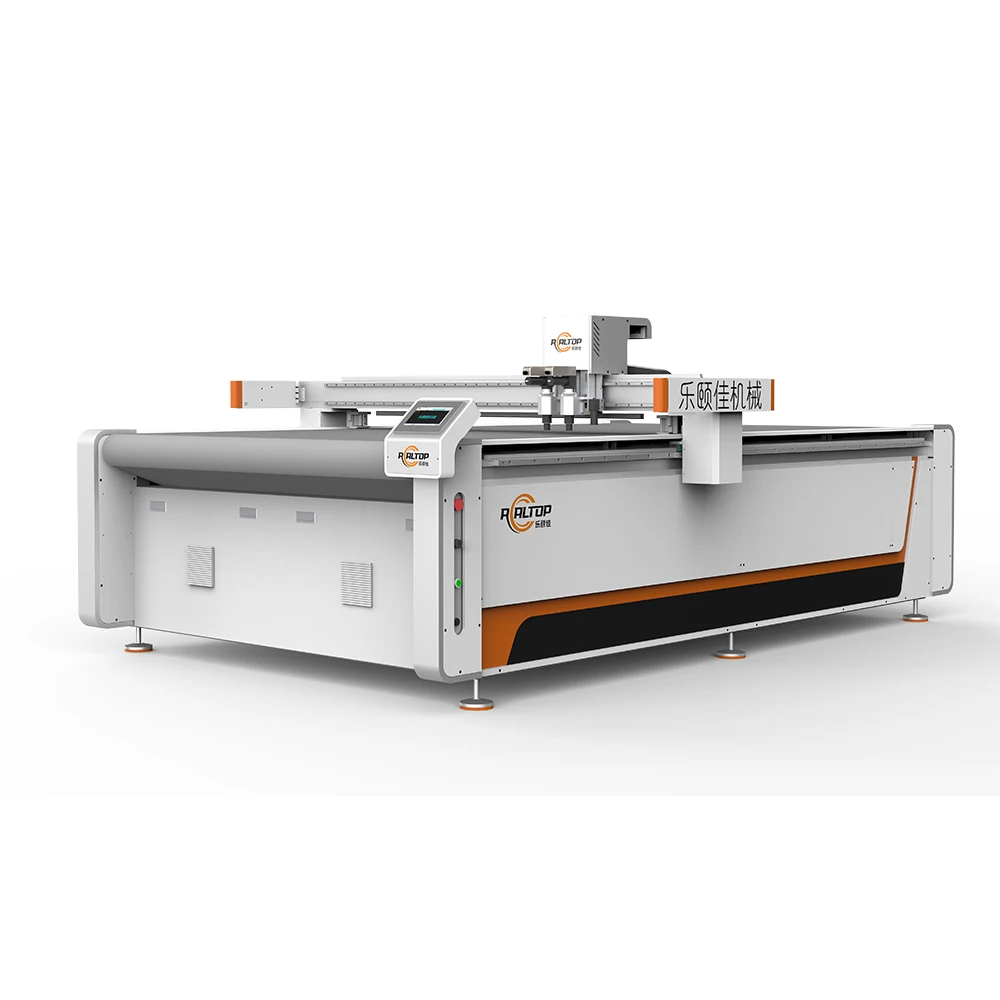
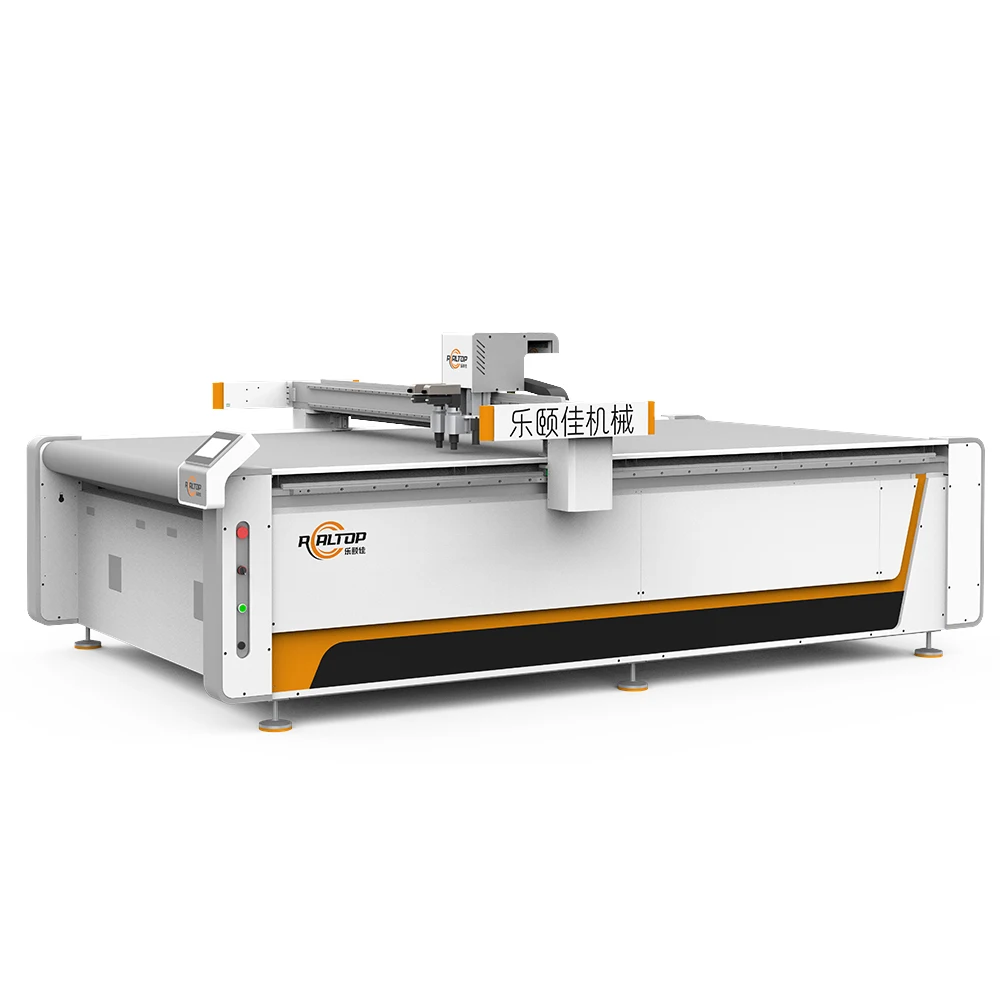
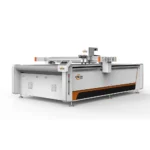
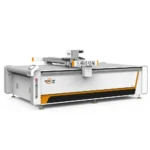
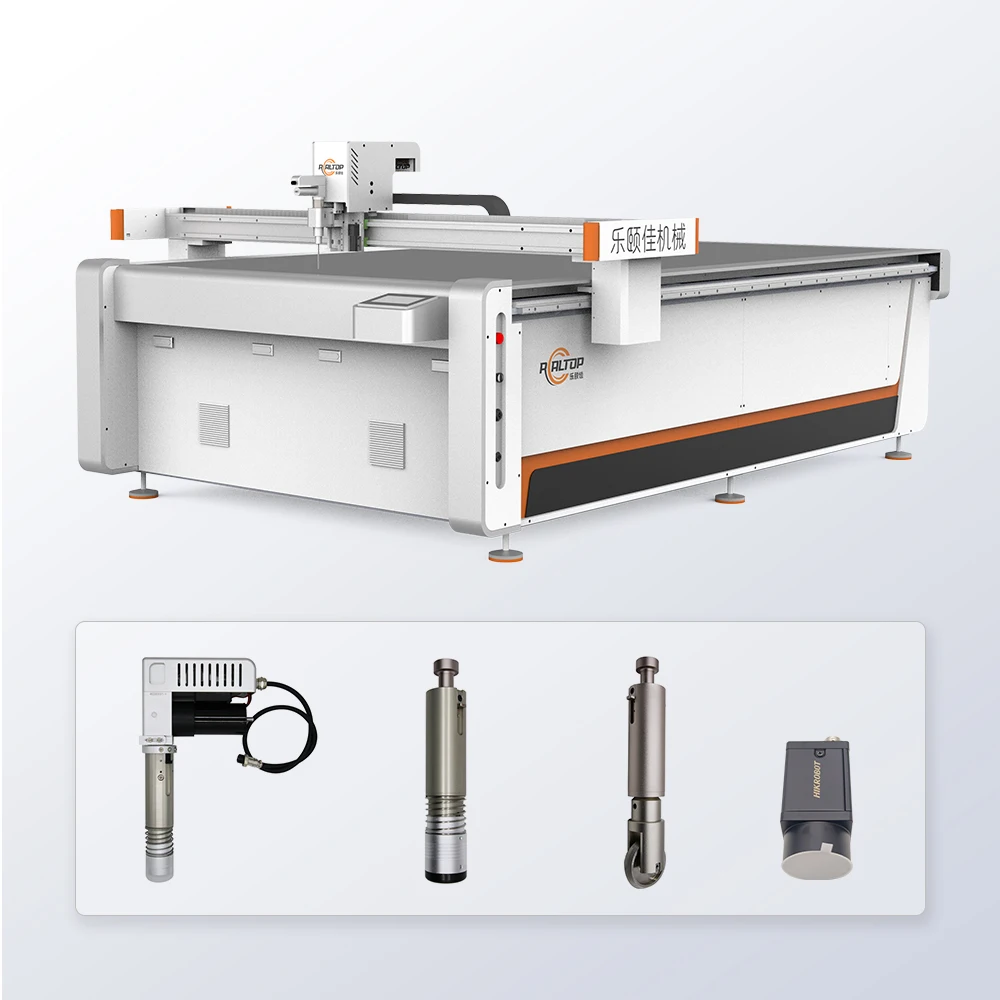
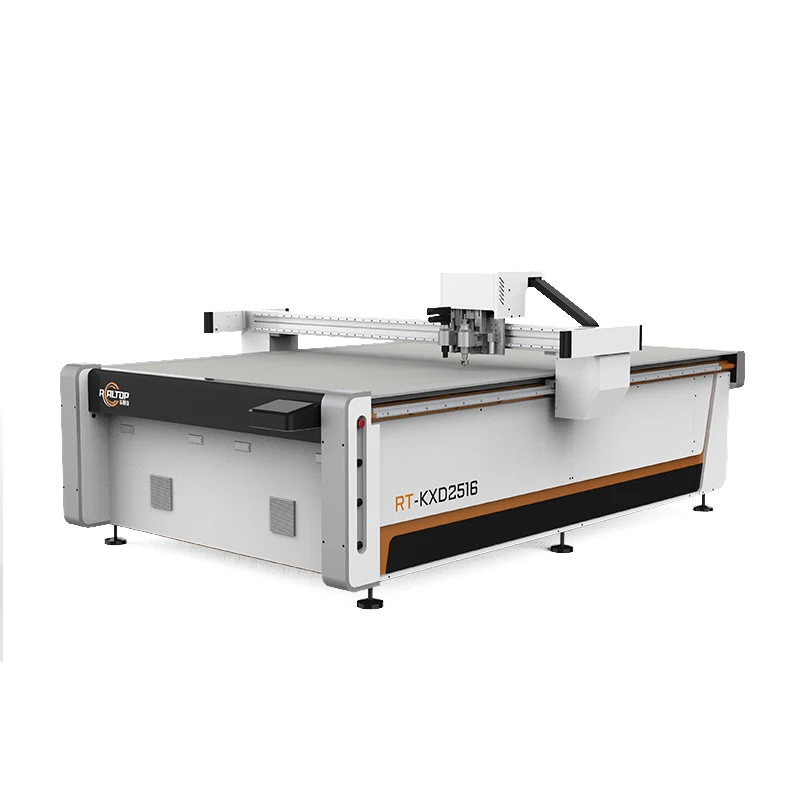
Precision-Built Frames — Realtop engineers the RT-D2516/RT-S2516 chassis and motion system in-house, ensuring every oscillating knife cut holds tight tolerance on thick leather and composite materials.
Technical Specifications
| Parameter | Value |
|---|---|
| Model | RT-D2516/RT-S2516 |
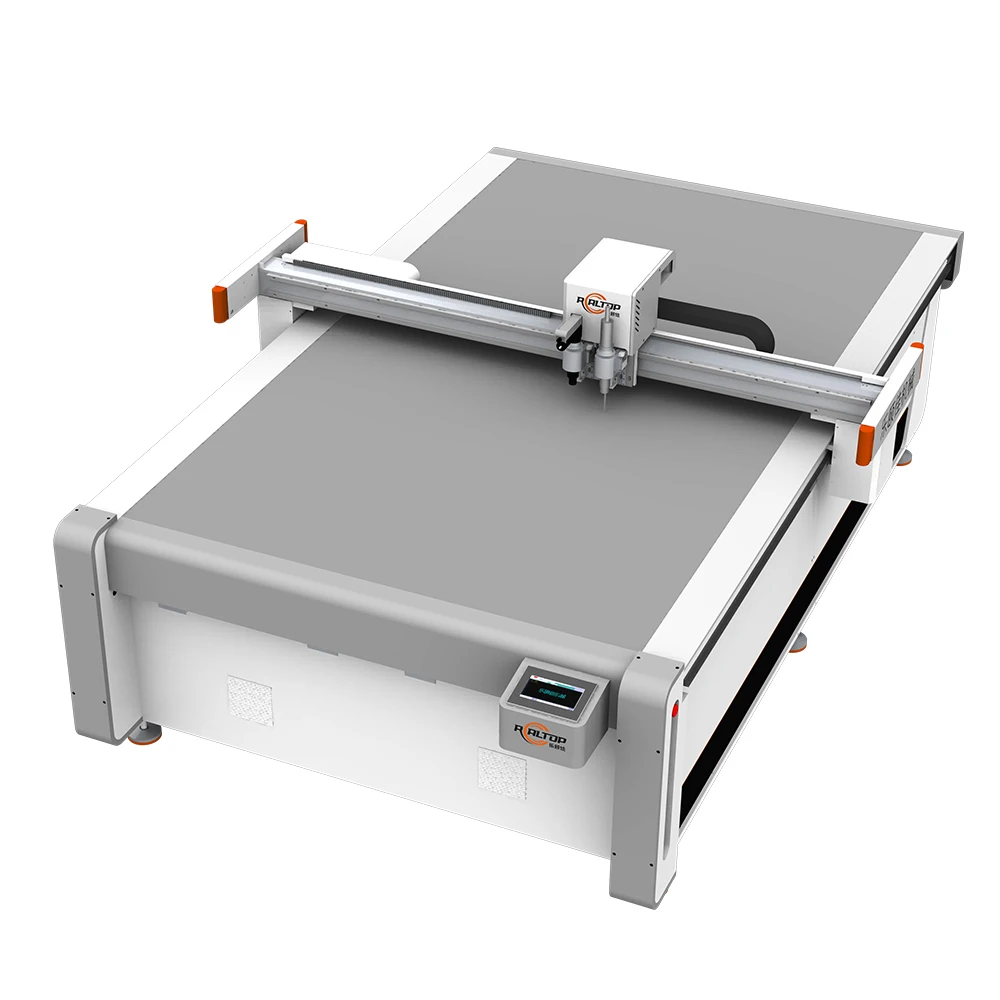
| Product Type | CNC Oscillating Knife Cutting Machine |
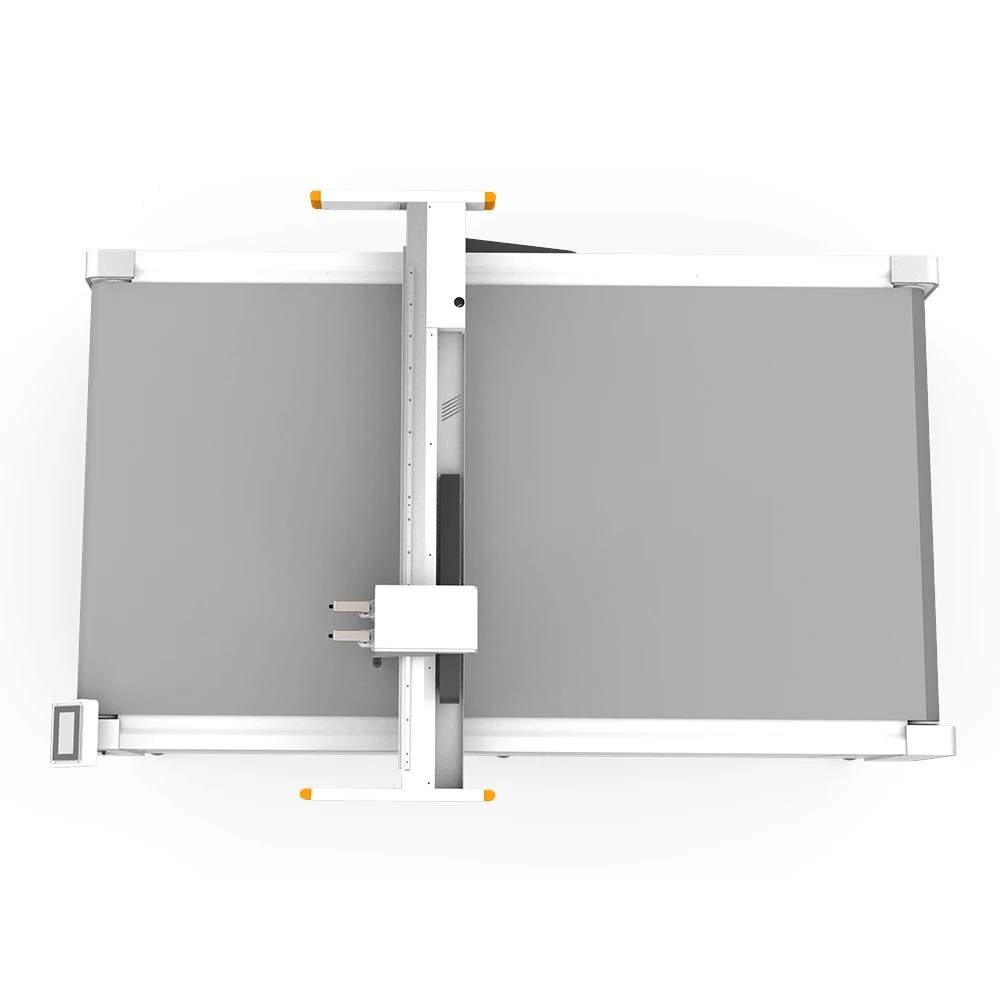
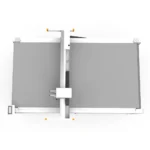
| Working Area | 1600×2500mm |
| Machine Size | 3450×2300×1250mm |
| Rated Power | 9kW |
| Voltage | 380V±10% |
| Vacuum Pump | 7.5kW |
| Table Type | Aluminum alloy honeycomb vacuum adsorption platform |
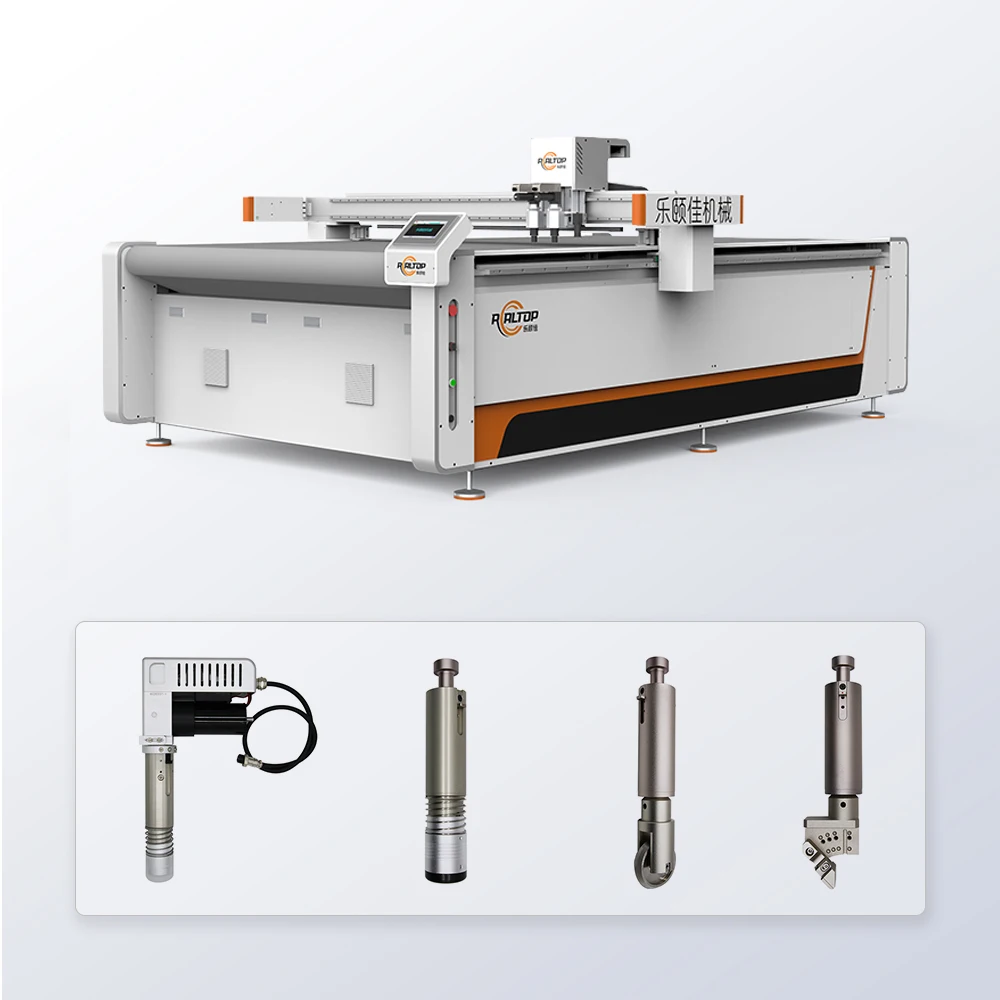
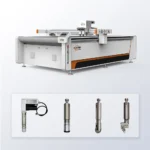
| Multifunctional Head | Swiss imported knife with vibration full cutting, half cutting, and cursor location |
| Translational Velocity | 800–2000mm/s |
| Cutting Speed | 200–800mm/s (according to different cutting materials) |
| Repeated Accuracy | ≤0.1mm |
| Transmission System | Digital servo motor, linear guide, synchronous belt, ball screw |
| Servo Motor | Delta (Taiwan) |
| Linear Guide | Taiwan Hiwin rail |
| Conveyor Belt | Germany imported |
| Instruction System | HP-GL compatible format |
| Auto Feeding | Yes |
| Safety Device | Infrared sensors with emergency stop |
| Assembly State | Fully assembled |
Application Suitability
| Application | Material or Output |
|---|---|
| Leather goods manufacturing | Full-grain leather, coated cowhide, split leather, synthetic leather |
| Footwear component cutting | Sponge composite leather, PU, EVA foam sheets |
| Garment flexible material processing | Fabric layers, technical textiles, woven and non-woven materials |
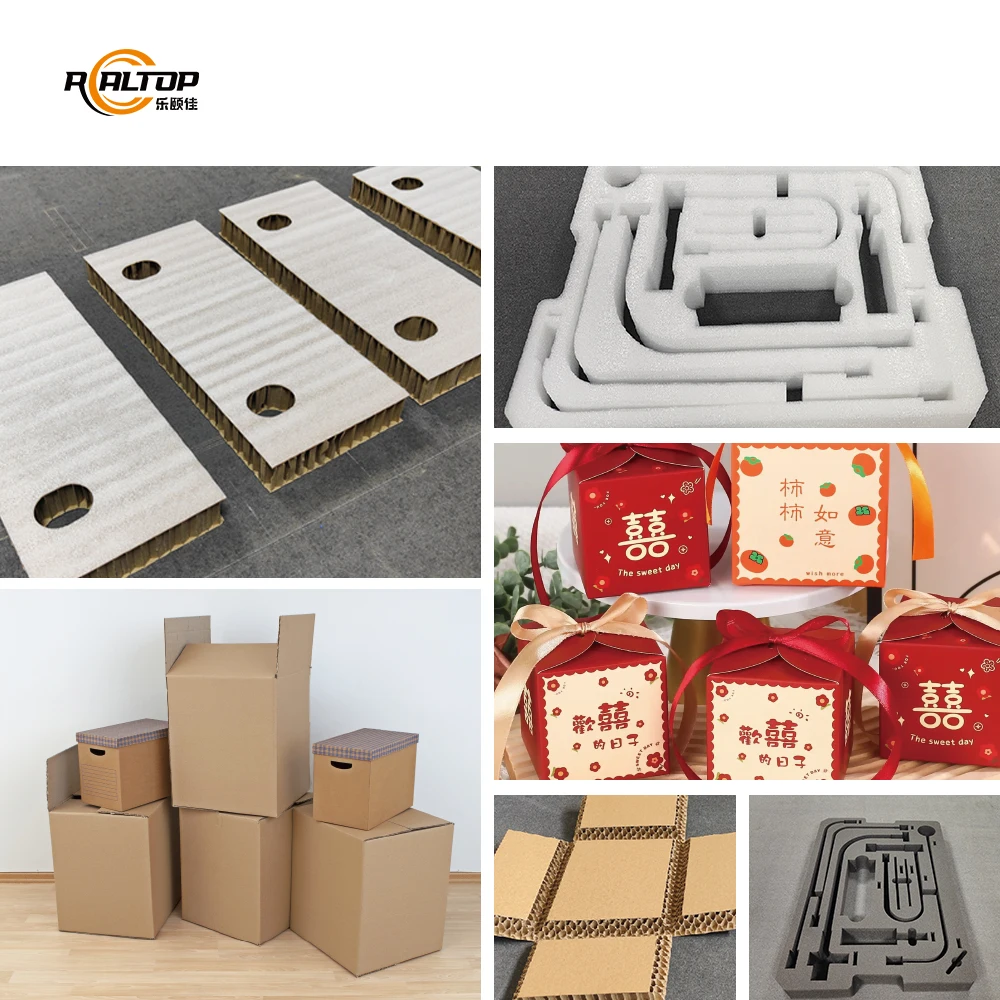
| Packaging carton and sample making | Corrugated board, folding carton stock, greyboard |
| PVC and soft glass fabrication | PVC sheets, soft glass, silicone rubber, flexible gasket material |
| Automotive interior trimming | Composite leather, foam-backed vinyl, headliner fabric |
Why "Working Area" Alone Cannot Specify a Leather Cutting Machine
A 1600×2500mm table tells you nothing about whether the blade will hold up on coated cowhide at production speed.
Many buyers I have worked with started their inquiry with table dimensions and assumed the rest would follow. But leather cutting introduces variables that a footprint specification never addresses. Coated finishes deflect standard blades. Thick splits demand oscillation frequency matched to density. And small pattern pieces lift off poorly zoned vacuum tables the moment the knife changes direction [NEED_CITE: vacuum hold-down requirements for flexible material cutting]. A CNC oscillating knife cutting machine factory that only asks for your sheet size is missing the information that actually determines whether the machine will run your material cleanly.
How the Knife Head Meets the Material
The Swiss imported oscillating knife head on the RT-D2516/RT-S2516 provides full-cut, half-cut, and cursor location in a single tool station. This matters because leather is not uniform. A full-cut pass separates pattern pieces from the hide, while a half-cut scores fold lines for boxed packaging samples or footwear uppers without severing the material. Cursor location allows the operator to register reference marks before a nested layout runs. Switching between these modes at the control level means a single CNC oscillating knife cutting machine handles multiple operations per hide without a manual tool change.
Frame Rigidity and Motion Accuracy Under Load
The RT-D2516/RT-S2516 frame supports Taiwan Hiwin linear guides paired with Delta servo motors across all axes. When the oscillating knife drives through dense composite leather at 800mm/s cutting speed, lateral forces push against the gantry. Linear guides absorb that load and keep the carriage tracking true. The ≤0.1mm repeated accuracy specification means that if a nesting layout calls for identical pieces in sequence, each cut registers within the same tolerance window. For buyers running tight-tolerance contour work on shoe components or automotive interior panels, that repeatability determines whether downstream stitching and assembly jigs accept the parts without rework [NEED_CITE: linear guide tolerance standards for CNC cutting equipment].
Reading the Specifications That Actually Matter for Leather
The 9kW rated power and 7.5kW vacuum pump work together. The vacuum pump generates suction through the aluminum honeycomb table surface to hold hides flat. If vacuum zoning is insufficient, small pieces near the table edge lift during direction changes, producing ragged cut lines. The auto-feeding system with Germany imported conveyor belt feeds roll stock or sequential hides onto the cutting area without manual repositioning. Cutting speed ranges from 200 to 800mm/s depending on material, which means thick splits run slower to maintain edge quality while thinner synthetics run at the upper range. The HP-GL compatible instruction system with multi-format import allows buyers to send DXF, PLT, and other common nesting files directly from their existing design software without reformatting.
The Hidden Cost of Skipping the Material Test
I once configured a vibration knife system for a Zhejiang leather goods producer based on sample swatches they mailed. The samples were standard split leather and cut cleanly. When the machine arrived and they loaded their actual production stock — a coated thick cowhide with a polyurethane top layer — the blade dragged and the cut face fuzzed badly. Production stopped until we sourced a different blade geometry. That experience reinforced a rule I now apply to every order: the buyer’s own material must be test-cut before the configuration is finalized. Without that step, you risk receiving a CNC oscillating knife cutting machine that performs perfectly on paper and fails on the first day of production [NEED_CITE: material-specific tooling requirements in leather cutting operations].
Why Buyers Source This Machine from Realtop
In-house design and production mean the RT-D2516/RT-S2516 is not a generic platform relabeled for leather work. The engineering team specifies the knife head, table zoning, and motion components together based on the buyer’s material stack.
Tool head and table configuration are documented per order, so a distributor or importer can verify that the machine they receive matches the quotation down to the blade type and vacuum zone layout.
Voltage customization from 380V±10% to target market requirements is confirmed before production begins, preventing commissioning delays caused by grid mismatch.
Software menu language and file format compatibility are validated during the order stage, not discovered during setup.
Sample cutting on the buyer’s own leather stock is standard procedure, producing a cutting report that documents edge quality, speed achieved, and blade wear over a test run.
Documentation & Verification
- Machine specification sheet listing exact knife head model and table zone configuration for your leather type
- Electrical schematic with voltage and frequency confirmation matching your facility grid
- Sample cutting report run on your own leather stock before shipment authorization
- Factory test record documenting motion accuracy and vacuum performance under load
- Operation and maintenance manual with blade replacement intervals and lubrication schedule
- Spare parts list covering consumable blades, belts, and vacuum pump service components
Installation, Commissioning & Support
- The 3450×2300mm footprint requires a level concrete floor with clearance for the 7.5kW vacuum pump placement
- Dedicated 380V±10% circuit rated for the 9kW total draw must be available before delivery
- Machine ships fully assembled; placement requires overhead crane or forklift access at your facility
- First-run commissioning includes vacuum zone calibration and knife depth setting on your material
- Operator training covers nesting software import, blade change procedure, and emergency stop protocols
- Consumable Swiss knife blades and Germany conveyor belt segments stocked for initial spare inventory
What We Need to Configure Your Machine
Before recommending a configuration, I need to know the specific leather types you process, including whether coated or finished surfaces are involved, and the typical thickness range. Your daily cutting volume and the maximum hide or roll dimensions determine whether the auto-feeding system and table size match your throughput. If your facility operates on a voltage standard other than 380V, confirm the local supply so the electrical system is built accordingly.
Frequently Asked Questions
Q: How is the tool head matched to my specific leather type and thickness?
A: The configuration process starts with your material samples. We run test cuts using different blade geometries and oscillation frequencies on your actual stock — coated cowhide, split leather, or composite — and document edge quality and cutting speed. The tool head specification in your quotation reflects the result of that test, not a default setting.
Q: Can voltage, plug type, and software language be customized before shipment?
A: Yes. The RT-D2516/RT-S2516 is built to order with your facility’s voltage and frequency confirmed before production begins. Plug type follows the target market standard. Software menu language is set during assembly so the operator interface matches your team’s preference from first power-on.
Q: What does the sample cutting process look like before I commit?
A: You send your production material to the factory. We run a nested layout on the RT-D2516/RT-S2516 and produce a cutting report covering edge finish, achieved speed, and blade condition after the test run. You review the report and physical samples before authorizing the build.
Q: What OEM options are available for distributors and importers?
A: Distributors can specify custom branding, documentation language, and machine color. Tool head selection, vacuum table zoning, and software configuration are built per your market’s typical applications. Factory test records and CE documentation are included with each unit shipped.
Q: How do I verify build quality before the machine leaves the factory?
A: The factory test record documents motion accuracy, vacuum hold-down performance, and cutting results on your material. You receive photographs of the assembled machine, electrical panel, and packing. Inspection visits or third-party audits can be arranged before dispatch authorization.
You may also like

商品评价
Clear filtersThere are no reviews yet.