









-
 Courier delivery
-
 DHL Courier delivery
-
 Warranty 1 year
-
 Free 30-Day returns

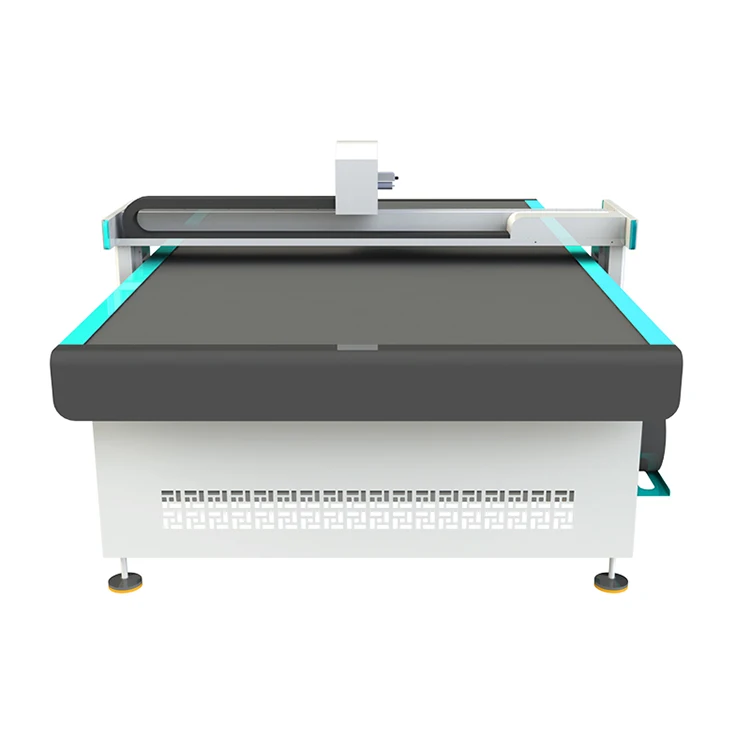
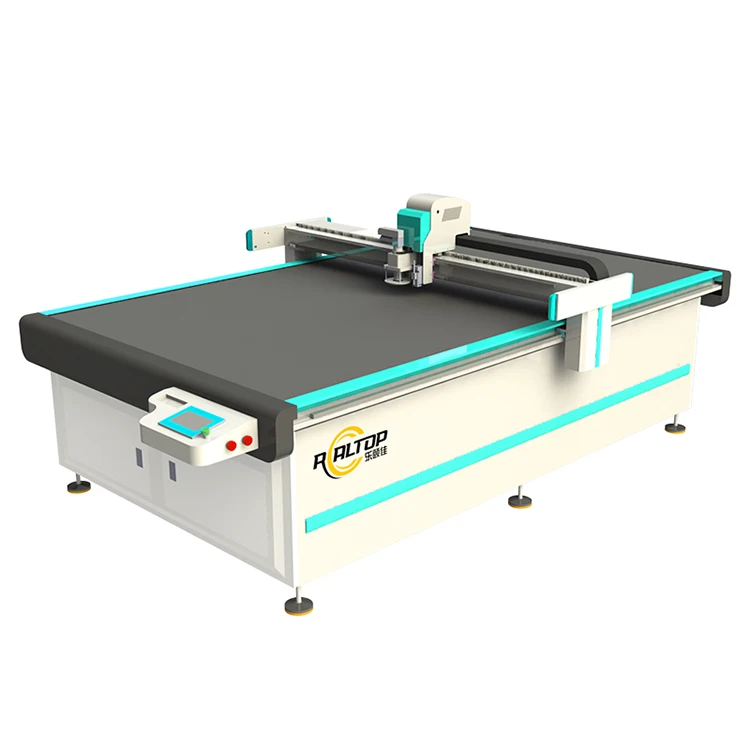
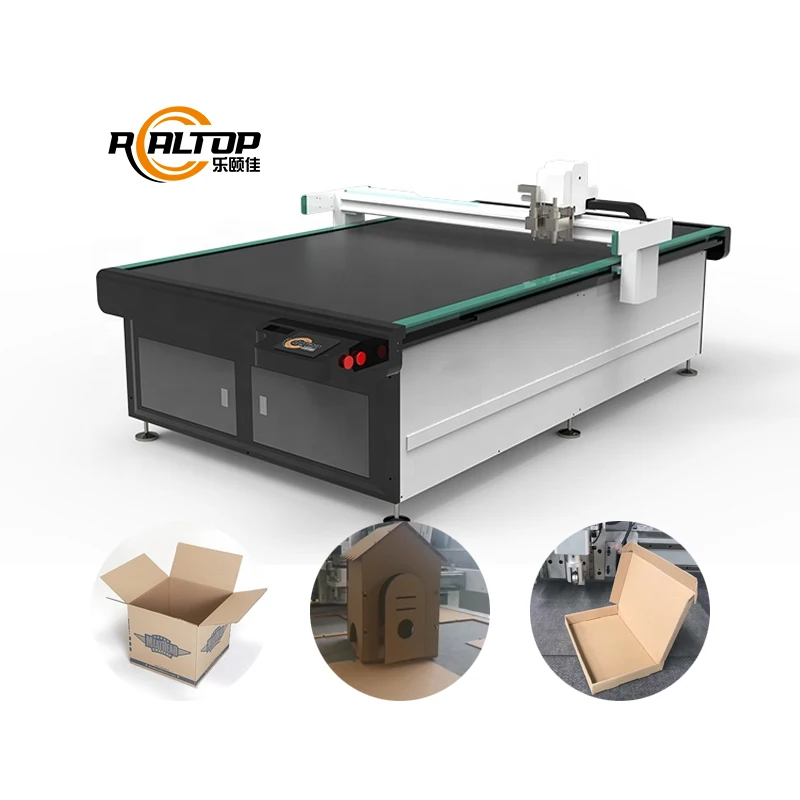
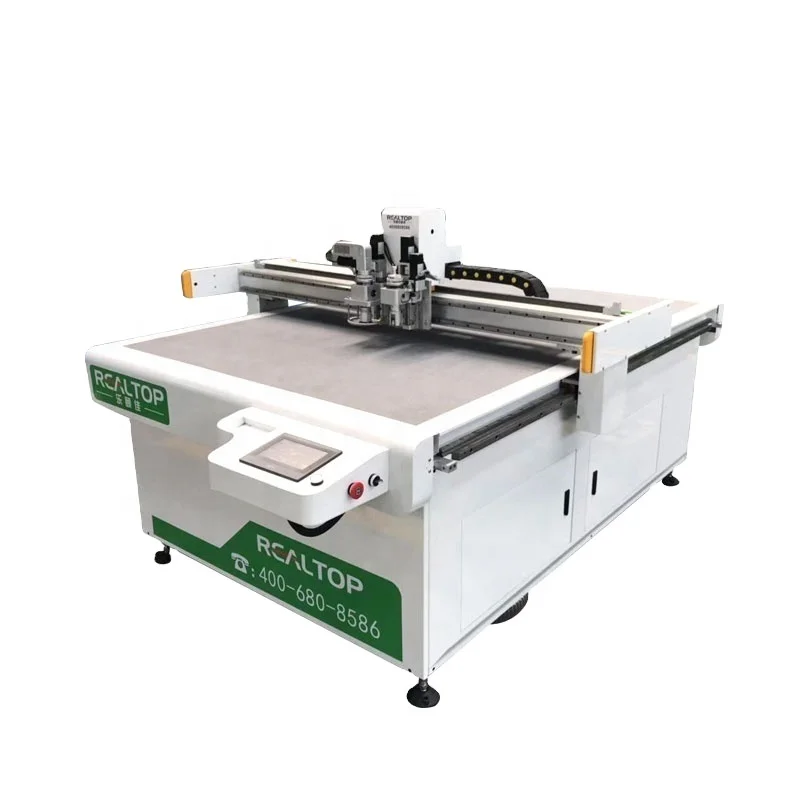
Factory Direct CNC Cutting Machine for Auto Seat & Handbag
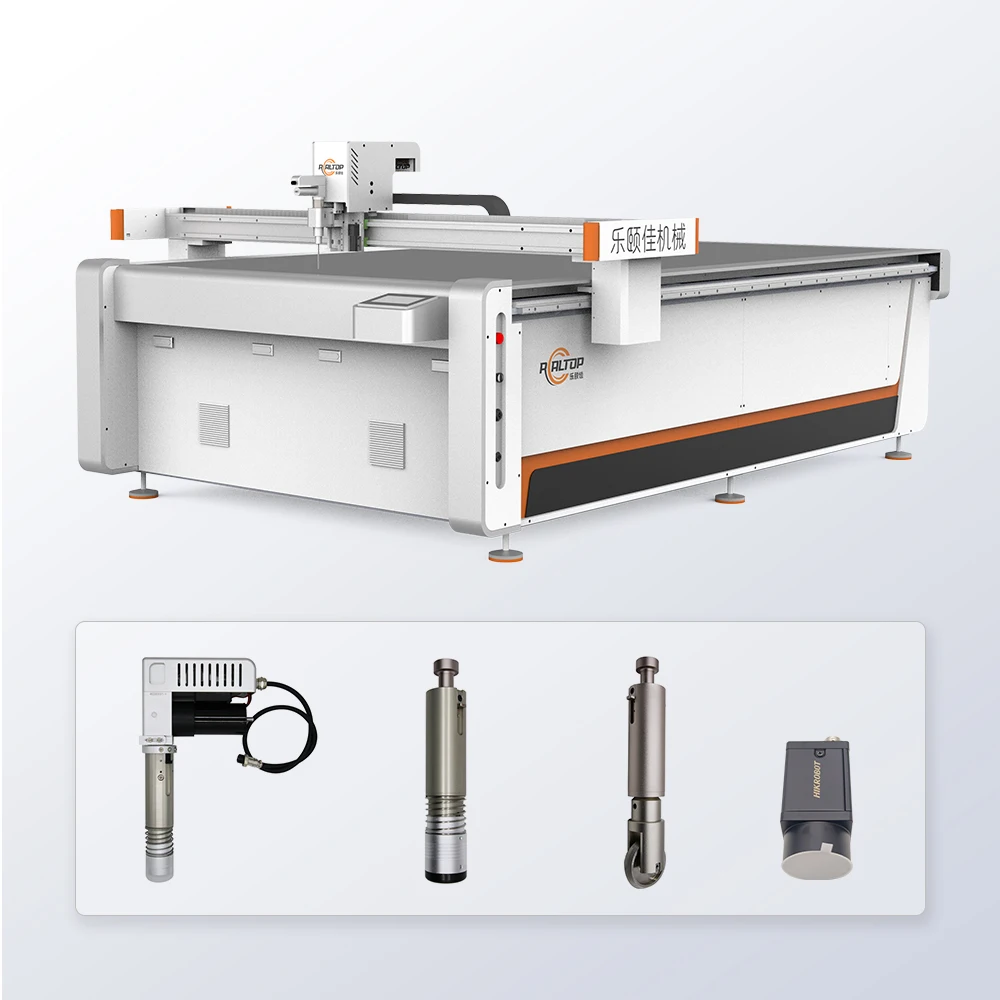
In-house engineered knife cutting integration — the frame, motion system and Swiss oscillating tool head on the RT-D2516/RT-S2516 are designed and built under one roof, so configuration follows your material rather than forcing a standard catalogue setup.
Technical Specifications
| Parameter | Value |
|---|---|
| Model | RT-D2516/RT-S2516 |
| Product Type | CNC Oscillating Knife Cutting Machine |
| Working Area | 1600×2500 mm |
| Overall Dimensions (L×W×H) | 3450×2300×1250 mm |
| Rated Power | 11 kW |
| Working Table | Flat vacuum hold-down table |
| Tool Head | Swiss imported oscillating knife — full cut, half cut, cursor positioning |
| Translational Velocity | 800–1200 mm/s |
| Cutting Speed | 200–800 mm/s (basis not stated in source — confirm with material type and thickness) |
| Repeatability | ≤0.1 mm |
| Transmission | Digital servo motor, linear guide, synchronous belt, imported ball screw |
| Servo Motor | Japanese Yaskawa |
| Linear Rail | Taiwan Hiwin |
| Vacuum Pump | 7.5 kW |
| Auto Feeding | Yes |
| Conveyor Belt | Germany imported |
| Instruction System | HP-GL compatible format |
| Voltage | 380V ±10% |
| Safety Device | Infrared sensors |
Application Suitability
| Application | Material or Output |
|---|---|
| Automotive seat and interior trim | Leather, synthetic leather, sponge composite materials |
| Handbag and case production | Genuine and PU leather, flexible composite panels |
| Footwear and boot manufacturing | Leather uppers, flexible synthetic sheets |
| Gasket and sealing fabrication | PVC, silicone, rubber, soft glass |
What the Cutting Speed Number Will Not Tell You
Actual throughput depends entirely on what sits on your table, not what is printed on the nameplate.
When buyers first reach out, they usually anchor on working area and quoted speed, assuming the 200–800 mm/s range will apply directly to their production. In automotive interior shops running six-layer sponge composite leather, that assumption breaks down fast. The blade must penetrate dense, adhesive-bonded stacks where friction climbs with every layer, and the cutting head slows to maintain edge quality [NEED_CITE: relationship between composite material density and achievable cutting speed]. A CNC oscillating knife cutting machine manufacturer who only sells by spec sheet will leave you discovering this gap on the factory floor.
How Frame Rigidity Holds Tolerance at Full Bed Travel
The RT-D2516/RT-S2516 spans 1600×2500 mm, which means the gantry travels a significant distance at high translational velocity. A frame that flexes under acceleration introduces positional drift that accumulates over a nesting layout, pushing contour cuts out of register with printed grain lines. Realtop designs the welded steel frame and motion assembly in-house so that structural stiffness is matched to the Yaskawa servo torque curve, keeping repeatability within ≤0.1 mm across the entire work envelope.
Why the Oscillating Head Was Chosen Over a Drag Knife for This Work
Sponge composite leather behaves nothing like single-ply vinyl. A drag knife drags through the material, which crushes the foam core and leaves a ragged, delaminated edge that downstream sewing operators will reject. The Swiss imported oscillating knife on this platform cuts with a rapid vertical stroke, slicing cleanly through adhesive-bonded layers without compressing them [NEED_CITE: oscillating knife versus drag knife edge quality on composite materials]. The half-cut and cursor positioning functions also allow kiss-cutting for perforation patterns used in seat ventilation zones.
Reading the Specifications Against Your Actual Production Job
The 7.5 kW vacuum pump paired with a flat vacuum hold-down table is sized to secure flexible sheet materials that tend to lift at high cutting speeds. In practice, small nested parts — think headrest inserts or armrest covers — create the most hold-down challenges because their surface area is limited. The Taiwan Hiwin linear rails and imported ball screw translate servo commands into precise motion, but that precision only matters if the material stays flat. The HP-GL compatible instruction system means your existing nesting software can drive the machine without a secondary translation layer, avoiding the file-format conflicts that delay commissioning. Auto-feeding from the Germany-imported conveyor belt keeps continuous material flow for roll-based synthetic leather, reducing manual repositioning between cuts.
The Real Cost of Specifying on Area Alone
We have seen buyers choose a machine purely on working area, then find that the oscillating knife head cannot penetrate their material stack at production speed. The tool holder begins to deflect under sustained load, and edge quality deteriorates within the first quarter of a shift [NEED_CITE: tool head deflection under continuous multi-layer cutting]. Small parts lift off poorly zoned vacuum surfaces, forcing operators to tape edges down — a workaround that slows the line and damages material. These are not warranty claims; they are specification mismatches that no amount of after-sales adjustment can fix.
Why Sourcing This Platform Directly from the Build Floor Matters
Realtop engineers both the knife cutting and the machine structure in the same facility, so the tool head, vacuum table zoning and motion system are validated together rather than assembled from unrelated vendor modules. Every RT-D2516/RT-S2516 is configured around the buyer’s confirmed material — oscillating knife type, vacuum zoning layout and feeding system are locked in after sample cutting, not assumed from a default list. The design team can adjust voltage, control language and safety device placement for the target market before the frame leaves Jinan. Factory test records are generated on the buyer’s own material, providing documented evidence of edge quality and dimensional accuracy before the crate is closed.
Documentation & Verification
- Machine specification sheet listing confirmed tool head, vacuum zoning and feeding setup for your material
- Electrical schematic with 380V ±10% confirmation matched to your facility supply
- Sample cutting report on your leather or composite stock, showing edge quality and dimensional data
- Factory test record documenting repeatability and cycle performance before dispatch
- Software licence and HP-GL file format compatibility note for your nesting workflow
- Spare parts list covering consumable blades, belts and vacuum cup replacements
Installation, Commissioning & Support
- Floor space allocation based on 3450×2300×1250 mm overall footprint plus material staging clearance
- Dedicated 380V ±10% circuit rated for 11 kW machine plus 7.5 kW vacuum pump draw
- Machine arrives on flatbed; gantry and conveyor assembly completed on-site with alignment verification
- First-run parameter tuning on your actual material, adjusting oscillation frequency and vacuum zone mapping
- Operator training covering HP-GL file import, tool head changeover and blade replacement intervals
- Scheduled maintenance checklist addressing Hiwin rail lubrication, ball screw inspection and belt tension checks
Before You Request a Quotation
Send us your material type, maximum stack thickness and typical sheet or roll dimensions so we can determine the correct oscillating knife configuration and vacuum zoning. If your facility runs a voltage or frequency outside 380V/50Hz, let us know early — the electrical package is built to order. We also need to know which nesting software you currently use so we can confirm HP-GL compatibility before the machine enters production.
Frequently Asked Questions
Q: How do you verify cutting speed and thickness on my specific material before I commit?
A: We run your actual leather, composite or PVC stock on the RT-D2516/RT-S2516 test bed and document edge quality, achievable layer count and dimensional repeatability in a sample cutting report. This data accompanies the quotation so you can evaluate real throughput rather than relying on generic speed ranges.
Q: What voltage and control language options are confirmed before shipment?
A: The standard electrical package is 380V ±10%, but we confirm your facility supply and adjust transformer and motor specifications if your site runs a different voltage or frequency. Control interface language is locked in during the specification review stage, not at the packing bench.
Q: How is the vacuum table zoned, and will small parts lift during high-speed cutting?
A: The flat vacuum table on the RT-D2516/RT-S2516 is divided into zones that can be activated independently based on the nesting layout. For small automotive interior parts like headrest covers, targeted zone activation maintains hold-down force across the limited surface area of each piece.
Q: Which tool head configuration is right for leather versus sponge composite versus PVC?
A: Leather typically requires a specific blade angle and oscillation frequency to avoid burnishing the grain surface, while sponge composite needs a longer stroke to penetrate adhesive-bonded layers cleanly. PVC and rubber respond to different blade geometries entirely. We match the Swiss oscillating knife setup to your confirmed material during the sample cutting stage.
Q: What does the OEM and customization process look like for distributors and importers?
A: Distributors work directly with our in-house design team to adjust working area, voltage package, safety device placement and control language for the target market. Every custom configuration goes through a full factory test cycle, and we provide documentation packages formatted for your import and certification requirements.
You may also like

商品评价
Clear filtersThere are no reviews yet.