


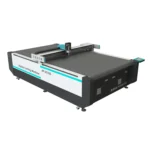
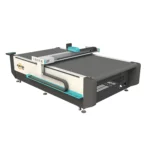
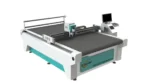

-
 Courier delivery
-
 DHL Courier delivery
-
 Warranty 1 year
-
 Free 30-Day returns

In-house tooling specification — every oscillating knife, vacuum zone and CCD parameter is matched to your composite layup and tested on your actual material before the machine leaves our Jinan floor.
Technical Specifications
| Parameter | Value |
|---|---|
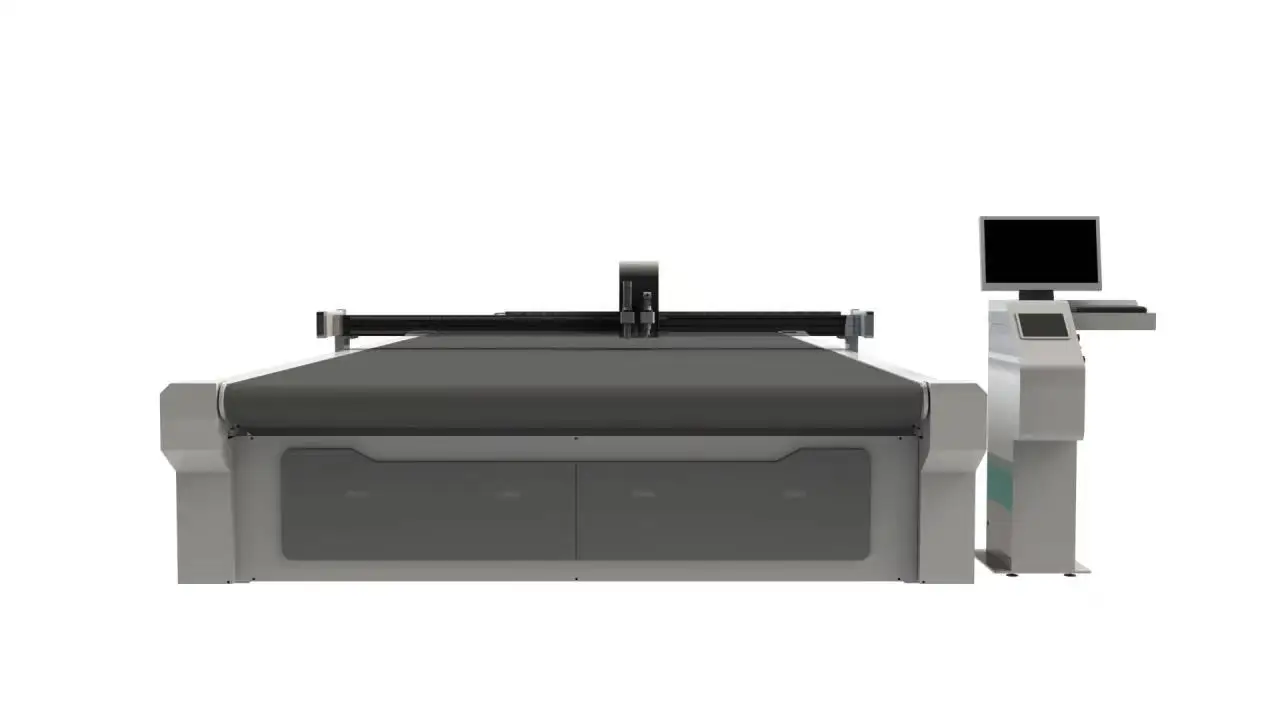
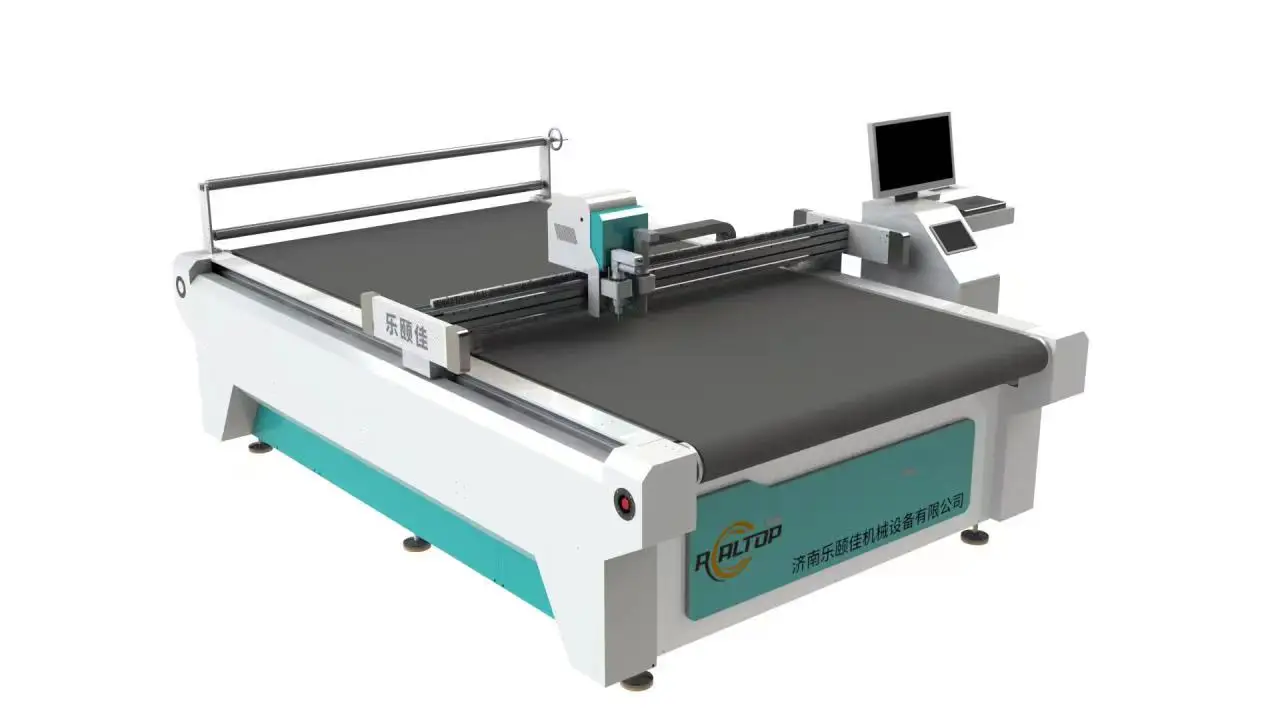
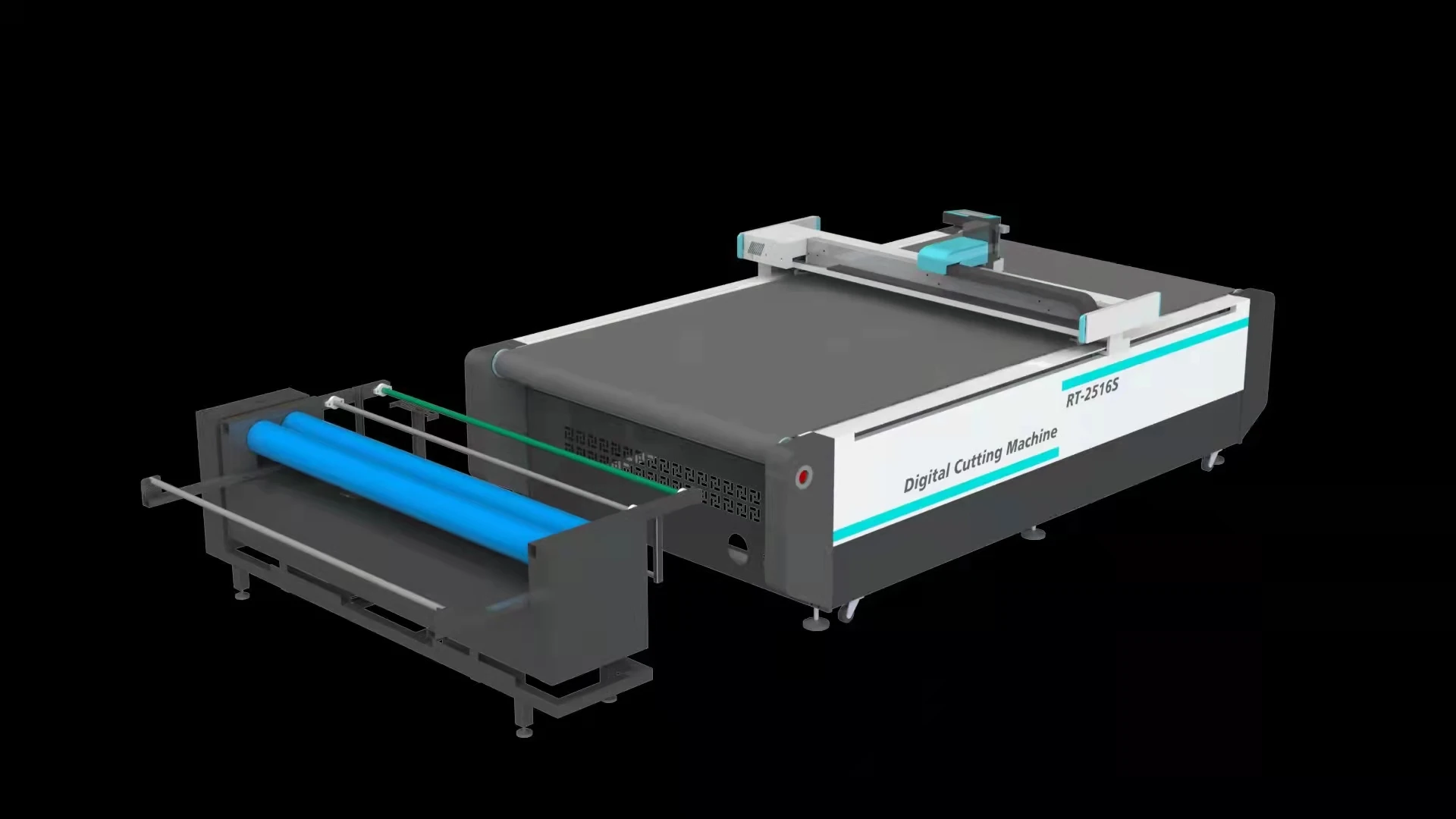
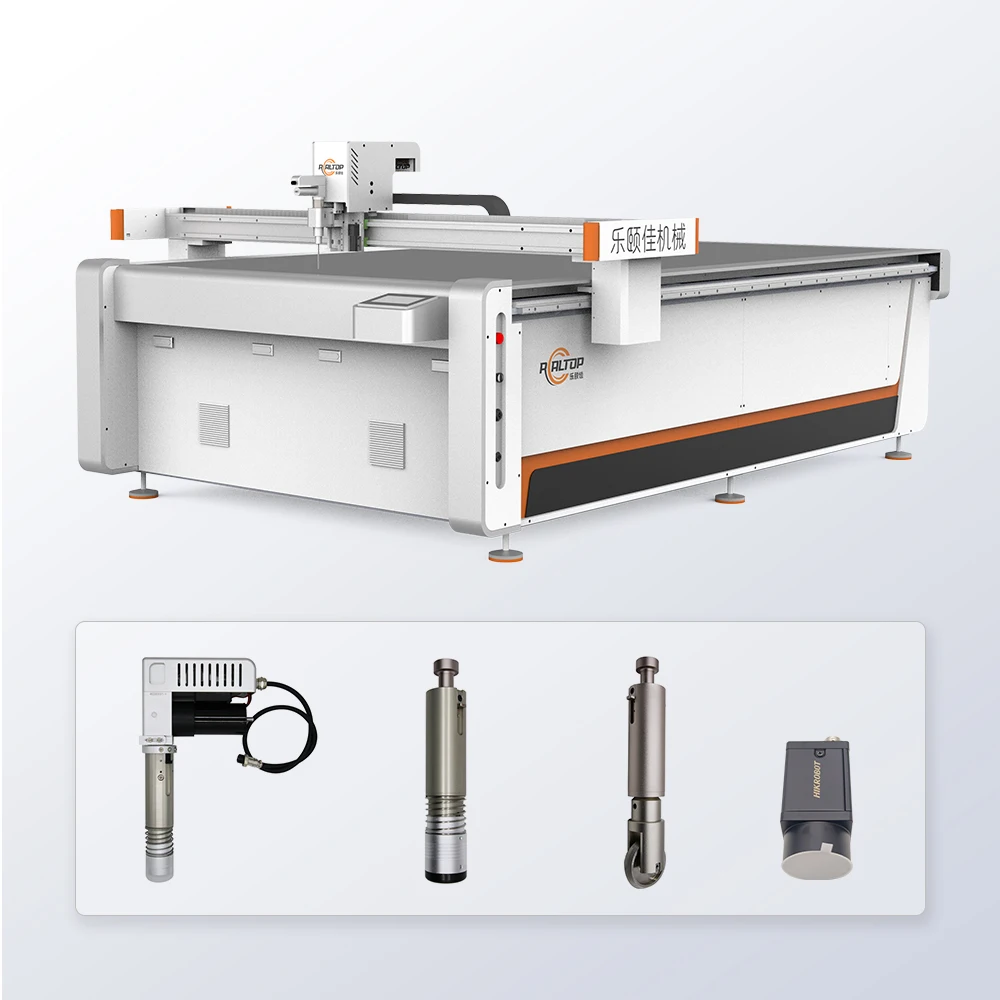
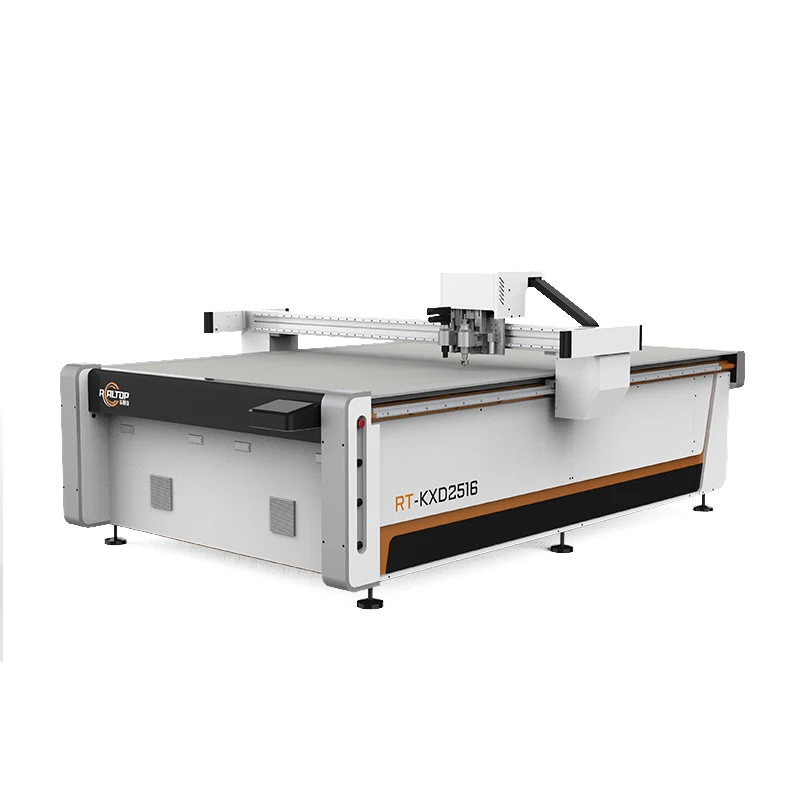
| Product Type | CNC Oscillating Knife Cutting Machine |
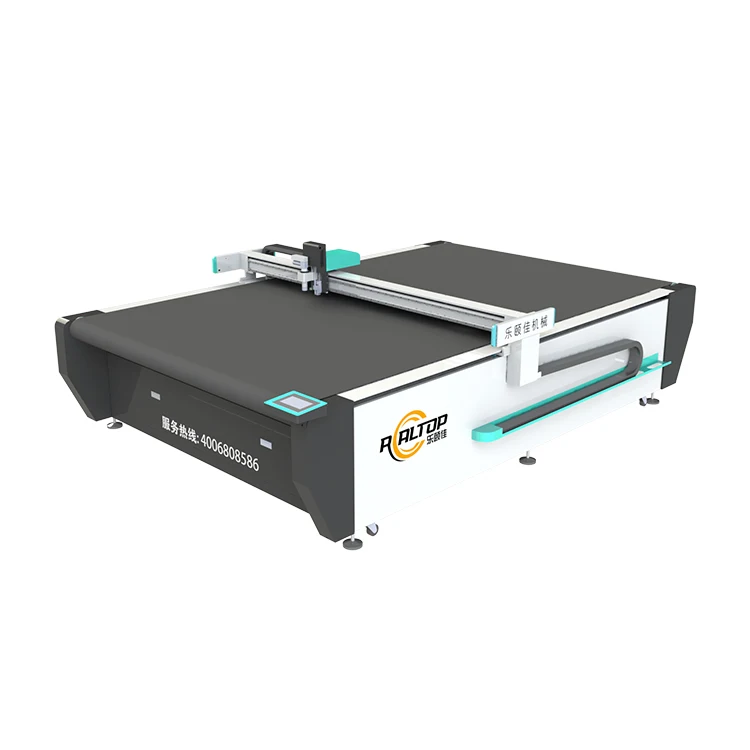
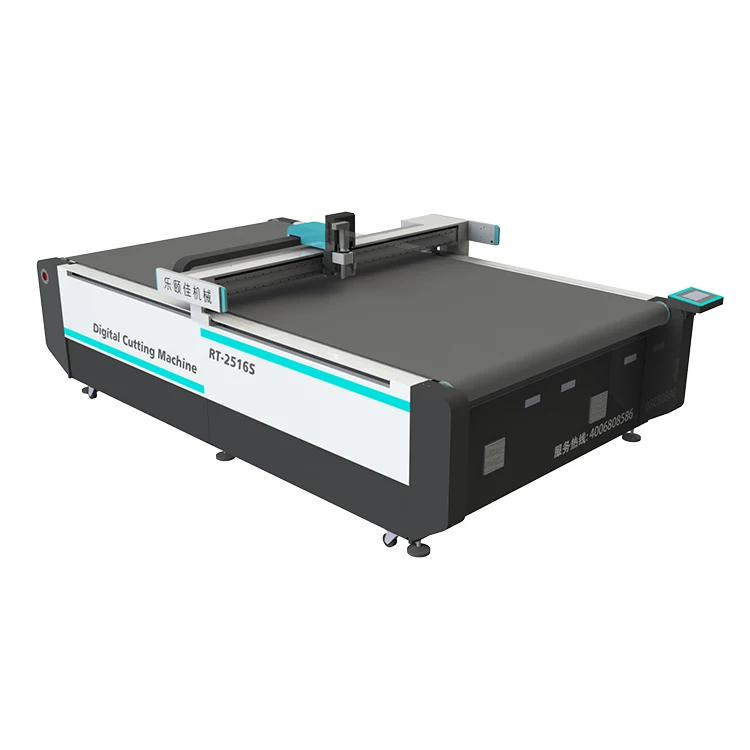
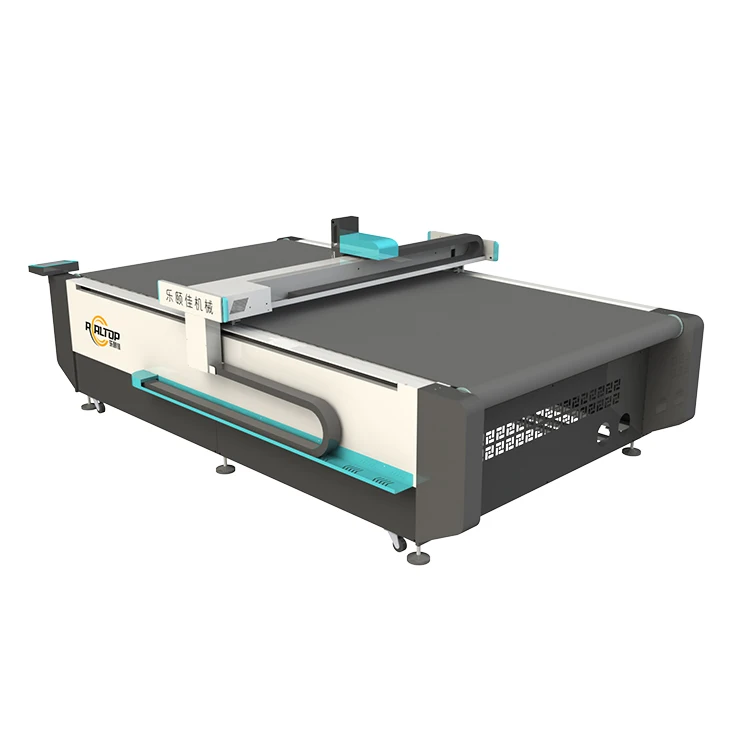
| Working Area | 1600×2500 mm |
| Machine Dimensions | 3450×2300×1250 mm |
| Rated Power | 9 kW |
| Voltage | 380V±10% (50/60 Hz to be confirmed) |
| Vacuum Table | Magnesium-aluminum alloy with PVDF coating, anodic and hard oxidation |
| Vacuum Pump | 7.5 kW, aviation aluminum shell, built-in silencer |
| Servo Motor | Delta (Panasonic optional), IP67 rated |
| Transmission | Digital servo, linear guide, synchronous belt, Taiwan Hiwin rail |
| Translational Velocity | 800–1200 mm/s |
| Cutting Thickness | 20–80 mm (basis to be confirmed by material and tool head) |
| Repeated Accuracy | ≤0.1 mm |
| Visual Positioning | CCD mark point, panoramic camera, projection positioning |
| Cutting Tools | Oscillating knife, pneumatic knife, high-power vibrating knife, circular knife, drag knife, creasing wheel, punching, V-cutting knife |
| Safety Devices | Infrared blocking, dual beam anti-collision sensors, emergency stop with in-situ resume |
| Instruction Format | HP-GL compatible |
Application Suitability
| Application | Material or Output |
|---|---|
| Carbon fiber pre-preg nesting | Dry fabric and pre-impregnated carbon fiber sheets |
| Fiberglass panel trimming | Glass fiber woven mat and chopped strand panels |
| PVC foam board profiling | Expanded and foamed PVC sheets for signage and marine |
| Automotive interior blanks | Non-woven, felt, and composite trim laminates |
| Gasket and sealing pads | PTFE, ETFE, rubber, and composite sealing stock |
| Soft furnishings and mats | Carpet, floor mat, and multi-layer textile composites |
Why Specified Working Area Alone Fails on Composites
A 1600×2500 mm table tells you nothing about whether the knife will delaminate your carbon fiber pre-preg.
Last year I set up a CNC oscillating knife cutting machine manufacturer line for a carbon fiber shop. We ran PVC validation sheets and the edges were clean. When we switched to their actual glass fiber pre-pregnated material, every edge frayed and separated — a full batch scrapped on the spot. The working area was correct; the tool head frequency, vacuum zoning, and blade geometry were not. Since then, regardless of order urgency, the real material goes on the table first. A flatbed digital cutting machine factory that skips this step is asking you to absorb the risk [NEED_CITE: composite cutting tool selection by fiber orientation and resin state].
Blade Selection That Follows the Fiber, Not the Brochure
Carbon fiber dry fabric demands a high-frequency oscillating knife that shears individual tows without pulling the weave apart. Pre-preg material, where resin is already present, requires a different oscillation amplitude and a blade bevel that prevents resin smearing across the cut face. This CNC digital cutting machine factory configures the tool head — oscillating, pneumatic, high-power vibrating, or drag knife — only after running the buyer’s actual roll or sheet on the table.
Vacuum Zoning Decides Whether Small Composite Parts Stay Flat
Composite blanks often yield nested parts smaller than 200 mm across. A single-zone vacuum table lets air leak under these parts, lifting them mid-cut and ruining the edge. The magnesium-aluminum alloy table with PVDF fluorocarbon coating is divided into independently controlled zones. The operator activates only the zones under the active cut path, maintaining hold-down pressure even on narrow offcuts. This matters especially on porous glass fiber mat where full-table vacuum dissipates before reaching the cutting head [NEED_CITE: vacuum adsorption zoning for small part retention on CNC knife tables].
Reading the Specs That Actually Matter on the Floor
The 7.5 kW vacuum pump paired with the PVDF-coated hard-oxidized table is not a cosmetic choice — hard oxidation resists the abrasive dust that carbon and glass fiber generate, preventing the micro-scratches that slowly destroy suction flatness over months of production. Taiwan Hiwin linear rails carry the gantry across the 2500 mm stroke; the IP67-rated Delta servo motors seal against the same airborne fiber dust that kills standard stepper drives. Translational velocity of 800–1200 mm/s is the unloaded travel speed; actual cutting speed on dense carbon fiber pre-preg is materially slower and depends on ply count and resin viscosity. The CCD mark point and panoramic camera system locates printed fiducial marks for contour cutting, but recognition reliability depends on print contrast and mark size — confirmed during the sample cut, not assumed from the spec sheet.
The Cost of Skipping the Material Trial
I have seen fabricators accept a machine based on a brochure cut of acrylic, then discover on delivery that the oscillating knife leaves a burr on their specific glass fiber weave because the blade oscillation frequency was too low for that material density. Re-tooling after shipment means new blade procurement, re-cutting vacuum gaskets, and re-running nesting software — all on your production schedule, not the factory’s. Worse, a vacuum pump undersized for porous composite material lets parts drift during the cut, producing scrap that the operator blames on the software [NEED_CITE: common causes of composite cutting scrap in oscillating knife operations].
Why Procurement Stops at This Factory Floor
Our Jinan facility designs and builds both knife and laser systems in-house, so when a composite material responds poorly to knife cutting, the engineering team evaluates laser thermal sealing on the same floor rather than forcing a knife-only solution. The thick-walled seamless steel frame undergoes high-temperature tempering and CNC machining center finishing — buyers can audit the weld seams and rail mounting surfaces directly. Tool head configuration, vacuum zone count, and CCD calibration are locked in the specification document before production begins. Every machine ships with a sample cutting report produced on the buyer’s own material roll or sheet, not a generic demo stock.
Documentation & Verification
- Electrical schematic confirming your site voltage and frequency before build release
- Tool head and vacuum zone configuration list matched to your composite material type
- Sample cutting report on your carbon fiber or glass fiber stock with edge macro photographs
- Factory test record covering repeated accuracy and CCD mark recognition on your printed sheet
- HP-GL file format compatibility note verifying your existing nesting software workflow
- Spare parts list with blade, vacuum seal, and filter part numbers sourced from the core factory
Installation, Commissioning & Support
- 380V±10% three-phase dedicated circuit required for the 9 kW rated load plus 7.5 kW vacuum pump
- Machine arrives fully assembled; floor leveling to within 2 mm across the 3450 mm frame length
- First-run parameter mapping on your composite material with tool head frequency and vacuum zone tuning
- Operator training on CCD mark registration and tool head changeover for mixed-material production days
- Swiss knife blade and vacuum seal consumable kit supplied with initial shipment for uninterrupted start-up
- One-year warranty covering servo drives, vacuum pump, and control system domestically and abroad
What to Send with Your Inquiry
Provide the exact composite material — dry fabric, pre-preg, or cured panel — with ply count, resin type, and sheet or roll dimensions. Include your daily nesting volume and the software format your nesting workflow currently outputs. State your workshop voltage and frequency, the control language your operators require, and whether you need the machine with auto-feeding conveyor for continuous roll processing. If your material is proprietary or difficult to source, ship a sample roll to our Jinan floor so the trial cut happens on the real stock before you commit.
Frequently Asked Questions
Q: How does the factory decide between knife and laser for a specific composite material?
A: We run your material on both systems in-house. Knife cutting is preferred when thermal degradation of the resin matrix or fiber must be avoided, such as aerospace pre-preg layups. Laser is evaluated when edge sealing of synthetic composites is required. The decision is documented in the sample cutting report before any order is confirmed.
Q: What voltage and control language customization is confirmed before the machine ships?
A: Your local voltage and frequency are confirmed against the 380V±10±10% system range and locked in the electrical schematic before production. Control language — English, Russian, Italian, Chinese, or a custom language — is specified in the order document and verified during the factory acceptance test with your operators present or via video.
Q: How is CCD contour recognition validated for printed composite sheets?
A: We print your actual fiducial mark layout on your material and run the panoramic camera and CCD mark point system at production translational speed. Recognition success rate and mark reacquisition time after interruption are recorded in the sample cutting report. If your print contrast is insufficient, we recommend mark specification adjustments before the machine is built.
Q: Can the factory produce custom working area sizes or multi-head configurations?
A: Yes. The in-house design team modifies frame length, table width, and gantry configuration based on your sheet size and throughput requirement. Custom working areas and dual-head setups are engineered with the same Hiwin rail and servo specification as standard models, and the modified configuration is documented in the machine specification sheet before build.
Q: How are spare blades and vacuum consumables sourced after delivery?
A: All tool head consumables — Swiss knife blades, oscillating knife spares, vacuum table seals, and filter elements — are manufactured or specified by our core factory and shipped directly. The spare parts list included with your machine carries exact part numbers, eliminating third-party sourcing uncertainty for routine maintenance.
You may also like

商品评价
Clear filtersThere are no reviews yet.