


-
 Courier delivery
-
 DHL Courier delivery
-
 Warranty 1 year
-
 Free 30-Day returns

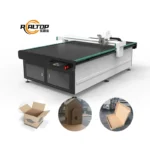
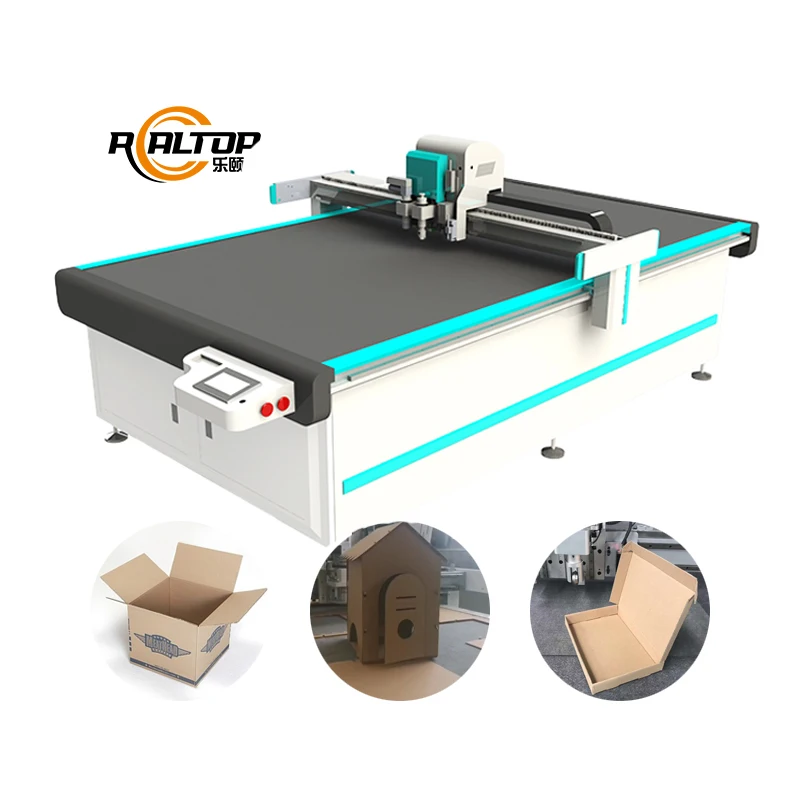
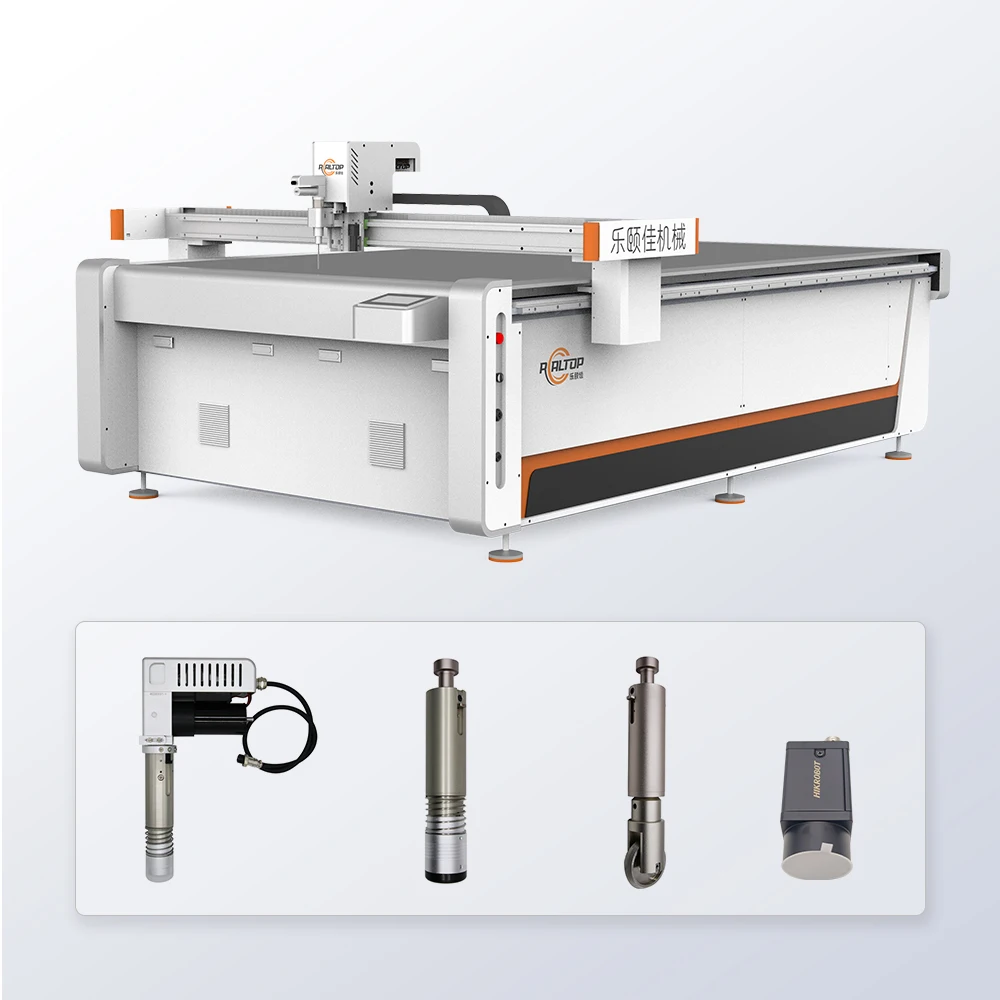
Tool Head Matched to Material — We configure the knife, creasing wheel or marking tool against your actual board grade, foam density or fabric weight, not a default package, ensuring the RT-D2516 cuts what you actually run.
Technical Specifications
| Parameter | Value |
|---|---|
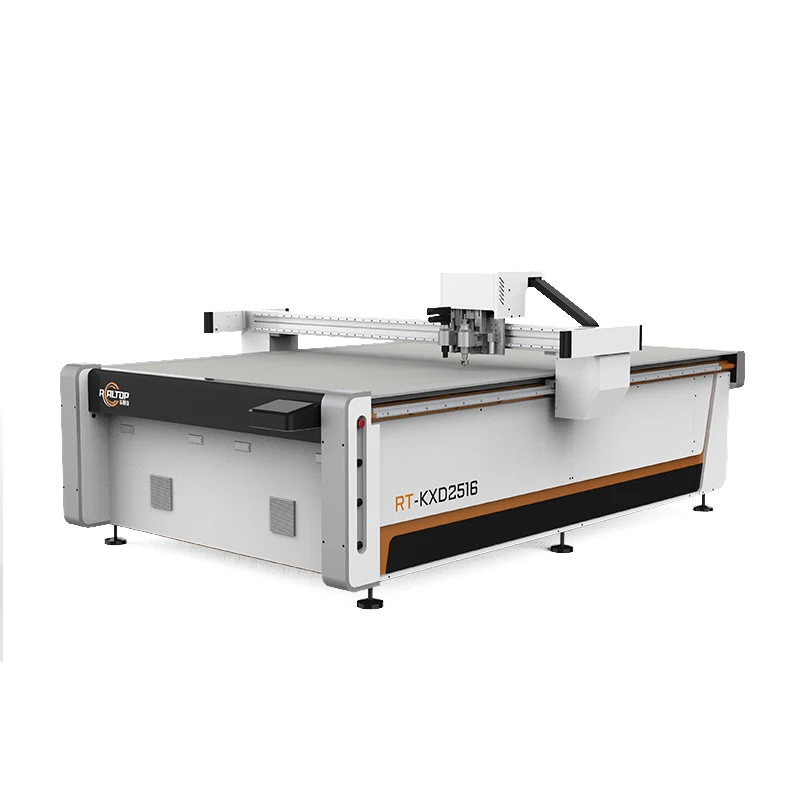
| Model | RT-D2516 |
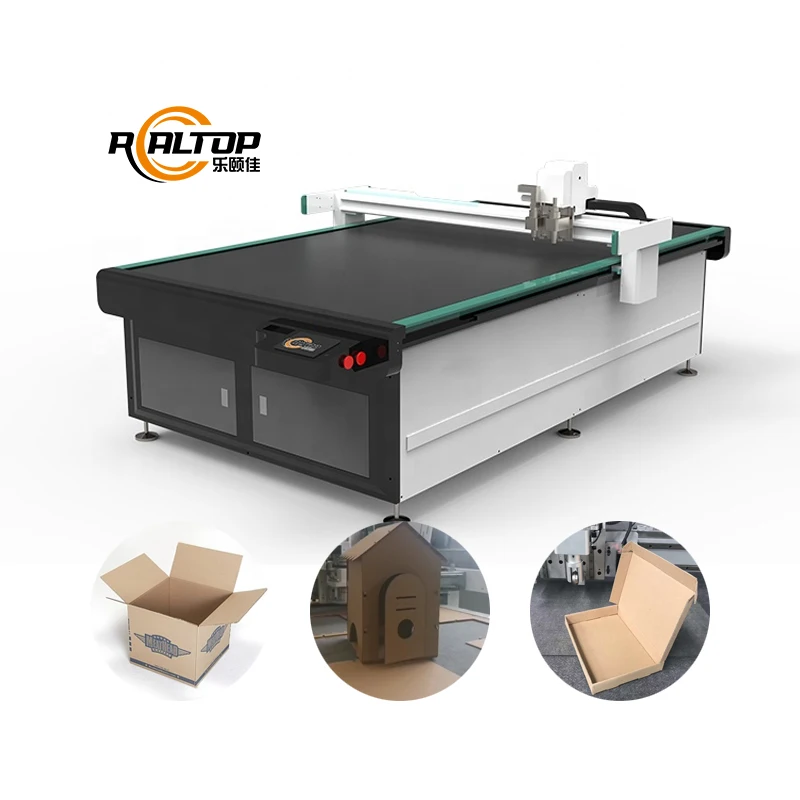
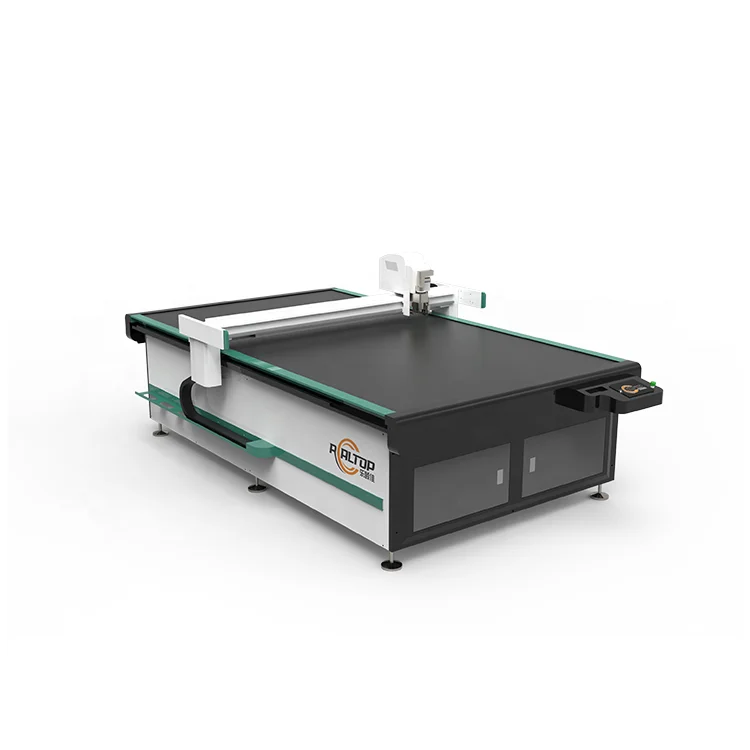
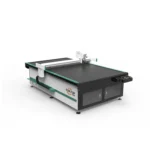
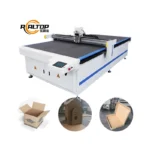
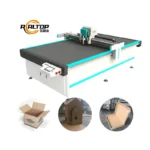
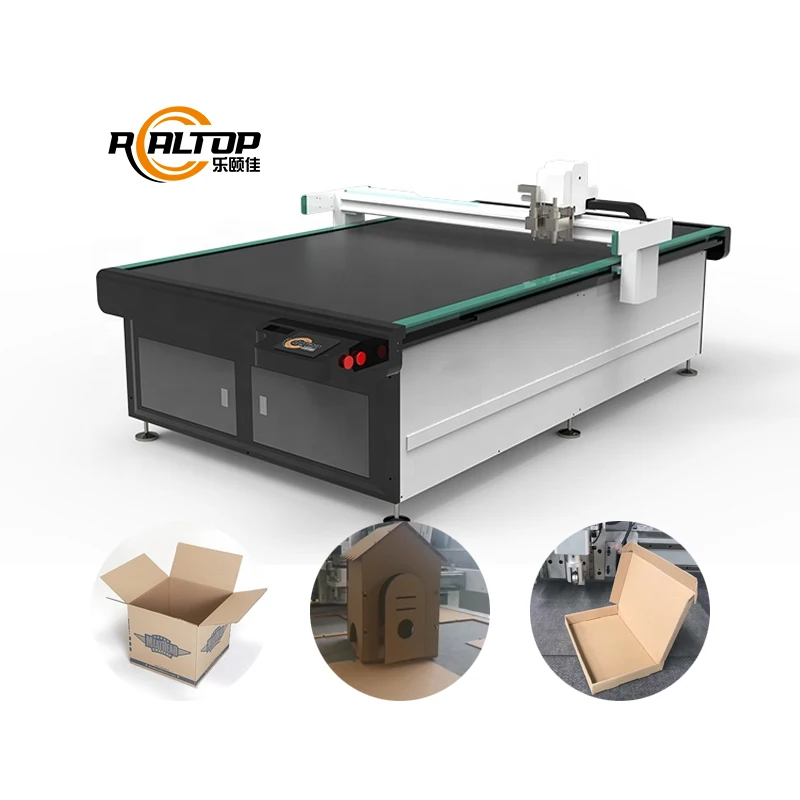
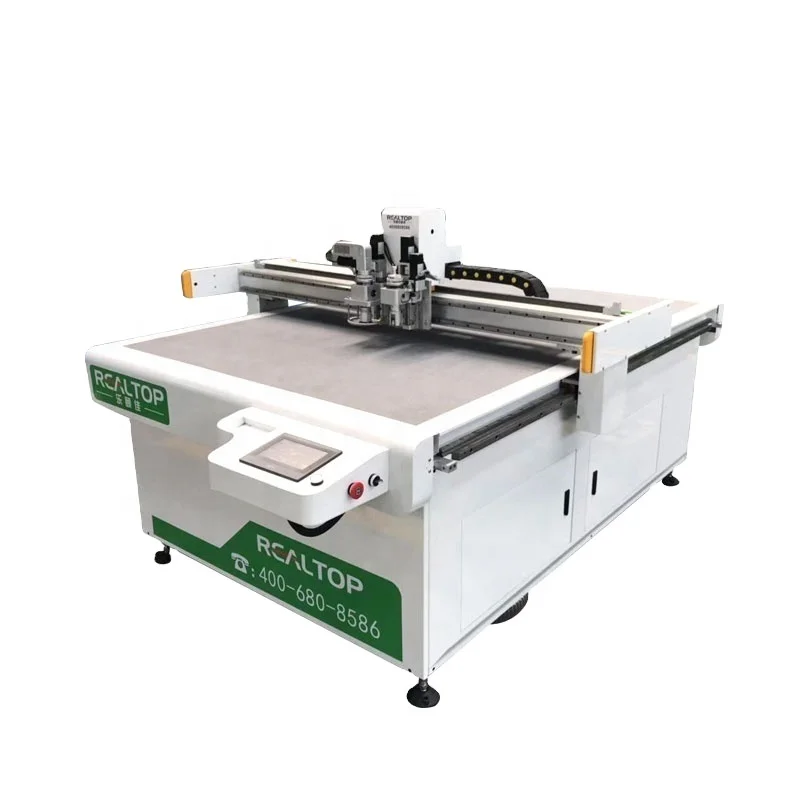
| Product Type | CNC Flatbed Digital Cutting Table |
| Working Area | 1600 × 2500 mm |
| Machine Size (L × W × H) | 3450 × 2300 × 1250 mm |
| Rated Power | 9 kW |
| Voltage | 380V ±10% (frequency to be confirmed) |
| Table Type | Flat working table with vacuum and auto feeding |
| Vacuum Pump | 7.5 kW |
| Tool Head | Swiss imported oscillating knife (vibration full cutting, half cutting, cursor location) |
| Translational Velocity | 800 – 1200 mm/s |
| Repeated Accuracy | ≤0.1 mm |
| Transmission System | Japanese Yaskawa digital servo motor, Taiwan Hiwin linear guide, synchronous belt, ball screw |
| Instruction System / File Format | HP-GL compatible |
| Safety Device | Infrared sensors |
| Conveyor Belt | Germany imported |
| Functions | Cutting, creasing, marking |
| Optional Tooling | Pneumatic cutting tool (cuts up to 70 mm thickness) |
Application Suitability
| Application | Material or Output |
|---|---|
| Packaging and carton sample making | Corrugated board, grey board, sticker stocks |
| Box and gift box production | Cardboard, art board, combined cutting and creasing |
| Leather and flexible material processing | Leather, sponge composite leather, garment fabrics |
| Semi-rigid and soft material cutting | PVC, soft glass, silicon, rubber sheets |
Why Material Thickness Changes Everything on a CNC Flatbed Digital Cutting Table Manufacturer’s Quotation
A machine specified only on working area and translational speed will fail the moment your stock deviates from the standard sample.
Last year a carton packaging buyer ordered a flatbed cutter based on a corrugated sample we provided. His actual production stock — five-layer corrugated — was nearly two millimeters thicker than our test piece. The machine ran, but cutting speed had to drop significantly, throughput fell well below his line’s target tempo, and downstream box folding stations started idling. The fault was not the machine; it was the specification gap [NEED_CITE: matching cutting tool configuration to corrugated board grade and ply count]. Before any order is placed, we run the buyer’s own material on the RT-D2516 and document edge quality, crease depth and achievable feed rate in a sample cutting report.
In-House Design Covers Both Knife and Creasing on One Platform
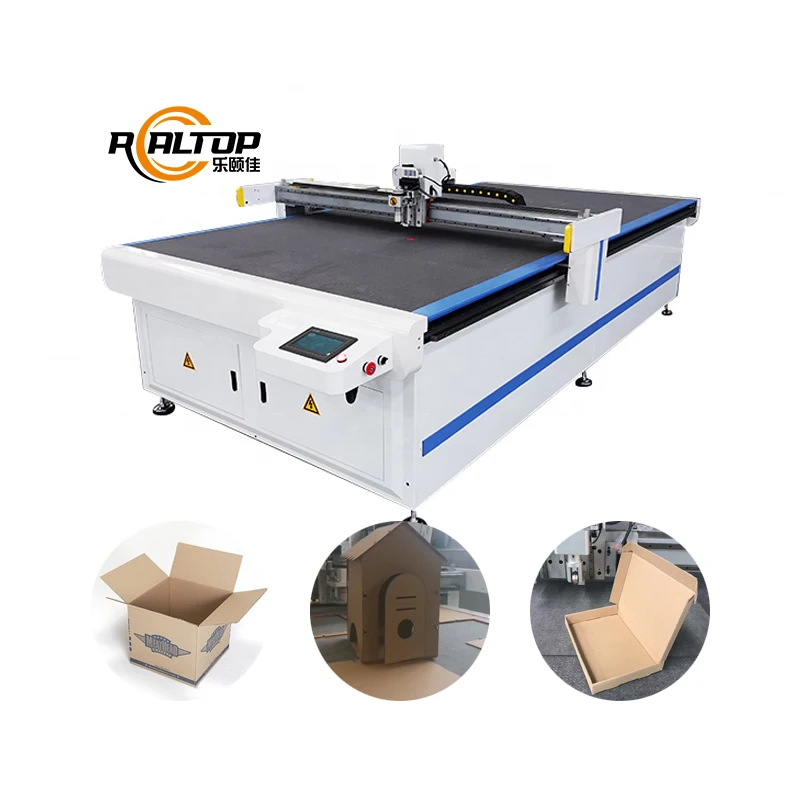
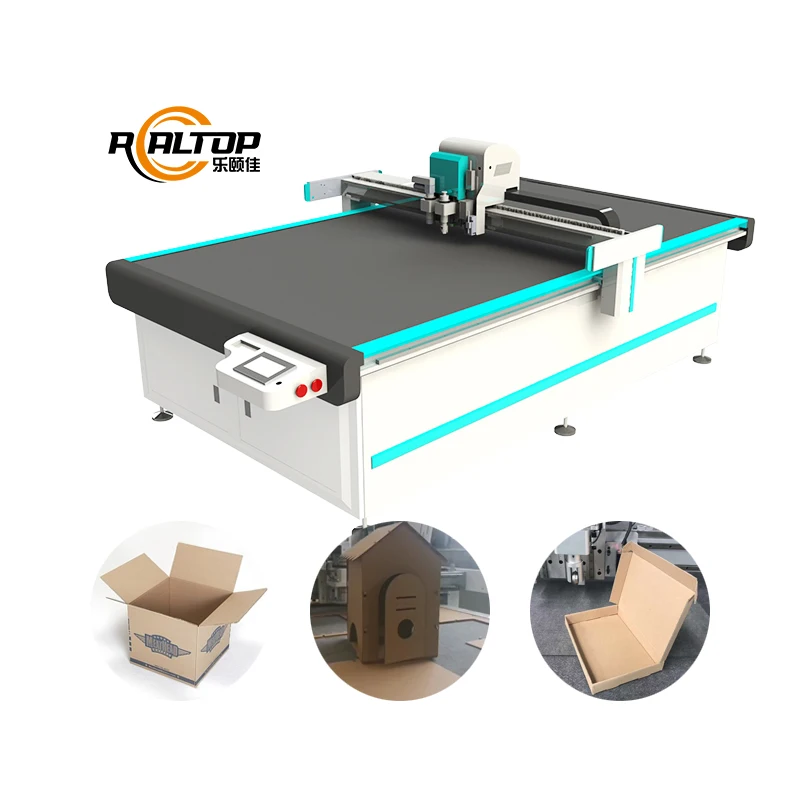
A packaging CNC cutting machine often has to switch between full cutting of box outlines, half cutting of sticker sheets, and creasing of fold lines — sometimes all within the same job file. The RT-D2516 supports a multifunctional tool head that mounts a Swiss imported oscillating knife alongside creasing and marking tools, so the operator loads one sheet and the table handles every operation without manual tool changes. As a CNC flatbed digital cutting table manufacturer with an in-house design team, we specify which tool heads ship on each unit based on the buyer’s job mix, rather than offering a single default configuration.
Vacuum Zoning and Auto-Feeding for Continuous Sheet Handling
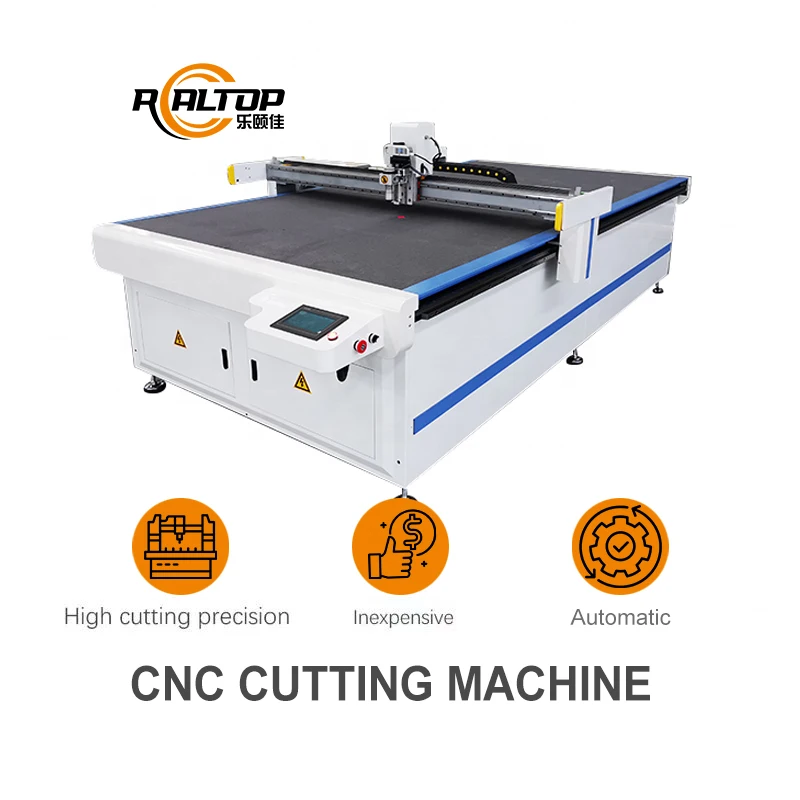
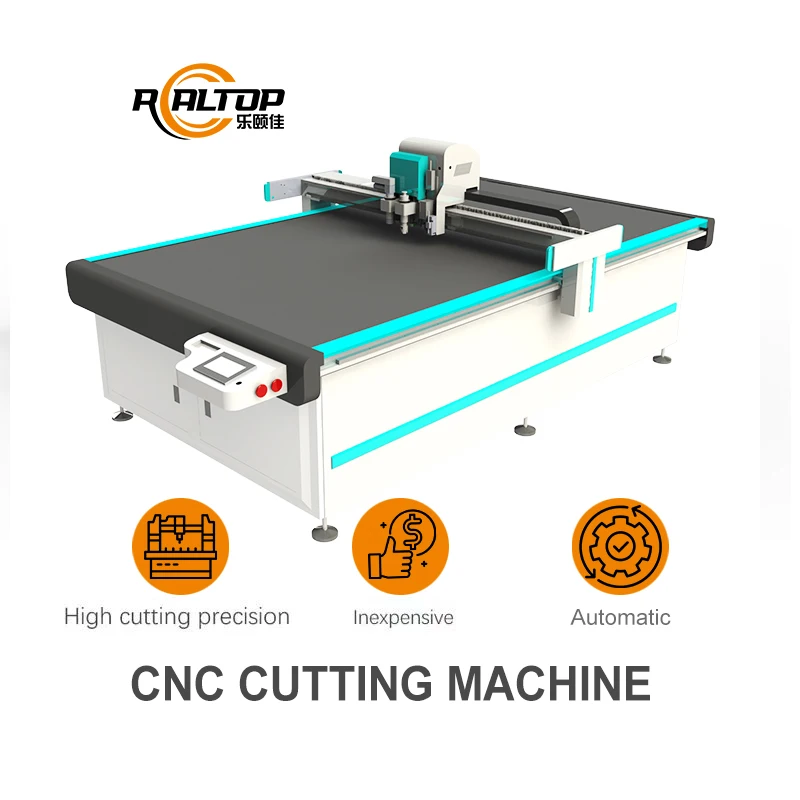
Vacuum hold-down is where many flatbed cutters lose the job. Small die-cut parts — sticker pieces, carton flaps, gasket blanks — lift off the table when the vacuum zones are too broad or too weak for their footprint. The RT-D2516 pairs a 7.5 kW vacuum pump with a flat table segmented into controllable zones, and a Germany-imported conveyor belt handles sheet feeding automatically so operators are not manually loading and aligning each piece [NEED_CITE: vacuum table zoning requirements for small-part CNC cutting]. This combination keeps material flat across the 1600 × 2500 mm working area during high-speed traversal between 800 and 1200 mm/s.
Reading the Specs That Actually Matter for Board and Flexible Material
The repeated accuracy specification of ≤0.1 mm comes from the Japanese Yaskawa digital servo motors driving Taiwan Hiwin linear guides and ball screws. In carton sample making, this tolerance determines whether a scored crease line lands exactly where the CAD file placed it — a millimeter drift means the box will not fold square. The 9 kW rated power covers the servo drives, vacuum pump at 7.5 kW, and the oscillating knife head simultaneously, so the machine does not brown out under combined load. HP-GL compatible file format support means most packaging CAD and nesting software can export directly to the controller without an intermediate conversion step. The optional pneumatic cutting tool extends thickness capacity up to 70 mm for dense foam or thick rubber, a configuration we confirm against the buyer’s heaviest stock before production.
The Hidden Cost of Wrong Tool Head Selection
Choosing an oscillating knife for a material that actually needs a drag knife, or omitting a creasing wheel when the job requires scored fold lines, produces ragged edges on corrugated flutes and crushed foam cores instead of clean slices [NEED_CITE: oscillating knife versus drag knife cutting edge quality on composite materials]. The buyer then spends weeks adjusting speed and depth parameters trying to compensate for a tooling mismatch that should have been resolved at the specification stage. We test each candidate tool head on the buyer’s actual material during the sample cutting phase, documenting which configuration delivers the required edge finish and crease integrity.
Why Procurement Teams Source This CNC Flatbed Digital Cutting Table Manufacturer
In-house design and production covering both knife and creasing technologies means a buyer selects the cutting method to match the material, not the other way around. Tool head and table configuration are specified per material type and production volume, so a sticker converter does not receive the same tooling package as a corrugated board processor. Software compatibility is confirmed before order — file format, nesting workflow and control language are verified, not assumed. Every RT-D2516 ships after a factory test on the buyer’s material with a documented sample cutting report, and voltage plus plug standards are matched to the destination market [NEED_CITE: industrial voltage and plug standards for export machinery markets].
Documentation & Verification
- Machine specification sheet listing every confirmed tool head and table configuration for the RT-D2516
- Electrical schematic and voltage confirmation matched to destination frequency before shipment
- Sample cutting report on buyer’s own corrugated, grey board or flexible material before commitment
- Software licence and HP-GL file format compatibility note for nesting and workflow integration
- Factory test record documenting cutting accuracy, crease depth and edge quality on buyer’s stock
- Operation and maintenance manual with spare parts list and packing photographs
Installation, Commissioning & Support
- The 3450 × 2300 × 1250 mm footprint requires a level concrete floor with clearance for the 1600 × 2500 mm working area and conveyor infeed
- 380V ±10% supply with a dedicated 9 kW circuit and frequency confirmation (50/60 Hz) before energizing
- Table arrives with the vacuum pump, Yaskawa servo drives and tool heads pre-mounted; on-site assembly focuses on belt tensioning and alignment
- First-run calibration includes vacuum zone testing on the buyer’s smallest parts to prevent lift during 800–1200 mm/s traversal
- Operator training covers tool head changeover, HP-GL file import, crease depth adjustment and infrared sensor safety system checks
- Spare parts list identifies oscillating knife blades, conveyor belt segments and vacuum seals as routine replacement items
Before You Send the Inquiry
Tell us the specific board grades, ply counts and thicknesses you run daily, along with whether your workflow requires combined cutting and creasing in one pass or separate operations. Confirm your factory voltage, frequency and plug standard so the electrical package matches before production starts. If you have existing CAD or nesting software, share the export file format so we verify HP-GL compatibility on the controller.
Frequently Asked Questions
Q: How do you verify cutting thickness capability against my specific corrugated or foam grade?
A: We ask you to ship a sample of your actual production stock to our factory. We run it on the RT-D2516 using the proposed tool head configuration and document cutting speed, edge quality and crease depth in a sample cutting report. You review the results before committing to the order, so there are no surprises on throughput when the machine arrives at your facility.
Q: Is the 380V supply compatible with my factory’s frequency and plug standard?
A: The RT-D2516 is rated at 380V ±10%, but frequency (50 Hz or 60 Hz) and plug type vary by destination market. We confirm both during the specification stage and adapt the electrical schematic accordingly. The 9 kW rated load requires a dedicated circuit, and we provide the wiring diagram in advance so your electrician can prepare the supply before the machine ships.
Q: Which tool head is right for my material — oscillating knife, drag knife or creasing wheel?
A: It depends on material composition and the cut geometry your job requires. Oscillating knives suit corrugated board, foam and composite materials where a vibrating blade produces clean edges. Drag knives work on thin vinyl and sticker sheets. Creasing wheels score fold lines on cardboard. We test candidates on your actual stock and ship the combination that delivers the required finish.
Q: Can the control system run in my language and import my existing file formats?
A: The RT-D2516 controller supports HP-GL compatible format, which covers most packaging CAD and nesting software exports. We confirm your specific software’s export format during the inquiry stage and verify compatibility before production. Control interface language is configured to your preference and validated during the factory test so operators can navigate menus from day one.
Q: What does vacuum table zoning look like for small die-cut parts?
A: The 7.5 kW vacuum pump feeds a flat table divided into controllable zones. For small parts like sticker pieces or carton flaps, the operator activates only the zones directly under the cutting path, concentrating hold-down force on the material footprint. This prevents lift during high-speed traversal at 800–1200 mm/s and keeps small blanks flat against the conveyor belt.
You may also like

商品评价
Clear filtersThere are no reviews yet.