





-
 Courier delivery
-
 DHL Courier delivery
-
 Warranty 1 year
-
 Free 30-Day returns

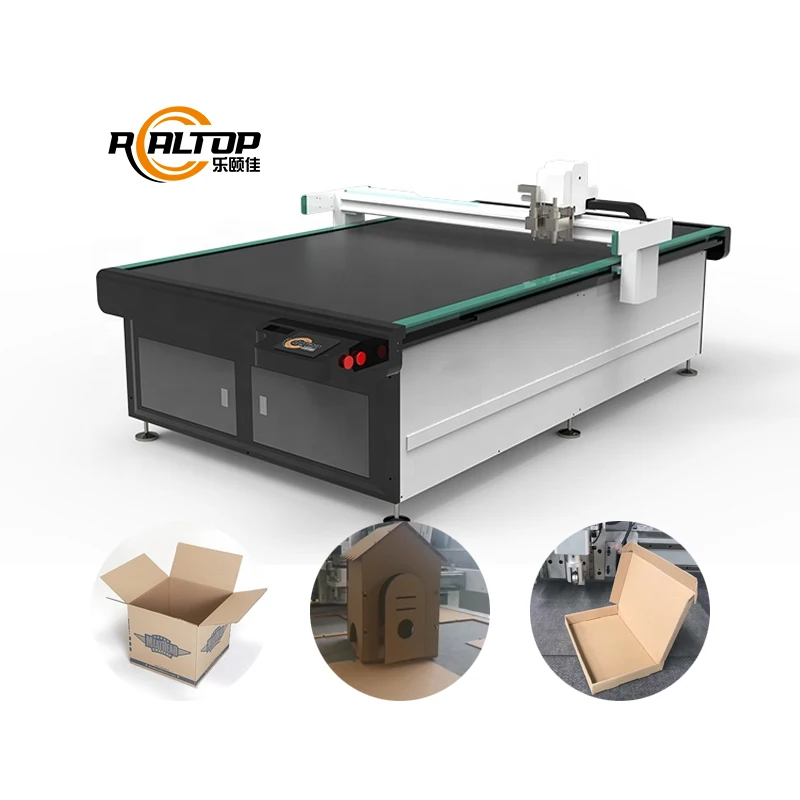
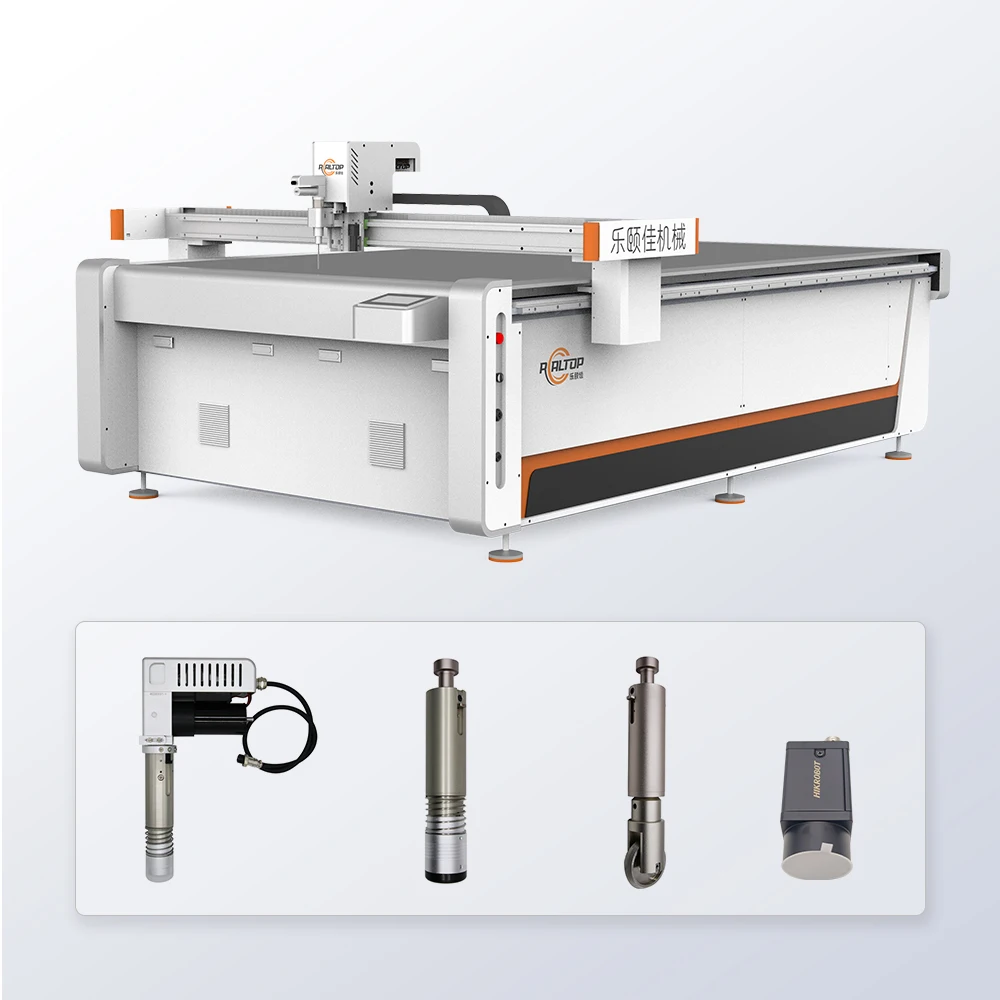
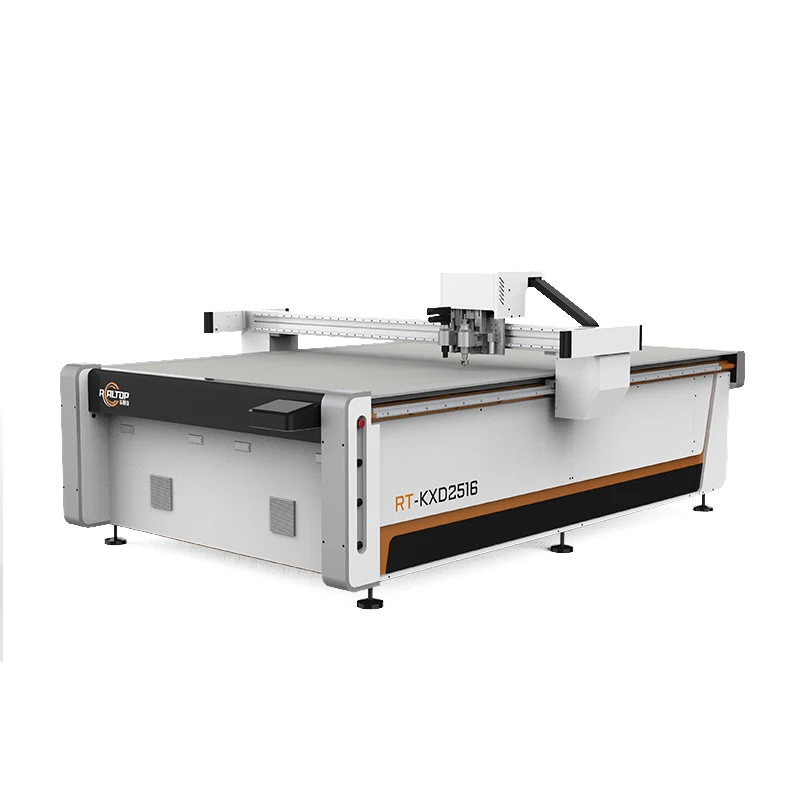
Integrated Tooling and Table Design — our in-house engineering team specifies oscillating knife, driven rotary, and milling heads alongside the vacuum table layout, ensuring the 1625 cuts your exact composite layup rather than forcing a generic setup.
Technical Specifications
| Parameter | Value |
|---|---|
| Model | 1625 |
| Product Type | CNC Oscillating Knife Cutting Machine |
| Working Area | 1600×2500 mm |
| Cutting Speed | 0–2000 mm/s |
| Cutting Thickness | ≤ 30 mm (basis not stated in source — confirm material and layup) |
| Cutting Accuracy | ±0.1 mm |
| Tools Available | Oscillating knife, Driven rotary knife, Creasing wheel, Kiss cutting tool, Pneumatic knife, Milling tool, V groove knife |
| Vacuum Table | Aluminum bellows vacuum table |
| Vacuum Pump | 9 kW |
| Servo Motor Options | Panasonic, Delta, Dorna |
| Control Panel | PLC with multi-language display |
| Voltage Options | 110 V, 220 V, 380 V |
| File Format Compatibility | PLT, DXF, AI, PDF |
| Safety Devices | Infrared sensor device, emergency stop |
| Machine Size (L×W×H) | 3300×2100×1350 mm |
| Certification | CE |
Application Suitability
| Application | Material or Output |
|---|---|
| Aerospace composite panels | Carbon fiber prepreg, aramid honeycomb, fiberglass cloth, thermal and acoustic insulation foam |
| Automotive interior and lightweight body panels | Carbon fiber covers, FRP, acoustic felt, damping pads, carpets |
| Wind power and new energy components | Fiberglass and carbon fiber cloth, vacuum infusion mesh, PET and PVC foam core, battery insulation sheets |
| Sporting goods and leisure equipment | Carbon fiber sheets and fabric, Kevlar, high-performance foam, composite fabrics |
Why "Working Area" Alone Cannot Define a Composite Cutting Machine
A 1600×2500 mm table means nothing if the knife cannot penetrate your layup at production speed.
I spent years on the assembly floor before moving into technical sales, and the most expensive mistakes I have witnessed started with a purchase order based on table size. A buyer sends a drawing, the seller confirms the footprint, and the machine arrives only to stall on a 15 mm carbon fiber prepreg stack. The oscillating head chatters, the edge delaminates, and the operator spends the rest of the shift hand-trimming. A CNC oscillating knife cutting machine manufacturer should ask for your actual material sample before quoting a configuration, because composite thickness, resin hardness, and fiber orientation all change the tooling requirement [NEED_CITE: composite cutting force variation by fiber orientation].
Cold Cutting Preserves Resin Integrity
Thermal cutting methods melt or burn the resin matrix in carbon fiber and Kevlar laminates, weakening the structural bond at the edge. The 1625 uses mechanical oscillation at high frequency to shear through fibers without generating heat, leaving a clean edge that maintains the original mechanical properties of the composite. This matters for aerospace and automotive components where edge delamination can propagate under load.
Vacuum Zoning for Large-Format Flexible Sheets
The aluminum bellows vacuum table on the 1625 provides full-surface adsorption across the 1600×2500 mm working area. Flexible materials like fiberglass cloth and vacuum infusion mesh tend to lift at the edges during high-speed knife travel. A properly zoned vacuum system holds these sheets flat without mechanical clamps that would interfere with the cutting path. The 9 kW vacuum pump generates sufficient negative pressure to keep even lightweight prepreg layers in position during nested cutting cycles.
Matching the Tool Head to the Composite Type
Not every composite responds to the same blade geometry. The oscillating knife handles most fabric and foam layups, but rigid G10 epoxy boards may require the milling tool for a burr-free edge. Aramid honeycomb cores, common in aerospace sandwich panels, often cut cleaner with a driven rotary knife. The 1625 supports seven tool options, and the correct selection depends on running a test cut on your actual material stack [NEED_CITE: tool wear rates on abrasive composite fibers].
Reading the Specification Sheet Beyond the Headline Numbers
The ±0.1 mm cutting accuracy on the 1625 is achievable on stable, flat composite sheets under full vacuum hold-down. Cutting speed reaches 2000 mm/s on thinner, less abrasive materials; denser carbon fiber laminates require slower passes to maintain edge quality and extend blade life. The PLC control panel supports multi-language operation, which reduces setup errors when the machine is operated by teams in different export markets. Voltage options of 110 V, 220 V, and 380 V must be confirmed against the destination facility’s supply before the machine leaves the factory, because rewiring a 9 kW vacuum pump and servo system on-site is neither practical nor safe.
The Cost of Skipping a Material Test
I once worked with a gasket producer who ordered a machine based on a PVC foam sample, then ran high-density composite rubber on arrival. The knife could not penetrate, production dropped to a fraction of the expected rate, and the buyer blamed the machine. The real failure was in the specification process. When you skip the sample cutting step, you risk receiving a CNC oscillating knife cutting machine manufacturer standard configuration that was never validated against your specific layup, resin system, and thickness [NEED_CITE: material hardness impact on oscillating knife penetration depth].
What Our Production Process Guarantees
Our in-house design team covers both knife and laser cutting technologies, so we recommend the method that fits your composite rather than pushing one platform. Every tool head and table configuration is specified against the buyer’s material data sheet and validated with a physical test cut. We confirm software file format compatibility for PLT, DXF, AI, and PDF before the order is placed, eliminating workflow surprises at commissioning. Voltage, control language, and safety device requirements are locked in during the specification review, not discovered during installation. The 1625 carries CE certification and ships with a complete factory test record.
Documentation & Verification
- Machine specification sheet listing confirmed tool heads and vacuum table zoning for your composite layup
- Electrical schematic with voltage and frequency matched to your facility before production begins
- Sample cutting report on your actual composite material showing edge quality and achievable pass depth
- Factory test record documenting motion accuracy and vacuum hold-down performance before crating
- Software licence and file format compatibility note for PLT, DXF, AI, and PDF workflows
- Spare parts list with recommended blade and tooling consumables for your specific material range
Installation, Commissioning & Support
- Floor space of at least 4000×3000 mm required to accommodate the 3300×2100 mm machine footprint and operator access
- Dedicated 380 V three-phase circuit with appropriate breaker rating for the 9 kW vacuum pump and servo motors
- Machine ships partially assembled; table leveling and gantry alignment completed on-site during commissioning
- PLC control panel configured to operator language before first power-on to prevent setup errors
- Oscillating knife and driven rotary knife blade replacement training included in the commissioning visit
- Preventive maintenance schedule covers vacuum pump filter, bellows inspection, and servo drive belt tension checks
What to Include in Your Inquiry
Send us the specific composite materials you cut, including fiber type, resin system, and total layup thickness. Confirm your local voltage and frequency so we can match the servo motors and vacuum pump before production starts. If you run printed composite sheets that require contour tracking, let us know so we can scope CCD camera positioning into the configuration.
Frequently Asked Questions
Q: How do you verify cutting thickness for my specific composite layup?
A: We run a sample cut on your actual material before finalizing the order. The test confirms which tool head penetrates cleanly, what pass depth is achievable without delamination, and whether the vacuum table holds the sheet flat. You receive a cutting report with edge photographs and recommended blade specifications.
Q: Which tool head works best for carbon fiber prepreg versus aramid honeycomb?
A: Carbon fiber prepreg typically cuts well with the oscillating knife at moderate speed, while aramid honeycomb cores often require the driven rotary knife for a clean shear through the cell walls. Rigid epoxy boards like G10 may need the milling tool. We determine the correct head during the material test.
Q: Can the voltage and control language be customized for my market?
A: Yes. The 1625 is available in 110 V, 220 V, and 380 V configurations, and the PLC control panel supports multi-language display. We confirm both during the specification review so the machine arrives ready for your facility without on-site electrical modifications.
Q: Is CCD camera contour recognition available for printed composite sheets?
A: CCD positioning can be integrated for buyers cutting pre-printed composite sheets where the knife must follow registered print contours. This is confirmed during the inquiry stage and validated with your printed sample before the machine configuration is finalized.
Q: Can I visit the factory and see a test cut on my material?
A: Factory visits and live sample cutting sessions are available. You can bring or ship your composite material, and we run the test on a 1625 configured to your specification. OEM configuration and private labeling options are also discussed during the visit.
You may also like

商品评价
Clear filtersThere are no reviews yet.