



-
 Courier delivery
-
 DHL Courier delivery
-
 Warranty 1 year
-
 Free 30-Day returns

Design and production integrity — Every T-series plotter leaves our Jinan facility with a factory test record cut on the buyer’s specific cardboard grade, ensuring the crease and cut quality matches the actual packaging prototype work before shipping.
Technical Specifications
| Parameter | Value |
|---|---|
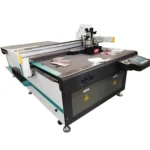
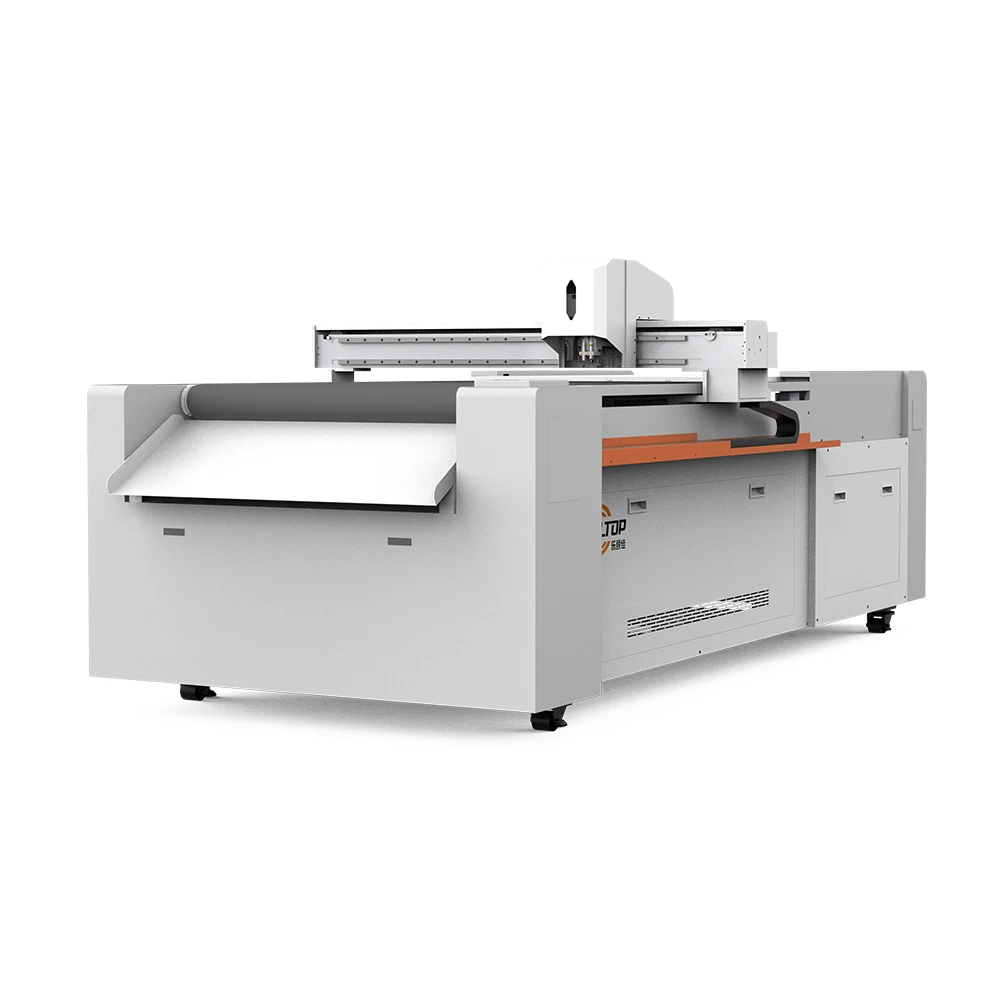
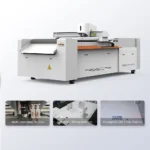
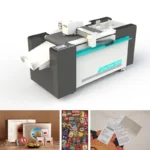
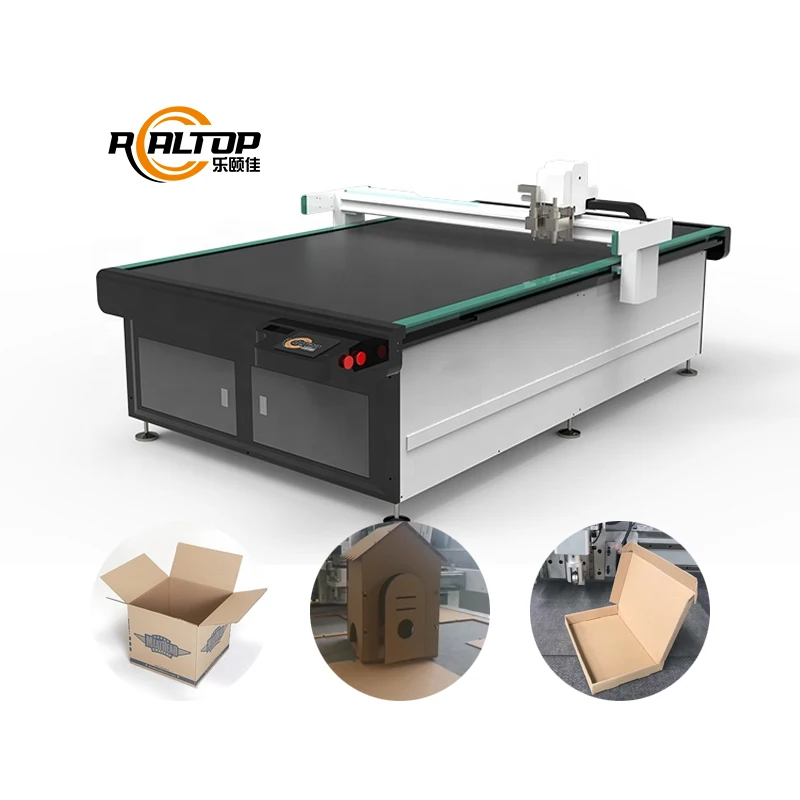
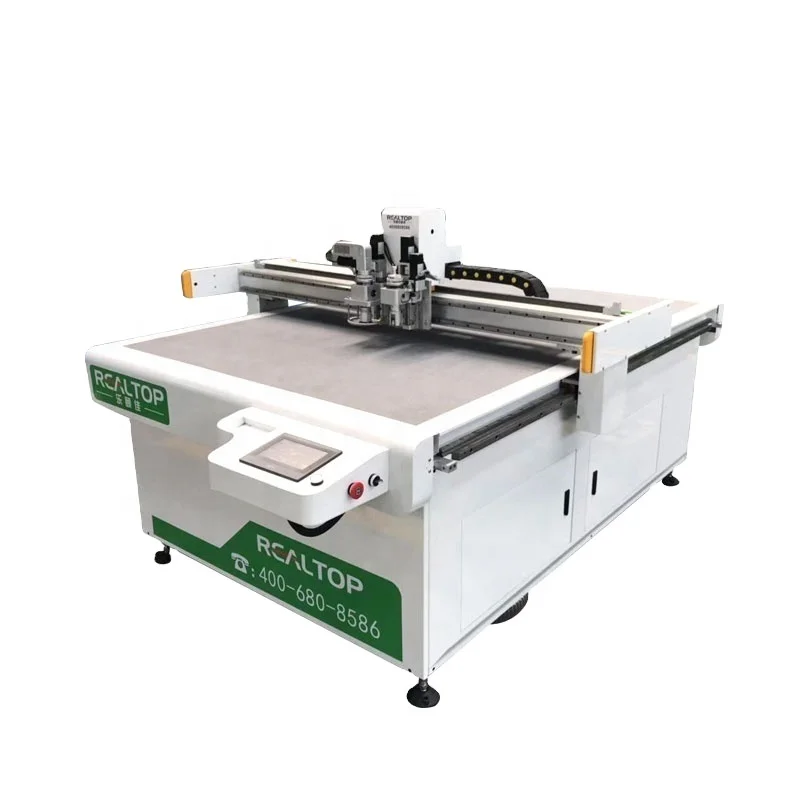
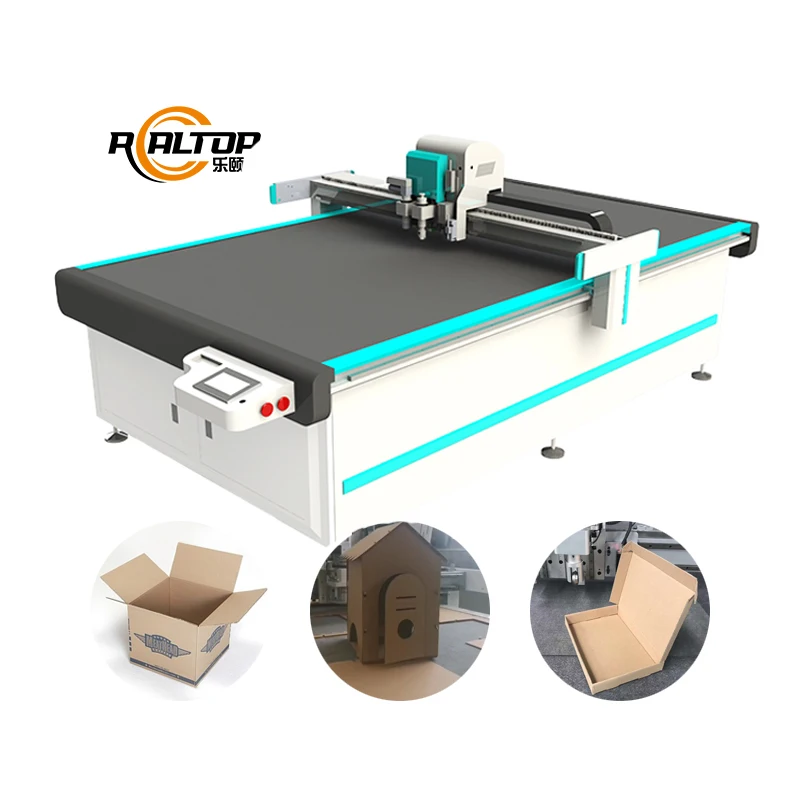
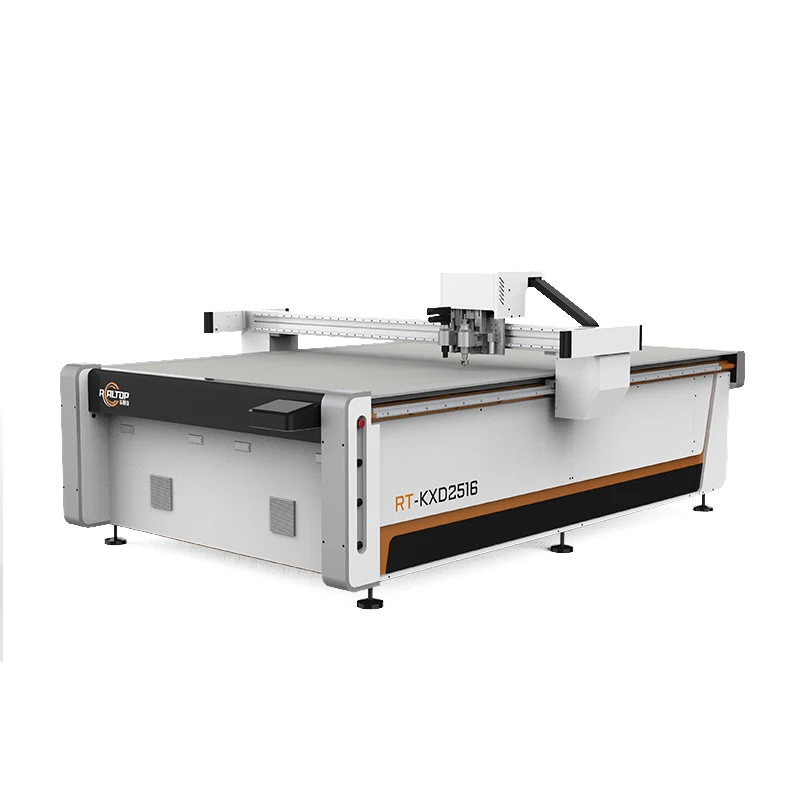
| Product Type | CNC Oscillating Knife Cutting Plotter |
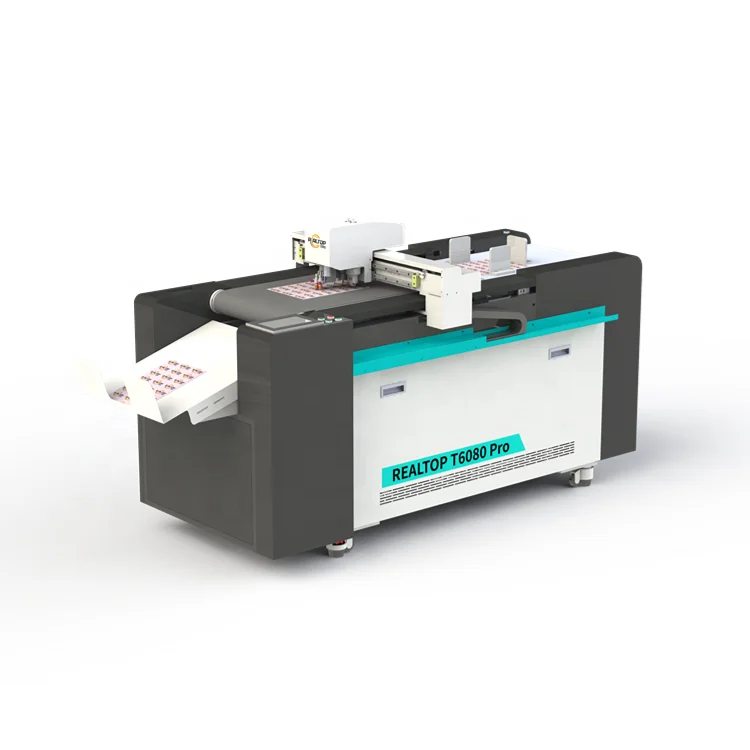
| Working Area Options | 400×600 mm / 600×800 mm / 900×1200 mm |
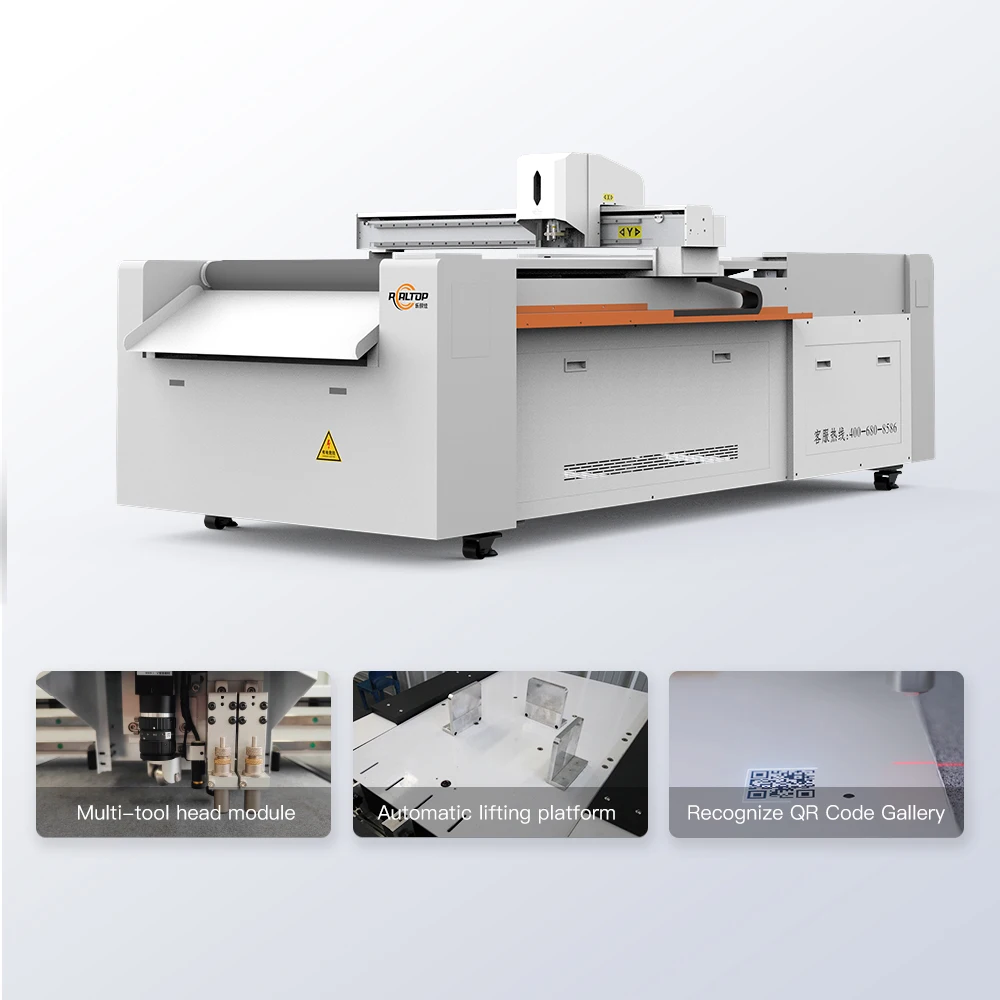
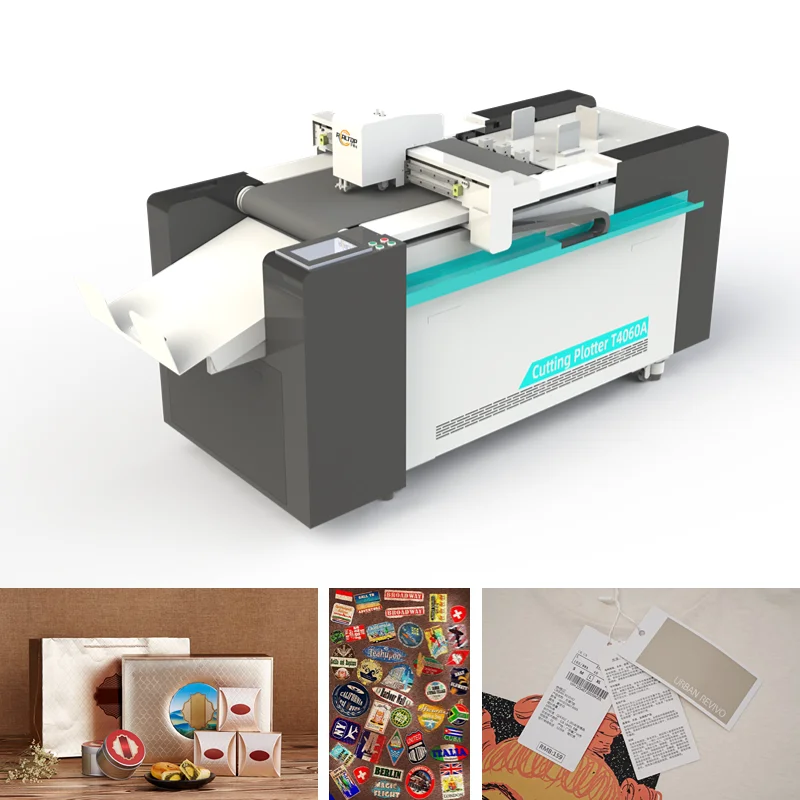
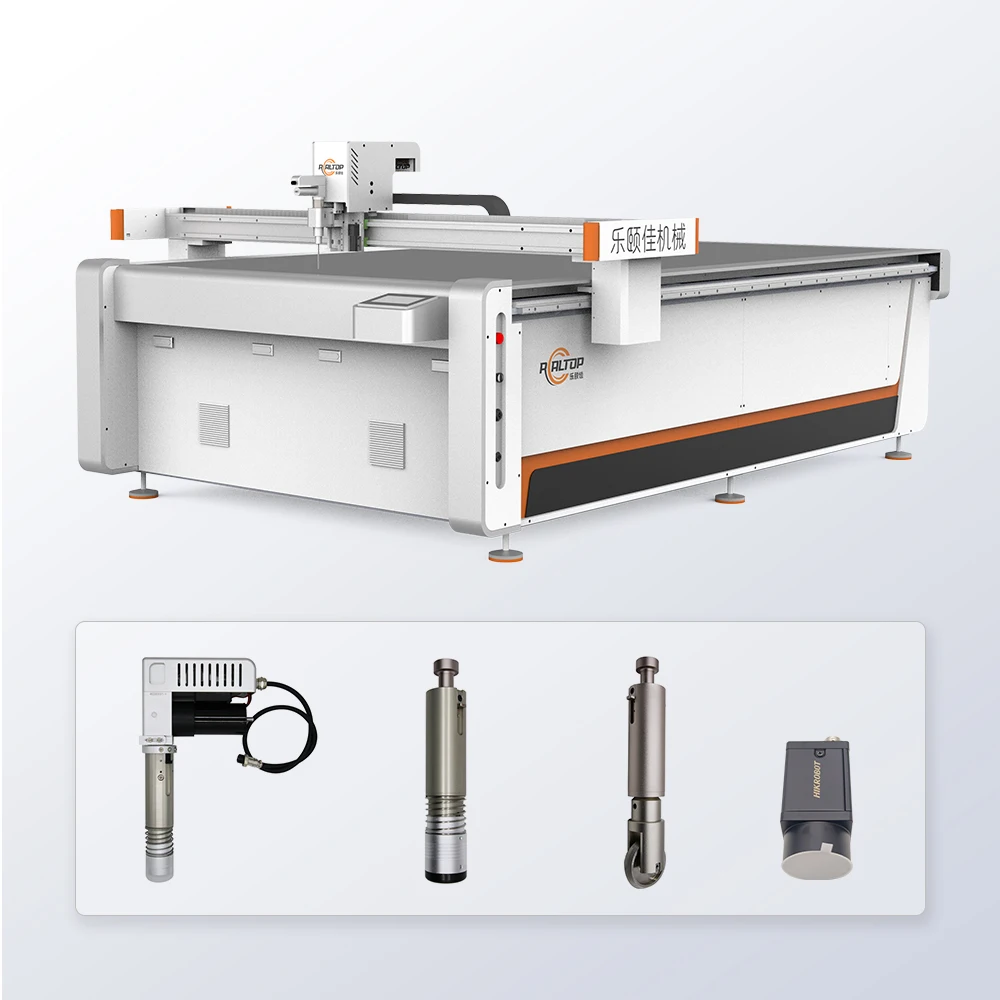
| Tool Head Configuration | Oscillating knife, Creasing wheel, Kiss cutting tool, CCD camera, Marking pen |
| Cutting Speed Range | 0–1500 mm/s |
| Maximum Cutting Thickness | ≤ 20 mm (basis not stated in source) |
| Repeat Positioning Accuracy | ±0.1 mm |
| Vacuum Pump Rating | 2.5 kW / 3.2 kW |
| Operating Voltage | 110V / 220V (rated or peak not specified in source) |
| File Format Compatibility | PLT, DXF, AI, PDF |
| Safety Features | Infrared sensor device, emergency stop |
| Control Interface | USB / direct drive / computer control |
| Language Options | English, Russian, Italian, Chinese (custom languages available) |
Application Suitability
| Application | Material or Output |
|---|---|
| Packaging prototype sampling | Cardboard, printed carton, corrugated board, cardstock |
| Advertising and graphic finishing | Vinyl sticker, self-adhesive vinyl, PVC stickers |
| Cultural design and craft production | Paper, leather tags, photo backing paper |
| Signage and display | Acrylic sheet engraving, store logo cutting |
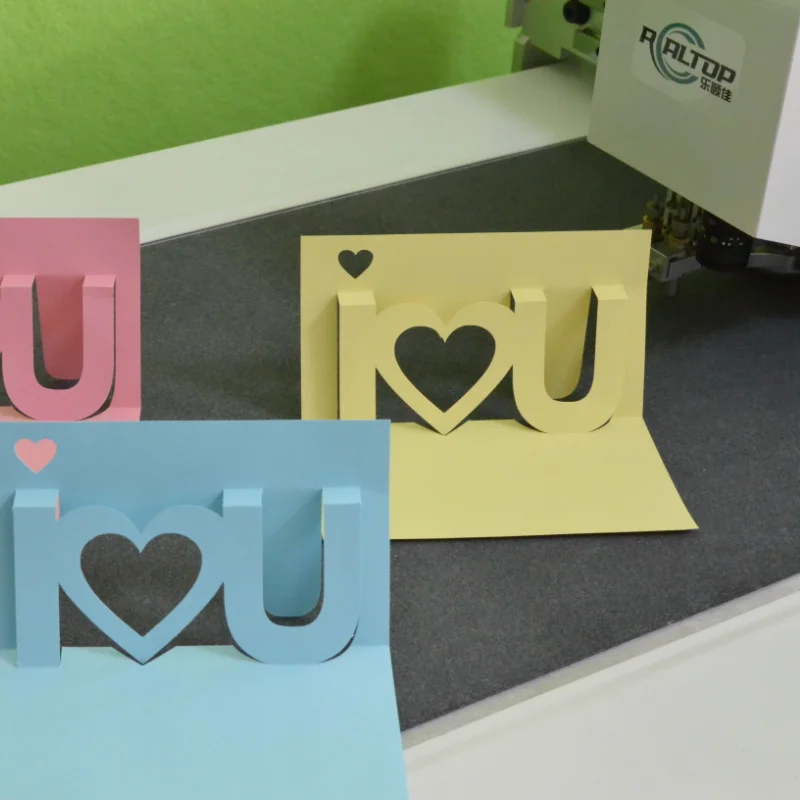
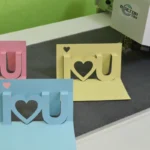
| Short-run die-line creation | Custom car decals, window clings, 3D greeting cards |
What "Desktop Convenience" Means When Material Thickness Varies
We specify the tool head and cutting depth against your actual material before any order is confirmed.
I have watched packaging sample shops order a desktop plotter based on the working area alone, only to discover on arrival that the oscillating knife cannot push through a 3 mm greyboard stack cleanly. The cutting speed drops, edges fray, and the daily prototype output falls well below expectations. Matching a CNC Oscillating Knife Cutting Plotter manufacturer to your specific board grade and typical thickness range prevents this mismatch from ever reaching your workshop floor [NEED_CITE: common specification gaps in desktop cutting equipment procurement].
Multi-Tool Head Architecture for Mixed-Material Workshops
A packaging sample maker rarely cuts one material all day. You might start with a 300 gsm cardstock prototype in the morning, switch to a self-adhesive vinyl decal run after lunch, and finish with leather tag kiss-cutting before the shift ends. The T-series platform accepts oscillating knife, creasing wheel, kiss cutting tool, and marking pen heads on a single chassis, eliminating the need for separate machines.
CCD Camera Contour Recognition in Short-Run Production
Printed carton prototypes demand precise registration. The integrated CCD camera reads printed marks on your sheet and adjusts the cut path automatically, holding the ±0.1 mm positioning accuracy across the entire bed. This matters when a packaging client expects the crease line to land exactly on the printed fold mark, not two millimeters off [NEED_CITE: CCD registration accuracy standards in digital finishing equipment].
Parsing the Specifications That Actually Affect Your Output
The 1500 mm/s cutting speed figure represents the maximum travel rate of the tool head, not the throughput on thick corrugated board. Actual cutting speed depends on material density and thickness. The 2.5 kW and 3.2 kW vacuum pump options determine how well small parts stay fixed to the table during intricate cuts — choose the higher rating if your typical job involves numerous small die-line components rather than full-sheet cuts. The ±0.1 mm repeat positioning accuracy directly governs whether nested box patterns align with printed graphics over long production runs. File format support across PLT, DXF, AI, and PDF means your design team’s existing workflow files import directly without intermediate conversion software. The available language options — English, Russian, Italian, Chinese plus custom languages — ensure operators in different export markets can navigate the control interface without translation errors during setup.
The Hidden Cost of Skipping the Sample Cut
When a buyer commits to a desktop CNC plotter without testing their actual material on that exact machine, the consequences surface during the first production week. Ragged edges on printed carton force manual trimming. Insufficient vacuum hold-down on small vinyl pieces causes lift and wasted material. CCD camera systems that work perfectly on test sheets fail to track marks at production speed on glossy-coated board. These issues are solvable, but they cost time and material to resolve after delivery rather than before [NEED_CITE: post-installation rework frequency in digital cutting equipment].
Why Source This Equipment Through Our Facility
Our in-house design team covers both oscillating knife and creasing technologies, meaning we configure the tool head array based on your material list rather than pushing a single standard package. We run sample cuts on your specific cardboard, vinyl, or leather stock before order confirmation, documenting edge quality and crease depth in a report you receive before committing. The voltage, plug type, and control language are verified against your local requirements before the machine leaves our Jinan production line. Software compatibility — file formats, nesting workflows, license terms — is confirmed in writing, not assumed. Every unit ships with a factory test record and packing photographs, so you see exactly what was built and tested.
Documentation & Verification
- Machine specification sheet detailing your selected tool head and table configuration
- Electrical schematic confirming voltage, plug type, and circuit requirements for your market
- Sample cutting report on your specific material with edge quality photographs
- Factory test record documenting positioning accuracy and cutting speed before dispatch
- Software license documentation and file format compatibility confirmation note
- Operation and maintenance manual in your specified control language
Installation, Commissioning & Support
- Desktop plug-and-play structure requiring only standard floor space and power connection
- 110V or 220V power supply matched to your local grid with confirmed plug type
- USB and direct-drive control interface setup with computer connectivity verification
- First-run parameter tuning on your cardboard, vinyl, or cardstock stock at your facility
- Operator training covering tool head changes, CCD camera calibration, and file import workflow
- Spare parts list covering blades, creasing wheels, and vacuum table consumables
What We Need to Specify Your Machine Correctly
Send us your most common material types with their typical thickness range, the maximum sheet size you process, and your daily prototype volume. Confirm your local voltage and frequency standard, preferred control language, and whether your existing design files use AI, DXF, PLT, or PDF formats. If you want to see a cut sample on your own stock before ordering, ship us a few sheets and we will run the trial with video documentation.
Frequently Asked Questions
Q: How do you select the correct tool head for my material?
A: We match the tool head to your specific material and thickness. Oscillating knife handles cardboard and corrugated board. The creasing wheel scores fold lines without cutting through. Kiss cutting tools work on vinyl stickers and self-adhesive films. We test your actual material before recommending a configuration.
Q: Can the machine operate on 110V power supply?
A: Yes, the T-series is configurable for both 110V and 220V operation. We confirm your local voltage, frequency, and plug type before production begins, and the electrical schematic included with your machine reflects the exact specification built for your market.
Q: What control languages are available on the interface?
A: Standard options include English, Russian, Italian, and Chinese. Custom language configurations are available for specific markets. We confirm your preferred language before order placement so the operator training materials match.
Q: Can I see a sample cut on my own material before ordering?
A: Yes. Send us sheets of your typical material — cardboard grade, vinyl type, or cardstock weight — and we will run cutting tests with video documentation. You receive the sample cut report before making any commitment.
Q: What spare parts should I plan to stock?
A: The spare parts list provided with your machine covers oscillating knife blades, creasing wheel inserts, and vacuum table consumables. We recommend stocking blades appropriate to your primary cutting materials and confirming reorder lead times for your region.
You may also like

商品评价
Clear filtersThere are no reviews yet.