


-
 Courier delivery
-
 DHL Courier delivery
-
 Warranty 1 year
-
 Free 30-Day returns

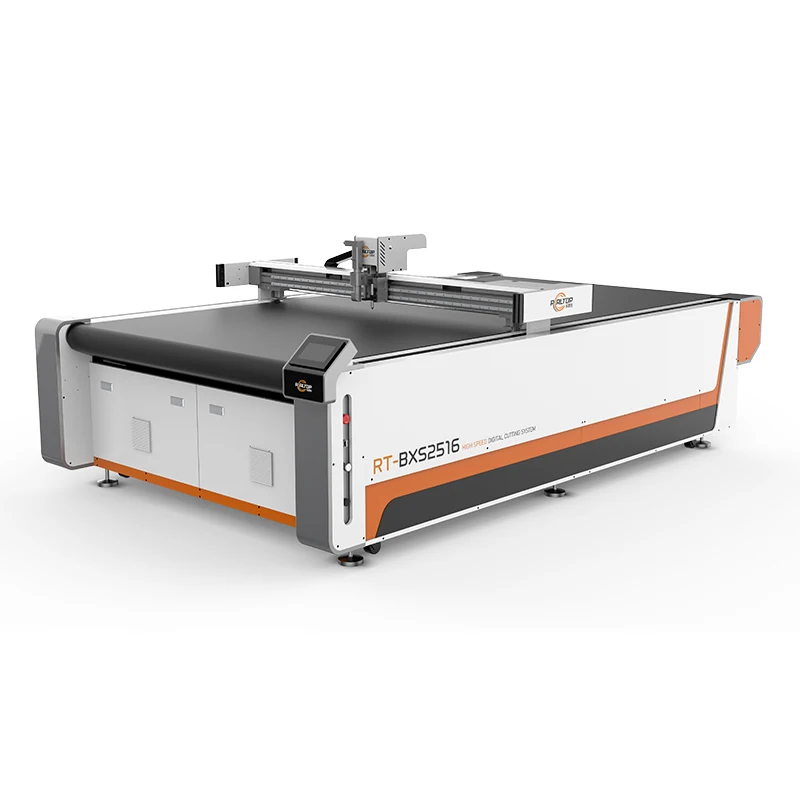
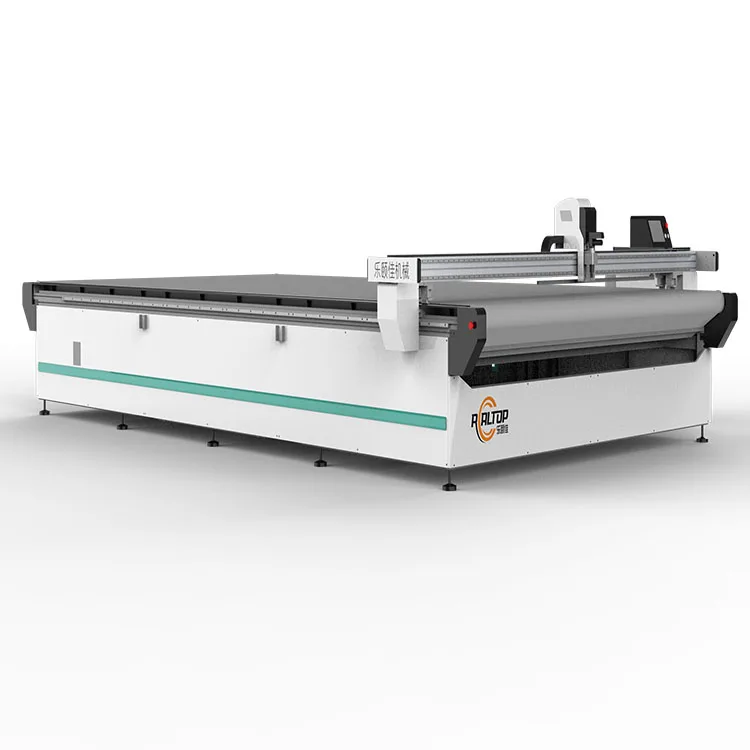
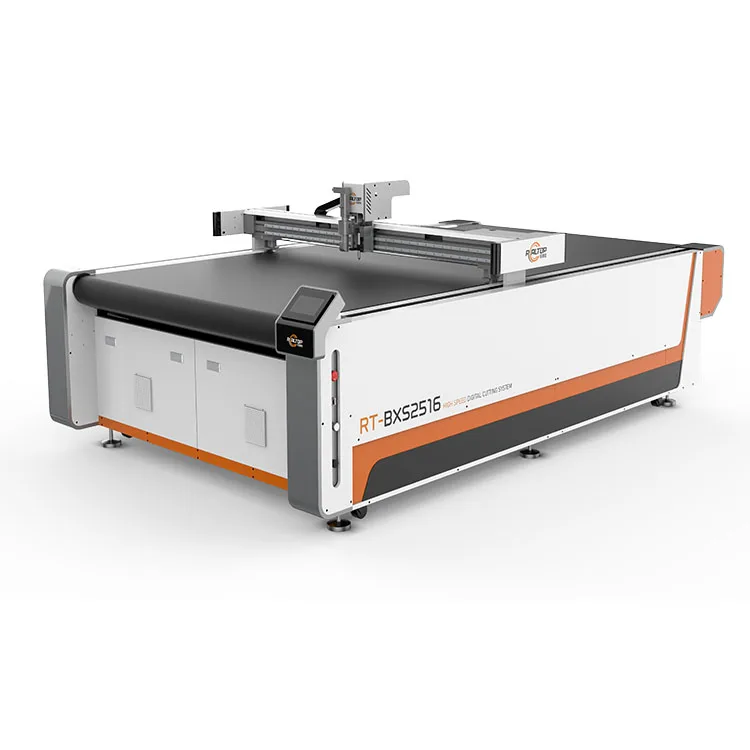
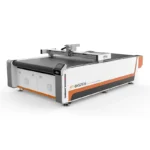
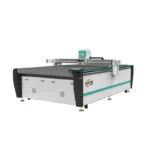
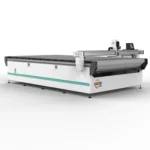
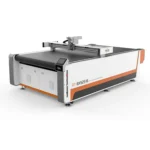
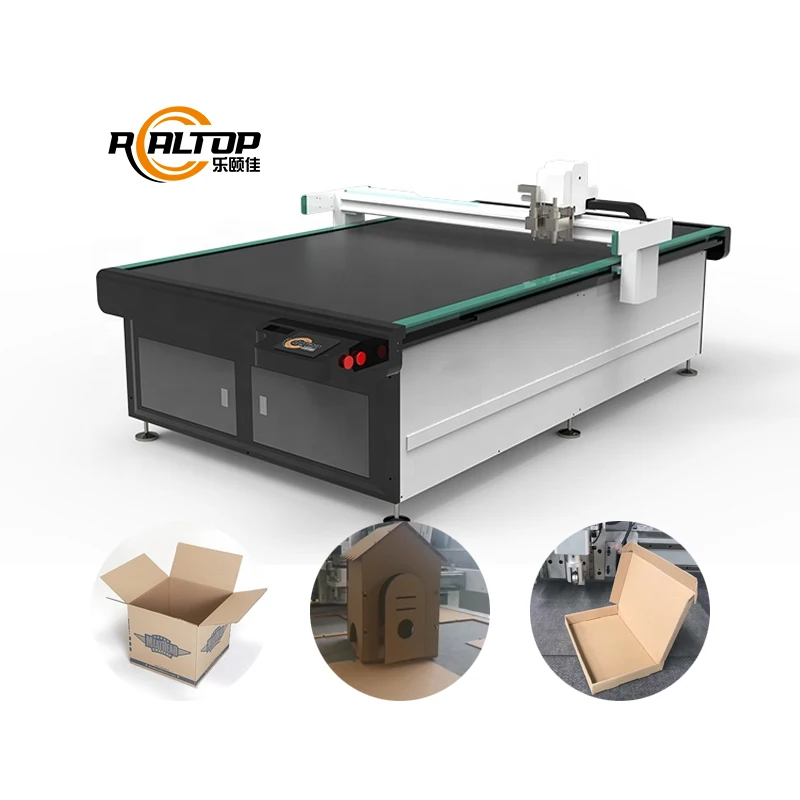
Precision-Built Frames — CNC machined from thick-walled seamless steel after high-temperature tempering, ensuring the RT-D2516/RT-S2516 maintains geometric accuracy across years of continuous fabric and composite cutting.
Technical Specifications
| Parameter | Value |
|---|---|
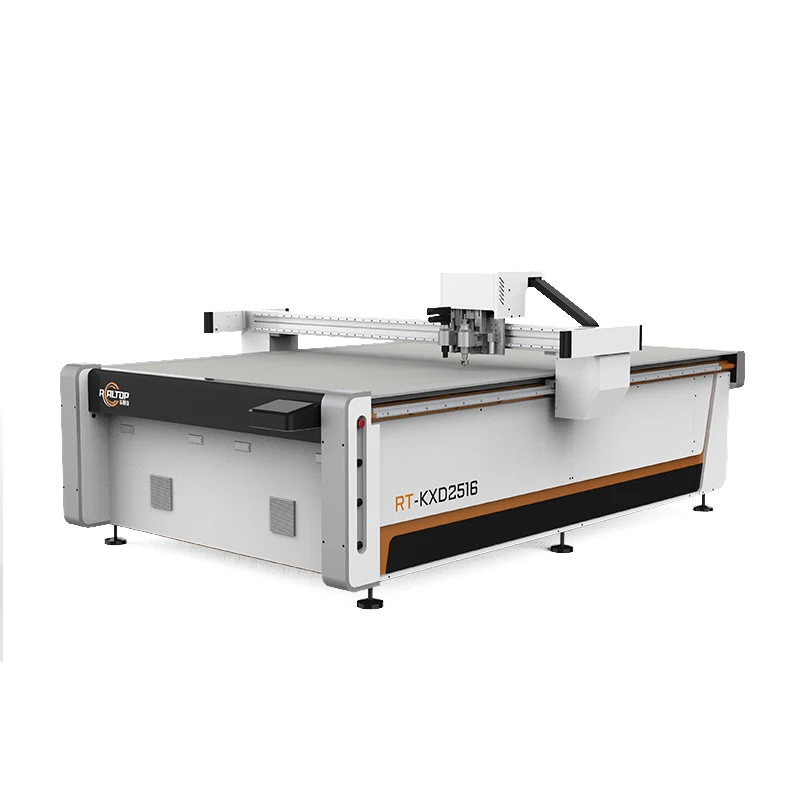
| Model | RT-D2516/RT-S2516 |
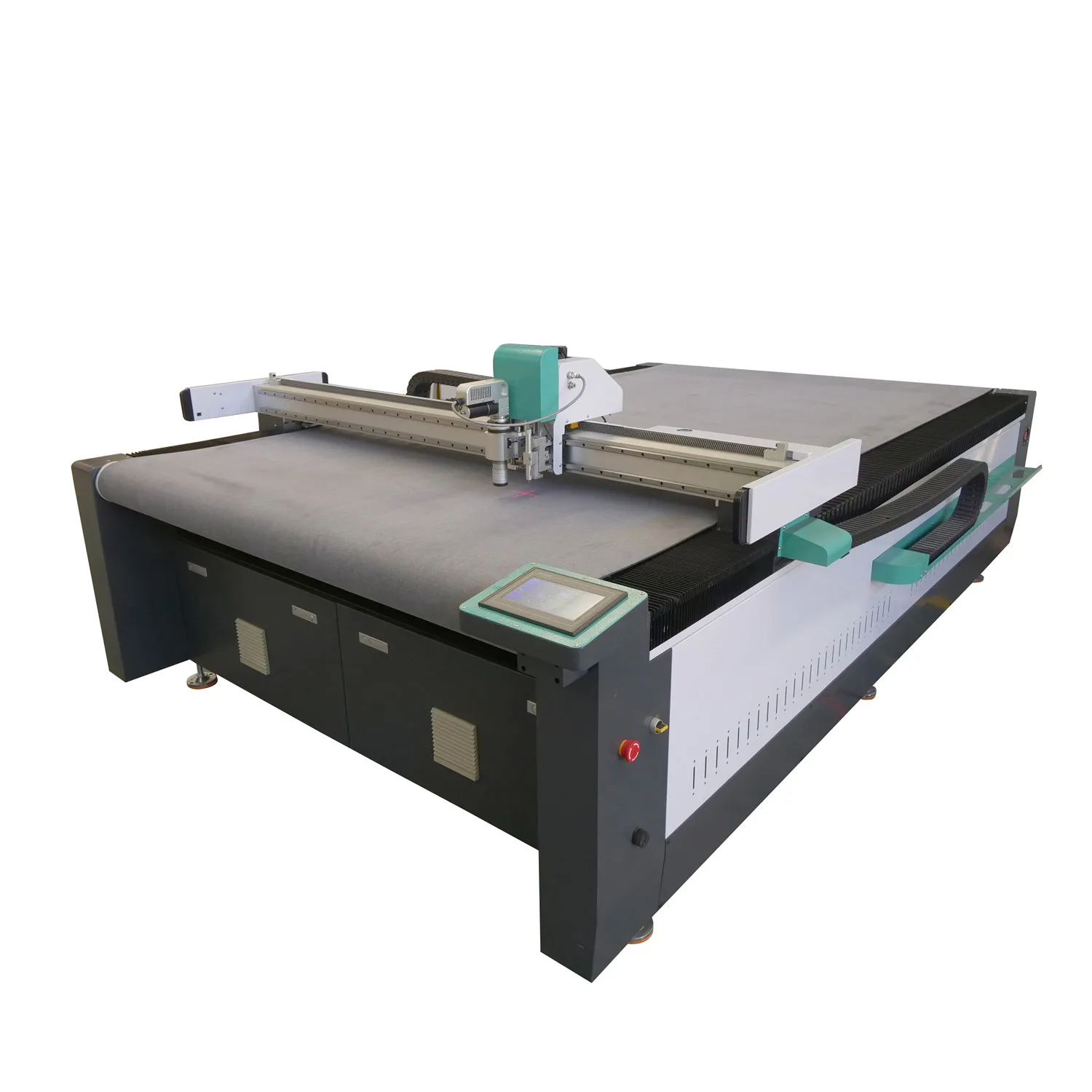
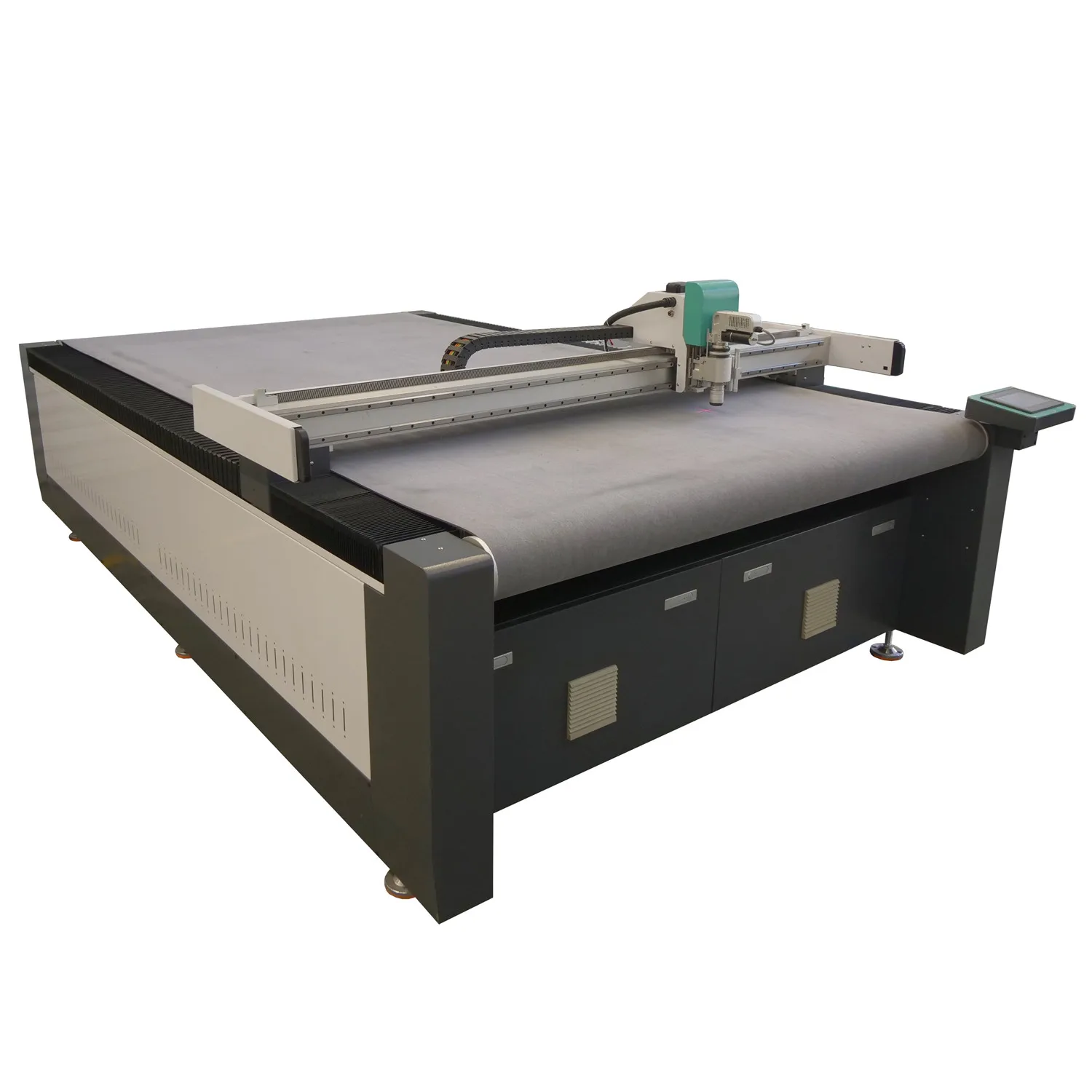
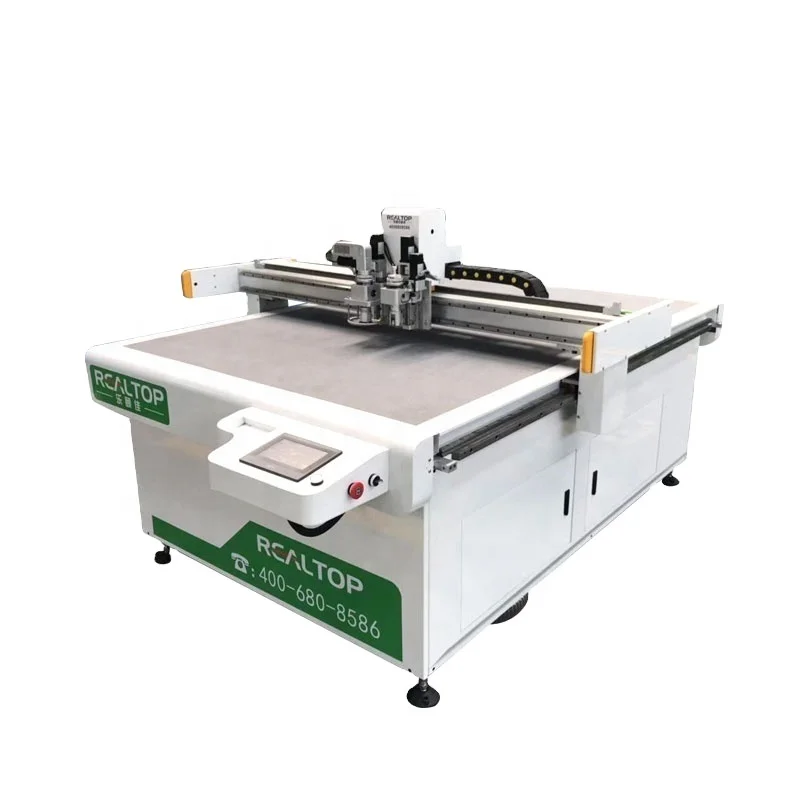
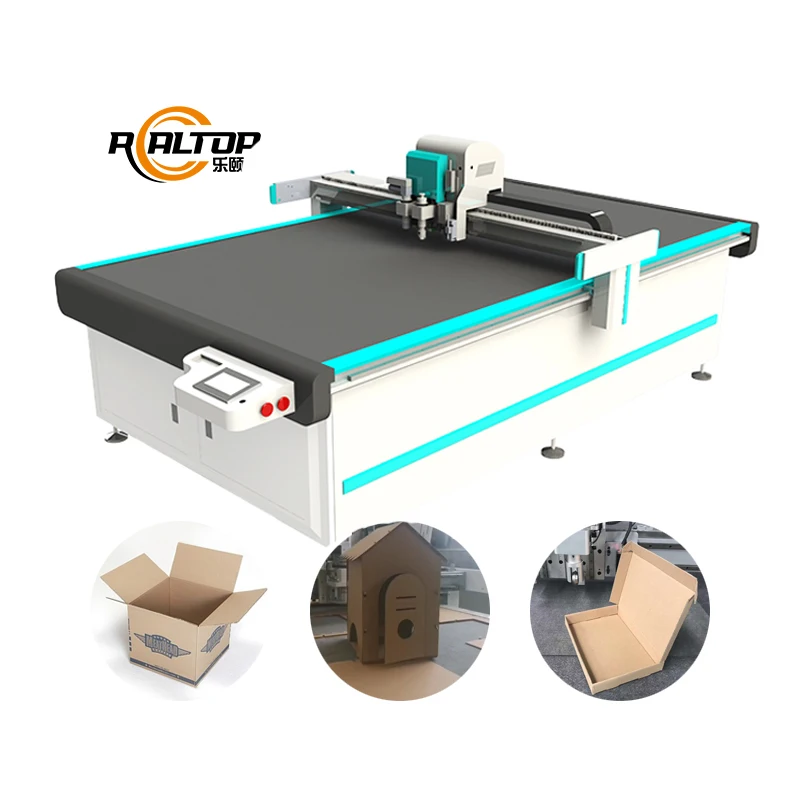
| Product Type | CNC Oscillating Knife Fabric Cutting Machine |
| Working Area | 1600×2500 mm |
| Overall Dimensions | 3450×2300×1250 mm |
| Rated Power | 9 kW |
| Voltage | 380V±10% |
| Transmission System | Digital servo motor, linear guide, synchronous belt, imported ball screw |
| Servo Motor Brand Option | Delta or Panasonic |
| Servo Motor Protection | IP67 |
| Translational Velocity | 800–2000 mm/s |
| Cutting Speed | 200–800 mm/s (varies by material type and layer count) |
| Cutting Thickness | ≤100 mm (capacity varies by material density and composition; basis to be confirmed with sample) |
| Repeatability | ≤0.1 mm |
| Vacuum Pump | 7.5 kW |
| Vacuum Table Surface | Magnesium-aluminum alloy with fluorocarbon PVDF powder spraying, anodic oxidation, hard oxidation |
| Table Type Option | Flat working table or auto feeding table |
| Conveyor Belt | Germany imported |
| Linear Guide | Taiwan Hiwin rail |
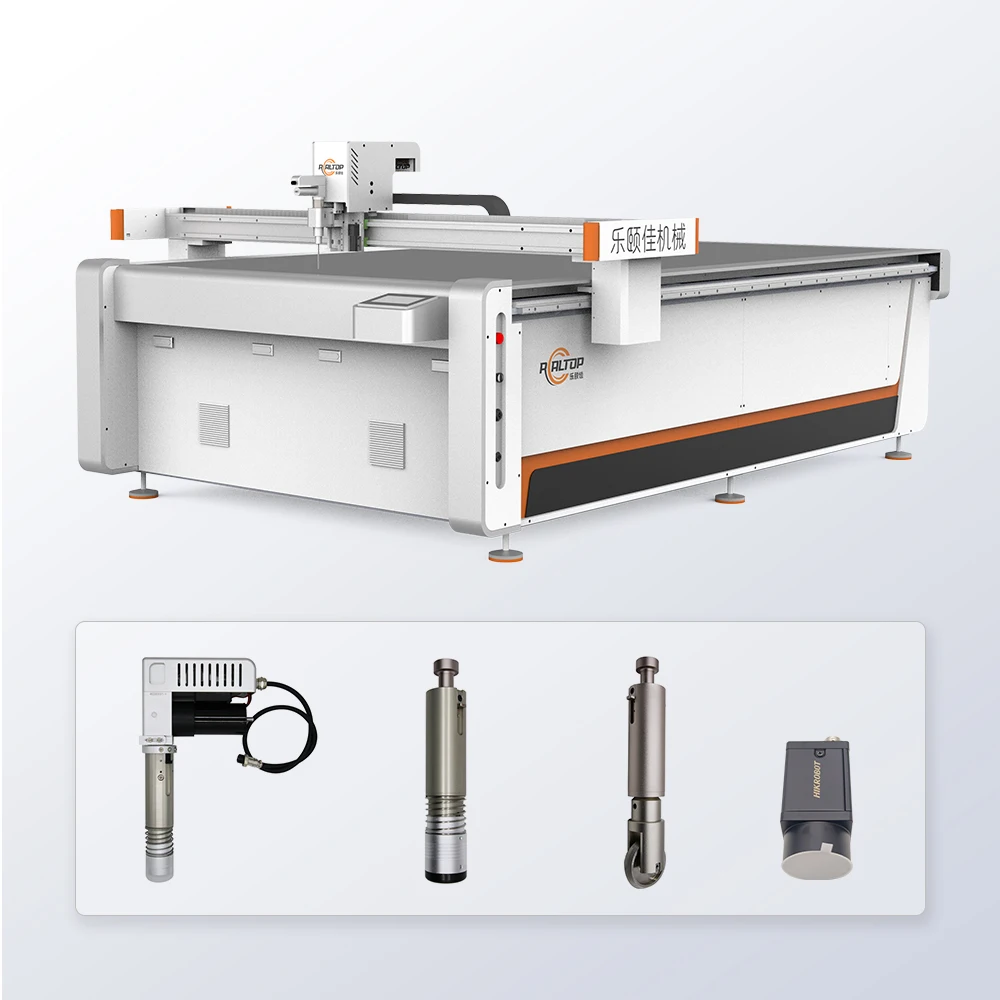
| Tool Head Types | Swiss imported knife, oscillating knife, pneumatic knife, high-power vibrating knife, circular knife, V-cutting knife, drag knife, creasing wheel, dotted line knife, punching, brush |
| Visual Positioning Options | Small CCD camera mark point positioning, panoramic camera recognition, projection positioning |
| Safety Device | Infrared induction blocking, anti-collision sensors on both sides of beam, emergency stop button |
| Control System | Touch screen control panel |
| Language Options | English, Russian, Italian, Chinese; special languages customizable |
| Software Compatibility | PLT, DXF, AI file formats; HP-GL compatible instruction format; auto typesetting/nesting |
| Frame Construction | Thick-walled seamless steel welded structure, high-temperature tempering treated, CNC machining center finished |
Application Suitability
| Application | Material or Output |
|---|---|
| Garment and footwear production | Single and multi-layer fabric, leather, shoe material, luggage material |
| Automotive interior and gasket manufacturing | Composite materials, sponge, PU, EVA, XPE, non-woven fabric |
| Soft home furnishing and carpet making | Textiles, carpets, floor mats, non-woven fabric |
| Packaging and sealing component fabrication | Corrugated cardboard, sticker, film, foam board, rubber, silicone |
| Industrial composite processing | Carbon fiber, fiberglass, PTFE, ETFE, PVC, PP, PE |
Why Material Thickness Claims Fail Without the Right Tool Head
A machine rated for 100 mm cutting depth means nothing if the tool head, vacuum zoning, and blade frequency are mismatched to your specific material stack.
Buyers often specify a CNC fabric cutting machine manufacturer based on working area and maximum thickness alone. I once configured a system for an automotive floor mat producer who sent a standard EVA sample for testing. The machine performed perfectly. When they installed it and ran their actual production material — a high-density XPE with a bonded composite layer — the edge quality collapsed. Ragged edges, crushed foam layers, and blade deflection turned the first two weeks into a complete reconfiguration exercise on their shop floor. That material interaction is not visible in a brochure specification [NEED_CITE: material density and layer composition effects on oscillating knife cutting].
Frame Rigidity and Long-Term Geometric Stability
The RT-D2516/RT-S2516 platform is built on a thick-walled seamless steel welded frame that undergoes high-temperature tempering before final finishing on a CNC machining center. This sequence eliminates internal welding stresses that would otherwise release gradually during operation, causing the linear guide rails to drift out of parallel. For a CNC fabric cutting machine manufacturer, frame stability is the foundation of repeatability. When the machine executes a full 2500 mm traverse at high translational velocity, any frame deflection directly translates into dimensional error on nested patterns.
Vacuum Hold-Down Architecture for Flexible Materials
The magnesium-aluminum alloy vacuum table receives fluorocarbon PVDF powder spraying followed by anodic oxidation and hard oxidation. This multi-step treatment maintains surface flatness under continuous vacuum load and prevents the corrosion that can compromise suction uniformity over time. Fabric and composite sheets require consistent hold-down pressure across the entire cutting bed, particularly when processing nested small parts where edge lift can shift material mid-cut. The 7.5 kW vacuum pump paired with this table construction ensures that thin textiles and thicker composite stacks alike remain stationary during high-speed oscillating knife passes [NEED_CITE: vacuum table zoning requirements for small part cutting on flexible materials].
Understanding the Specification Sheet Beyond Surface Numbers
The cutting speed range of 200–800 mm/s reflects the variance across different material families. A single layer of woven textile cuts at the upper end, while multi-layer stacks of dense XPE or composite gasket material demand slower passes to maintain edge integrity. The Taiwan Hiwin linear guides and IP67-rated servo motors (available in Delta or Panasonic configurations) maintain the ≤0.1 mm repeatability across the full 1600×2500 mm working area. The 9 kW rated power covers the combined load of the servo drives, oscillating knife mechanism, and control systems during peak operation. Understanding these relationships prevents the common mistake of assuming a single speed figure applies to every material in your production mix.
The Cost of Skipping Material-Specific Configuration
When a buyer selects a tool head without testing their actual production material, the consequences extend beyond poor edge quality. A drag knife that works on thin vinyl will crush and tear multi-layer foam. An oscillating knife set to the wrong frequency will produce clean cuts on leather but leave frayed edges on woven composites. I have seen production lines run for weeks with compromised output before the root cause was traced back to the initial configuration decision. The vacuum table zoning also matters: large-zone suction designed for full-sheet cutting may leave small nested parts insufficiently held, causing material shift and scrapped batches [NEED_CITE: tool head and material mismatch consequences in digital cutting].
Why Sourcing Directly From the Manufacturer Matters
The RT-D2516/RT-S2516 is designed and built in-house, covering both the mechanical platform and the integration of knife cutting technology. This means the frame, motion system, vacuum table, and tool head configuration are engineered as a single unit rather than assembled from disconnected supplier components. Buyers receive sample cutting reports run on their own material before commitment, confirming edge quality, cutting speed, and tool head selection for their specific application. Voltage, plug type, and control panel language are confirmed and customized before the machine enters production, eliminating the post-delivery electrical rework that frequently delays commissioning. The full tool head range — from Swiss imported vibration knives to pneumatic knives, creasing wheels, and punching tools — is specified per material rather than offered as a generic package.
Documentation & Verification
- Machine specification sheet detailing configured tool heads and vacuum table zoning for your material type
- Electrical schematic confirming voltage, frequency, and plug type matched to your facility
- Sample cutting report run on your actual fabric or composite material before order confirmation
- Software license and file format compatibility note for PLT, DXF, AI, and HP-GL workflows
- Factory test record documenting repeatability and cutting performance before dispatch
- Operation and maintenance manual with spare parts list in your specified control language
Installation, Commissioning & Support
- Requires a level concrete floor to support the 3450×2300×1250 mm footprint and dynamic cutting loads
- Dedicated 380V±10% circuit required for the 9 kW rated power plus 7.5 kW vacuum pump
- Machine ships fully assembled; rigging and positioning equipment must accommodate overall dimensions
- First-run parameter calibration performed on your material to set knife pressure, oscillation frequency, and vacuum zones
- Operator training covers touch screen control panel functions, tool head changes, and nesting software operation
- Spare blade inventory and maintenance schedule provided based on your daily cutting volume and material type
Before You Request a Quotation
Provide your material type, maximum thickness, layer count, and typical sheet dimensions so the correct tool head and table configuration can be specified. Confirm your facility voltage, frequency, and the control language your operators require. If your production involves printed contour cutting, share your mark style and registration method so the appropriate CCD or panoramic vision system is included in the configuration.
Frequently Asked Questions
Q: How is cutting thickness capacity determined for different fabric types and layer counts?
A: The ≤100 mm specification varies significantly by material density and composition. A stack of lightweight woven fabric may cut cleanly at full depth, while dense XPE or multi-layer composites require a reduced thickness per pass. We run sample cuts on your actual material to determine the practical cutting depth, tool head selection, and speed settings before confirming the machine configuration.
Q: How do I select the right tool head for my material to avoid edge quality problems?
A: Each material family responds differently to cutting action. Oscillating knives suit dense foams and composites, drag knives work on thin vinyl and film, and pneumatic knives handle thick leather and multi-layer fabric. We test your specific material with multiple tool head options during the sample cutting phase and document which configuration delivers the edge quality and cutting speed your production requires.
Q: What voltage, language, and plug customization options are confirmed before shipment?
A: The machine supports 380V±10% with configurable plug types for your destination market. The touch screen control panel is available in English, Russian, Italian, and Chinese, with special languages customizable. These specifications are confirmed during the order process and verified on the electrical schematic before the machine enters production, preventing on-site electrical rework.
Q: How does the CCD contour recognition system perform with printed marks at production speed?
A: The system offers small CCD camera mark point positioning, panoramic camera recognition, and projection positioning options. Performance depends on your mark size, contrast, and print consistency. We test the vision system with your actual printed material during sample cutting to verify tracking accuracy at your required cutting speed before finalizing the configuration.
Q: What does the factory test record include before the machine ships?
A: The test record documents repeatability measurements across the working area, cutting performance on the specified material, tool head calibration values, vacuum table suction uniformity, and safety device function checks. This record is generated using the exact configuration — including tool heads, table type, and vision system — that will ship to your facility.
You may also like

商品评价
Clear filtersThere are no reviews yet.