





-
 Courier delivery
-
 DHL Courier delivery
-
 Warranty 1 year
-
 Free 30-Day returns

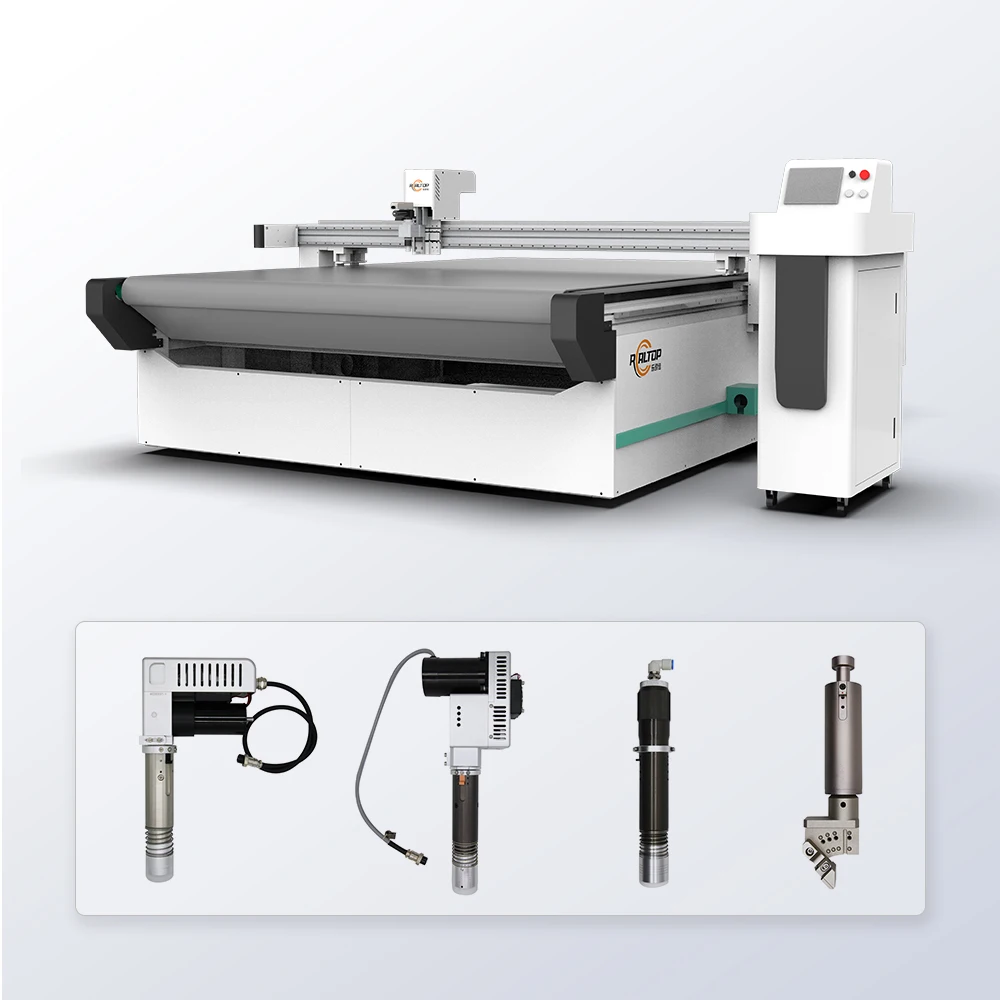
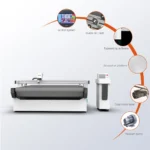
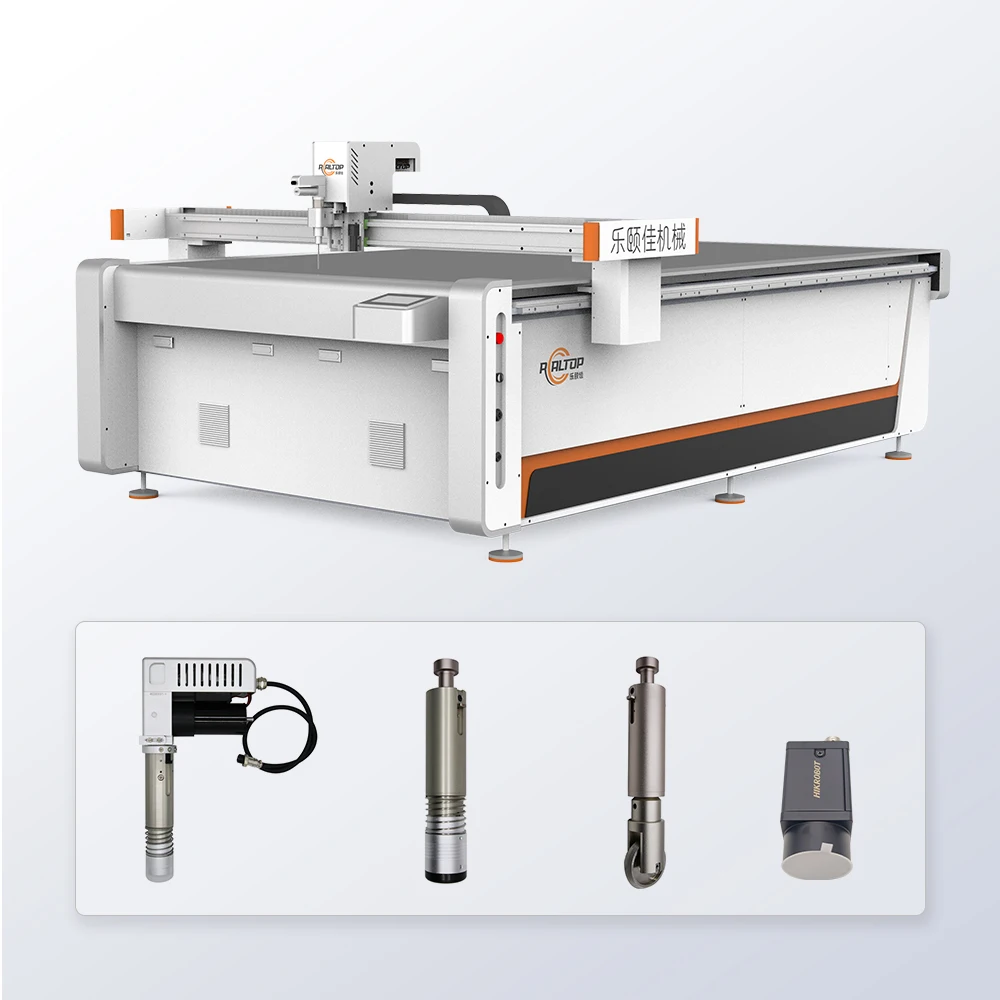
Modular Tool Head System — Every cutting head is matched to your actual material and confirmed through test cuts before the machine leaves our Jinan factory.
Technical Specifications
| Parameter | Value |
|---|---|
| Model | 1625 |
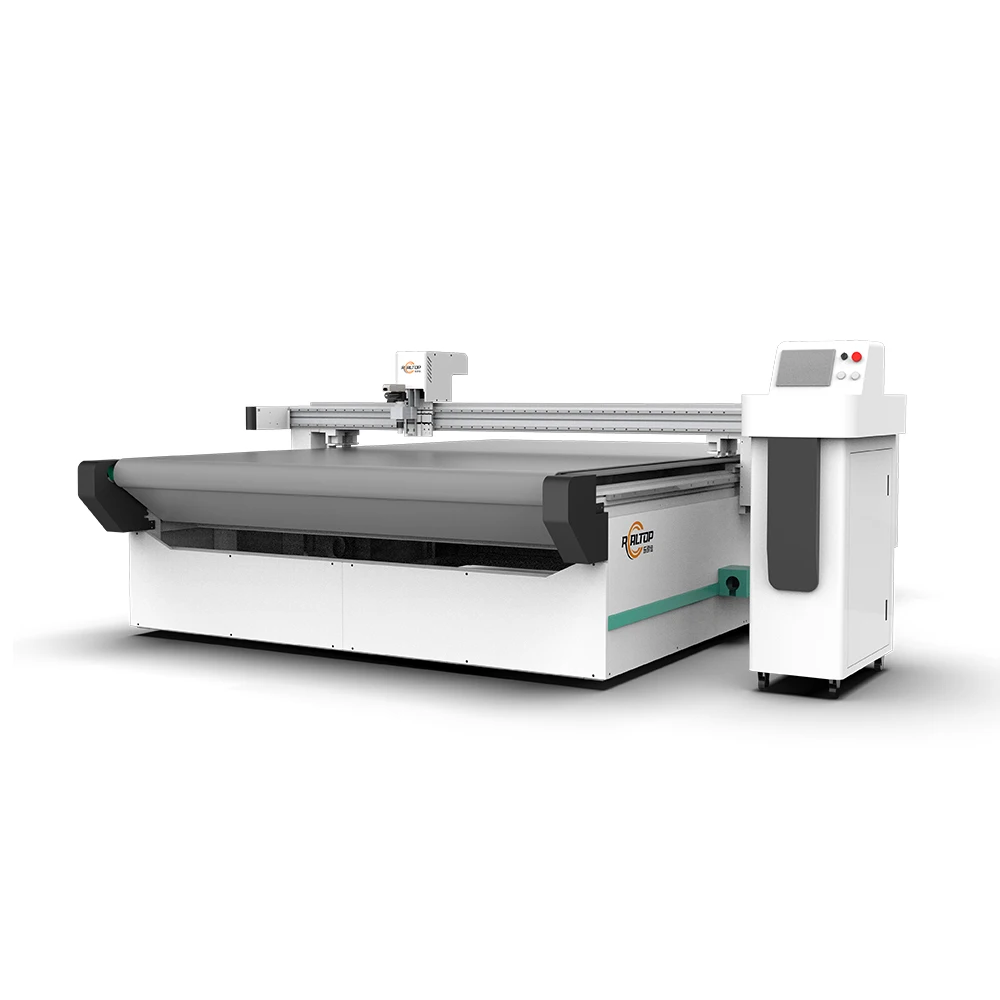
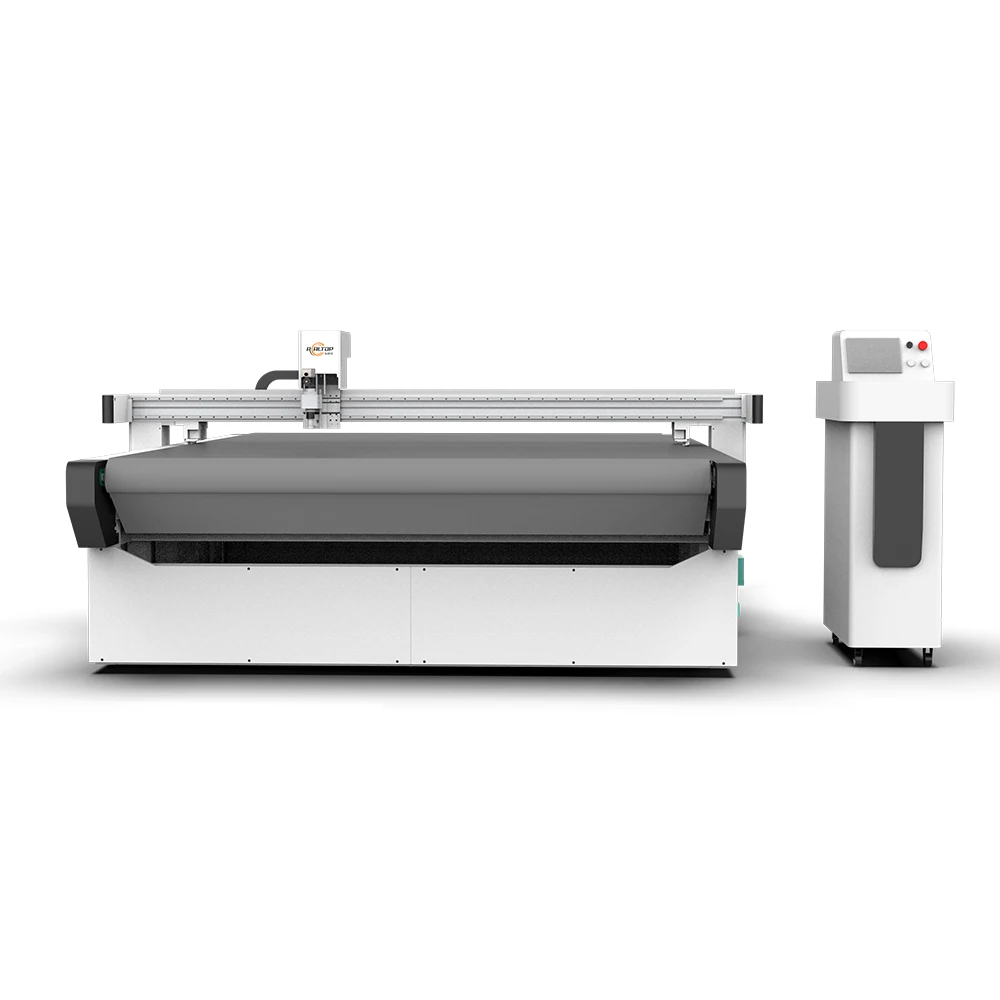
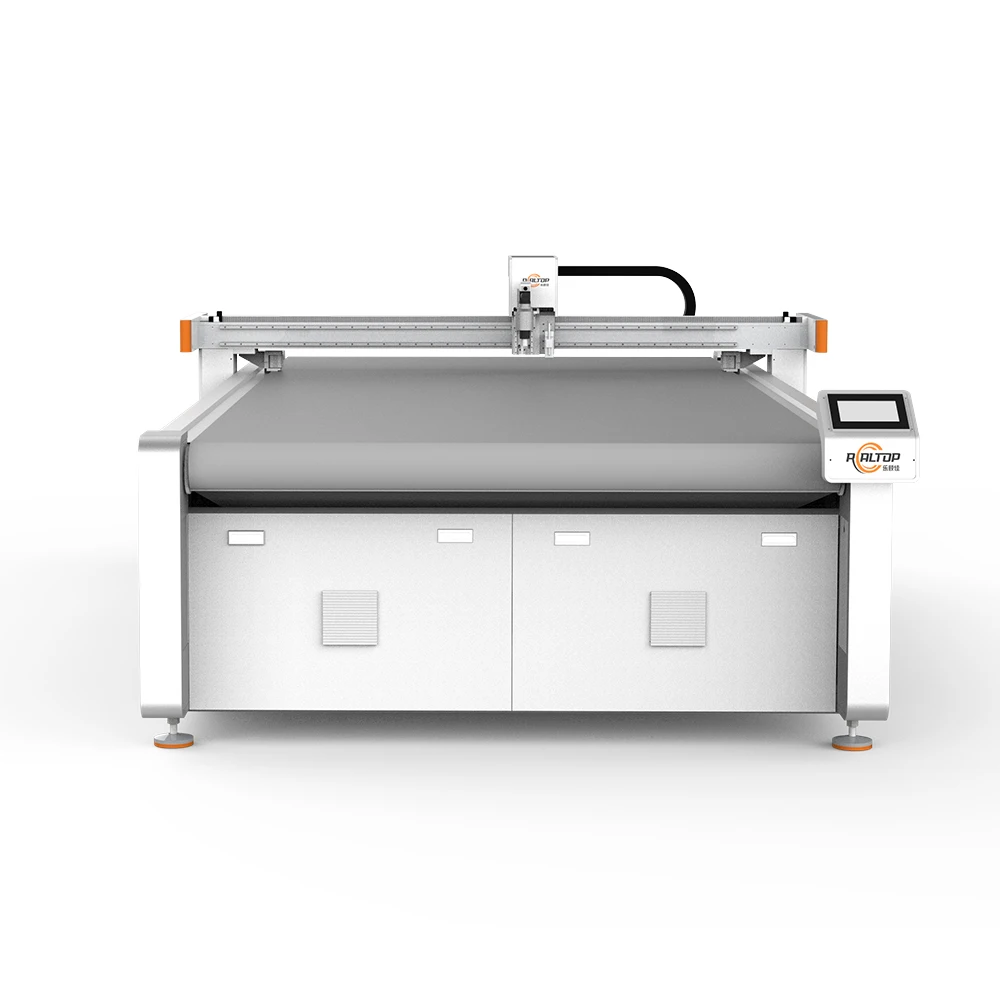
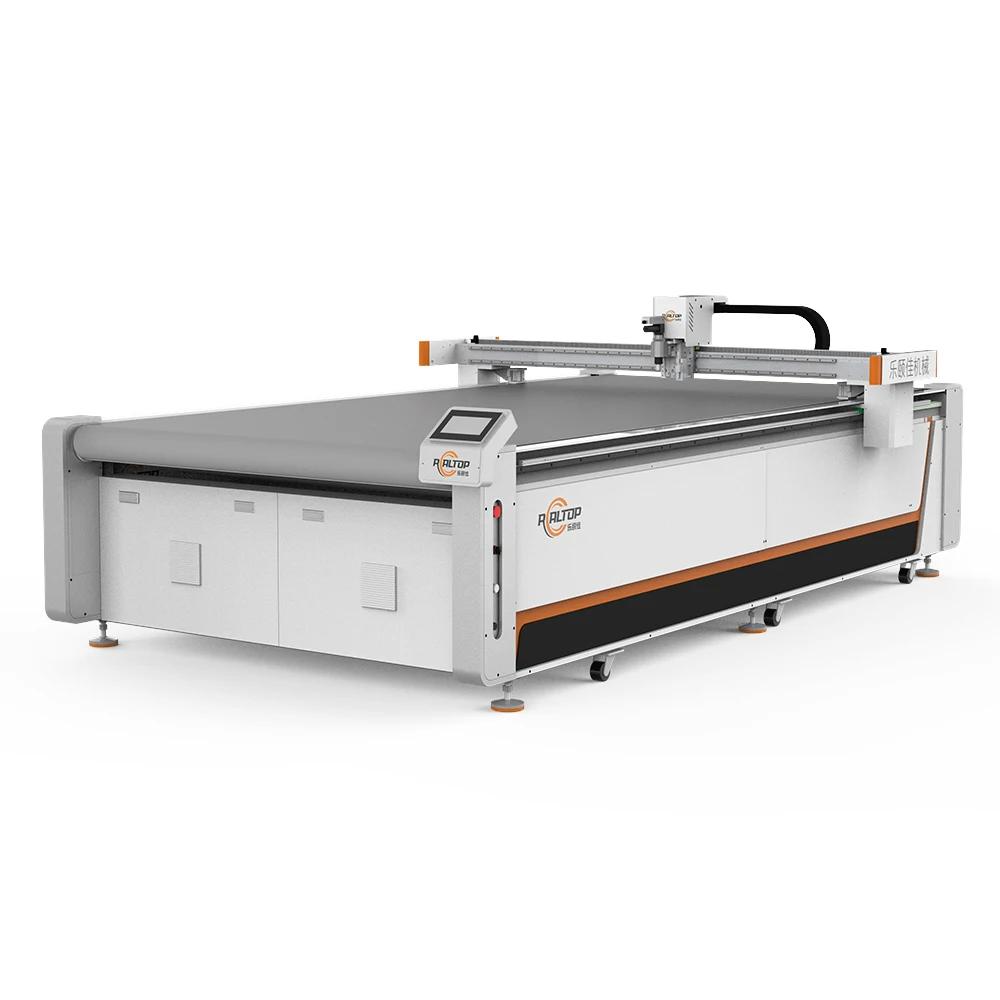
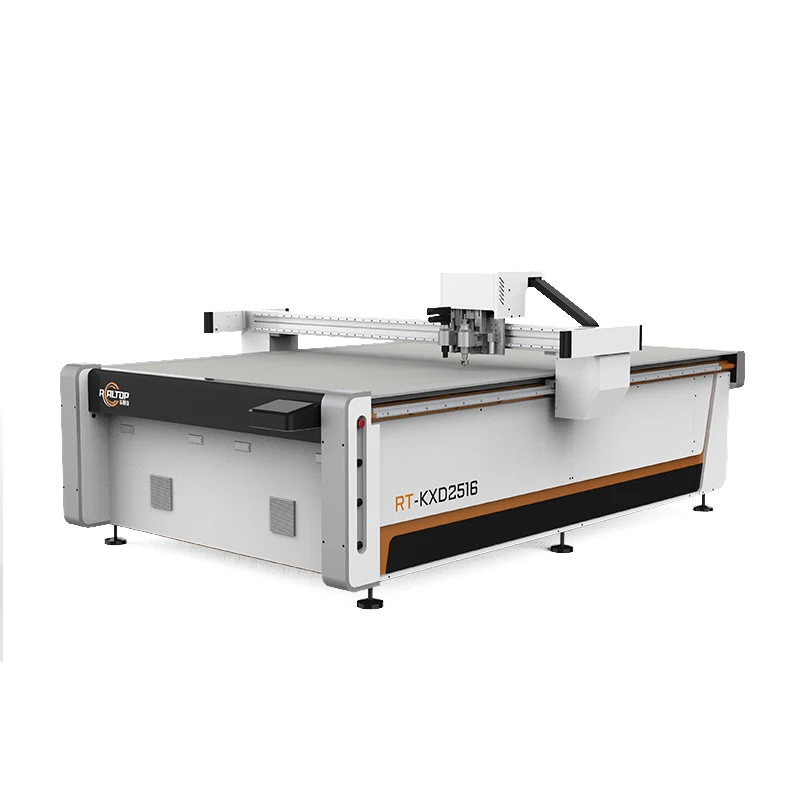
| Product Type | CNC Oscillating Knife Cutting Machine |
| Working Area | 1600 × 2500 mm |
| Cutting Thickness | ≤ 30 mm |
| Cutting Accuracy | ± 0.1 mm |
| Cutting Speed | 0 – 2000 mm/s |
| Tools Available | Oscillating knife, Driven rotary knife, Creasing wheel, Kiss cutting tool, Pneumatic knife, Milling tool, V-groove knife |
| Applicable Materials | Fabric, Cardboard, Carton, Mats, PVC, EVA, Leather, Acrylic, Foam, PTFE, Rubber |
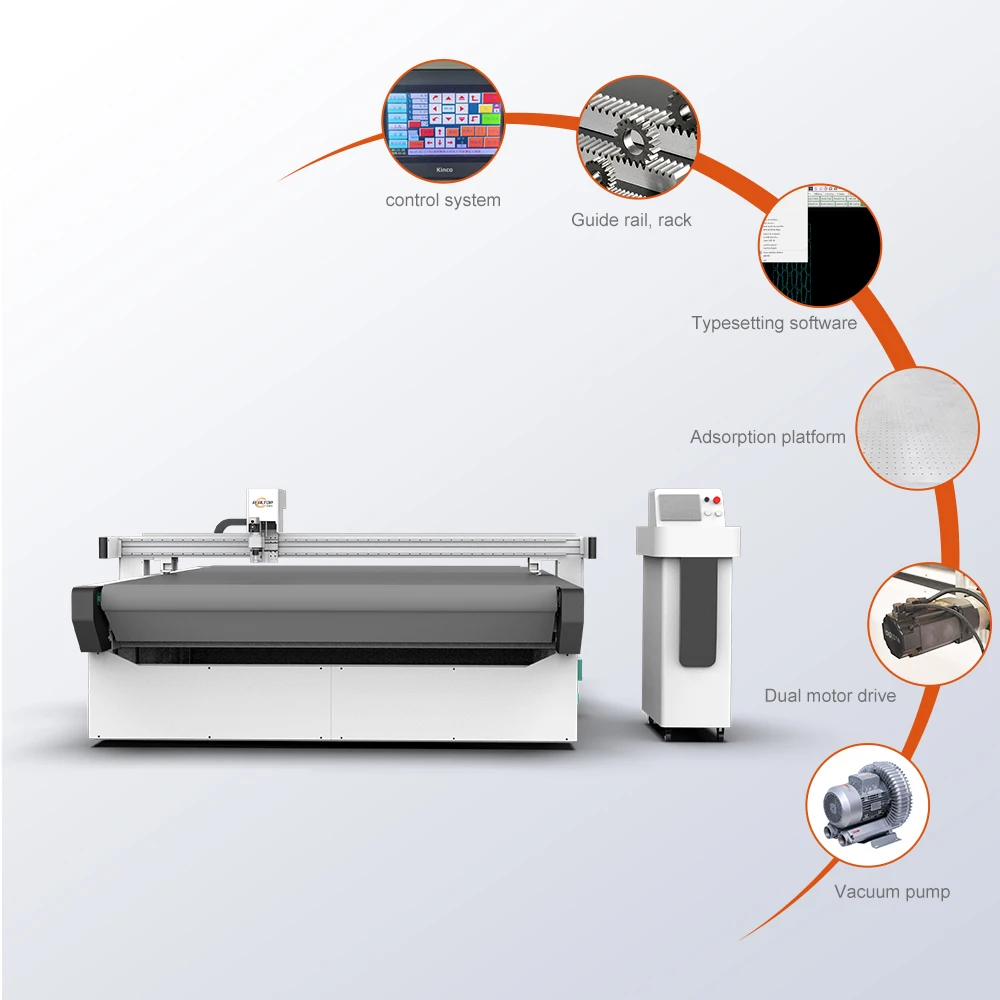
| Vacuum Table | Aluminum bellows vacuum table |
| Vacuum Pump | 9 kW |
| Control System | PLC control panel with intuitive interface |
| Servo Drive Options | Panasonic, Delta, or Dorna |
| Profile Format | PLT, DXF, AI, PDF |
| Voltage Options | 110V, 220V, 380V |
| Software Language | English, Russian, Italian, Chinese (customizable) |
| Safety Device | Infrared sensor and emergency stop |
| Machine Size | 3300 × 2100 × 1350 mm |
| Compliance | CE |
Application Suitability
| Application | Material or Output |
|---|---|
| Apparel manufacturing | Suits, knitwear, lace, and complex woven fabrics in single or multi-layer stacks |
| Automotive interiors | Seat fabrics, carpets, and PVC floor mats requiring burr-free edges |
| Home textiles | Sofa fabrics, heavy curtains, and area rugs held flat under strong vacuum |
| Composite processing | Carbon fiber prepreg, aramid sheets, and specialty layered materials |
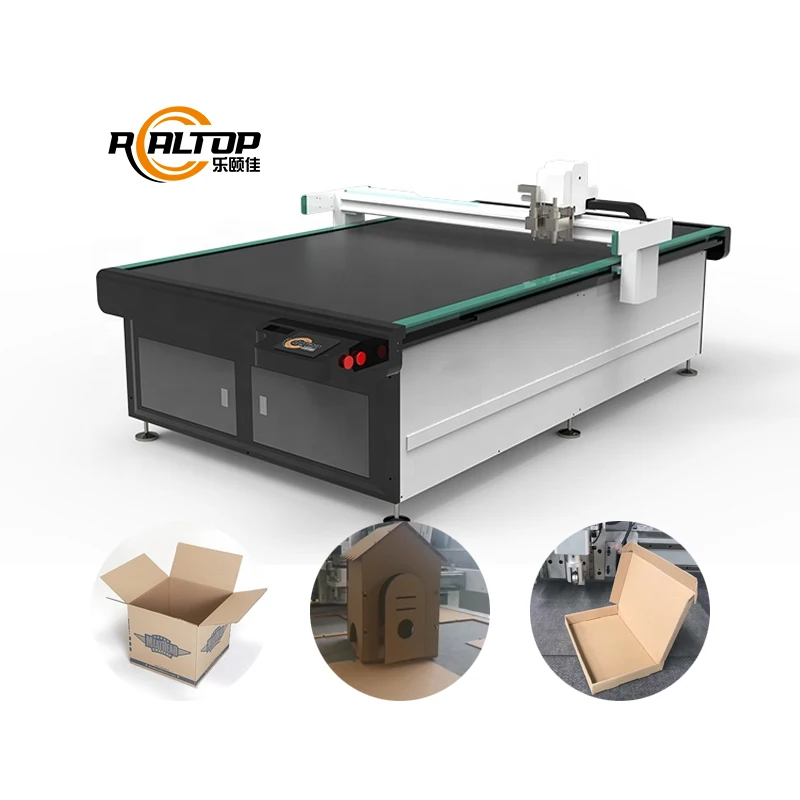
| Packaging and carton | Corrugated board, folding carton, and foam inserts with creasing and kiss-cut tools |
Why the Wrong Oscillating Knife Head Ruins Your Material Yield
Specifying a CNC Oscillating Knife Cutting Machine by working area alone guarantees nothing about the edge your material will get.
I learned this the hard way. A customer making automotive floor mats sent us a sample of his leather for a test cut. The result was clean. But when the machine arrived and he loaded his actual production roll — a composite with a fiberglass reinforcing layer — the knife edge was gone in three days, and two oscillating blades were destroyed. The material the buyer tests with and the material the buyer runs are not always the same thing. This is why every order we accept now requires the buyer’s real production material to arrive at our Jinan workshop before we finalize the tool head, feed speed, and vacuum zoning. [NEED_CITE: tool head selection criteria for composite flexible materials]
How Tool Heads Match the Material, Not the Brochure
A CNC Oscillating Knife Cutting Machine manufacturer that ships one head for every job is guessing. Fabric needs a high-frequency oscillating knife for clean ply separation. Leather and synthetic composites respond better to a driven rotary knife that slices rather than punches. Foam requires a specific stroke amplitude to avoid crushing the cell structure before the blade completes the cut. This 1625 platform carries up to seven tool options — oscillating knife, driven rotary knife, pneumatic knife, kiss cutting, creasing wheel, milling, and V-groove — and the right combination is locked in only after your material has been cut and measured on our floor.
Vacuum Zoning That Holds Small Parts at Full Speed
The aluminum bellows vacuum table on this unit is not a flat sheet with holes drilled in it. The surface is divided into independent zones that the operator opens or closes depending on where the cut path runs. When you are cutting small gasket pieces from a full sheet of PTFE or rubber, leaving all zones open bleeds suction and lets lightweight parts lift under the knife head. Closing unused zones concentrates the 9 kW vacuum pump output exactly where the material needs to be held. [NEED_CITE: vacuum hold-down requirements for thin flexible materials at high traverse speeds]
Reading the Specs That Actually Matter for Cloth Cutting
Cutting speed is listed at 0–2000 mm/s, but the usable speed depends entirely on your material stack and tool head. A single ply of knitwear can run near the upper limit; a 30 mm stack of dense sofa fabric demands a slower traverse to maintain the ± 0.1 mm accuracy across the entire 1600 × 2500 mm bed. The PLC control panel lets the operator store material-specific profiles, so switching from a thin lace order to a thick mat order means loading a saved file rather than recalculating feed rates from scratch. The 9 kW vacuum pump and aluminum bellows table work together to keep the material stationary even when the knife is making tight-radius corners at speed. File formats — PLT, DXF, AI, PDF — are handled natively, which means your design team does not need a separate conversion step before the machine starts cutting.
The Hidden Cost of Skipping the Material Test
When a buyer skips the sample cutting step — or sends a hand-picked sample instead of a production roll — the machine may arrive configured for a material it will never see. The wrong oscillation frequency on a foam sheet crushes the edge and creates dust. An incorrect vacuum zone layout lets thin vinyl lift mid-cut, producing scrap instead of finished parts. A voltage mismatch discovered at uncrating means weeks of delay while a transformer is sourced locally. These are not hypothetical failures; they are the reason our sales process insists on real material, real voltage confirmation, and real software file testing before the crate is closed. [NEED_CITE: common causes of CNC cutting machine commissioning delays]
What Our Jinan Factory Builds Into This Machine
Every frame on the 1625 is welded and stress-relieved in our own facility, not outsourced to a welding shop that also makes garden gates. The tool head library — oscillating, rotary, pneumatic, kiss-cut, creasing, milling, V-groove — is designed and assembled under the same roof, which means a configuration change during production does not require waiting on a third-party supplier. The PLC control panel and servo drive selection (Panasonic, Delta, or Dorna) are wired and tested as a complete system before the machine is crated. Voltage is confirmed against your facility’s actual supply specification, and the control language is set to your operator’s preference — English, Russian, Italian, or Chinese — before the machine ships. We do not assemble a generic unit and hope it fits.
Documentation & Verification
- Electrical schematic and voltage confirmation sheet matching your facility’s supply before dispatch
- Tool head and vacuum zone configuration list matched to your tested material profile
- Sample cutting report on your own production roll with edge quality photographs
- Software licence and file format compatibility note for PLT, DXF, AI, PDF workflows
- CE declaration and factory test record signed off after full-speed dry run
Installation, Commissioning & Support
- Floor space of approximately 3300 × 2100 mm with level concrete base for the 1625 frame
- Dedicated circuit matching confirmed voltage (110V, 220V, or 380V) and the 9 kW vacuum pump load
- Machine ships as a single assembled unit; vacuum table and gantry aligned at our factory before crating
- First-run parameter setup covers tool head selection, vacuum zoning, and cutting speed for your material
- Operator training on the PLC panel includes loading profiles and switching between material presets
- Spare oscillating and rotary knife blades included; consumable sourcing documented in the manual
What We Need From You to Quote Accurately
Send us the material type, thickness, and maximum sheet size you run. Tell us your daily volume and whether you cut single-ply or stacked layers. Share your facility voltage, frequency, and the control language your operators need. If you have existing DXF or PLT files, attach a sample so we can verify nesting and path compatibility before we recommend a configuration.
Frequently Asked Questions
Q: How is the cutting method and tool head specified for my material?
A: We start with the material type, thickness, and edge requirement you provide. Your actual production material is then cut on our Jinan factory floor using different tool heads — oscillating, rotary, or pneumatic — and the results are compared. The winning configuration is locked into your order specification, not guessed from a datasheet.
Q: Can I send my own material for sample cutting before placing the order?
A: Yes, and we require it. Send a production roll or sheet — not a showroom sample — so we can test cutting speed, vacuum hold-down, and edge quality under real conditions. You receive a sample cutting report with photographs and measured tolerances before you commit to the purchase.
Q: What voltage and control language options are confirmed before shipment?
A: The 1625 is configurable for 110V, 220V, or 380V, and we confirm the exact voltage, plug type, and frequency against your facility’s electrical specification before production begins. The PLC interface language — English, Russian, Italian, or Chinese — is set and verified during the factory test.
Q: How does the software handle my existing DXF, PLT, or AI files?
A: The system imports PLT, DXF, AI, and PDF formats natively. Before your machine ships, we run your actual design files through the nesting and path-generation software to confirm compatibility. If any conversion or adjustment is needed, it is documented in the software compatibility note included with your documentation package.
Q: What spare parts and blade consumables are included?
A: The shipment includes a set of replacement blades for the specific tool heads on your configuration, along with a spare parts list. Blade replacement intervals depend on your material — abrasive composites wear blades faster than woven fabric — and the manual documents sourcing options for ongoing consumable supply.
You may also like

商品评价
Clear filtersThere are no reviews yet.