



-
 Courier delivery
-
 DHL Courier delivery
-
 Warranty 1 year
-
 Free 30-Day returns

In-house cutting platform design — Realtop engineers both knife and laser systems under one roof, letting packaging converters match the cutting method to their exact board flute and foam density rather than forcing a single technology across every material.
Technical Specifications
| Parameter | Value |
|---|---|
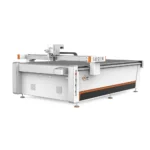
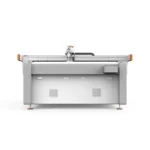
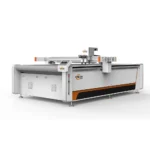
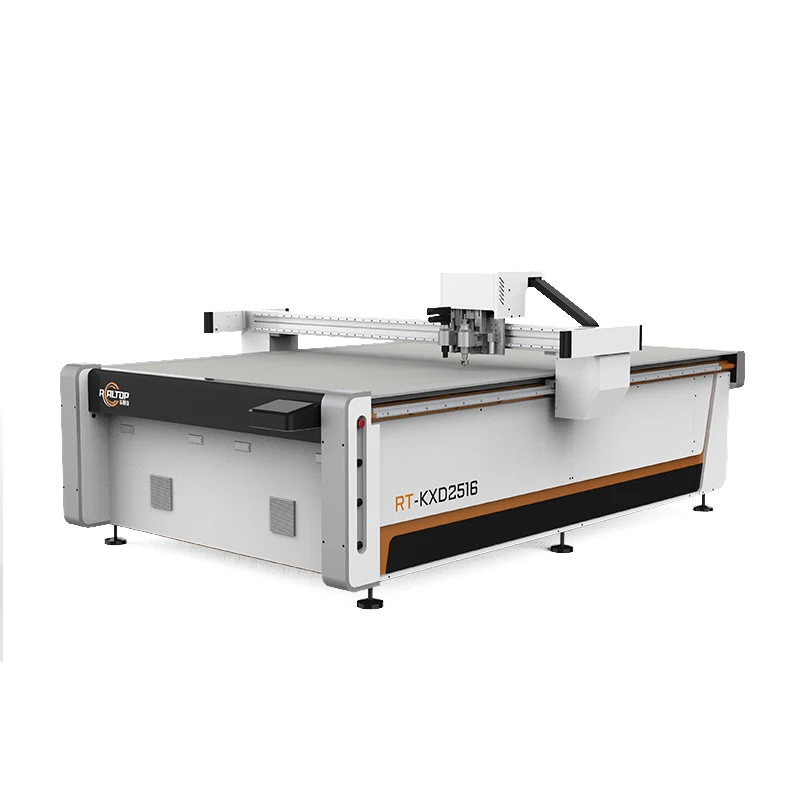
| Product Type | CNC Oscillating Knife Cutting Machine |
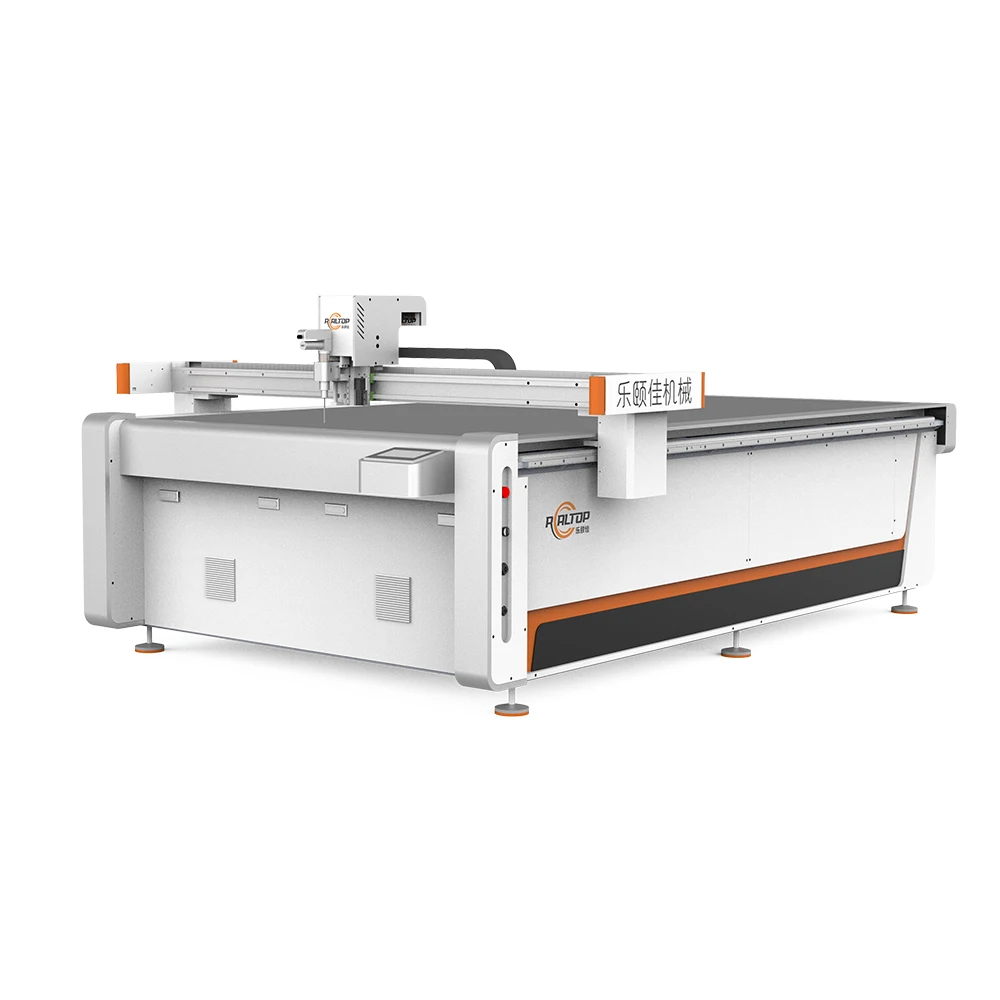
| Working Area | 1600 × 2500 mm |
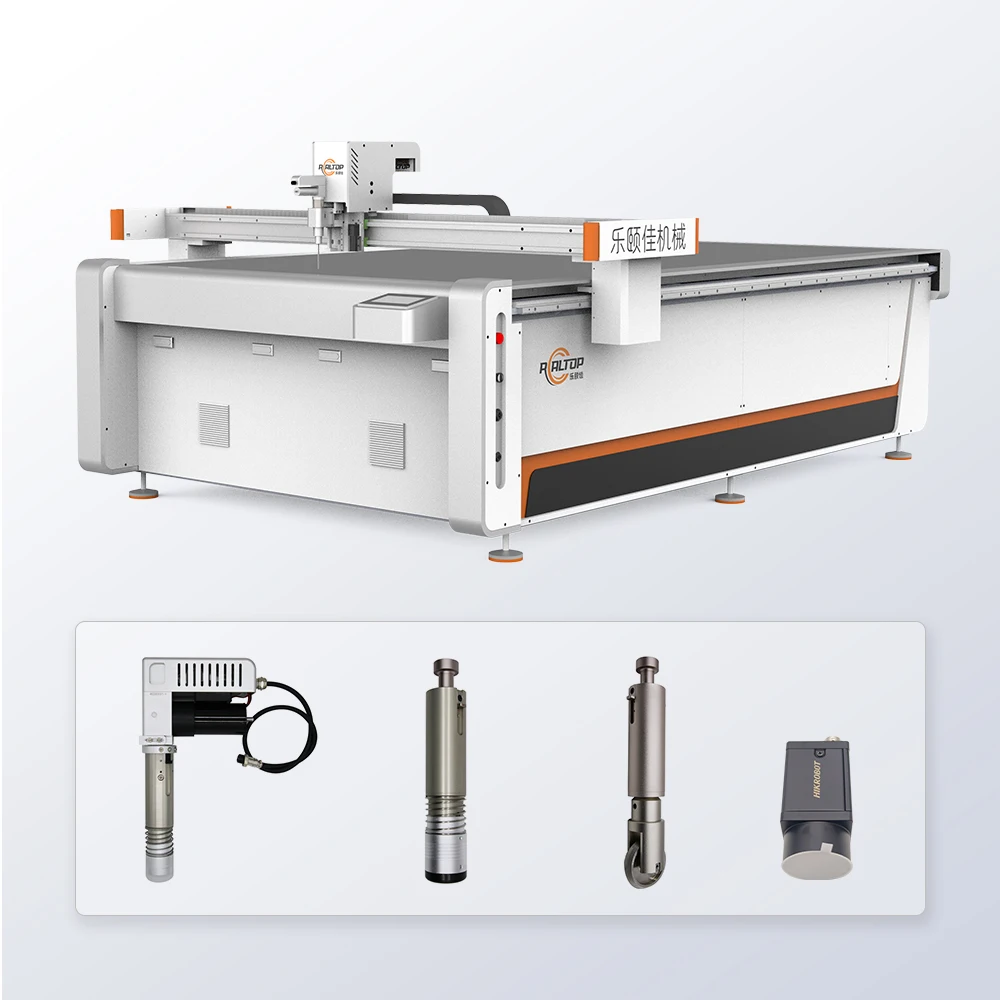
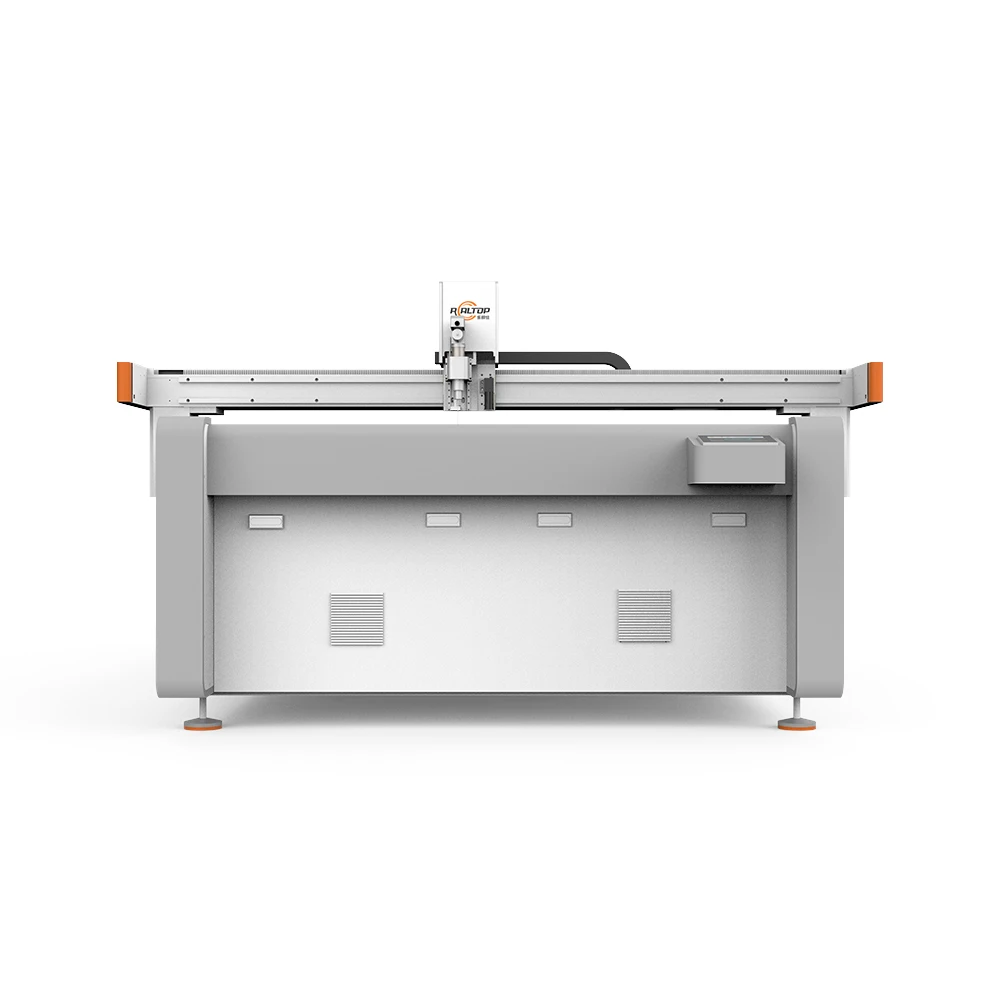
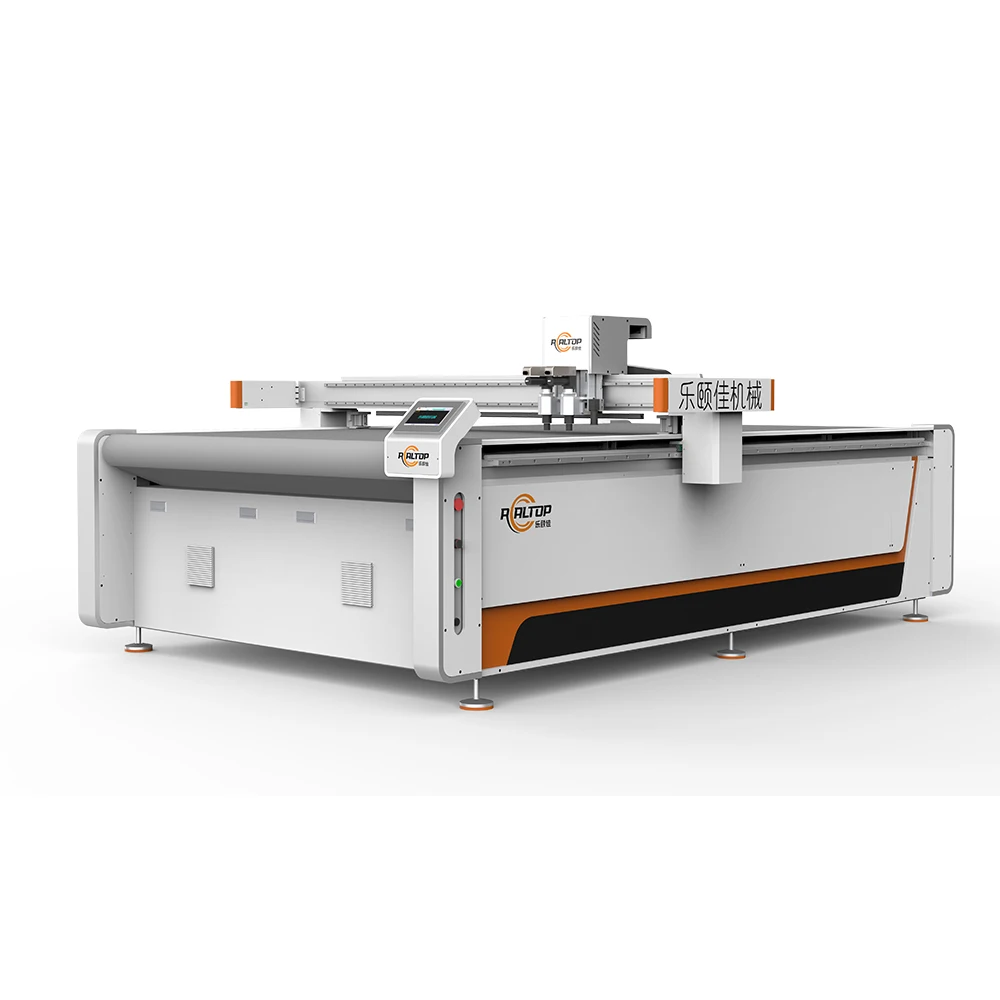
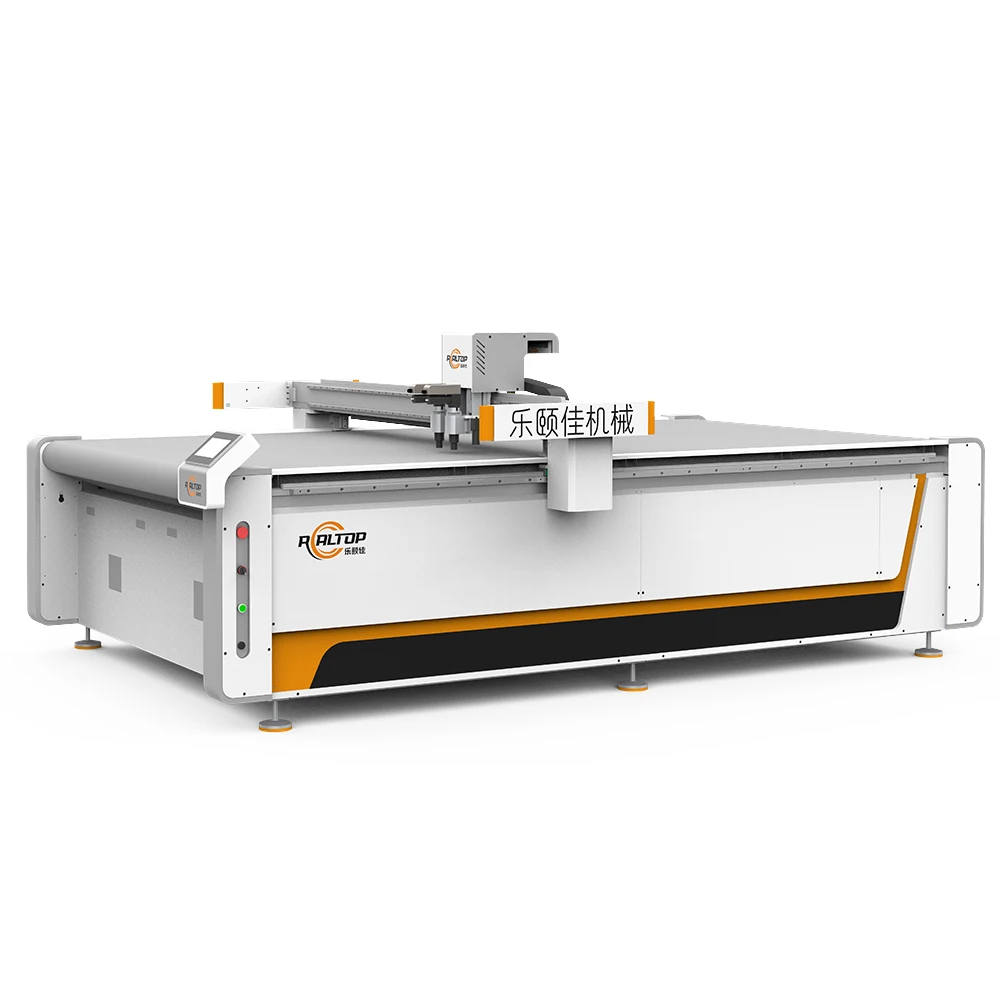
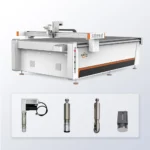
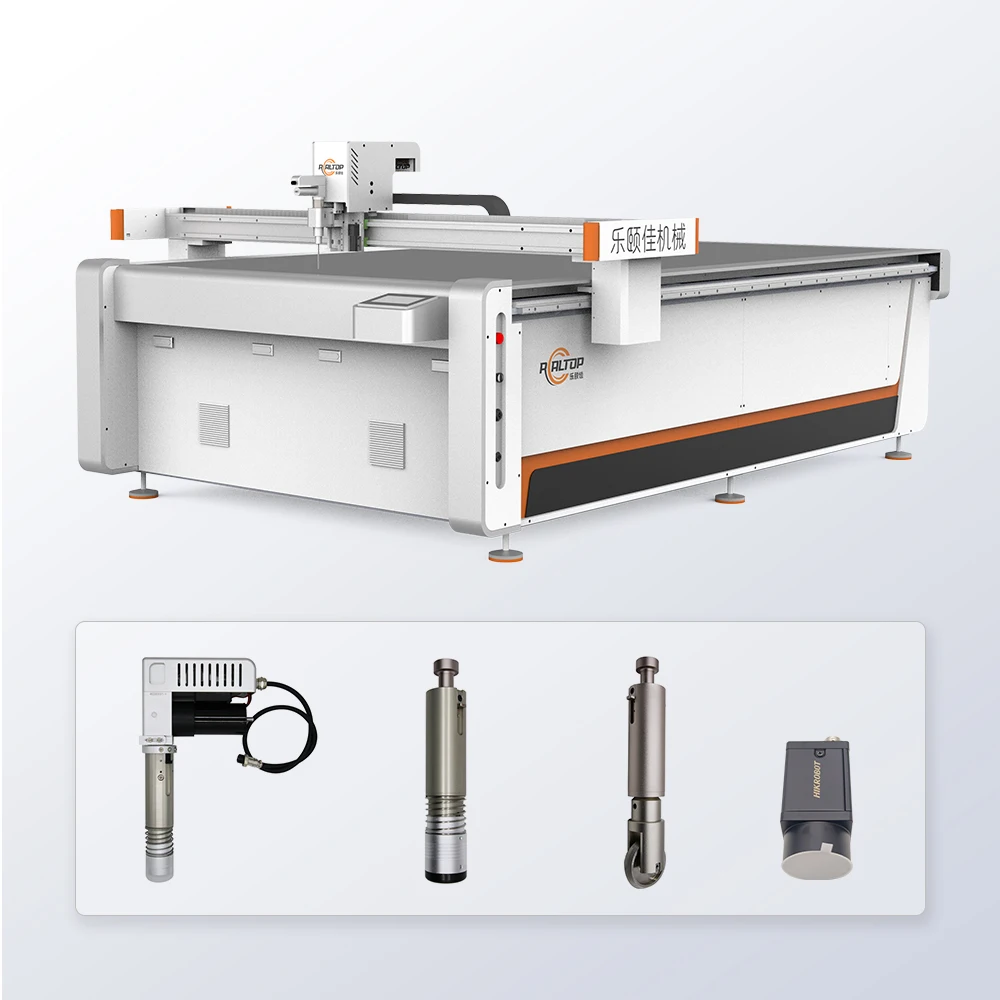
| Tool Head Options | Oscillating knife, Driven rotary knife, Creasing wheel, Kiss cutting tool, Pneumatic knife, Milling tool, V-groove knife, CCD camera |
| Cutting Speed | 0–1500 mm/s |
| Maximum Cutting Thickness | ≤ 40 mm |
| Cutting Accuracy | ±0.1 mm |
| Vacuum Pump | 9 kW |
| Vacuum Table | Aluminum bellows vacuum table |
| Voltage Options | 110V / 220V / 380V |
| Control System | PLC control panel |
| Servo Motor Options | Panasonic, Delta, Dorna (source value — verify against manufacturer catalog) |
| Compatible File Formats | PLT, DXF, AI, PDF |
| Safety Devices | Infrared sensor and emergency stop |
| Machine Dimensions | 3300 × 2100 × 1350 mm |
| Certification | CE (verify on actual certificate) |
Application Suitability
| Application | Material or Output |
|---|---|
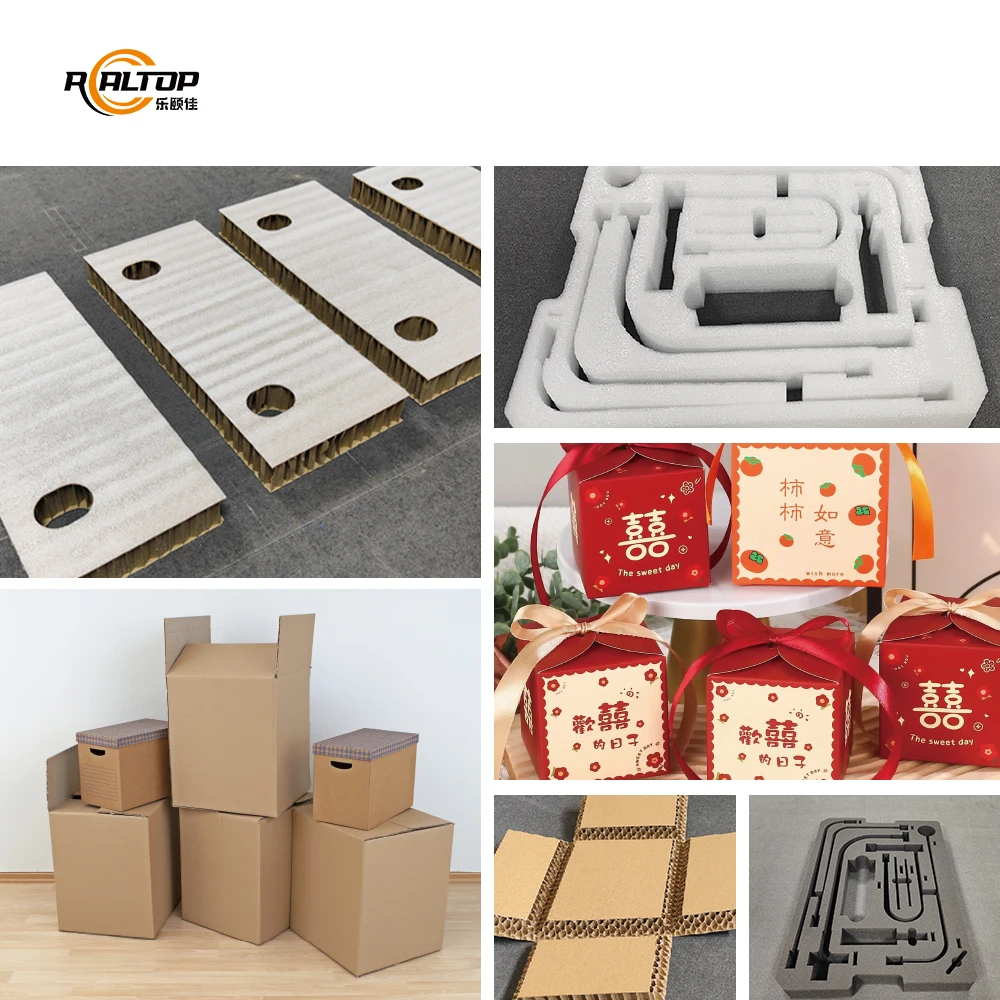
| Packaging sample making | Corrugated board (E-flute through BC-flute), greyboard, cardstock, art paper |
| Protective packaging inserts | EVA foam, EPE foam, PU foam, rubber mats |
| Carton structural prototyping | Specialty paper, adhesive-backed materials, thin plastic sheets |
| Non-metal component cutting | Leather, synthetic leather, PVC, PET, velvet and fleece fabric, non-woven fabric |
| Composite and gasket fabrication | Coroplast, composite materials |
Why "Just Send Me the Working Area" Leads to Costly Mistakes
Every inquiry that starts with "I need a 1600×2500 CNC Oscillating Knife Cutting Machine manufacturer" without naming the material is a red flag I have learned to catch early. The working area is the least important specification when the tool head is wrong for the job.
I remember a Pakistani buyer who ordered a board cutter based on working area alone. We tuned the oscillating knife parameters for the corrugated samples he sent, but his actual daily production ran on dense greyboard. The blade wore out twice as fast, edge quality degraded within hours, and his output dropped significantly. After that, every quotation I prepare requires a sample cutting test on the buyer’s real production material before we lock in the tool head and table configuration [NEED_CITE: material-specific tool head selection for oscillating knife systems].
How Interchangeable Tool Heads Eliminate Material Mismatch
A single gantry carrying an oscillating knife, creasing wheel, V-groove knife, driven rotary knife, and CCD camera means the machine adapts to the material rather than the operator fighting a fixed setup. For corrugated board sample making, the oscillating knife handles through-cuts while the creasing wheel scores fold lines in the same pass. For adhesive-backed foam inserts, the kiss cutting tool scores the adhesive layer without cutting through the release liner. This is what separates a CNC Oscillating Knife Cutting Machine manufacturer that understands packaging workflows from one that simply sells a moving blade.
Vacuum Zoning and Small-Part Hold-Down
The aluminum bellows vacuum table paired with a 9 kW pump delivers full-surface suction across the 1600 × 2500 mm bed. When cutting small carton components or intricate gasket shapes, insufficient vacuum zoning allows parts to lift mid-cut, producing dimensional drift and ragged edges. The flatness of the aluminum bellows design keeps the material seated uniformly, which is critical when holding ±0.1 mm accuracy across the entire working envelope [NEED_CITE: vacuum hold-down requirements for flatbed digital cutting tables].
Reading the Specification Sheet Like a Production Manager
Cutting speed rated at 0–1500 mm/s tells you the traverse capability, but actual throughput depends on the contour complexity of your box structure and the flute density of your board. A simple rectangular carton blank will approach the upper speed range, while an intricate packaging insert with tight radii forces the head to decelerate through every corner. The ±0.1 mm accuracy figure matters most when your creasing lines must align precisely with cut edges for automated folding downstream. Voltage configurability across 110V, 220V, and 380V means the electrical system is built to match your facility’s supply before the machine leaves the factory, avoiding costly transformer additions on arrival. File format compatibility with PLT, DXF, AI, and PDF ensures your existing packaging design workflow feeds directly into the nesting software without an intermediate conversion step that could distort dimensions.
The Hidden Cost of Skipping the Sample Cutting Test
When a buyer accepts a quotation based on a generic material list instead of demanding a cut test on their own stock, the problems surface during commissioning. Foam that is denser than the reference sample crushes under the oscillating knife rather than slicing cleanly. Corrugated board with higher moisture content compresses under the vacuum table, throwing off the depth setting and producing incomplete cuts. Adhesive-backed materials gum up the blade edge far faster than bare stock, demanding a different tool coating or a driven rotary knife instead [NEED_CITE: blade wear factors in oscillating knife cutting of adhesive materials].
Why Packaging Converters Source This Platform Here
Realtop designs both oscillating knife and laser cutting systems in-house, so a buyer processing corrugated board and acrylic display stands can source both platforms from one engineering team with matched software workflows. Tool head and table configurations are specified per material and daily volume before the order is placed, not swapped in the field after complaints. CCD camera positioning is integrated and tested against the buyer’s actual printed registration marks at production speed. Every machine ships with a sample cutting report generated on the buyer’s own board or foam, confirming edge quality and achievable thickness before the crate is sealed. Voltage, plug type, control panel language, and software licensing are all confirmed in writing during the specification review, eliminating surprises at customs or during first power-on.
Documentation & Verification
- Machine specification sheet listing every configured tool head and table option
- Electrical schematic confirming voltage, frequency, and plug type for your facility
- Sample cutting report produced on your specific board flute or foam density
- Tool head and vacuum table configuration list matched to each material you will run
- Software licence and file format compatibility note for your DXF, AI, or PDF workflow
- Factory test record documenting accuracy verification across the full working area
Installation, Commissioning & Support
- Floor space allocation for the 3300 × 2100 × 1350 mm footprint plus operator clearance zones
- Dedicated electrical circuit matching confirmed voltage (110V, 220V, or 380V) and frequency
- Assembly of the aluminum bellows vacuum table and gantry on arrival with alignment verification
- First-run parameter tuning using your actual production material and nesting files
- Operator training covering tool head changes, vacuum zoning adjustments, and CCD camera calibration
- Spare blade and creasing wheel kit included, with replacement supply channels confirmed at handover
What to Include in Your Inquiry
Send the specific material types, thicknesses, and sheet sizes you plan to run daily, along with representative box structure files or foam insert drawings. Confirm your facility’s voltage and frequency, the preferred control panel language, and whether your existing design software outputs DXF, AI, PDF, or PLT files. If your production involves printed contours, provide sample printed sheets so we can verify CCD camera tracking at your target cutting speed before quotation.
Frequently Asked Questions
Q: How is cutting thickness verified for my specific flute and foam density before shipment?
A: We require physical samples of your actual production material — not a generic reference grade. Our team runs cutting tests across the thickness range you specify, documents edge quality, cycle time observations, and achievable depth, then issues a sample cutting report. You review and approve this report before the machine enters final assembly.
Q: Which tool head is specified for corrugated board versus foam versus adhesive-backed material?
A: Corrugated board typically runs on the oscillating knife with the creasing wheel for fold lines. EVA and EPE foam inserts use the oscillating knife at adjusted stroke frequencies. Adhesive-backed materials often require the kiss cutting tool or driven rotary knife to prevent adhesive buildup. Each material in your production list gets a dedicated tool head assignment in the configuration document.
Q: What voltage, plug type, and control language are confirmed before production starts?
A: During the specification review, we confirm your facility’s exact voltage and frequency, the required plug standard, and the control panel display language. These details are written into the technical agreement and reflected in the electrical schematic. The PLC panel and servo drives are configured accordingly before factory testing begins.
Q: Can the CCD camera track my printed registration marks at production cutting speed?
A: We test the CCD camera using your actual printed sheets during the sample cutting phase. The system must reliably detect registration marks and adjust the cutting path without slowing below your target throughput. If mark contrast or print density causes detection issues, we identify them before shipment and recommend print adjustments or camera settings.
Q: What spare parts and wear items are included, and how are replacements supplied?
A: The initial shipment includes a spare parts list covering blades, creasing wheels, and other consumable tooling items identified during your sample cutting tests. Replacement supply channels and part numbers are documented so you can reorder directly. We review the maintenance schedule during commissioning so your team knows expected change intervals for each material you run.
You may also like

商品评价
Clear filtersThere are no reviews yet.