



-
 Courier delivery
-
 DHL Courier delivery
-
 Warranty 1 year
-
 Free 30-Day returns

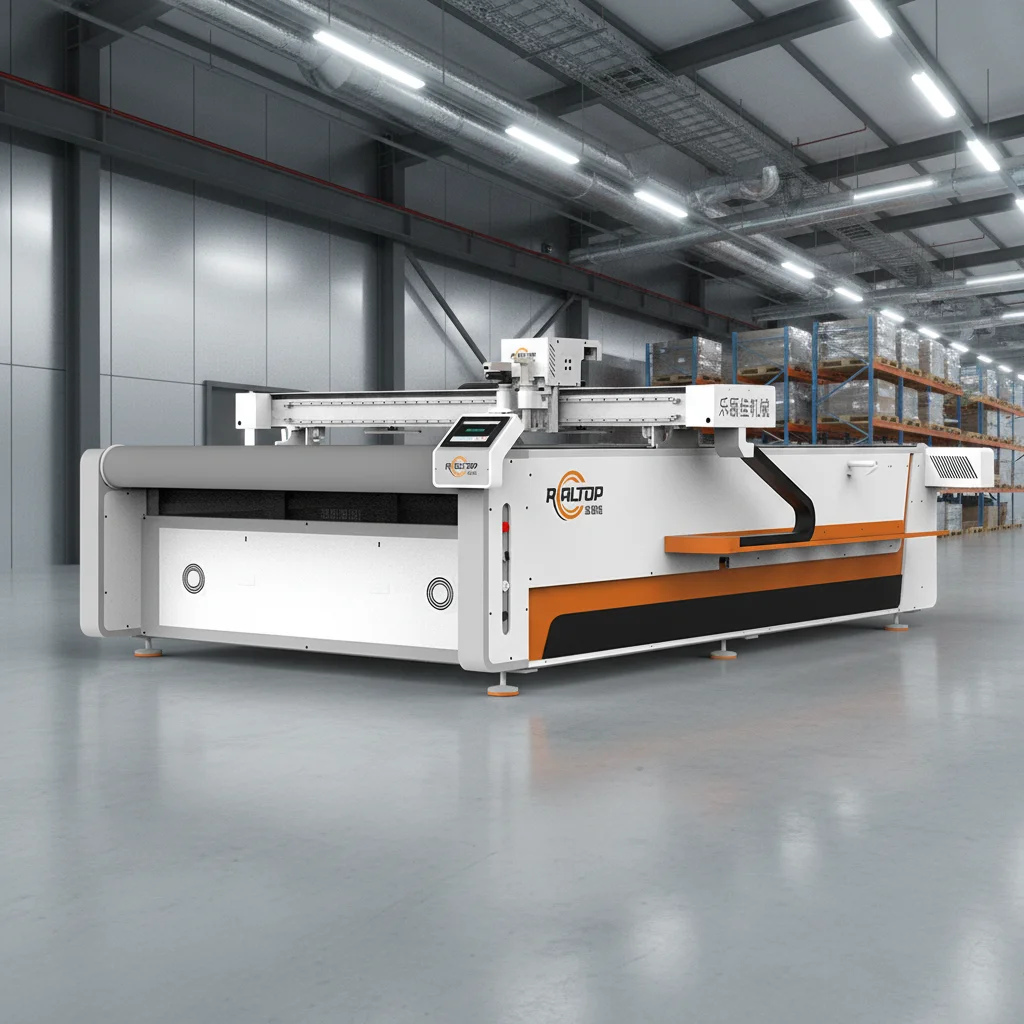
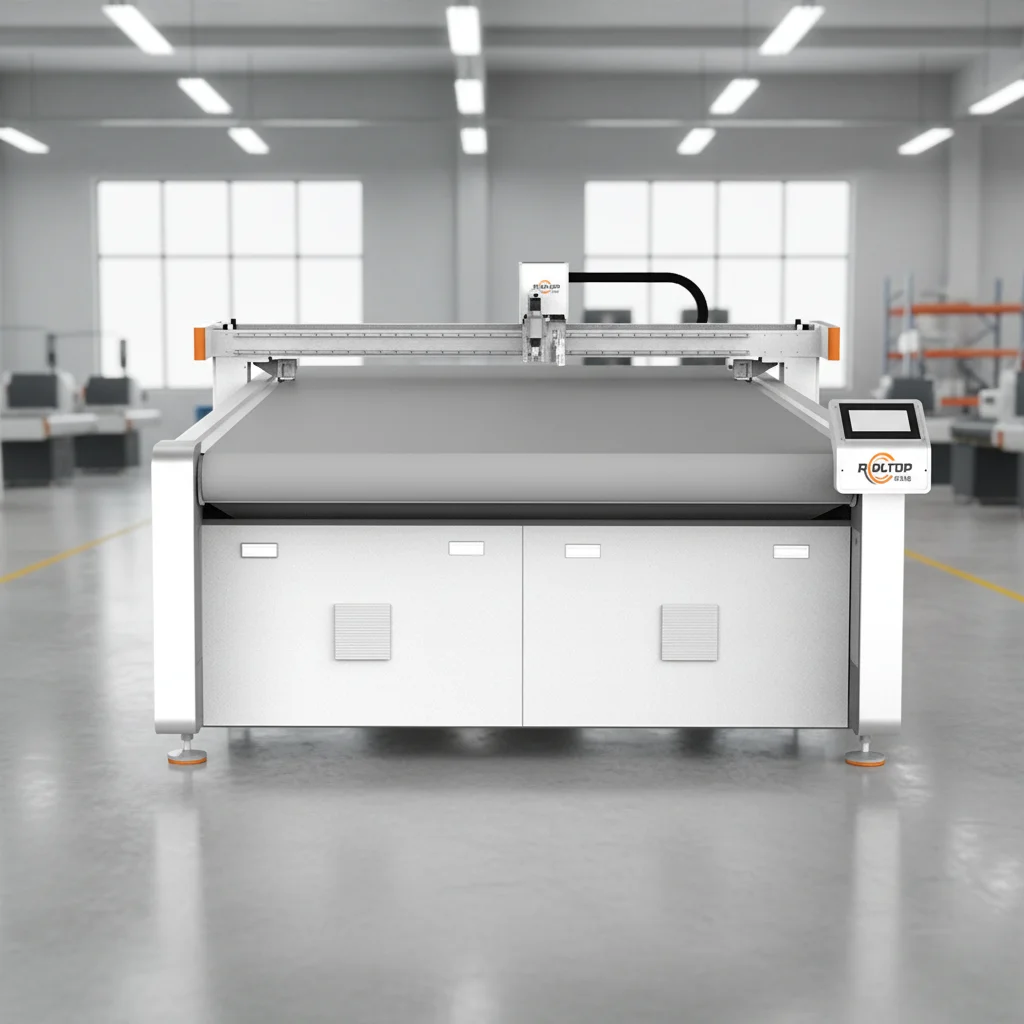
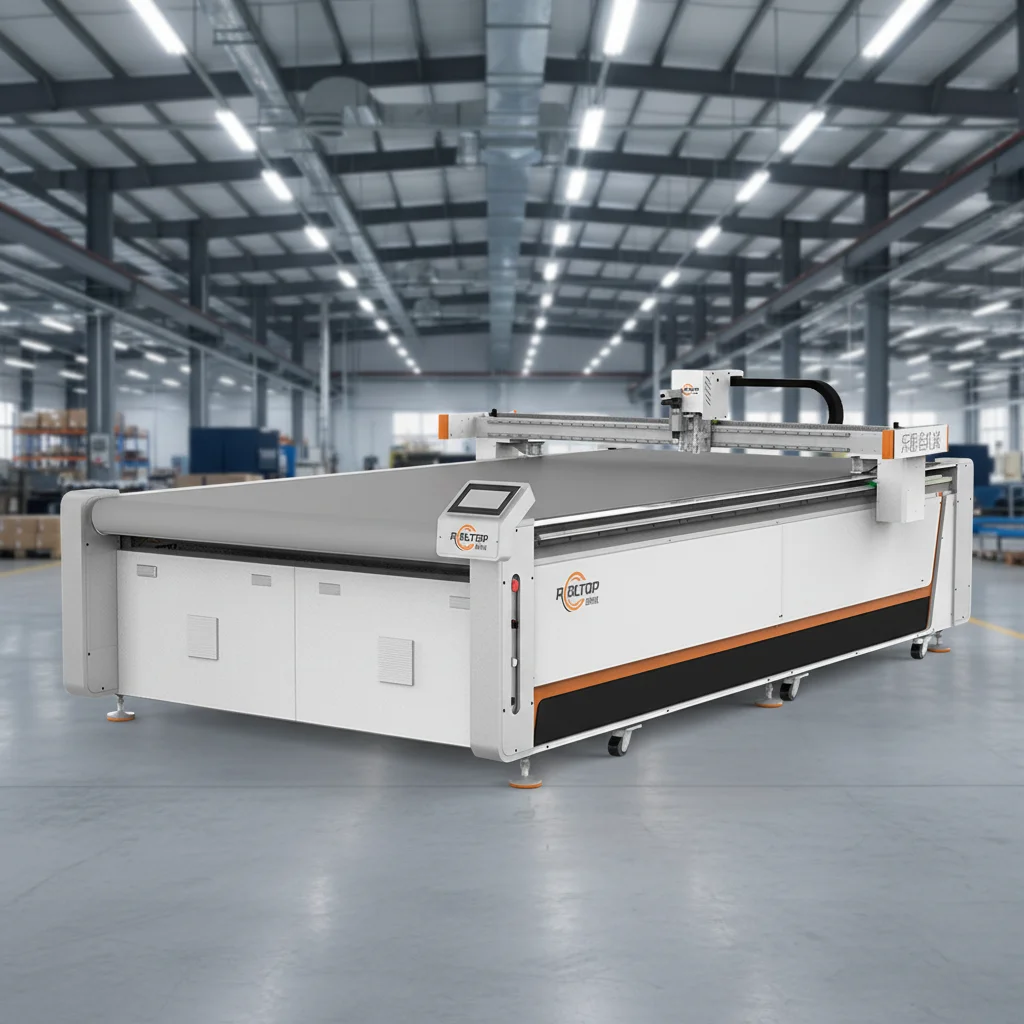
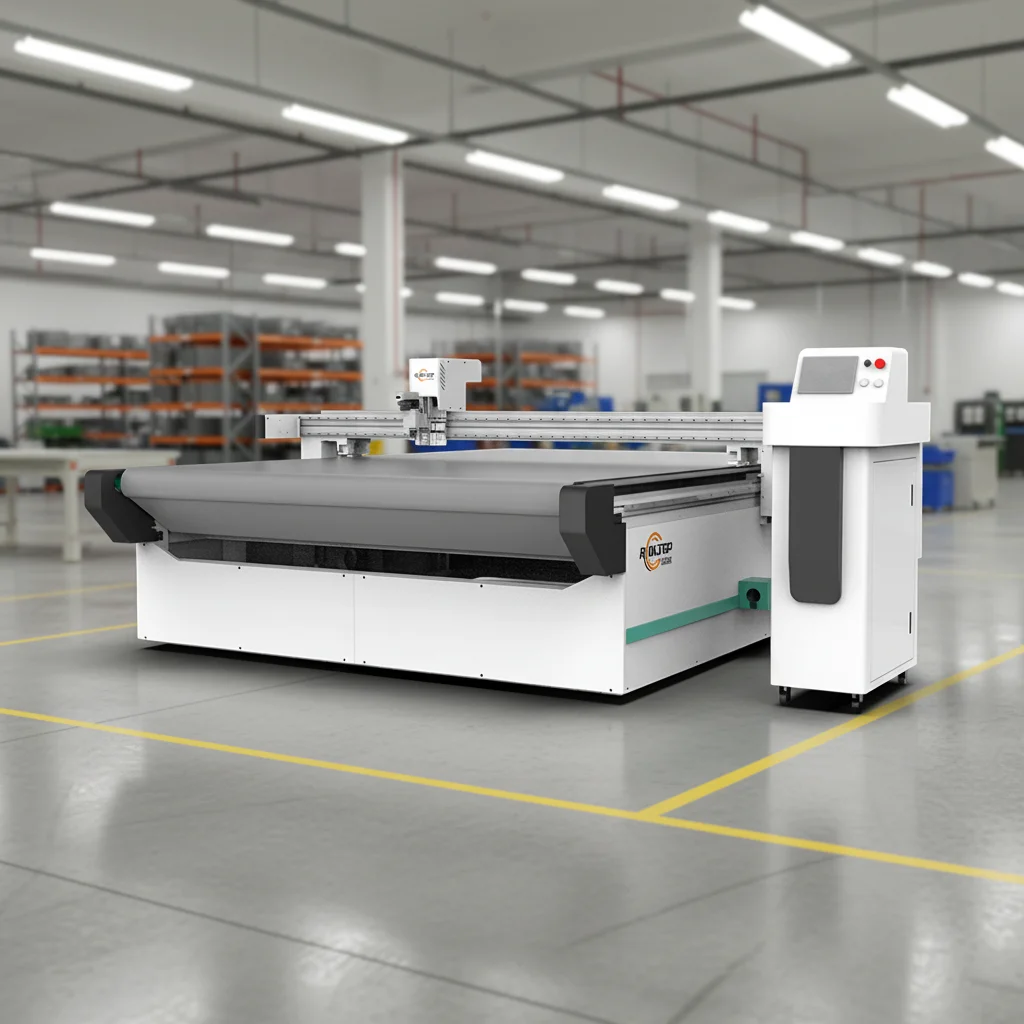
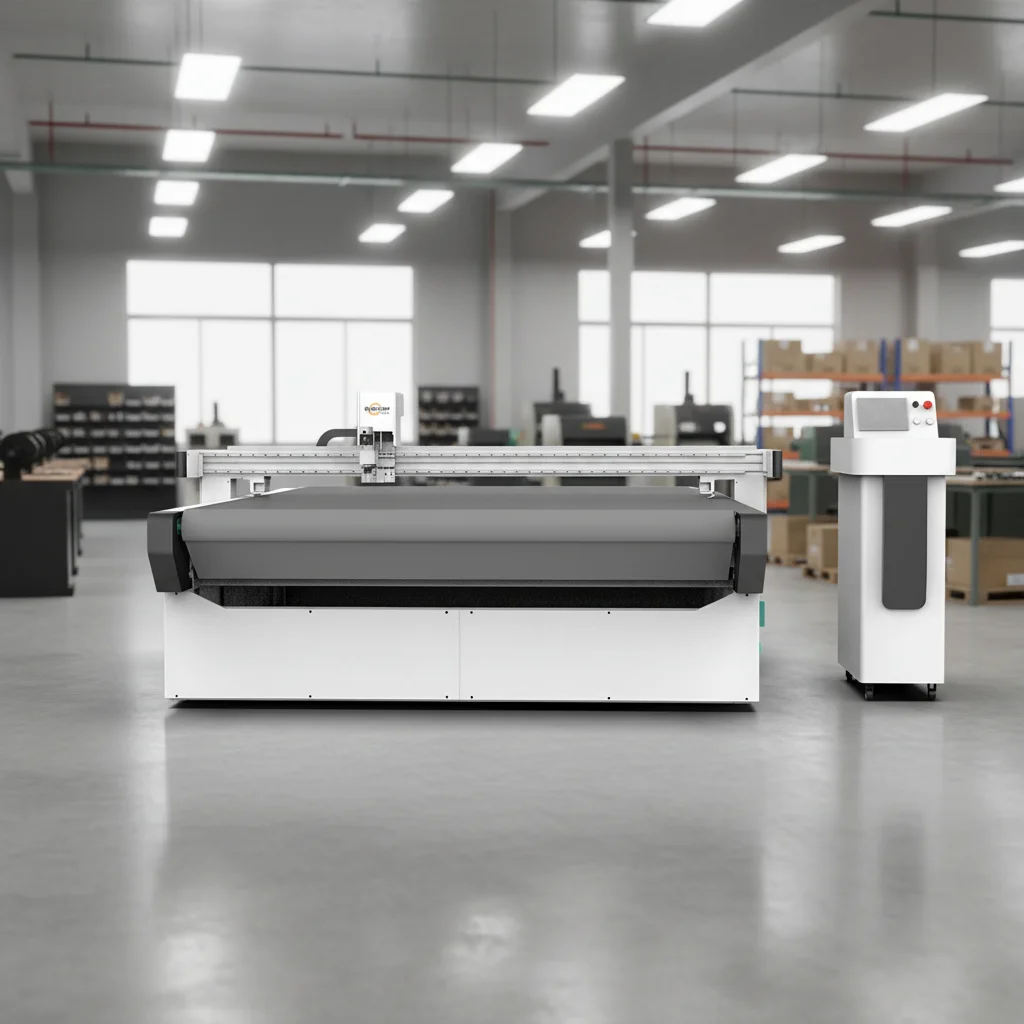
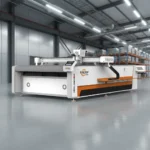
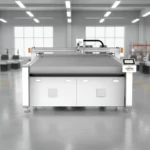
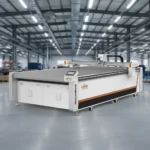
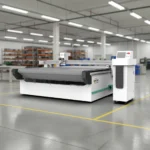
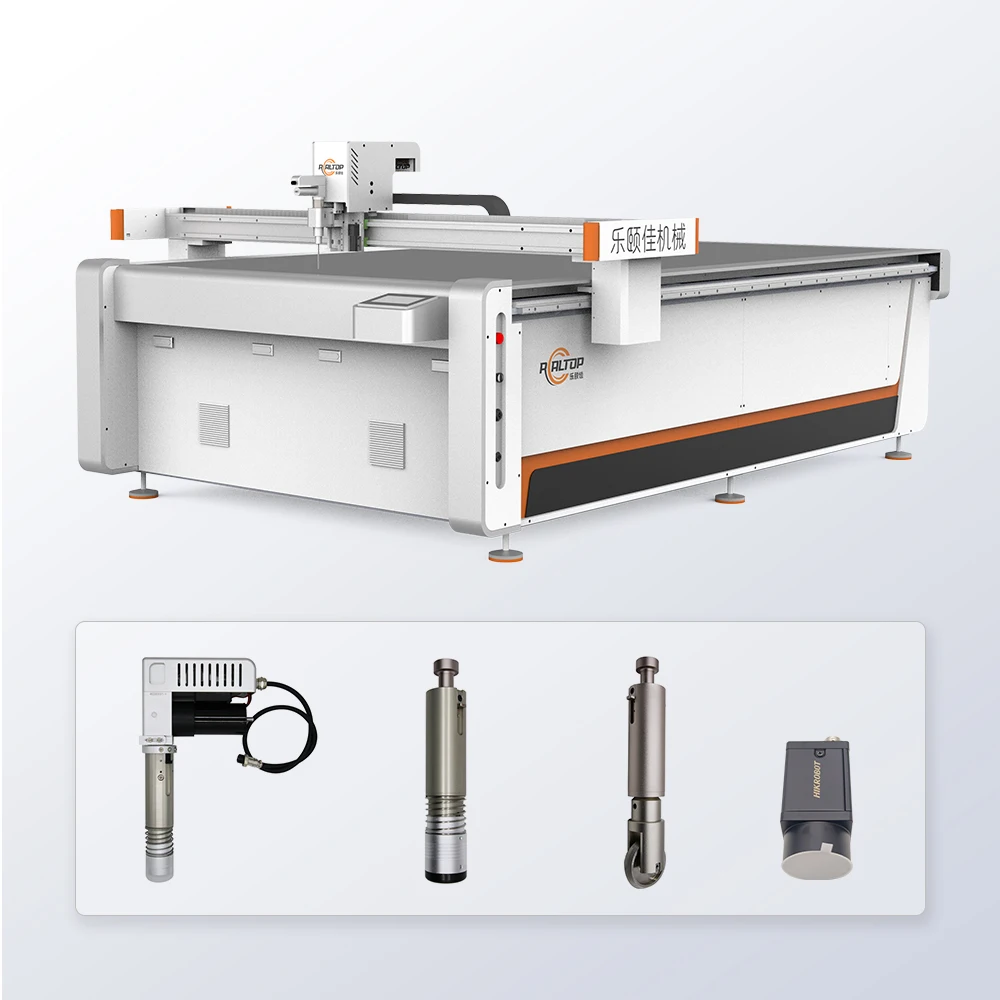
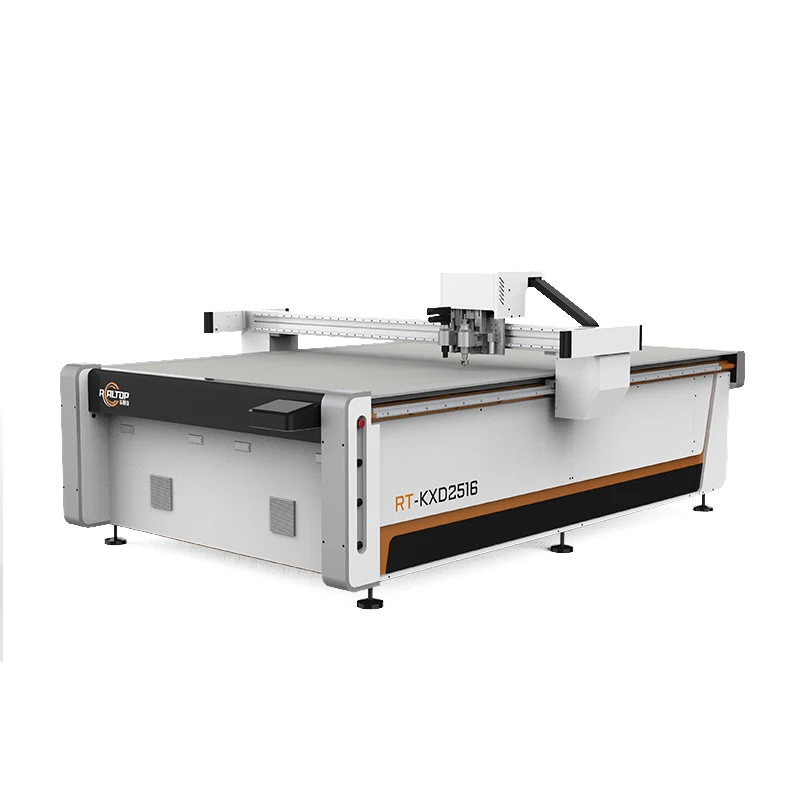
Core Factory Build Quality — Every RT-D2516 and RT-S2516 frame undergoes high-temperature tempering and CNC machining center finishing before assembly, ensuring the structural rigidity required for continuous fabric and composite cutting operations.
Technical Specifications
| Parameter | Value |
|---|---|
| Model | RT-D2516 / RT-S2516 |
| Product Type | CNC Oscillating Knife Cutting Machine |
| Working Area | 1600×2500 mm |
| Machine Size (L×W×H) | 3450×2300×1250 mm |
| Rated Power | 9 kW |
| Voltage | 380V ±10% |
| Cutting Speed | 800–2000 mm/s (translational velocity) |
| Cutting Thickness | ≤100 mm (basis to be confirmed depending on material density) |
| Repeatability | ≤0.1 mm |
| Transmission System | Delta or Panasonic digital servo motor, Taiwan Hiwin linear guide, synchronous belt, ball screw |
| Tool Head Options | Swiss imported oscillating knife, pneumatic knife, high-power vibrating knife, circular knife, V-cutting knife, drag knife, creasing wheel, dotted line knife, punching, brush |
| Vacuum Table | Magnesium-aluminum alloy with PVDF powder spraying, anodic and hard oxidation |
| Vacuum Pump | 7.5 kW integrated aviation aluminum shell pump with built-in silencer sponge |
| Control System | CNC with touch screen control panel, HP-GL compatible |
| Visual Positioning | Small CCD camera mark point, panoramic camera recognition, projection positioning (optional) |
| Safety Devices | Infrared induction blocking, anti-collision sensors, emergency stop with resume function |
| Software Compatibility | PLT, DXF, AI formats; auto typesetting and nesting |
Application Suitability
| Application | Material or Output |
|---|---|
| Garment and Footwear Manufacturing | Multi-layer cotton, denim, synthetic leather, shoe uppers, and lining fabrics |
| Automotive Interior Production | Car seat covers, headliners, floor mats, and sound insulation composite felts |
| Luggage and Bag Making | Heavy-duty nylon, canvas, PU leather, and EVA foam padding |
| Packaging and Gasket Sealing | Corrugated cardboard, plastic boxes, rubber seals, PTFE, and fiberglass sheets |
| Soft Furnishings and Outdoor Gear | Carpet, non-woven fabric, sponge, PU foam, and XPE insulation rolls |
Why Frame Rigidity Dictates Edge Quality on Multi-Ply Layups
A vibrating blade cutting through fifty layers of denim generates lateral resistance that exposes every weakness in a machine’s gantry and motion system.
When buyers evaluate a CNC oscillating knife cutting machine manufacturer, they often focus exclusively on the working area or the brand of the oscillating tool head. Yet the most common field failures I have witnessed on fabric cutting lines stem from gantry deflection and rail wear, issues that originate in the frame welding and finishing process. A machine that holds a tight tolerance on single-ply vinyl will often produce ragged edges or drift on thick composite layups if the underlying structure lacks mass and proper stress relief [NEED_CITE: structural dynamics in high-frequency oscillating cutting equipment]. The RT-D2516 and RT-S2516 address this by utilizing a thick-walled seamless steel structure that is heat-treated to relieve internal welding stresses before the mounting surfaces are milled.
Engineering the Foundation for Precision Textile Cutting
The core advantage of sourcing from an in-house manufacturer lies in the integration of the frame design with the motion components. Rather than dropping a pre-bought gantry onto a generic base, the RT-D2516 and RT-S2516 are built around a thick-walled seamless steel frame that undergoes high-temperature tempering. This thermal stress relief prevents the micro-deformations that typically occur months after a machine is installed in a humid or temperature-variable workshop. Once the frame stabilizes, CNC machining centers mill the rail mounting surfaces, ensuring the Taiwan Hiwin linear guides sit on a perfectly flat plane. This baseline accuracy is what allows the digital servo motors to maintain ≤0.1 mm repeatability, even when the Swiss oscillating knife is striking at high frequencies through dense materials like rubber gaskets or compressed sponge.
Vacuum Adsorption and Material Hold-Down Dynamics
Holding flexible materials flat without mechanical clamps requires a sophisticated understanding of airflow and surface friction. The magnesium-aluminum alloy vacuum table on these models is not merely a perforated plate; it undergoes a multi-stage surface treatment including fluorocarbon PVDF powder spraying, anodic oxidation, and hard oxidation. This process creates a surface that is highly resistant to the abrasion caused by dragging heavy fabric rolls across it, while maintaining the flatness required for consistent vacuum pull. The 7.5 kW vacuum pump, housed in an aviation aluminum shell with a built-in silencer sponge, provides the necessary static pressure to keep porous materials like non-woven textiles or carpet firmly anchored. Without this level of hold-down, the high-speed oscillating blade would simply lift the top plies of the layup, resulting in miscuts and wasted material [NEED_CITE: vacuum zoning requirements for porous composite materials].
Translating Motor Torque and Blade Frequency into Clean Edges
The interaction between the Delta or Panasonic servo motors and the Swiss imported oscillating knife defines the production capability of the line. The servo motors feature IP67 waterproof ratings and real-time automatic gain adjustment with vibration suppression, which is critical when the cutting head undergoes rapid directional changes. If the drive system cannot instantly compensate for the inertia of the tool head, the corner radius on a pattern piece will round off, ruining the fit of a garment or shoe upper. Furthermore, the cutting speed specification of 800–2000 mm/s refers to translational velocity; actual cutting speed through materials like 100 mm thick EVA foam or dense PU is governed by the stroke rate of the knife and the resistance of the polymer. The availability of specialized heads, such as the high-power vibrating knife or the circular knife, allows the operator to match the tool’s mechanical action to the tensile strength and compressibility of the specific layup being processed.
The Hidden Costs of Mismatched Tooling and Electrical Standards
One of the most frequent reasons for line stoppages is the specification of a machine based solely on its footprint, ignoring the electrical and tooling realities of the destination facility. A workshop running 415V at 50Hz may experience premature servo drive failure if connected to a machine configured for a different tolerance band without proper transformer isolation. Similarly, attempting to cut aramid fibers or carbon fiber prepreg with a standard drag knife instead of the specified high-power vibrating knife or punching tool will rapidly degrade the blade holder and compromise the cut edge. These mismatches lead to extended downtime while waiting for replacement parts and recalibration, turning a productive asset into a bottleneck [NEED_CITE: impact of voltage fluctuation on industrial servo drive longevity].
Why Sourcing Directly from the Core Factory Matters
Procuring this equipment directly from the source provides transparency that trading channels cannot match. The in-house design team controls the integration of the CCD camera positioning systems, ensuring the panoramic or mark-point recognition aligns with the machine’s coordinate system for accurate contour cutting of printed textiles. Component sourcing is fully documented; buyers know exactly whether their unit is equipped with Delta or Panasonic drives and can verify the origin of the linear rails. The factory’s capability to perform high-temperature tempering and CNC finishing on the frame guarantees structural integrity. Furthermore, OEM and private-label adaptations, such as custom control languages or specific safety guarding configurations, are engineered into the build rather than applied as afterthoughts. This level of control ensures the RT-D2516 and RT-S2516 meet the exact demands of the buyer’s production environment.
Documentation & Verification
- Machine specification sheet detailing RT-D2516/RT-S2516 electrical schematics and 380V voltage configuration
- Factory test record documenting cutting performance on buyer-supplied fabric or composite samples
- Component sourcing list verifying Delta or Panasonic servo motors and Taiwan Hiwin linear guides
- Tool head and vacuum table configuration list matching specific material thickness and porosity requirements
- Software license and file format compatibility note confirming PLT, DXF, and AI workflow integration
Installation, Commissioning & Support
- Requires a leveled concrete foundation capable of supporting the 3450×2300×1250 mm machine footprint and dynamic loads
- Dedicated 380V ±10% circuit with appropriate isolation for the 9 kW rated power and 7.5 kW vacuum pump
- Split box platform option available to facilitate transport and reassembly in facilities with restricted access
- Initial calibration of the Swiss oscillating knife and CCD camera positioning system performed on-site
- Operator training on auto typesetting software and tool head changes for varying material densities
- Scheduled inspection of the synchronous belt tension and magnesium-aluminum table surface for wear
Preparing Your Material Data for Quotation
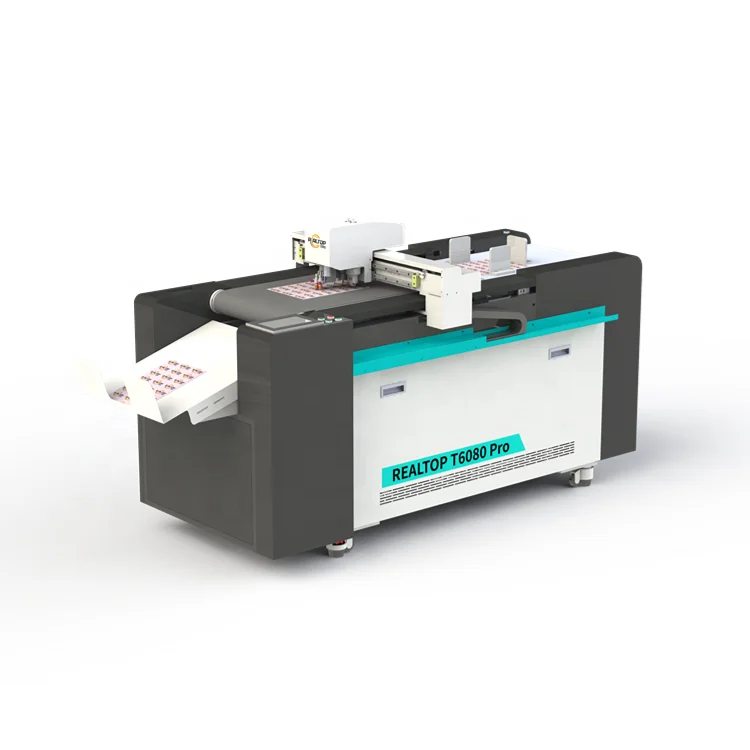
To determine the correct configuration between the flat table and auto-feeding conveyor models, we require details on your primary material types, maximum layup thickness, and daily cutting volume. Please specify the local voltage and frequency standards, as well as the preferred language for the touch screen control panel. Providing digital or physical samples of your most challenging materials allows us to test the appropriate oscillating or pneumatic knife head before finalizing the build specification.
Frequently Asked Questions
Q: What OEM and private-label customization is available for this cutting table?
A: We offer comprehensive customization including frame color matching, specific electrical standards, and branding on both the machine chassis and documentation. The control panel language can be configured to English, Russian, Italian, or other specific languages. Tool head configurations and safety guarding can also be adapted to meet regional distributor requirements or specific factory safety protocols.
Q: How is the build quality and frame rigidity verified before shipment?
A: Every frame is constructed from thick-walled seamless steel and undergoes high-temperature tempering to relieve welding stress. The mounting surfaces are then finished using CNC machining centers to ensure flatness. We provide a factory test record and inspection protocol documentation, allowing buyers or their appointed third-party inspectors to verify the structural integrity and motion precision before the machine is packed.
Q: What factory documentation is provided to verify component sourcing?
A: Buyers receive a detailed configuration list that identifies the specific brands of critical components, such as the Delta or Panasonic servo motors and Taiwan Hiwin linear guides. The documentation package also includes the electrical schematic, software compatibility notes, and a packing list with photographs, ensuring full transparency regarding the machine’s internal build and part origins.
Q: Can the machine handle both single-ply vinyl and multi-layer composite fabrics?
A: Yes, but it requires selecting the correct tool head and vacuum zoning strategy. The Swiss oscillating knife is suitable for many flexible materials, while high-power vibrating knives or pneumatic options may be specified for dense composites. We test your specific material samples at the factory to confirm the cutting edge quality and throughput before the configuration is finalized.
You may also like

商品评价
Clear filtersThere are no reviews yet.