


-
 Courier delivery
-
 DHL Courier delivery
-
 Warranty 1 year
-
 Free 30-Day returns

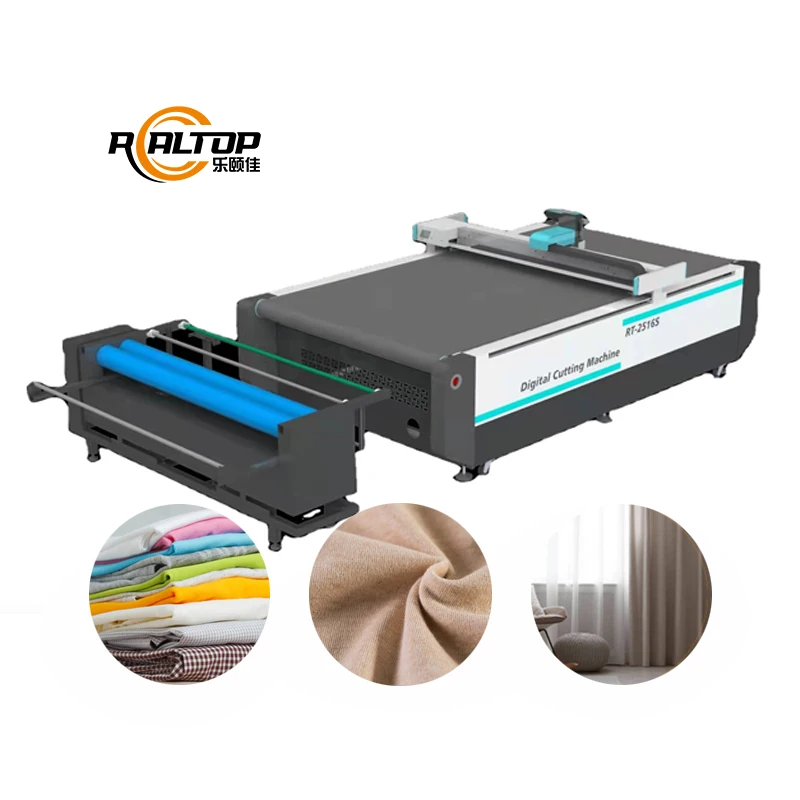
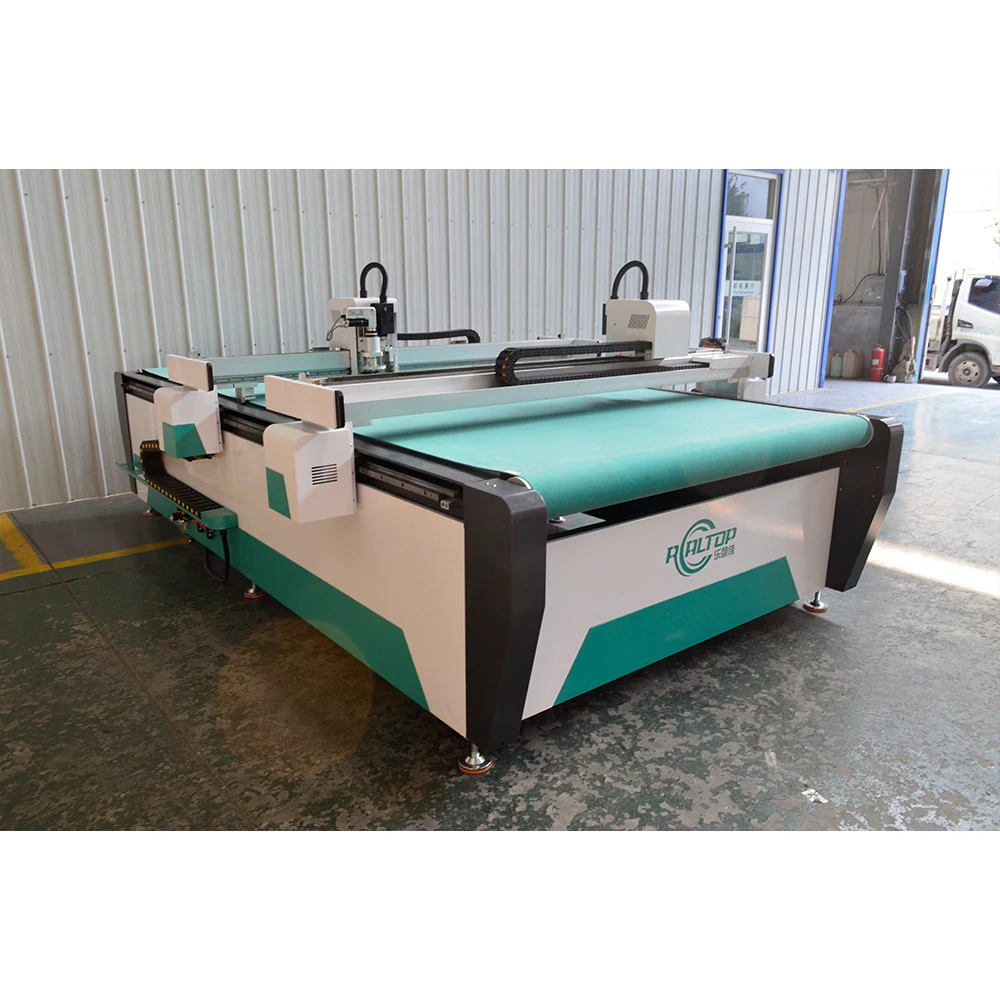
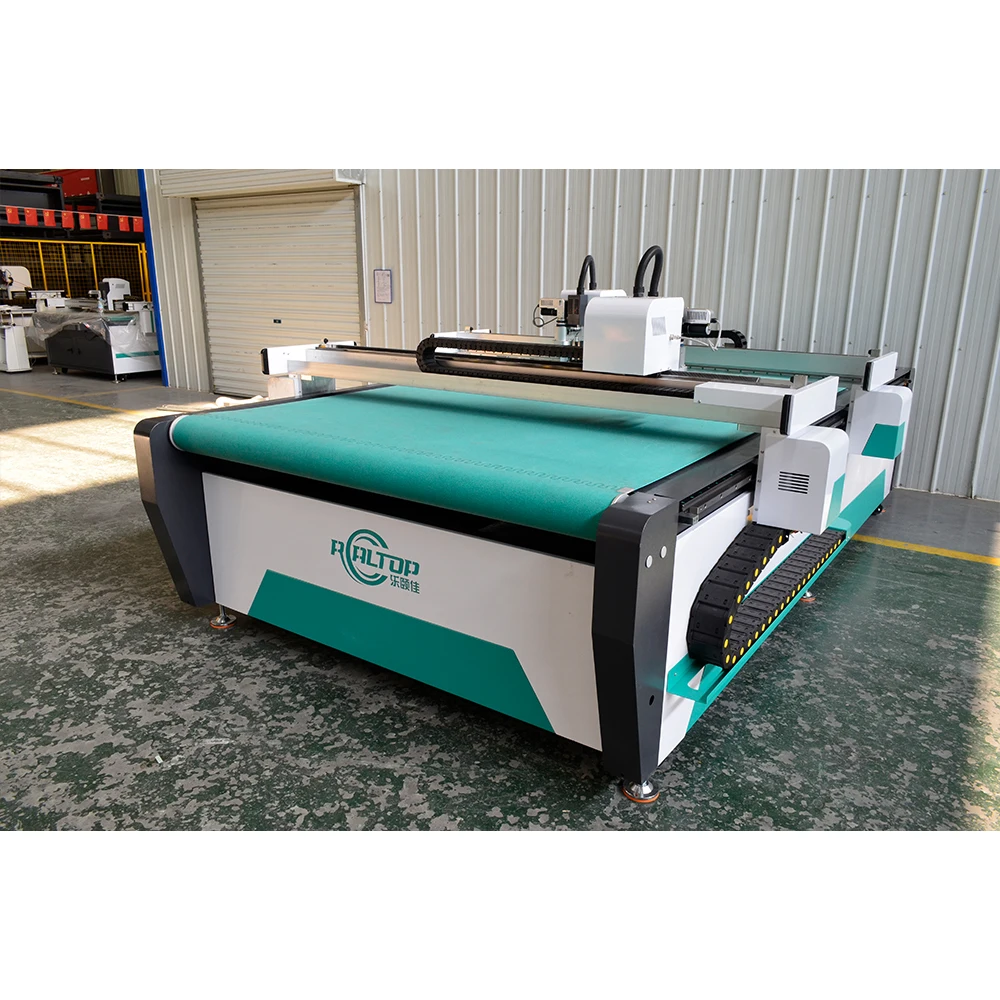
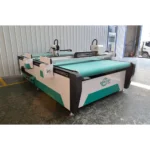
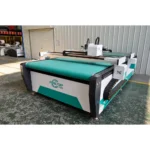
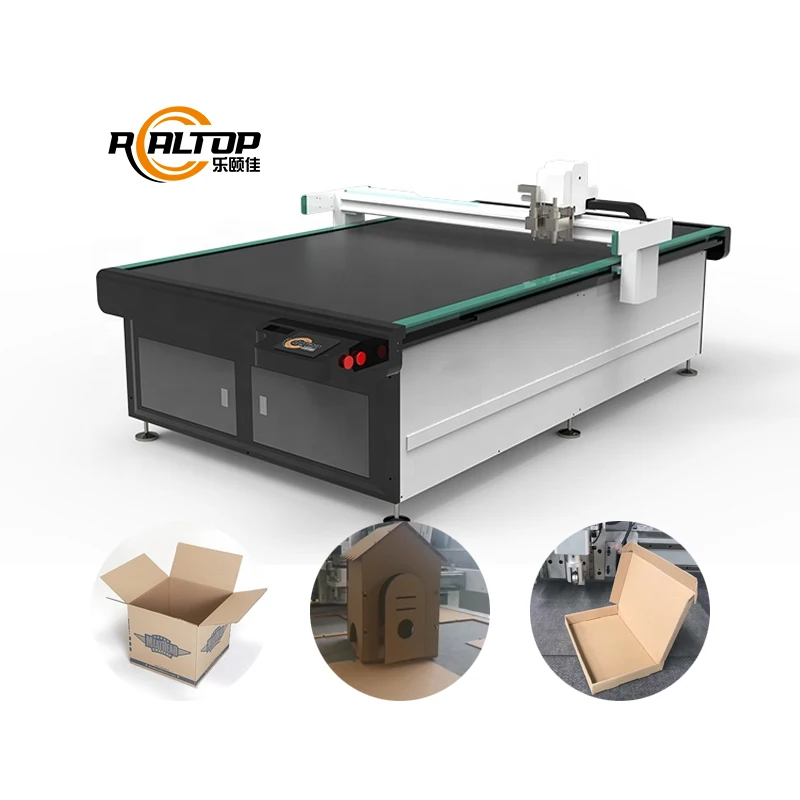
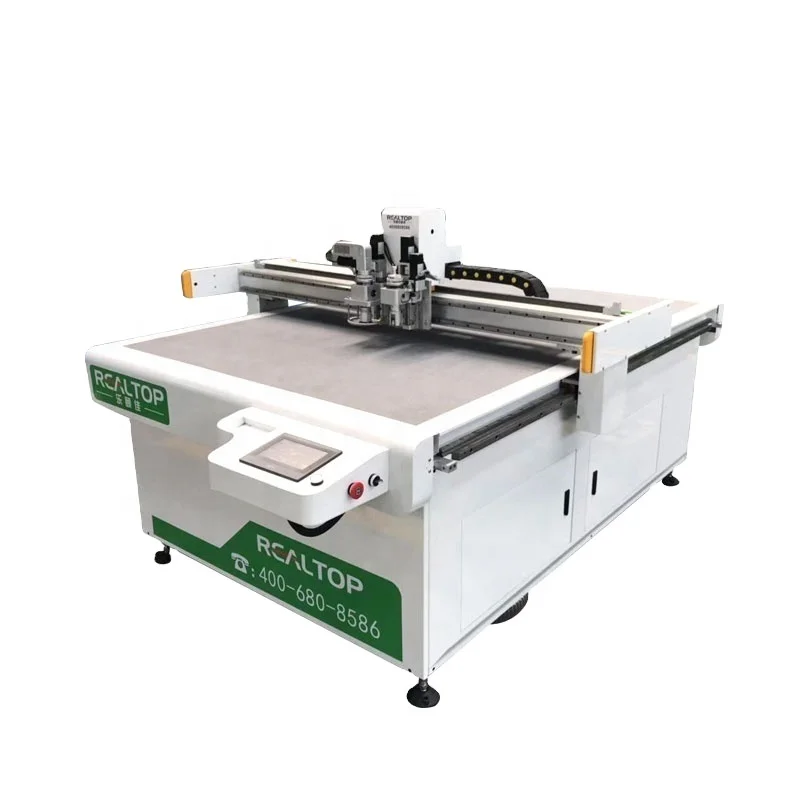
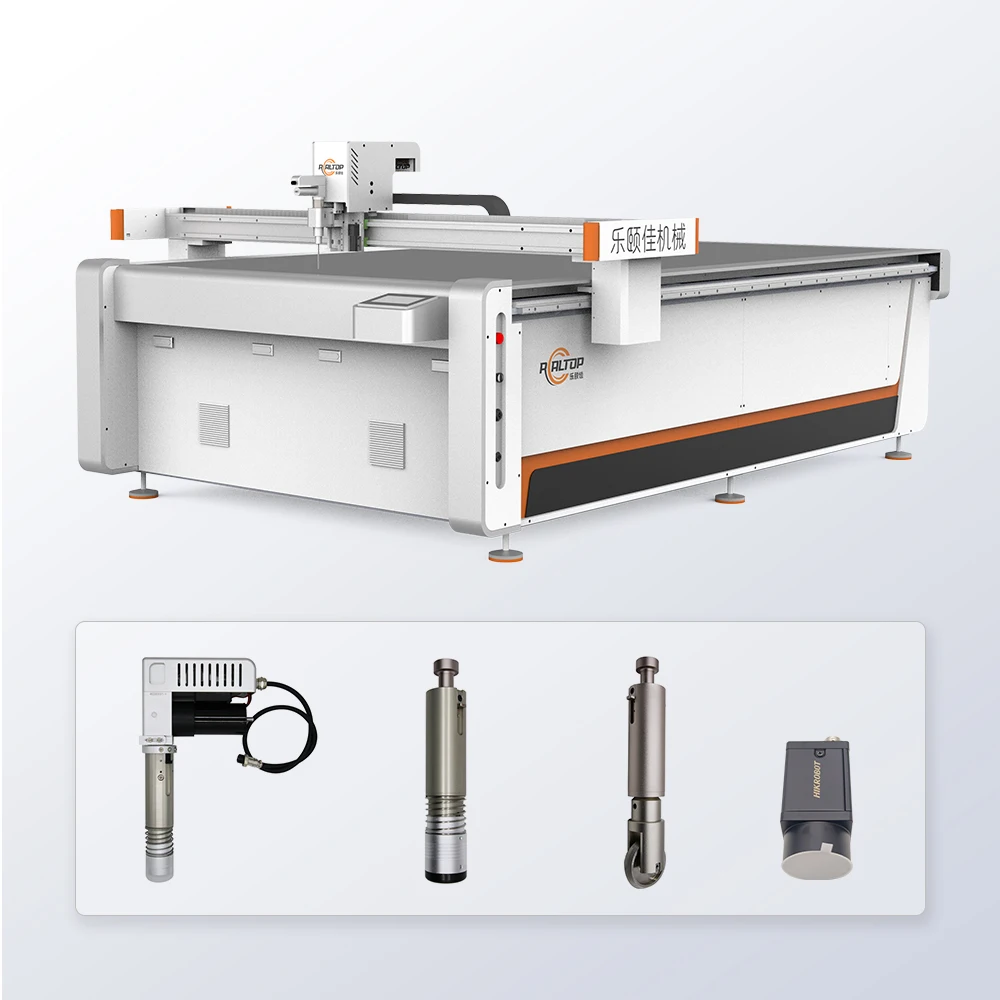
Welded-bed rigidity — The lathe bed of the RT-D2516/RT-S2516 undergoes overall welding and imported milling machine processing, ensuring long-term motion accuracy across the 1600×2500mm working area rather than relying on bolted-together extrusions that drift under continuous cutting loads.
Technical Specifications
| Parameter | Value |
|---|---|
| Model | RT-D2516/RT-S2516 |
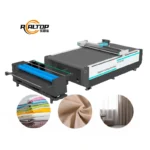
| Product Type | CNC Oscillating Knife Cutting Machine |
| Working Area | 1600 × 2500 mm |
| Machine Size | 3450 × 2300 × 1250 mm |
| Rated Power | 9 kW |
| Cutting Thickness | ≤50 mm (according to different cutting materials) |
| Translational Velocity | 800–1200 mm/s |
| Repeated Accuracy | ≤0.1 mm |
| Drive Mechanism | Pinion and rack transmission |
| Transmission System | Digital servo motor, linear guide, synchronous belt, ball screw |
| Table Structure | High precision aviation aluminum countertop with inner wind structure |
| Table Cloth | High-density felt |
| Fixed Model | Flat working table |
| Multifunctional Head | Swiss imported knife: vibration full cutting, vibration half cutting, cursor location |
| Safety Device | Infrared sensors |
| Motor Brand | Panasonic Servo motor (source value — verify against manufacturer catalog) |
| Vacuum Pump | 7.5 kW |
| Voltage | 380V ± 10% |
| Instruction System | HP-GL compatible format |
| Other Configuration | Delta servo motor, Germany imported conveyor belt, auto feeding, Taiwan Hiwin rail |
| Certification | CE |
Application Suitability
| Application | Material or Output |
|---|---|
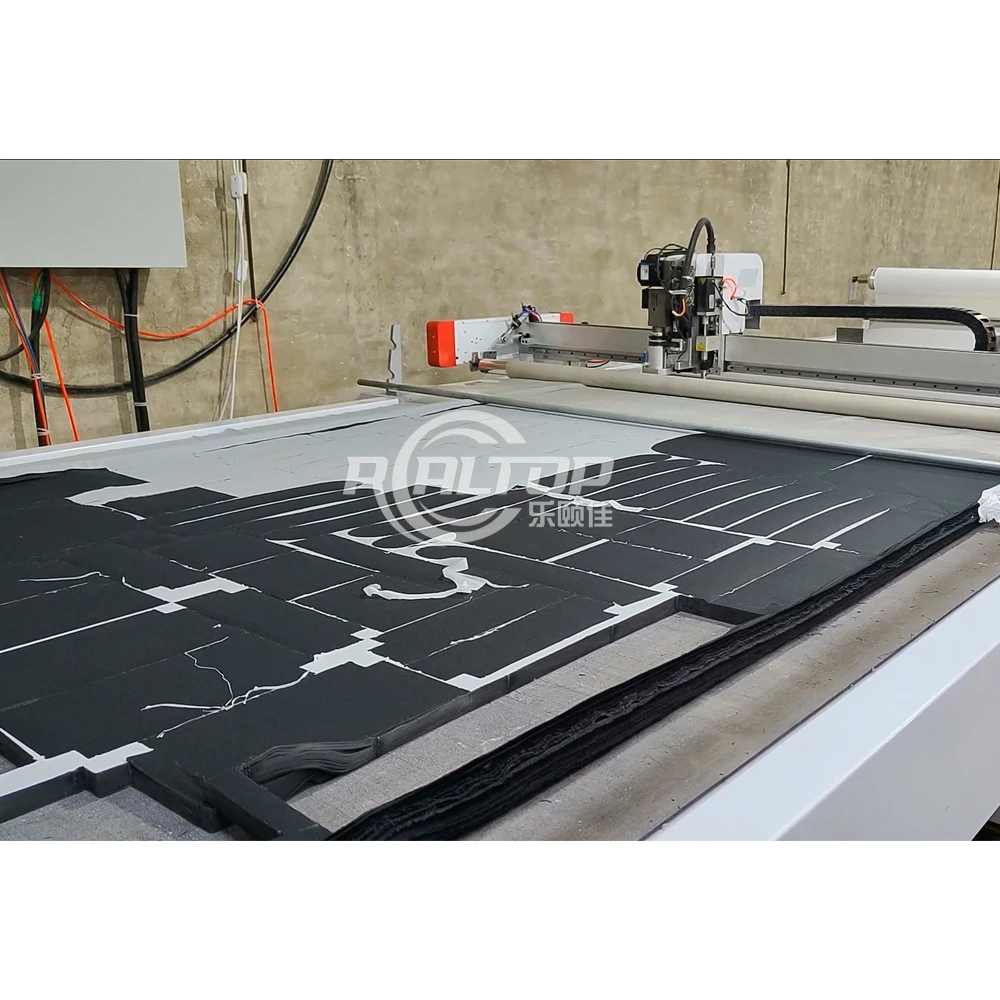
| Garment and footwear production | Multi-layer fabric, textile, leather |
| Automotive interior trimming | Sponge composite leather, flexible composite materials |
| Fashion and interior design | Clothing flexible materials, PVC, soft glass |
| Industrial gasket and seal cutting | Silicon, rubber, soft non-metallic sheets |
Why "Cutting Thickness ≤50mm" Means Nothing Without Your Material
Real cutting capacity depends on material density and layer structure, not a single number on a spec sheet.
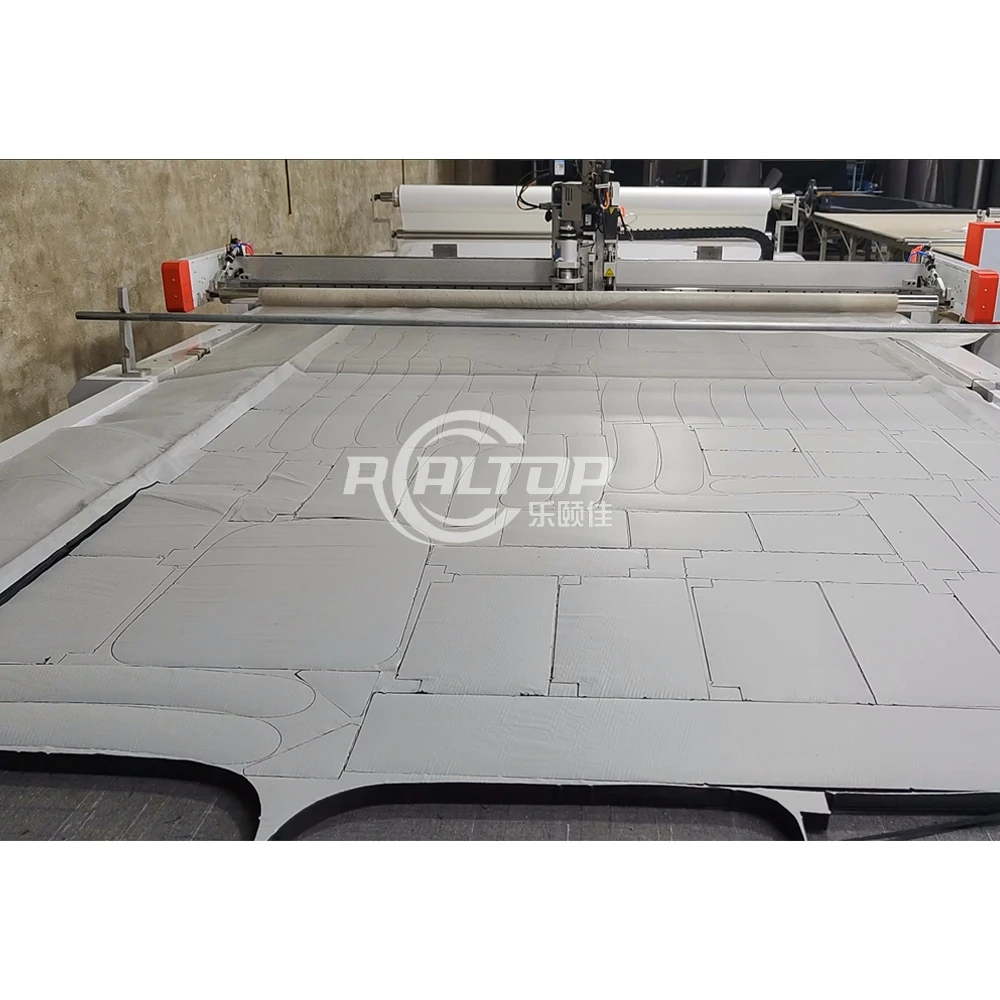
When I helped commission a fabric cutting line for an automotive interior supplier, the machine was rated for 50mm thickness on paper. Their actual material was a sponge-and-fiberglass composite for headliners — the sponge compressed under standard knife pressure while the fiberglass layer frayed at the edges. We spent four days on-site adjusting oscillation frequency and knife pressure before the cuts met quality standards [NEED_CITE: composite material cutting behavior under oscillating knife]. A CNC Fabric Cutting Machine manufacturer who only quotes working area and maximum thickness without asking about your specific material stack is leaving you exposed to exactly this kind of production failure.
Frame and Motion Architecture
The RT-D2516/RT-S2516 is built on an overall-welded lathe bed that goes through imported milling machine processing after welding. This matters because CNC oscillating knife cutting generates continuous lateral vibration at the tool head, and a frame assembled from bolted extrusions can develop micro-shifts at the joints over months of production. The welded-and-milled approach keeps the gantry reference surface true, which directly supports the ≤0.1mm repeated accuracy claim across the full 1600×2500mm CNC Fabric Cutting Machine working envelope.
Vacuum Table Zoning and Small-Part Hold-Down
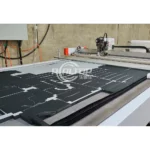
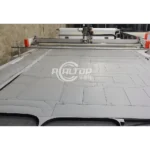
The aviation aluminum countertop uses an inner wind structure connected to a 7.5 kW vacuum pump. The high-density felt table cloth sits on top and serves as both the cutting surface and the air-permeable layer that pulls vacuum through to the material. For small garment pattern pieces or narrow automotive trim strips, insufficient vacuum zoning means parts lift during the final cuts and shift position, ruining nesting yield [NEED_CITE: vacuum hold-down requirements for flexible materials]. The zoned wind structure allows operators to activate only the sections under active cutting, concentrating suction where it is needed.
Reading the Specs That Actually Matter
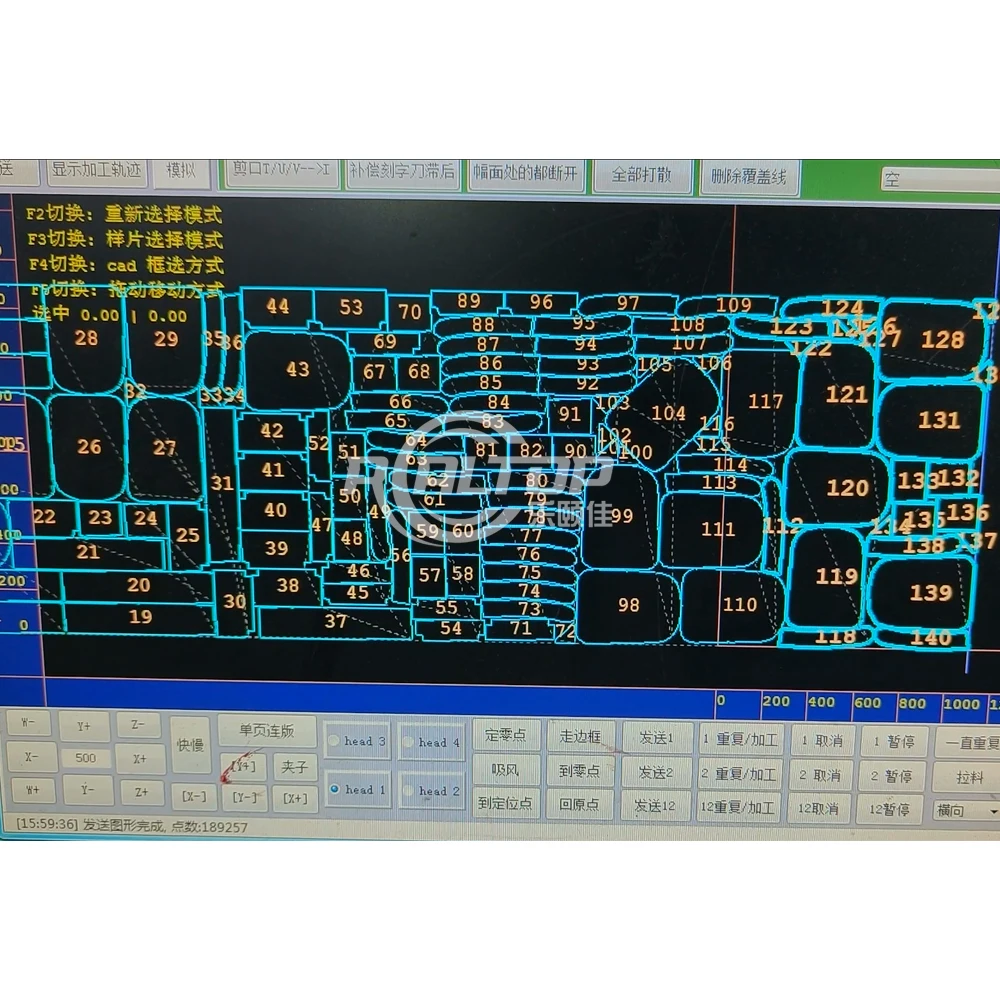
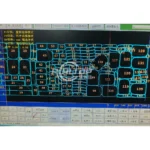
The pinion-and-rack drive mechanism carries the gantry across the 2500mm length, chosen over belt drives for higher bearing capacity and sustained transmission accuracy — belt systems stretch over time and lose positional repeatability. The Panasonic servo motors (verify against current build) provide closed-loop position feedback so the controller corrects deviation in real time. Taiwan Hiwin linear rails guide the carriage with low rolling friction, keeping the oscillating knife perpendicular to the table surface even at the 800–1200 mm/s translational velocity range. The Swiss imported multifunctional knife head supports vibration full cutting, half cutting, and cursor location, giving operators flexibility across through-cuts, kiss-cuts on liner-backed materials, and mark-and-cut workflows without a head change. HP-GL compatible instruction format means the controller accepts files from common nesting and CAD systems already used in garment and leather workshops.
The Cost of Specifying on Working Area Alone
Buyers often start with table size and assume everything else follows. A 1600×2500mm table large enough for your fabric rolls does not guarantee the knife head can handle your material thickness or that the vacuum system will hold your smallest pieces flat. When the wrong tool head is paired with a dense composite, you get ragged edges that require manual trimming — quietly adding labor cost to every shift [NEED_CITE: tool head selection and edge quality in oscillating knife cutting]. Confirming the cutting method, tool head configuration, and vacuum zoning against your actual production materials before the order is placed avoids the situation where the machine arrives and cannot do the job it was bought for.
Why Source This CNC Fabric Cutting Machine Here
The design team and core factory cover both knife and laser cutting technologies under one roof, so the cutting method is matched to your material rather than forced into whatever the factory prefers to build. Tool head and table configurations are specified per your material type and daily production volume, not pulled from a standard catalog page. Voltage, control language, and plug type are confirmed before production starts, preventing the shipment of a 380V machine to a 220V workshop. Every unit is sample-cut on the buyer’s own material before commitment, giving you physical proof that the configuration works on your fabric, leather, or composite — not just on the factory’s test swatch. Documentation includes the electrical schematic, tool head list, and software file-format compatibility note so there are no surprises during commissioning.
Documentation & Verification
- Machine specification sheet listing confirmed tool head and table configuration for your material
- Electrical schematic with voltage and frequency matching your local supply
- Sample cutting report produced on your fabric or composite before dispatch
- Software licence and file format compatibility note for your nesting workflow
- Factory test record with actual repeated accuracy measurements
- Spare parts list covering blades, felt, and wear items for first-year operation
Installation, Commissioning & Support
- Foundation must be level and able to support the 3450×2300×1250mm machine footprint with clearance for auto-feeding rolls
- Dedicated 380V ± 10% circuit required for the 9 kW rated power draw plus the 7.5 kW vacuum pump
- Machine ships in modular sections; gantry and table are aligned on-site using the milled reference surfaces
- First-run parameter setting includes oscillation frequency, knife pressure, and vacuum zone mapping for your material
- Operator training covers HP-GL file import, nesting layout, and tool head changeover procedures
- High-density felt replacement intervals and Swiss knife blade stock are reviewed during handover
Before You Send an Inquiry
To get a configuration that actually works on your production floor, share your material type, layer structure, and maximum thickness along with your largest sheet or roll width. Confirm your local voltage and frequency so the electrical system is built correctly from the start. If you have an existing nesting software or file format in daily use, send a sample file so compatibility is verified before the machine is built — not discovered as a problem on day one of production.
Frequently Asked Questions
Q: How can I verify the real cutting thickness for my specific fabric or composite?
A: Request a sample cutting test using your own material sent to the factory before order confirmation. The test report documents knife pressure, oscillation frequency, and edge quality on your exact material stack. A number like ≤50mm on a spec sheet only reflects ideal conditions, and sponge composites or layered textiles behave very differently from solid foam.
Q: What electrical and control options are confirmed before the machine ships?
A: Voltage, plug type, and control interface language are confirmed during the quotation stage and documented in the electrical schematic. The RT-D2516/RT-S2516 is configured for 380V ± 10%, but other voltages are available when specified early. This avoids the costly rewiring and transformer work that happens when assumptions are made.
Q: How does the factory ensure the frame stays accurate over years of vibration?
A: The lathe bed is overall-welded and then machined on an imported milling machine, creating a single rigid reference surface. Bolted or extruded frames can develop joint play under continuous oscillating knife vibration. The welded-and-milled approach preserves the ≤0.1mm repeated accuracy across the full table over long production runs.
Q: Can I add tool heads or automation after the initial purchase?
A: The multifunctional head design accepts round knife, marking pen, and auto-feeder attachments as your product lines expand. The conveyor belt and auto-feeding system are part of the configurable platform, so adding material handling later does not require a new machine base. Confirm the expansion path during initial specification to ensure the control system supports future modules.
Q: What OEM capability is available for distributors and importers?
A: The core factory handles in-house design and production, supporting OEM branding, custom voltage builds, and control language localization. Documentation including CE declaration, electrical schematics, and operation manuals can be produced under the distributor’s brand. Sample cutting on target materials validates the configuration before bulk orders are committed.
You may also like

商品评价
Clear filtersThere are no reviews yet.