


-
 Courier delivery
-
 DHL Courier delivery
-
 Warranty 1 year
-
 Free 30-Day returns

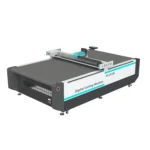
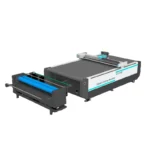
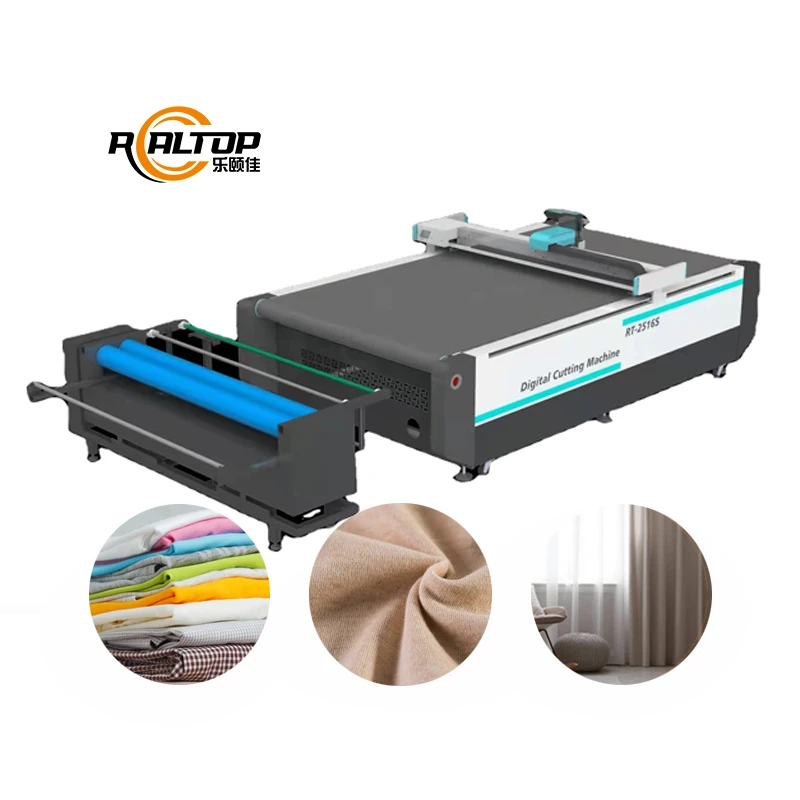
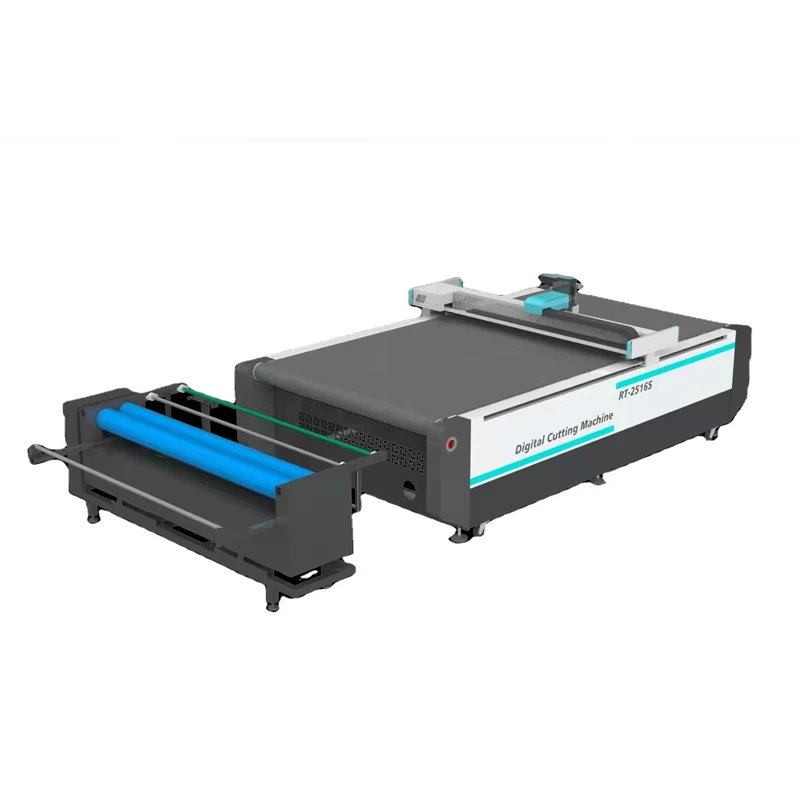
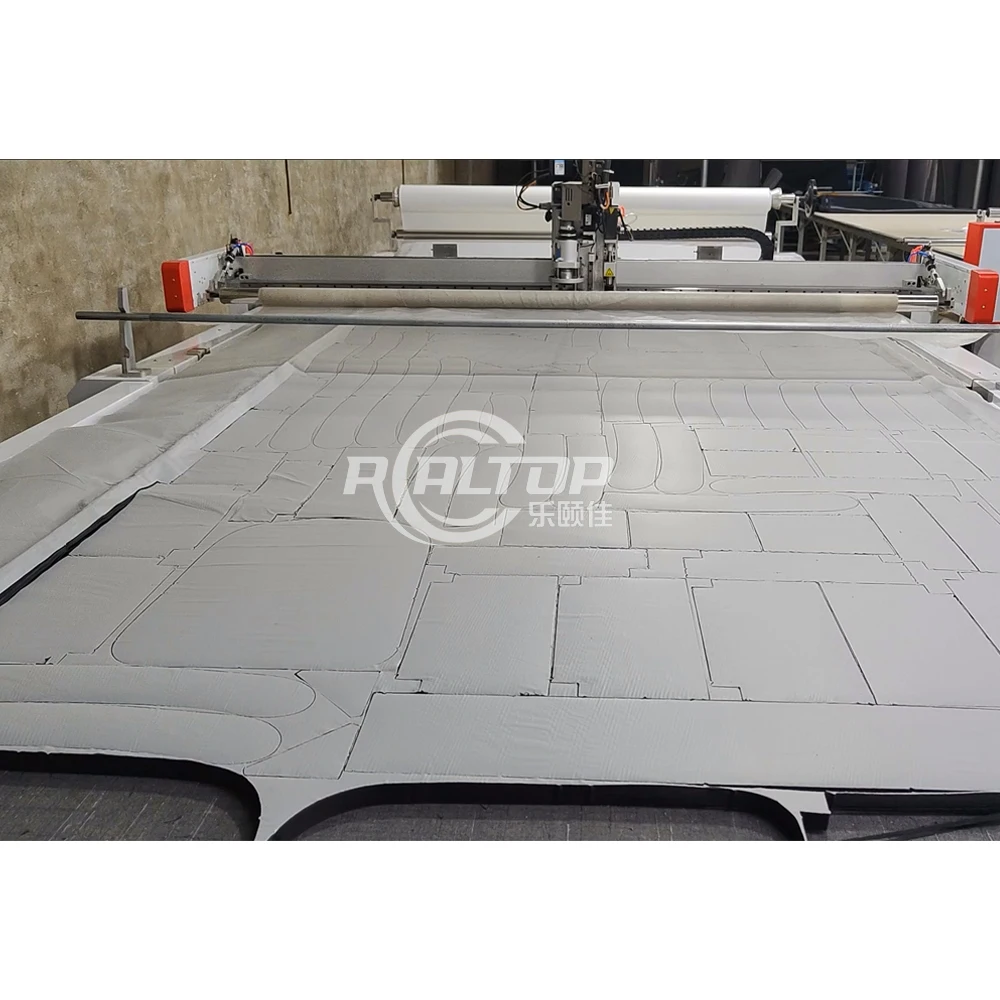
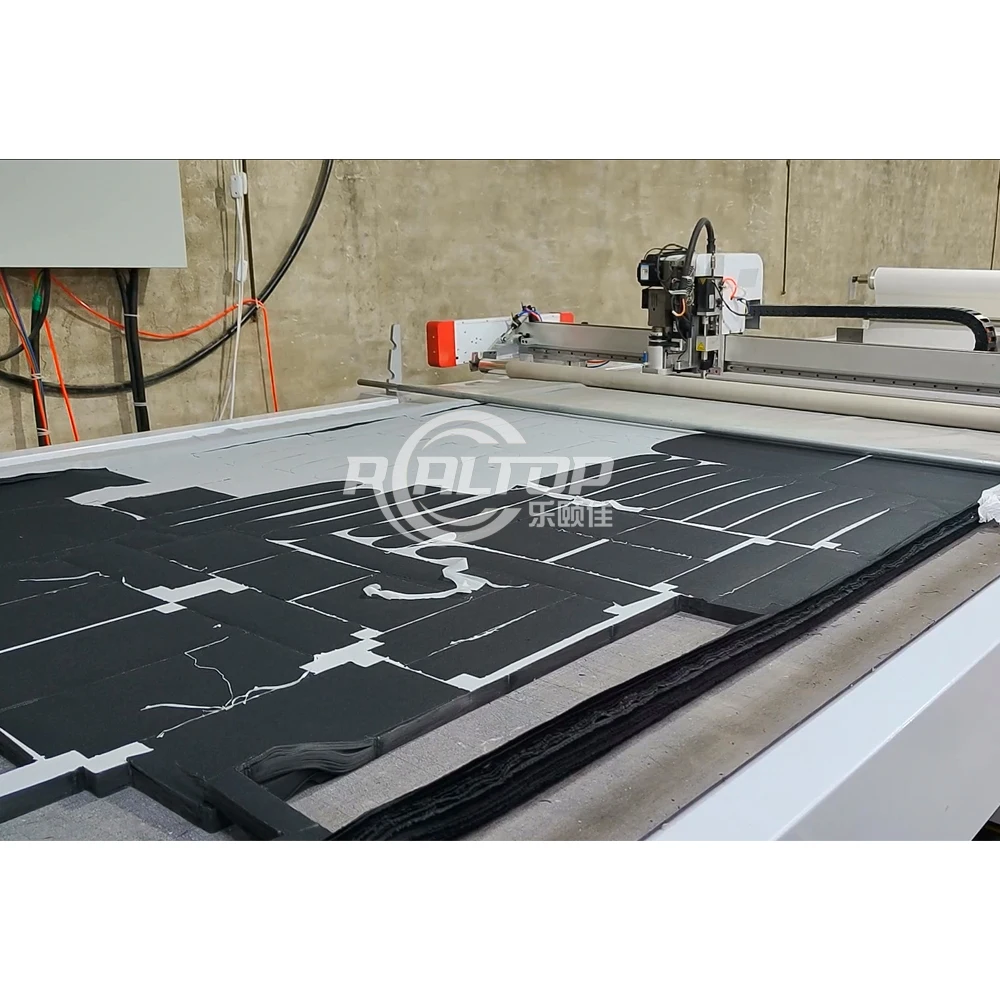
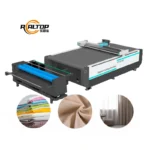
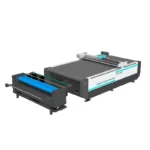
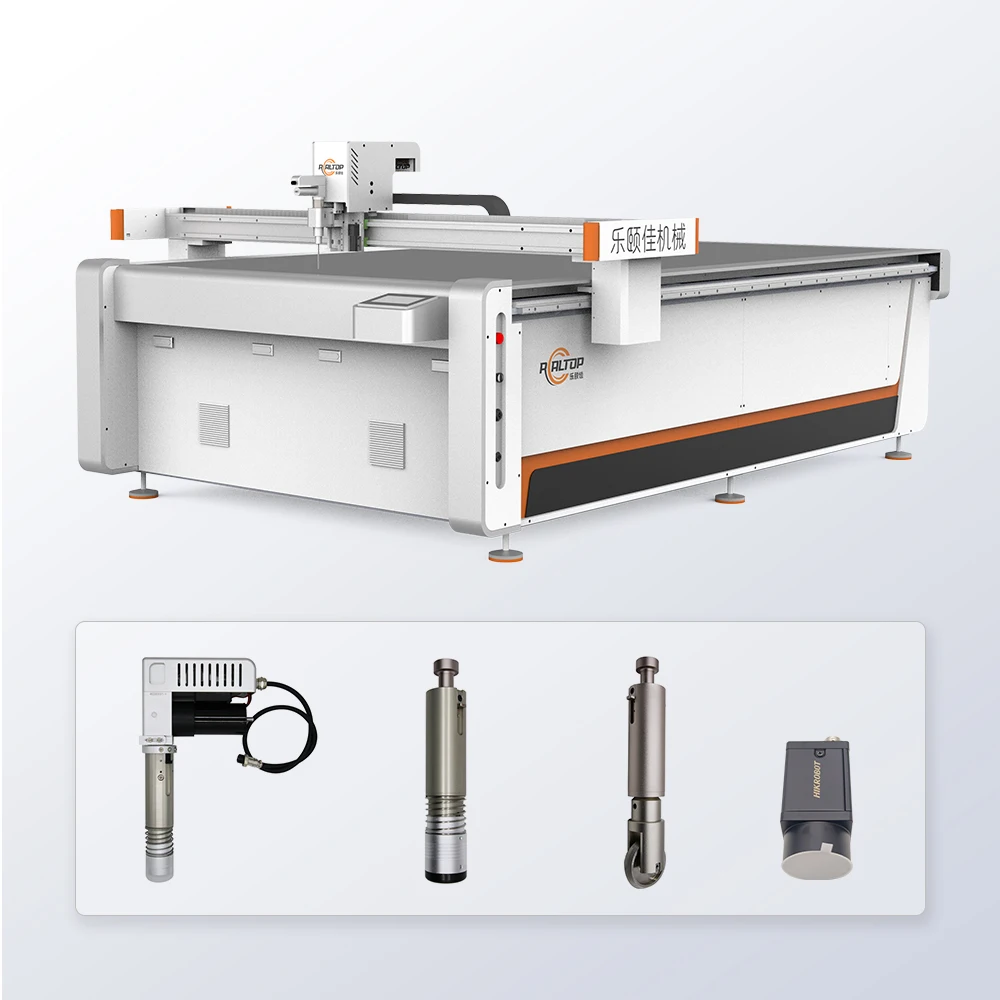
In-house oscillating knife design — the frame, tool head and vacuum table are engineered together so fabric and leather producers cut real production materials instead of generic test samples.
Technical Specifications
| Parameter | Value |
|---|---|
| Model | RT-D2516/RT-S2516 |
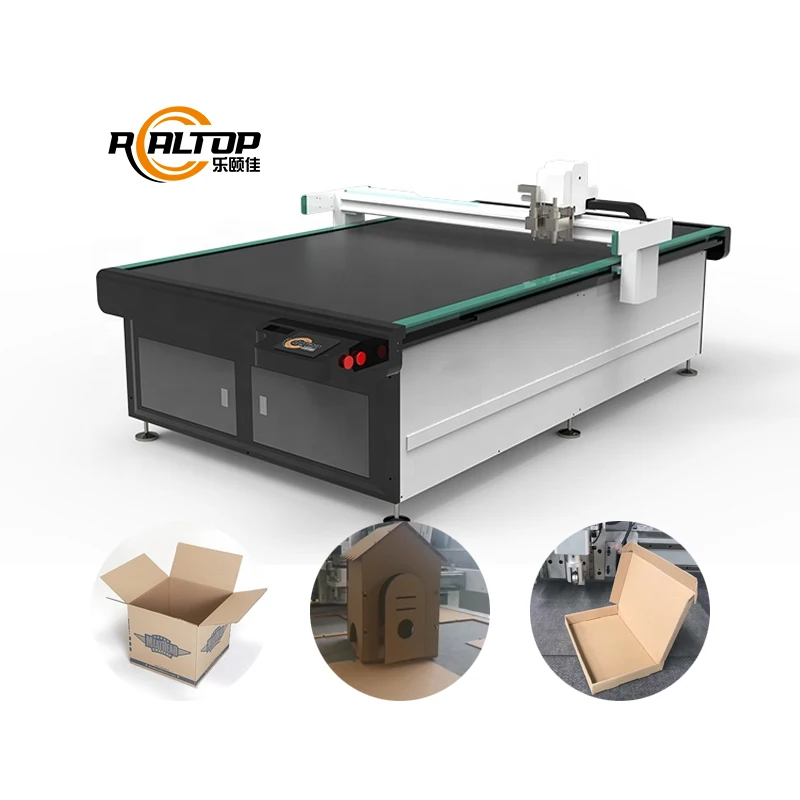
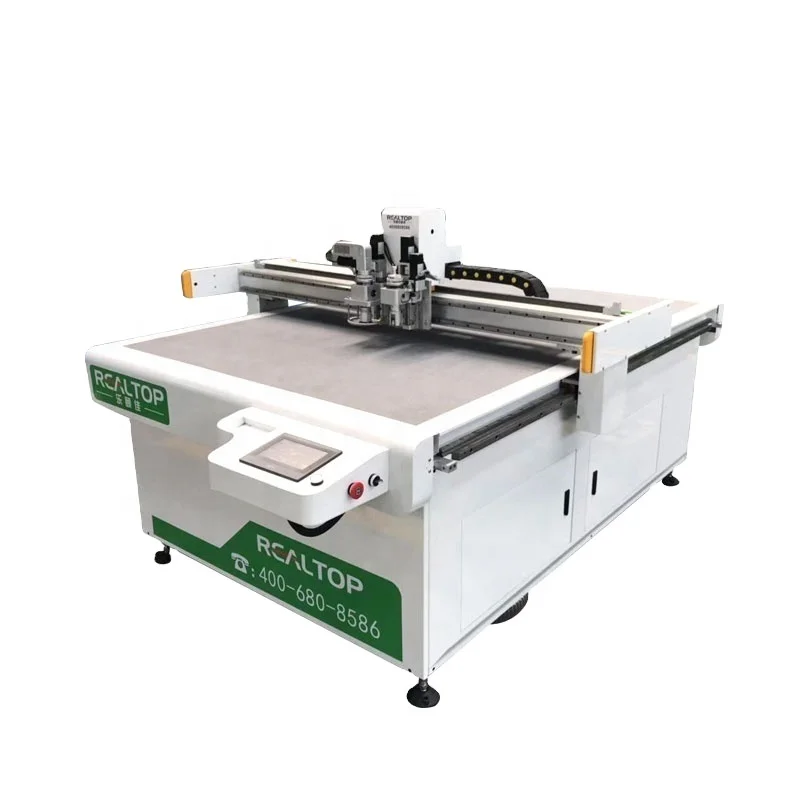
| Product Type | CNC Oscillating Knife Fabric Cutting Machine |
| Working Area | 1600×2500 mm |
| Machine Size | 3450×2300×1250 mm |
| Rated Power | 9 kW |
| Vacuum Pump | 7.5 kW |
| Table Surface | High-density felt with vacuum suction and auto feeding |
| Tool Head | Swiss imported knife, vibration full cutting, half cutting and cursor location |
| Translational Velocity | 800–1200 mm/s |
| Repeated Accuracy | ≤0.1 mm |
| Cutting Thickness | Up to 50 mm (basis to be confirmed per material and layer count) |
| Transmission | Digital servo motor, Taiwan Hiwin linear guide, synchronous belt, imported ball screw |
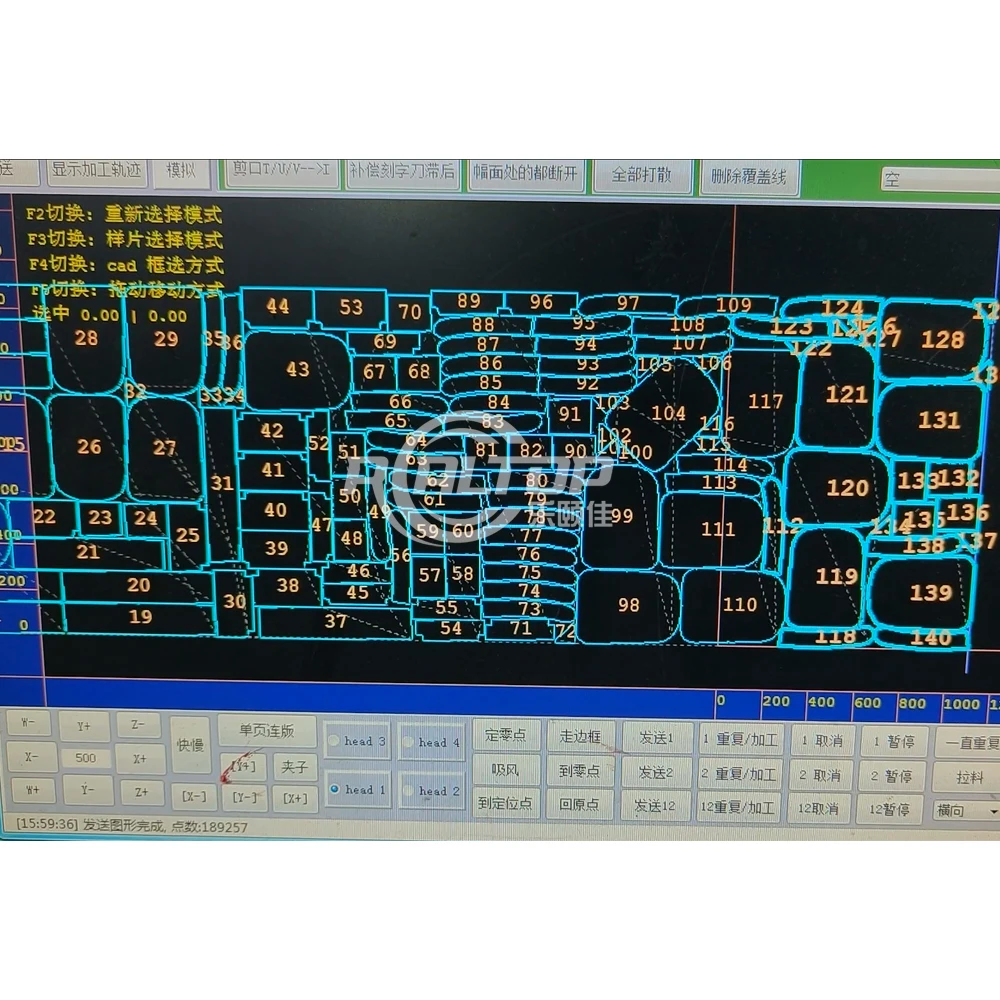
| Instruction Format | HP-GL compatible |
| Voltage | 380V±10% |
| Control Language | English, Russian, Italian, Chinese (special languages customizable) |
| Frame | Overall welding with imported milling machine processing |
| Electrical Cables | High-flexibility, wear, moisture, cold and high temperature resistant |
| Safety Device | Infrared sensors |
| Modular Tool Holder | Compatible with round knife, marking pen, auto feeder |
| Conveyor Belt | Germany imported |
| Certification | CE |
Application Suitability
| Application | Material or Output |
|---|---|
| Garment and fashion fabric cutting | Multi-layer woven, knit and technical textiles with complex pattern nesting |
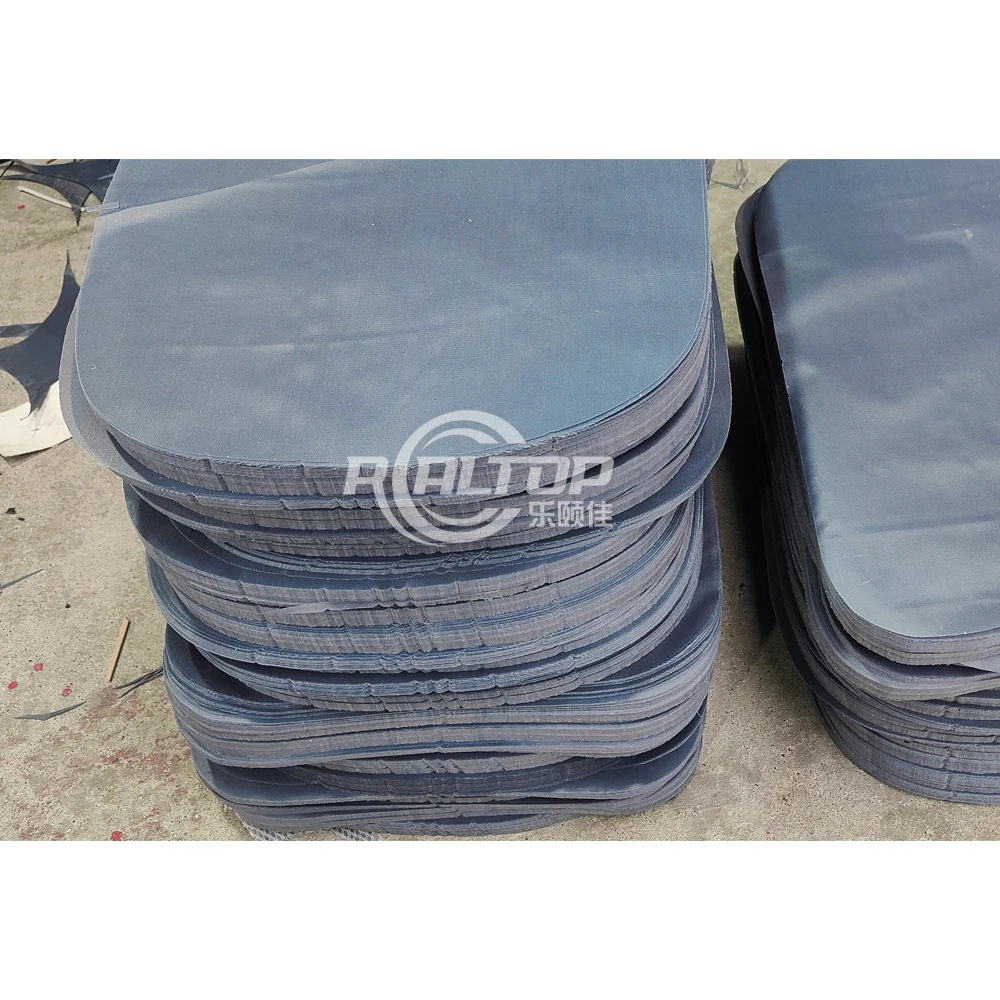
| Leather goods production | Genuine leather, PU and synthetic leather for bags, footwear uppers and accessories |
| Automotive interior trim | Leather hide, sponge composite, PVC and soft-touch laminates for seats and door panels |
| Sponge and composite processing | Foam laminates, bonded cushion materials and multi-density padding |
| PVC and soft signage | Flexible PVC, soft glass, vinyl banner and billboard material |
| Gasket and seal fabrication | Silicon, rubber sheet and non-metallic sealing compounds |
Why Ragged Edges Start at the Specification Stage
Edge quality is determined before the machine arrives, not after installation.
When a buyer specifies a cloth CNC cutting machine based on working area alone and ignores material density, the oscillating knife may fail to penetrate deeper composite layers. I watched this happen at an automotive seating plant in Monterrey: the vibration blade cut clean through sample PU leather, but once production started on fiberglass-reinforced carpet laminate the edges frayed instantly because the tool head pressure was never matched to the actual sandwich structure [NEED_CITE: material density matching in oscillating knife cutting applications]. A CNC oscillating knife cutting machine manufacturer must confirm the exact material stack before locking in tool head configuration. The wrong setup does not produce a warning — it produces scrap that accumulates across entire shifts until someone traces the problem back to the initial quotation.
Design and Manufacturing Under One Roof
The RT-D2516/RT-S2516 is developed and assembled within a single production facility, meaning the frame geometry, motion system and tool head calibration are validated as one integrated unit. When design and assembly are separated across different vendors, tolerance stack-up between the linear guide mounting surface and the vacuum table plane introduces positioning drift that no servo calibration can fully compensate. In-house engineering allows the gantry load path and the table flatness to be referenced to the same machined datum during frame fabrication. This alignment matters especially when cutting thick sponge composites where even a slight table deviation translates into inconsistent blade penetration depth.
Build Quality That Survives Daily Production Cycles
The overall-welded frame processed on imported milling equipment provides a stable base that resists deflection under continuous vibration loads. The Taiwan Hiwin linear guides and imported ball screws maintain positioning accuracy through the thousands of reciprocating cycles an oscillating knife completes during a production run [NEED_CITE: linear guide wear characteristics under oscillating tool loads]. Electrical connections use high-flexibility cables rated for moisture, cold and elevated temperatures, reducing the cable fatigue failures that commonly interrupt fabric cutting operations in humid or unheated workshops. The German-imported conveyor belt and the modular tool holder design mean that field maintenance addresses worn components individually rather than requiring full system teardowns.
Reading the Parameters That Actually Matter for Fabric Cutting
The Swiss imported oscillating knife head offers both full-cut and half-cut vibration modes, which determines whether the blade severs every ply in a fabric lay or scores only the top layer for kiss-cut applications. Translational velocity between 800 and 1200 mm/s governs how fast the head travels between cuts, but actual cutting speed depends on material resistance and the number of direction changes in the nesting layout. The 7.5 kW vacuum pump paired with a high-density felt table surface generates the hold-down force necessary to prevent lightweight woven textiles from lifting during high-speed traversal — insufficient vacuum zoning causes small pattern pieces to shift and produce dimensional errors beyond the ≤0.1 mm repeated accuracy rating. The HP-GL compatible instruction system accepts nesting output from common CAD platforms used in garment and leather workshops, though file format compatibility should always be verified against the buyer’s existing nesting software before the order is finalized.
The Cost of Skipping Material Verification
A buyer who accepts a standard tool head specification without testing on actual production material risks discovering edge quality problems only after the machine is commissioned and the production schedule is already committed. Composite materials containing fiberglass mesh, metallic thread reinforcement or adhesive interlayers respond differently to vibration frequency and blade geometry than the standard PU leather or cotton fabric used during factory demonstrations [NEED_CITE: oscillating knife behavior on reinforced composite materials]. When the cutting head cannot fully penetrate these hidden layers, operators compensate by reducing feed speed and increasing blade pressure, which accelerates tool wear and degrades the repeated accuracy over subsequent weeks. The downstream cost extends beyond wasted material — it includes delayed shipments, renegotiated delivery penalties and the reputational damage of inconsistent edge quality reaching the cutting table of a garment or automotive interior customer.
Why Production Managers Source This Machine Here
The in-house design team matches tool head type and vacuum configuration to each buyer’s specific material stack rather than shipping a standard configuration and expecting the operator to adapt. The factory conducts sample cutting on the buyer’s own material before the order is confirmed, documenting edge quality, penetration depth and cutting speed in a report that travels with the shipment. Voltage, plug type and control language are confirmed in writing before production begins, preventing the commissioning delays caused by electrical mismatch at destination. The modular tool holder allows buyers to add round knife or marking pen functions in the field as their product range expands, extending the machine’s useful scope without replacing the base unit. CE documentation and a complete spare parts list ship with every unit, supporting both end-user maintenance and distributor resale compliance.
Documentation & Verification
- Machine specification sheet confirming tool head type, vacuum pump rating and working area matched to your production layout
- Electrical schematic with 380V±10% confirmation and destination plug type documented before production release
- Sample cutting report on your fabric, leather or composite material with edge quality photographs and thickness measurement
- Factory test record documenting repeated accuracy within ≤0.1 mm on your specified material before dispatch
- Software licence and HP-GL file format compatibility note aligned with your existing nesting workflow
- Packing photographs showing frame, electrical box and tool head condition prior to container loading
Installation, Commissioning & Support
- Overall machine size of 3450×2300×1250 mm requires floor space planning with clearance for material loading on both infeed and outfeed sides
- 380V±10% three-phase supply with dedicated circuit for the combined 9 kW machine and 7.5 kW vacuum pump loads
- Fully assembled frame arrives with table and gantry pre-mounted; commissioning covers vacuum zone verification and blade calibration
- First-run parameter setting includes oscillation frequency, blade depth and feed speed adjustment on your actual material stack
- Operator training covers tool change procedure for the modular holder, nesting file import and daily felt surface maintenance
- Spare parts list includes Swiss knife blades, felt sections and high-flexibility cables sized to your consumption pattern
Prepare Your Material Data Before Inquiry
Share the exact material type, maximum thickness, number of plies in a typical lay and daily cutting volume so the tool head and vacuum configuration can be specified precisely. Confirm your facility voltage, frequency and preferred control language to avoid electrical rework after delivery. If your nesting workflow uses a specific CAD format beyond HP-GL, provide sample files so software compatibility is verified before the quotation stage.
Frequently Asked Questions
Q: How is cutting thickness verified for my specific material and layer count?
A: The factory conducts sample cutting on your actual material, documenting blade penetration, edge quality and the number of plies cleanly severed. The ≤50 mm rating in the specification sheet is a general reference; real cutting depth depends on material density, reinforcement content and ply adhesion. Results are recorded in a sample cutting report shared before you commit to the order.
Q: What voltage, plug and control language are confirmed before shipment?
A: The standard configuration operates on 380V±10% three-phase supply. Destination plug type, circuit breaker rating and control panel language — available in English, Russian, Italian, Chinese or custom languages — are confirmed in writing during the quotation stage. The electrical schematic shipped with the machine reflects these confirmed specifications.
Q: Can sample cutting on my material be arranged before I commit?
A: Yes. You send a representative sample of your production material, and the factory runs cutting trials using the proposed tool head and vacuum configuration. The sample cutting report documents edge finish, dimensional accuracy against the nesting file and recommended feed parameters, giving you production-relevant data before placing the order.
Q: Can frame size, tool head and table configuration be specified for OEM resale?
A: The in-house design team adjusts working area dimensions, tool head selection and vacuum table layout to match the requirements of your target market. Control language, documentation language and electrical standards are customized per destination. OEM capability covers both hardware configuration and documentation branding for distributor channels.
Q: What documentation ships with the machine?
A: Each unit ships with a machine specification sheet, electrical schematic reflecting confirmed voltage and plug type, CE declaration, factory test record, operation and maintenance manual, software licence note, spare parts list and packing photographs. These documents support end-user commissioning, distributor compliance and customs clearance at destination.
You may also like

商品评价
Clear filtersThere are no reviews yet.