



-
 Courier delivery
-
 DHL Courier delivery
-
 Warranty 1 year
-
 Free 30-Day returns

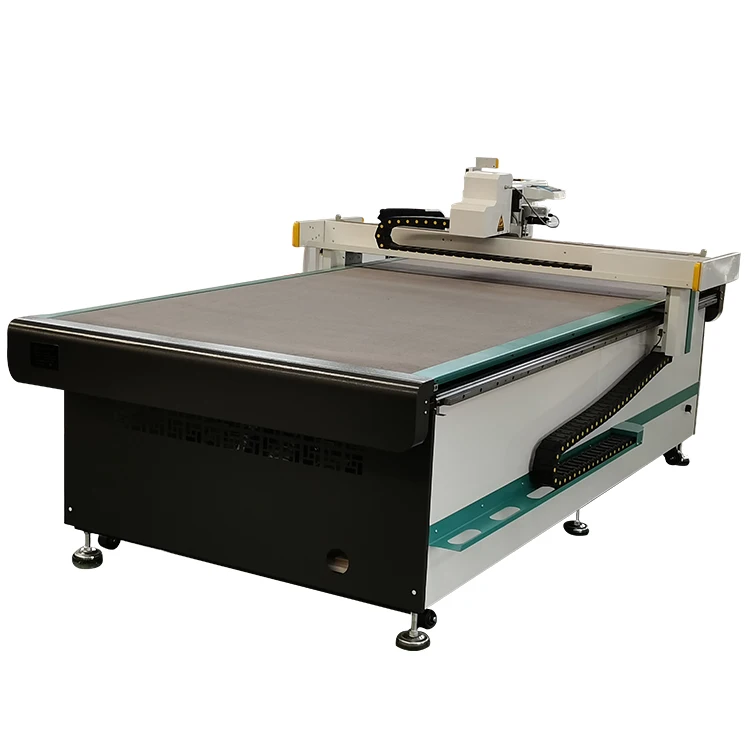
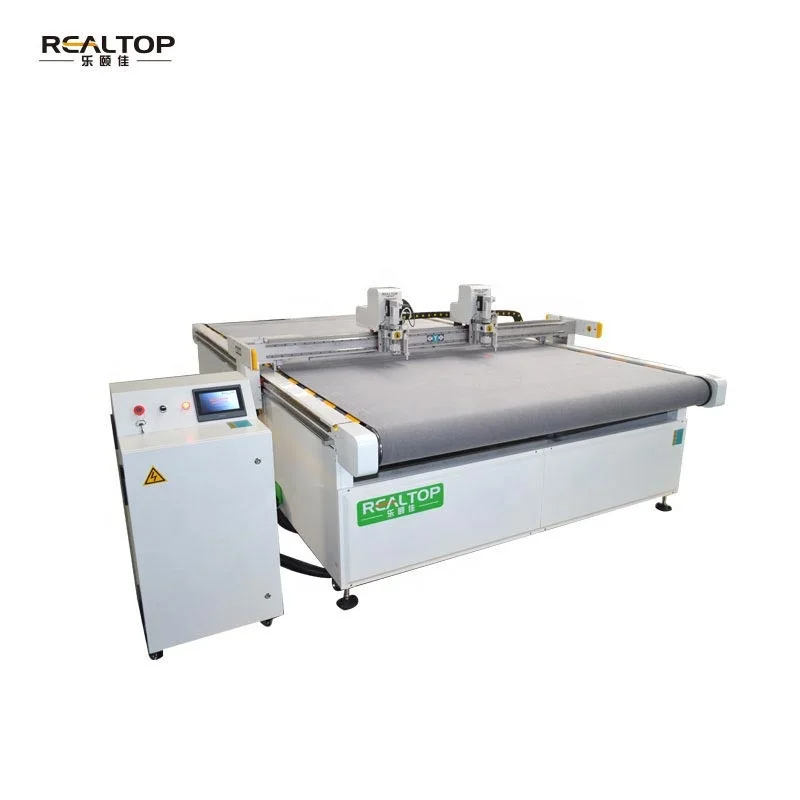
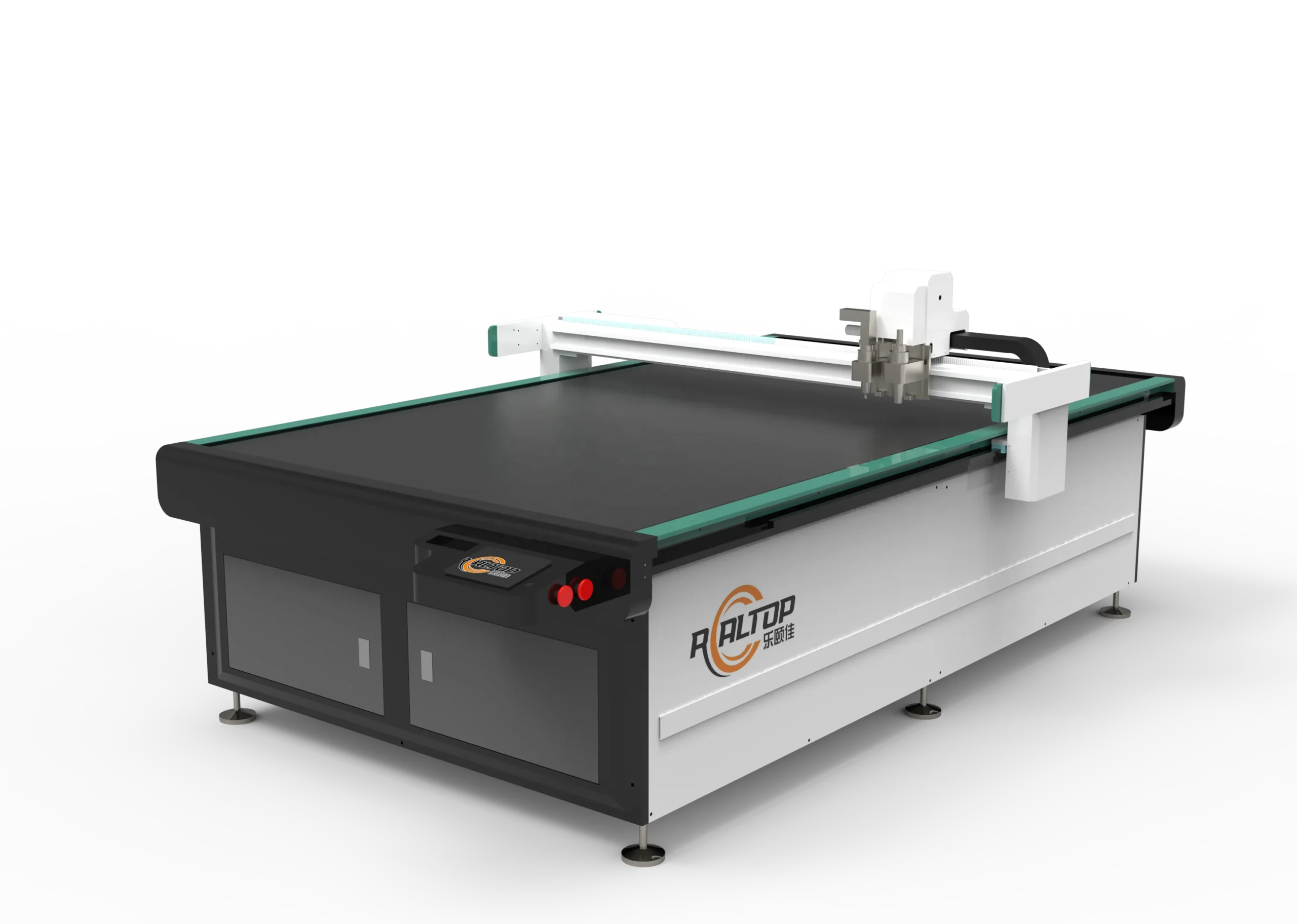
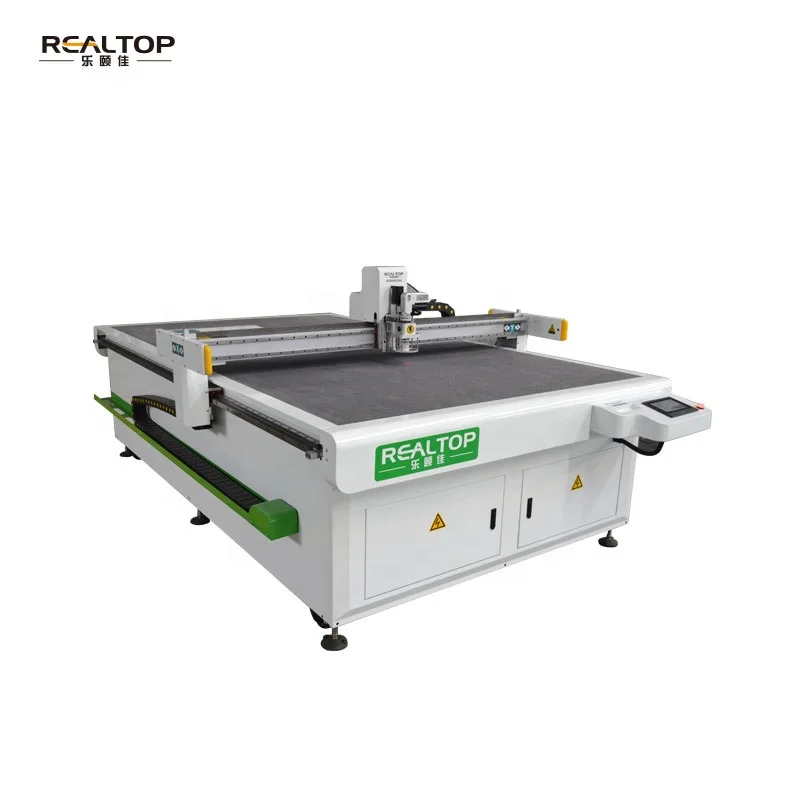
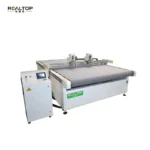
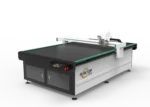
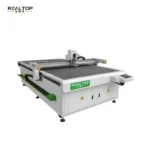
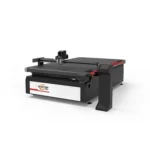
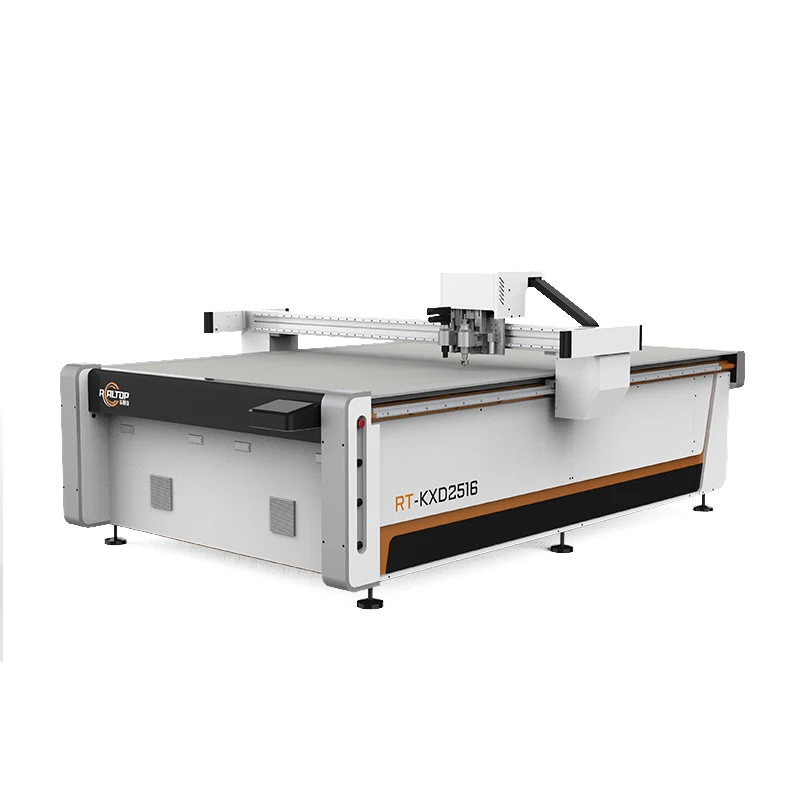
In-House Tool Head Engineering — Realtop matches oscillating knife profiles and vacuum zoning to the buyer’s actual flexible material before the RT-D2516/RT-S2516 leaves the factory, preventing the edge quality failures that occur when machines are specified on table size alone.
Technical Specifications
| Parameter | Value |
|---|---|
| Model | RT-D2516/RT-S2516 |
| Working Area | 1600×2500 mm |
| Overall Dimensions (L×W×H) | 3450×2300×1250 mm |
| Rated Power | 9 kW |
| Voltage | 380V ±10% |
| Control System | CNC (HP-GL compatible) |
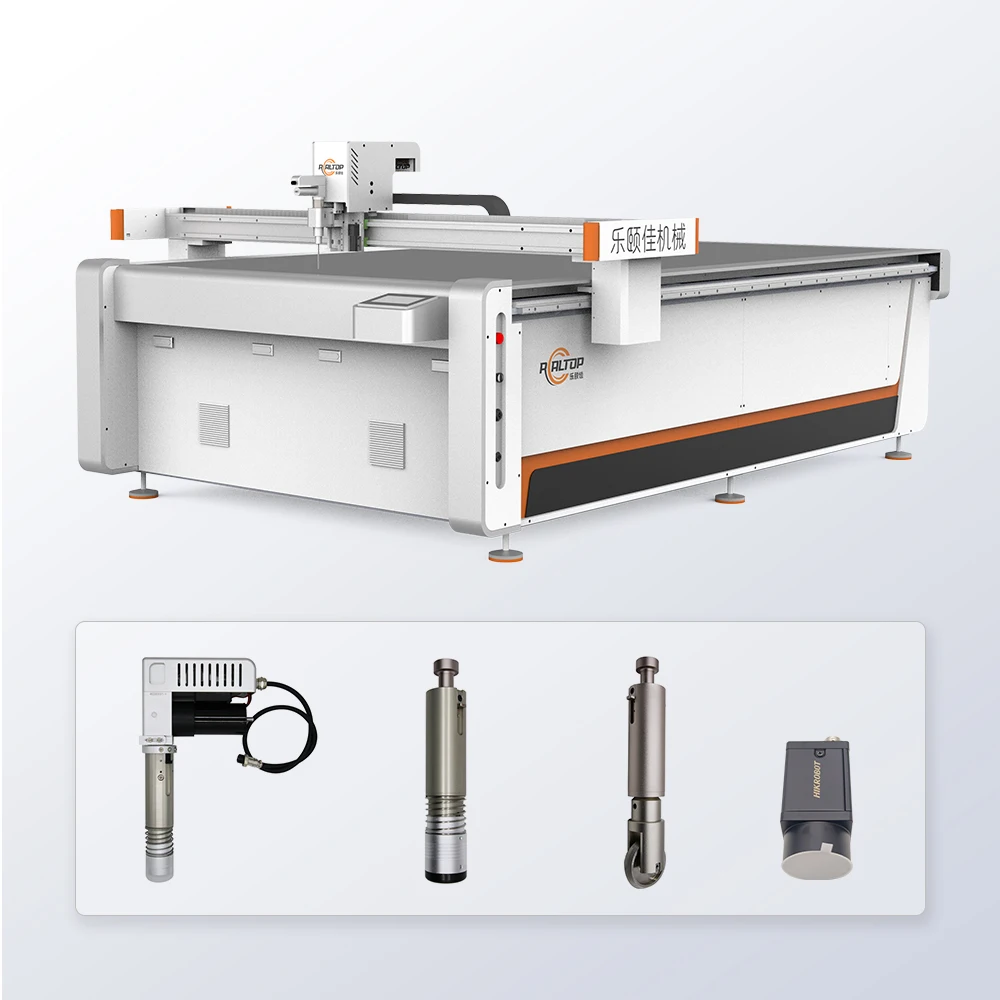
| Tool Head | Multifunctional head with Swiss imported knife (vibration full/half cutting, cursor location) |
| Translational Velocity | 800–1200 mm/s |
| Cutting Speed | 200–800 mm/s (dependent on material density and thickness) |
| Repeatability | ≤0.1 mm |
| Transmission System | Digital servo motor, linear guide, synchronous belt, imported ball screw |
| Safety Device | Infrared sensors |
| Worktable | Flat vacuum table with auto-feeding conveyor |
| Vacuum Pump | 7.5 kW |
| Conveyor Belt | Germany imported |
| Linear Rail | Taiwan Hiwin |
| Servo Motor | Japanese Yaskawa |
| Assembly State | Fully assembled |
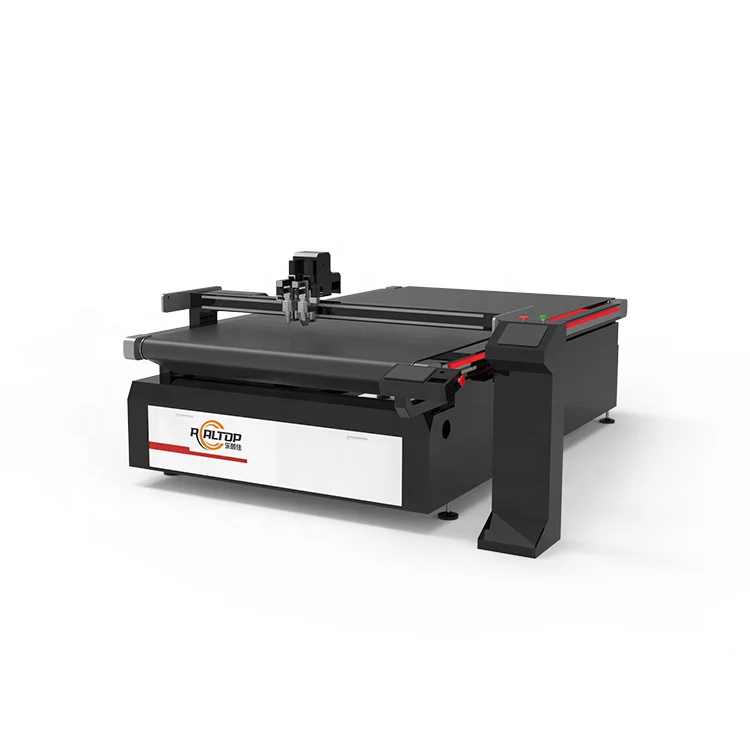
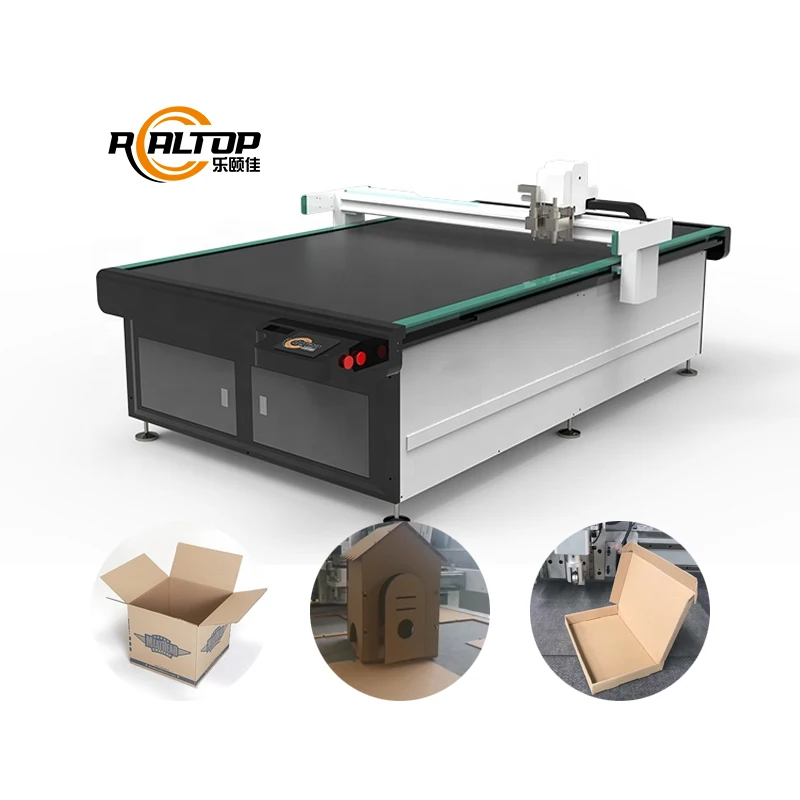
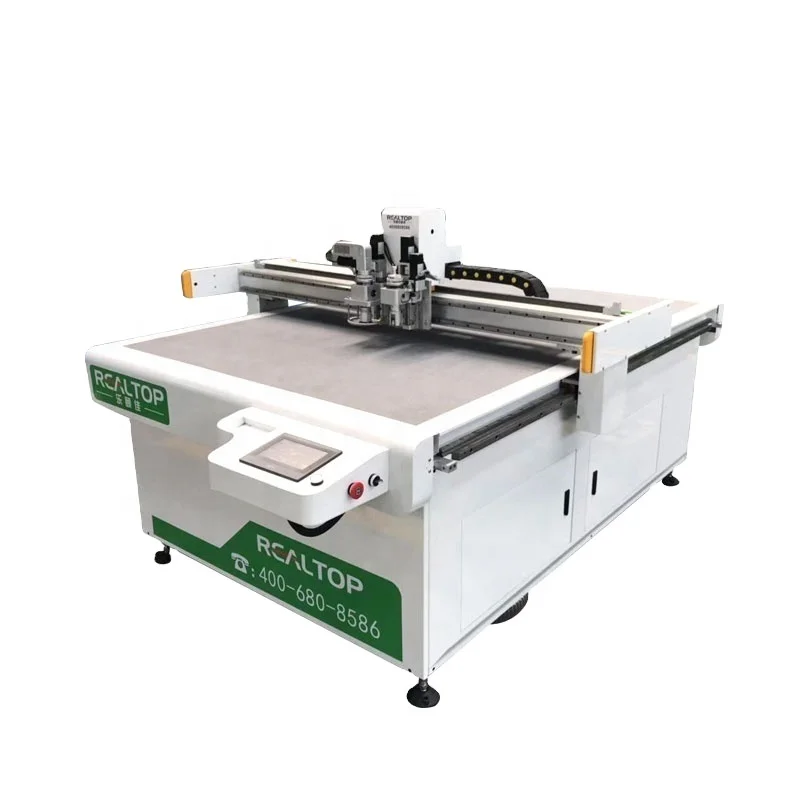
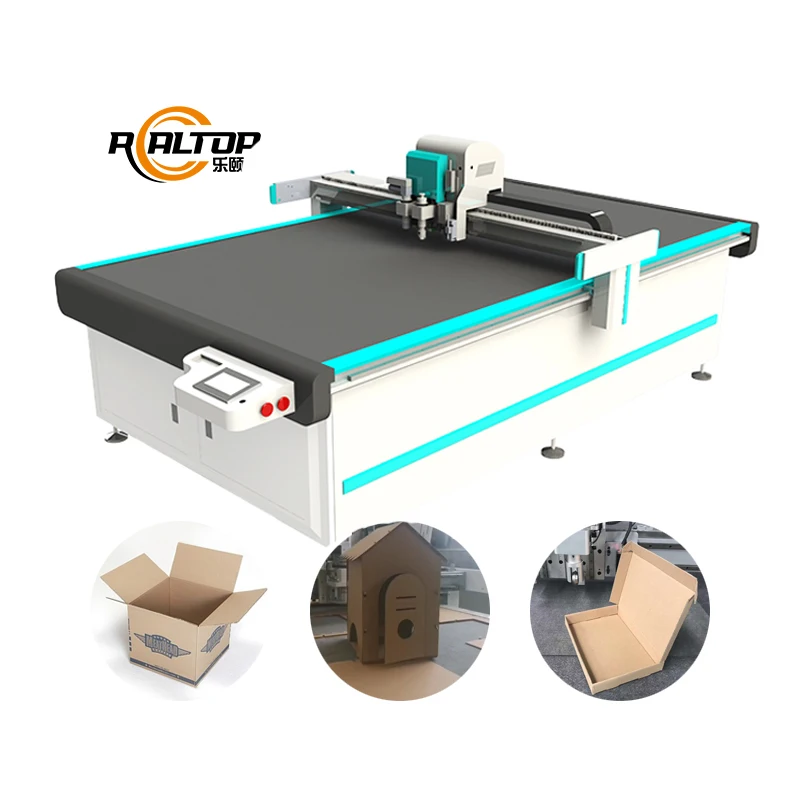
| Product Type | CNC Oscillating Knife Cutting Machine |
Application Suitability
| Application | Material or Output |
|---|---|
| Footwear Upper Cutting | Canvas, sponge composite leather, synthetic leather for casual and lazy shoes |
| Garment & Leather Goods | Flexible clothing materials, genuine and PU leather hides |
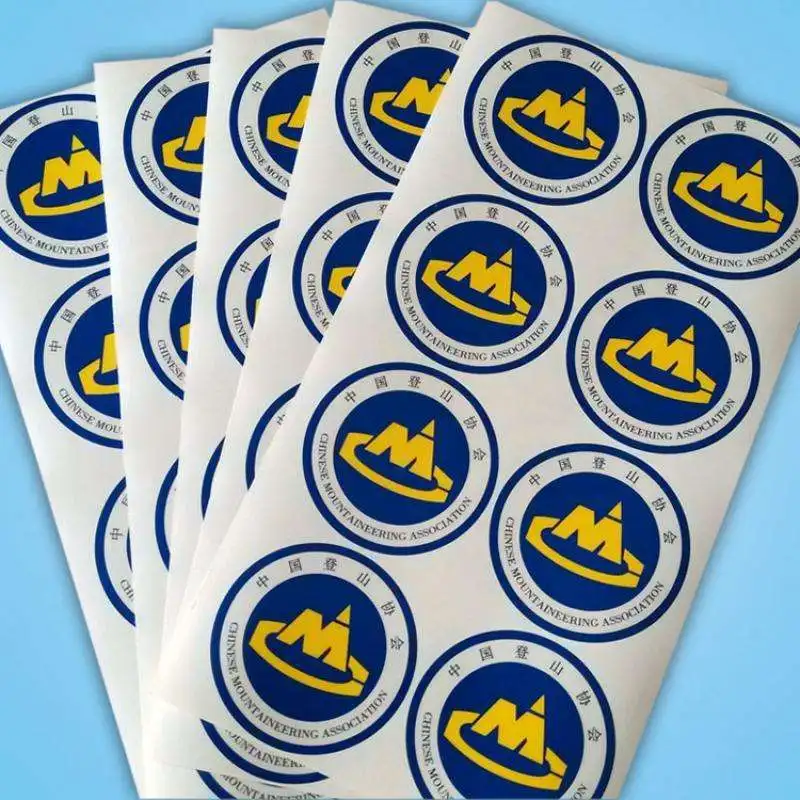
| Packaging & Carton Sampling | Corrugated board, PVC sheets, sticker and label substrates |
| Gasket & Soft Material Processing | Silicon, rubber, soft glass, industrial sealing composites |
Why the Voltage Question Should Come Before the Price on a CNC Oscillating Knife Cutting Machine Manufacturer Order
Confirming the electrical schematic and control language is the first technical step, not the final shipping detail.
When buyers focus entirely on working area and cutting speed, the electrical configuration often defaults to the factory’s standard domestic setup. I have seen 380V/50Hz machines arrive in regions running 440V/60Hz, where the servo motors overheat during continuous shifts and the control board eventually fails. The cost of replacing a Yaskawa servo drive on-site far exceeds the time required to specify the correct transformer and contactor rating before the frame is ever bolted together. [NEED_CITE: voltage and frequency standards by export market]
Matching the Swiss Knife Profile to the Material Stack
The multifunctional head on this CNC oscillating knife cutting machine manufacturer build uses a Swiss imported knife assembly capable of full cutting, half cutting, and cursor location. The distinction matters when processing layered sponge composites for footwear uppers; a standard drag knife crushes the foam core, leaving a deformed edge that rejects in the lasting department. The oscillating action slices cleanly through variable densities, maintaining the integrity of the adhesive boundary.
Vacuum Zoning for Small Component Holding
A 7.5 kW pump generates sufficient static pressure across the flat working table, but holding small gasket components or shoe tongue patterns requires more than raw suction. The auto-feeding conveyor with Germany imported belting allows continuous material advancement, yet the vacuum zoning must isolate active areas to prevent sheet lift at the 200–800 mm/s cutting speeds. Without proper zoning, small offcuts become projectiles near the infrared safety sensors.
The Servo and Rail Combination That Defines Repeatability
The ≤0.1 mm repeatability specification is a product of the Japanese Yaskawa digital servo motors paired with Taiwan Hiwin linear rails across the 1600×2500 mm travel. In footwear nesting, where a single hide yields dozens of size-graded components, accumulated positional drift over a long cutting path causes mismatched pairs. The imported ball screw transmission eliminates the backlash common in rack-and-pinion setups when the head reverses direction at 1200 mm/s translational velocity. [NEED_CITE: linear motion system tolerance standards]
The Hidden Cost of Skipping the Material Sample
Purchasing a cutting table based on a brochure’s maximum thickness rating ignores the interaction between tool geometry and material hardness. A machine may cut 10 mm foam cleanly but tear through a 3 mm canvas composite if the oscillation frequency and knife bevel are mismatched. The resulting ragged edges require manual trimming, doubling the labor cost per piece and creating a bottleneck that no amount of machine speed can resolve. [NEED_CITE: tooling wear rates on abrasive composites]
The Engineering Discipline Behind the RT-D2516/RT-S2516
Realtop operates an in-house design team that covers both knife and laser technologies, meaning the selection between an oscillating blade and a CO2 beam is driven by material chemistry rather than machine availability. The HP-GL compatible control system is verified against the buyer’s nesting software before the order is finalized, preventing workflow incompatibility. The 9 kW total rated power is distributed across the 7.5 kW vacuum pump and cutting head, sized for continuous industrial duty cycles. Every unit undergoes a factory test with documented parameters before the shipping crate is closed. [NEED_CITE: CE machinery directive requirements for industrial equipment]
Documentation & Verification
- Electrical schematic confirming 380V ±10% compatibility with local grid tolerance before dispatch.
- Factory test record cutting the buyer’s specific canvas or composite material at production speed.
- Tool head configuration list detailing the Swiss knife profile and vacuum zoning map.
- Software licence and HP-GL file format compatibility note for the nesting workflow.
- Operation and maintenance manual translated into the requested control language.
- Spare parts list identifying consumable blades, belts, and vacuum seal replacements.
Installation, Commissioning & Support
- Foundation must support the 3450×2300 mm footprint and dynamic vibration of the 7.5 kW pump.
- Dedicated 380V circuit required to handle the 9 kW peak draw during servo acceleration.
- Fully assembled state reduces installation to utility connection and conveyor belt tensioning.
- First-run calibration verifies the ≤0.1 mm repeatability across the full 1600×2500 mm travel.
- Operator training covers Swiss knife angle adjustment for the specific flexible material stack.
- Preventive maintenance schedule for Hiwin rail lubrication and Yaskawa servo encoder checks.
What to Define Before Requesting a Quotation
To configure the RT-D2516/RT-S2516 for a specific production line, provide the exact material composition, maximum sheet thickness, and the CAD or HP-GL file format currently used for nesting. Specify the local voltage and frequency, along with the required language for the CNC interface, so the control cabinet can be wired and programmed before assembly begins.
Frequently Asked Questions
Q: How is the tool head selected for specific flexible materials?
A: The selection process involves testing the Swiss imported knife profile against a sample of the buyer’s material, adjusting oscillation frequency and blade angle to prevent edge fraying on composites or crushing on sponge layers. The final configuration is documented before the order is confirmed.
Q: What electrical details must be confirmed before shipment?
A: The buyer must provide the exact local voltage, frequency, and plug type. We then confirm the electrical schematic and component ratings match the site supply, ensuring the Yaskawa servos and control cabinet are configured correctly to prevent on-site overheating or failure.
Q: Can existing HP-GL or CAD files run directly on the system?
A: The CNC control system accepts HP-GL compatible formats. Before production, we verify that the buyer’s existing nesting software output translates correctly to the machine’s instruction set, ensuring file compatibility and accurate component geometry without requiring third-party software licenses.
Q: What does the material sample testing process involve?
A: We run the buyer’s actual material through the RT-D2516/RT-S2516, measuring edge quality, achievable cutting speed, and vacuum hold-down effectiveness. A sample cutting report is provided, detailing the results and confirming the machine’s suitability for the intended production volume.
You may also like

商品评价
Clear filtersThere are no reviews yet.