


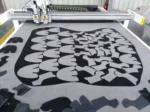

-
 Courier delivery
-
 DHL Courier delivery
-
 Warranty 1 year
-
 Free 30-Day returns

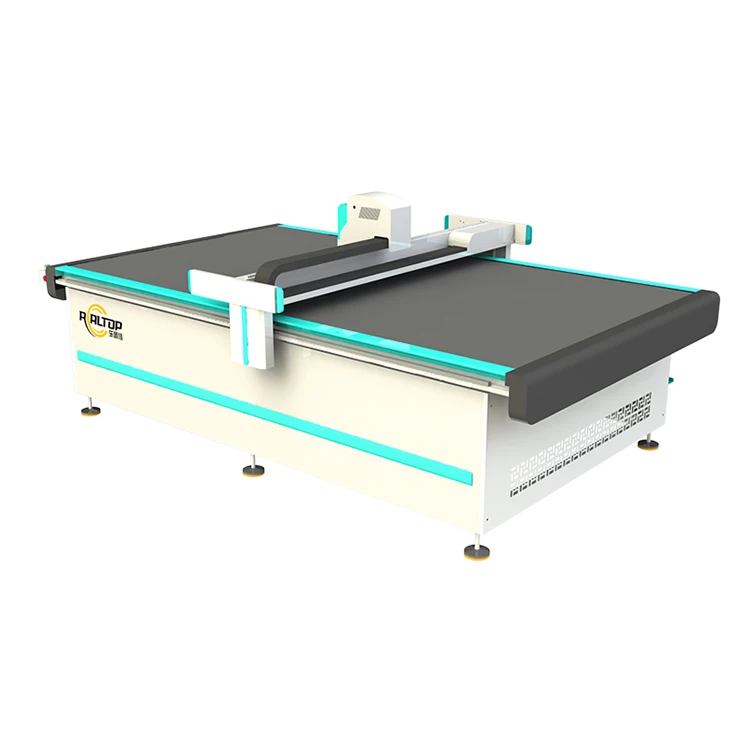
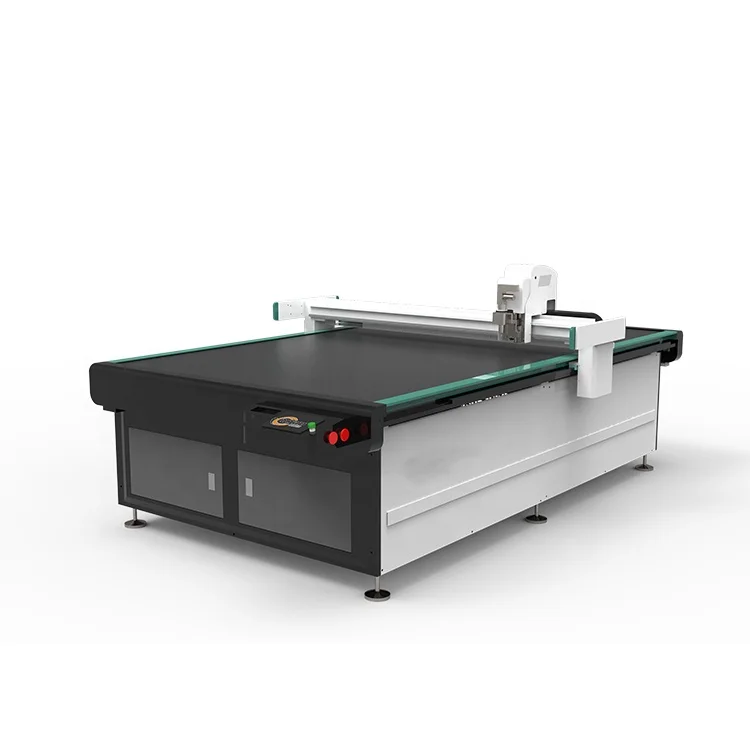
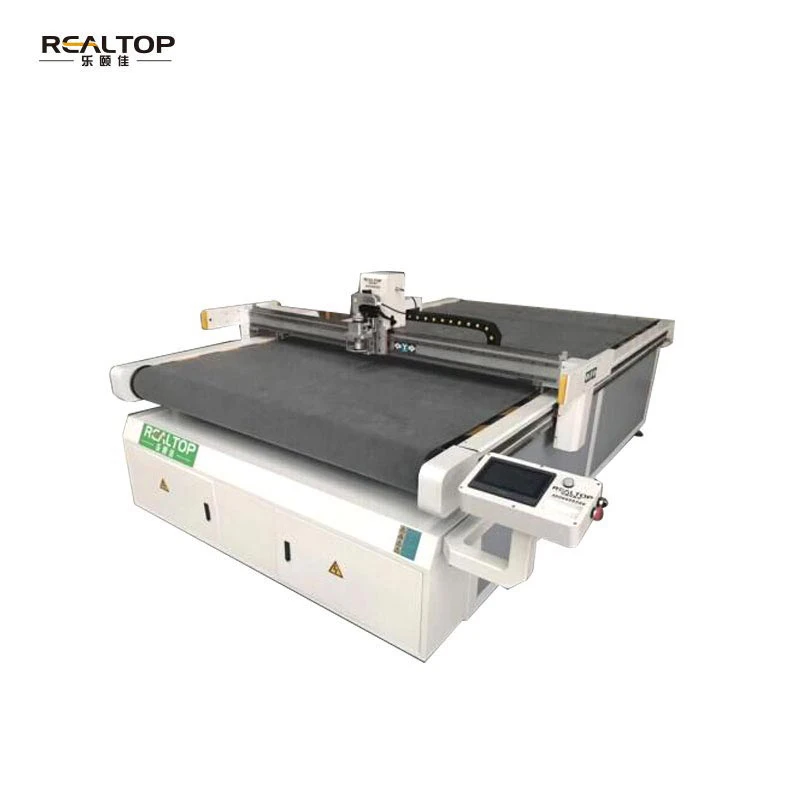
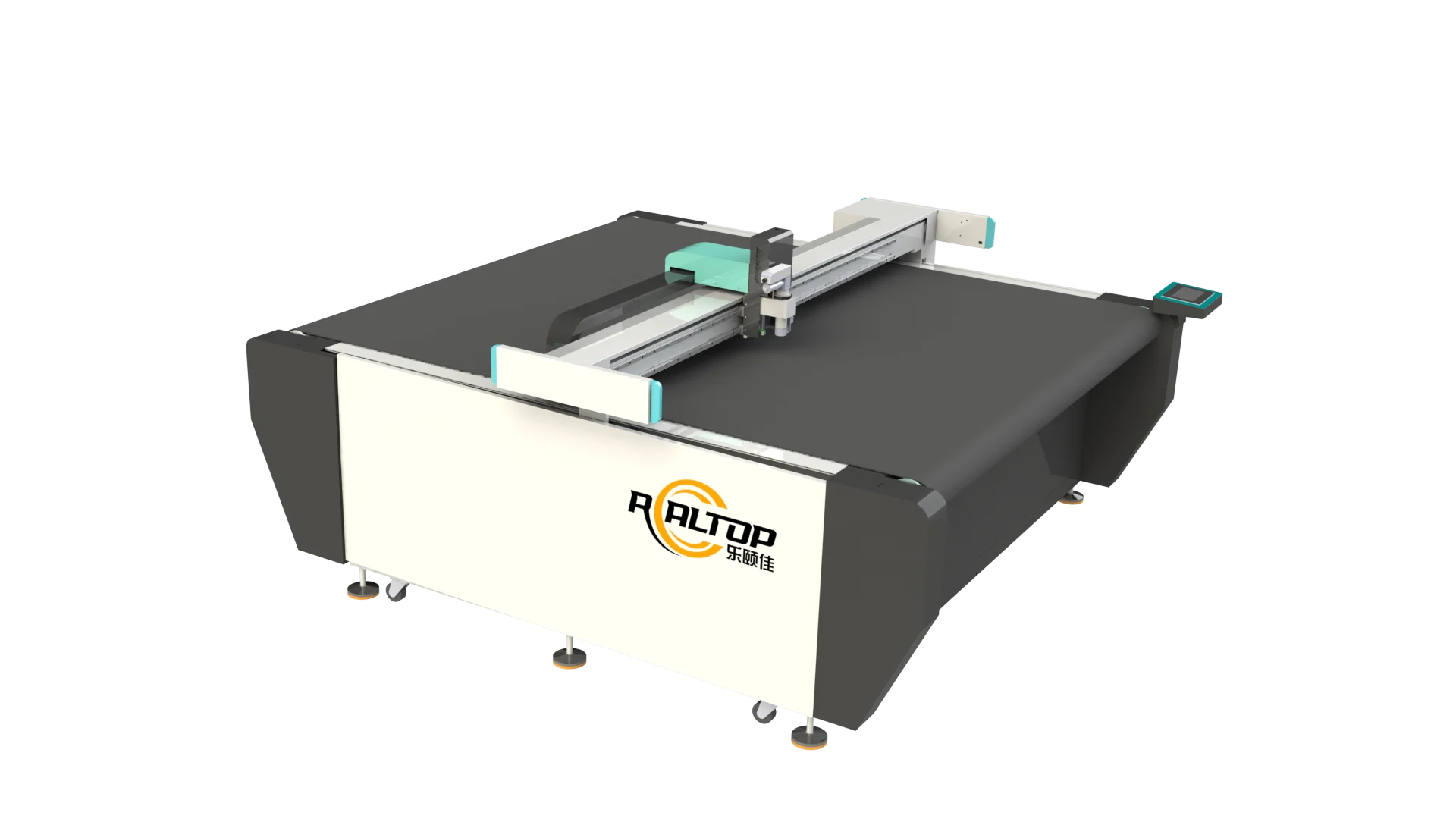
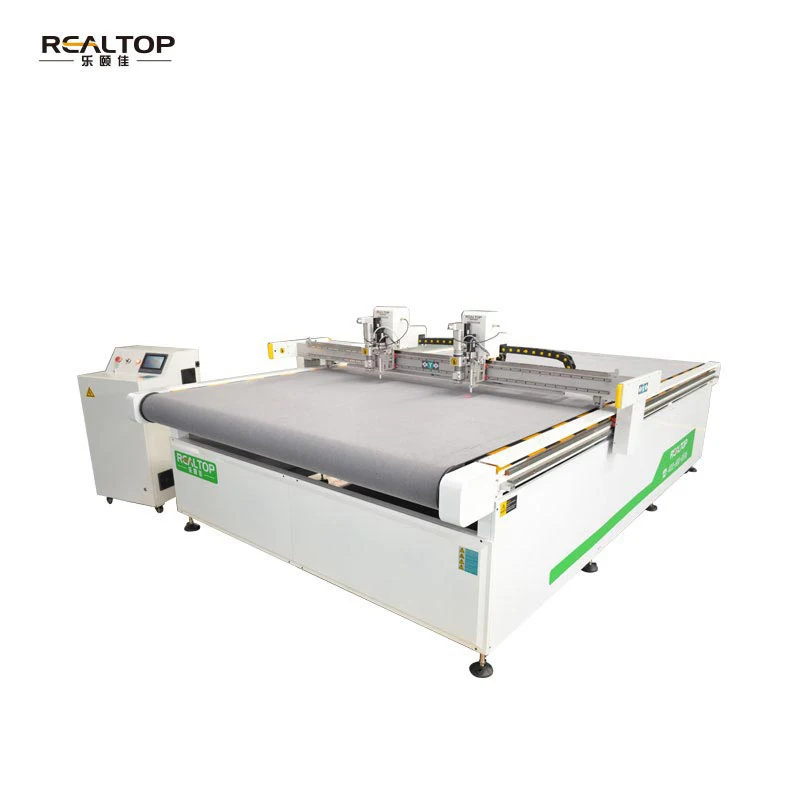
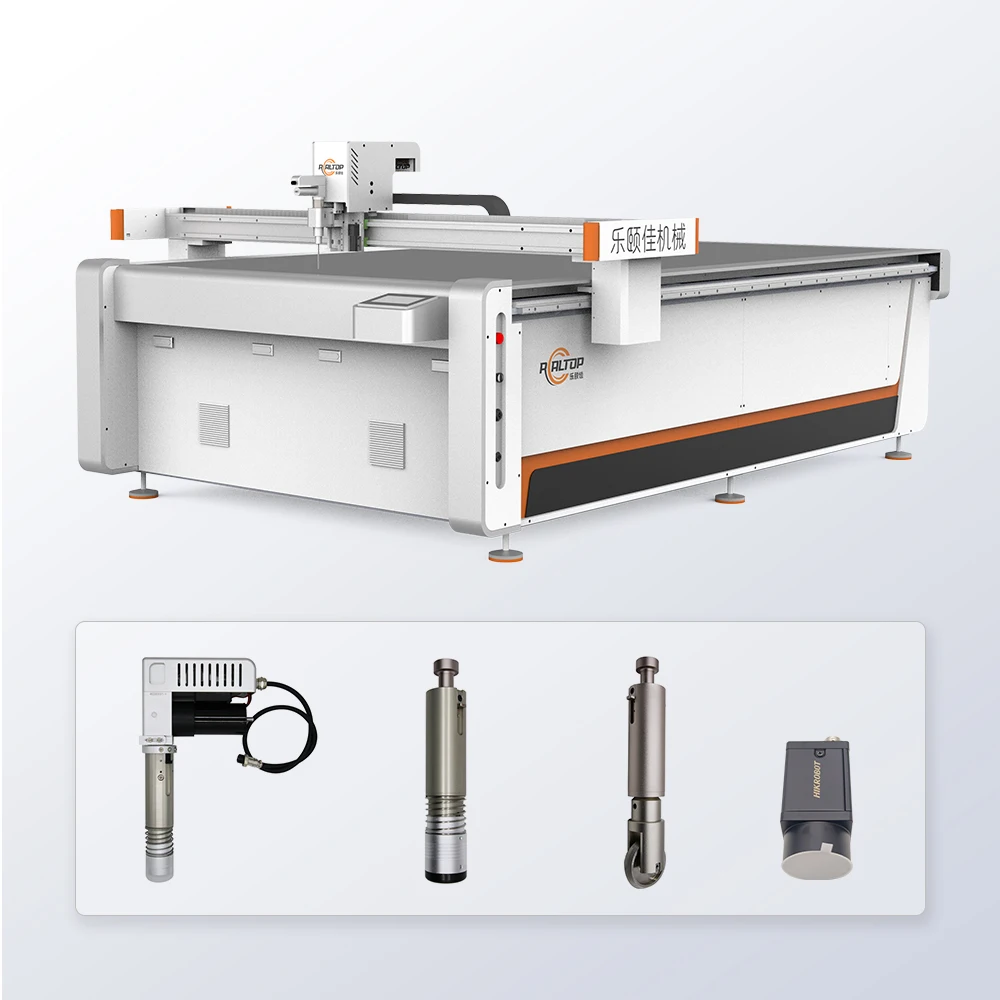
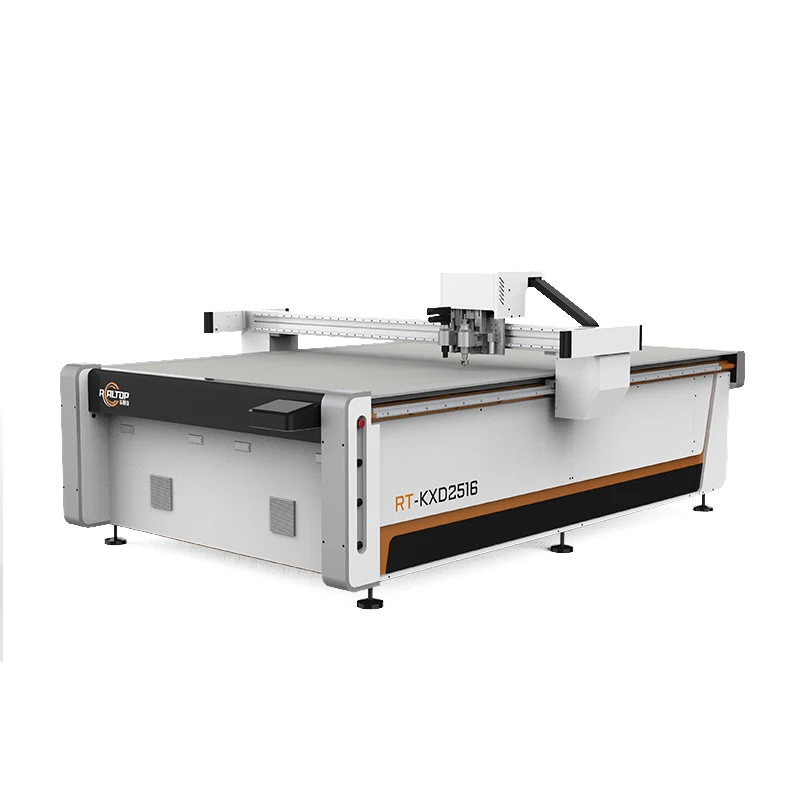
Core factory build quality — every RT-D2516/RT-S2516 frame and motion assembly is designed, welded and tested in our Jinan production facility, not sourced from a trading desk.
Technical Specifications
| Parameter | Value |
|---|---|
| Model | RT-D2516/RT-S2516 |
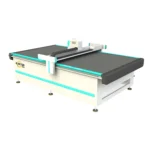
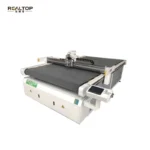
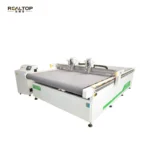
| Product Type | CNC Oscillating Knife Leather Cutting Machine |
| Working Area | 1600×2500mm |
| Overall Dimensions | 3450×2300×1250mm |
| Rated Power | 11 kW |
| Vacuum Pump | 7.5 kW |
| Table Type | Flatbed vacuum table with auto feeding system |
| Tool Head | Oscillating knife (Swiss imported) — vibration full/half cutting, cursor location |
| Translational Speed | 800–1200 mm/s |
| Cutting Speed | 200–800 mm/s (basis not stated in source — confirm material type / thickness) |
| Repeatability | ≤0.1 mm |
| Transmission System | Japanese Yaskawa digital servo, Taiwan Hiwin linear guide, synchronous belt, ball screw |
| Conveyor Belt | Germany imported |
| Safety Device | Infrared sensors |
| Instruction System | HP-GL compatible format |
| Voltage | 380V±10% (frequency to be confirmed before order) |
Application Suitability
| Application | Material or Output |
|---|---|
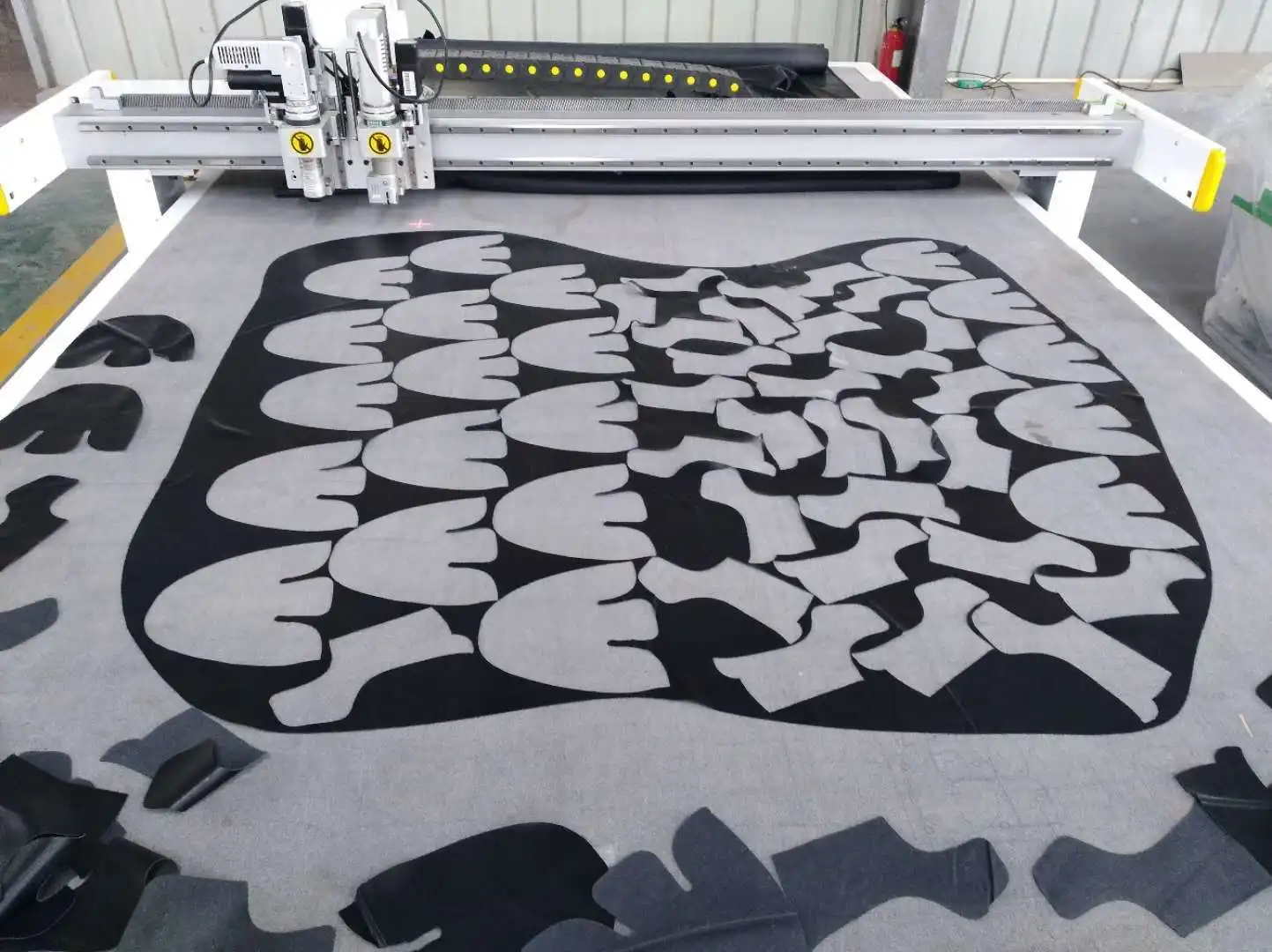
| Footwear upper cutting | Genuine leather, synthetic PU leather, sponge composite leather |
| Shoe leather piece processing | Multi-layer leather stacks for sole and insole components |
| Garment flexible material cutting | Textile composites, soft PVC, clothing flexible materials |
| Gasket and seal fabrication | Rubber, silicon, soft glass sheets |
| Automotive interior trimming | Composite leather and foam-backed flexible sheets |
Why the Tool Head Decision Must Come Before the Working Area
A CNC oscillating knife cutting machine manufacturer who only asks for your sheet size is setting you up for a machine that fits your floor but fails on your material. The cutting method, blade profile and vibration frequency must be matched to your specific leather grade and thickness before a working area is quoted.
I once shipped a unit to a footwear factory in West Africa where the sample ran perfectly on standard PU leather. Their actual production stock carried a heavy adhesive backing that gummed up the blade within the first shift. Edges frayed, the operator had to stop every twenty minutes to clear residue, and two days of production were lost before we swapped to a different blade geometry and adjusted the oscillation stroke. [NEED_CITE: oscillating knife blade selection for adhesive-backed leather and composite materials]
Frame Rigidity and Motion Component Selection
The RT-D2516/RT-S2516 is built on a welded steel frame designed in-house to handle the lateral forces generated during high-speed oscillating knife work on dense leather. A rigid frame prevents the micro-deflection that causes edge wander on long contour cuts across the 1600×2500mm bed. When you are cutting shoe uppers with tight curves and nested patterns, even a fraction of a millimetre of frame flex translates into mismatched left-and-right pieces that the lasting department will reject.
The Japanese Yaskawa digital servo motors paired with Taiwan Hiwin linear guides deliver ≤0.1mm repeatability across the full travel range. This combination is specified because leather cutting demands high translational speeds — up to 1200 mm/s between cuts — followed by immediate deceleration into precise contour work. The servo response and guide rail accuracy together ensure that the blade follows the programmed path without overshoot, which is critical when nesting pieces with minimal kerf allowance.
Vacuum Hold-Down and Auto Feeding Integration
A 7.5kW vacuum pump feeds the flatbed vacuum table, generating enough suction to secure leather hides and roll-fed flexible materials during cutting. Leather is not uniform — a single hide can vary in stiffness, thickness and surface texture, and curled edges are common. The vacuum system must overcome this tendency to lift, especially on smaller nested parts where the surface area in contact with the table is limited. [NEED_CITE: vacuum table zoning requirements for small leather component cutting]
The auto feeding system with Germany imported conveyor belt allows continuous processing of roll stock or pre-cut sheets. The operator loads the roll at the infeed end, and the conveyor advances the material incrementally as each cutting cycle completes. This eliminates the manual repositioning that slows output and introduces alignment errors between consecutive sheets.
Reading the Spec Sheet: What Matters for Leather Work
The Swiss imported oscillating knife head supports both vibration full cutting and half cutting, which is essential when processing multi-layer leather or composite materials where a kiss-cut on the backing layer keeps nested pieces organised for pick-up. The cursor location function aids in aligning the blade start point to a physical reference mark on irregularly shaped hides.
Cutting speed is listed at 200–800 mm/s, but this range depends entirely on the material density and thickness being processed — a 2mm synthetic PU leather will allow speeds at the upper end, while a 6mm bonded leather stack requires slower passes to maintain edge quality. Always request a sample cutting report on your own material to establish the realistic speed for your production mix.
The 11kW rated power accounts for the servo drives, vacuum pump load and oscillating knife motor running simultaneously, which is the actual operating condition during a cutting cycle rather than a standby figure.
The Cost of Specifying on Bed Size Alone
Buyers who select a machine primarily by working area often discover after delivery that the vacuum zoning is insufficient for their part mix. Small leather components — shoe tongue pieces, strap sections, gasket offcuts — can lift off the table during the final cuts of a nest if the vacuum zones are not configured to match the part geometry. Once a piece lifts, the blade catches it, the edge tears, and the entire nest may need to be re-cut from fresh material.
Similarly, a tool head specified for thin garment textile will struggle on 4mm sole leather, producing crushed edges rather than clean cuts. [NEED_CITE: tool head mismatch consequences on leather edge quality and material waste] The result is not a machine failure but a production bottleneck that the buyer attributes to operator error.
Why Source This Machine Directly From the Factory
In-house design and production covering both knife and laser platforms means the cutting method is selected to match your material rather than forced into a single technology. If your leather composite has a thermoplastic backing that benefits from laser edge sealing, that conversation happens at the inquiry stage, not after the knife machine is already on your floor.
Tool head and table configuration is specified per material type and daily volume. The RT-D2516/RT-S2516 configuration you receive is not a catalogue default but a build sheet matched to your leather grade, thickness range and part geometry.
Sample cutting on your own material is completed before you commit to the order, so edge quality, cutting speed and vacuum hold-down are verified against your actual production stock — not a generic demo sheet.
Voltage, control language and plug type are confirmed and documented before the machine leaves the factory, eliminating the on-site rewiring and control panel confusion that delays commissioning.
OEM configuration requests — custom bed sizes, additional tool stations, modified conveyor lengths — are handled by the same design team that engineered the standard platform, ensuring structural and motion integrity on modified builds.
Documentation & Verification
- Machine specification sheet confirming RT-D2516/RT-S2516 configuration against your purchase order
- Electrical schematic with voltage, frequency and plug type matched to your facility supply
- Sample cutting report on your leather stock documenting edge quality and achievable speed
- Tool head and vacuum table configuration list per your material type and part geometry
- Factory test record with video verification before dispatch
- Software licence and HP-GL file format compatibility note for your existing nesting workflow
Installation, Commissioning & Support
- Floor space planning for the 3450×2300×1250mm overall footprint including conveyor infeed clearance
- Dedicated 380V±10% circuit with confirmed frequency and phase matching the installed servo and vacuum pump loads
- Assembly of conveyor sections and auto feeding system on-site with alignment to the flatbed vacuum table
- First-run parameter setting for your specific leather type including oscillation stroke, cutting depth and vacuum zone mapping
- Operator training covering tool head blade changes, conveyor belt tensioning and HP-GL file loading
- Spare parts list covering Swiss imported blades, conveyor wear strips and vacuum seals for your maintenance schedule
Before You Request a Quote
To configure the RT-D2516/RT-S2516 correctly for your production line, we need to understand what you are actually cutting. Please share your leather type and thickness range, whether you process hides, rolls or pre-cut sheets, and your target daily piece volume. If your facility operates on a voltage or frequency different from 380V, or your operators require a specific control panel language, note this at the inquiry stage so it is built into the specification. Sending a sample of your production material allows us to run a cutting test and confirm edge quality, speed and vacuum hold-down before you commit.
Frequently Asked Questions
Q: How is the oscillating knife tool head matched to my specific leather type and thickness?
A: We review your material composition — genuine, synthetic, composite, adhesive-backed — and run a sample cutting test. Blade geometry, oscillation frequency and stroke depth are then adjusted to produce clean edges at a sustainable cutting speed. The tool head configuration is documented on the build sheet before production begins.
Q: What voltage, frequency and control language options are confirmed before shipment?
A: Standard configuration is 380V±10%, but frequency and plug type must match your facility supply. Control panel language is confirmed during the specification review. All electrical details are recorded on the schematic and verified during the factory test before the machine is crated.
Q: Can I send my material for sample cutting to verify edge quality before placing the order?
A: Yes, sending your actual production leather is strongly recommended. We run the sample on the RT-D2516/RT-S2516 platform with the proposed tool head configuration, document cutting speed and edge condition, and share the report with you. This confirms the machine will handle your specific stock.
Q: What is the factory’s design and production capability for OEM or custom configuration requests?
A: The same in-house design team that engineers the standard platform handles OEM modifications — custom bed dimensions, additional tool stations or modified conveyor systems. All changes are validated against the base frame and motion system specifications to maintain structural integrity and cutting accuracy.
Q: How is vacuum table zoning configured to prevent small leather parts from lifting during cutting?
A: Vacuum zones are mapped to your typical nest layout so that suction is concentrated under smaller pieces. The 7.5kW pump capacity and zone configuration are confirmed during the sample cutting stage using your part geometry, ensuring hold-down remains secure through the final cuts of each nest.
You may also like

商品评价
Clear filtersThere are no reviews yet.