





-
 Courier delivery
-
 DHL Courier delivery
-
 Warranty 1 year
-
 Free 30-Day returns

Tool Head Configuration — specified per material ply count and flute type before commitment, avoiding the common failure of a generic setup producing ragged edges on recycled corrugated board.
Technical Specifications
| Parameter | Value |
|---|---|
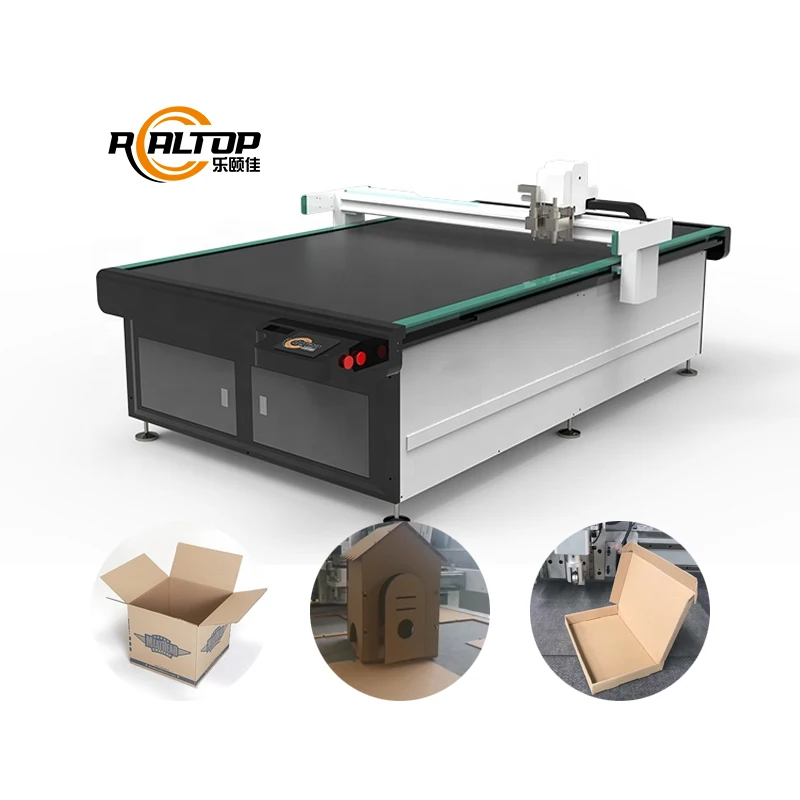
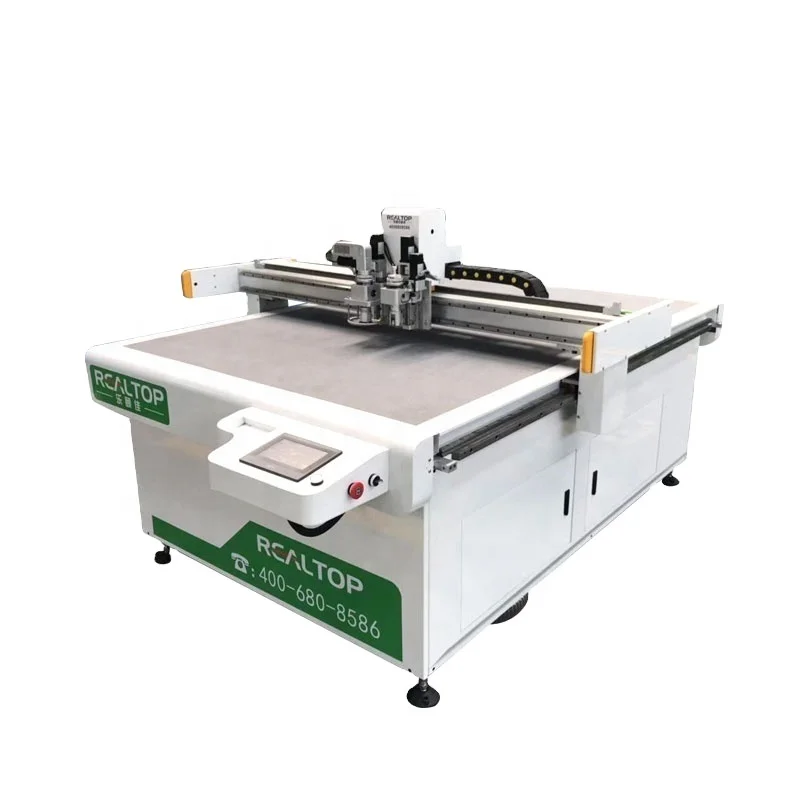
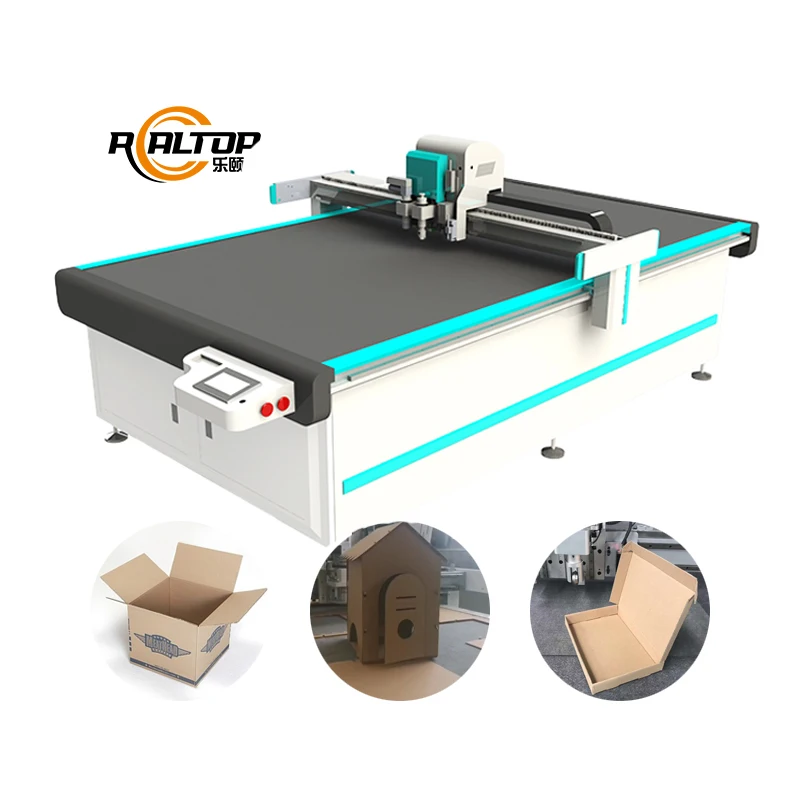
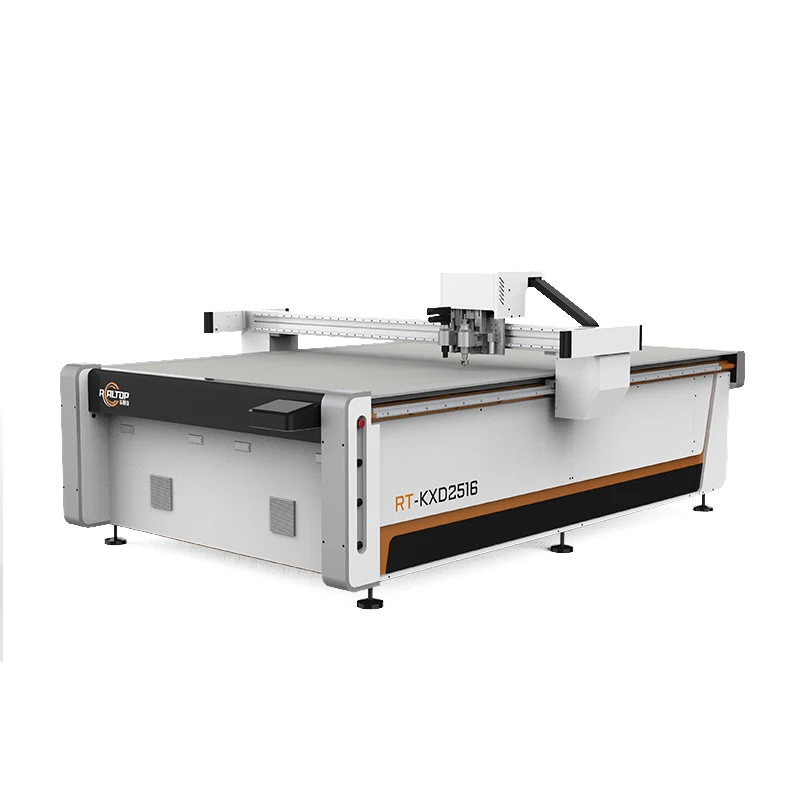
| Product Type | CNC Oscillating Knife Cutting Machine |
| Working Area | 1600 × 2500 mm |
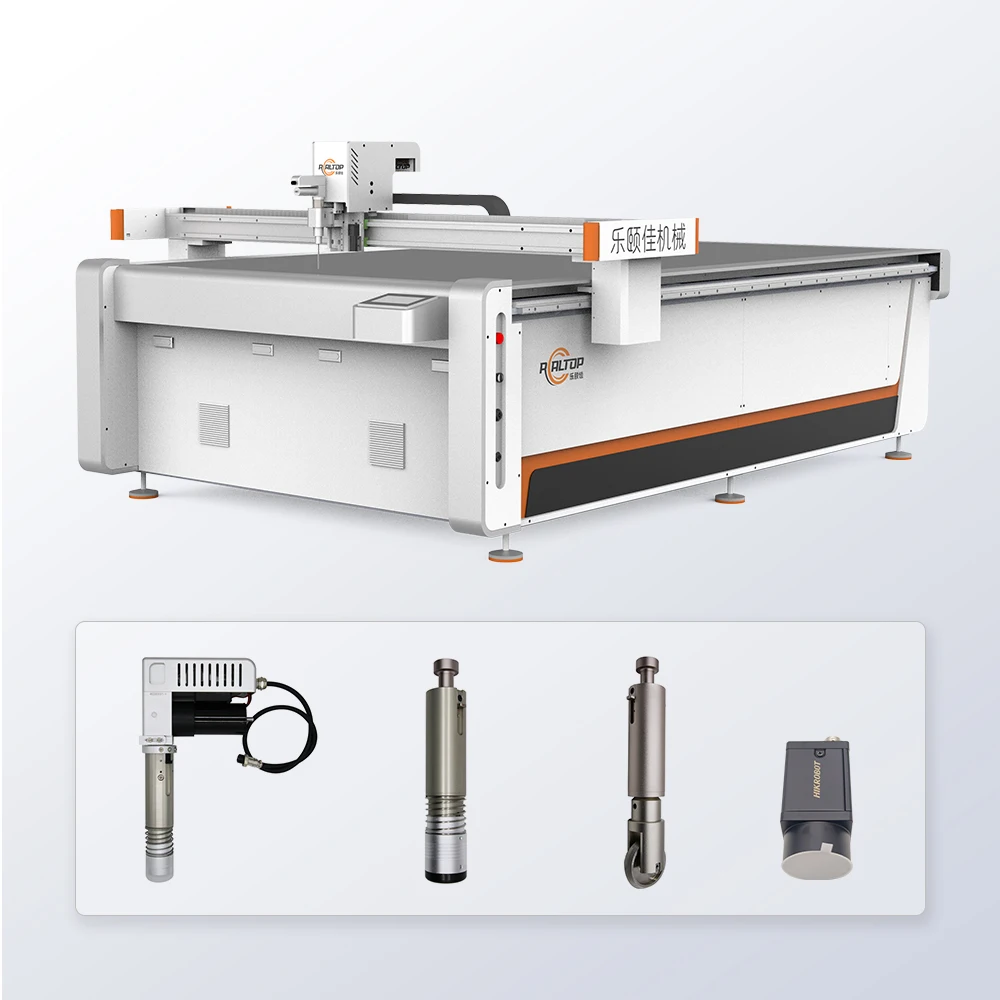
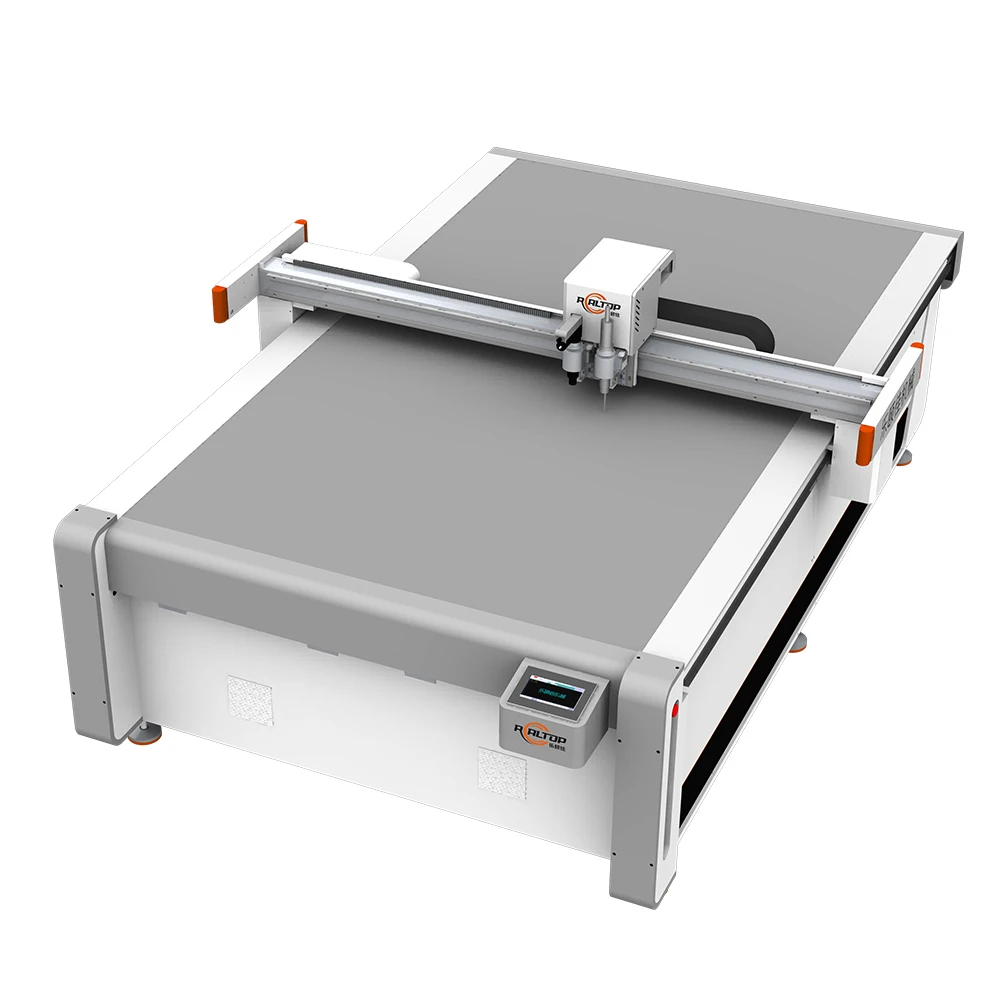
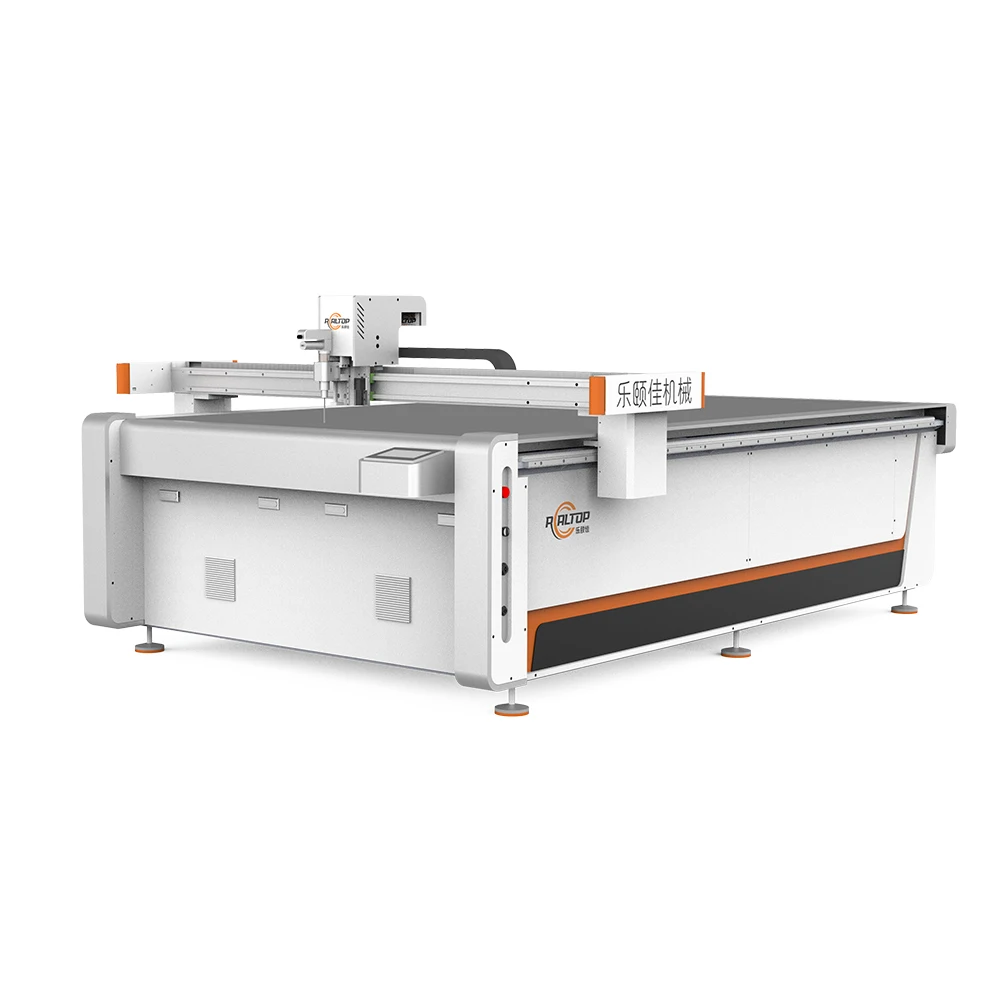
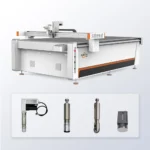
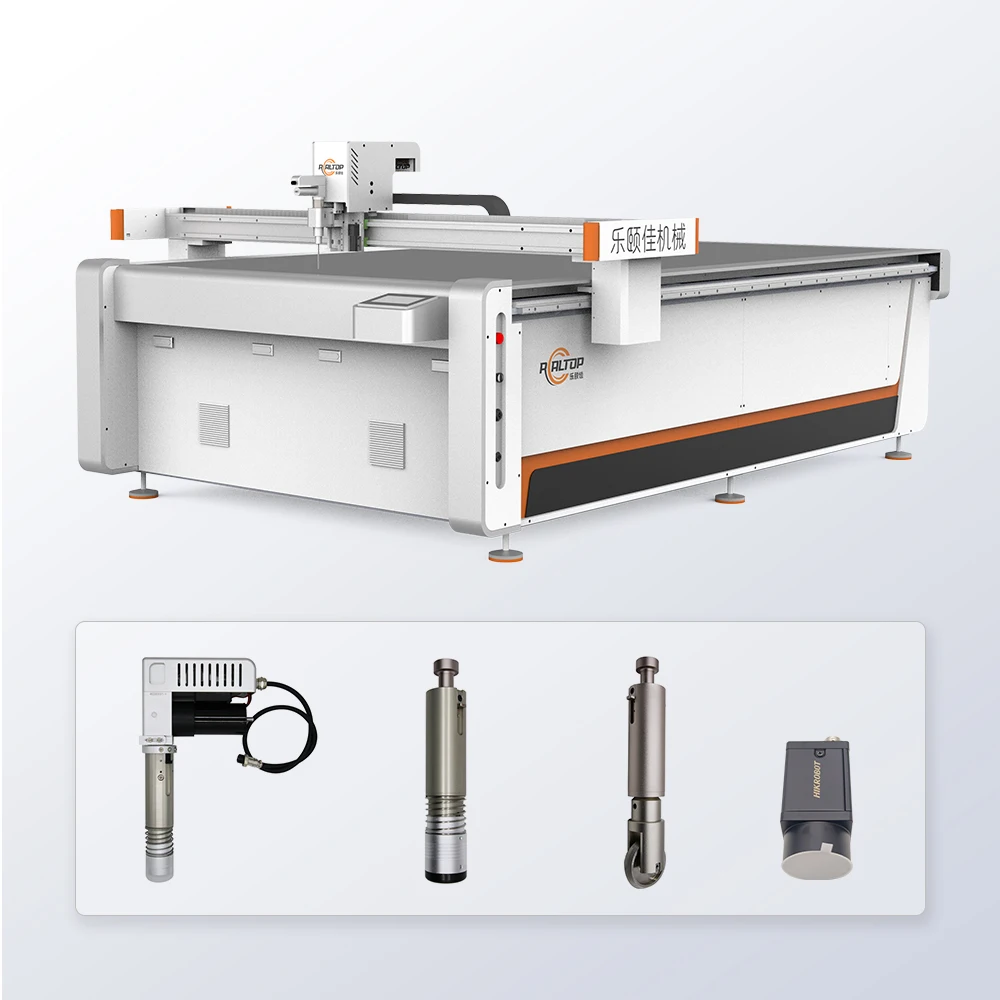
| Available Tool Heads | Oscillating knife, Driven rotary knife, Creasing wheel, Kiss cutting tool, Pneumatic knife, Milling tool, V groove knife |
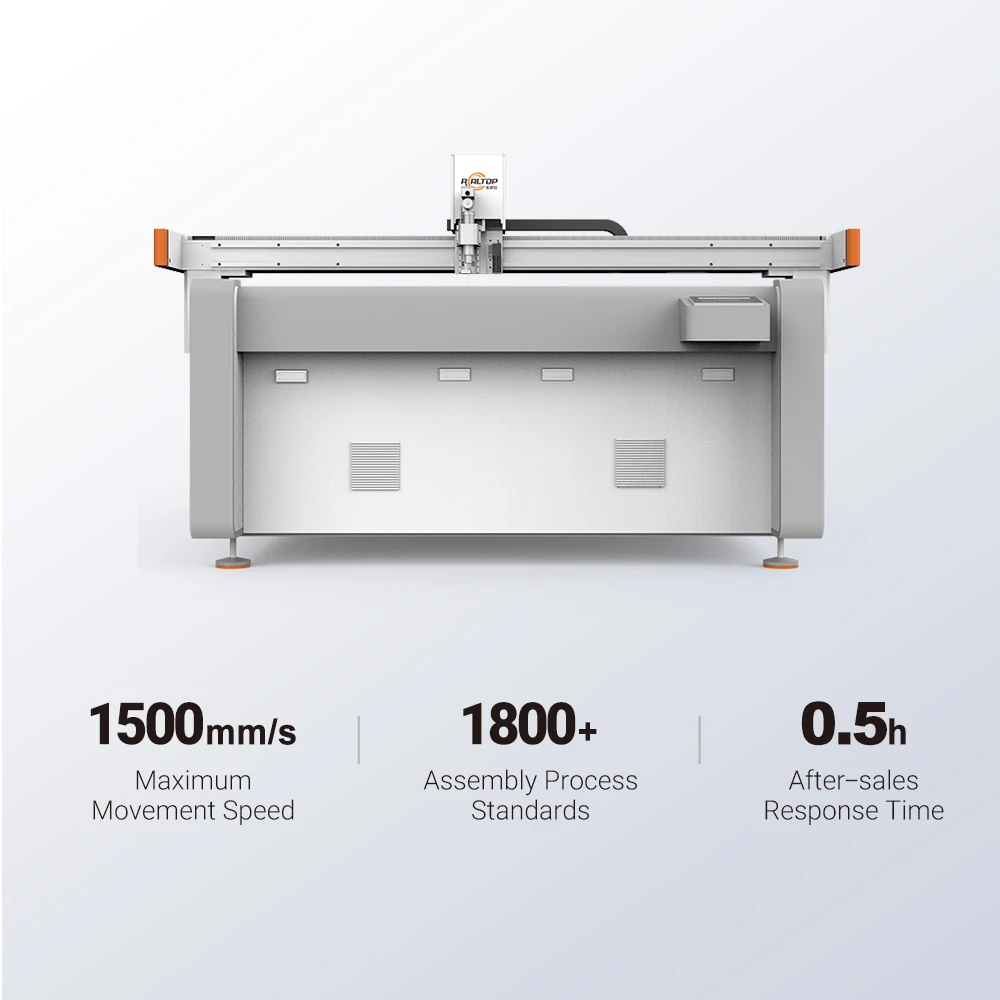
| Cutting Speed | 0 – 1500 mm/s |
| Cutting Thickness Capacity | ≤ 40 mm (basis not stated in source — confirm material type and density) |
| Cutting Accuracy | ± 0.1 mm |
| Vacuum Table | Aluminum bellows with 9 kW pump |
| Servo Drive Options | Panasonic, Delta, or Dorna |
| Control System | PLC panel with optional display languages |
| Voltage Options | 110V / 220V / 380V (rated or peak not specified in source) |
| Compatible File Formats | PLT, DXF, AI, PDF |
| Safety Features | Infrared sensor array and emergency stop |
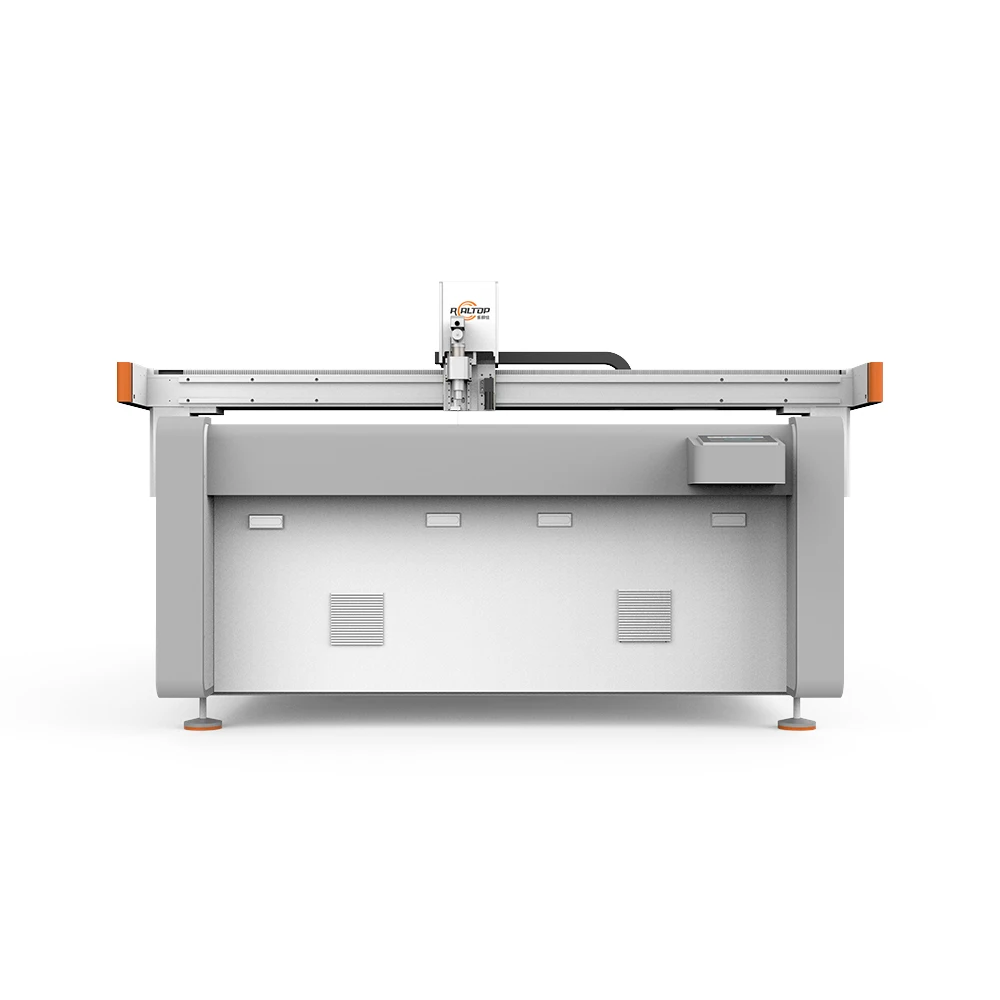
| Machine Dimensions | 3300 × 2100 × 1350 mm |
| Standards | CE (2026 Certified) |
Application Suitability
| Application | Material or Output |
|---|---|
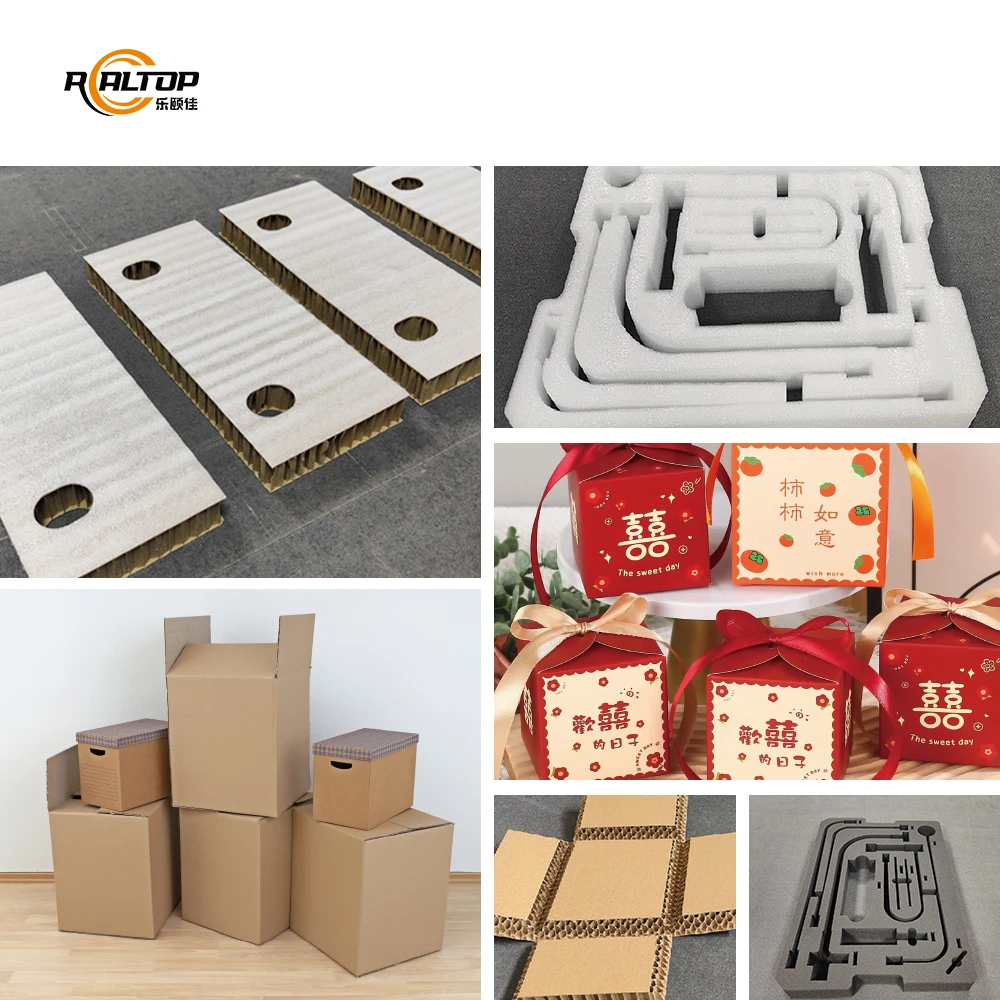
| Carton and corrugated box sample making | E-flute, B-flute, BC-flute corrugated cardboard with crease and cut in one pass |
| Folding carton and luxury packaging prototyping | Greyboard, cardstock, art paper, specialty coated papers |
| Protective foam insert fabrication | EVA, EPE, PU foam sheets for custom packaging |
| Soft goods and textile packaging components | Velvet, fleece, non-woven fabric, rubber mats |
| Thin plastic and synthetic leather die-free cutting | PVC, PET sheets, leather and synthetic leather |
| Composite and adhesive-backed material processing | Multi-layer laminates and gasket materials |
Why Specified Working Area Is Not Enough to Guarantee a Clean Cut on Corrugated Board
A flatbed size only tells you what fits on the table, not whether the tool head can handle the actual flute structure and moisture content of your board.
I spent several weeks commissioning digital cutting tables across South Asia and West Africa. One recurring issue appeared in nearly every carton plant: the machine arrived with an oscillating knife rated for standard single-wall corrugated, but the local board stock was recycled, heavier, and carried higher moisture. The blade bogged down mid-sheet, edges crushed, and operators spent more time clearing jammed offcuts than running jobs [NEED_CITE: effect of moisture content on corrugated cutting resistance]. Specifying a CNC oscillating knife cutting machine manufacturer means verifying the tool stack against the exact board grades your press line will feed, not just the maximum sheet dimensions.
Matching the Tool Stack to the Packaging Structure
Each packaging structure demands a different tool combination. A simple shipping carton may only need an oscillating knife for outline cuts and a creasing wheel for fold lines. A luxury folding carton with intricate window cutouts, kiss-cut peel sections, and V-groove folds requires the driven rotary knife, kiss cutting tool, and V groove knife mounted and sequenced in the same job file. The PLC control panel sequences these heads automatically once the file is loaded, so operators only load the sheet and start the cycle. This is where an experienced CNC oscillating knife cutting machine manufacturer adds value — by mapping your packaging library to a tool head configuration before the machine ships.
Vacuum Zoning and Its Role in Holding Small Packaging Parts
The 9 kW pump feeding the aluminum bellows vacuum table generates substantial hold-down force across the full 1600 × 2500 mm surface. However, small packaging components — inserts, dividers, corner pads — cover less area and are more prone to lifting during aggressive cuts. Proper table zoning directs suction only to the active cutting region, preventing smaller blanks from shifting. During trials on thin greyboard, I have watched poorly zoned tables let credit-card-sized pieces drift mid-cut, ruining the ± 0.1 mm accuracy the servo system is designed to deliver [NEED_CITE: vacuum table zoning practices for small-format digital cutting].
Reading the Specs Through a Packaging Lens
The cutting speed range of 0 – 1500 mm/s is a maximum traverse figure; actual cutting speed depends on flute density and knife oscillation frequency. On BC-flute, the knife must penetrate deeper and slower than on E-flute, so throughput adjusts accordingly. The ± 0.1 mm accuracy is achievable when the servo drives — selectable among Panasonic, Delta, or Dorna — are matched to the gantry load and the file complexity. The dedicated packaging box structure design software reads PLT, DXF, AI, and PDF formats, which matters because many carton plants receive artwork from brand clients in Adobe Illustrator or PDF and cannot afford a manual conversion step before every run.
The Hidden Cost of Wrong Configuration Choices
When a creasing wheel is too blunt for double-wall corrugated, the fold line cracks instead of compressing cleanly, and the assembled box fails drop tests. If the vacuum pump is undersized for porous recycled board, air leaks through the sheet and hold-down force drops, causing registration drift on long nesting layouts. Voltage mismatches are another quiet failure mode: a 380V machine wired into a 220V supply without transformer adjustment will run, but the servo drives overheat and the PLC resets randomly — issues that may not surface until weeks after installation [NEED_CITE: industrial equipment voltage and frequency mismatch consequences].
Why Buyers Source This Equipment Here
The design team configures tool heads and table zones against the buyer’s actual material stack rather than shipping a default setup. Sample cutting on the buyer’s own packaging board — including recycled stocks with variable moisture — is completed and documented before the order is confirmed. File format compatibility between the dedicated packaging software and the buyer’s existing design workflow is verified in advance. Voltage, plug type, and control panel language are specified and recorded on the electrical schematic prior to production. The in-house factory covers both knife cutting technologies, so a buyer processing foam inserts alongside corrugated boxes can address both applications from one production line.
Documentation & Verification
- Sample cutting report on buyer’s own corrugated or foam material documenting edge quality and crease depth
- Tool head and vacuum table configuration list matched to specified material grades and thicknesses
- Electrical schematic confirming voltage, frequency, and plug type before dispatch
- Software license and file format compatibility note covering PLT, DXF, AI, and PDF workflows
- Factory test record with dimensional verification against buyer-supplied packaging drawings
- Operation and maintenance manual with tool change intervals and blade replacement procedures
Installation, Commissioning & Support
- Foundation leveling within tolerance for the 3300 × 2100 × 1350 mm frame footprint and 9 kW vacuum pump placement
- Dedicated circuit matching confirmed 110V / 220V / 380V rating with correct breaker sizing
- Gantry and tool carriage assembly on-site with servo drive calibration for ± 0.1 mm accuracy verification
- First-run parameter tuning on buyer’s actual board grades, adjusting oscillation frequency and feed rate
- Operator training on tool head changeover sequences and packaging software nesting functions
- Spare blade, creasing wheel, and knife holder inventory aligned with daily production volume
What to Include in Your Inquiry
Share the specific board grades, flute types, and foam densities your line processes, along with typical sheet dimensions and daily volume targets. Confirm your facility voltage and frequency, preferred control panel language, and the design software your team currently uses. If you are replacing an existing die-cutting process, note the current die inventory and turnaround expectations so the tool configuration can be matched precisely.
Frequently Asked Questions
Q: How is cutting thickness capacity verified for my specific corrugated or foam material?
A: We run sample cuts on your actual material, measuring edge quality, crease definition, and full-penetration depth. The ≤ 40 mm figure is a general range; real capacity depends on flute density, moisture, and foam cell structure. Results are documented in a cutting report before you commit.
Q: Which tool head configuration is recommended for my packaging material mix?
A: Configuration depends on your specific structures — corrugated shipping boxes need oscillating knife and creasing wheel, while luxury cartons may add kiss cutting and V groove tools. We map your packaging library and recommend the exact tool stack before production.
Q: How do you confirm software and file format compatibility with my design workflow?
A: The dedicated packaging design software supports PLT, DXF, AI, and PDF imports. Before the order, we test file round-tripping with your actual artwork to confirm nesting, tool path assignment, and crease-line recognition work without manual rework.
Q: What voltage and control language options are confirmed before shipment?
A: Voltage is configurable across 110V, 220V, and 380V, and the PLC panel display language is set to your preference. Both are recorded on the electrical schematic and confirmed in writing before the machine enters production.
Q: Can I send sample material for trial cutting before placing the order?
A: Yes. Send representative sheets of your actual corrugated board, foam, or specialty paper. We run the trial, document cutting speed, edge condition, and crease quality, and share the report so you can evaluate performance on your own stock.
You may also like

商品评价
Clear filtersThere are no reviews yet.