


-
 Courier delivery
-
 DHL Courier delivery
-
 Warranty 1 year
-
 Free 30-Day returns

Configured Per Material — We match oscillating knife tooling and vacuum table zoning to the buyer’s specific board grade and flute profile before production begins.
Technical Specifications
| Parameter | Value |
|---|---|
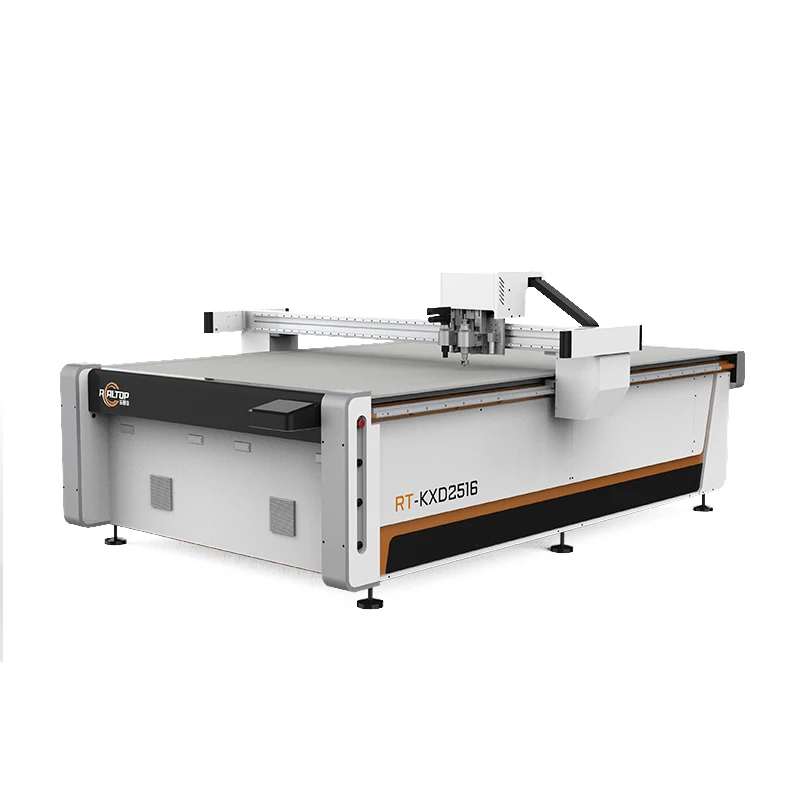
| Model | RT-D2516/RT-S2516 |
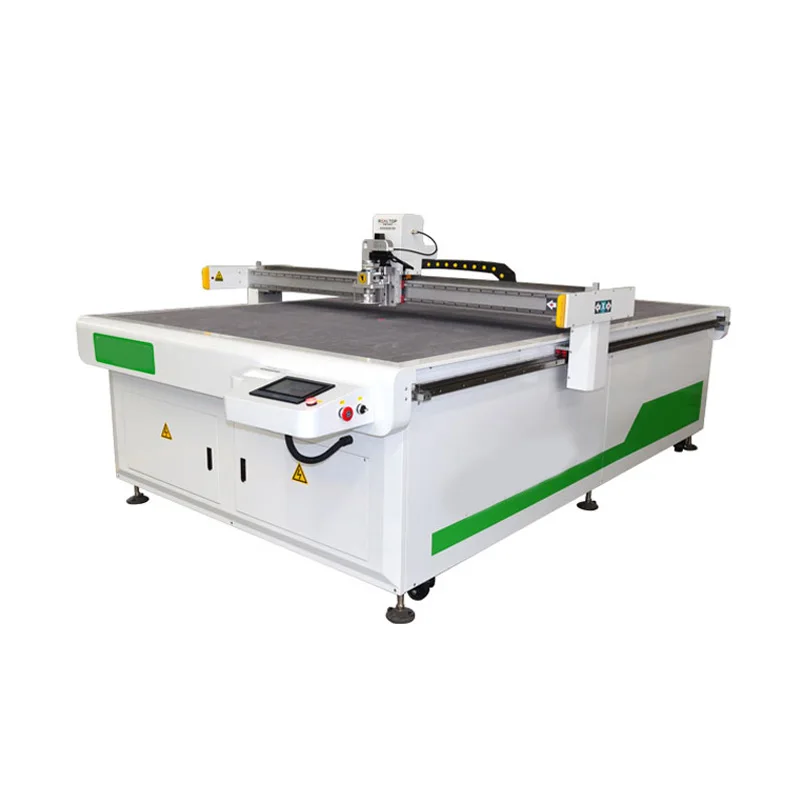
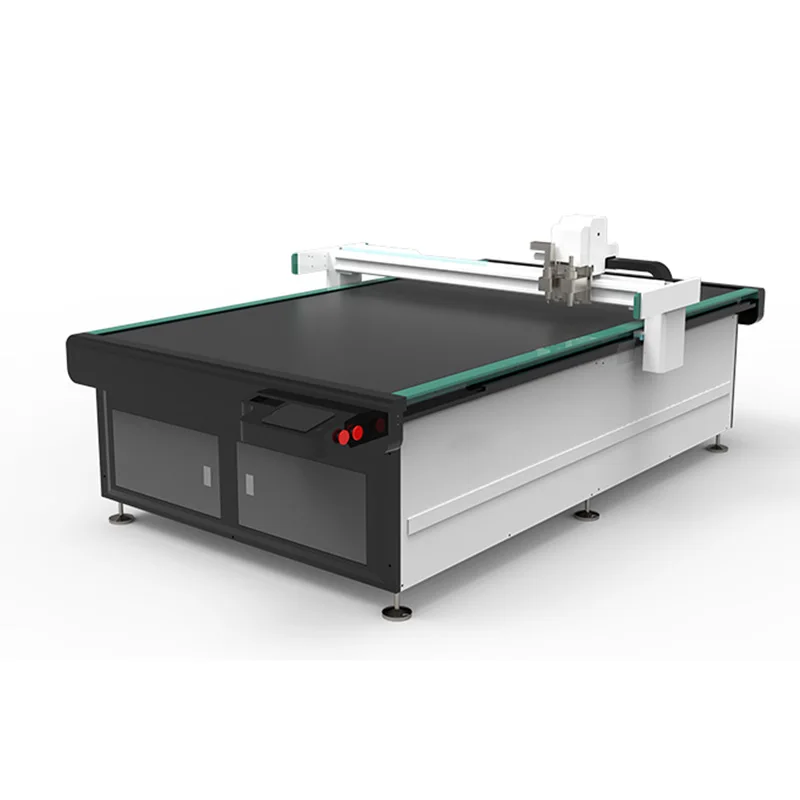
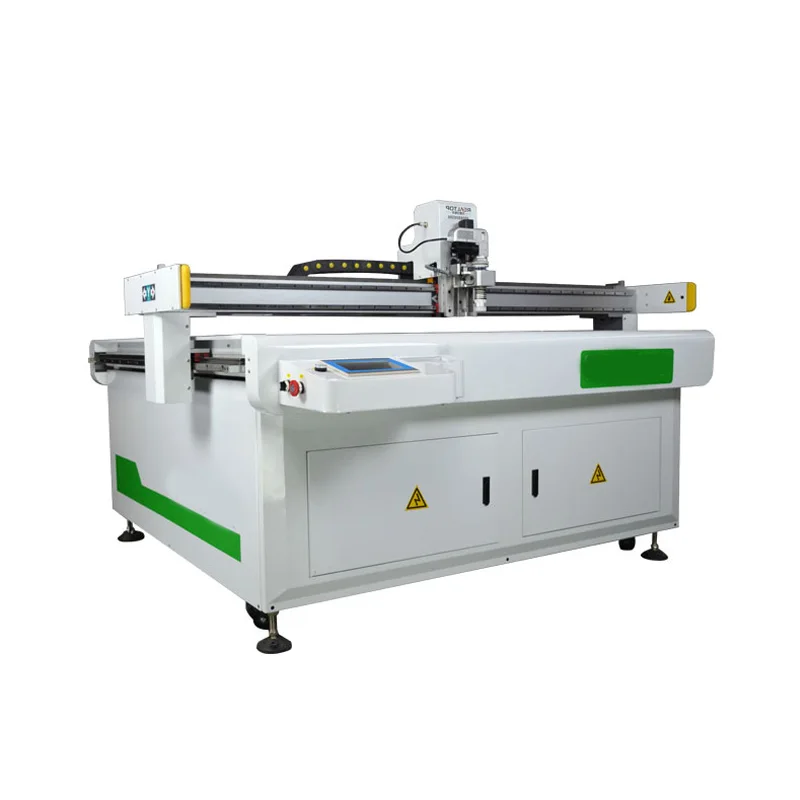
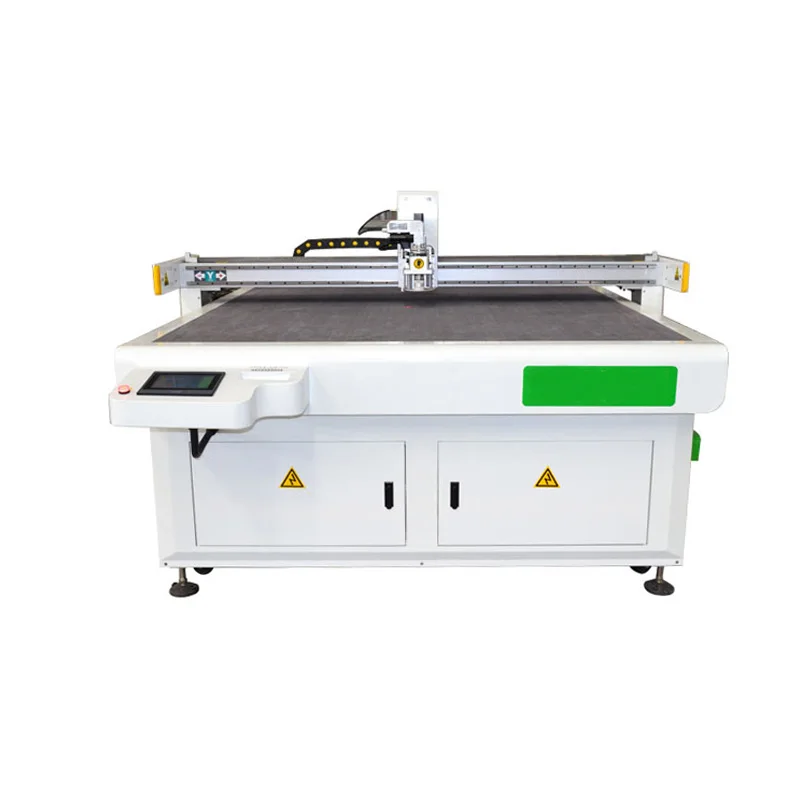
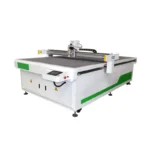
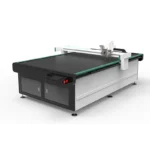
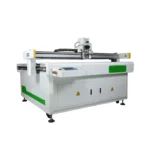
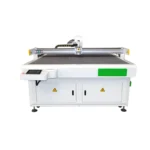
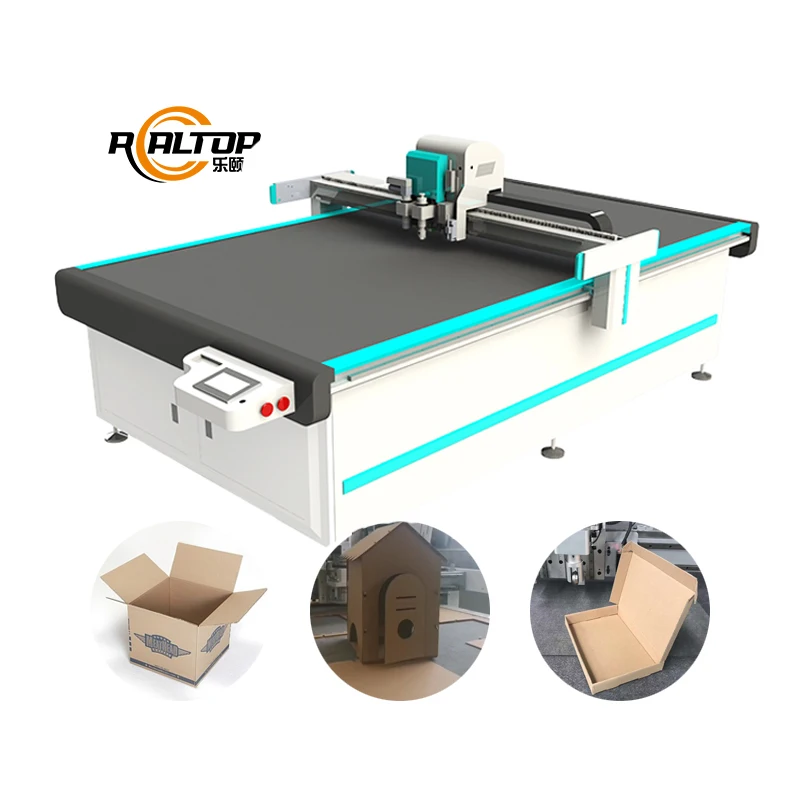
| Product Type | CNC Oscillating Knife Cutting Machine |
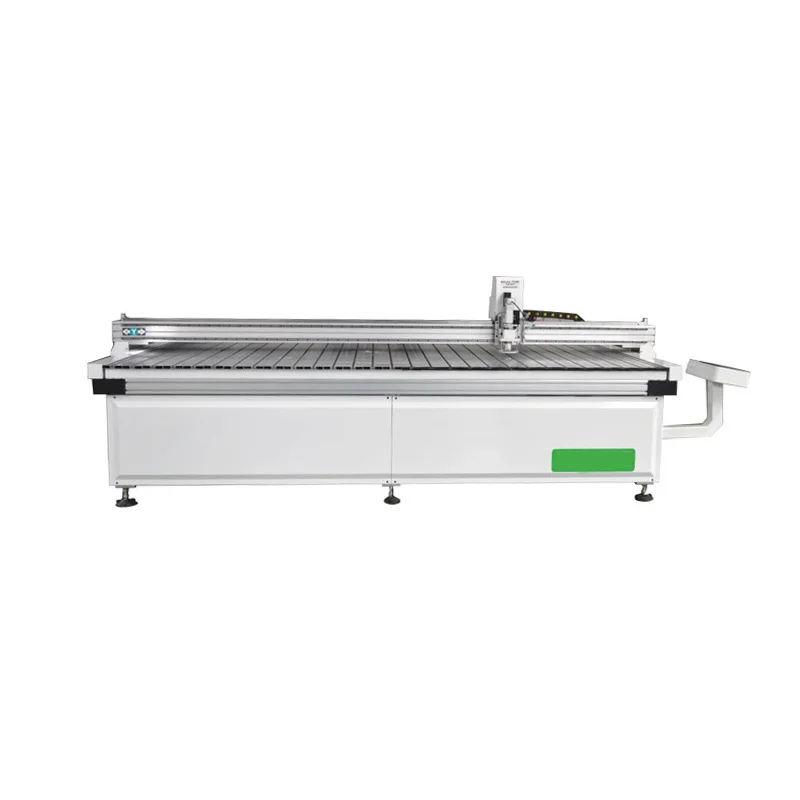
| Working Area | 1600 × 2500 mm |
| Overall Dimensions (L × W × H) | 3450 × 2300 × 1250 mm |
| Rated Power | 9 kW |
| Voltage | 380V ±10% |
| Working Table | Flat vacuum table |
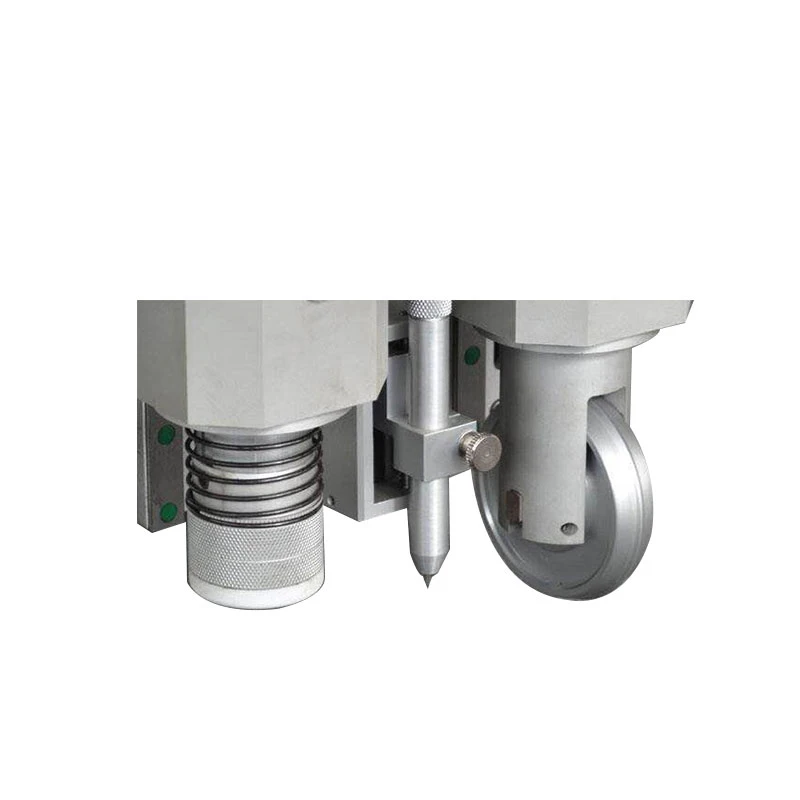
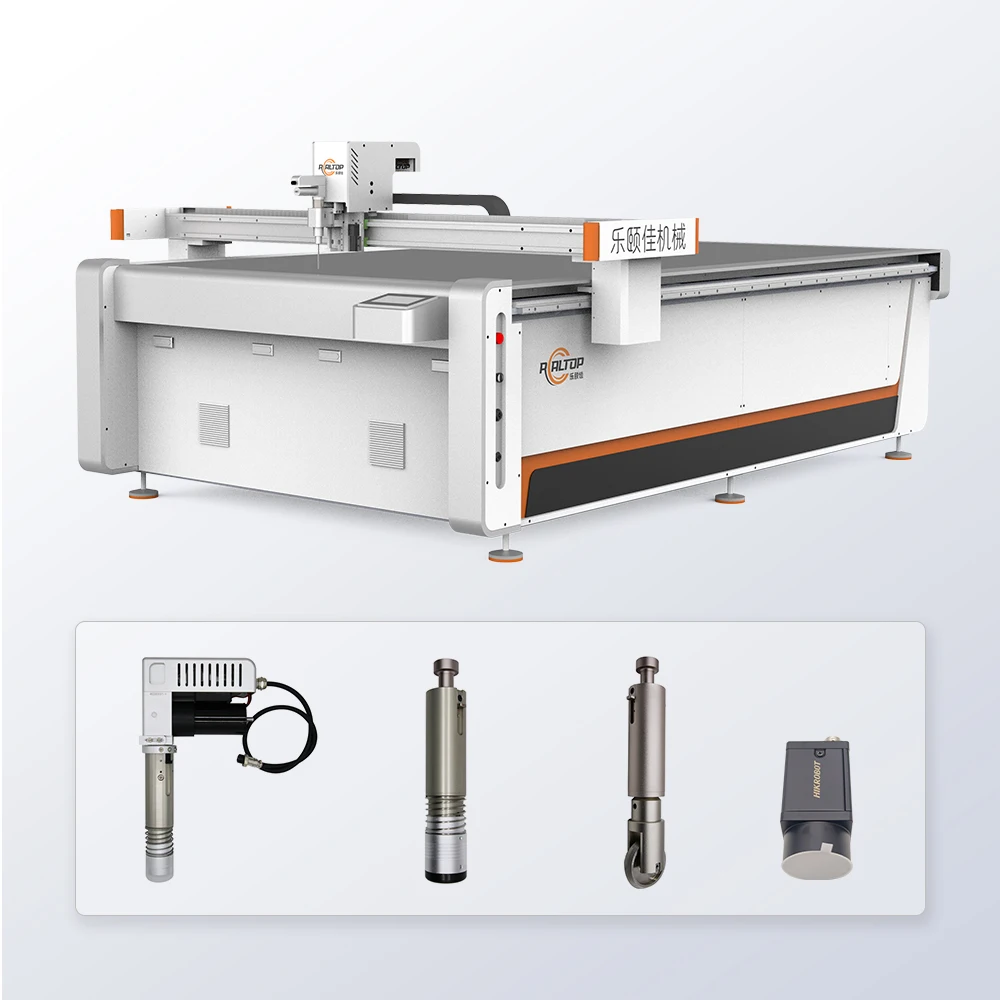
| Tool Head | Swiss imported oscillating knife with vibration full-cut, half-cut and cursor location |
| Translational Velocity | 800 – 1200 mm/s |
| Cutting Speed | 200 – 800 mm/s depending on material |
| Repeated Accuracy | ≤0.1 mm |
| Servo Motor | Japanese Yaskawa |
| Linear Rail | Taiwan Hiwin |
| Transmission | Synchronous belt and imported ball screw |
| Conveyor Belt | Germany imported |
| Vacuum Pump | 7.5 kW |
| Safety Device | Infrared sensors |
| Instruction System | HP-GL compatible format |
| Assembly State | Fully assembled (source value — verify against manufacturer catalog) |
Application Suitability
| Application | Material or Output |
|---|---|
| Carton and box sample making | Corrugated board, greyboard, folding carton stock |
| Packaging prototype development | Foam board, honeycomb paper, PVC blister sheets |
| Flexible gasket and seal prototyping | Rubber sheet, silicone, non-asbestos fiber |
| Signage and display cutting | Vinyl, soft PVC, foam PVC, acrylic-backed board |
| Leather and textile sampling | Split leather, PU synthetic, sponge composite leather |
Why Working Area Alone Does Not Guarantee a Clean Cut
A CNC packaging sample cutting machine manufacturer that quotes only table size often leaves out the part that matters most on the shop floor: whether the knife head, oscillation frequency and vacuum zoning are matched to the board grade you actually run. The right cut comes from tooling matched to material, not from a bigger table. I have walked into workshops where the operator was double-passing on 2 mm greyboard because the oscillation amplitude was set for thin vinyl, leaving ragged edges and crushing the top liner on corrugated flutes. The machine was large enough; the configuration was not. When you source from a CNC packaging sample cutting machine manufacturer, the first question should always be what material, thickness and flute profile you intend to cut daily, not how many square meters of table you want [NEED_CITE: material thickness and oscillation amplitude relationship in flatbed digital cutting].
Oscillating Knife Versus Static Drag for Packaging Board
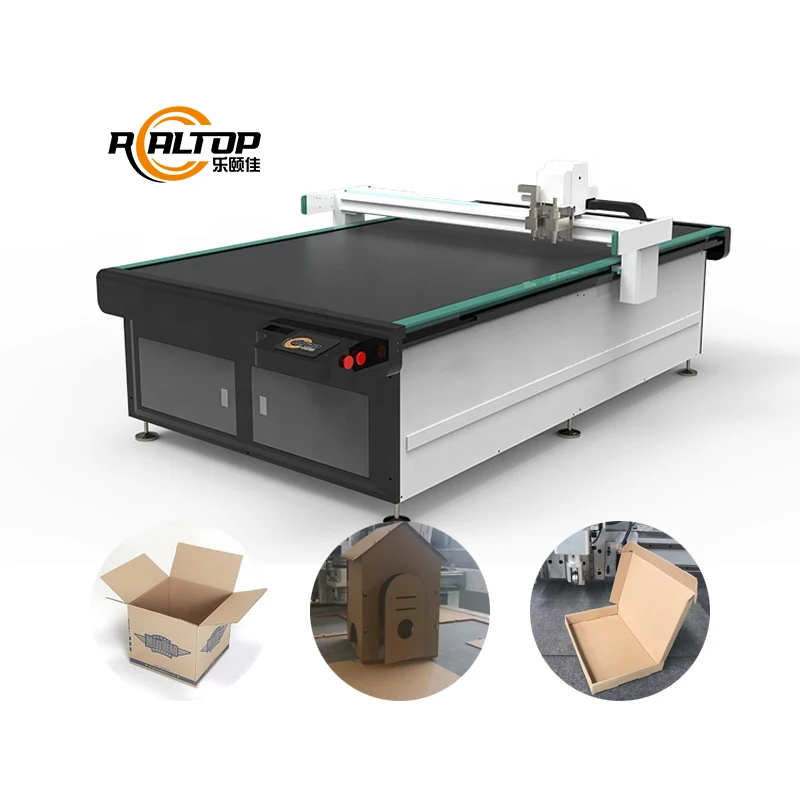
The Swiss imported oscillating knife on the RT-D2516/RT-S2516 is designed to cut through dense greyboard and multi-wall corrugated without crushing the flute structure. The high-frequency vibration slices through fiber rather than tearing it, which preserves the compressed edge that a packaging sample needs to fold cleanly on the crease line. The half-cut function scores the fold line in the same setup, so the sample goes from flat sheet to assembled box prototype in one pass. This is what separates a usable sample from one that cracks at the corners when the production manager tries to fold it by hand.
Vacuum Hold-Down Across a 1600 × 2500 mm Surface
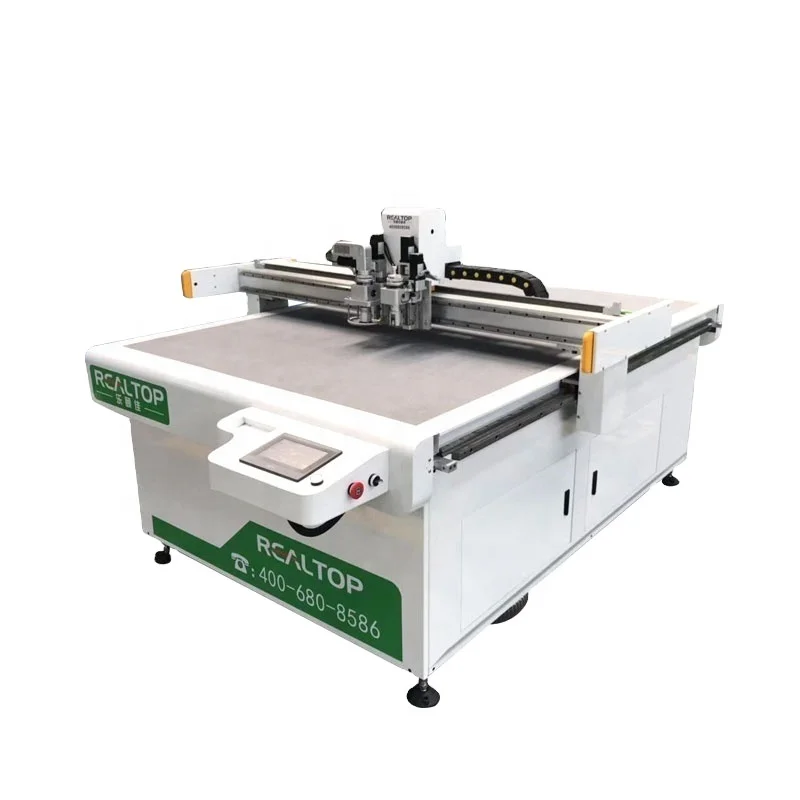
The 7.5 kW vacuum pump paired with a flat table of this size must generate sufficient negative pressure to prevent small carton blanks from lifting during high-speed directional changes. When the head decelerates at the end of a cut path, any loss of hold-down causes the sheet to shift, throwing off repeated accuracy even when the Yaskawa servo and Hiwin rail are capable of ≤0.1 mm precision. The table zoning determines whether a small gasket sample stays flat in one corner while the rest of the surface is unoccupied [NEED_CITE: vacuum table zoning requirements for small-part flatbed cutting].
Reading the Specification Sheet Like a Production Manager
The 9 kW rated power covers the spindle drive, servo axes and vacuum system operating together during a full cutting cycle. On 380V ±10% supply, the machine expects a stable three-phase line; voltage fluctuation beyond this range affects servo response and can trip the inverter protection mid-job. The 200 – 800 mm/s cutting speed range reflects the spread between dense greyboard at the lower end and thin vinyl or film at the upper end. Pushing 800 mm/s on 3 mm corrugated will leave uncut fibers at the bottom of the kerf, while running 200 mm/s on 0.5 mm PVC wastes cycle time. The HP-GL compatible instruction system means files exported from common packaging CAD software transfer without re-drawing, but the specific nesting software and file import workflow should be confirmed against the buyer’s existing design environment before order confirmation.
The Cost of Specifying Too Late
When a buyer confirms working area and leaves tooling open, the default configuration tends toward the most common material the factory ships for — often thin film or vinyl. That head then arrives at a packaging sample shop and struggles with 2 mm greyboard, producing crushed flute edges and incomplete cuts at the bottom of the kerf. The operator slows the feed rate to compensate, cycle time stretches, and what looked like a productive machine on paper becomes a bottleneck. I have seen entire sample runs scrapped because the half-cut depth was not adjustable enough for the board grade, leaving fold lines that cracked instead of bending [NEED_CITE: tool head mismatch consequences in digital flatbed cutting].
Why Buyers Source This Machine From Our Workshop
Our in-house design team covers both knife and laser cutting, so we recommend the method that fits the material rather than forcing every job through one technology. The RT-D2516/RT-S2516 is configured per buyer: tool head, vacuum zoning and conveyor options are selected after reviewing the actual board grades and sheet sizes you run. We cut samples on your own material before you commit, so edge quality, crease depth and cycle time are verified on the stock that matters, not on our demo sheet. Electrical schematics, voltage and control language are confirmed for your destination market before the machine enters final assembly. Every unit ships with a factory test record showing cutting results on the specified material range.
Documentation & Verification
- Machine specification sheet listing the exact tool head and table configuration selected for your material range
- Electrical schematic with voltage, frequency and plug type confirmed for your facility
- Sample cutting report showing edge quality and crease depth on your own board stock
- Factory test record documenting cutting speed and repeated accuracy before crating
- Operation and maintenance manual with tool change and blade replacement procedures
- Software licence and HP-GL file format compatibility note for your design workflow
Installation, Commissioning & Support
- Flat concrete floor with level tolerance to suit the 3450 × 2300 × 1250 mm footprint
- Dedicated 380V three-phase circuit rated for the 9 kW total load plus vacuum pump
- Machine arrives fully assembled; site work is limited to power connection and leveling
- First-run parameter tuning on your board grade to set oscillation amplitude and feed rate
- Operator training covering blade changes, vacuum zone selection and HP-GL file loading
- Spare blade and consumable list provided with recommended replacement intervals
What We Need to Quote the Right Configuration
To specify this CNC packaging sample cutting machine correctly, we need your primary board types and thicknesses, typical sheet dimensions and the daily sample volume your department produces. Tell us your local voltage and frequency standard, the control language your operators prefer, and whether your design team exports files in HP-GL or another format. If you can send a few sheets of your actual material, we will run a sample cut and send back the results before you place the order.
Frequently Asked Questions
Q: How do you select the right tool head for my packaging material?
A: We ask for your specific board types, thicknesses and whether you need creasing. The Swiss oscillating knife handles full-cut and half-cut in one setup, but the oscillation amplitude and blade angle must match your flute profile and greyboard density. We confirm this through sample cutting on your material before the machine enters production.
Q: Will the vacuum table hold small carton samples without shifting?
A: The 7.5 kW vacuum pump provides strong hold-down, but small blanks in one corner of the 1600 × 2500 mm table require proper zoning to maintain suction. We configure the vacuum zones based on the smallest part in your sample range and verify hold-down during the factory test on your material.
Q: Can the system import my existing design files?
A: The instruction system is HP-GL compatible, which covers many packaging CAD outputs. We need to see your actual file format and nesting workflow before order to confirm compatibility. If conversion is needed, we address it during the sample cutting stage so there are no surprises at installation.
Q: How do you confirm voltage and language before shipment?
A: We collect your facility voltage, frequency and plug standard during the inquiry stage and record them on the electrical schematic. Control language preference is confirmed at the same point. Both are verified on the specification sheet you sign off before we begin final assembly.
Q: How can I check cutting speed and edge quality before ordering?
A: Send us your actual board stock or a detailed specification of the grades you run. We cut sample pieces on the RT-D2516/RT-S2516 and send you a report with the edge finish, crease depth and cycle time achieved. You approve the results before we proceed with your machine build.
You may also like

商品评价
Clear filtersThere are no reviews yet.