





-
 Courier delivery
-
 DHL Courier delivery
-
 Warranty 1 year
-
 Free 30-Day returns

Configured per material — the cutting method, tool head, vacuum zoning and vision system are matched to the buyer’s specific material and production volume before order confirmation, not forced from a single standard build.
Technical Specifications
| Parameter | Value |
|---|---|
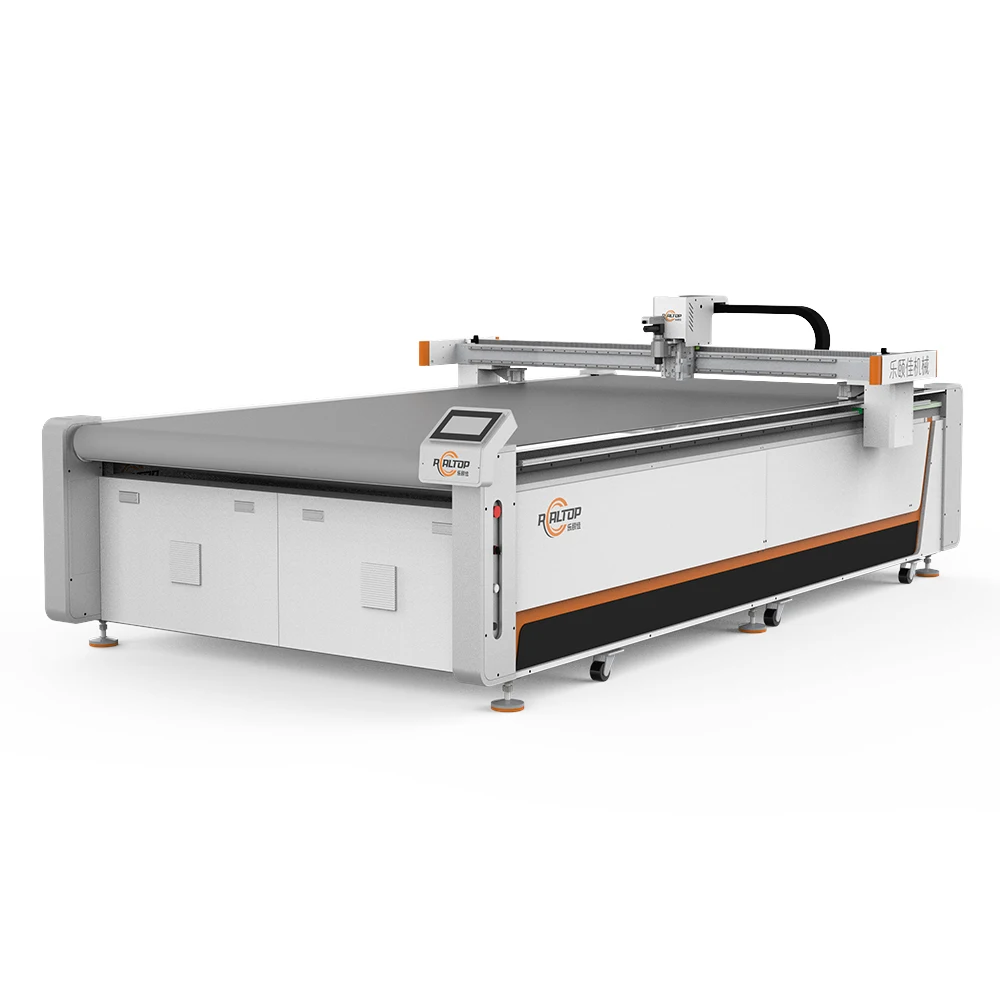
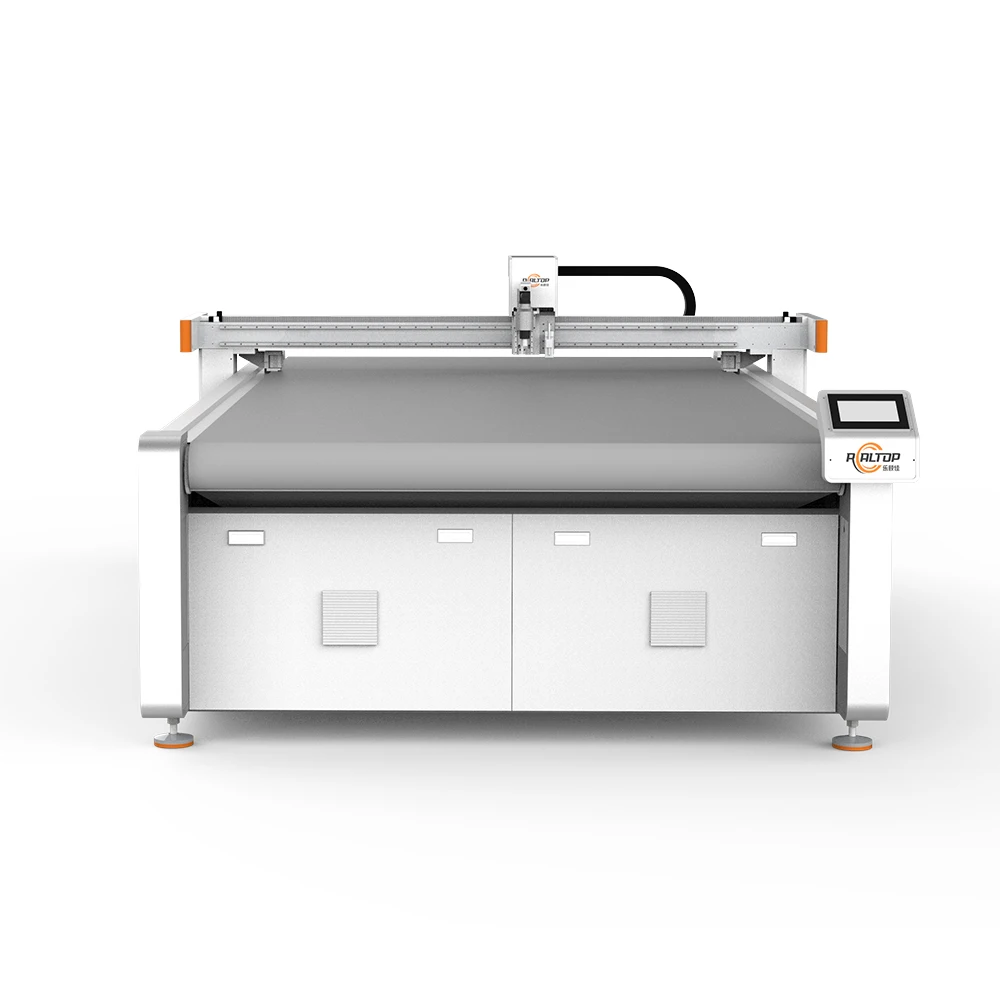
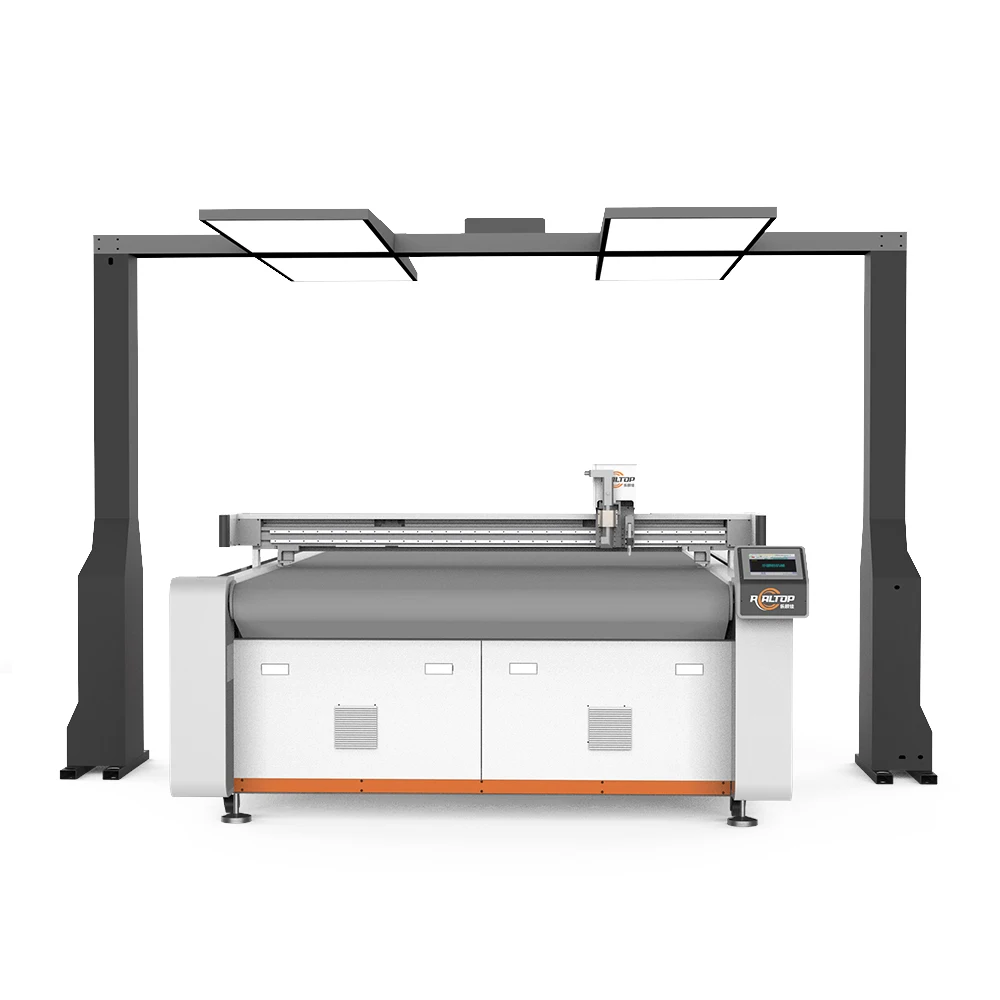
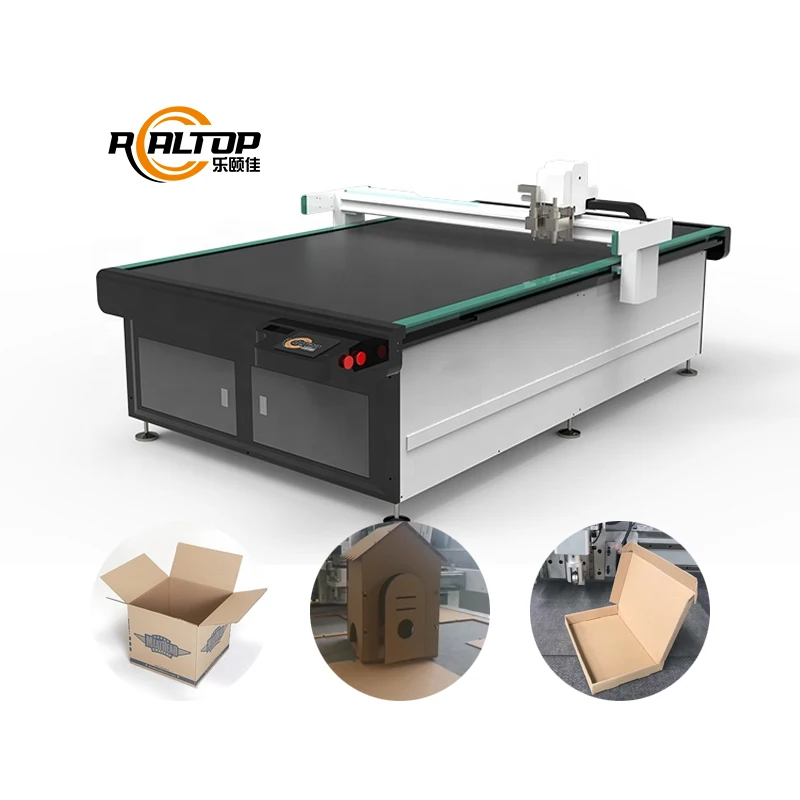
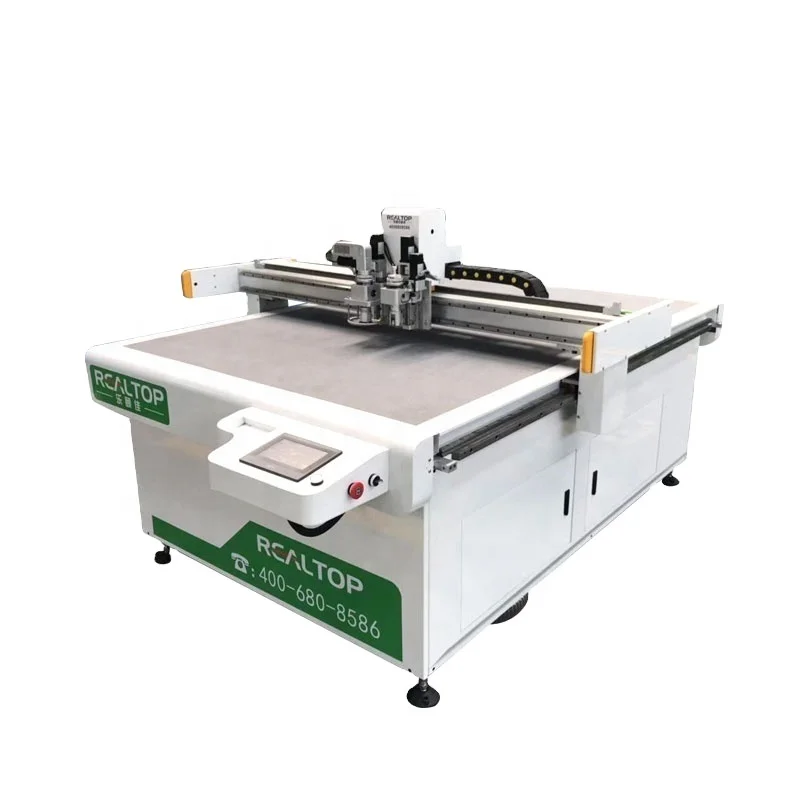
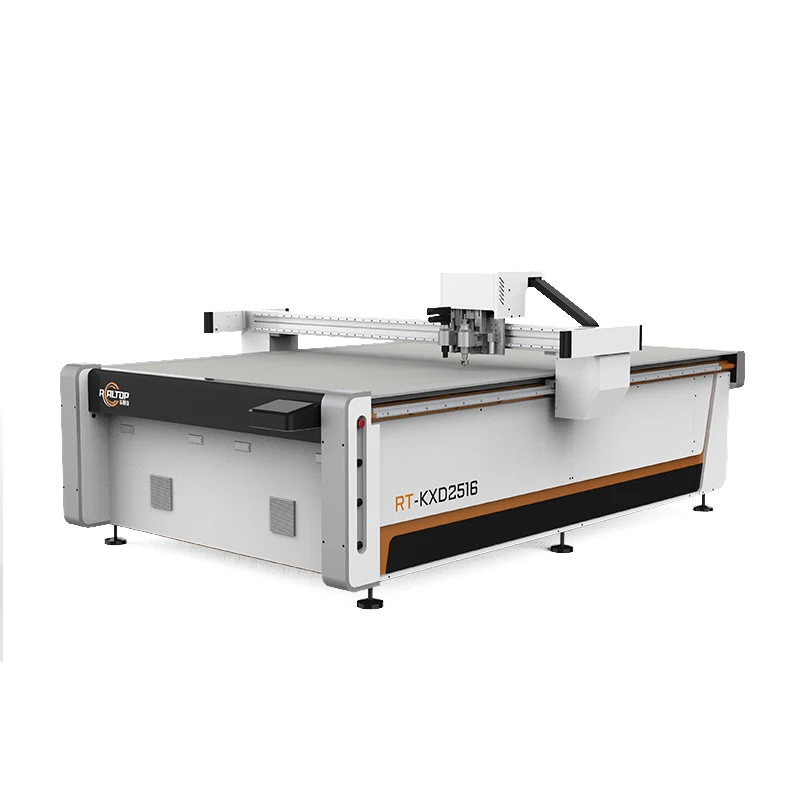
| Product Type | CNC Oscillating Knife Cutting Table |
| Working Area | 1600×2500 mm |
| Overall Dimensions | 3450×2300×1250 mm |
| Rated Power | 9 kW |
| Vacuum Pump | 7.5 kW |
| Working Table | Flatbed aluminum alloy vacuum adsorption |
| Translational Velocity | 800–1200 mm/s |
| Repeated Accuracy | ≤0.1 mm |
| Transmission System | Digital servo motor, linear guide, synchronous belt, ball screw |
| Servo Motor | Taiwan Delta |
| Linear Guide | Taiwan Hiwin |
| Cutting Thickness Range | 20–80 mm (basis not stated in source) |
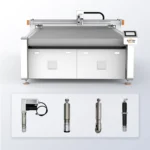
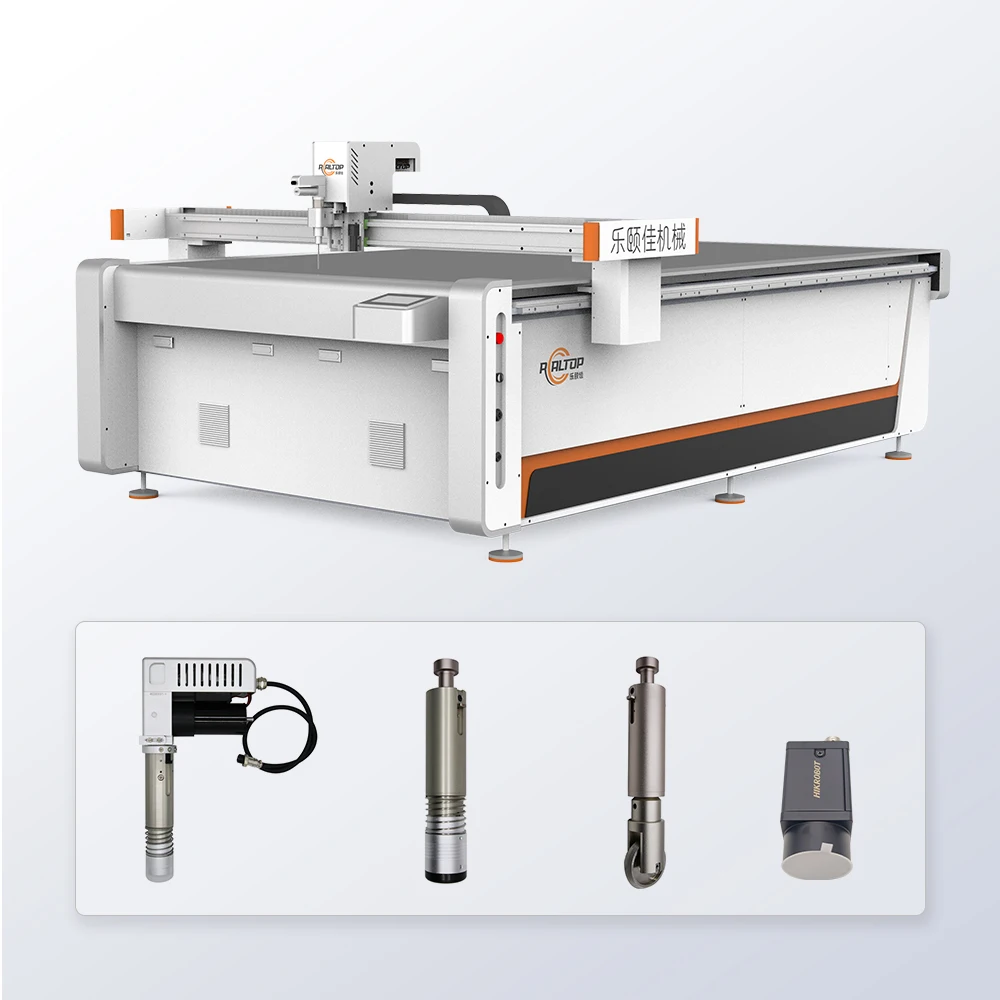
| Tool Head Options | Oscillating knife, pneumatic knife, high-power vibrating knife, circular knife, V-cutting knife, drag knife, creasing wheel, dotted line knife, punch, brush |
| Swiss Imported Knife Function | Vibration full cutting, vibration half cutting, cursor location |
| Visual Positioning Options | Small CCD camera mark point, panoramic camera recognition, projection positioning |
| Machine Frame | Hard steel structure with reinforced beam |
| Conveyor Belt | Germany imported |
| Felt Belt | Wear-resistant anti-pull composite fiber |
| Auto Feeding | Yes |
| Instruction System | HP-GL compatible format |
| Voltage | 380V ±10% |
| Safety Device | Infrared sensors |
| Software Language Options | English, Russian, Italian, Chinese (special languages customizable) |
Application Suitability
| Application | Material or Output |
|---|---|
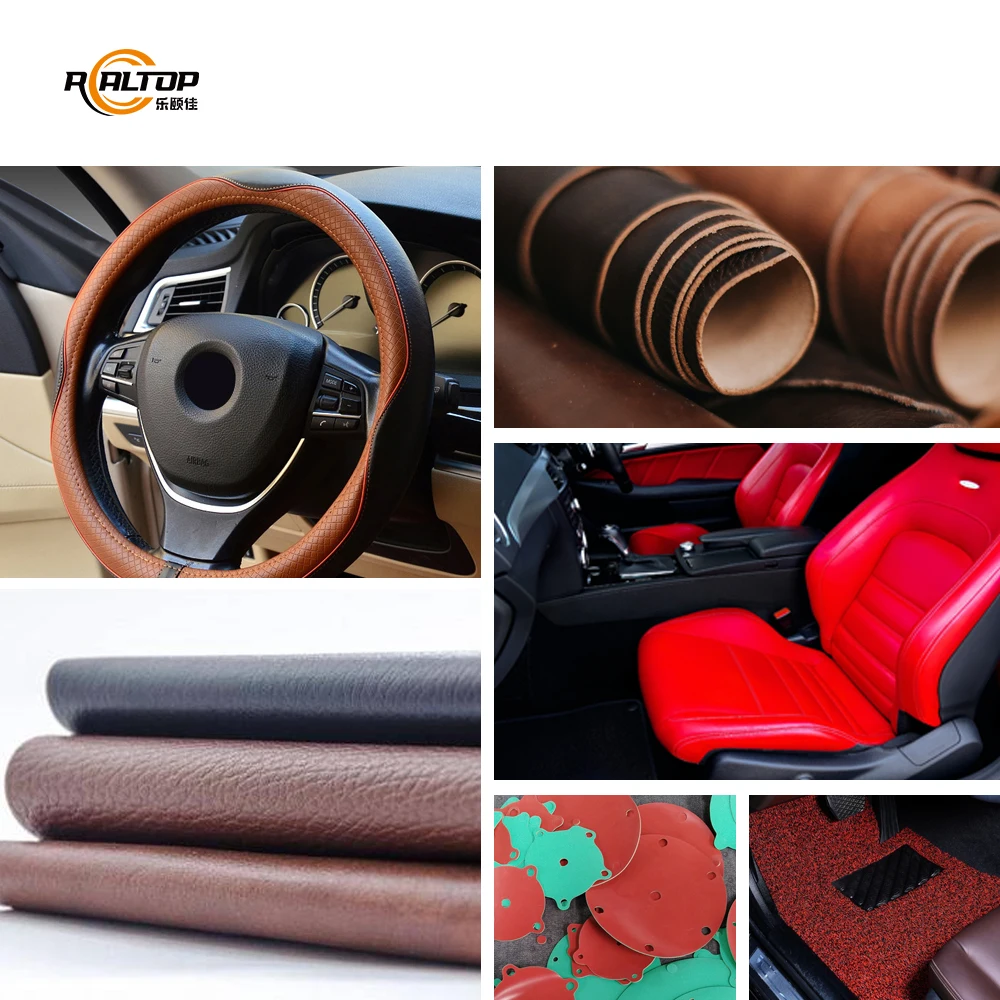
| Footwear and leather goods cutting | Genuine leather, synthetic leather, composite leather |
| Automotive interior components | Car foot pads, seat covers, gaskets |
| Garment and clothing fabric | Woven textiles, non-woven fabric, multi-layer cloth |
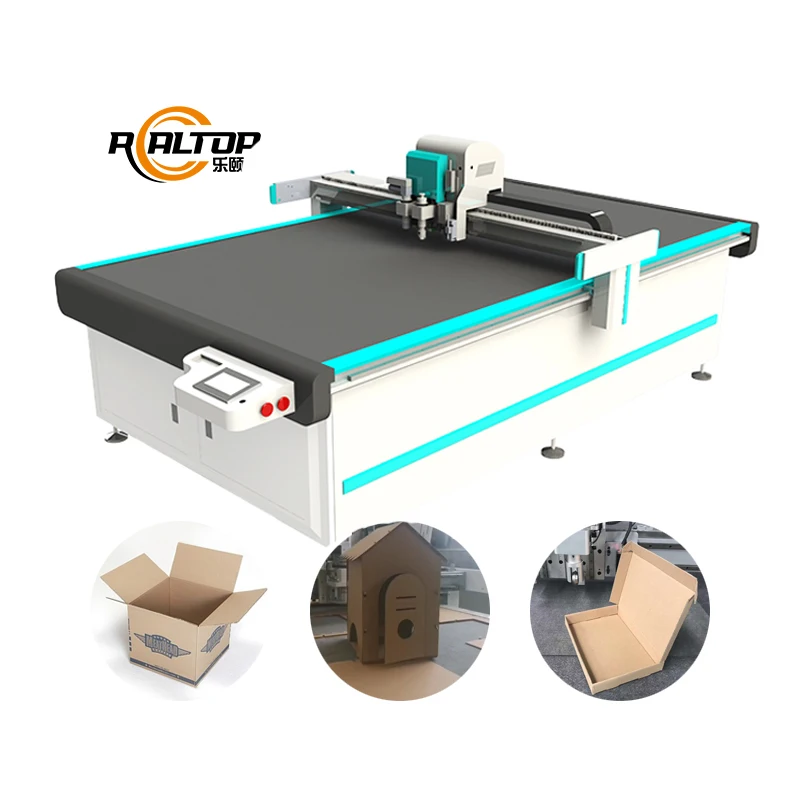
| Packaging and carton sample making | Cardboard, corrugated cardboard |
| Carpet and floor mat production | Carpet, sponge, EVA, XPE |
| Gasket and sealing pad manufacturing | Rubber, PTFE, ETFE, fiberglass |
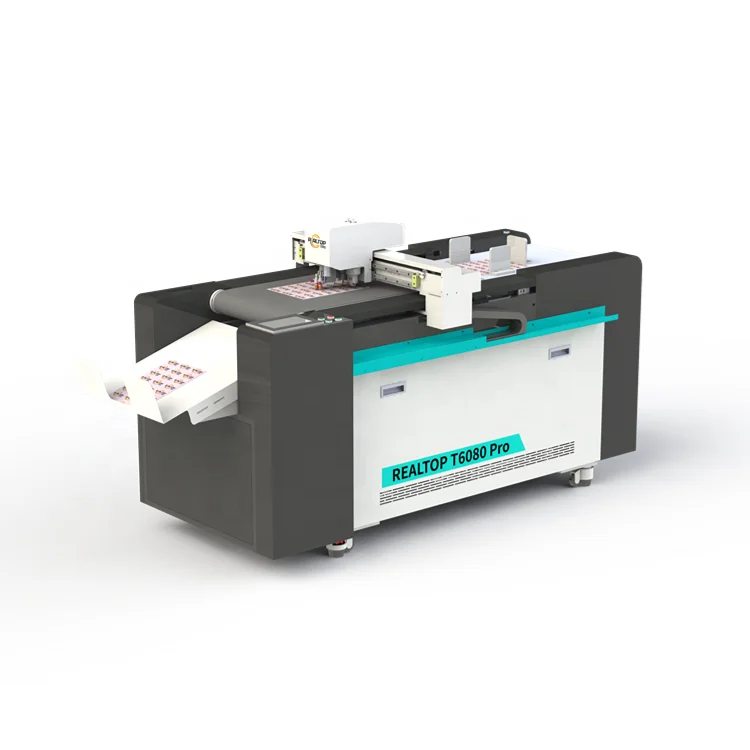
| Graphic advertising and printing | Sticker, film, PVC, PP, PE |
| Bag and luggage production | PU, PVC, composite materials |
Why the Wrong Tool Head Ruins More Than the Edge
A flatbed digital cutting table specified only by working area often fails the moment it meets the actual material. The RT-D2516 / RT-S2516 CNC flatbed digital cutting machine configuration starts with the buyer’s material sample, not a brochure spec. [NEED_CITE:]
I have watched a buyer receive an oscillating knife machine to cut dense EVA foam, only to find the standard blade crushed the edges instead of shearing clean. The foam was 40 mm thick, and the tool head had been chosen from a dropdown menu rather than from a cutting test. Ragged edges on foam or leather are not a software problem — they are a specification failure that shows up three months into production when the customer demands a return. A wrong tool head also accelerates blade wear, which pulls the repeated accuracy off the ≤0.1 mm mark within weeks.
Matching the Knife to the Material Before Shipment
The tool head carriage on this CNC flatbed digital cutting machine accepts interchangeable heads — oscillating knife, drag knife, creasing wheel, punch and high-power vibrating knife among them. Each head changes the physical interaction between blade and material. A drag knife works for thin vinyl and sticker stock where the material lies flat under vacuum pressure, while an oscillating knife is necessary for thick sponge or composite foam where the bl*rate.
The Swiss imported knife function adds vibration full cutting, half cutting and cursor location, which matters when the job requires kiss-cutting a sticker layer without scoring the release liner beneath it. Getting this wrong means either cutting through the liner or leaving the sticker half-attached — both outcomes stop the packing line.
Vision Positioning for Irregular Contours and Printed Marks
Leather hides arrive in irregular shapes with natural flaws that must be avoided during nesting. The panoramic camera recognition system extracts the contour of each hide and identifies defect zones so the nesting software can work around them, maximizing yield from an expensive natural material. For printed textile or signage work, the CCD camera mark point positioning tracks registration marks at production speed so cut lines follow the printed graphic rather than drifting off-register. [NEED_CITE:]
Projection positioning adds a third option, laying a visible outline onto the material bed so the operator can confirm layout before the knife starts moving — useful for short-run carton sample work where a wrong cut wastes a full sheet.
Reading the Numbers That Actually Matter
The 800–1200 mm/s translational velocity is the speed the head travels between cuts and along straight paths. What matters more to the production floor is how well the machine holds that speed through direction changes, which is where the Taiwan Delta servo motors paired with Hiwin linear guides come in. Servo response determines whether the head decelerates and accelerates cleanly at corners without leaving witness marks on the cut edge.
The hard steel frame with reinforced beam resists deflection under the 7.5 kW vacuum load and the dynamic forces of the oscillating knife at full stroke. A lighter frame would flex, and that flex translates directly into dimensional drift across a 1600×2500 mm bed. The wear-resistant composite fiber felt belt maintains surface tension across the conveyor feeding system, preventing material shift during long nesting runs.
What Happens When Configuration Gets Skipped
A vacuum table without adequate zoning will lift small parts off the bed during the final cut pass, because the vacuum area is too large relative to the part footprint and the air leaks around the edges. The operator then has to tape parts down by hand, which slows the cycle and introduces positioning error. [NEED_CITE:]
Voltage mismatch is another silent failure. A machine wired for 380V three-phase that arrives at a facility running a different supply will either trip the breaker instantly or, worse, run at reduced torque until the servo motors overheat and the drive faults become intermittent and expensive to diagnose.
Why Buyers Source This Build From Realtop
In-house design and production covers both knife cutting technologies under one roof, so the buyer is not forced to choose between a knife-only builder and a laser-only builder when the material demands a specific approach. The tool head and table configuration is specified per material and production volume, documented in writing before the order is confirmed.
Software compatibility with the buyer’s existing HP-GL workflow and nesting files is verified before shipment, not discovered during installation. The voltage, plug type and control language are confirmed against the buyer’s facility specifications. Sample cutting on the buyer’s own material provides a physical report showing edge quality, thickness capability and tool head selection before any commitment is made.
Documentation & Verification
- Machine specification sheet listing confirmed tool heads and vacuum zoning for your material
- Electrical schematic with voltage and plug type matched to your facility before production
- Sample cutting report on your material showing edge quality and achievable thickness
- Factory test record documenting repeated accuracy and translational velocity before dispatch
- Software license and file format compatibility note for your nesting workflow
- Operation and maintenance manual in confirmed control language
Installation, Commissioning & Support
- Foundation must support 3450×2300×1250 mm overall footprint with level floor tolerance for the 1600×2500 mm bed
- Dedicated 380V ±10% three-phase circuit required for 9 kW rated power plus 7.5 kW vacuum pump
- Machine ships fully assembled; rigging plan needed for doorway and overhead clearance at site
- First-run parameter tuning covers tool head offset, vacuum zoning and servo gain for your material
- Operator training includes tool head changeover, nesting software and CCD calibration procedure
- Spare parts list covers blades, felt belt sections and vacuum seals specific to your configuration
- Maintenance schedule for Hiwin rail lubrication and Delta servo inspection intervals provided
What to Prepare Before You Request a Quote
Send the material type, thickness and sheet dimensions along with your daily volume target so the correct tool head and vacuum zoning can be specified. Confirm your facility voltage, frequency and plug type, plus the control language your operators need. If you run existing nesting software, share a sample file so HP-GL compatibility and import workflow can be verified before the quotation is issued.
Frequently Asked Questions
Q: How is cutting thickness verified for my specific material before I commit?
A: A sample cutting test is run on your actual material using the proposed tool head and vacuum configuration. The resulting sample cutting report documents edge quality, maximum clean-cut thickness and any adjustments needed. You review this physical evidence before confirming the order, so there is no guesswork about whether the machine handles your stock.
Q: Which tool head prevents ragged edges on leather or crushed foam?
A: The correct head is selected based on your material’s density, thickness and fiber structure during the sample cutting stage. Oscillating knife suits thick foam and composites, while drag knife works for thin vinyl and sticker. The configuration list specifies which heads ship with your machine, preventing the mismatch that causes edge defects.
Q: Can the vision system track printed marks and irregular leather contours at production speed?
A: Panoramic camera recognition extracts irregular hide contours and flags flaws for nesting avoidance. CCD mark point positioning follows printed registration marks during continuous cutting runs. Both systems operate within the machine’s translational velocity range, and performance on your specific print or hide type is demonstrated during the sample cutting phase.
Q: What voltage and control language are confirmed before shipment?
A: Your facility’s voltage, frequency and plug type are recorded in the electrical schematic before production begins. The control language is set to match your operator team’s requirement from the available options or customized to a special language. Both are documented in the specification confirmation and verified at factory test.
Q: How does the software integrate with my existing nesting workflow?
A: The system accepts HP-GL compatible format files. Before order confirmation, you share a sample file from your existing workflow so import compatibility and nesting behavior can be verified. The software license and file format compatibility note documents exactly which formats are supported, preventing surprises at installation.
You may also like

商品评价
Clear filtersThere are no reviews yet.