



-
 Courier delivery
-
 DHL Courier delivery
-
 Warranty 1 year
-
 Free 30-Day returns

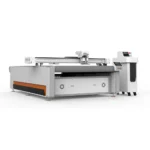
In-House Design & Build — REALTOP controls both knife tooling and table engineering under one roof, so the 1625 configuration is matched to your material before the order is placed.
Technical Specifications
| Parameter | Value |
|---|---|
| Model | 1625 |
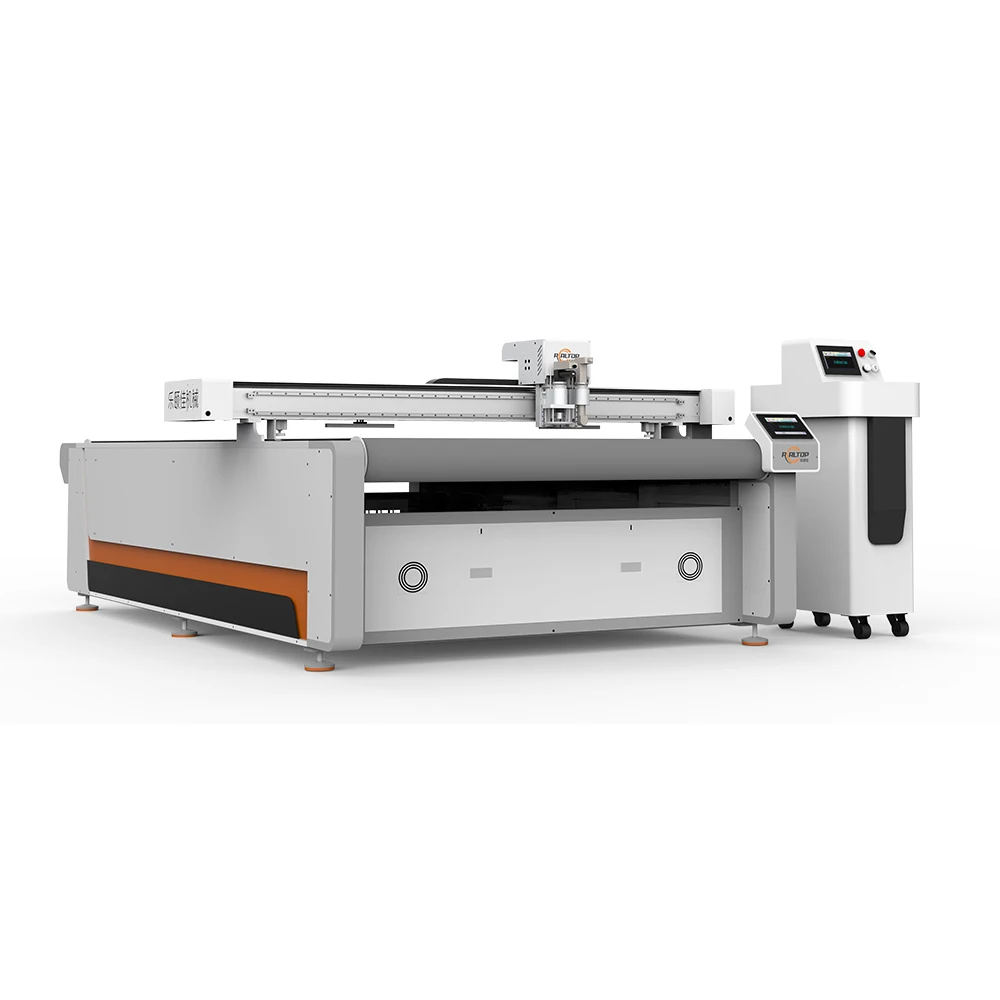
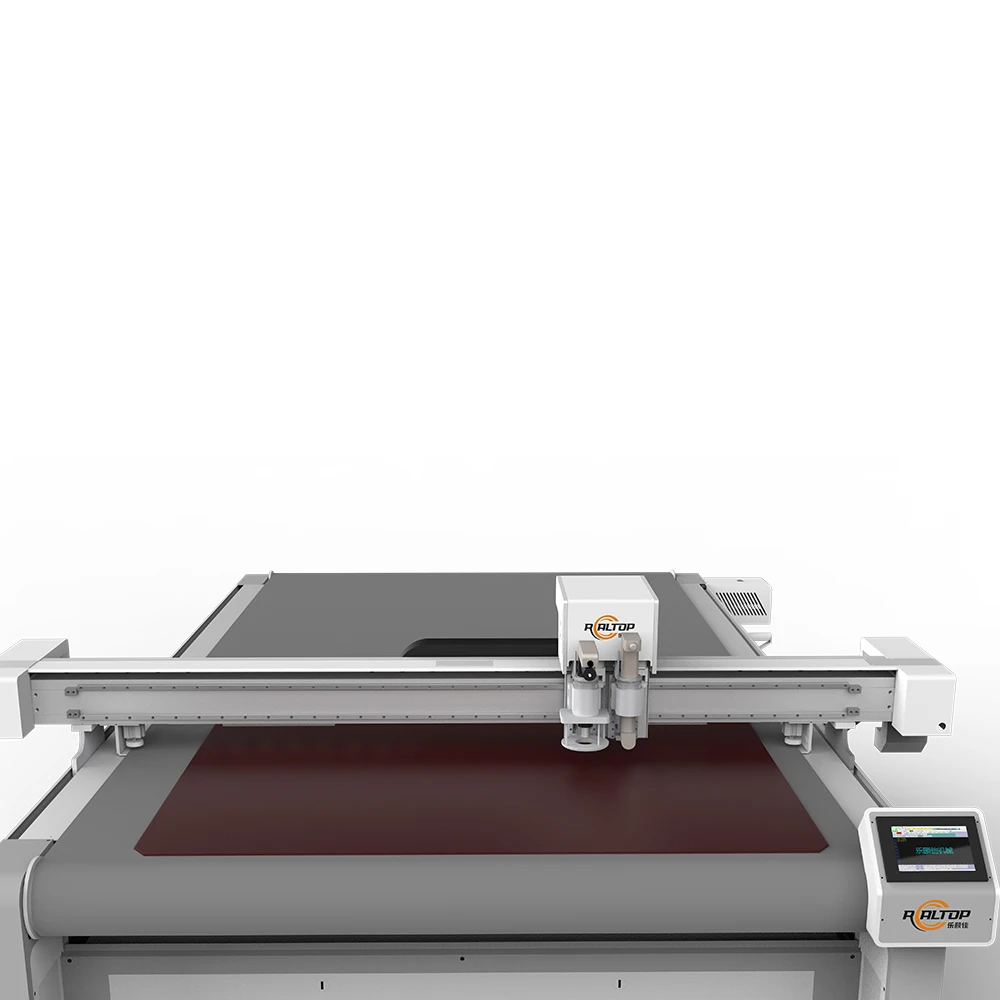
| Product Type | CNC Oscillating Knife Cutting Machine |
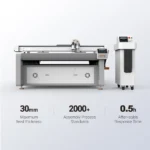
| Working Area | 1600×2500 mm |
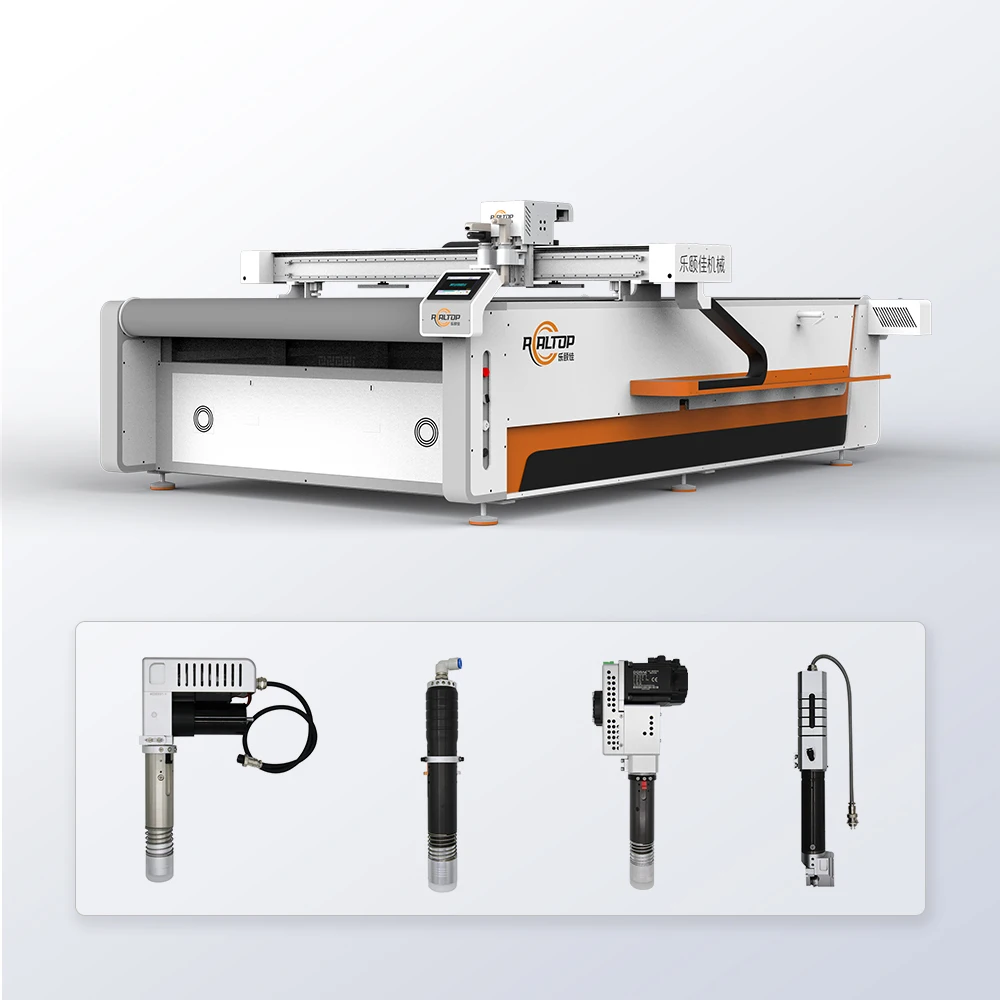
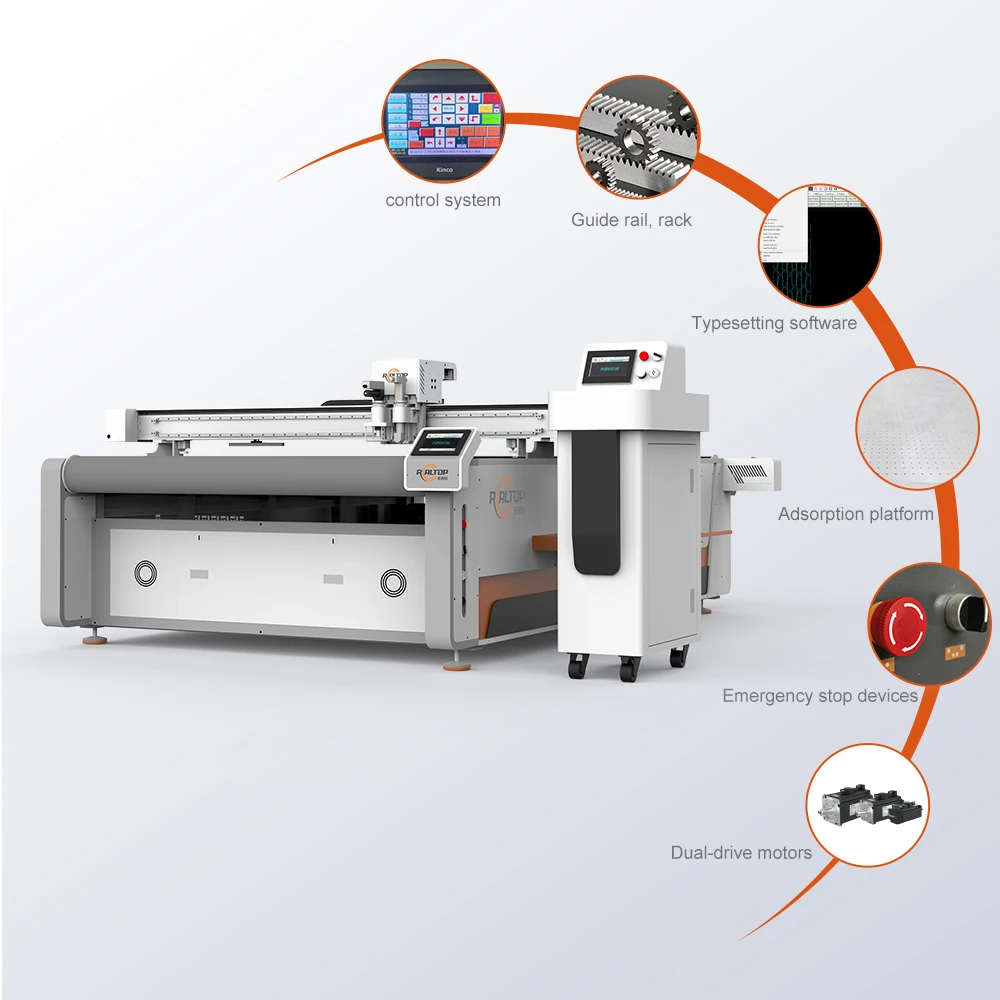
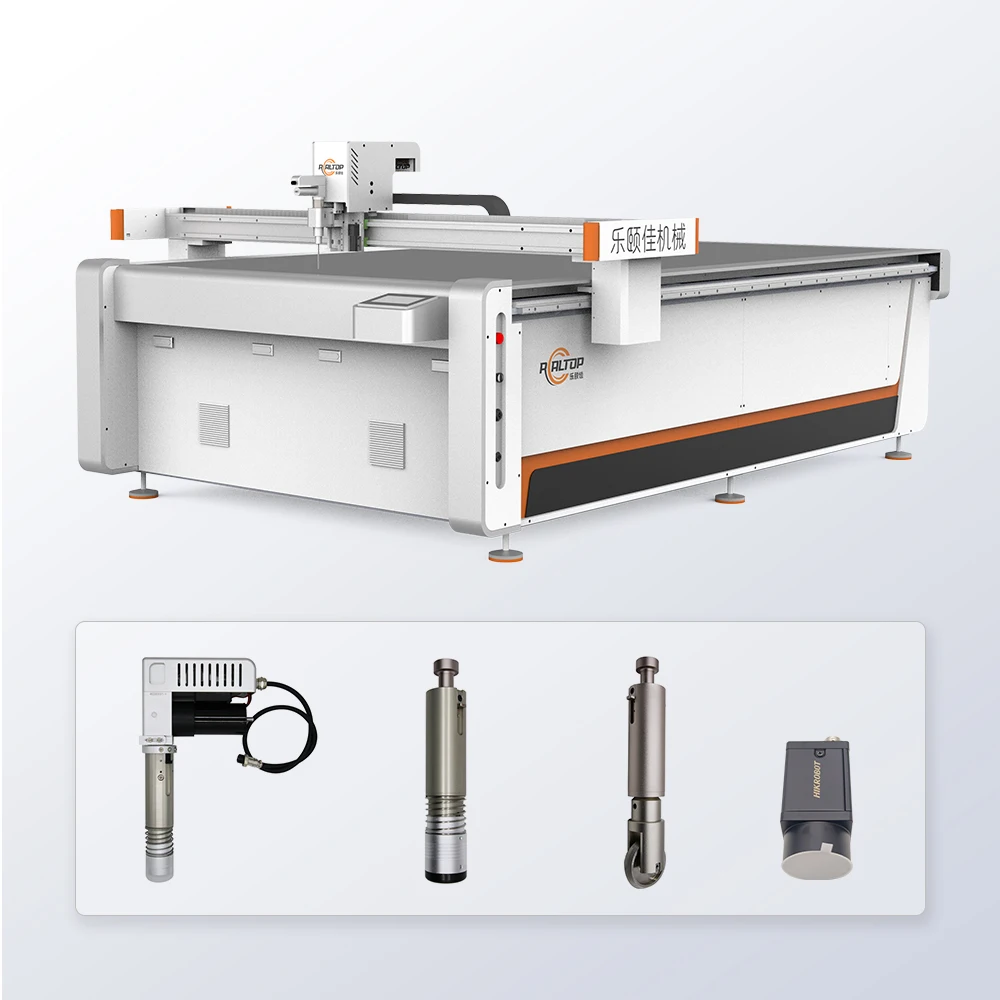
| Tool Head Options | Oscillating knife, Driven rotary knife, Creasing wheel, Kiss cutting tool, Pneumatic knife, Milling tool, V groove knife, CCD camera |
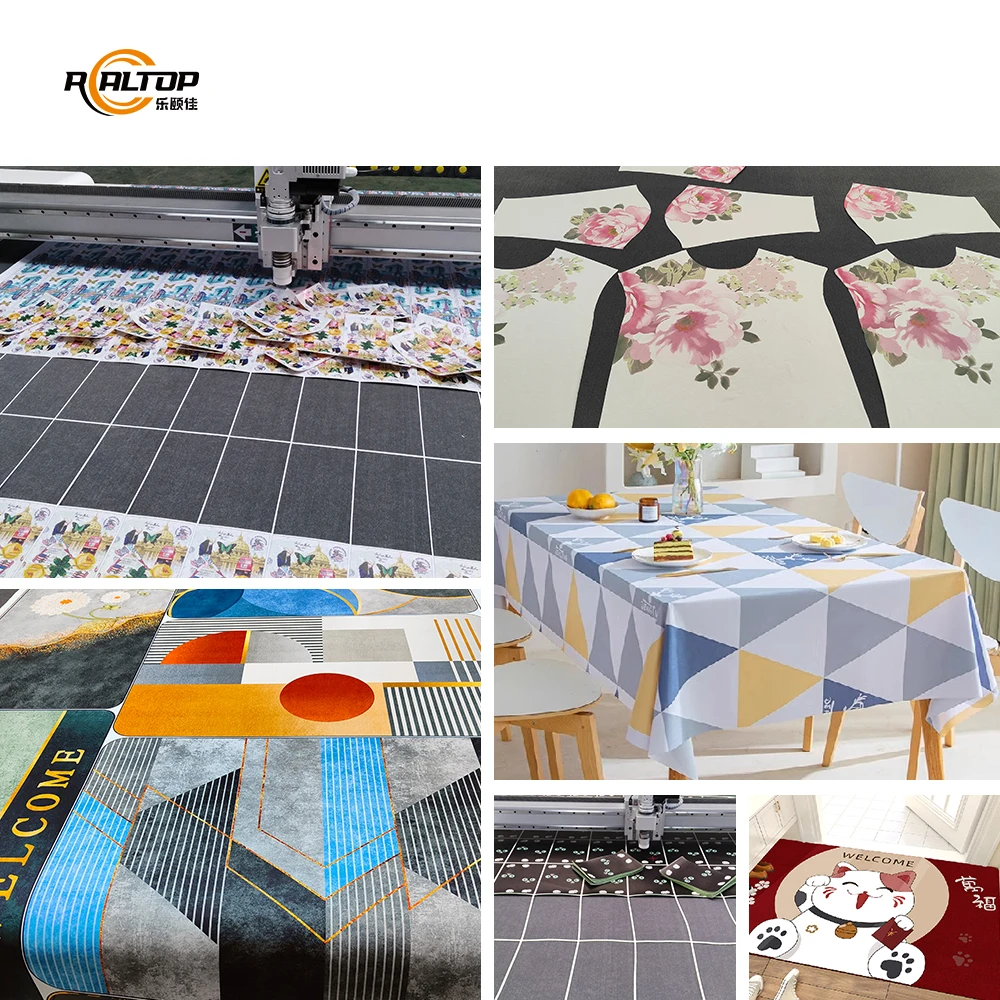
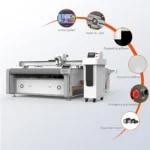
| Applicable Materials | Fabric, Cardboard, Carton, Mats, PVC, EVA, Leather, Acrylic, Foam, PTFE, Rubber |
| Cutting Speed | 0–1500 mm/s |
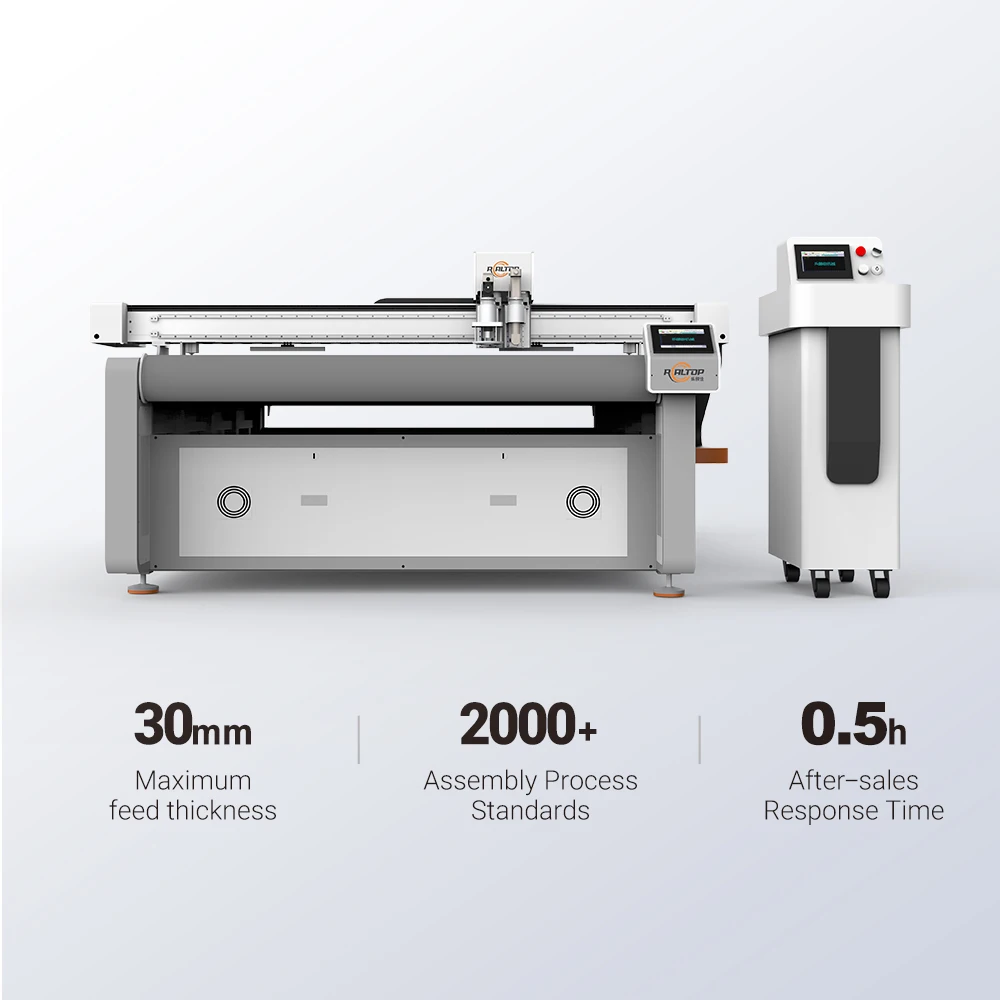
| Cutting Thickness | ≤ 40 mm |
| Positioning Accuracy | ±0.1 mm |
| Vacuum Pump Power | 9 kW |
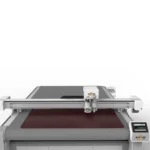
| Vacuum Table | Aluminum bellows vacuum table with high flatness and seal |
| Machine Frame | Heavy-duty frame with precision-ground surface |
| Control System | PLC control panel with optional display languages |
| Servo Motor Options | Panasonic, Delta, Dorna |
| Voltage Options | 110V, 220V, 380V |
| Supported File Formats | PLT, DXF, AI, PDF |
| Safety Device | Infrared sensor device and emergency stop device |
| Machine Dimensions (L×W×H) | 3300×2100×1350 mm |
| Standards | CE |
Application Suitability
| Application | Material or Output |
|---|---|
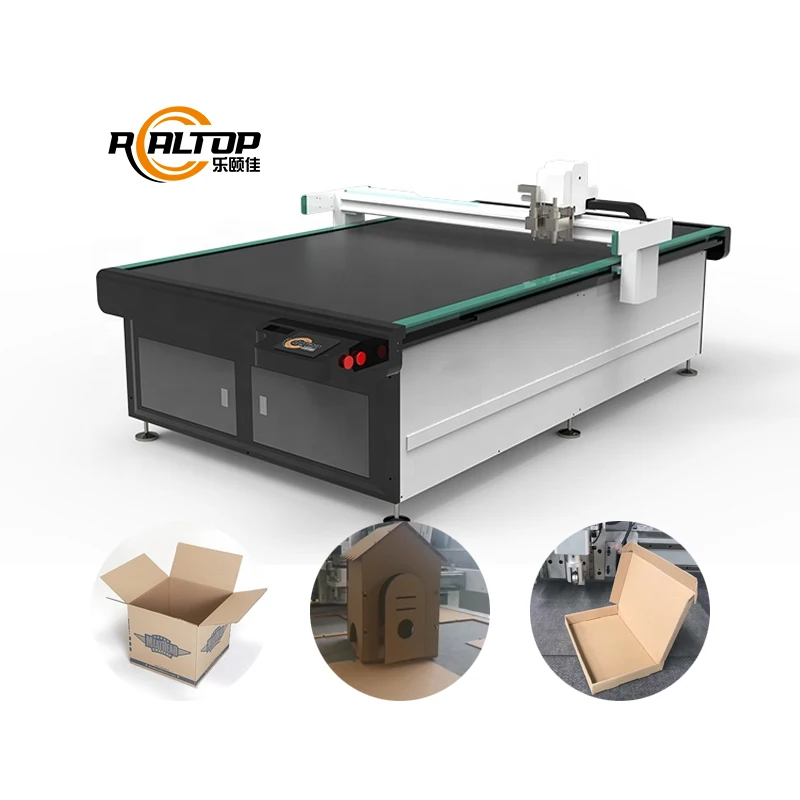
| Packaging sample making | Corrugated cardboard, greyboard, art paper, specialty paper |
| Foam and gasket processing | EVA, EPE, PU foam, rubber mats, PTFE sheets |
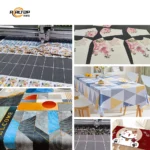
| Garment and footwear cutting | Velvet, fleece, non-woven fabric, leather, synthetic leather |
| Automotive interior production | Composite materials, adhesive-backed laminates, foam |
| Signage and advertising | Thin plastic sheets (PVC, PET), board materials |
Why the Wrong Tool Head Costs More Than the Machine Itself
Matching the tool head to the material is the single most critical decision when buying a CNC oscillating knife cutting machine.
I once watched a customer burn through blade sets every few days because the oscillating knife was specified for standard EVA foam while the actual stock was glass-fiber reinforced composite. The edge quality dropped, the cutting speed had to be reduced, and daily output fell sharply. The machine was not at fault — the tool head selection was [NEED_CITE: tool head and material compatibility guidelines for digital flatbed cutters]. When the buyer sends the exact production material for sample cutting before the order is confirmed, this mismatch disappears. A CNC Oscillating Knife Cutting Machine manufacturer that validates tooling against real stock prevents the most expensive mistake in the entire purchasing cycle.
Knife Tooling Matched to Real Production Stock
The 1625 offers eight interchangeable tool heads — oscillating knife, driven rotary knife, creasing wheel, kiss cutting tool, pneumatic knife, milling tool, V groove knife, and CCD camera. This range matters because a single cutting method cannot cover corrugated board, leather, foam, and adhesive-backed composites with equal quality. Each tool head is selected after reviewing the buyer’s material type, thickness, and edge-finish requirement, ensuring the CNC Oscillating Knife Cutting Machine manufacturer ships a configuration that works on day one.
Vacuum Table Engineering for Small and Irregular Parts
The aluminum bellows vacuum table on the 1625 uses a high-seal construction with zoning capability. Small parts — gaskets, shoe components, and packaging inserts — tend to lift under knife pressure if the vacuum hold-down is uneven. Zoned vacuum channels keep localized suction active only under the cutting path, so material stays flat without wasting pump capacity on empty table areas. This detail is often overlooked until a production run of small die-cut shapes is lost to lift and rework [NEED_CITE: vacuum table zoning principles for flatbed digital cutting systems].
Reading the Specifications That Actually Matter
The working area of 1600×2500 mm covers most standard sheet sizes used in packaging and garment cutting, but the cutting thickness ceiling of 40 mm defines the real material boundary. A 9 kW vacuum pump delivers sufficient suction across the full table area for dense and layered stock. The PLC control panel supports multiple display languages — English, Russian, Italian, Chinese, and custom options — which prevents operator error in multilingual workshops. Positioning accuracy of ±0.1 mm is maintained by servo motors available from Panasonic, Delta, or Dorna, letting buyers align spare-parts sourcing with their existing maintenance supply chain. File format support for PLT, DXF, AI, and PDF removes software bottlenecks when importing designs from packaging CAD or nesting applications.
The Hidden Cost of Skipping Sample Validation
When a buyer specifies a machine on working area alone and skips material testing, the problems surface after installation. Knife drag on coated fabrics, incomplete kiss cuts on adhesive laminates, and crushed foam cores all trace back to unverified tool-head and speed settings. By the time these issues appear, the machine is already on the factory floor and the production schedule is waiting [NEED_CITE: typical rework costs when cutting parameters are unverified before shipment]. Sending a roll or sheet of actual production material for sample cutting before the purchase order eliminates guesswork and locks in the correct configuration.
Why Source the 1625 from REALTOP
The in-house design team covers both knife cutting and table engineering, so configuration decisions are made by the people who build the machine rather than a third-party integrator. The core factory handles frame machining, motion assembly, and electrical integration, keeping build quality under direct control. Sample cutting on the buyer’s own material is standard procedure — not an optional extra — producing a cutting report that documents edge quality, speed, and depth. Voltage, plug type, and control language are confirmed against the buyer’s facility before production begins, preventing the costly rewiring and reprogramming that delays commissioning. Software licenses and file-format compatibility notes ship with the machine, so the nesting workflow is ready the day the table powers up.
Documentation & Verification
- Machine specification sheet listing all selected tool heads and vacuum zone layout
- Electrical schematic with confirmed voltage and plug type for the destination facility
- Sample cutting report produced on the buyer’s own material with recorded parameters
- Software licence and file format compatibility note for PLT, DXF, AI, and PDF workflows
- Factory test record documenting positioning accuracy and cutting quality before crate closure
Installation, Commissioning & Support
- Level floor with 3300×2100 mm clearance and overhead space for the 1350 mm frame height
- Dedicated circuit matching confirmed voltage — 110V, 220V, or 380V — plus a separate breaker for the 9 kW vacuum pump
- Assembled on-site from shipped modules; frame, gantry, and table aligned and bolted by the installation team
- First-run calibration of servo motors and tool head offset to achieve ±0.1 mm positioning accuracy
- Operator training on PLC control panel in the confirmed language, covering file import and nesting setup
- Spare-parts list covering blades, vacuum seals, and belts matched to the chosen servo brand
How to Start the Conversation
Provide the material type, maximum thickness, sheet dimensions, and daily cutting volume so the tool head and vacuum configuration can be matched before quotation. Include the local voltage, frequency, and preferred control language to ensure the electrical package fits your facility. If your production uses printed or pre-marked stock, mention this early so the CCD camera option and contour-recognition workflow can be evaluated.
Frequently Asked Questions
Q: How do I confirm the right tool head for my specific material and thickness?
A: Send a sample of your actual production stock — including any coatings, laminations, or backing layers. We run test cuts with multiple tool heads on the 1625 and provide a sample cutting report showing edge quality, achievable speed, and cutting depth. This report becomes part of the order documentation, so the shipped configuration matches proven results.
Q: What voltage, plug type, and control language should I specify before shipment?
A: The 1625 supports 110V, 220V, and 380V configurations. Provide your facility voltage, frequency, and plug standard along with the preferred PLC display language. We confirm these in the electrical schematic before production, so no rewiring or reprogramming is needed at installation.
Q: Can I send my material for sample cutting before placing the order?
A: Yes — sample cutting on the buyer’s own material is standard. We test tool head selection, cutting speed, and vacuum hold-down, then issue a report covering edge finish and dimensional accuracy. This step prevents the most common cause of post-installation disputes.
Q: How does the vacuum table zoning handle small parts that tend to lift?
A: The aluminum bellows table on the 1625 uses zoned vacuum channels that concentrate suction under the active cutting path. Small gaskets, packaging inserts, and footwear components stay flat without requiring a full-table vacuum draw, preserving cutting speed and preventing lift-related rejects.
Q: What OEM and custom configuration options does the factory offer?
A: The in-house design team can adjust working area partitions, add or swap tool heads, customize PLC language, and adapt the vacuum layout for specific part geometries. OEM branding on the control panel and machine frame is available for distributors placing repeat orders.
You may also like

商品评价
Clear filtersThere are no reviews yet.