



-
 Courier delivery
-
 DHL Courier delivery
-
 Warranty 1 year
-
 Free 30-Day returns

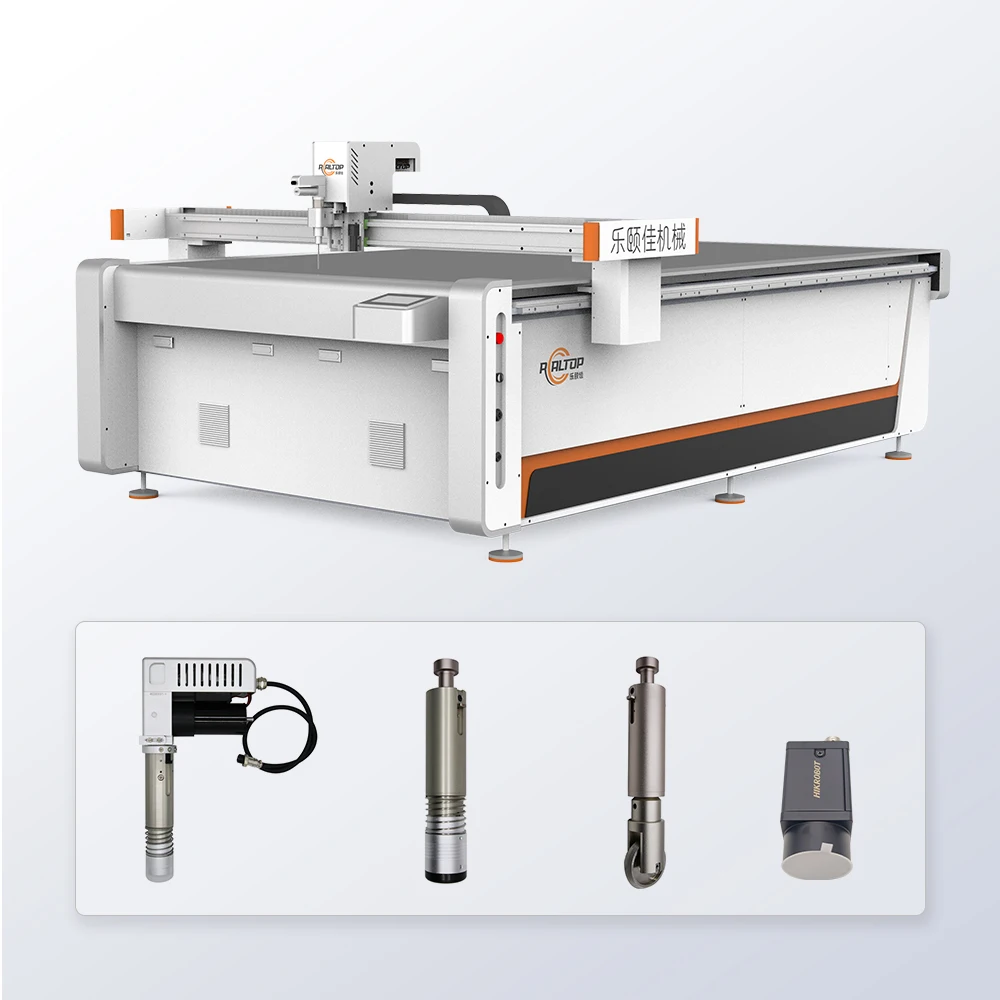
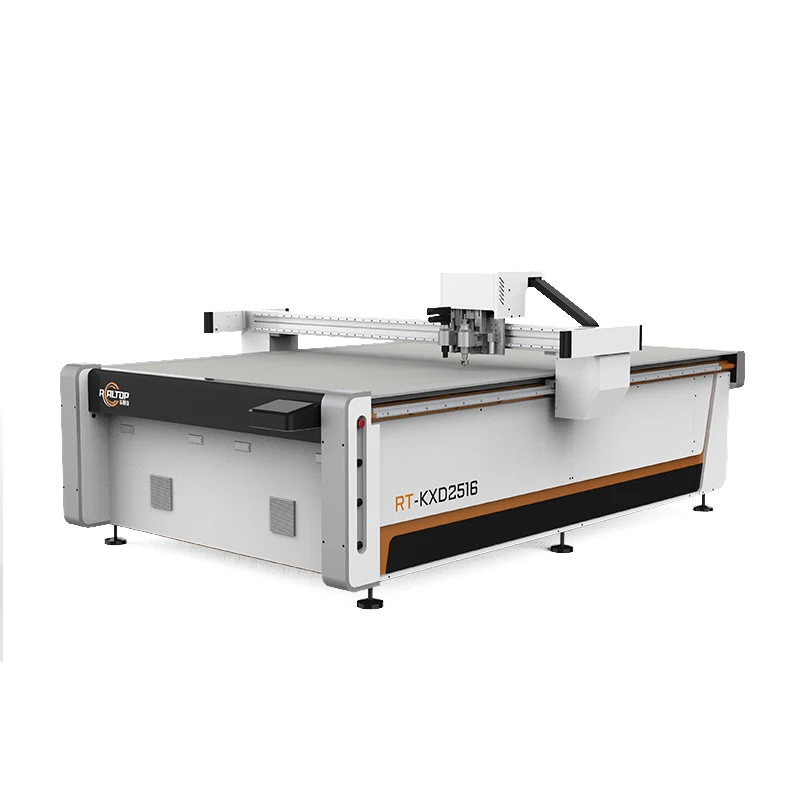
Configured per material — Every RT-D2516/RT-S2516 leather cutting system is matched to the buyer’s specific hide thickness, density and daily volume through pre-order sample testing on the actual production material.
Technical Specifications
| Parameter | Value |
|---|---|
| Model | RT-D2516 / RT-S2516 |
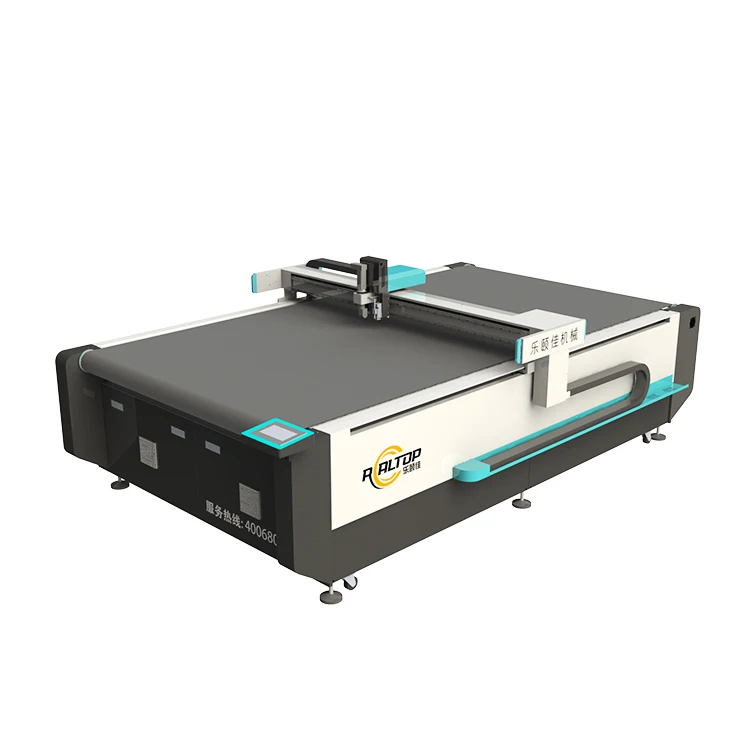
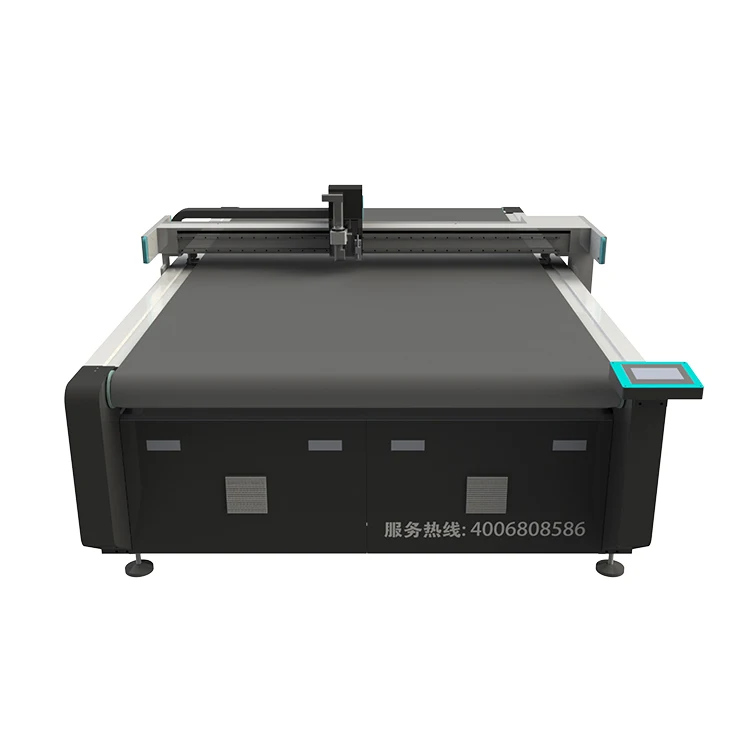
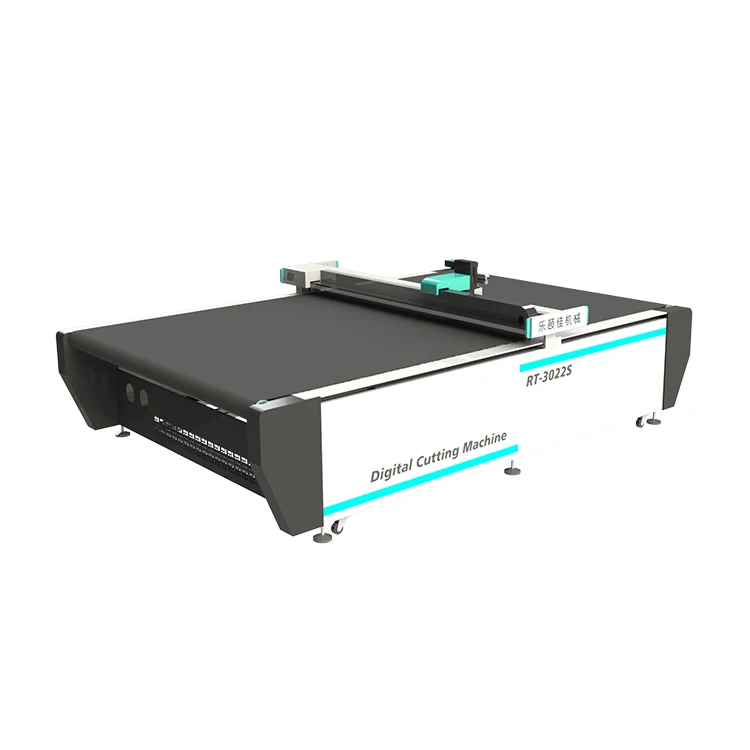
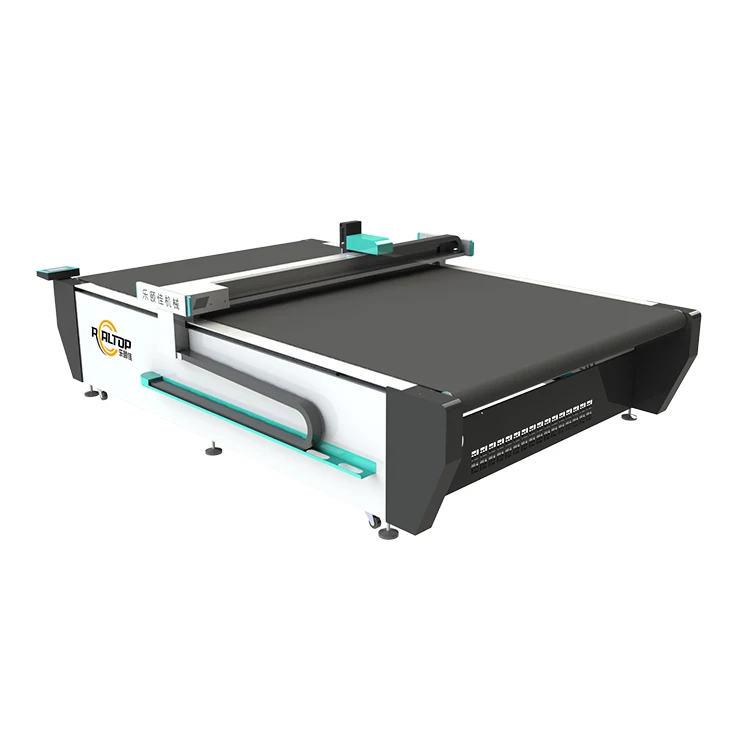
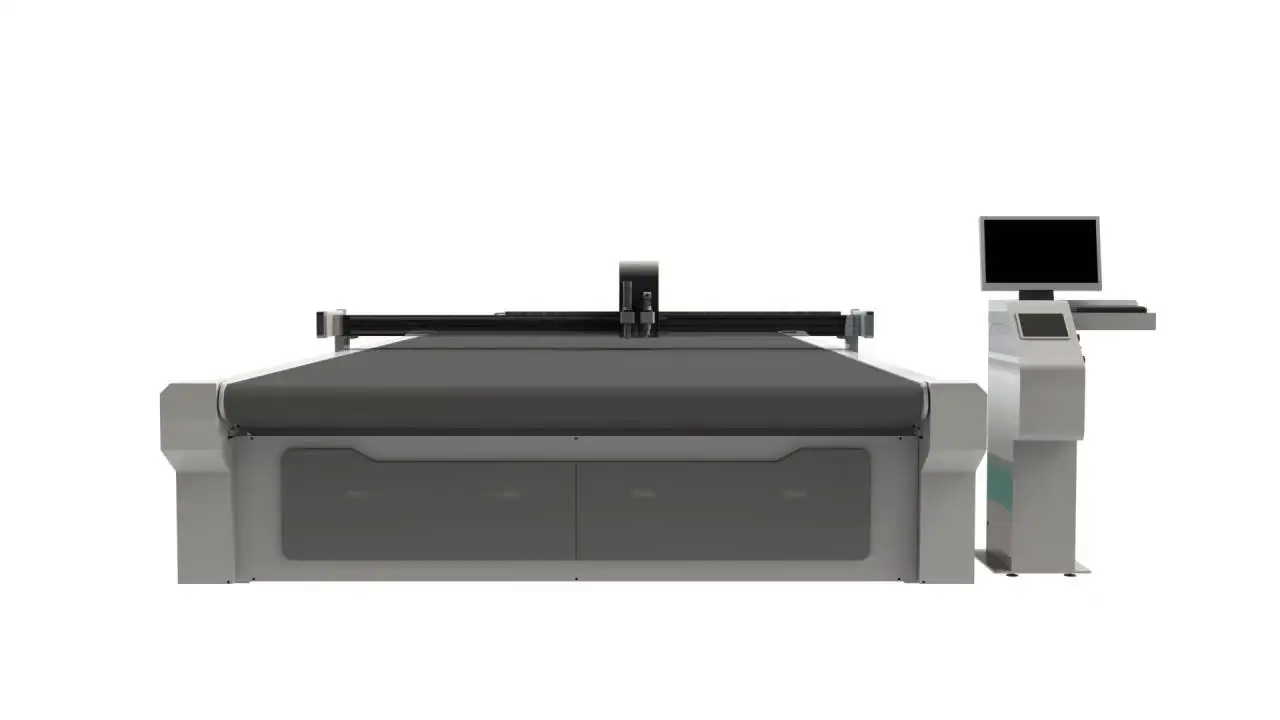
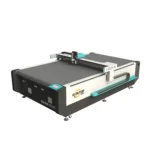
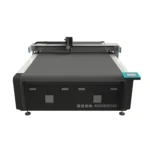
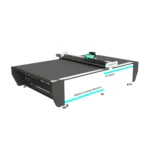
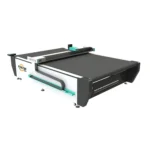
| Product Type | CNC Oscillating Knife Leather Cutting Machine |
| Working Area | 1600 × 2500 mm |
| Overall Dimensions | 3450 × 2300 × 1250 mm |
| Rated Power | 9 kW |
| Tool Head | Swiss imported oscillating knife with full cutting, half cutting and cursor location |
| Translational Velocity | 800–1200 mm/s |
| Cutting Speed | 200–800 mm/s (varies by material type and thickness) |
| Repeated Accuracy | ≤0.1 mm |
| Servo Motor | Japanese Yaskawa |
| Guide Rail | Taiwan Hiwin linear guide |
| Transmission System | Digital servo motor, linear guide, synchronous belt, imported ball screw |
| Vacuum Pump | 7.5 kW |
| Conveyor Belt | Germany imported |
| Table Type | Flat working table with vacuum hold-down |
| Instruction System | HP-GL compatible format |
| Safety Device | Infrared sensors |
| Voltage | 380V ±10% |
| Standards | CE declaration where applicable |
Application Suitability
| Application | Material or Output |
|---|---|
| Footwear upper cutting | PU leather, genuine leather, composite uppers |
| Leather goods and accessories | Bags, belts, small leather goods from hides and splits |
| Automotive interior panels | Sponge composite leather, multi-layer PU for seat covers and door inserts |
| Garment and outerwear | Clothing flexible material, soft textiles layered over backing |
| Industrial gaskets and seals | PVC, soft glass, silicon, rubber sheets |
Why Specifying Working Area Alone Leaves Out the Hard Part
A CNC Oscillating Knife Cutting Table manufacturer must address the gap between nominal working envelope and actual cutting performance on the buyer’s material, because the most common field failure is a machine that fits the factory floor but cannot handle the material thickness the buyer actually runs.
Buyers often send an inquiry listing only sheet size and expected daily volume, then discover after installation that the tool head specified for single-layer genuine leather cannot push through multi-layer composite PU without ragged edges or crushed foam cores. The cutting speed drops, the knife wears faster, and the production line bottlenecks at this single station [NEED_CITE: cutting force and tool deflection on multi-layer leather composites]. Voltage, plug type and control language often go unconfirmed until the machine arrives, adding weeks of delay before the first cut is made.
Oscillating Knife Mechanics on Leather and Composite Hides
The Swiss imported oscillating knife on the RT-D2516/RT-S2516 operates with full cutting, half cutting and cursor location modes, which matters because leather varies in density across a single hide. Full cutting handles standard garment-weight PU and single-layer genuine leather cleanly. Half cutting scores kiss-cut patterns on adhesive-backed materials without penetrating the release liner, a requirement in automotive interior laminates where the backing must remain intact during assembly.
Cursor location lets the operator set reference points manually before the CNC Oscillating Knife Cutting Table manufacturer runs the nesting program, catching grain direction changes or natural defects in genuine hides that the software cannot detect. This step prevents wasted material on premium leather where each hide carries a significant cost.
Motion Components That Hold Tolerance Over a Production Shift
The RT-D2516/RT-S2516 uses Japanese Yaskawa digital servo motors paired with Taiwan Hiwin linear guides and imported ball screws, a combination chosen for positional stability rather than peak speed. Leather cutting demands consistent edge quality across the entire 1600 × 2500 mm bed, and servo drift or guide play shows up immediately as mismatched pattern pieces that fail during stitching. Repeated accuracy holds at ≤0.1 mm, which keeps nested footwear upper components within the tolerance window for automated sewing lines downstream [NEED_CITE: positional tolerance requirements for nested leather pattern pieces in footwear assembly].
How Tool Head, Vacuum and Feed Rate Interact on the Shop Floor
Cutting speed on this machine ranges from 200 to 800 mm/s depending on material type and thickness, and that range exists because leather is not a uniform substrate. Dense, oil-tanned genuine leather at 3 mm thickness demands slower feed and higher oscillation frequency to prevent the knife from dragging and tearing the grain surface. Thin PU composite on a release liner runs at the upper end of the speed range with half-cutting mode engaged.
The 7.5 kW vacuum pump and flat working table with vacuum hold-down keep the material flat during cutting, but small pattern pieces like belt loops or gusset panels can lift if vacuum zoning is not adjusted to the nesting layout. The Germany imported conveyor belt and auto-feeding system allow continuous loading of rolled or flat leather sheets, reducing the manual handling time between cuts. The HP-GL compatible instruction system accepts nesting files from common pattern-making CAD packages, so buyers do not need to rebuild their workflow around proprietary software.
The Hidden Cost of a Mismatched Tool Head and Table Configuration
A buyer processing multi-layer sponge composite leather for automotive seat covers may receive a machine configured with a standard oscillating knife and a single-zone vacuum table. The knife pushes through the top PU layer but compresses the foam core instead of shearing it, leaving crushed edges that require manual trimming and cause material yield loss [NEED_CITE: edge quality defects from incorrect tool head selection on foam-backed leather]. Small pieces lift off the single-zone vacuum bed during high-speed cutting, forcing the operator to slow the machine down or tape material manually.
These problems do not appear in a factory test on standard sample material — they only emerge when the buyer runs their actual production stock. Correcting them after shipment means ordering a different tool head, reconfiguring vacuum zones and re-testing, which delays the production line by weeks.
Why Buyers Source This Machine Through Our Build Process
Our in-house design team covers both oscillating knife and laser cutting technologies, so the buyer selects the method that matches the leather type rather than forcing one approach across all materials. Tool head and table configuration are specified against the buyer’s actual hide thickness, density and daily volume before the order is confirmed.
We run sample cutting on the buyer’s own material and provide a cutting report showing edge quality, speed achieved and tool wear rate before commitment. Electrical schematics and voltage are confirmed for the target market, and software compatibility with the buyer’s existing HP-GL nesting files is verified during the pre-order stage. The RT-D2516/RT-S2516 ships with a complete spare parts list and operation manual, and the factory test record documents performance on the buyer’s specific leather stock.
Documentation & Verification
- Sample cutting report run on your specific leather type and thickness before order confirmation
- Tool head and vacuum table configuration list matched to your material profile
- Electrical schematic and voltage confirmation for your local 380V ±10% supply standard
- HP-GL software licence and file format compatibility note for your existing CAD workflow
- Factory test record documenting cutting speed and edge quality on your supplied material
- Operation and maintenance manual with spare parts list included at shipment
Installation, Commissioning & Support
- 3450 × 2300 × 1250 mm footprint requires level concrete floor with clearance for auto-feeding conveyor entry
- 9 kW rated power plus 7.5 kW vacuum pump need dedicated 380V ±10% three-phase circuit with correct breaker sizing
- Machine ships partially assembled; guide rails and servo drives require on-site alignment and calibration
- First-run commissioning includes vacuum zone mapping and oscillation frequency tuning for your leather stock
- Operator training covers HP-GL file import, nesting layout adjustment and tool head changeover procedures
- Spare oscillating knives, conveyor belt segments and sensor replacements listed in shipped parts inventory
Before You Request a Quote
Send us your leather type, thickness range and whether you are cutting single-layer hides or multi-layer composites. Tell us your daily sheet volume and the nesting software you currently use so we can confirm HP-GL compatibility. Specify your local voltage, frequency and preferred control language so the electrical build and interface match your shop floor requirements from day one.
Frequently Asked Questions
Q: How is cutting thickness verified for my specific leather type and density?
A: We ask you to send a sample of your actual production leather, including any composite backing layers. Our team runs cutting tests at multiple speeds and oscillation settings, then provides a report showing edge quality, achievable speed and tool wear rate on your material before you commit to the order.
Q: What tool head configuration is recommended for PU versus genuine leather?
A: Genuine leather typically runs with standard oscillation at moderate speed to protect the grain surface, while multi-layer PU composite may need higher oscillation frequency and adjusted blade geometry to shear through foam cores without compression. We specify the tool head based on your sample cutting results.
Q: Can the auto-feeding system handle rolled leather or only flat sheets?
A: The Germany imported conveyor belt system with auto-feeding handles both rolled and flat leather sheets. The material feeds continuously onto the vacuum table, and the 7.5 kW vacuum pump holds it flat during cutting without manual clamping between sheets.
Q: How do I confirm voltage, plug and control language before shipment?
A: During the pre-order stage, we confirm your local voltage standard within the 380V ±10% range, plug type and preferred control interface language. The electrical schematic is built to match, and this specification is documented before production begins.
Q: What file formats does the HP-GL compatible system accept from my existing CAD software?
A: The instruction system accepts HP-GL compatible format files, which most standard pattern-making and nesting CAD packages can export. We verify file compatibility with your specific software version during the pre-order sample cutting stage to ensure your existing workflow transfers without modification.
You may also like

商品评价
Clear filtersThere are no reviews yet.