


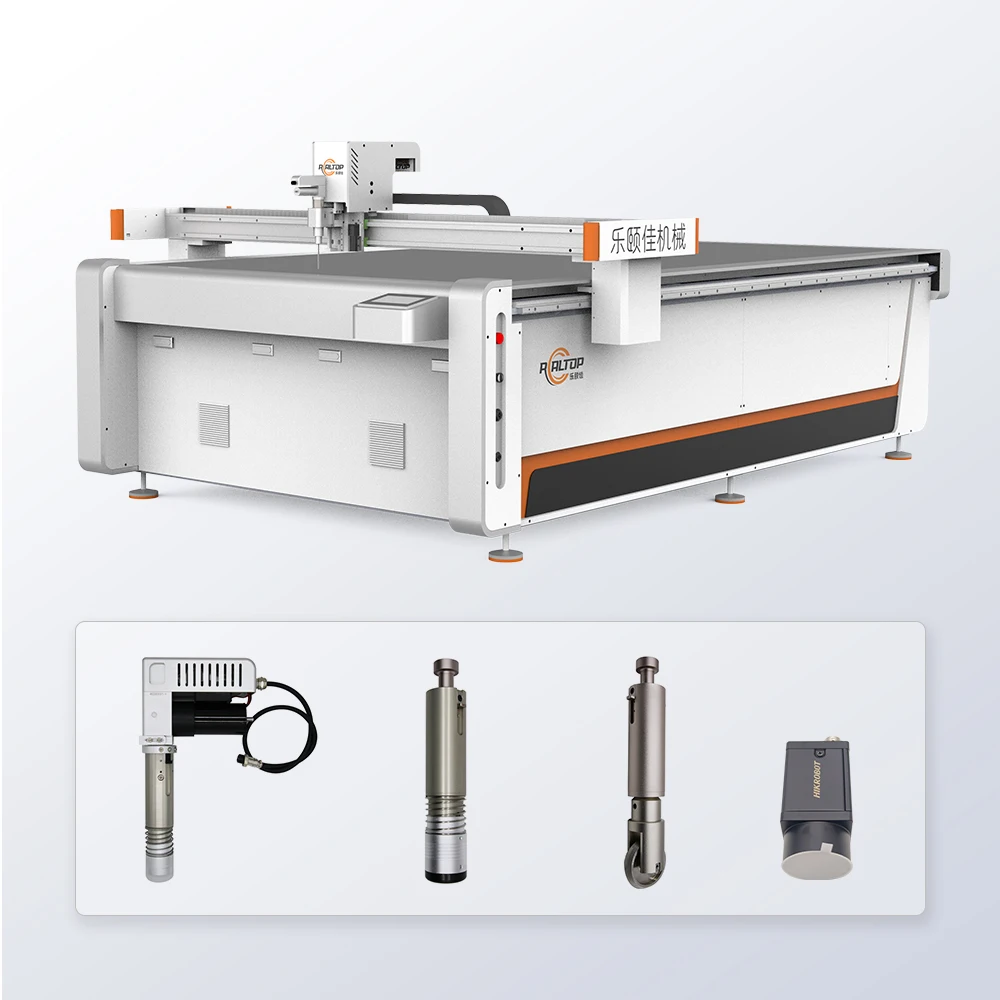
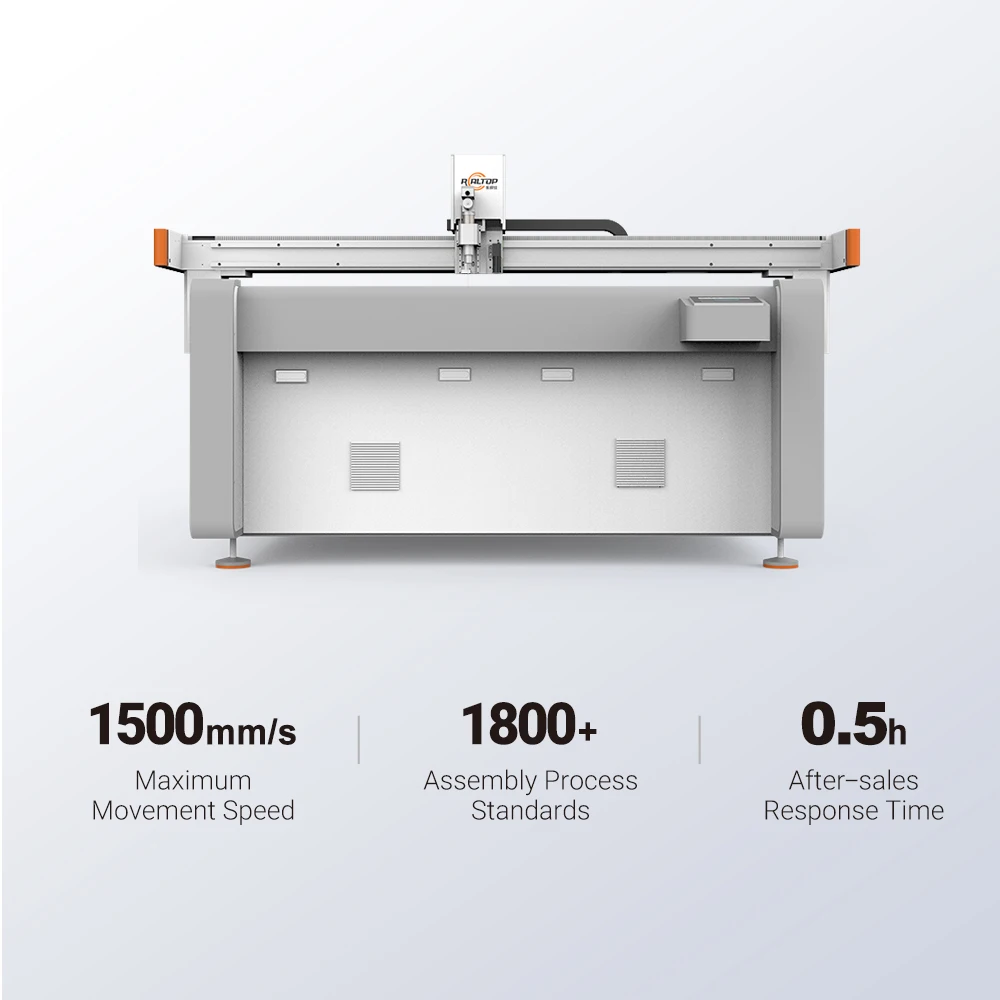

-
 Courier delivery
-
 DHL Courier delivery
-
 Warranty 1 year
-
 Free 30-Day returns

In-house tool-path engineering — the 1625 platform is built around a proprietary cutting algorithm developed by our Jinan engineering team, not adapted from generic nesting software, ensuring clean edges on Nomex honeycomb and carbon fiber prepreg without thermal damage.
Technical Specifications
| Parameter | Value |
|---|---|
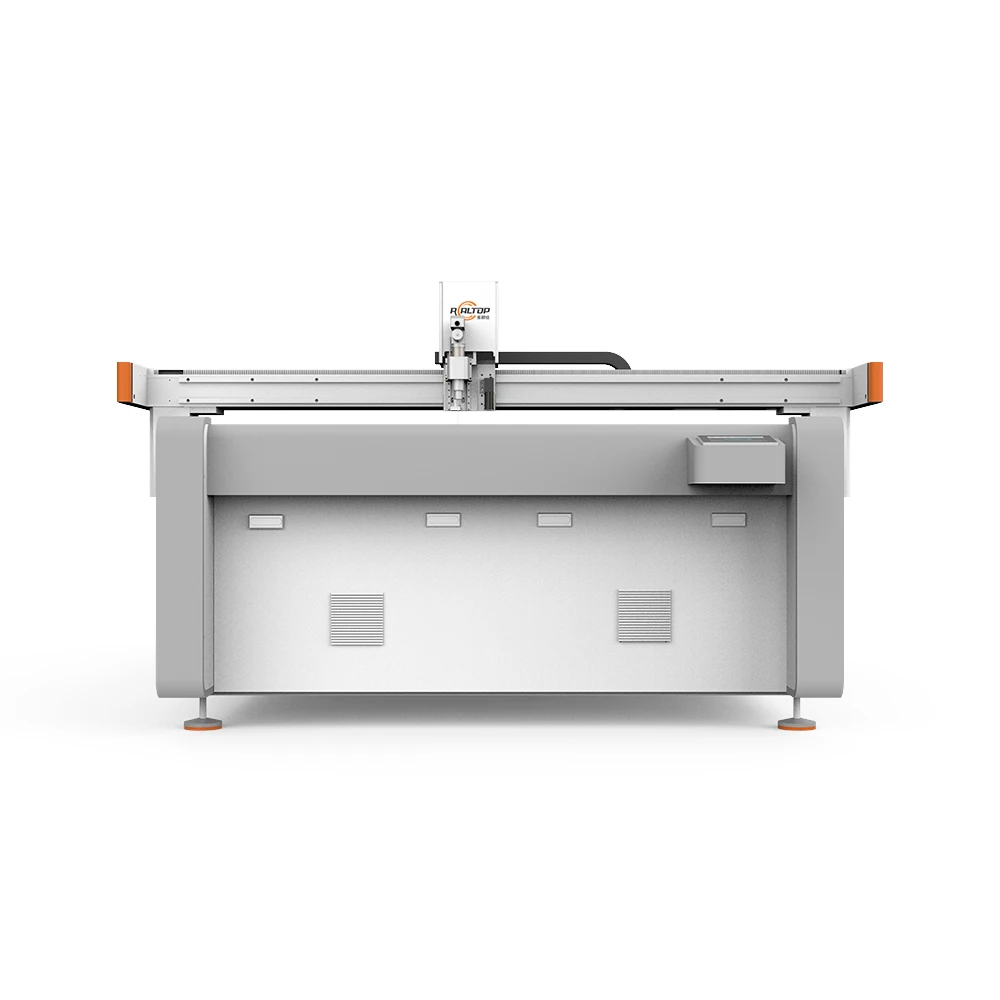
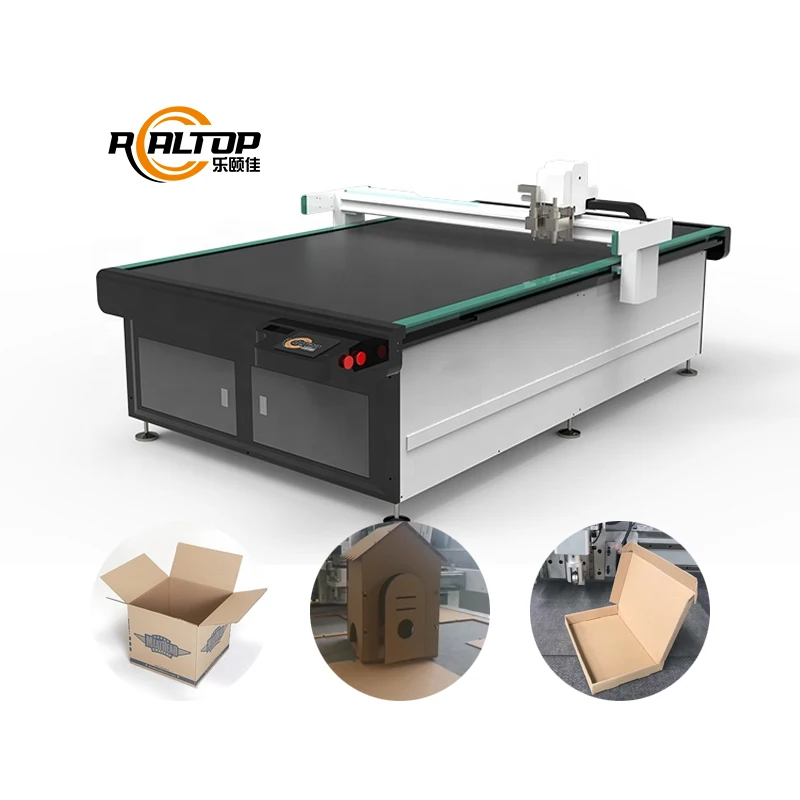
| Product Type | CNC Oscillating Knife Cutting Machine |
| Model | 1625 |
| Working Area | 1600×2500 mm |
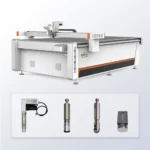
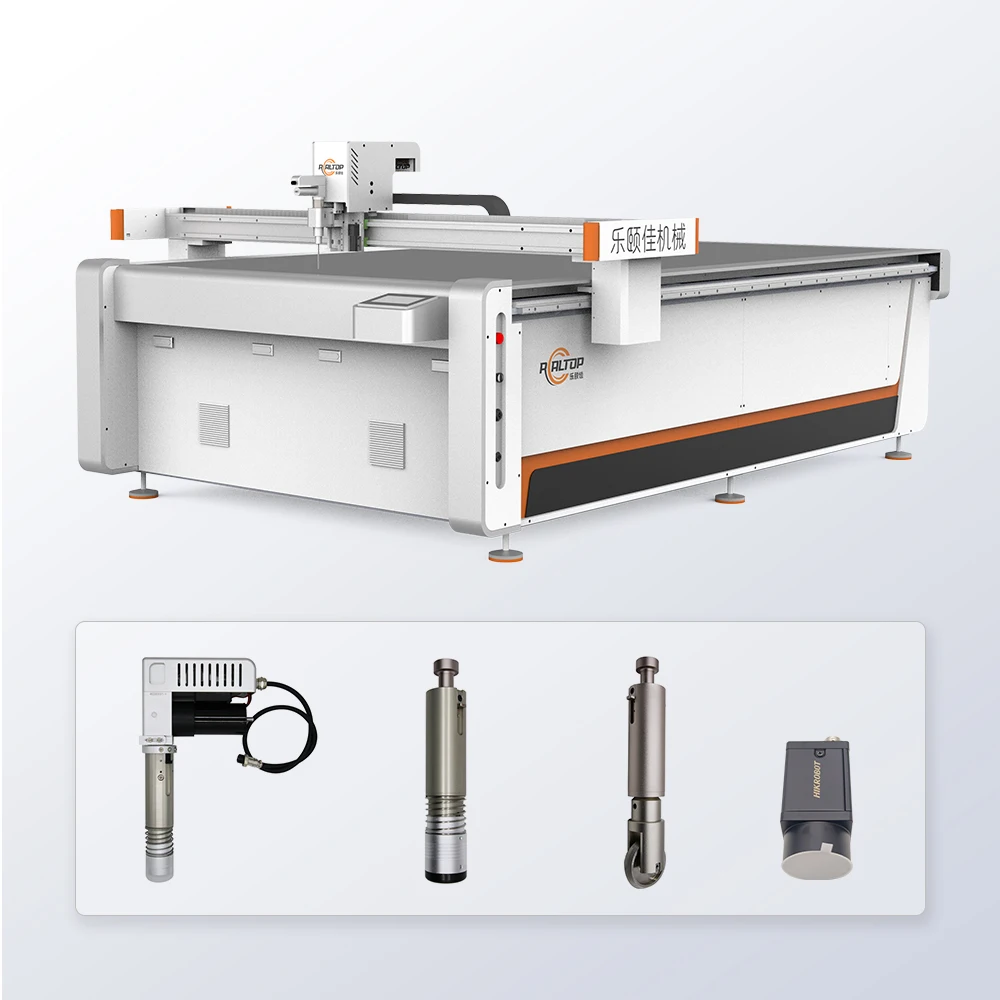
| Tool Head Configuration | Oscillating knife, Driven rotary knife, V-groove knife, Creasing wheel, Kiss cutting tool, Pneumatic knife, Milling tool (selectable) |
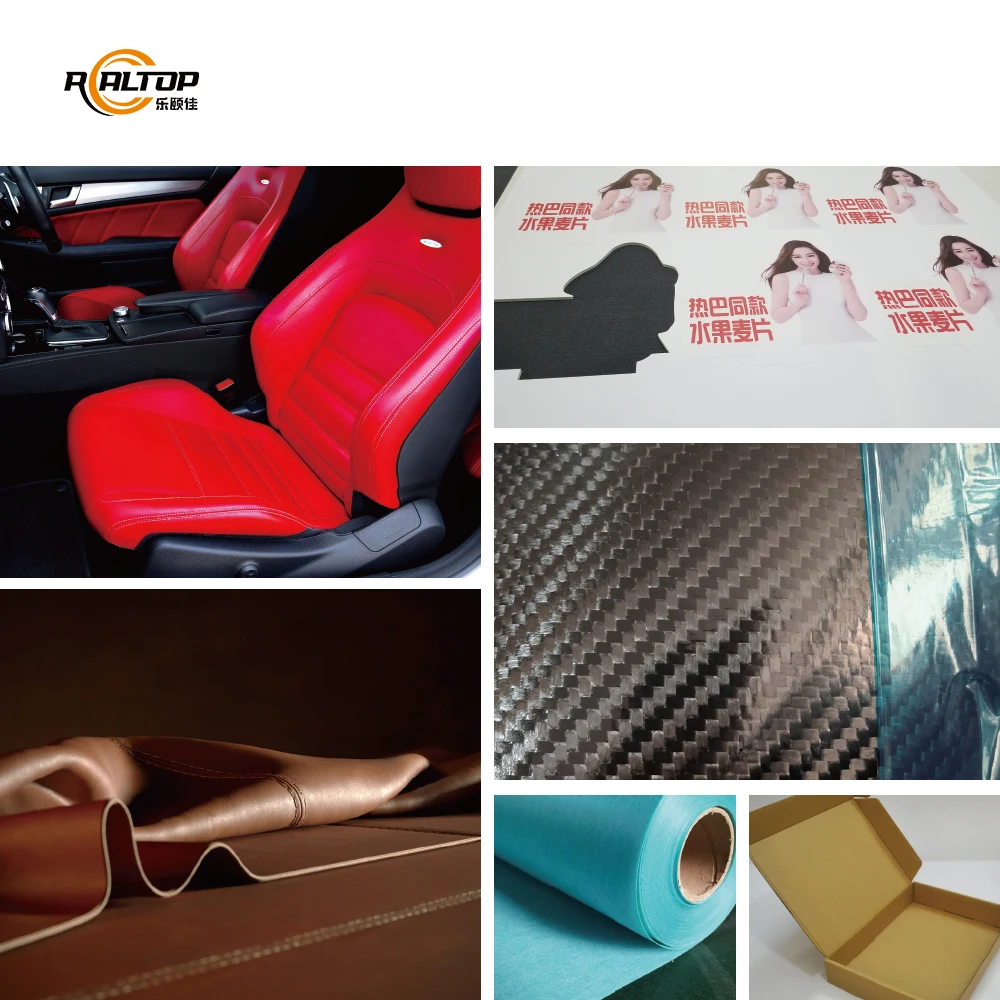
| Applicable Materials | Carbon fiber prepreg, Aramid honeycomb (Nomex), Fiberglass cloth, Ceramic fiber, Acoustic foam, PTFE, G10 epoxy boards |
| Cutting Speed | 0–2000 mm/s (material dependent) |
| Cutting Thickness | ≤ 30 mm |
| Cutting Accuracy | ±0.1 mm |
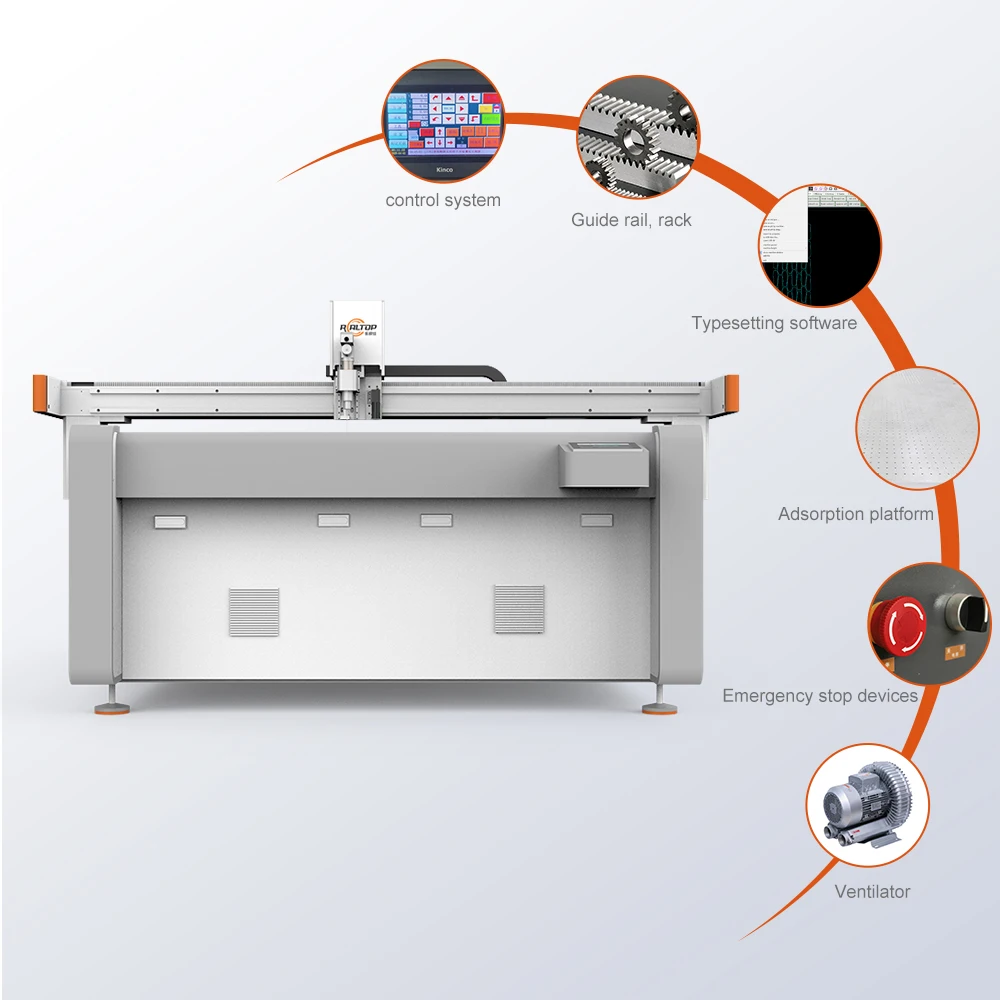
| Vacuum Table | Aluminum bellows vacuum table |
| Vacuum Pump | 9 kW |
| Voltage | 110V, 220V, 380V (frequency to be confirmed) |
| Control System | PLC control panel (verify against manufacturer catalog) |
| Servo Motors | Panasonic, Delta, Dorna (options) |
| Machine Size | 3300×2100×1350 mm |
| File Formats | PLT, DXF, AI, PDF |
| Safety | Infrared sensor device and emergency stop |
Application Suitability
| Application | Material or Output |
|---|---|
| Aerospace Interior Trim | Carbon fiber prepreg layup, Nomex honeycomb core slicing, ceramic fiber thermal blankets |
| Automotive NVH Components | Acoustic felt, damping pads, battery insulation sheets, headliner foam |
| Wind Energy Blade Molding | Fiberglass infusion mesh, PET/PVC foam core preforms, vacuum bagging consumables |
| High-Performance Sporting Goods | Bicycle frame prepreg cutting, surfboard core shaping, helmet liner foam |
Why "Standard" Machines Fail on Aerospace Composites
The difference between a scrap bin and a flight-ready part is the machine’s frame rigidity and vacuum integrity, not the advertised cutting speed.
When distributors import generic CNC tables for composite cutting, they often face delamination issues on honeycomb cores. Standard routing spindles generate heat and vibration that shatter brittle resin matrices. The 1625 CNC oscillating knife cutting machine addresses this through a cold-cutting process where the blade vibrates at high frequency to shear fibers without friction. This eliminates the "fuzzing" on aramid honeycomb that forces secondary finishing operations. For importers supplying the aerospace supply chain, maintaining the ±0.1 mm tolerance across a 1600×2500 mm bed requires a frame that resists twisting under the dynamic load of the knife head [NEED_CITE: composite material cutting tolerances in aerospace assembly].
Engineering the Frame for Zero-Deflection
A rigid foundation is non-negotiable when cutting expensive prepreg rolls. The 1625 utilizes a heavy-duty welded steel frame that undergoes stress-relief heat treatment to prevent long-term geometric drift. This stability ensures that the Z-axis depth control remains consistent, which is vital for "kiss-cutting" where the blade must penetrate the composite layer without scoring the release paper underneath.
Motion System and Tool-Head Versatility
The platform supports interchangeable tool heads, allowing distributors to offer clients a single machine capable of milling G10 epoxy boards and slicing soft acoustic felts. The aluminum bellows vacuum table provides superior flatness compared to standard PVC tables, ensuring that thin fiberglass cloths do not lift during the cutting stroke. This flexibility is why the 1625 is specified by machinery importers who need one reliable solution for diverse composite clients.
Decoding the 9 kW Vacuum and ±0.1 mm Accuracy
The 9 kW vacuum pump is sized to generate sufficient negative pressure across the aluminum bellows table, which is critical for holding porous materials like ceramic fiber blankets. A weaker pump would allow the material to shift, destroying the ±0.1 mm accuracy rating. The PLC control panel manages the coordination between the Panasonic servo motors and the vacuum zones, ensuring that the cutting head’s acceleration does not overcome the hold-down force on lightweight foams [NEED_CITE: vacuum hold-down requirements for porous composites].
The Risk of Ignoring Material-Specific Configuration
Specifying a machine based solely on table size leads to disaster when the material is 30mm thick aramid honeycomb. If the Z-axis stroke is insufficient or the knife oscillation frequency is fixed for paper rather than composite, the blade will drag and tear the cell walls. This results in edge compression that makes assembly impossible without aggressive sanding.
Why Distributors Source the 1625 from Realtop
We manufacture the frame and integrate the cutting engineering in-house, rather than assembling off-the-shelf components. This allows us to customize the servo motor selection (Panasonic or Delta) and voltage (110V/220V/380V) to match your local grid before the machine leaves Jinan. Our design team validates the tool-path logic for specific composites, ensuring the software interprets DXF files into clean knife motion.
Documentation & Verification
- Machine specification sheet detailing the aluminum bellows table flatness and frame treatment
- Electrical schematic confirming 110V/220V/380V wiring matches the target market grid
- Tool head and table configuration list specifying the oscillating knife or driven rotary setup
- Factory test record using your sample carbon fiber or honeycomb material
- CE declaration and safety compliance documents for European import
Installation, Commissioning & Support
- Foundation: Level concrete floor required to support the 3300×2100×1350 mm footprint and dynamic cutting loads.
- Power: Dedicated circuit for the 9 kW vacuum pump plus servo drive, voltage verified at 110V/220V/380V.
- Assembly: Frame and bellows table aligned on-site to restore factory flatness specifications.
- Training: Instruction on swapping the oscillating knife for the V-groove tool and setting Z-axis depth.
- Maintenance: Schedule for checking knife amplitude and cleaning vacuum filters on the aluminum table.
Next Steps for Technical Evaluation
To determine if the 1625 fits your composite cutting portfolio, please provide the specific material stack-up (e.g., carbon fiber prepreg thickness), required tolerance for nesting efficiency, and local voltage standards. We require a sample of your most abrasive material to perform a factory cutting test and verify the 9 kW vacuum pump sizing.
Frequently Asked Questions
Q: How does Realtop configure the tool head for a specific composite material?
A: Our engineering team selects the knife type—oscillating for foam, driven rotary for fabric, or V-groove for honeycomb—based on a sample cutting test. We match the blade geometry and oscillation frequency to the material density to prevent delamination and ensure edge quality before finalizing the machine build.
Q: What factory quality-control steps are applied to the frame and motion components?
A: Every 1625 frame undergoes stress-relief heat treatment to prevent future warping. We measure the aluminum bellows table flatness and verify the Panasonic or Delta servo motor positioning accuracy against the ±0.1 mm specification. A full 24-hour dry run is performed to check for vibration or thermal drift.
Q: What OEM customization is available for distributors regarding branding and voltage?
A: We offer full electrical customization for 110V, 220V, or 380V grids to match your market. Distributors can request custom HMI languages, branded machine panels, and specific servo motor packages. We provide the necessary documentation for local certification compliance.
Q: What documentation ships with the machine to support local service?
A: You receive a complete electrical schematic, a parts list with exploded diagrams for the knife head and vacuum system, and the PLC programming manual. The test record from your specific material sample is also included to assist your technicians with future parameter tuning.
You may also like

商品评价
Clear filtersThere are no reviews yet.