

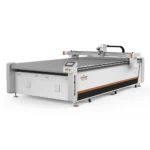
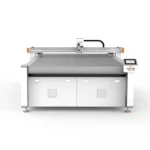
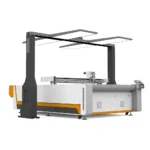
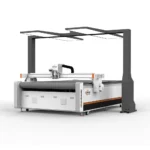

-
 Courier delivery
-
 DHL Courier delivery
-
 Warranty 1 year
-
 Free 30-Day returns

In-house tool head engineering — every oscillating knife, drag knife and creasing wheel is matched to your material before the 1625 leaves our Jinan factory, not swapped out on arrival.
Technical Specifications
| Parameter | Value |
|---|---|
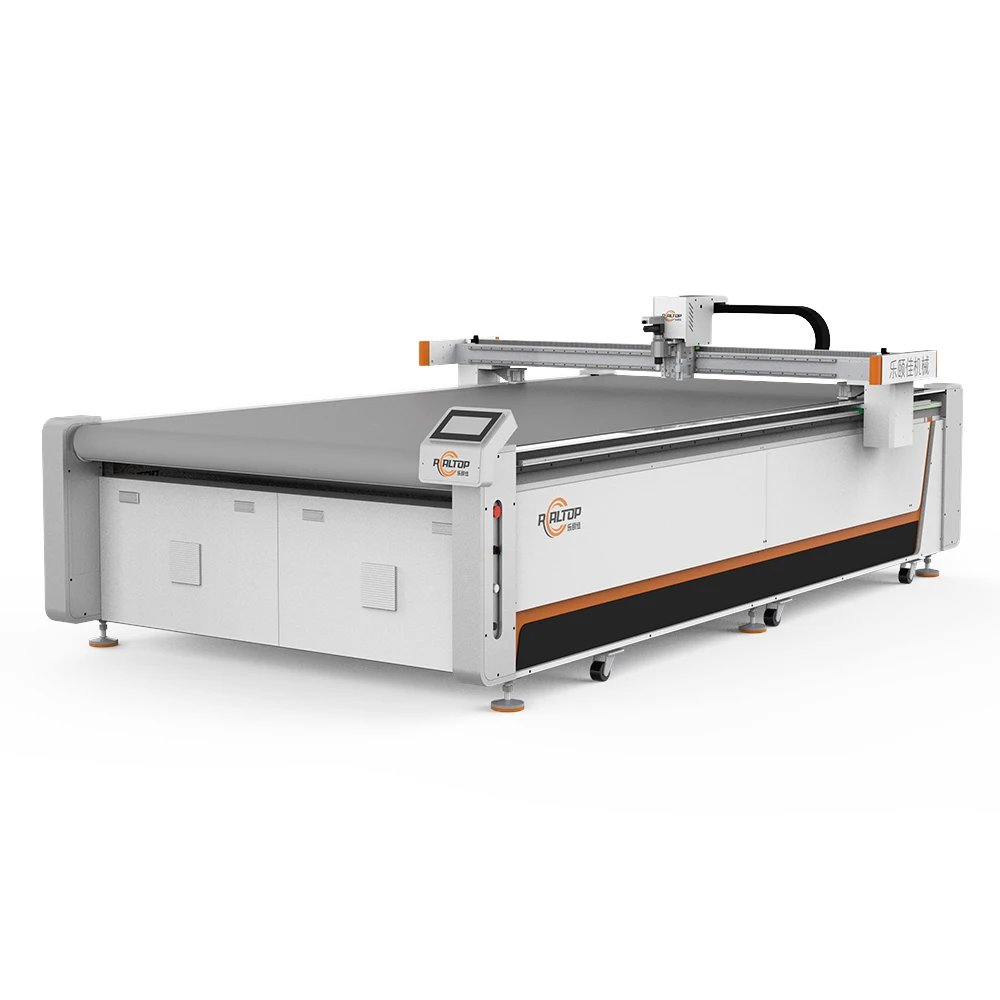
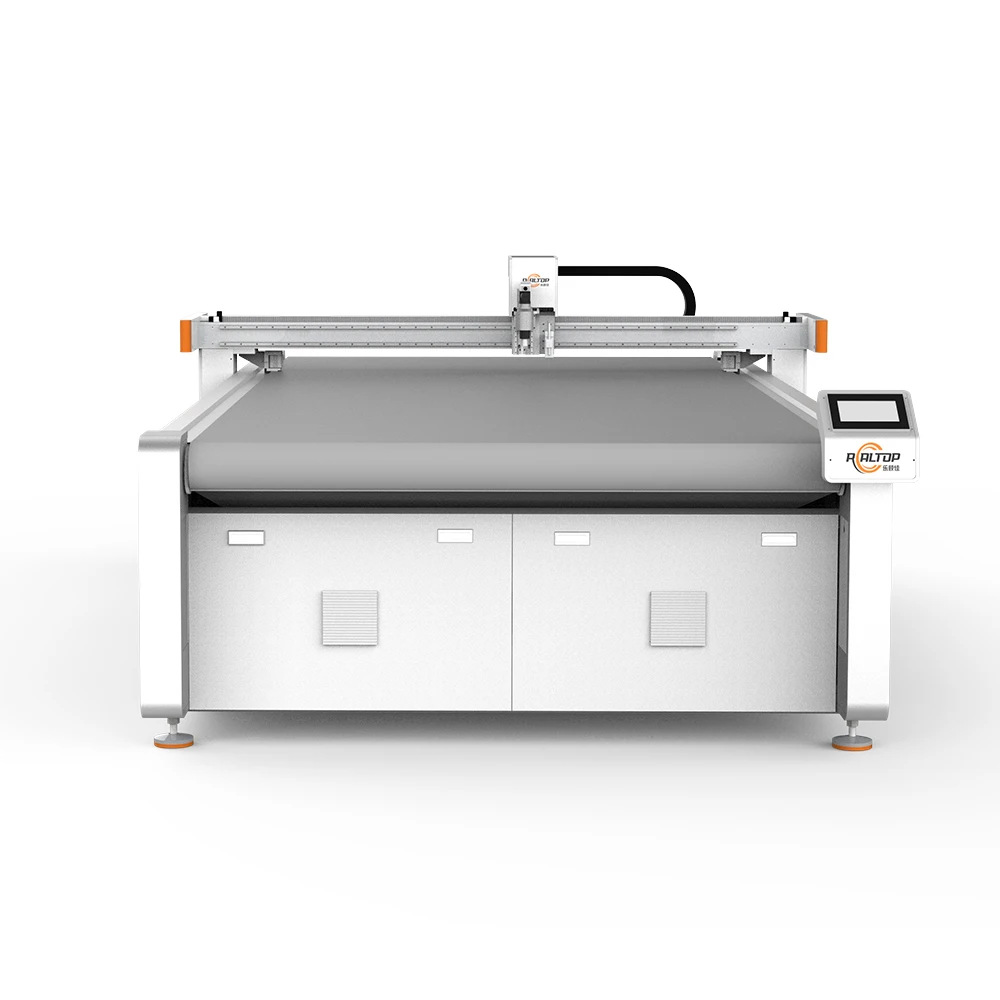
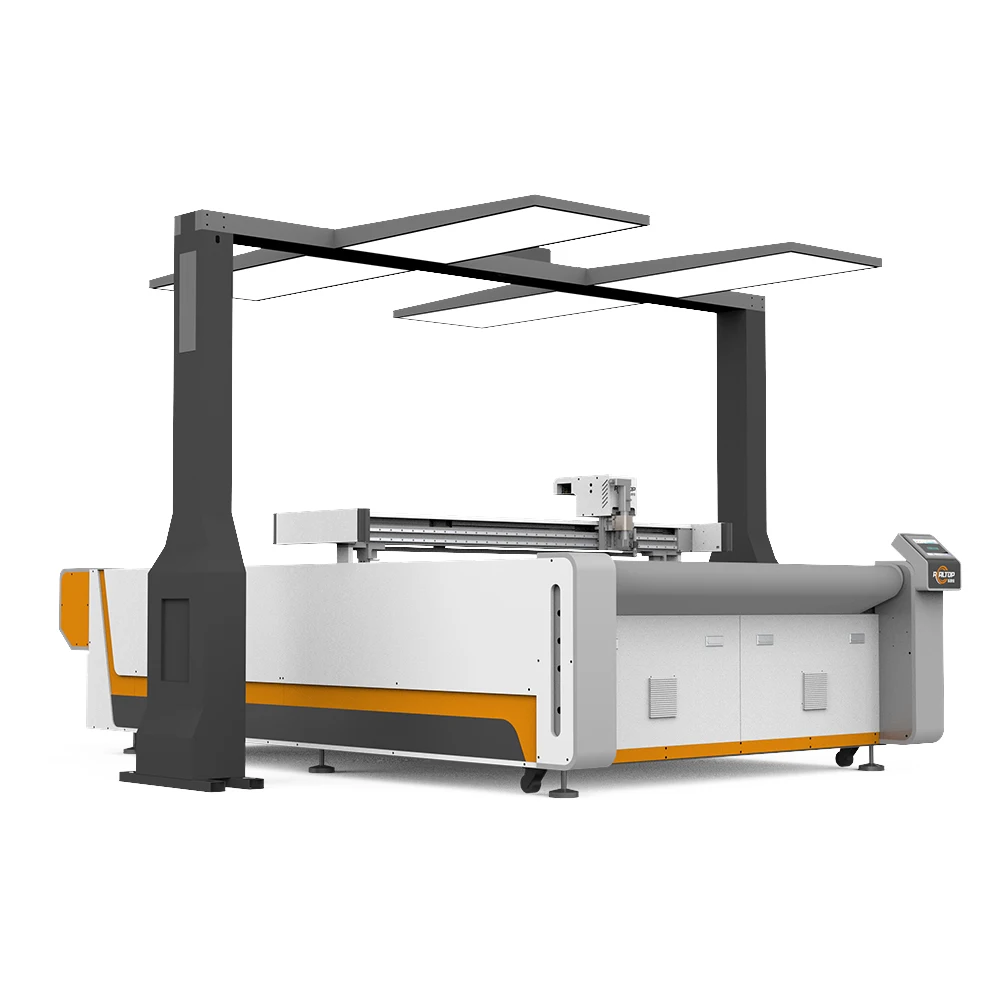
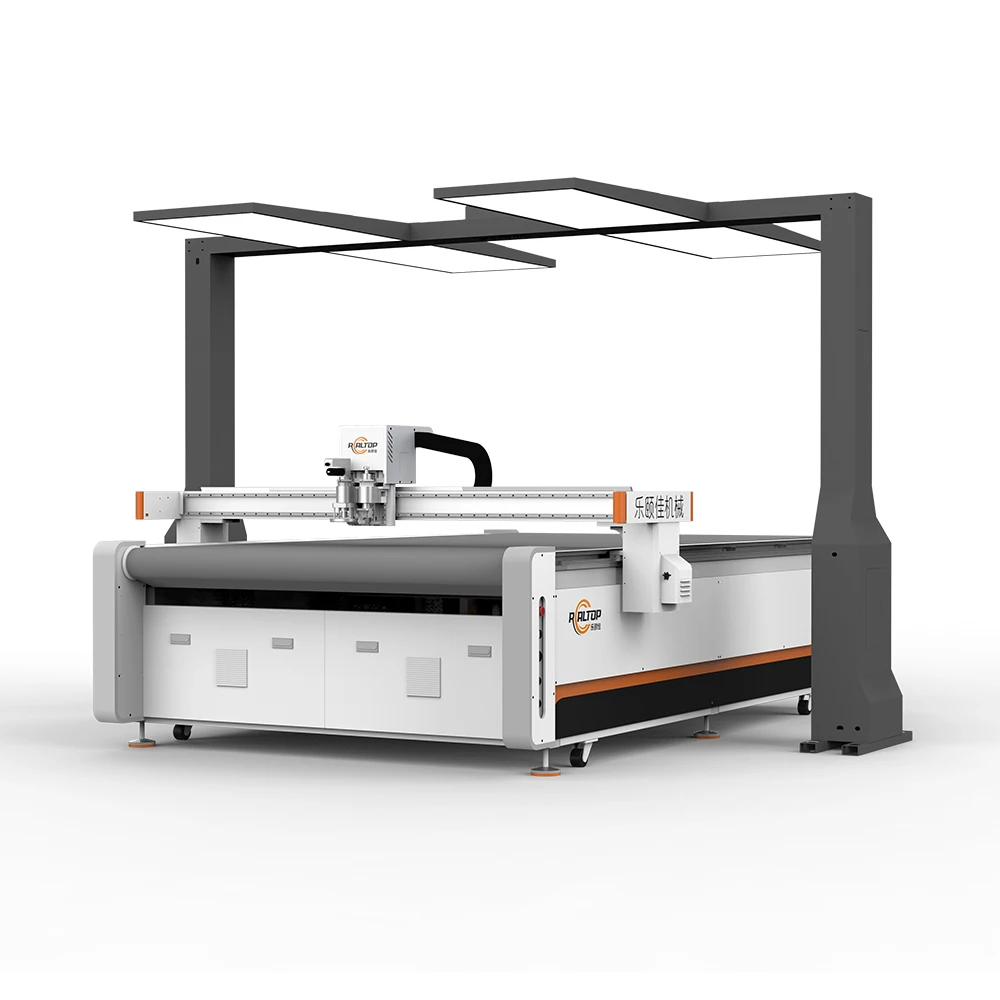
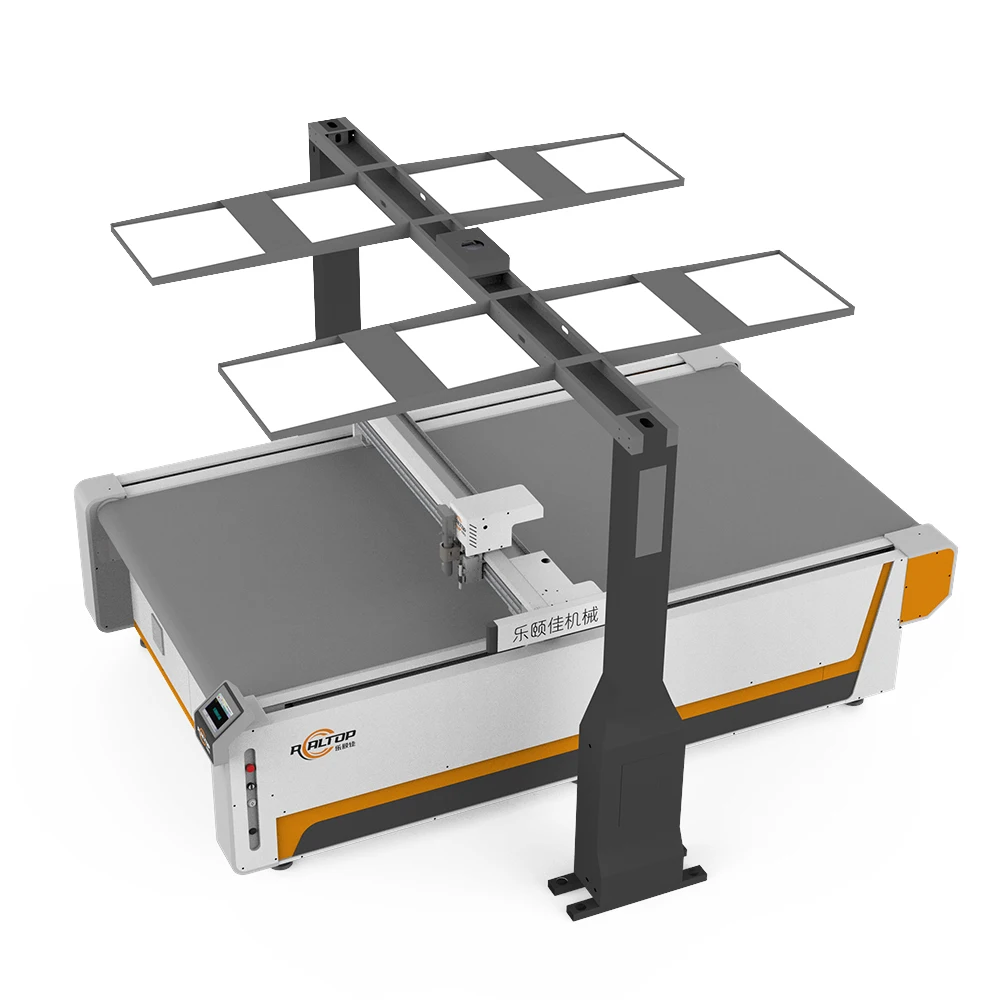
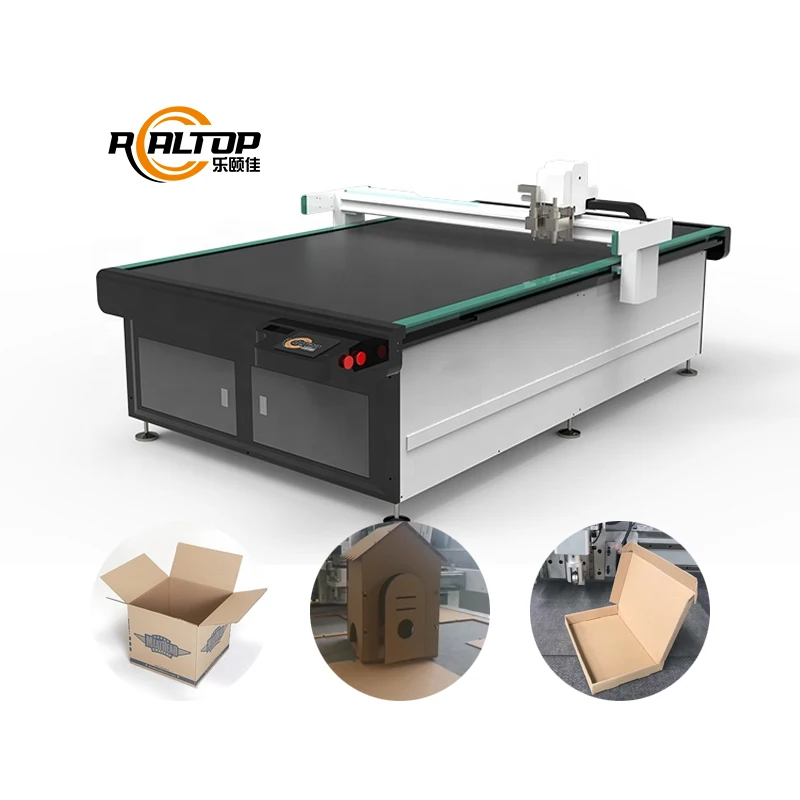
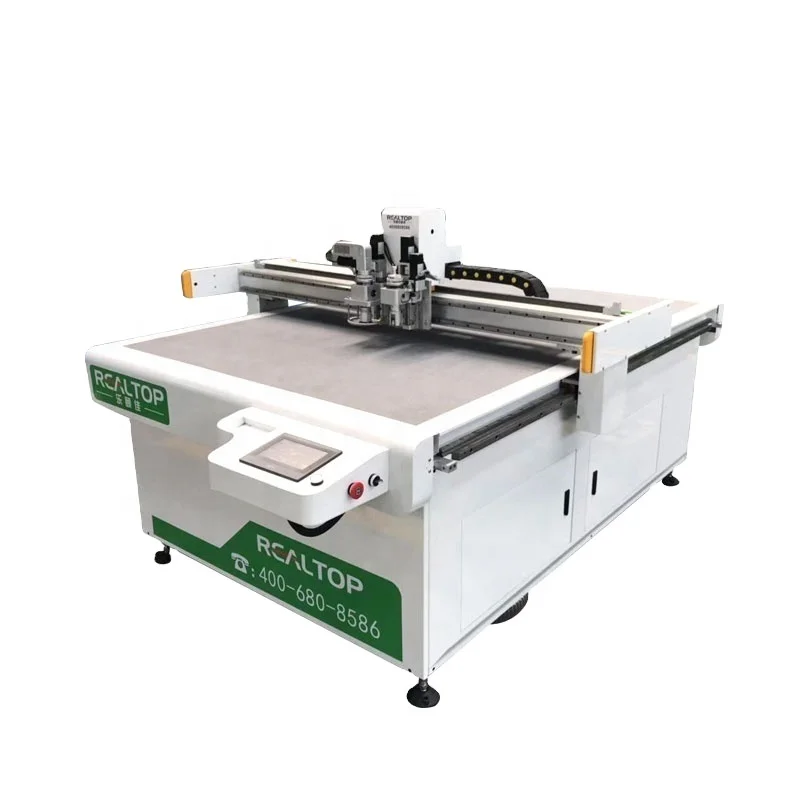
| Product Type | CNC Oscillating Knife Cutting Machine |
| Model | 1625 (Standard) |
| Working Area | 1600×2500 mm |
| Tool Head Options | Oscillating knife, Driven rotary knife, Creasing wheel, Kiss cutting tool, Pneumatic knife, Milling tool, V-groove knife |
| Cutting Speed | 0–2000 mm/s |
| Cutting Thickness | Up to 30 mm (basis not stated in source — confirm material and block format) |
| Cutting Accuracy | ±0.1 mm |
| Vacuum Pump | 9 kW, aerospace-grade aluminum integral casting |
| Vacuum Table | Aluminum bellows vacuum table |
| Servo Motors | Panasonic, Delta, Dorna options |
| Voltage | 110V / 220V / 380V (frequency to be confirmed) |
| Control System | PLC with intuitive interface, optional display languages |
| CCD Camera | Contour recognition and positioning for printed materials |
| Profile Formats | PLT, DXF, AI, PDF |
| Safety Devices | Infrared sensor, emergency stop |
| Machine Size | 3300×2100×1350 mm |
| Software | Dedicated packaging structure design software, auto-nesting with camera-based defect detection |
| Language Options | English, Russian, Italian, Chinese; special languages customizable |
| Power-Off Resume | Supported |
| Nesting Efficiency | Material utilization improved by 15%–30% (basis not stated in source — confirm block format and material) |
| Standards | CE (certificate availability to be confirmed) |
Application Suitability
| Application | Material or Output |
|---|---|
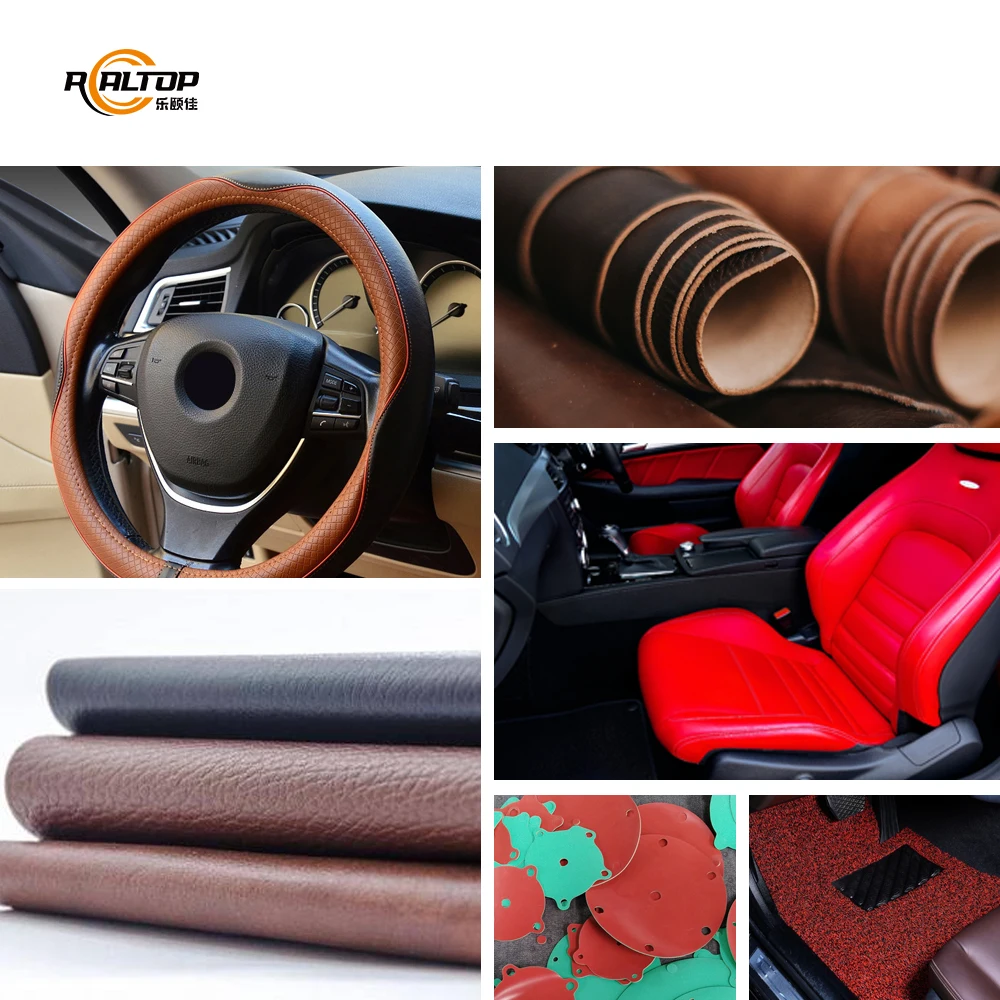
| Leather goods and footwear | Shoe uppers, bags, genuine leather contour cutting with grain-pattern recognition |
| Automotive interiors | PVC car mats, seat covers, interior trim components, soft composite panels |
| Garment and textile | Apparel panels, sofa fabrics, multi-layer fabric cutting with auto-nesting |
| Advertising and signage | Foam boards, adhesive stickers, vehicle wraps, PVC sheets, acrylic panels |
| Packaging sample making | Cartons, gift boxes, corrugated board, folding carton prototypes |
| Composites and foam | EPE foam, insulating materials, rubber gaskets, PTFE sheets |
What "Up to 30 mm Cutting Depth" Really Means on the Shop Floor
Thickness ratings only matter when tied to the exact material density and tool head in use.
I have watched workshops take delivery of a CNC oscillating knife cutting machine manufacturer brochure promising deep cuts, then struggle through half-density EVA foam because the oscillation amplitude was never matched to the material’s compression behavior. Leather is dense and fibrous; automotive floor mats combine a PVC top layer with a thick sponge backing that absorbs blade energy. The 1625 configuration process requires your actual material sample so the right tool head and stroke frequency are set before the machine ships [NEED_CITE: oscillation frequency requirements for layered composite materials].
How the Design Team Matches Tooling to Your Material Stack
The 1625 carries up to seven tool head options — oscillating knife, driven rotary knife, creasing wheel, kiss cutting, pneumatic knife, milling, and V-groove knife — each engineered in-house at REALTOP’s Jinan facility. The CNC oscillating knife cutting machine manufacturer selection process does not default to the oscillating knife for every job. Genuine leather with natural grain variation may need the driven rotary knife for clean contour following, while a PVC car mat with a thick foam underlayer demands a pneumatic knife with higher downward force to penetrate both layers without delamination.
Vacuum Zoning Decided Before the Frame is Welded
Small parts lift off poorly zoned vacuum tables the moment the blade exits the cut path. The 1625 uses an aluminum bellows vacuum table fed by a 9 kW aerospace-grade aluminum integral casting pump, but the zoning layout is not generic. The design team maps your typical part geometry and nesting pattern, then assigns vacuum zones so that even narrow gaskets and small leather patches stay flat during high-speed contour cuts [NEED_CITE: vacuum adsorption requirements for small-part CNC knife cutting]. This planning happens during the sample cutting stage, not as a field adjustment.
Reading the Specification Sheet Beyond the Working Area
A 1600×2500 mm bed tells you the maximum sheet size, but it does not tell you whether the machine will hold ±0.1 mm accuracy across that full span over years of production. The 1625 frame is heavy-duty with a precision-ground mounting surface, which keeps the gantry rails parallel under continuous oscillating knife vibration. The Panasonic, Delta, or Dorna servo motor options each carry different torque curves, and the choice depends on whether your daily workload is high-speed thin fabric cutting or slower, high-force composite penetration. Profile format support — PLT, DXF, AI, PDF — means your existing nesting software feeds the PLC directly without manual re-drawing. The CCD camera reads printed registration marks at production speed for contour work on pre-printed leather and fabric rolls, closing the loop between digital design and physical cut path.
The Cost of Choosing a Tool Head by Default
Specifying a machine by working area and price alone leaves the hardest decisions for the installation day. A drag knife dragged through multi-layer automotive foam produces crushed edges and frayed seams that fail quality inspection. A vacuum table without zone mapping lets small leather patches shift mid-cut, nesting yield drops, and premium genuine leather gets scrapped. These are not software problems solvable by a firmware update — they are mechanical mismatches baked into the machine at the factory [NEED_CITE: tool head and material mismatch consequences in CNC cutting]. The 1625 sample cutting process on your own material is the checkpoint where these failures surface before you pay the balance.
Why Buyers Come Back for a Second Machine
The design team and core factory operate under one roof, so a change in your material specification triggers a tool head and vacuum table review, not a referral to a third-party integrator. CCD contour recognition parameters are tuned to your printed mark style and verified at full cutting speed before dispatch. Voltage — 110V, 220V, or 380V — and control language are confirmed in writing on the specification sheet, not assumed from the destination port. Software license, file format compatibility, and nesting workflow are validated with your existing DXF or AI files. Every machine ships with a factory test record run on your actual material sample.
Documentation & Verification
- Machine specification sheet with tool head and vacuum table configuration matched to your material
- Electrical schematic confirming voltage, frequency and plug type for your facility
- Sample cutting report on your leather, foam or composite stock with edge quality photographs
- Factory test record with cutting accuracy measurement and CCD positioning verification
- Software license and file format compatibility note for your PLT, DXF, AI or PDF workflow
- Spare parts list with oscillating knife blades, vacuum seals and servo motor consumables
Installation, Commissioning & Support
- Floor space requirement based on 3300×2100 mm footprint plus material handling clearance
- Dedicated power circuit sized for the 9 kW vacuum pump and servo motor configuration
- Machine arrives fully assembled on frame; vacuum table and gantry require on-site leveling
- First-run commissioning includes tool head stroke calibration on your supplied material samples
- Operator training covers PLC interface navigation in your confirmed control language
- Preventive maintenance schedule for aluminum bellows vacuum seals and oscillating knife bearings
What to Prepare Before Requesting a Quotation
Send your actual material samples — including the thickest composite you plan to cut — along with your typical nesting layout and daily volume target. Confirm your facility voltage and frequency, control language preference, and whether your existing files are in DXF, PLT, AI, or PDF format. If your production includes printed contour work, provide a sample of the printed material so CCD recognition can be verified before the order is finalized.
Frequently Asked Questions
Q: How is the tool head selected for my specific leather type and thickness?
A: Your material sample is test-cut with multiple tool head options at our Jinan factory. The oscillating knife, driven rotary knife and pneumatic knife each produce different edge qualities depending on leather density and backing material. The selection is confirmed and documented before your machine enters production.
Q: Can voltage, plug type and control language be locked in before shipment?
A: Yes. The 1625 is available in 110V, 220V and 380V configurations. Your exact voltage, frequency, plug standard and PLC display language are confirmed on the machine specification sheet and electrical schematic before the order is released to the factory floor.
Q: How do you verify CCD contour recognition at full production speed?
A: We run your printed material sample through the CCD camera system at the target cutting speed, checking registration mark tracking accuracy across the full 1600×2500 mm bed. Results are recorded in the factory test report provided before shipment.
Q: What happens during the sample cutting process before I commit?
A: You send your actual production material. We configure the tool head, vacuum zoning and cutting parameters, then run a full nest pattern. The sample cutting report documents edge quality, cutting depth and cycle time for your review and approval.
Q: What documentation ships with the machine?
A: You receive the specification sheet, electrical schematic, factory test record on your material, operation and maintenance manual, software license with file format compatibility note, and a spare parts list covering blades, vacuum seals and consumables.
You may also like

商品评价
Clear filtersThere are no reviews yet.