




-
 Courier delivery
-
 DHL Courier delivery
-
 Warranty 1 year
-
 Free 30-Day returns

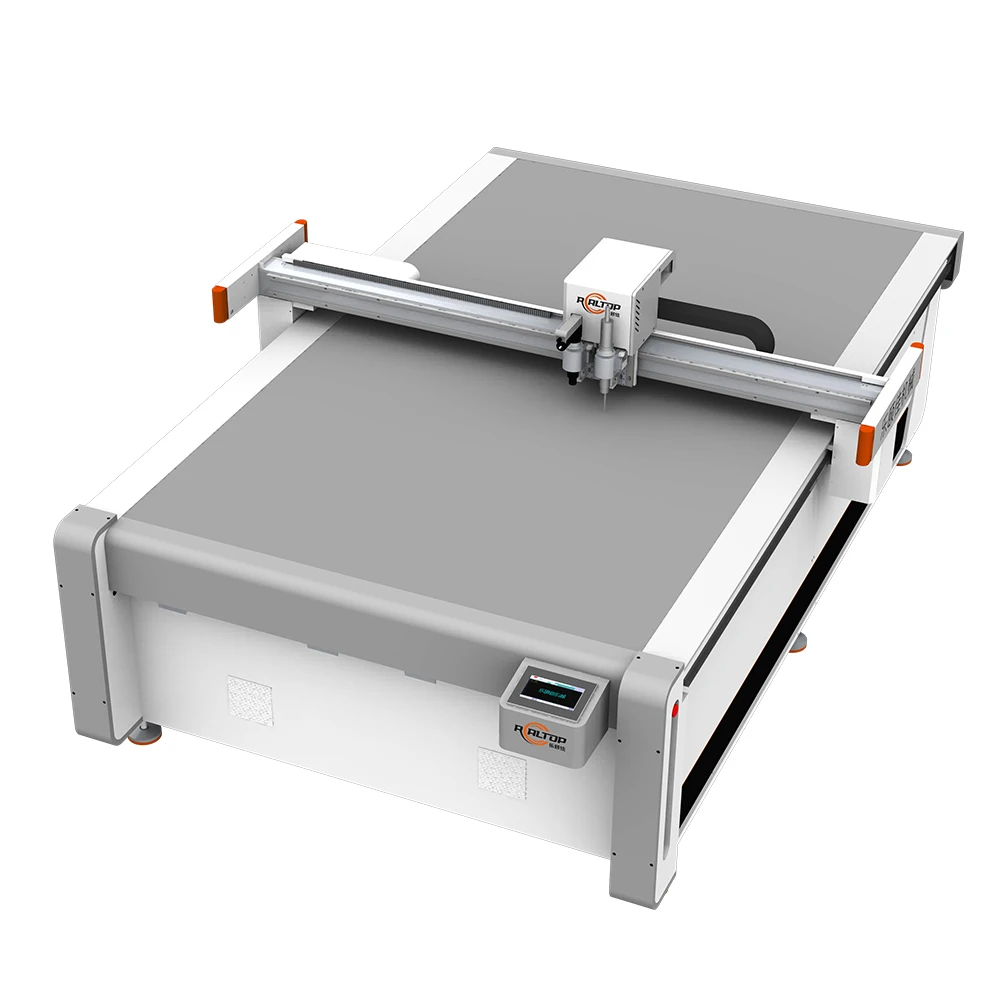
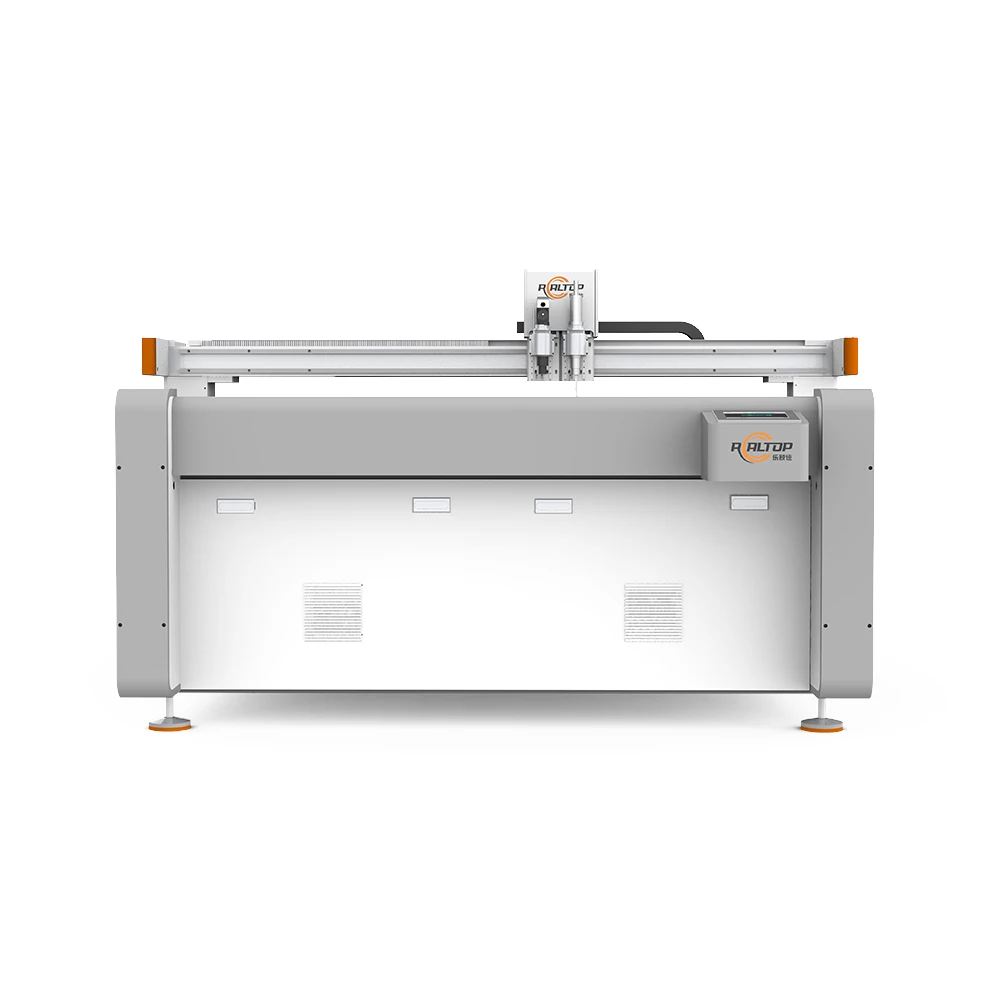
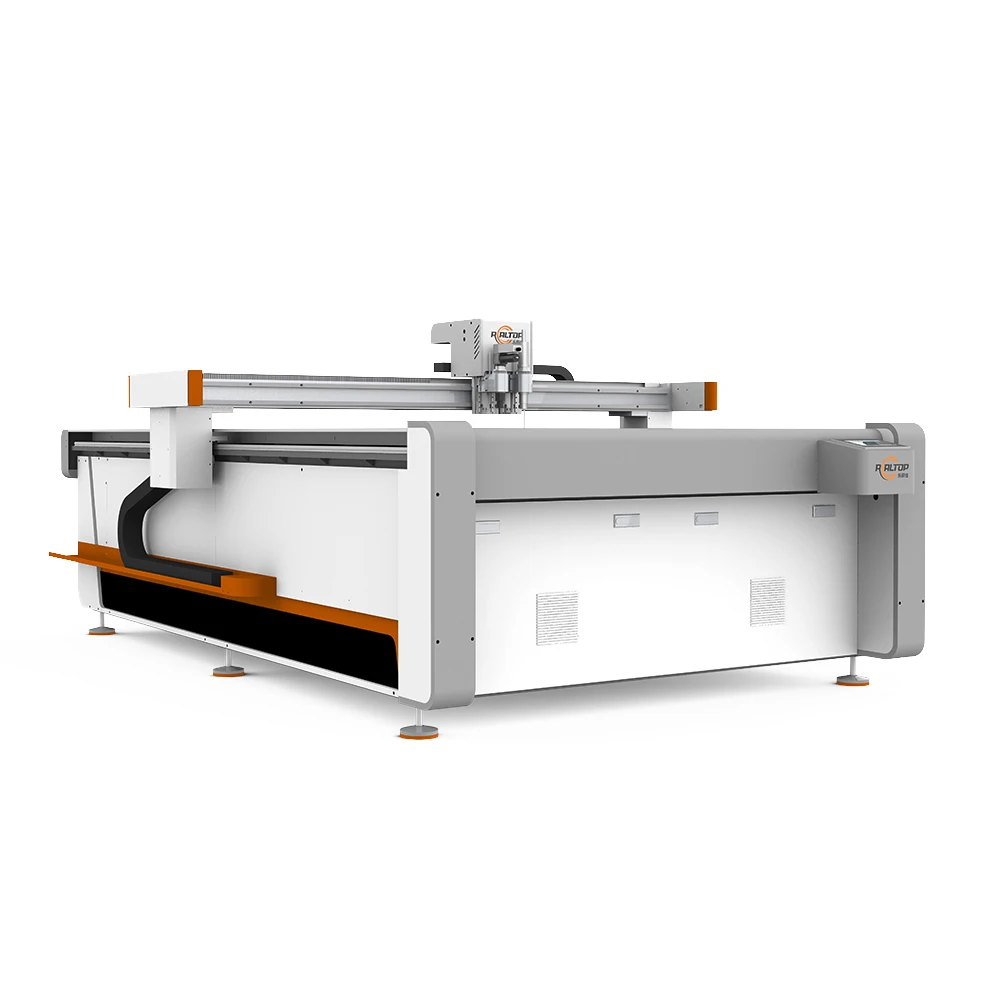
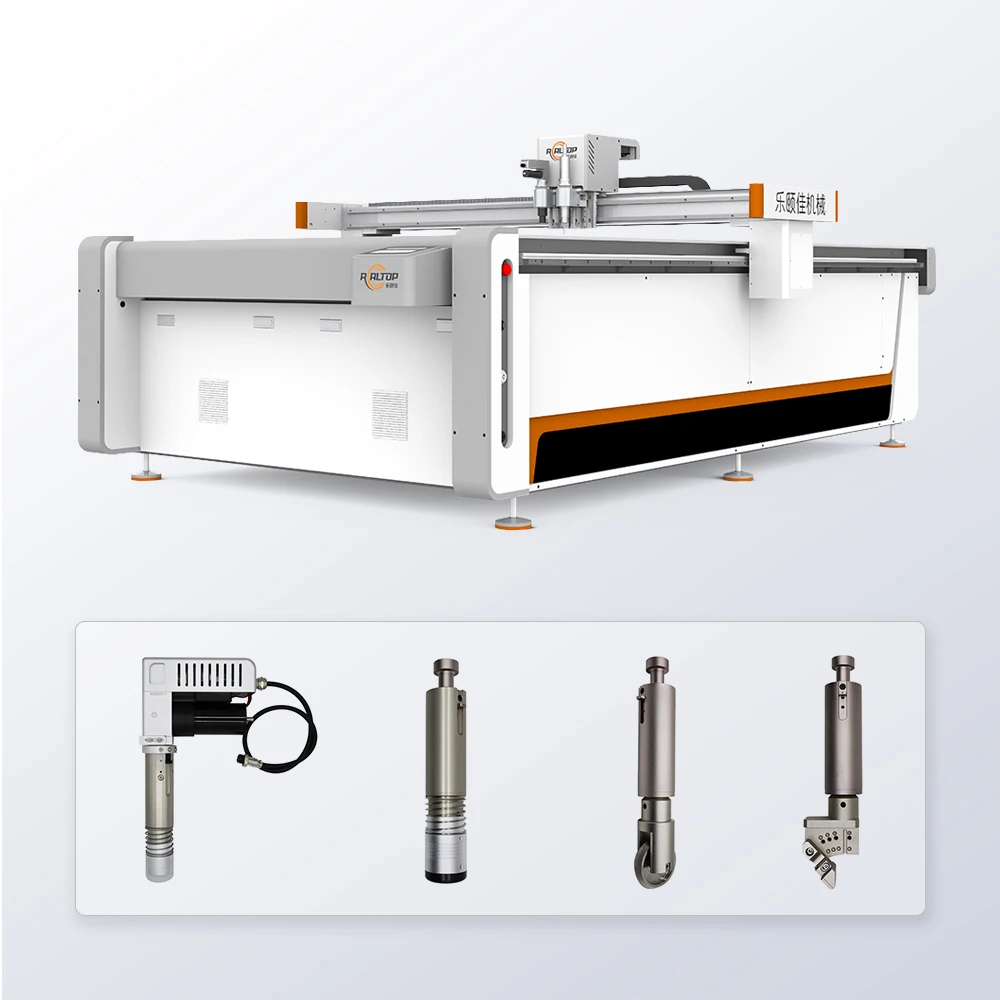
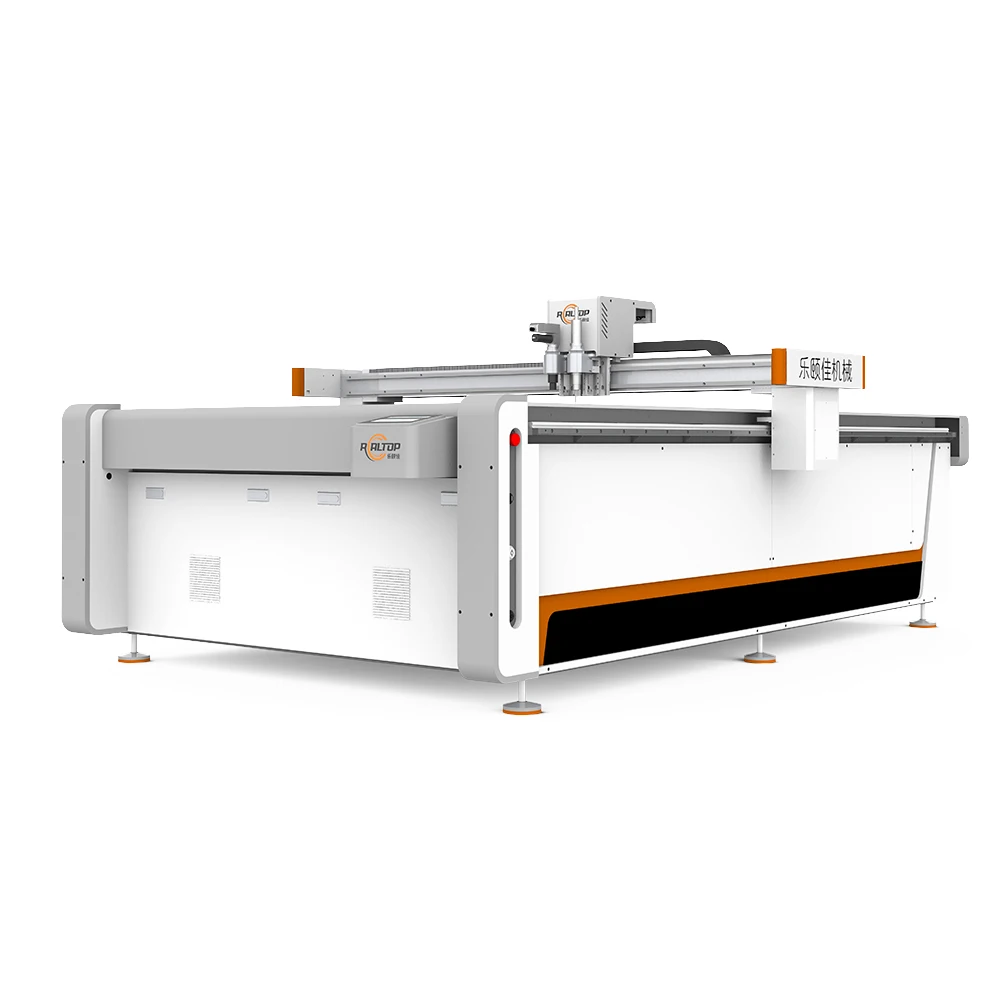
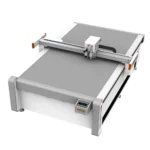
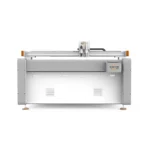
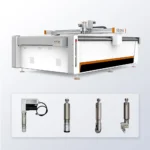
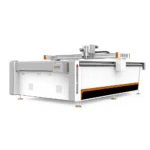
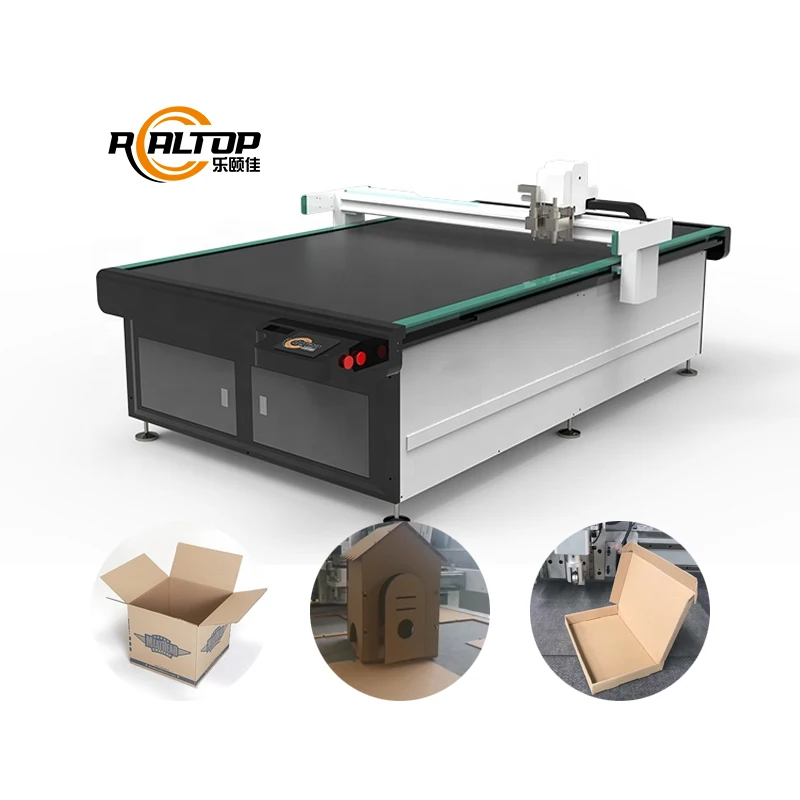
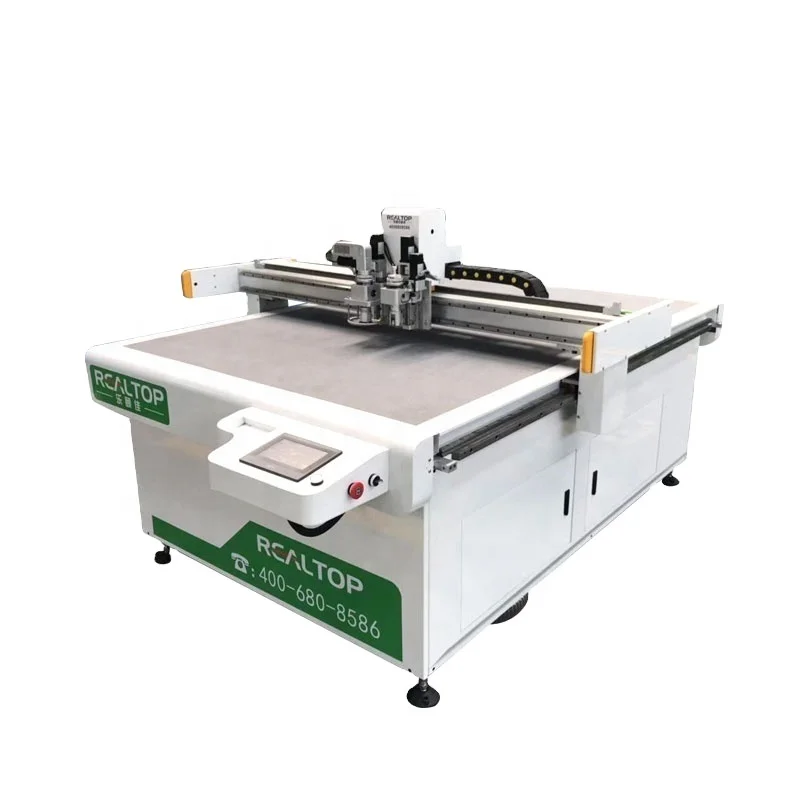
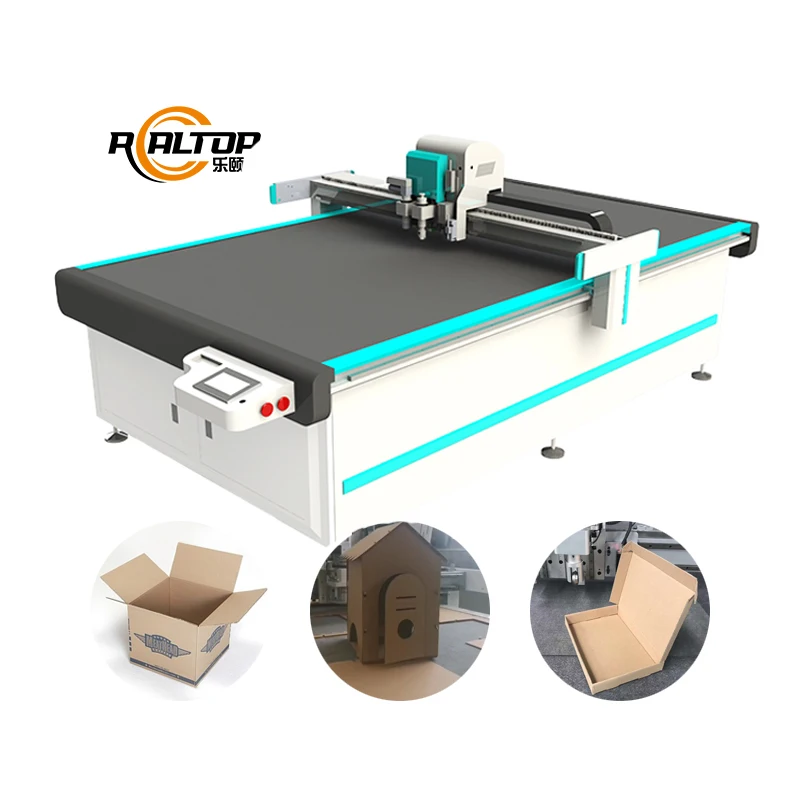
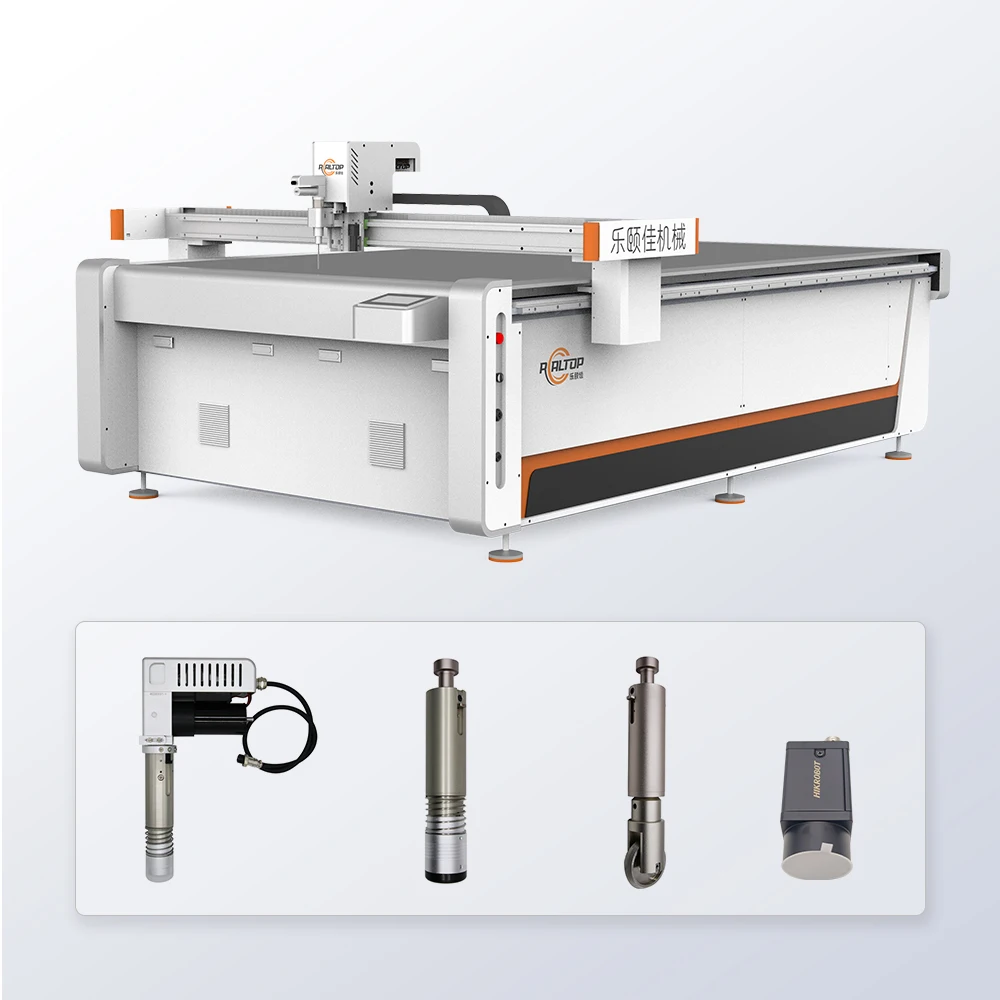
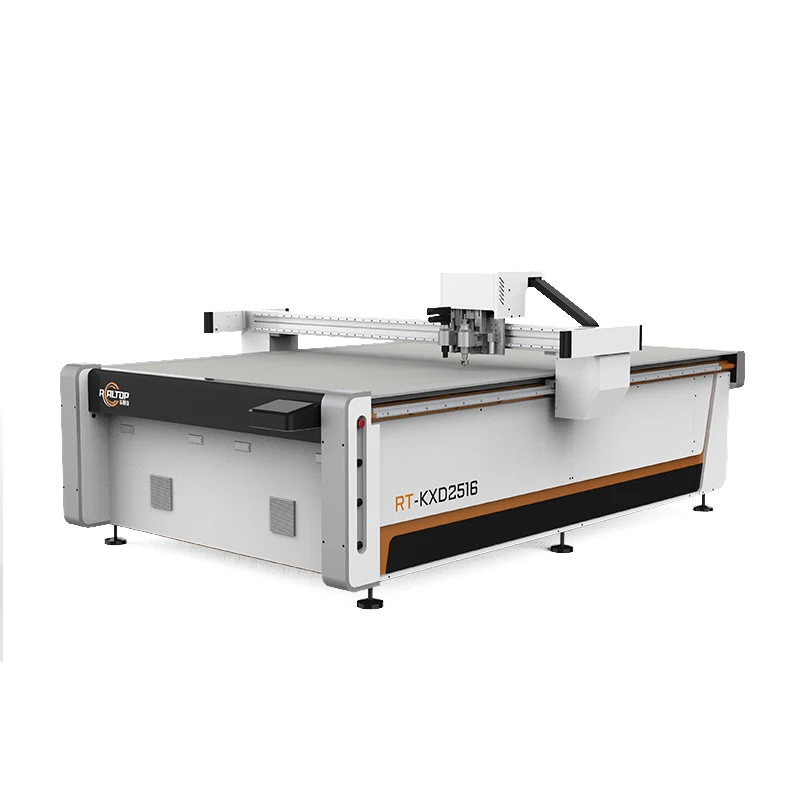
Precision Tooling Match — The 1625 CNC Oscillating Knife Cutting Machine factory pairs seven tool head options with aluminum bellows vacuum tables, so packaging and corrugated board producers specify the cutting method by material rather than forcing one approach across every substrate.
Technical Specifications
| Parameter | Value |
|---|---|
| Model | 1625 |
| Product Type | CNC Oscillating Knife Cutting Machine |
| Working Area | 1600 × 2500 mm |
| Tool Head Options | Oscillating knife, Driven rotary knife, Creasing wheel, Kiss cutting tool, Pneumatic knife, Milling tool, V groove knife |
| Cutting Speed | 0–1500 mm/s |
| Cutting Thickness | ≤ 40 mm (basis not stated in source) |
| Cutting Accuracy | ±0.1 mm |
| Vacuum Table | Aluminum bellows vacuum table |
| Vacuum Pump Power | 9 kW |
| Voltage Options | 110V, 220V, 380V |
| Control System | PLC control panel with optional display languages |
| File Format Compatibility | PLT, DXF, AI, PDF |
| Software | Dedicated packaging box structure design software |
| Safety Device | Infrared sensor device and emergency stop device |
| Overall Dimensions (L×W×H) | 3300 × 2100 × 1350 mm |
| Language Options | English, Russian, Italian, Chinese, customizable |
| Certification | CE (source value — verify against manufacturer catalog) |
Application Suitability
| Application | Material or Output |
|---|---|
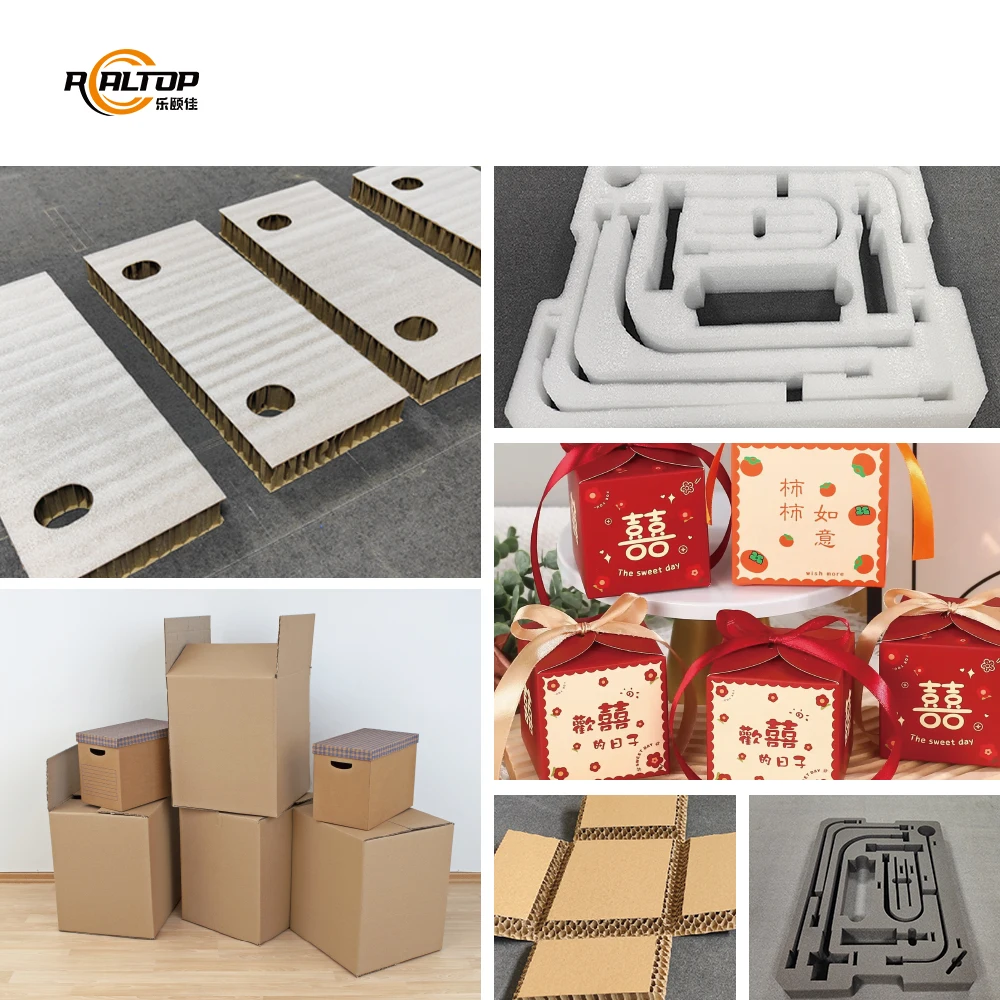
| Carton and packaging sample making | Corrugated cardboard (E-flute, B-flute, BC-flute), greyboard, specialty paper |
| Honeycomb board V-grooving and folding | Honeycomb board with slotted V-cut grooving for collapsible packaging |
| Protective packaging inserts | EVA, EPE, PU foam, rubber mats |
| Display and signage substrate cutting | Thin plastic sheets (PVC, PET), velvet, fleece, non-woven fabric |
| Soft material die-free prototyping | Leather, synthetic leather, composite and adhesive-backed materials |
What a 40 mm Thickness Rating Actually Means for Corrugated Board
Cutting depth only matters when matched to the tool head, vacuum hold-down, and material density in combination.
When buyers evaluate a CNC Oscillating Knife Cutting Machine factory brochure, the headline thickness number often masks the real constraint. A 40 mm limit on rigid foam behaves entirely differently from 40 mm of BC-flute corrugated board, where the honeycomb core compresses under tool pressure and tears rather than shears. I have watched packaging shops discover this mismatch after the machine arrived on their floor — the oscillating knife crushed the flute walls at full depth because the vacuum zoning was designed for large panels, not small carton blanks. Confirming which tool head and vacuum zone layout was tested, on which material, and at what cutting speed, prevents costly rework after installation [NEED_CITE:].
Why Frame Rigidity Matters When Slotting Honeycomb Board
Honeycomb board V-grooving places unusual lateral forces on the gantry. The V groove knife must score partway through the core without penetrating the bottom liner, requiring the tool head to maintain consistent depth across the full 1600 × 2500 mm working area. Any deflection in the gantry translates directly into uneven fold lines and cracked panels during forming. The 1625 addresses this with a heavy-duty precision-ground frame that supports the ±0.1 mm cutting accuracy specification across the entire bed.
Vacuum Table Zoning for Small Packaging Blanks
A common failure point on CNC oscillating knife cutting machines in packaging environments is the vacuum table holding small carton blanks while the knife exits the material. When the vacuum zone is larger than the part itself, air bleeds around the edges and the piece lifts, producing a ragged tail on the cut. The aluminum bellows vacuum table on the 1625 provides full-surface adsorption across the bed, maintaining hold-down force even when cutting small inserts from foam or thin corrugated sheets [NEED_CITE:]. This matters especially for multi-up nesting layouts where dozens of small parts share a single sheet.
Reading the Specs: Tool Heads, Power, and File Compatibility
The seven available tool heads on the 1625 each serve a distinct packaging workflow. The oscillating knife handles thick corrugated and foam board where a clean shear cut is required. The driven rotary knife suits continuous long cuts on thinner materials like non-woven fabric. The creasing wheel produces fold lines without penetrating the surface — essential for carton sample making where the blank must fold cleanly without cracking the liner. The V groove knife cuts part-depth channels into honeycomb board so it can fold into rigid box structures.
The 9 kW vacuum pump provides the suction force needed to hold porous corrugated materials flat, though the actual hold-down performance depends on how the vacuum zones are configured on the aluminum table. The PLC control panel with multi-language support means operators in different markets can run the machine in their native language, reducing setup errors. File compatibility across PLT, DXF, AI, and PDF formats allows packaging designers to send artwork directly from standard design software without intermediate conversion steps [NEED_CITE:].
The Real Cost of Skipping the Sample Cut
When a packaging producer commits to a cutting table based on spec sheets alone, the first day of production becomes the acceptance test. If the driven rotary knife cannot hold tolerance on the buyer’s specific B-flute board, or if the vacuum table cannot grip the small die-cut inserts at production speed, the machine sits idle while tooling is reconfigured. I have seen this happen on a carton sample line in Southeast Asia where the material supplier changed the adhesive backing mid-quarter, and the kiss cutting tool that worked during testing left uncut fibers on the actual stock. Running a sample cut on the buyer’s own material before the order is confirmed catches these variables before the machine ships [NEED_CITE:].
Why Buyers Source This CNC Oscillating Knife Cutting Machine from the Factory
In-house design covering both the machine frame and the tool head configurations means the 1625 is specified as a system rather than assembled from generic components. The packaging box structure design software is included as standard, so operators can design and cut from the same environment without licensing a third-party package. Voltage is confirmed before production — the 1625 ships at 110V, 220V, or 380V depending on the buyer’s local supply, with matching electrical schematics. Factory testing uses the buyer’s actual material and thickness, producing a documented cutting report that travels with the shipment. Customizable control language and file format verification before order confirmation prevent compatibility issues at commissioning [NEED_CITE:].
Documentation & Verification
- Machine specification sheet listing all seven tool head options and their designated materials
- Electrical schematic confirming voltage, plug type, and circuit requirements for the destination country
- Tool head and table configuration list detailing which tools ship with the machine and for which substrates
- Sample cutting report on buyer’s own corrugated or honeycomb board, documenting edge quality and fold accuracy
- Factory test record with photographs showing the 1625 running at rated speed before packing
- Software license and file format compatibility note covering PLT, DXF, AI, and PDF import verification
Installation, Commissioning & Support
- Floor space requirement based on 3300 × 2100 mm overall dimensions, plus clearance for material loading on all sides
- Dedicated electrical circuit matching confirmed voltage (110V, 220V, or 380V) and the 9 kW vacuum pump draw
- Machine arrives partially assembled; gantry and control panel require on-site alignment and leveling
- First-run commissioning includes vacuum zone calibration and tool head offset setting for the buyer’s material
- Operator training covers the packaging box structure design software, file import workflow, and tool changeover procedure
- Spare parts list includes oscillating knife blades, creasing wheels, and vacuum table seals for scheduled replacement
Before You Send the Inquiry
To specify the 1625 accurately for your packaging line, provide the material type, flute or board thickness, and maximum sheet size you will process. Confirm your local voltage standard and frequency so the electrical system is configured before build. If your design workflow uses specific DXF or AI templates, share a sample file so software compatibility is verified before the order is placed.
Frequently Asked Questions
Q: How is the cutting thickness capacity verified before I commit to the 1625?
A: The factory runs a sample cut on your own material — whether corrugated board, honeycomb board, or foam — and documents the edge quality, cutting depth, and fold accuracy in a report. This confirms the tool head and vacuum configuration handle your specific substrate before the machine enters production.
Q: Which tool head should I specify for corrugated cardboard versus honeycomb board?
A: Corrugated cardboard typically uses the oscillating knife for through-cuts and the creasing wheel for fold lines. Honeycomb board requires the V groove knife for part-depth slotting so the panel folds without cracking. The 1625 supports both on a single machine, and the configuration is confirmed during sample testing.
Q: What voltage and plug standard will the machine be configured for before shipment?
A: The 1625 is available at 110V, 220V, or 380V. The buyer confirms the local voltage and plug type before production, and the electrical schematic is included in the documentation package so your electrician can prepare the circuit before the machine arrives.
Q: Can the included software import my existing DXF or AI packaging templates?
A: The dedicated packaging box structure design software supports PLT, DXF, AI, and PDF import. Before the order is confirmed, a sample file from your design workflow is tested on the machine to verify that layers, cut lines, and crease lines are interpreted correctly.
Q: What does the factory acceptance test cover before the machine ships?
A: The factory test runs the 1625 at cutting speed on your specified material, checking dimensional accuracy against the ±0.1 mm tolerance, vacuum hold-down stability, and tool head performance. A photographic record and test report are provided, and buyers may attend in person or request a video record.
You may also like

商品评价
Clear filtersThere are no reviews yet.