





-
 Courier delivery
-
 DHL Courier delivery
-
 Warranty 1 year
-
 Free 30-Day returns

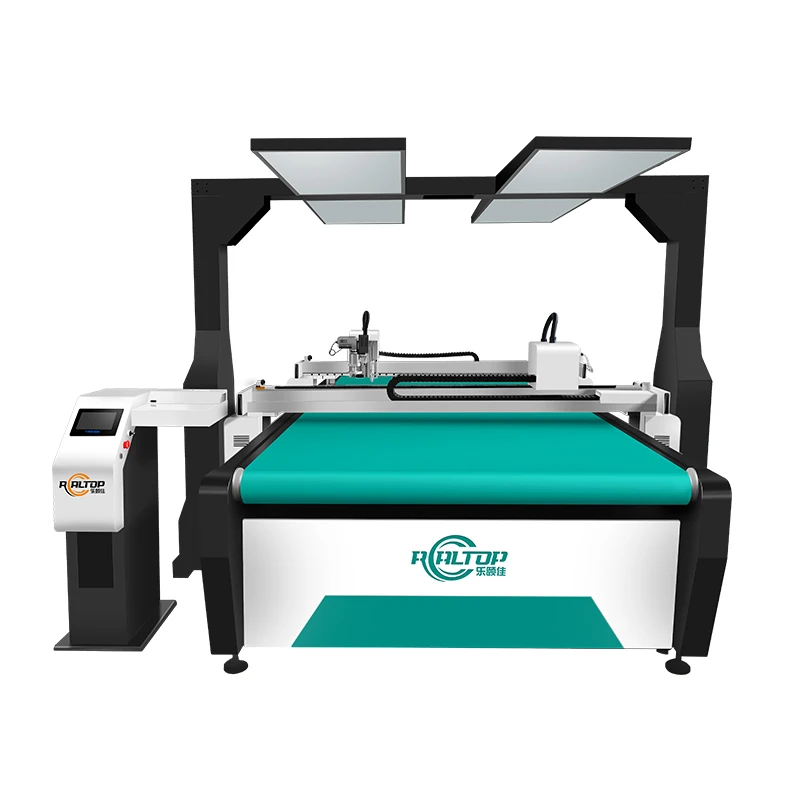
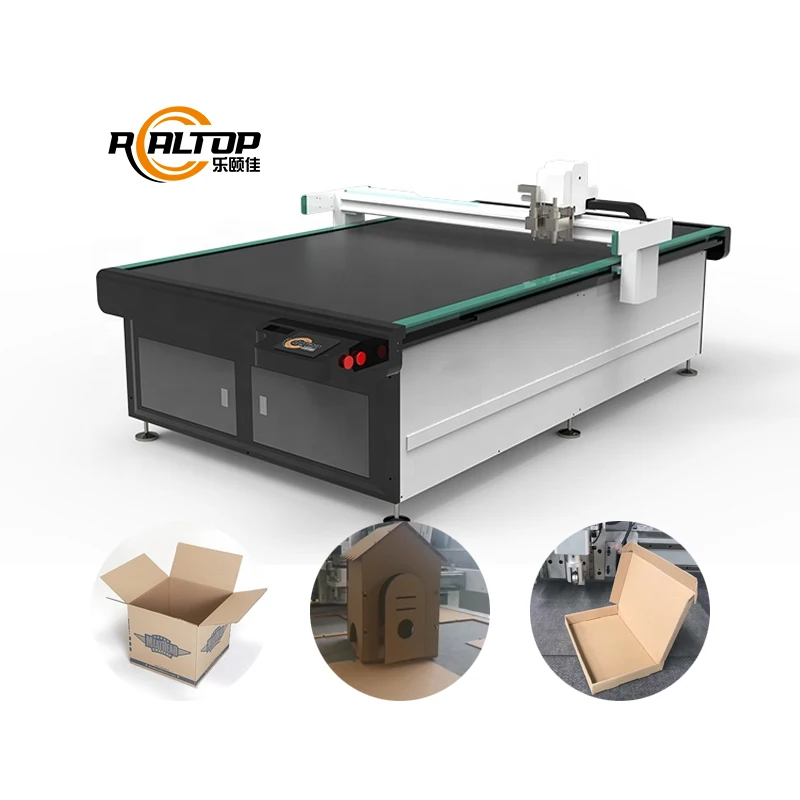
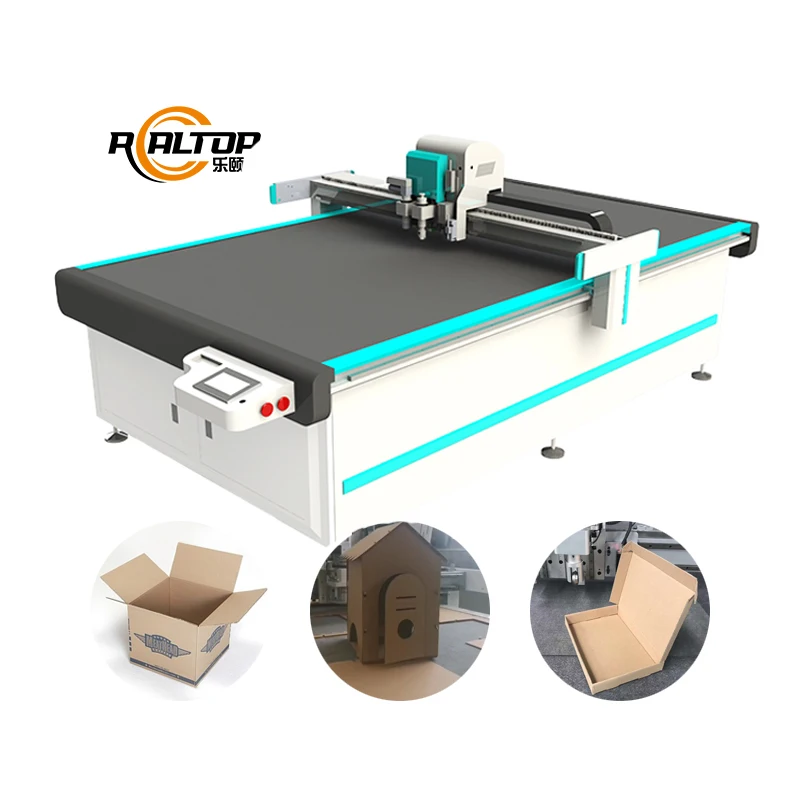
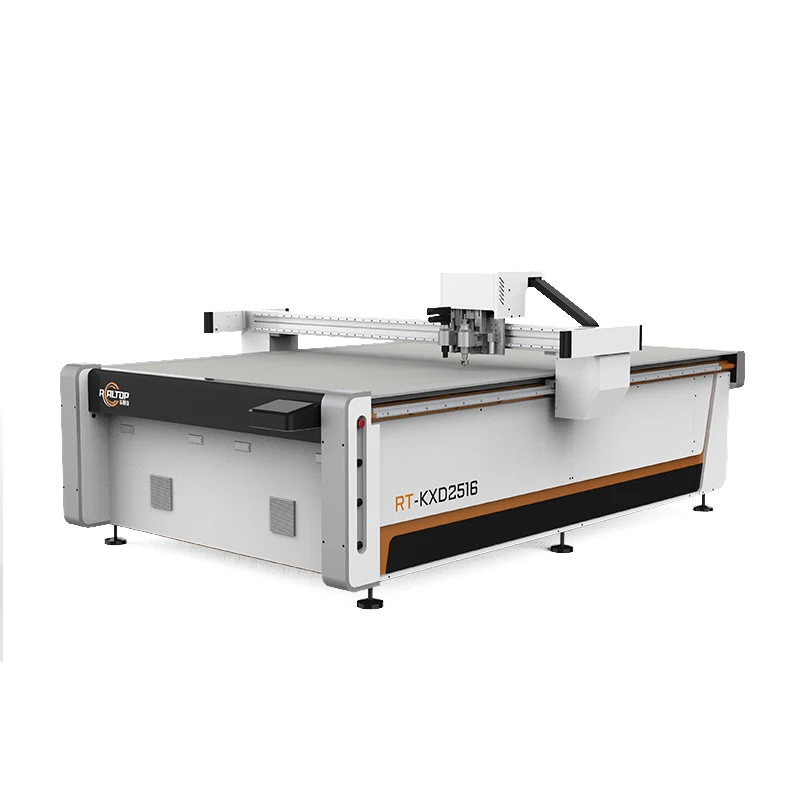
In-house tool head and table specification — We configure the RT-D2516/RT-S2516 oscillating knife head, vacuum zoning, and vision system to match your material thickness and contour complexity rather than quoting a fixed catalog build.
Technical Specifications
| Parameter | Value |
|---|---|
| Product Type | CNC Oscillating Knife Cutting Machine |
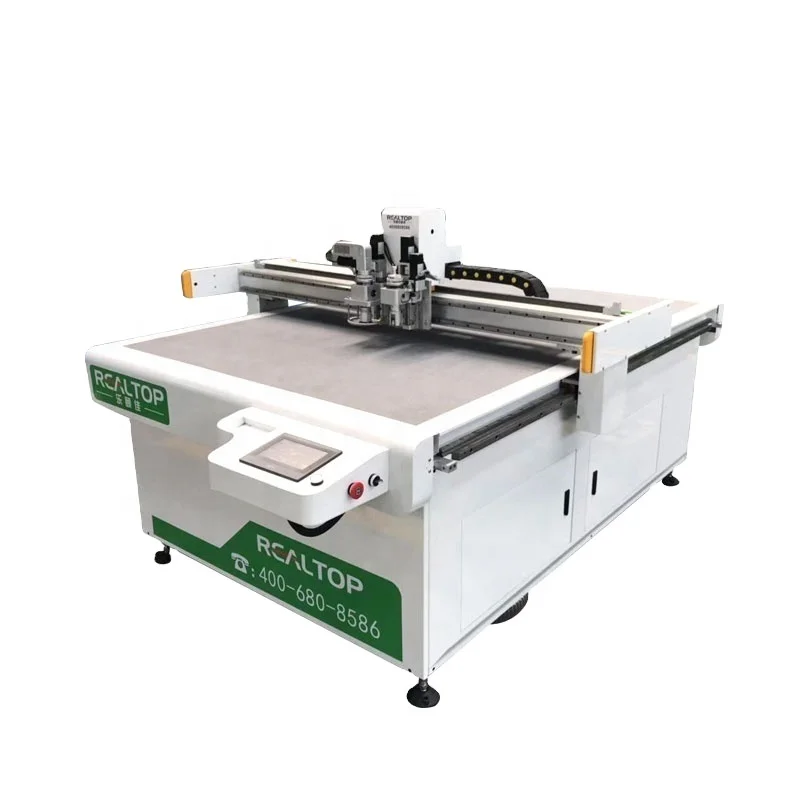
| Model | RT-D2516/RT-S2516 |
| Working Area | 1600×2500 mm |
| Machine Size | 3450×2300×1250 mm |
| Rated Power | 9 kW |
| Working Table | Aluminum alloy flat vacuum table |
| Vacuum Pump | 7.5 kW |
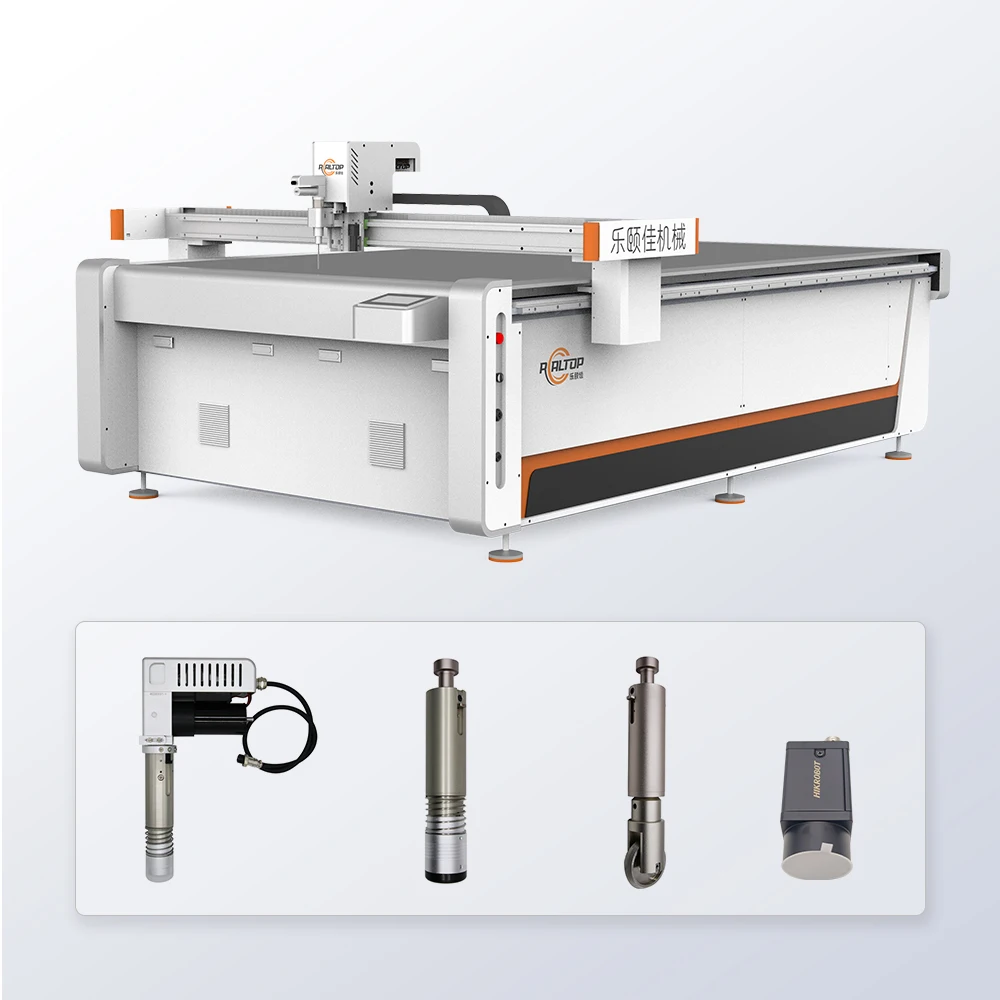
| Multifunctional Head | Swiss imported knife with vibration full cutting, vibration half cutting, and cursor location |
| Translational Velocity | 800–1200 mm/s |
| Cutting Thickness | 20–80 mm (basis not stated in source — depends on material density and tool head) |
| Repeated Accuracy | ≤0.1 mm |
| Transmission System | Digital servo motor, linear guide, synchronous belt, ball screw |
| Servo Motor | Taiwan Delta |
| Guide Rail | Taiwan Hiwin rail |
| Conveyor Belt | Germany imported |
| Frame Structure | Hard steel frame |
| Vision System | Panoramic camera recognition, CCD mark-point positioning, projection positioning (optional) |
| Instruction System | HP-GL compatible format |
| Voltage | 380V ± 10% |
| Software Language | Customizable (English, Russian, Italian, Chinese) |
| Safety Device | Infrared sensors |
| Key Features | Multi-tool head options, vacuum adsorption, CCD contour recognition |
Application Suitability
| Application | Material or Output |
|---|---|
| Leather goods and footwear | Natural and synthetic leather, PU, composite hides for uppers, bags, and belts |
| Automotive interiors | Sponge composite leather, EVA, XPE foam for seat covers, headliners, and door panels |
| Garment and soft furnishings | Fabric, textile, non-woven fabric, carpet for apparel, upholstery, and floor mats |
| Gasket and sealing production | Rubber, PTFE, ETFE, silicone, soft glass for industrial sealing pads |
| Packaging and graphic arts | Corrugated cardboard, plastic box, sticker, film, foam board for sample making and signage |
Why "Cutting Thickness 80 mm" Can Be Misleading for Flexible Materials
A stated thickness range means little without the material density and tool head that produced it.
When buyers ask about a CNC oscillating knife cutting machine manufacturer, the first number they compare is cutting depth. I have seen this go wrong more than once. A buyer cutting 60 mm open-cell foam will get clean edges with an oscillating knife at full stroke, but the same machine trying to slice 60 mm dense rubber gasket stock will stall or produce crushed edges unless the tool head, blade stroke, and vacuum hold-down are all reconfigured. The 20–80 mm range on our spec sheet is a material-dependent envelope, not a single verified cut [NEED_CITE: cutting depth validation methods for flexible materials]. Always ask for a sample cutting report on your exact material before the order is confirmed, and check which tool head was used to achieve the stated depth.
Matching the Tool Head to the Material
The RT-D2516/RT-S2516 platform supports multiple tool heads — oscillating knife, drag knife, creasing wheel, punching, and marking pen — each suited to a different material behavior. Oscillating vibration handles thick sponge, foam, and composite leather where a drag knife would drag and distort the surface. For thin film, sticker, or paper-based gasket material, a drag knife or kiss-cut configuration gives cleaner edges without penetrating the backing. Creasing wheels are added for corrugated and carton sample work. The correct CNC oscillating knife cutting machine manufacturer will specify which head and blade geometry suits your material before production begins, not after the machine arrives on your floor.
Vision Positioning at Production Speed
Printed contour cutting depends on whether the camera system can keep up with your line speed. The panoramic camera recognition and CCD mark-point positioning on this platform read printed registration marks and adjust the cutting path in real time. This matters when you are nesting irregular shapes on pre-printed fabric or cutting around logos on composite leather for automotive interiors. If the material has low-contrast marks or a busy printed background, the vision system must be tuned before the first production run [NEED_CITE: CCD vision accuracy factors in digital cutting]. Projection positioning is available as an option for operators who need a visual overlay of the cut path on the material surface.
Reading the Drive and Frame Specifications
The repeated accuracy of ≤0.1 mm comes from the combination of Taiwan Hiwin linear rails and Taiwan Delta servo motors, connected through synchronous belts and ball screws on a hard steel frame. At a translational velocity of 800–1200 mm/s, any frame flex or rail play will show up as drift on long cuts — especially visible when cutting interlocking pattern pieces across the full 1600×2500 mm bed. The 7.5 kW vacuum pump paired with the aluminum alloy vacuum table generates the hold-down force needed to keep flexible materials flat during high-speed travel. If you are cutting small parts like gaskets or shoe components, ask about vacuum zone segmentation so suction is concentrated under the cutting area rather than spread across the entire table.
The Cost of Skipping the Sample Cut
One of the most expensive mistakes in flexible material cutting is ordering a machine based on working area and rated power, then discovering the tool head cannot handle your actual stock. A buyer processing 3 mm PVC with embedded fiberglass scrim may find the standard oscillating blade fraying the edges, while a different blade profile and stroke frequency solves it entirely. When this happens after shipment, the cost includes return freight, tool head replacement, production downtime, and lost confidence with your own customers [NEED_CITE: cost impact of incorrect tooling in digital cutting]. This is why a sample cutting report on your specific material — with the tool head, blade type, and vacuum pressure documented — should be a non-negotiable step before payment.
Why Source This Machine from the Factory
Our design team handles both the knife cutting and the laser cutting product lines, so the cutting method is chosen to fit your material rather than forcing everything through one technology. Every RT-D2516/RT-S2516 is built with a tool head and table configuration specified per your material type and production volume. The CCD camera and software compatibility are verified against your existing file formats before the machine enters production. Voltage, plug type, and control language are confirmed in writing — not assumed from the shipping destination. You can send your material to our Jinan facility for a documented sample cut before you commit, and the build is covered by five patents in cutting technology.
Documentation & Verification
- Machine specification sheet listing the exact tool head and vacuum zone layout matched to your material
- Electrical schematic with voltage and plug type confirmed before production starts
- Sample cutting report documenting edge quality, tool head used, and cutting speed on your material
- HP-GL file format compatibility note and software licence details for your nesting workflow
- Factory test record with measured accuracy on a production-speed cutting cycle
- Packing photographs showing the machine secured and the conveyor belt protected for transit
Installation, Commissioning & Support
- Floor must support the 3450×2300 mm footprint plus material staging space on the infeed and outfeed sides
- A dedicated 380V ± 10% circuit with appropriate breaker rating is required for the 9 kW total load including the 7.5 kW vacuum pump
- Machine ships assembled on the hard steel frame; the vacuum table, vision gantry, and conveyor belt are calibrated at the factory
- First-run commissioning includes vacuum zone tuning and CCD mark recognition calibration on your printed material
- Operator training covers tool head changes, blade replacement intervals, and HP-GL file import procedures
- Spare parts list includes Swiss blades, vacuum seals, and drive belt replacements for your specific configuration
What We Need from Your Side
Send us your material type, thickness, and maximum sheet or roll width so we can match the tool head and vacuum configuration. Confirm your local voltage and frequency, the control language your operators need, and the file format your design team currently uses for nesting. If your production involves printed contour work, send a sample of the printed material so we can test the CCD recognition under actual conditions before quoting.
Frequently Asked Questions
Q: How is cutting thickness verified for my specific material?
A: The stated 20–80 mm range is material-dependent. We run a sample cut on your exact stock using the recommended tool head and blade, then document the achievable depth, edge quality, and cutting speed in a sample report before you place the order.
Q: Which tool head do you recommend for my material?
A: The recommendation depends on material composition and edge requirement. Thick foam and composite leather typically use the oscillating knife, while thin films and gaskets use a drag knife. We validate edge quality on your material before shipment and include the tool head specification in your documentation.
Q: What voltage and control language options are confirmed before production?
A: The standard voltage is 380V ± 10%, but custom voltage and plug types are available. Control software language — English, Russian, Italian, or Chinese — is confirmed in writing before production. An electrical schematic reflecting your exact configuration is provided for approval.
Q: How does the CCD vision system handle low-contrast printed marks?
A: The panoramic camera and CCD mark-point system reads registration marks and adjusts the cutting path in real time. We test recognition on your actual printed material at production speed during the sample cut phase, documenting any contrast limitations and the recommended mark specification for reliable tracking.
Q: What does OEM and custom configuration cover?
A: Configuration covers working area size, tool head selection, vacuum zone layout, voltage and plug type, software language, and optional projection positioning. Each parameter is specified against your material and production volume, not chosen from a standard catalog list.
You may also like

商品评价
Clear filtersThere are no reviews yet.