



-
 Courier delivery
-
 DHL Courier delivery
-
 Warranty 1 year
-
 Free 30-Day returns

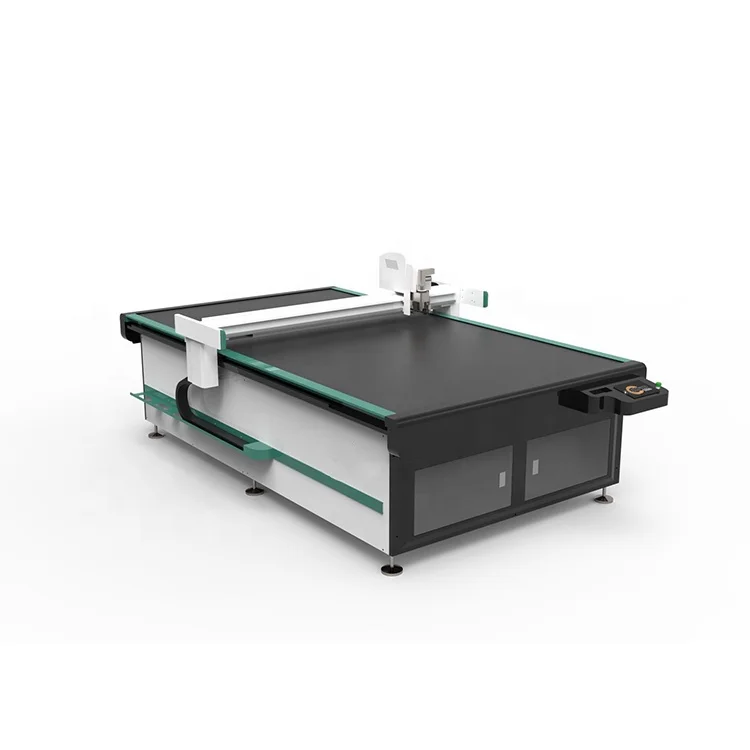
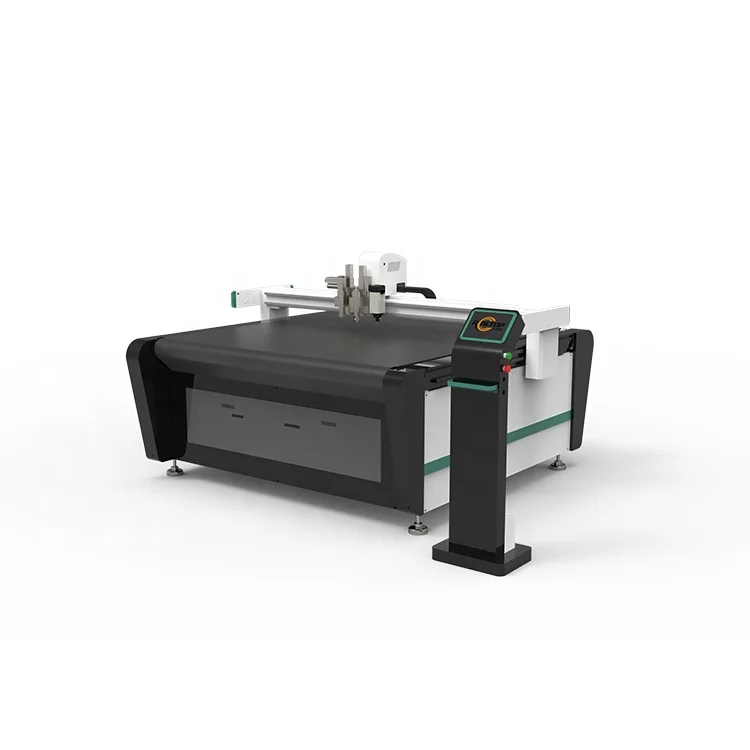
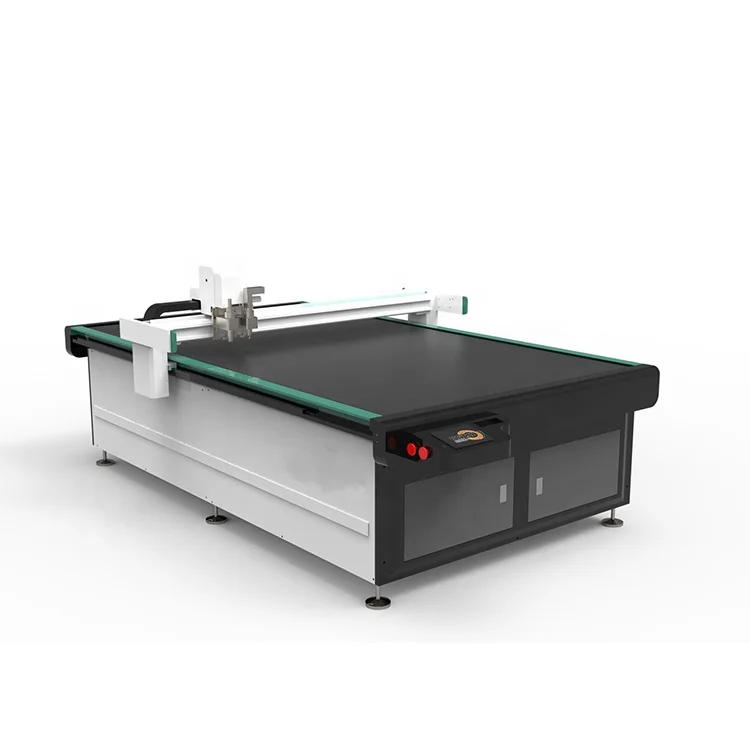
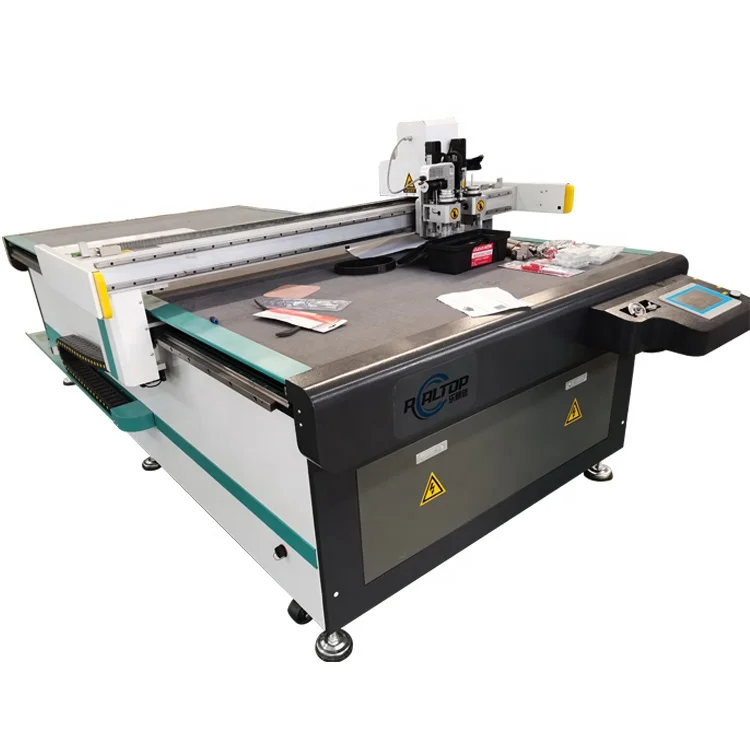
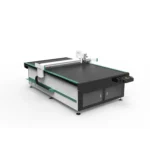
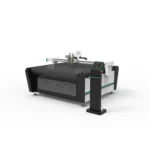
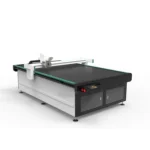
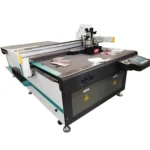
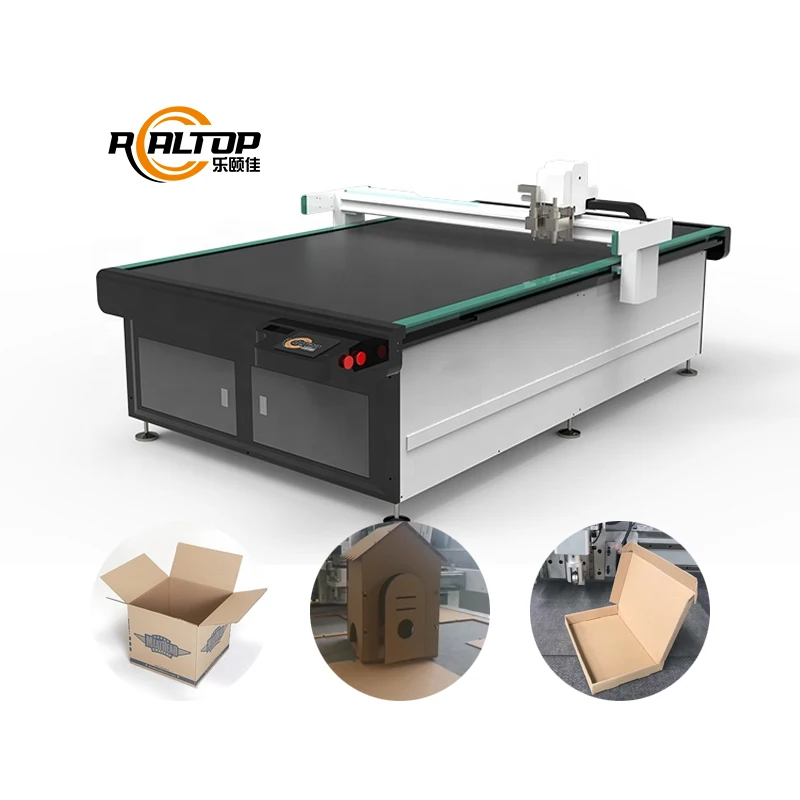
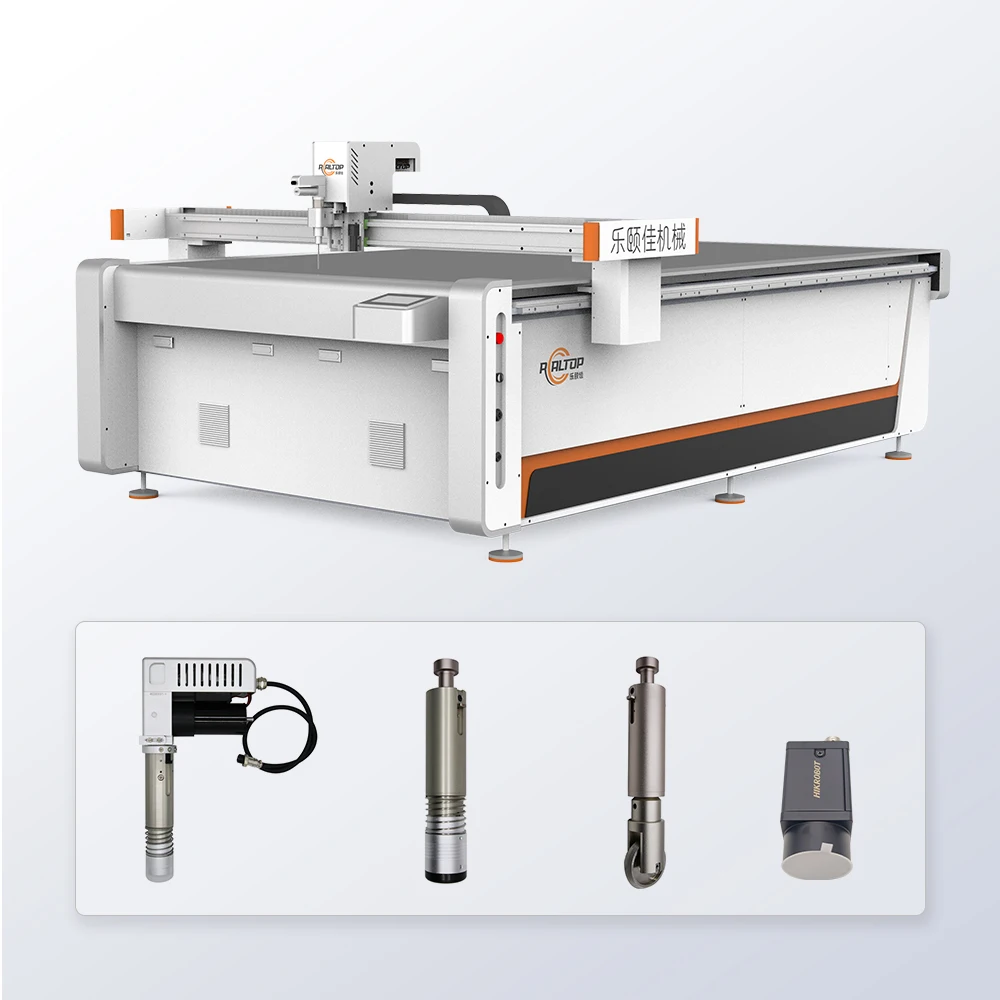
Design-to-Build Traceability — the RT-D2516/RT-S2516 CNC oscillating knife cutting machine is engineered and assembled under one roof in our Jinan facility, so frame tolerances, motion calibration, and tool head configuration stay aligned from drawing to dispatch.
Technical Specifications
| Parameter | Value |
|---|---|
| Model | RT-D2516/RT-S2516 |
| Product Type | CNC Oscillating Knife Cutting Machine |
| Working Area | 1600×2500 mm |
| Overall Dimensions (L×W×H) | 3450×2300×1250 mm |
| Rated Power | 9 kW |
| Voltage | 380V ±10% |
| Vacuum Pump | 7.5 kW |
| Table Type | Flat working table with vacuum and auto feeding |
| Tool Head | Swiss imported oscillating knife with full cut, half cut, and cursor location |
| Translational Velocity | 800–1200 mm/s |
| Cutting Speed | 200–800 mm/s (according to different cutting materials) |
| Repeated Accuracy | ≤0.1 mm |
| Servo Motor | Japanese Yaskawa |
| Linear Rail | Taiwan Hiwin |
| Conveyor Belt | Germany imported |
| Transmission System | Digital servo motor, linear guide, synchronous belt, ball screw |
| Safety Device | Infrared sensors |
| Instruction System | HP-GL compatible format |
| Pneumatic Cutting Tool Max Thickness | up to 70 mm (basis not stated in source — confirm material type and density) |
| Functions | Cutting, creasing, marking |
Application Suitability
| Application | Material or Output |
|---|---|
| Packaging sample making | Corrugated cardboard, grey board, stickers, folding carton prototypes |
| Gift box and premium packaging | Rigid board, composite leather wraps, soft-touch laminates |
| Automotive interior trimming | Fabric seat covers, sponge composite leather, PVC soft trim |
| Flexible textile cutting | Garment fabrics, leather hides, clothing technical textiles |
| Gasket and seal production | Rubber sheet, silicon, soft non-metallic gasket stock |
Why Specified Thickness Fails When the Material Changes
A machine that cuts E-flute cleanly can stall on double-wall BC-flute if the tool head stroke and vacuum zoning were never sized for the actual stock.
I have watched packaging workshops receive a cutting table that performed well during sample approval, only to struggle once five-layer board entered daily rotation. The oscillating knife simply ran out of vertical travel, and the vacuum hold-down could not keep the heavier sheets flat. Production slowed to a fraction of the expected rate, and operators began hand-feeding smaller sheets just to maintain edge quality. That mismatch almost always traces back to the initial inquiry, where working area was confirmed but material density and ply count were left vague. A CNC oscillating knife cutting machine manufacturer should insist on seeing the thickest and heaviest stock before the tool head is locked in. [NEED_CITE: vacuum hold-down requirements for multi-wall corrugated board]
Frame Rigidity and Motion Component Sourcing
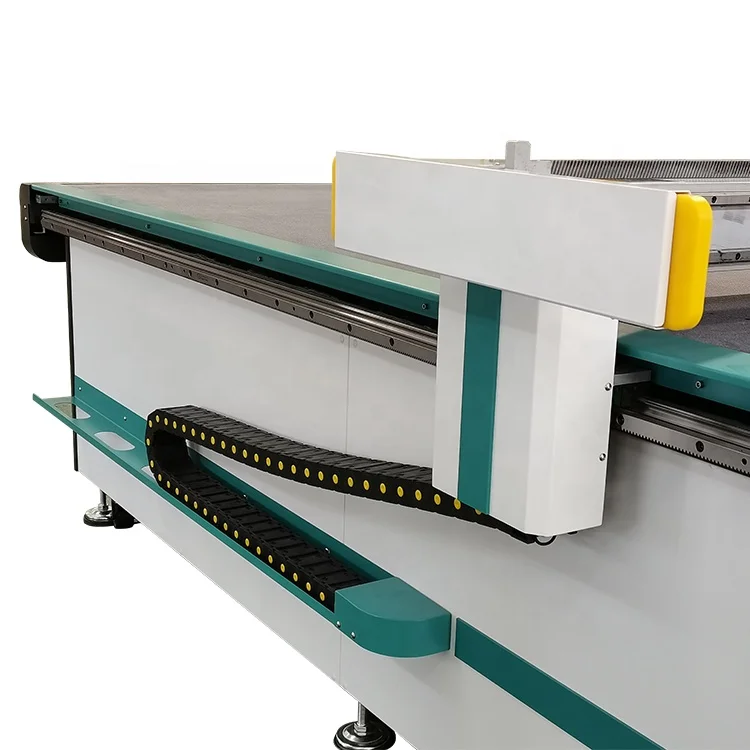
The RT-D2516/RT-S2516 is built on a welded steel frame machined and assembled in the same Jinan workshop where the design team sits, so any tolerance deviation found during commissioning feeds directly back into the next production run. Yaskawa servo motors drive the gantry through Taiwan Hiwin linear rails and precision ball screws, holding repeated accuracy at ≤0.1 mm across the full 1600×2500 mm travel. For distributors evaluating build quality, this single-source construction means frame geometry, motion calibration, and electrical integration are verified together rather than handed off between separate integrators.
Vacuum Zoning and the Auto-Feed Conveyor
The 7.5 kW vacuum pump feeds a zoned flat table, and the Germany-imported conveyor belt moves sheet stock onto the cutting surface without manual lifting. This combination matters when a packaging sample maker shifts from small carton blanks to full-size display stands: the conveyor handles the weight, while selective vacuum zones grip only the area under the knife path. Without zoning, small offcuts lift at the 800–1200 mm/s translational speed, producing ragged edges or pulling the sheet out of registration mid-cut. [NEED_CITE: vacuum zoning strategies for mixed-size cutting nests]
What the Specs Mean on the Workshop Floor
The Swiss imported oscillating knife delivers full-cut, half-cut, and cursor positioning from a single tool head, so a creasing wheel swap is not needed every time the job shifts from folding carton outlines to kiss-cut sticker runs. The 200–800 mm/s cutting speed range reflects real variation: thin PVC or garment fabric allows the upper end, while dense grey board forces a slower pass to keep the blade from deflecting. The HP-GL compatible instruction system accepts standard vector files from most packaging CAD packages, avoiding format conversion that can corrupt curve geometry. Repeated accuracy of ≤0.1 mm means registration marks on pre-printed stock stay within tolerance across a multi-sheet run, provided the vacuum holds the material firmly.
When the Wrong Configuration Reaches the Buyer
A distributor who accepts a generic tool head specification may find the machine delivers crushed foam edges instead of clean slices, or leaves creasing lines too shallow for a reliable fold. The vacuum pump may be adequate for full-sheet cardboard but insufficient once the operator nests small gasket pieces that flutter under the knife. Electrical mismatches surface later: a 380V unit shipped to a market running 415V industrial supply will overheat the servo drives during extended shifts. These failures rarely appear in the factory test because the test material and voltage were exactly what the builder assumed, not what the buyer actually runs. [NEED_CITE: industrial voltage variance tolerances across export markets]
Sourcing Directly from the Build Floor
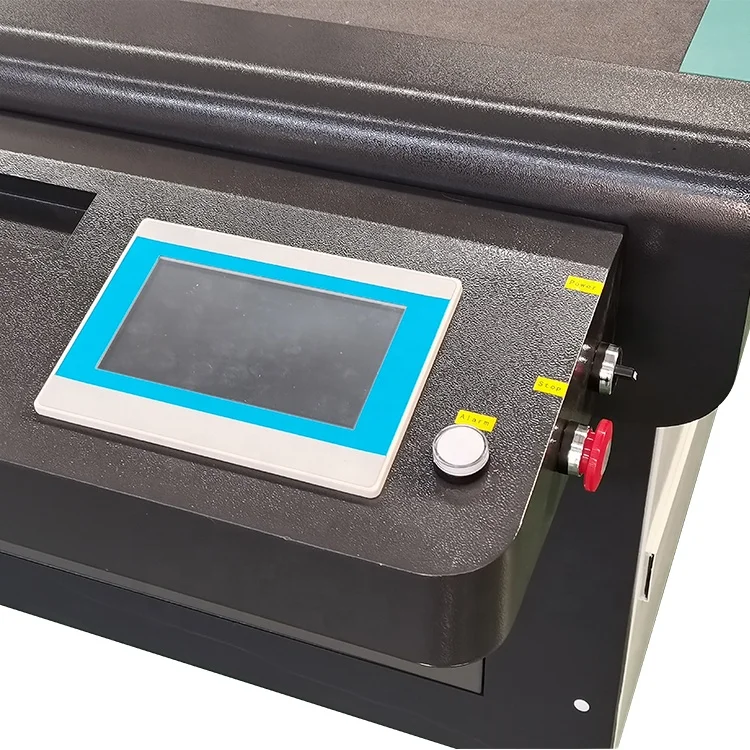
In-house design and production mean the same engineering team that sizes the RT-D2516/RT-S2516 frame also selects the servo and rail package, so a distributor requesting a longer bed or higher vacuum flow gets a coherent recalculation rather than a bolted-on afterthought. Tool head and table configuration are specified per material before the order is confirmed, backed by sample cutting on the buyer’s own stock. Voltage, plug type, and control panel language are documented in the electrical schematic before fabrication begins. The factory test record captures actual cutting performance on the agreed material, not a generic demo sheet. OEM capability extends to frame dimensions, conveyor width, and software integration, keeping the distributor’s brand identity intact across the machine line.
Documentation & Verification
- Machine specification sheet listing every sourced component by origin and rated parameter
- Electrical schematic confirming voltage, frequency, and plug type for your target market
- Tool head and table configuration list matched to your material thickness and ply count
- Factory test record cut on your own corrugated, fabric, or leather stock before dispatch
- Operation and maintenance manual with HP-GL file format compatibility notes
- Spare parts list identifying wear items and recommended reorder intervals
Installation, Commissioning & Support
- Foundation must support the 3450×2300 mm footprint with level tolerance across the full vacuum table
- Dedicated 380V ±10% circuit required to feed the 9 kW machine load and 7.5 kW vacuum pump separately
- Gantry and conveyor arrive assembled; vacuum zones and infrared sensors are calibrated on-site
- First-run parameter setting covers knife stroke, oscillation frequency, and vacuum zone mapping for your stock
- Operator training addresses HP-GL file import, nesting workflow, and half-cut depth adjustment
- Swiss oscillating knife blades and conveyor belt segments stocked as priority spare parts
Before You Send the Inquiry
Share the exact material types, thicknesses, and maximum sheet dimensions your customers run, along with the local industrial voltage and frequency at the installation site. If your workflow depends on specific CAD file formats or nesting software, name the package so instruction system compatibility is confirmed up front. State whether you need sample cutting on your own stock before the production order is released.
Frequently Asked Questions
Q: What OEM customization range does Realtop offer on the RT-D2516/RT-S2516?
A: Frame length, table width, vacuum zone count, conveyor configuration, and control panel language are all configurable within the in-house design system. The engineering team recalculates servo sizing and rail span to match any dimensional change, so performance stays consistent across OEM variants carrying your brand.
Q: How are voltage, plug type, and control language confirmed before production?
A: The electrical schematic is issued for buyer approval before fabrication begins, listing the exact voltage, frequency, plug standard, and HMI language for the destination market. Any deviation from the standard 380V ±10% supply triggers a recalculation of transformer and drive components.
Q: What is the typical factory lead time for distributor orders?
A: Standard configurations move through fabrication, assembly, and testing over typical multi-week lead times. Customized OEM builds or orders requiring extended factory acceptance testing on buyer-supplied materials may require additional scheduling, confirmed at the quotation stage.
Q: Which motion components are sourced, and what is the spare parts policy?
A: Yaskawa servo motors, Hiwin linear rails, and the Germany-imported conveyor belt are identified on the specification sheet. A spare parts list ships with every machine, and replacement blades, belt segments, and rail carriages are available through the after-sales channel with documented reorder intervals.
Q: Can buyers send their own material for sample cutting before commitment?
A: Yes. The sales process requires sample cutting on the buyer’s actual corrugated board, fabric, leather, or composite stock before the order is finalized. A sample cutting report documenting edge quality, creasing depth, and cycle time accompanies the quotation.
You may also like

商品评价
Clear filtersThere are no reviews yet.