


-
 Courier delivery
-
 DHL Courier delivery
-
 Warranty 1 year
-
 Free 30-Day returns

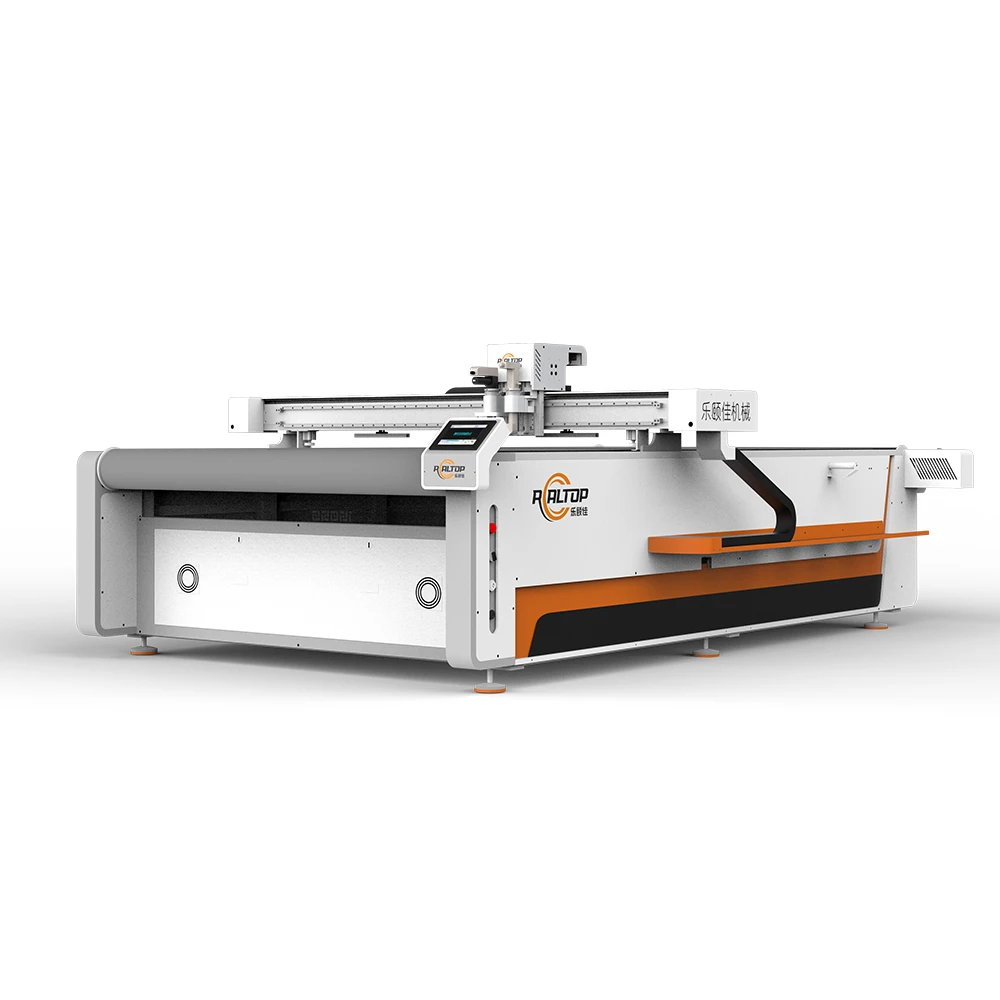
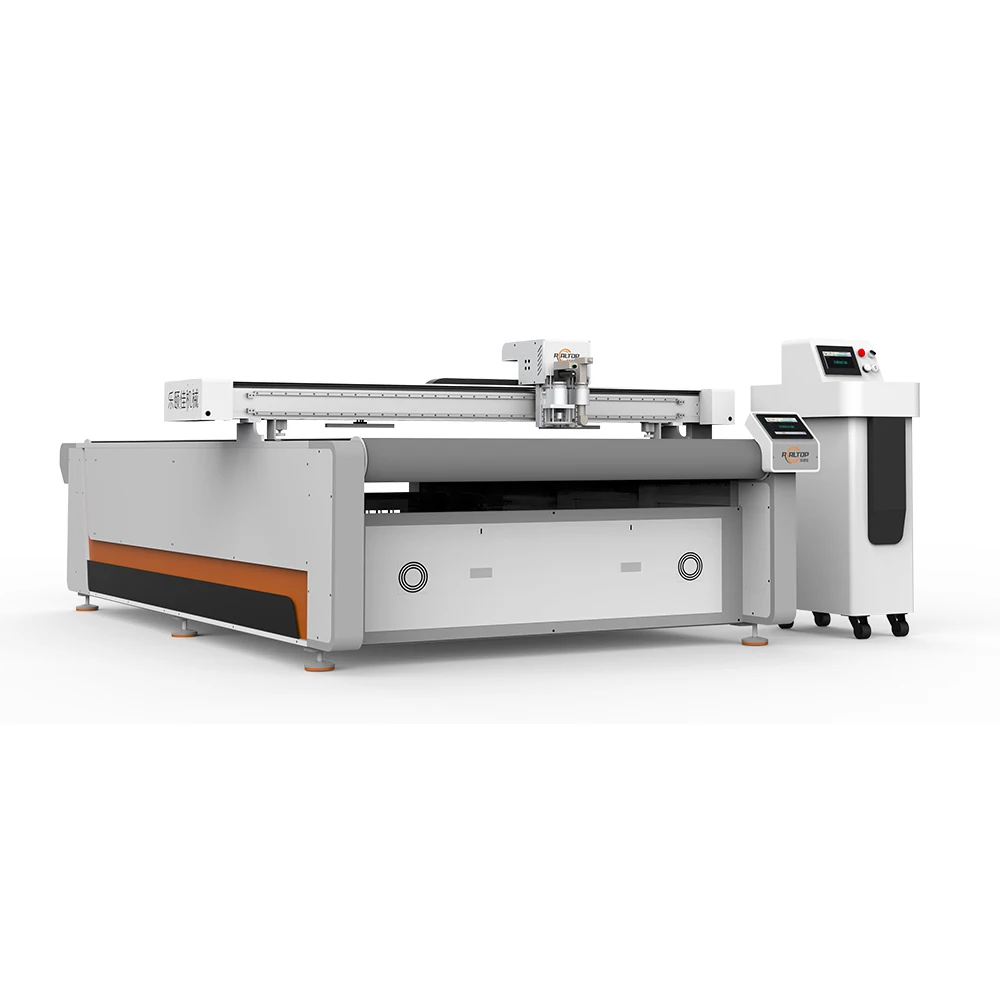
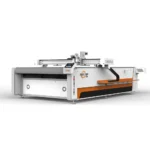
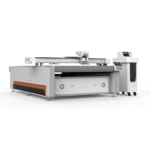
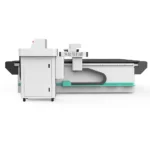
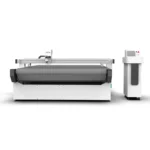
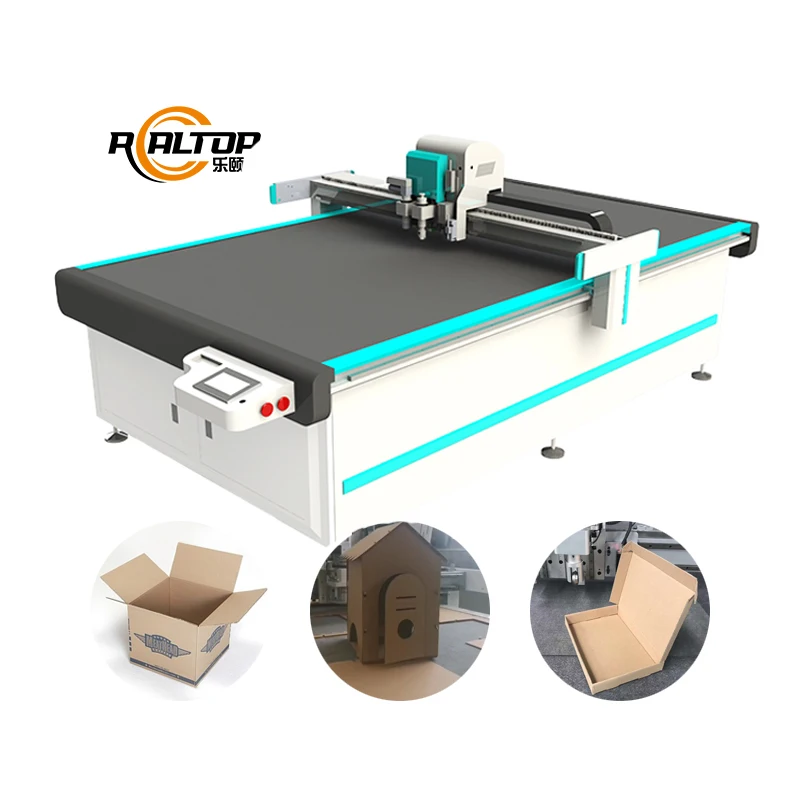
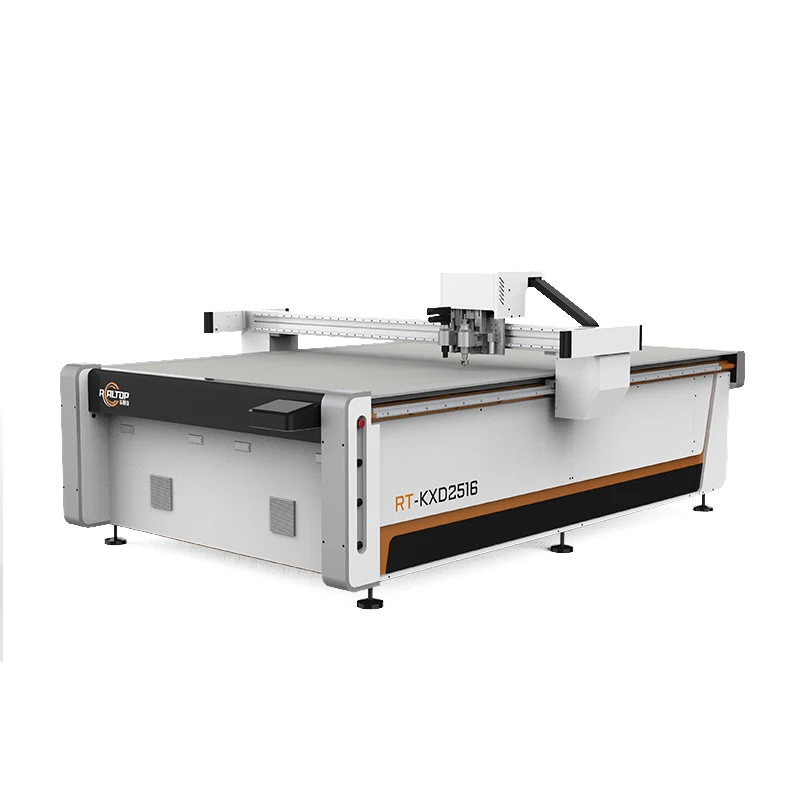
Built on a unified knife-and-laser platform — REALTOP engineers both cutting methods under one roof, so the 1625 cloth cutting table is matched to your fabric weight, weave and stack height rather than forcing every job onto a single blade type.
Technical Specifications
| Parameter | Value |
|---|---|
| Product Type | CNC Oscillating Knife Cutting Machine |
| Working Area | 1600×2500 mm |
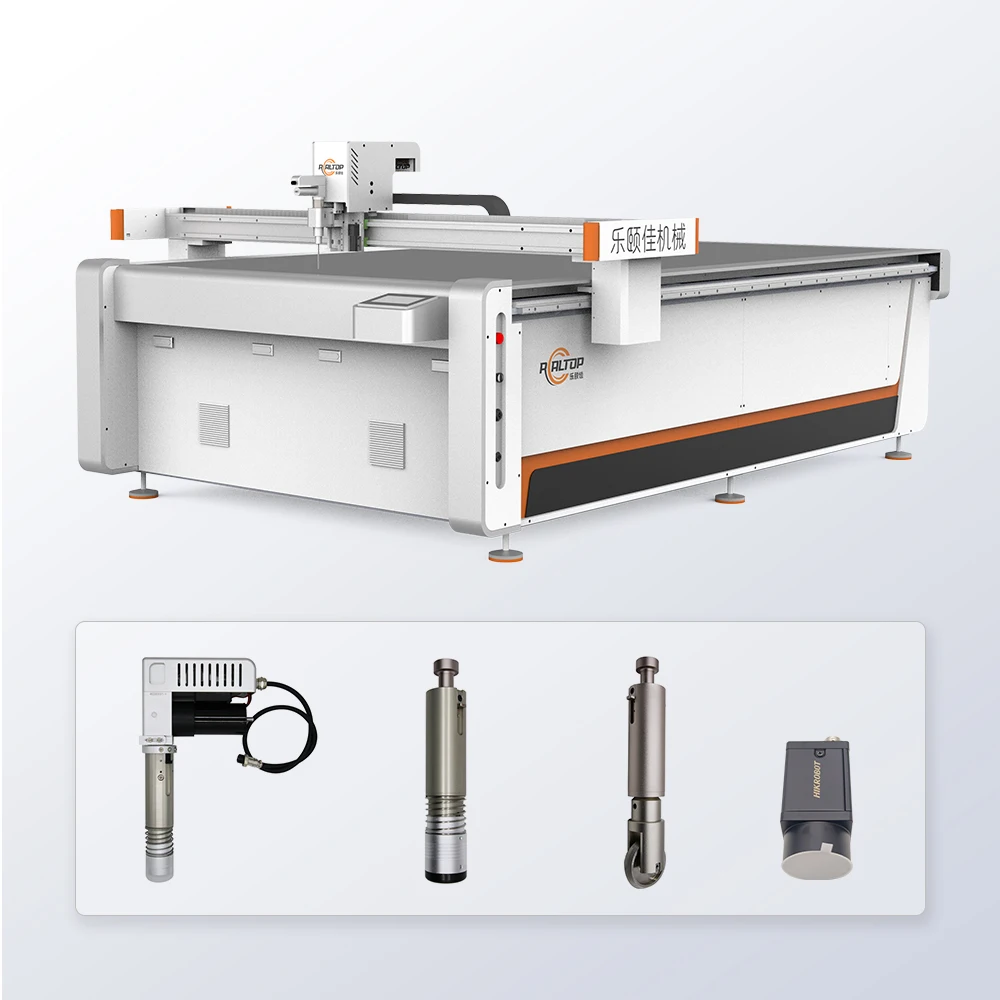
| Tool Head Options | Oscillating knife, Driven rotary knife, Creasing wheel, Kiss cutting tool, Pneumatic knife, Milling tool, V groove knife |
| Cutting Speed | 0–2000 mm/s |
| Cutting Thickness (Single Layer) | Up to 30 mm (basis not stated in source) |
| Multi-layer Cutting Thickness (Textile) | Up to 30–50 mm (basis not stated in source) |
| Textile Multi-layer Cutting Speed | 1200–2000 mm/s (basis not stated in source) |
| Positioning Accuracy | ±0.1 mm |
| Repeat Positioning Accuracy | ±0.1 mm |
| Vacuum Pump Power | 9 kW |
| Servo Motor Options | Panasonic, Delta, Dorna |
| Control System | PLC control panel |
| Voltage Options | 110V, 220V, 380V |
| Language Options | English, Russian, Italian, Chinese (customizable) |
| File Formats Supported | PLT, DXF, AI, PDF |
| Safety Devices | Infrared sensor, emergency stop |
| Machine Dimensions (L×W×H) | 3300×2100×1350 mm |
| Standards | CE (declared, confirm scope) |
Application Suitability
| Application | Material or Output |
|---|---|
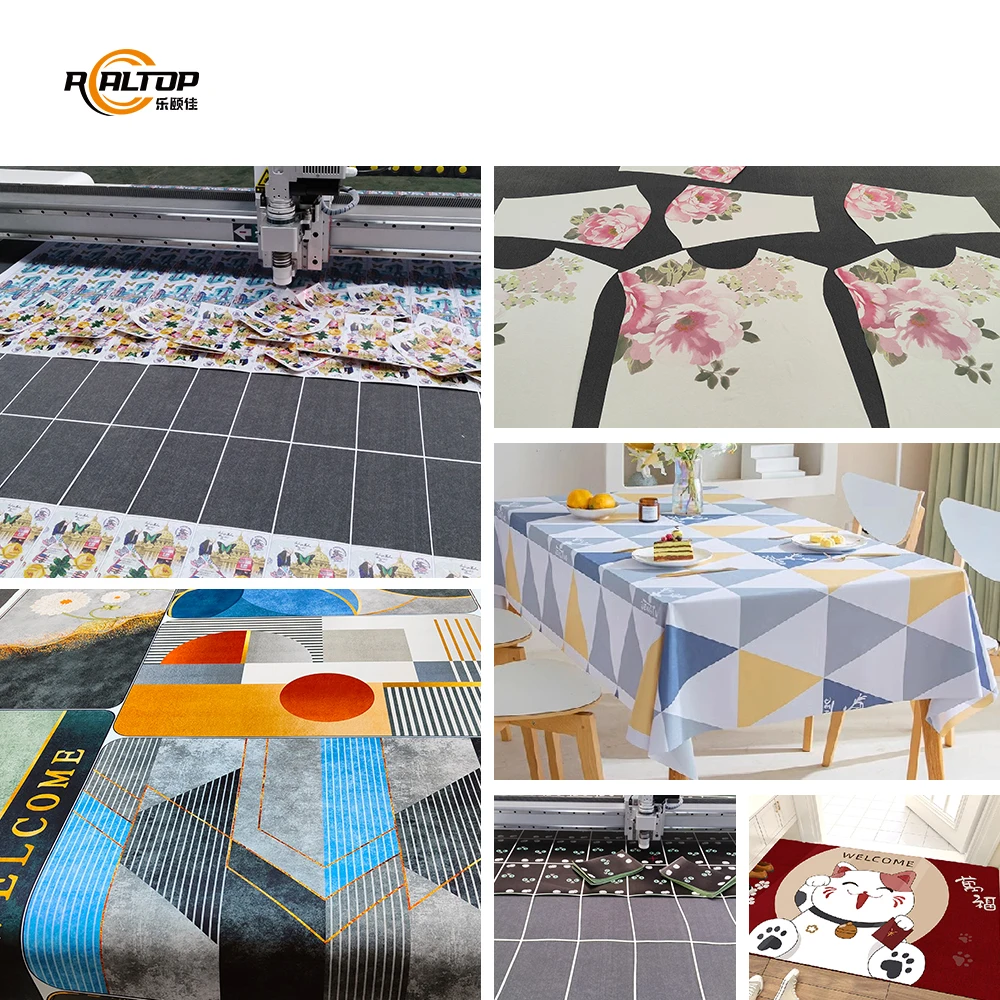
| Garment manufacturing | Suits, knitwear, lace, patterned fabrics in multi-layer stacks |
| Automotive interiors | Seat fabrics, carpets, PVC mats requiring cold-cut burr-free edges |
| Home textiles | Sofa fabrics, curtains, rugs cut under full-surface vacuum hold-down |
| Composite processing | Carbon fiber prepreg, aramid, specialty layered materials |
| Footwear and bags | Leather, synthetic uppers, lining fabrics, insole board |
What a "30 mm Cutting Depth" Claim Hides for Fabric Buyers
The real question is whether that depth holds across your actual fabric density and layer count, not just a static block of foam.
Many cloth cutting machines are quoted on maximum single-pass depth tested on low-density material. When a buyer switches to a tightly woven technical textile or a multi-layer stack with interlining, the blade deflects, the bottom layers shift, and the edge on the lowest ply turns ragged. A CNC oscillating knife cutting machine manufacturer should confirm cutting depth against the specific fabric weight, weave and stack compression you run daily, not against a generic sample [NEED_CITE: fabric stack compression behavior under oscillating knife cutting].
Vacuum Zoning and Fabric Hold-Down
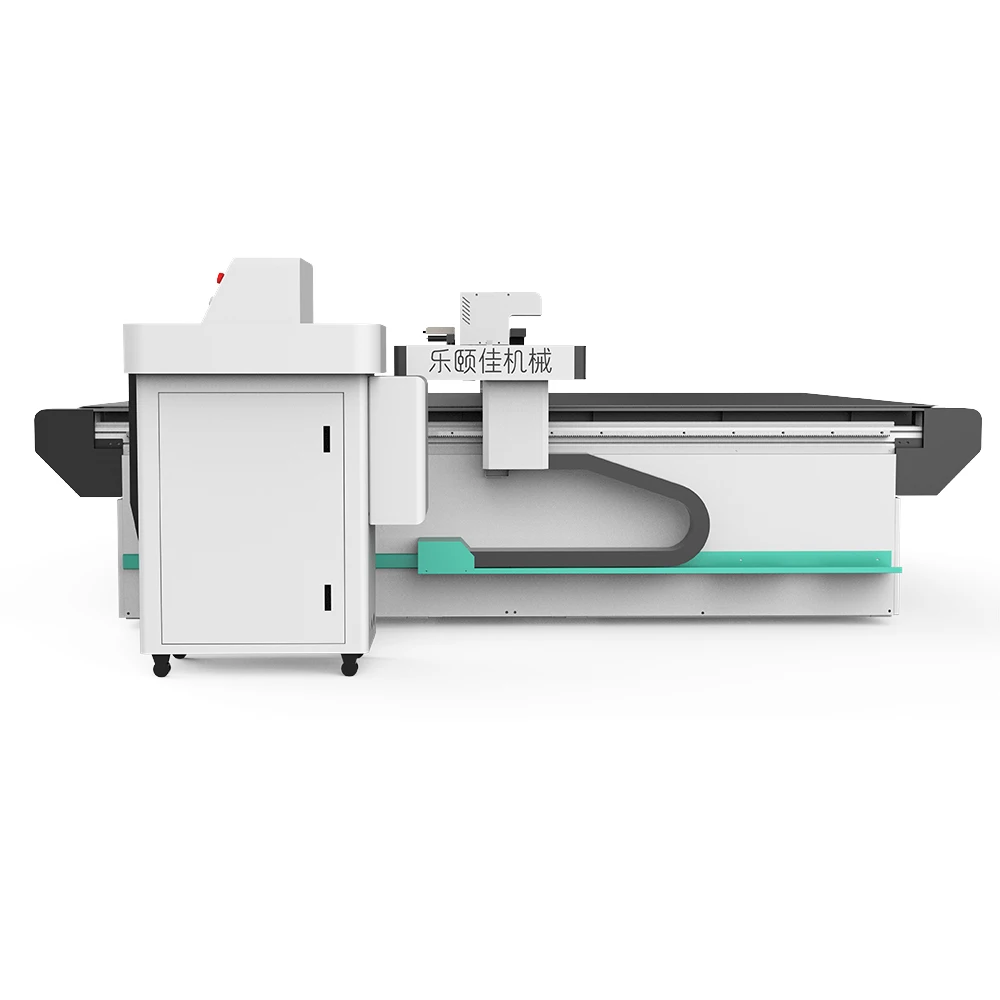
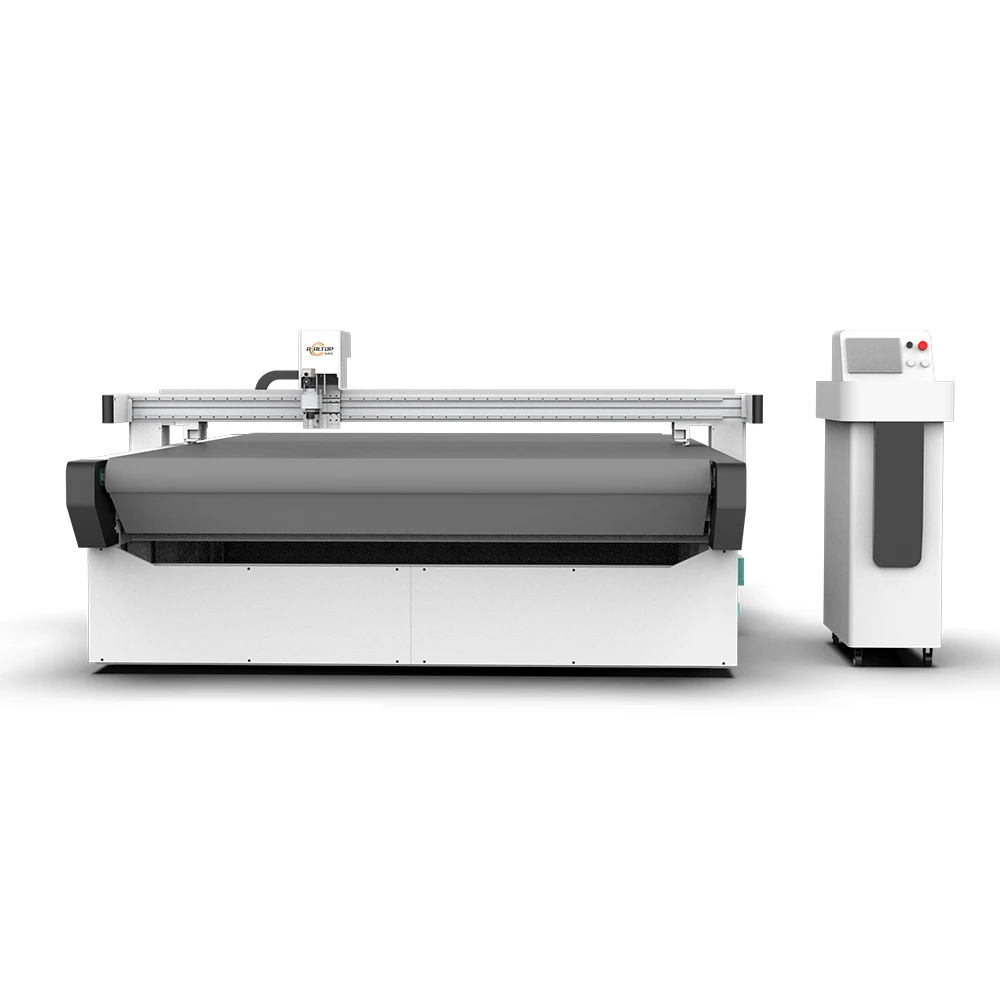
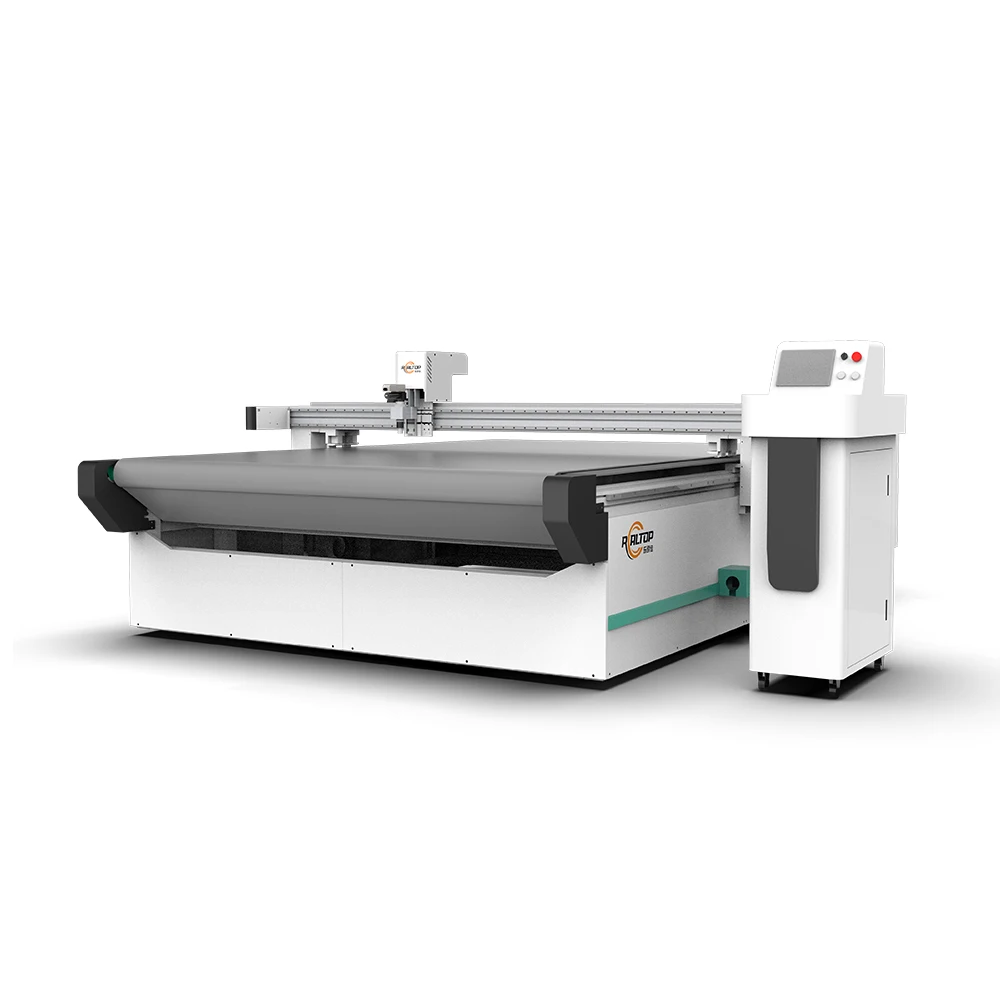
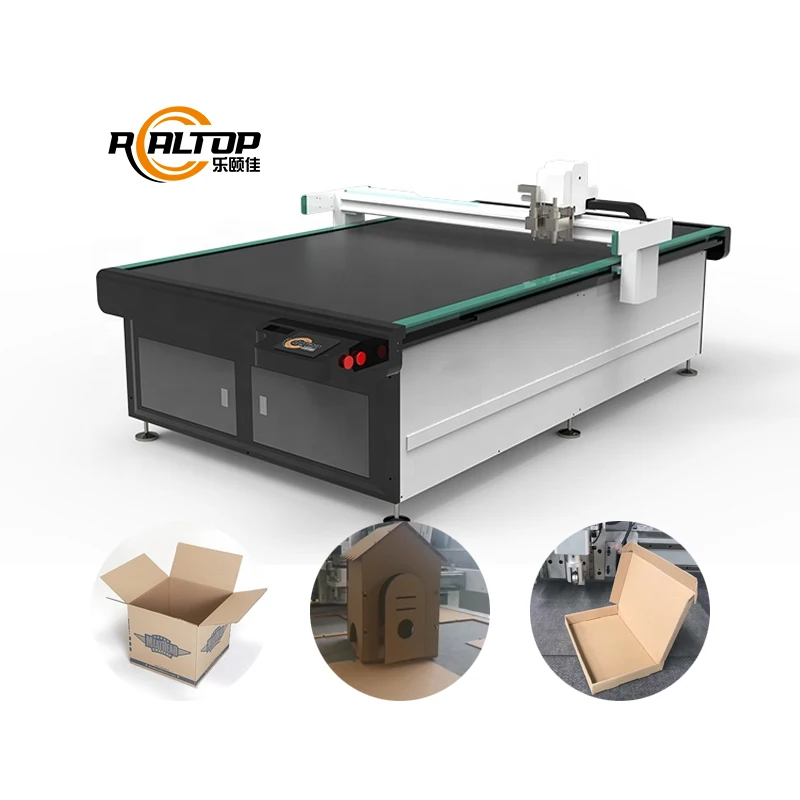
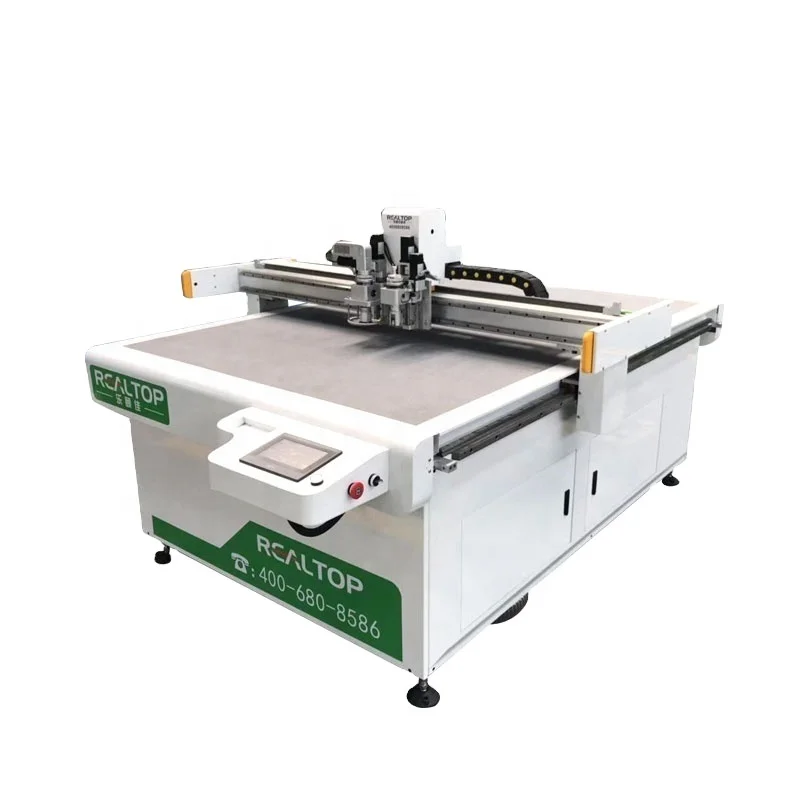
A 1600×2500 mm table must keep every ply flat from center to corner, especially when cutting small pattern pieces that tend to lift under high-speed knife strokes. The aluminum bellows vacuum table on this system provides full-surface adsorption across zoned segments. Operators can activate only the zones under active cutting, which concentrates suction where it matters and reduces pump load during nested layouts of small garment panels.
Tool Head Selection by Fabric Construction
The available tool heads on this CNC oscillating knife cutting machine span from high-frequency oscillating blades for woven and knit stacks to driven rotary knives for single-ply technical textiles and pneumatic knives for heavy canvas or carpet. Kiss cutting tools handle vinyl and heat transfer films without penetrating the backing, while creasing wheels score fold lines on carton samples run on the same table. Selecting the wrong head for the weave or ply count is the most common cause of frayed edges and re-cut waste in fabric shops [NEED_CITE: tool head selection criteria for industrial textile cutting].
Reading the Specs That Affect Your Daily Output
The 9 kW vacuum pump paired with zoned table segments determines how securely small garment pieces stay in place at cutting speeds approaching 2000 mm/s. Without adequate hold-down, the bottom plies of a 40-layer knit stack will shift during the final strokes, producing mismatched panels that fail downstream quality checks. The ±0.1 mm repeat positioning accuracy, driven by selectable Panasonic, Delta or Dorna servo motors, controls pattern alignment across nested layouts — critical when cutting striped or checked fabrics where a visible mismatch between front and back panels means a rejected garment. File format support for DXF, AI, PDF and PLT means the nesting files from common apparel CAD systems import directly, avoiding manual redraws that introduce dimensional errors. PLC control with multi-language interface options reduces operator errors in mixed-language production environments.
The Cost of Skipping a Material Test Before Order
Buyers who commit to a cloth cutting configuration based on a brochure spec often discover during production that the blade dulls three times faster than expected on coated or reinforced fabrics. Edge fraying on the bottom ply goes unnoticed until the bundle reaches the sewing line, where operators flag mismatched panels. Rework at that stage involves re-cutting the entire bundle plus the lost sewing labor, pushing delivery schedules and eroding margins [NEED_CITE: cost impact of cutting defects in garment production workflows]. Running the buyer’s actual fabric through a sample cut before the machine leaves the factory catches these mismatches at a point where tool head or blade changes cost hours, not weeks.
Why Source This Machine from REALTOP
Design and production of both knife and laser platforms happen under one roof in Jinan, which means the cutting method is selected to suit the material rather than forcing every fabric onto whichever machine is in stock. Each 1625 cloth cutting table ships with tool head and vacuum zone layout specified against the buyer’s sample fabric, layer count and edge quality requirement. Voltage, plug type and control panel language are confirmed before production starts, eliminating the common export problem of a machine arriving with the wrong electrical configuration. Software compatibility with the buyer’s existing DXF, AI or PLT nesting files is verified before order, so files import without conversion loss on day one. A factory test record with dimensional checks against the ±0.1 mm repeatability spec accompanies every machine.
Documentation & Verification
- Machine specification sheet listing the confirmed tool head and vacuum zone layout for your fabric
- Electrical schematic with voltage and plug type matched to your facility supply
- Sample cutting report on your own fabric showing edge quality and layer count tested
- Software licence and file format compatibility note for DXF, AI, PDF and PLT imports
- Factory test record with positioning accuracy verified against ±0.1 mm repeatability
- Operation manual with blade change intervals and vacuum table maintenance schedule
Installation, Commissioning & Support
- 3300×2100 mm footprint requires a level floor with clearance for material loading on both long sides
- 9 kW vacuum pump plus servo and PLC systems need a dedicated 380V or 220V circuit per confirmed voltage spec
- Machine ships partially disassembled; table frame, gantry and vacuum segments bolt together on site
- First-day commissioning includes vacuum zone balancing and servo tuning on your fabric stack
- Operator training covers tool head changeover, blade replacement and PLC panel navigation in your selected language
- Spare parts list identifies consumable blades, oscillating bearings and vacuum seals for local stocking
What We Need to Quote Accurately
Send the fabric types, weights and maximum layer counts you plan to cut, along with your typical nest layout dimensions. Confirm your facility voltage and frequency, and let us know which CAD system generates your cutting files so we verify format compatibility before building. If you are running multi-layer stacks with interlining or adhesive-backed plies, include those in the sample pack so the tool head and vacuum zone configuration are matched to the full construction.
Frequently Asked Questions
Q: How is the correct tool head chosen for my fabric type and layer count?
A: We test your actual fabric samples across the available heads — oscillating knife, driven rotary, pneumatic and kiss cutting — and select based on edge quality, blade wear rate and stack stability at your production layer count. The result is documented in a sample cutting report before the machine configuration is finalized.
Q: Will the software import my existing DXF, AI or PLT nesting files?
A: The PLC control system reads DXF, AI, PDF and PLT formats directly. We verify compatibility with a sample file from your CAD system before order confirmation to ensure dimensions, curve interpolation and layer assignments transfer without manual redrawing or nesting errors.
Q: What voltage and language options are confirmed before shipment?
A: Voltage is configurable across 110V, 220V and 380V, matched to your facility supply and confirmed on the electrical schematic before production. The PLC panel language is set to English, Russian, Italian, Chinese or a custom language per your operator requirements.
Q: Can you run a sample cut on my fabric before I commit to the order?
A: Yes. Send your fabric samples including any interlining or backing materials. We run them on the configured table, document cutting speed, edge quality and layer behavior, and provide a full sample cutting report so you evaluate results before the build proceeds.
Q: How is positioning accuracy verified at the factory before dispatch?
A: Every machine undergoes a factory test with repeated positioning cycles measured against the ±0.1 mm repeatability specification. The test record, including dimensional checks on a standard cutting pattern, ships with the machine documentation package for your quality records.
You may also like

商品评价
Clear filtersThere are no reviews yet.