


-
 Courier delivery
-
 DHL Courier delivery
-
 Warranty 1 year
-
 Free 30-Day returns

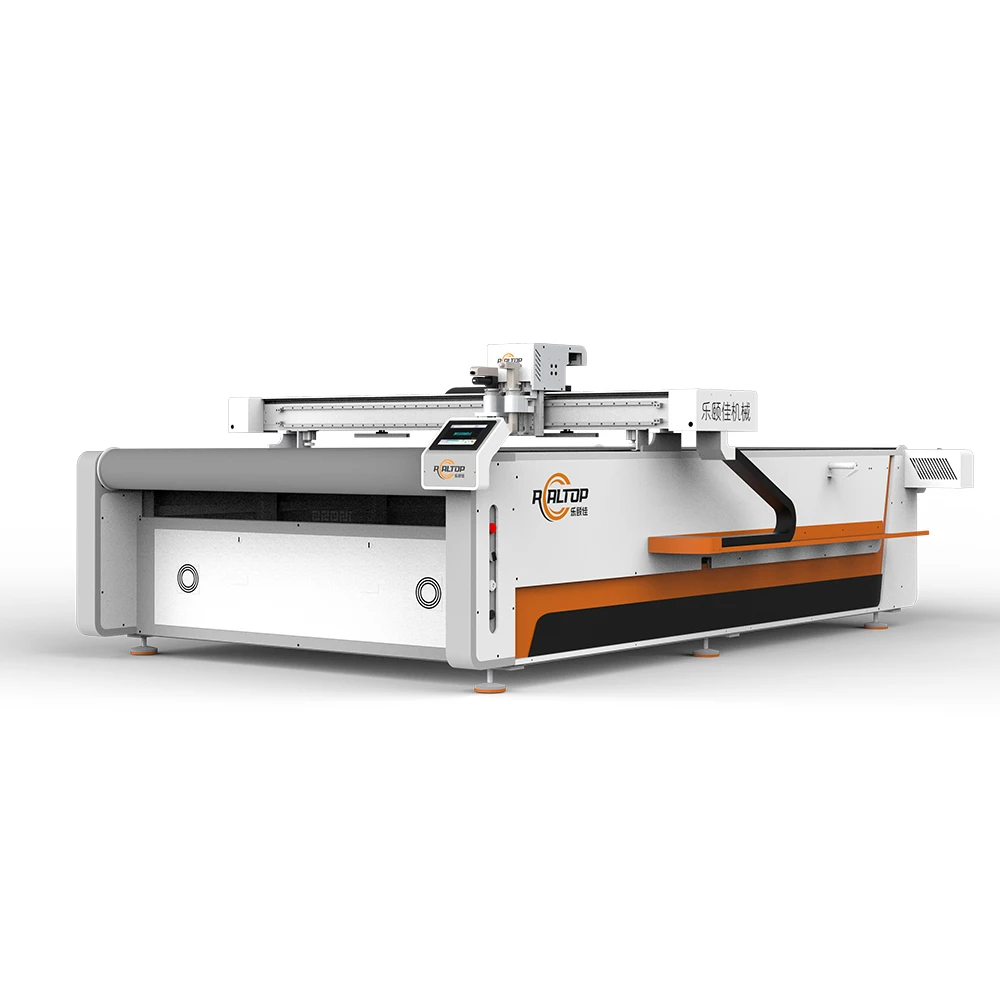
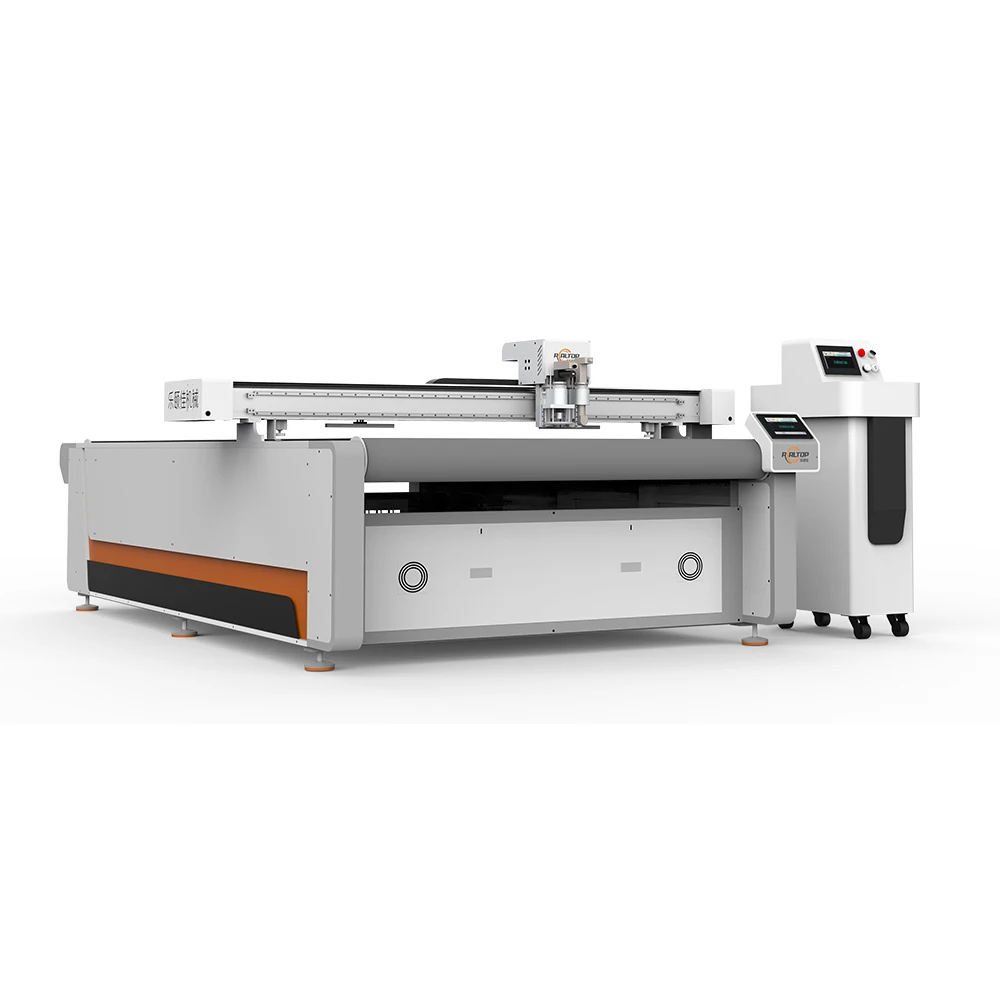
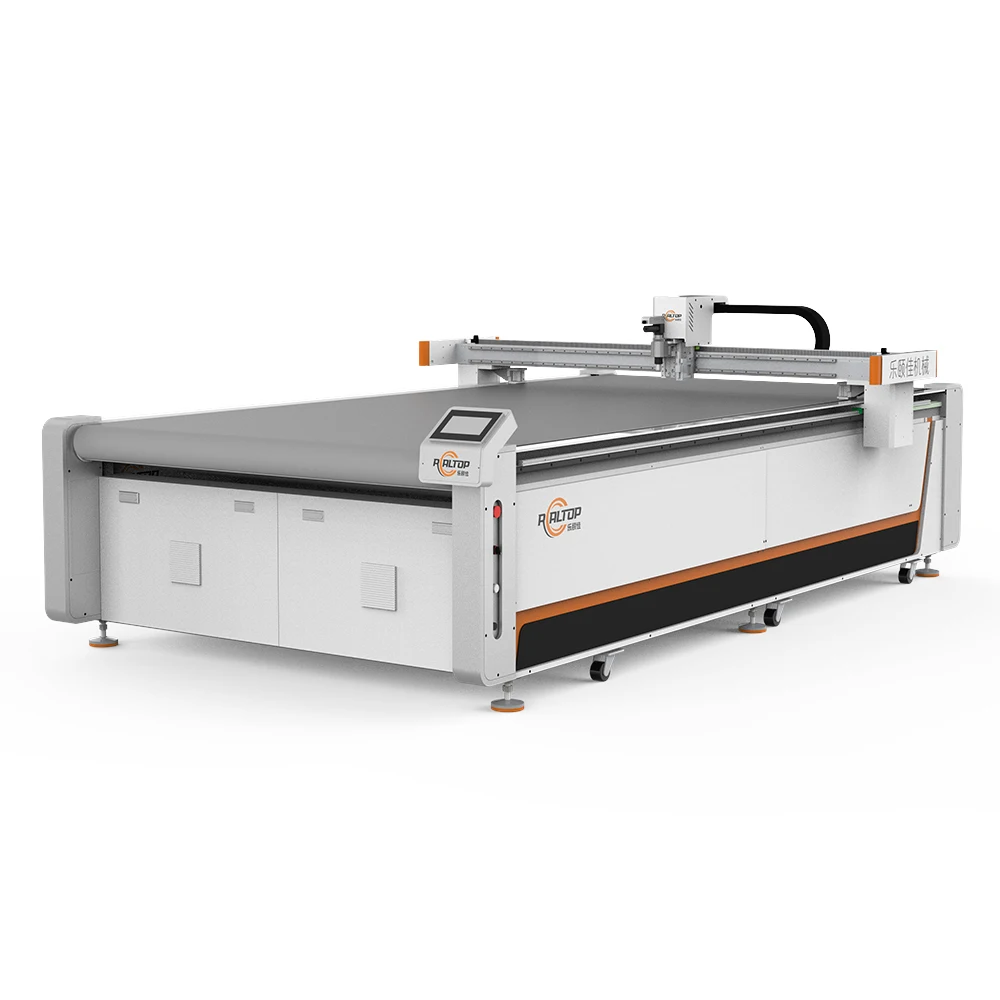
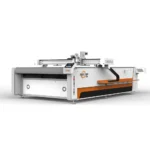
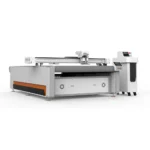
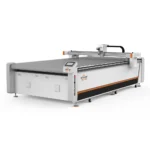
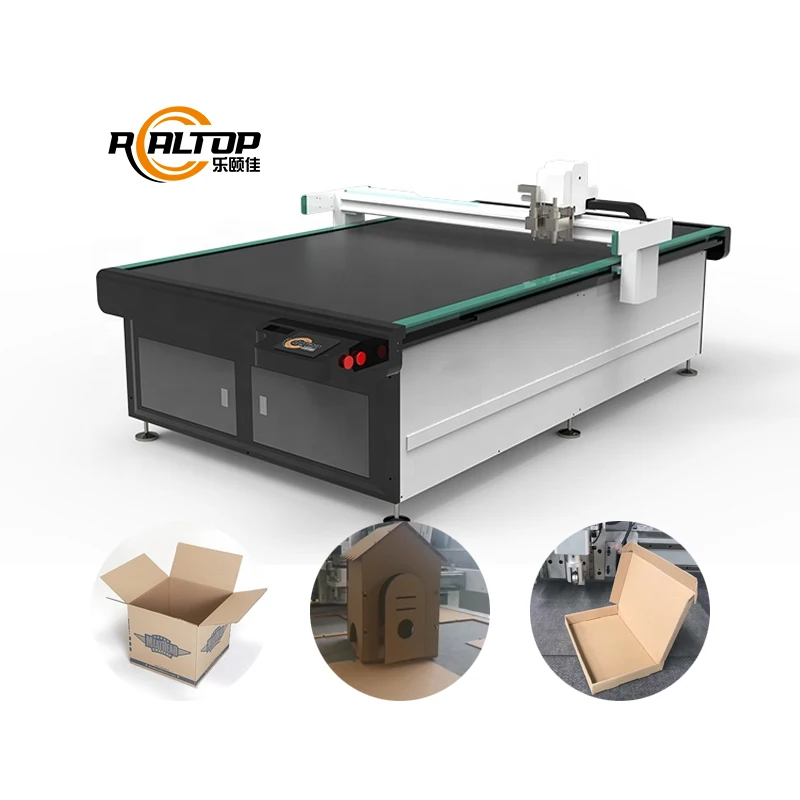
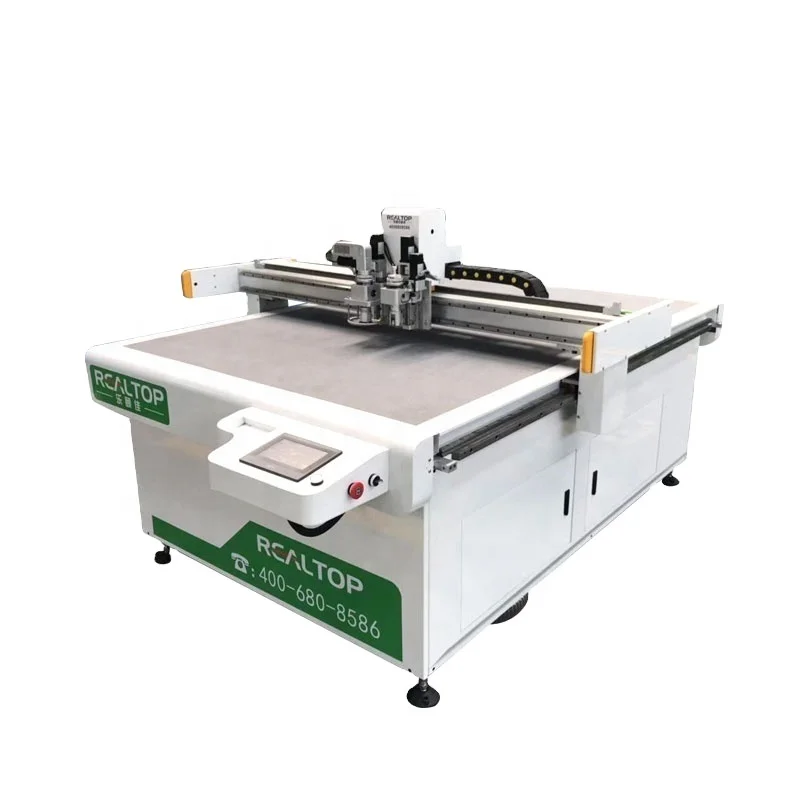
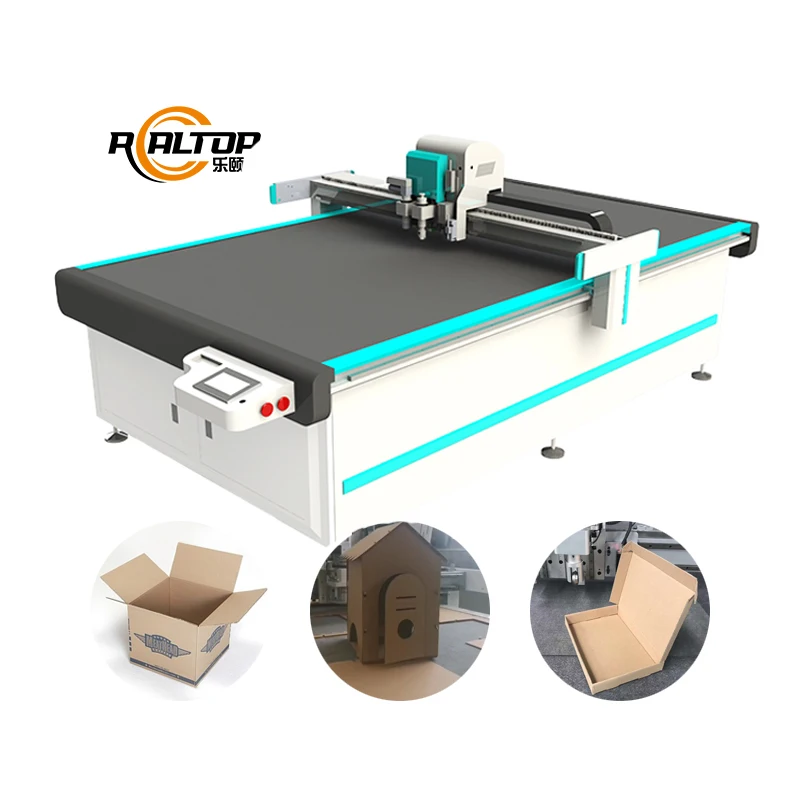
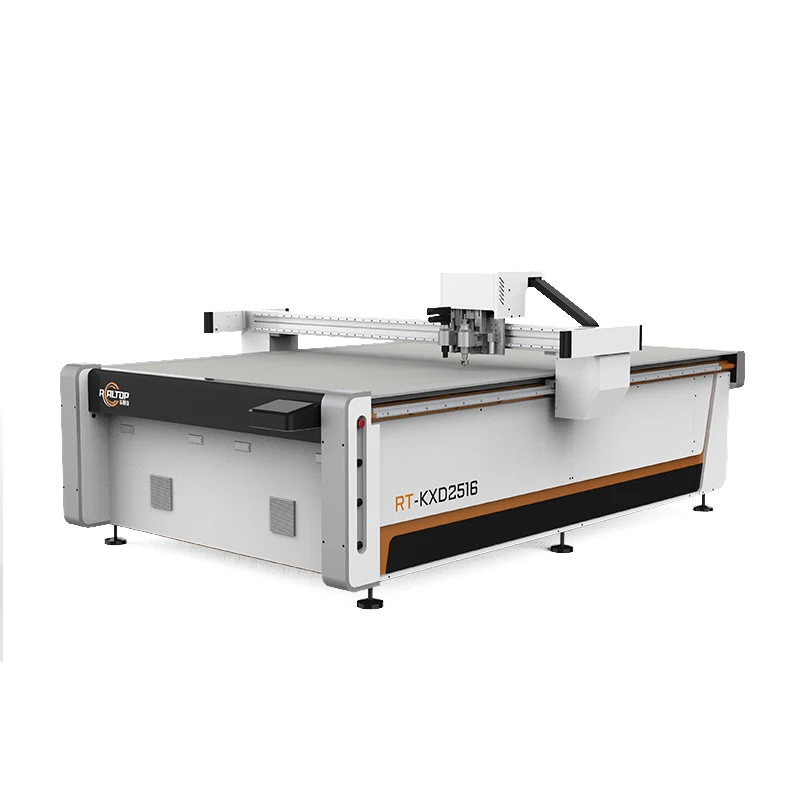
Precision-Built Frames — every Realtop oscillating knife table starts on a heavy-duty steel frame with precision-ground mounting surfaces, ensuring the motion system stays true even after years of continuous fabric cutting shifts.
Technical Specifications
| Parameter | Value |
|---|---|
| Product Type | CNC Oscillating Knife Cutting Machine |
| Working Area | 1600 × 2500 mm |
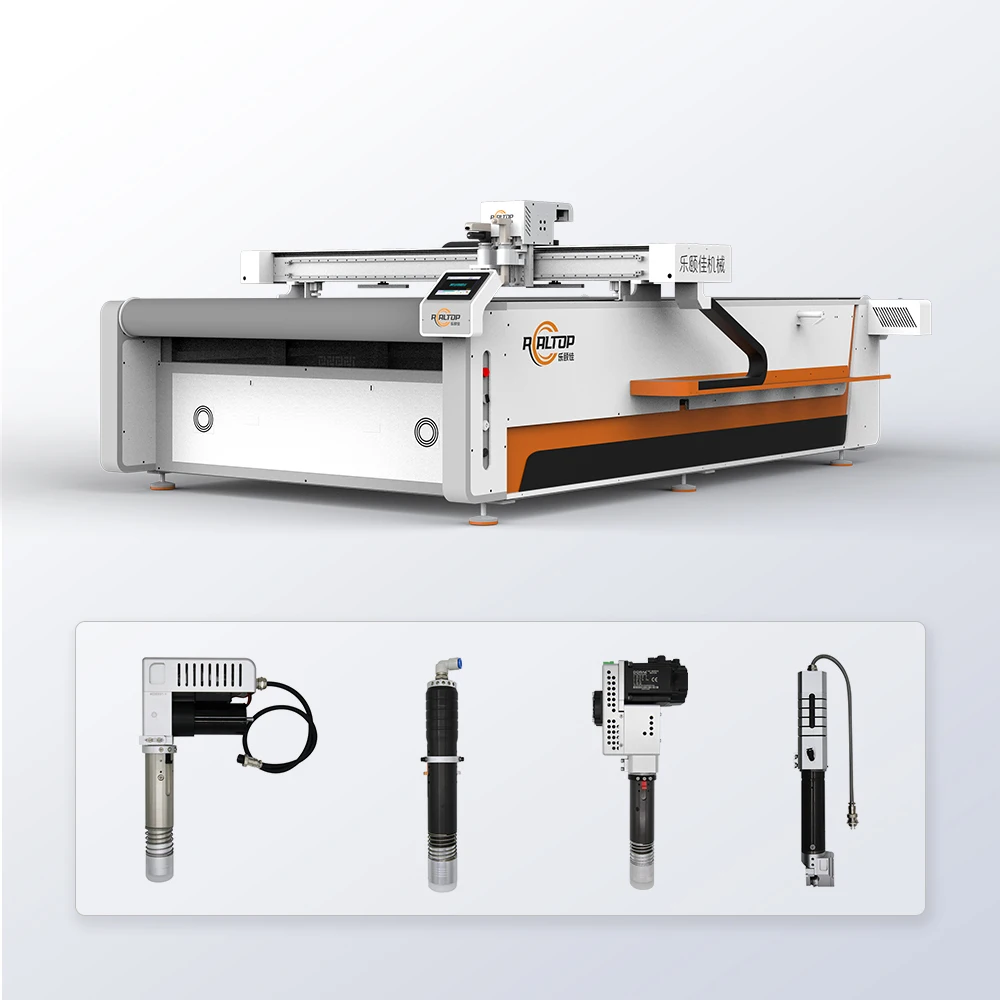
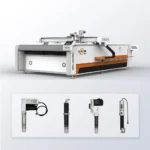
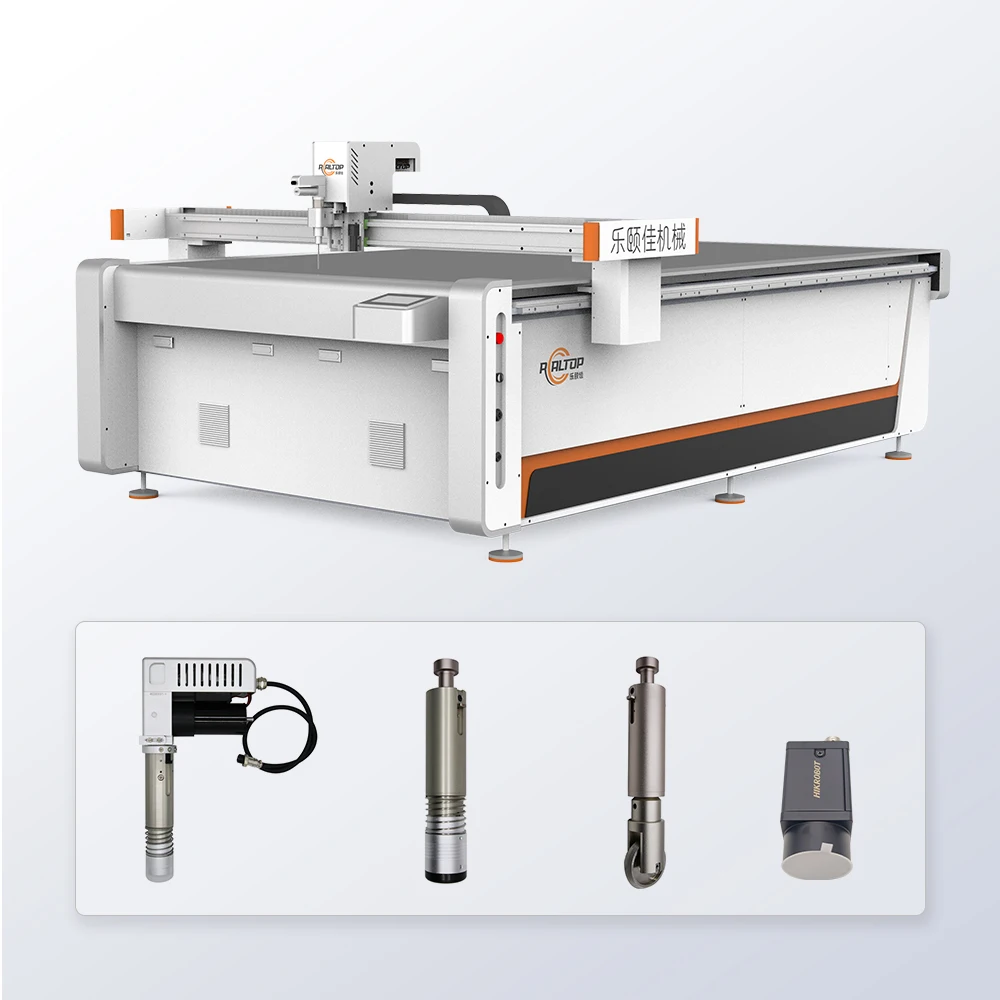
| Available Tool Heads | Oscillating knife, Driven rotary knife, Creasing wheel, Kiss cutting tool, Pneumatic knife, Milling tool, V groove knife |
| Cutting Speed | 0–2000 mm/s |
| Maximum Cutting Thickness | ≤ 30 mm |
| Positioning Accuracy | ±0.1 mm |
| Vacuum Pump | 9 kW |
| Voltage Options | 110V / 220V / 380V |
| Accepted File Formats | PLT, DXF, AI, PDF |
| Safety Devices | Infrared sensor and emergency stop |
| Machine Dimensions | 3300 × 2100 × 1350 mm |
| Control System | PLC control panel |
| Servo Motor Options | Panasonic, Delta, Dorna |
| Interface Language Options | English, Russian, Italian, Chinese (customizable) |
| Certification | CE |
Application Suitability
| Application | Material or Output |
|---|---|
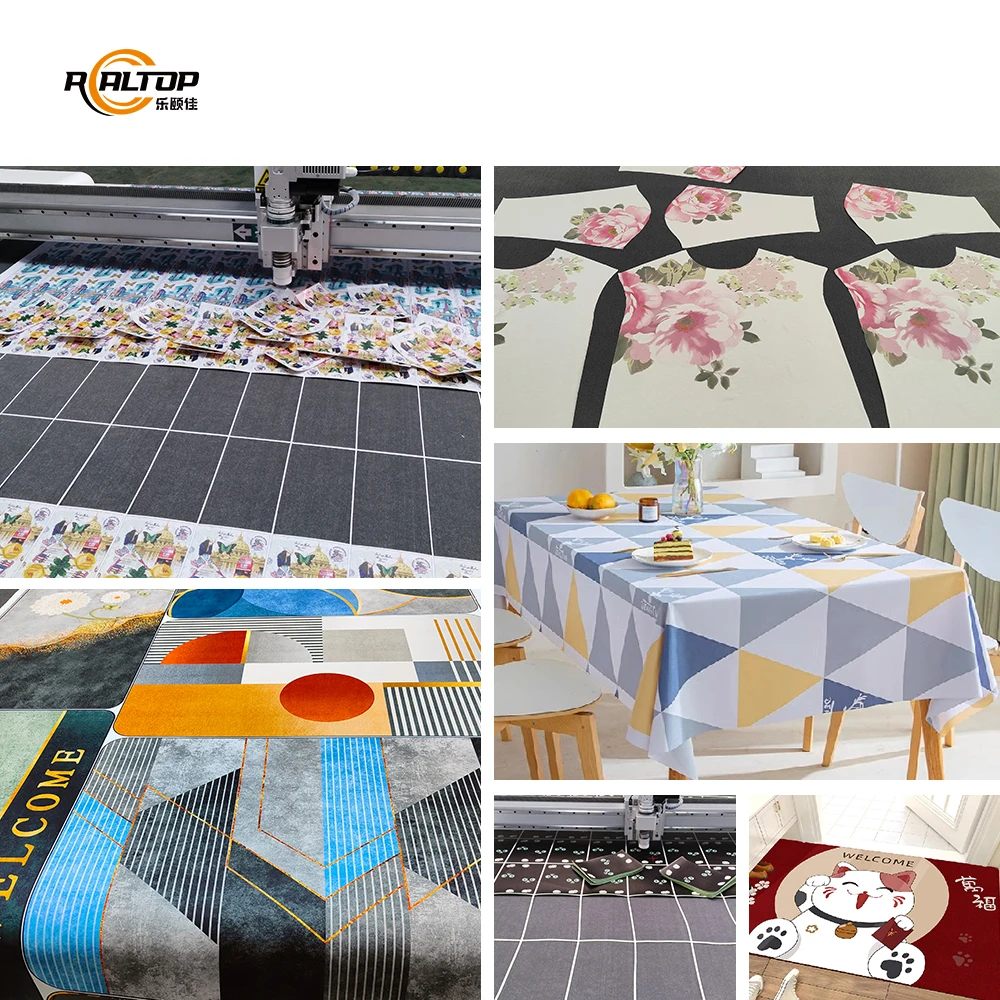
| Apparel manufacturing | Suits, knitwear, lace, and layered fabrics with pattern-matching layouts |
| Automotive interior trimming | Seat fabrics, carpets, PVC floor mats requiring burr-free edges |
| Home textile production | Sofa upholstery fabrics, curtains, area rugs and woven mats |
| Composite material processing | Carbon fiber prepreg and aramid sheets without delamination |
Why "Cutting Speed 2000 mm/s" Means Nothing Without the Right Tool Head
The knife that matches your fabric matters far more than the maximum travel speed on the nameplate.
A CNC oscillating knife cutting machine factory may quote impressive speed figures, but when a driven rotary knife hits multi-layer aramid at full traverse, the edge frays and the operator spends more time sorting rejects than loading sheets. The same machine with an oscillating knife set to a lower stroke delivers clean, sealed edges every time [NEED_CITE: cutting tool selection criteria for technical textiles]. I have watched a Jinan workshop run the same fabric on two differently configured tables — one produced furniture-grade cuts, the other shredded the material within fifty passes.
Frame Rigidity and Motion Accuracy in Fabric Cutting
When you slice thirty layers of polyester at high traverse, any flex in the gantry translates directly into dimensional drift across the nesting layout. This CNC oscillating knife cutting machine rests on a heavy-duty frame with precision-ground surfaces, which keeps the linear guides parallel and the belt tension consistent across the full 1600 × 2500 mm envelope. That rigidity is what allows the ±0.1 mm positioning accuracy to hold from the first piece to the last piece of a long production run.
Tool Head Selection as the Real Differentiator
Seven tool head options are available — oscillating knife, driven rotary knife, creasing wheel, kiss cutting tool, pneumatic knife, milling tool, and V groove knife — and each one answers a different material behavior. Woven aramid demands a high-frequency oscillating stroke to prevent fiber pull-out, while single-layer PVC mat cuts faster and cleaner with a driven rotary knife. A creasing wheel scores carton inlets without penetrating the backer, something no blade can replicate [NEED_CITE: oscillating versus rotary knife behavior on layered textiles]. The PLC control panel lets the operator store the tool-to-material pairing so a job change takes minutes, not a full re-setup.
Reading the Spec Sheet Against Your Actual Material
The 9 kW vacuum pump pulls air through an aluminum bellows vacuum table, and that combination is what holds small fabric pieces flat when the knife exits a cut — without adequate hold-down, thin knits lift and shift. Cutting thickness up to 30 mm covers most garment stacks, automotive carpet, and foam gaskets, but attempting thirty millimeters of dense aramid composite at the maximum 2000 mm/s traverse will overload the oscillating motor. Servo options from Panasonic, Delta, and Dorna let a buyer match motor response to their preferred control ecosystem, and voltage configurability from 110V to 380V means the machine ships ready for the destination market without aftermarket transformers.
The Hidden Cost of Skipping the Sample Cut
Buyers who skip a material-specific sample run often discover edge quality problems only after the machine is bolted to their floor and the first production batch is already late. Ragged edges on lace mean re-cutting entire panels; crushed foam gaskets fail sealing tests downstream. In my experience around Shandong cutting lines, the factories that insist on a real-material trial before purchase avoid weeks of adjustment and blade experimentation after delivery [NEED_CITE: sample cutting validation in CNC knife equipment procurement]. That single step separates a machine that runs from day one and one that becomes a prolonged commissioning project.
Why Source This CNC Oscillating Knife Cutting Machine From Realtop
Realtop runs in-house design and production covering both knife and laser technologies, so a buyer can match the cutting method to the material rather than force one approach across every job. Tool head and table configuration is specified per material type and production volume, not pulled from a standard list. CCD camera positioning is available for printed contour work where registration marks must be read at production speed. Software compatibility with PLT, DXF, AI, and PDF files is confirmed before the order is locked. Voltage, control language, and servo brand are all adjustable to the destination market, and every unit goes through a factory test on the buyer’s actual material before crating.
Documentation & Verification
- Machine specification sheet listing every tool head and table option confirmed for your order
- Electrical schematic with voltage and frequency matched to your facility’s supply
- Sample cutting report produced on your fabric or composite before shipment commitment
- Factory test record documenting accuracy across the full 1600 × 2500 mm working area
- Operation and maintenance manual in your chosen control language
- Spare parts list covering blades, belts, and wear items for the first year of operation
Installation, Commissioning & Support
- Floor plan showing the 3300 × 2100 × 1350 mm footprint and required clearance around the gantry
- Dedicated circuit sizing for the 9 kW vacuum pump and PLC control panel voltage specification
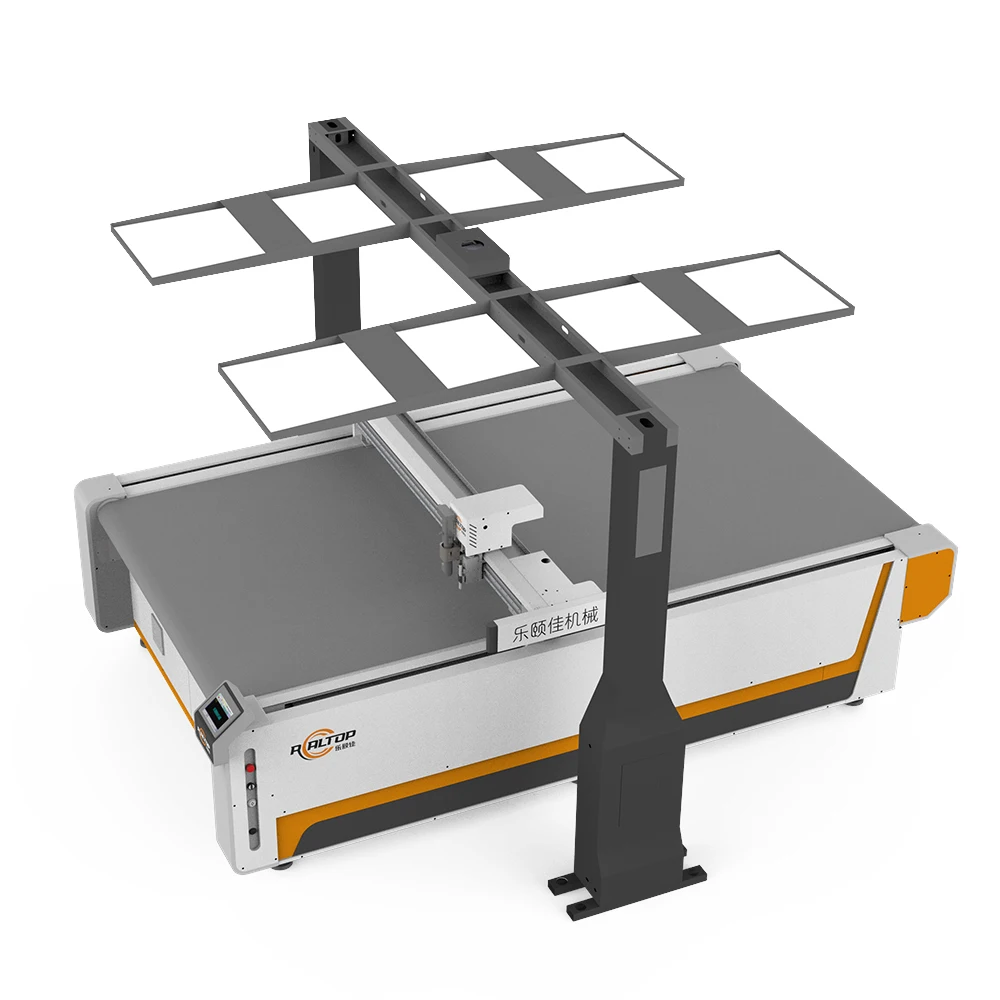
- Crated machine arrives with gantry and table separated; reassembly includes leveling and guide alignment
- First-run commissioning covers servo tuning for the selected Panasonic, Delta, or Dorna motors
- Operator training on tool head changeover, nesting import from PLT or DXF, and vacuum zoning
- Scheduled belt and blade inspection intervals documented in the maintenance manual
Getting Your Quotation Right the First Time
Send a sample of the actual fabric, composite, or mat you intend to cut, along with the typical sheet size and layer count you run in production. Confirm your facility voltage and frequency so the electrical system ships correct. If you work with printed materials that require contour recognition, include a printed sheet so the CCD workflow can be validated before the CNC oscillating knife cutting machine factory begins assembly.
Frequently Asked Questions
Q: How do you match the tool head to my specific fabric type and thickness?
A: We ask for a sample of your actual material and run test cuts with multiple tool heads — oscillating, rotary, pneumatic — recording edge quality and speed on each. The winning configuration is documented in your order file and locked into the PLC control panel as the default setup for that material.
Q: What OEM capability does the factory offer for distributors?
A: Distributors can specify custom color, branding plates, control language, and servo brand. We also adapt the working area and tool head range to fit regional demand, and provide co-branded documentation including manuals and spare parts lists tailored to your market.
Q: Can I see a sample cut on my material before placing an order?
A: Yes. Send your fabric, leather, or composite sheet to the Jinan workshop and we will run it on the configured table, then ship back the cut samples along with a report covering edge quality, achievable thickness, and recommended tool head for your production volume.
Q: What voltage and control language options are available for export markets?
A: The system supports 110V, 220V, and 380V configurations wired to your destination frequency. Interface languages currently include English, Russian, Italian, and Chinese, with additional languages configurable during production to match your operator base.
Q: How do I verify frame build quality before shipment?
A: We provide a factory test record showing positioning accuracy across the full 1600 × 2500 mm travel, photographs of the frame and motion components, and the electrical schematic. Buyers are also welcome to visit the workshop for a live inspection before crating.
You may also like

商品评价
Clear filtersThere are no reviews yet.