


-
 Courier delivery
-
 DHL Courier delivery
-
 Warranty 1 year
-
 Free 30-Day returns

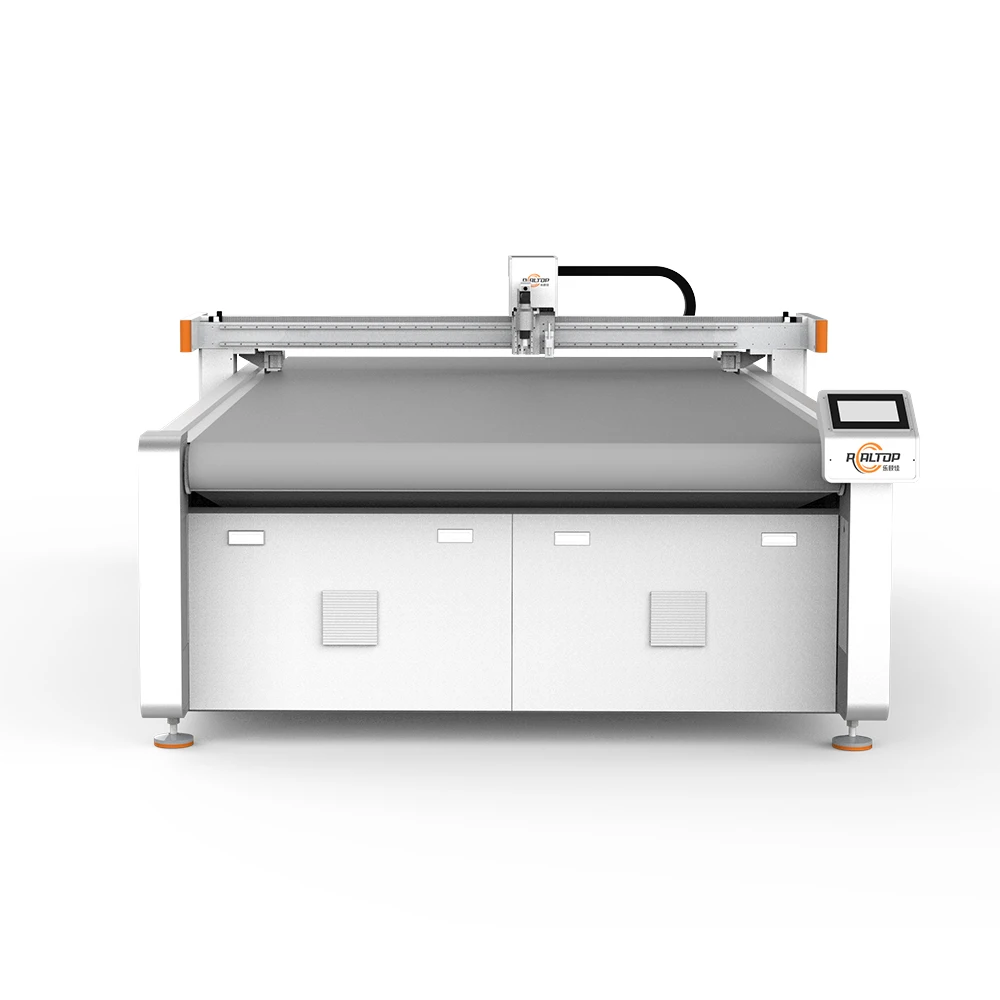
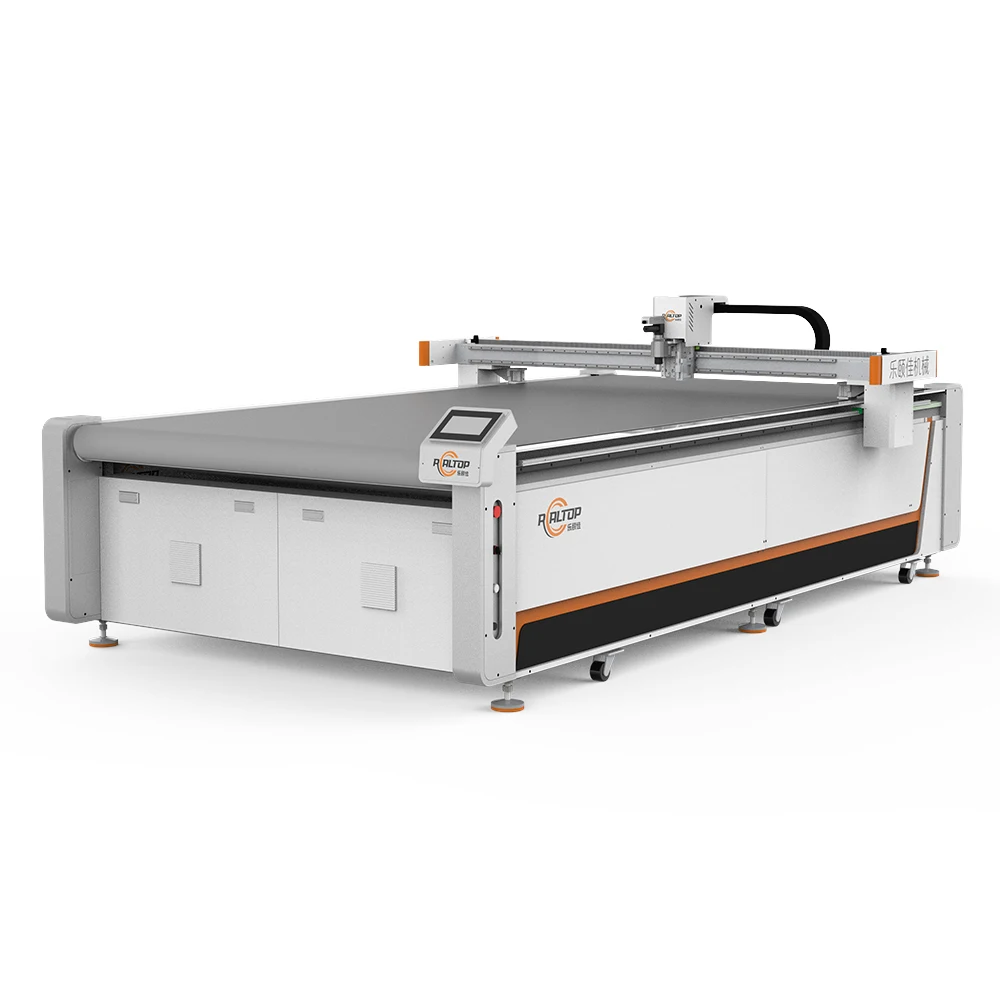
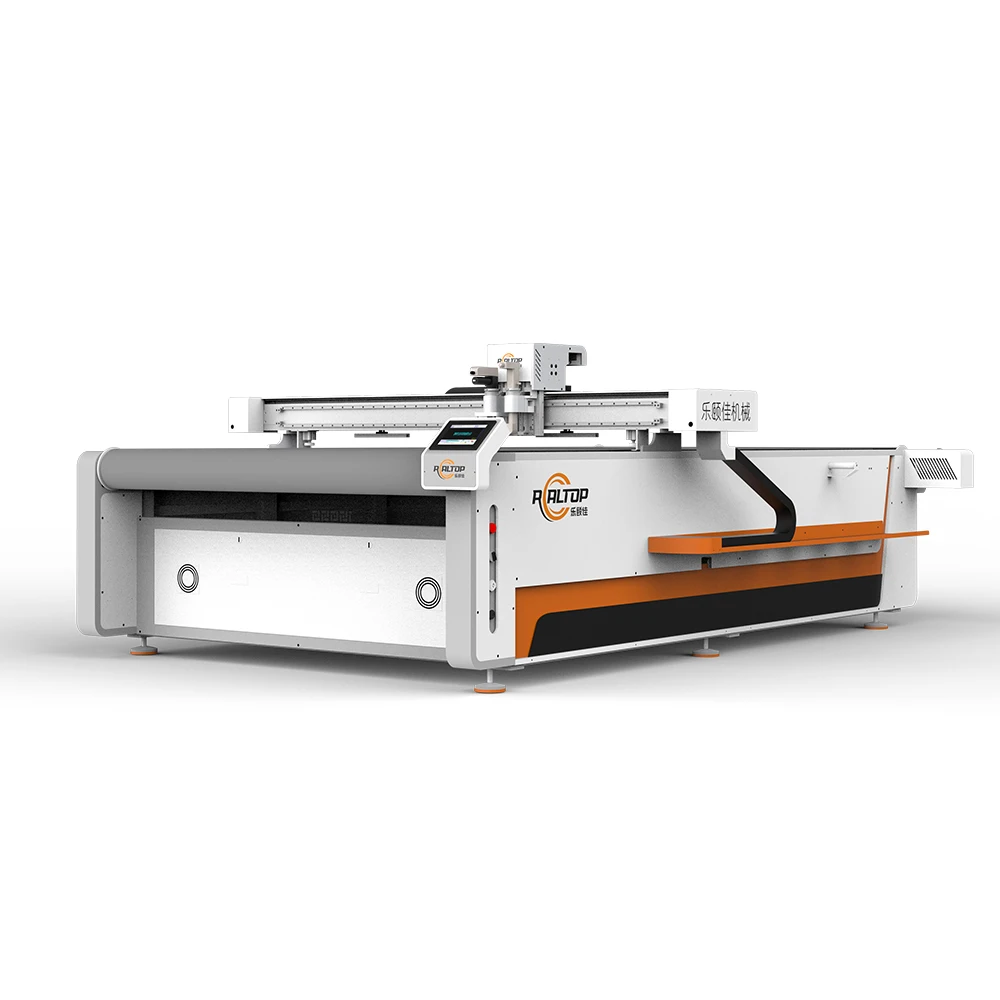
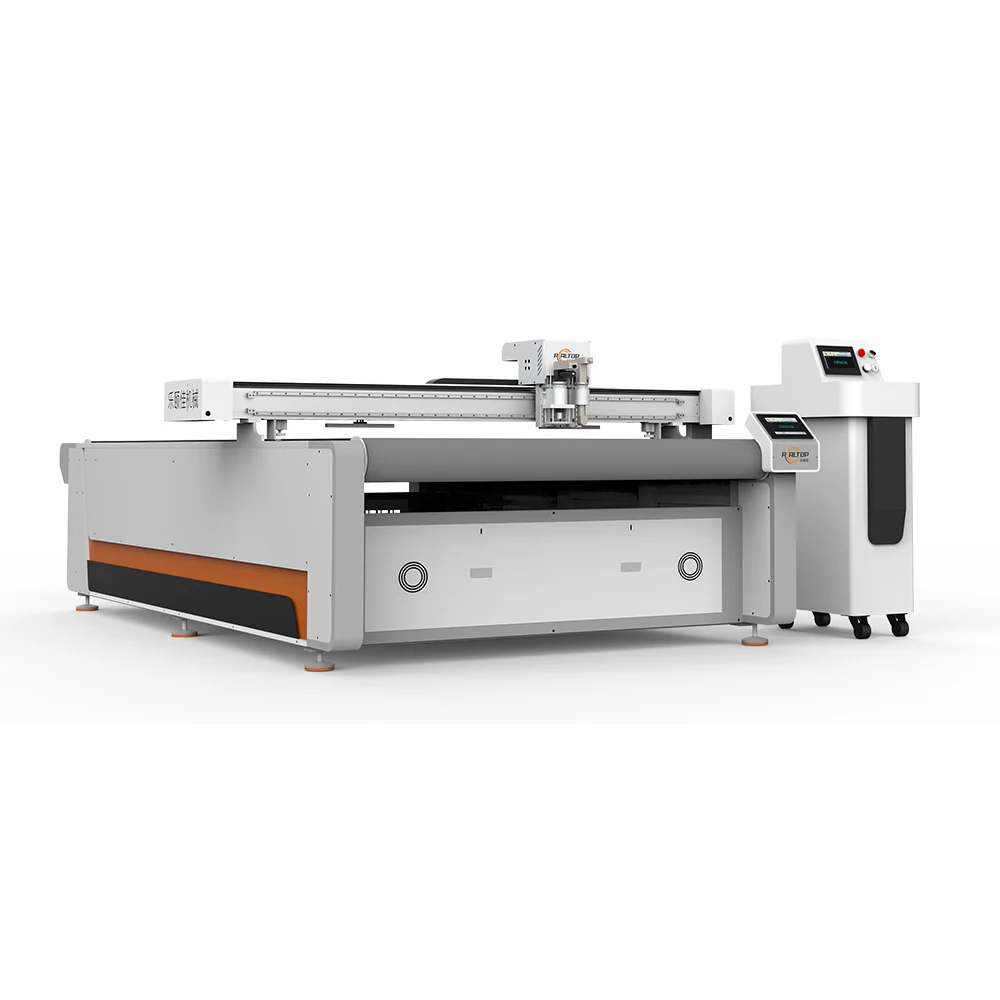
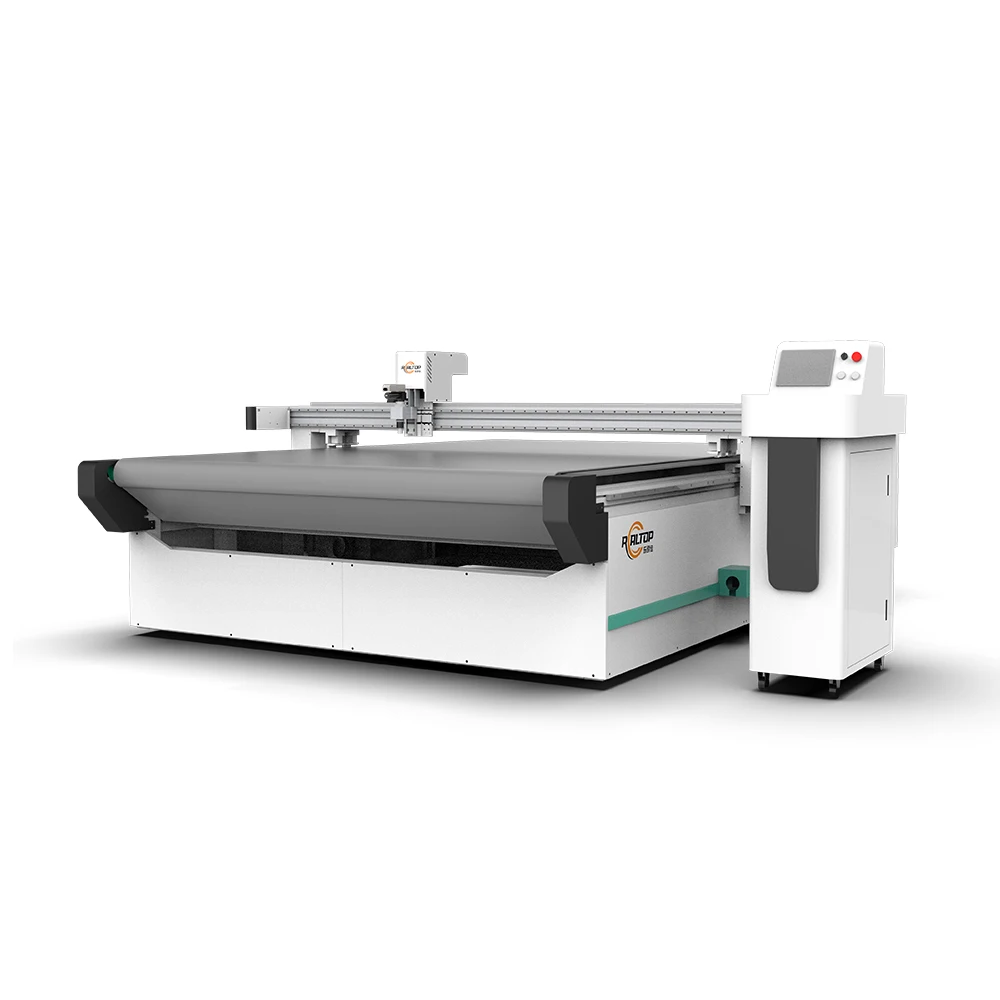
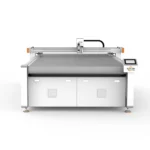
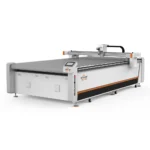
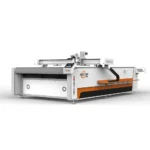
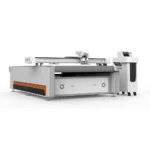
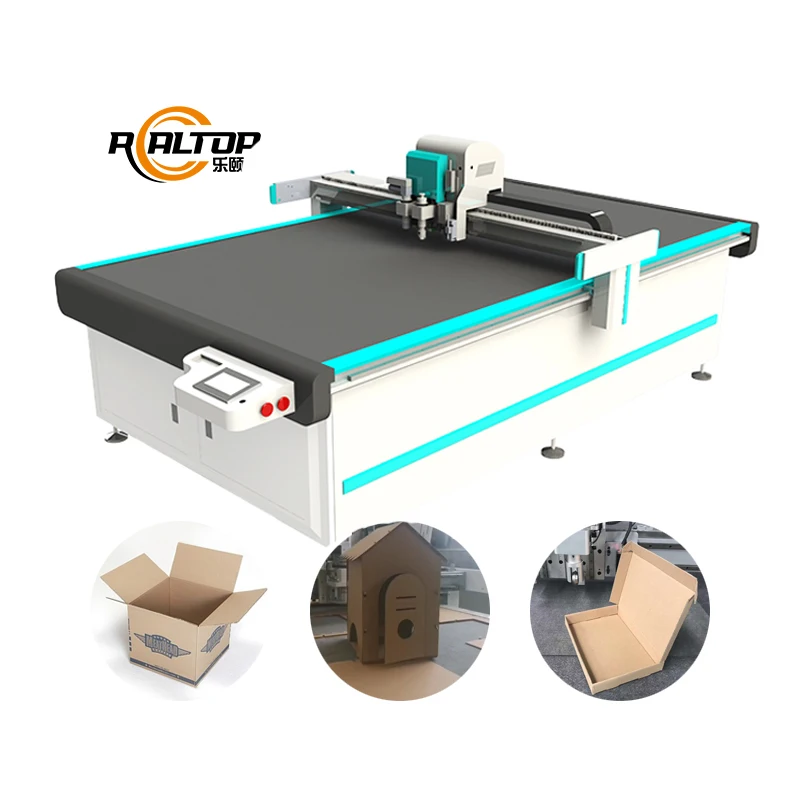
In-House Build Quality Control — Every REALTOP CNC flat bed oscillating knife cutter undergoes frame stress testing and motion calibration on our Jinan factory floor before crating, ensuring the machine that arrives at your facility cuts to the same tolerance it held during the sample run.
Technical Specifications
| Parameter | Value |
|---|---|
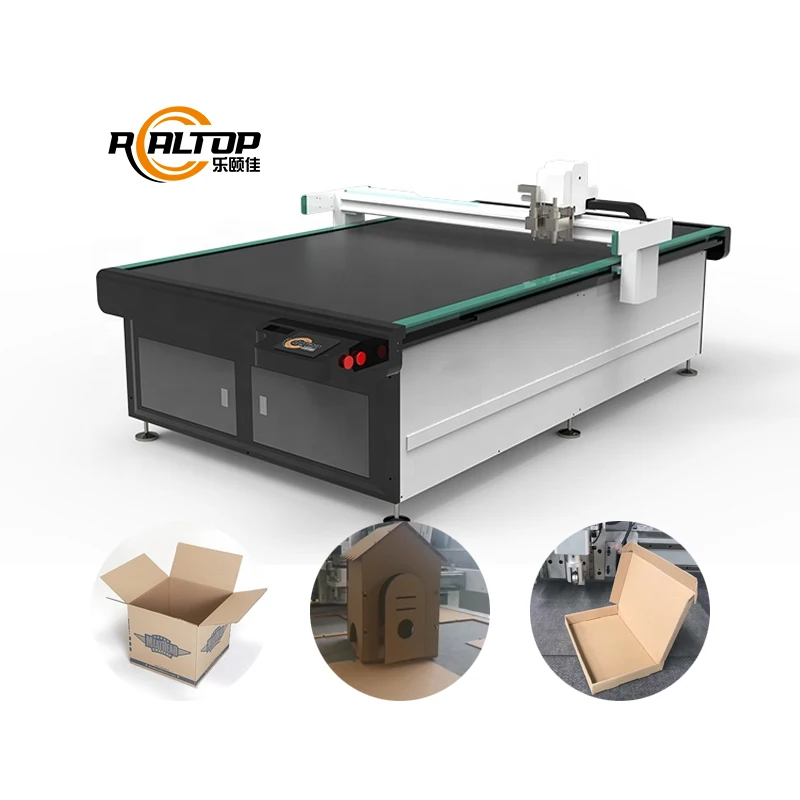
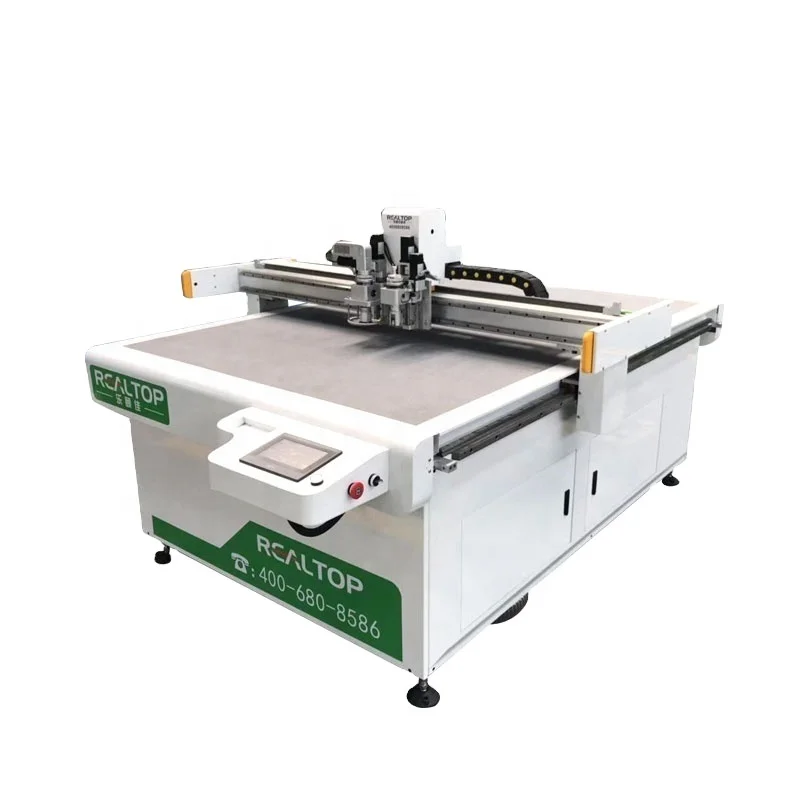
| Product Type | CNC Flat Bed Oscillating Knife Cutting Machine |
| Working Area | 1600×2500 mm |
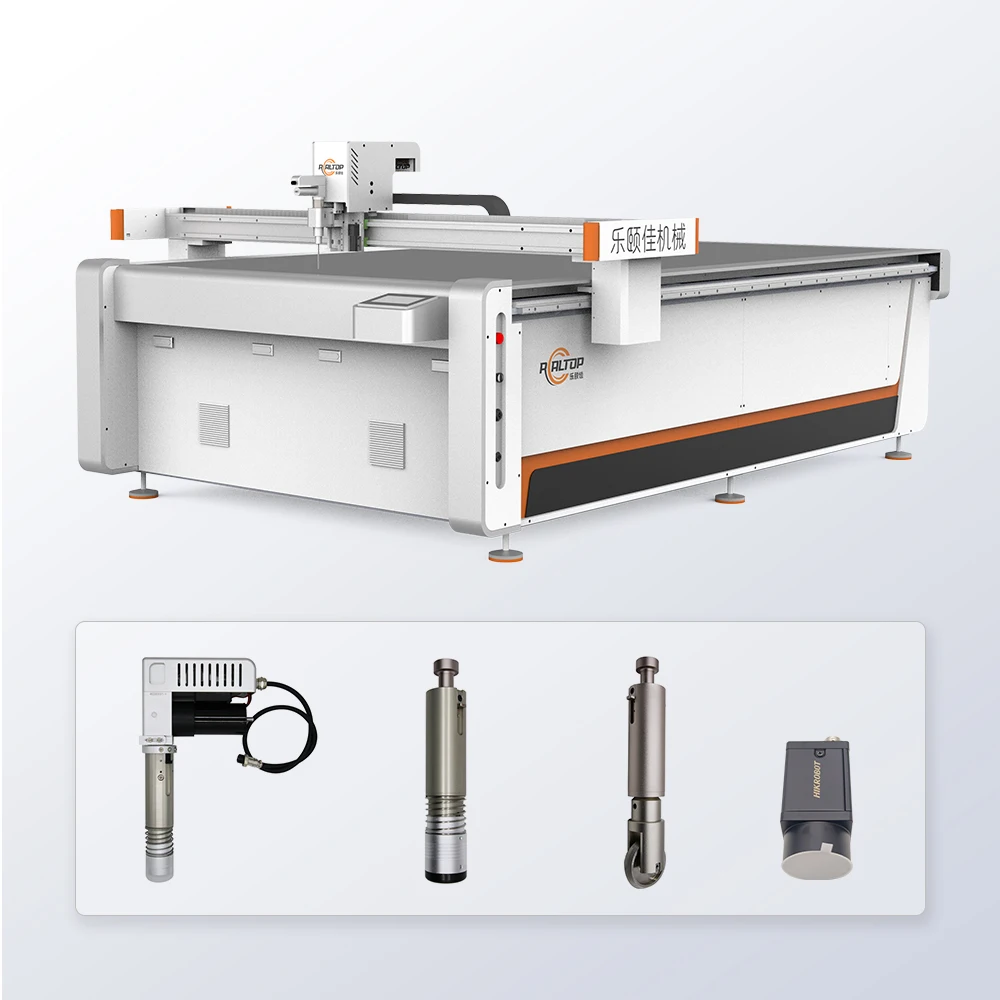
| Tool Head Options | Oscillating knife, Driven rotary knife, Creasing wheel, Kiss cutting tool, Pneumatic knife, Milling tool, V groove knife |
| Cutting Speed | 0–2000 mm/s |
| Cutting Thickness | Up to 30 mm (basis to be confirmed on buyer material) |
| Cutting Accuracy | ±0.1 mm |
| Vacuum Pump Power | 9 kW |
| Vacuum Table Type | Aluminum bellows vacuum table |
| Voltage Options | 110V / 220V / 380V (frequency to be confirmed) |
| Control System | PLC control panel with optional display languages |
| Servo Motor Options | Panasonic, Delta, Dorna |
| Software File Formats | PLT, DXF, AI, PDF |
| Machine Size | 3300×2100×1350 mm |
| Safety Device | Infrared sensor device and emergency stop device |
| Standards | CE |
Application Suitability
| Application | Material or Output |
|---|---|
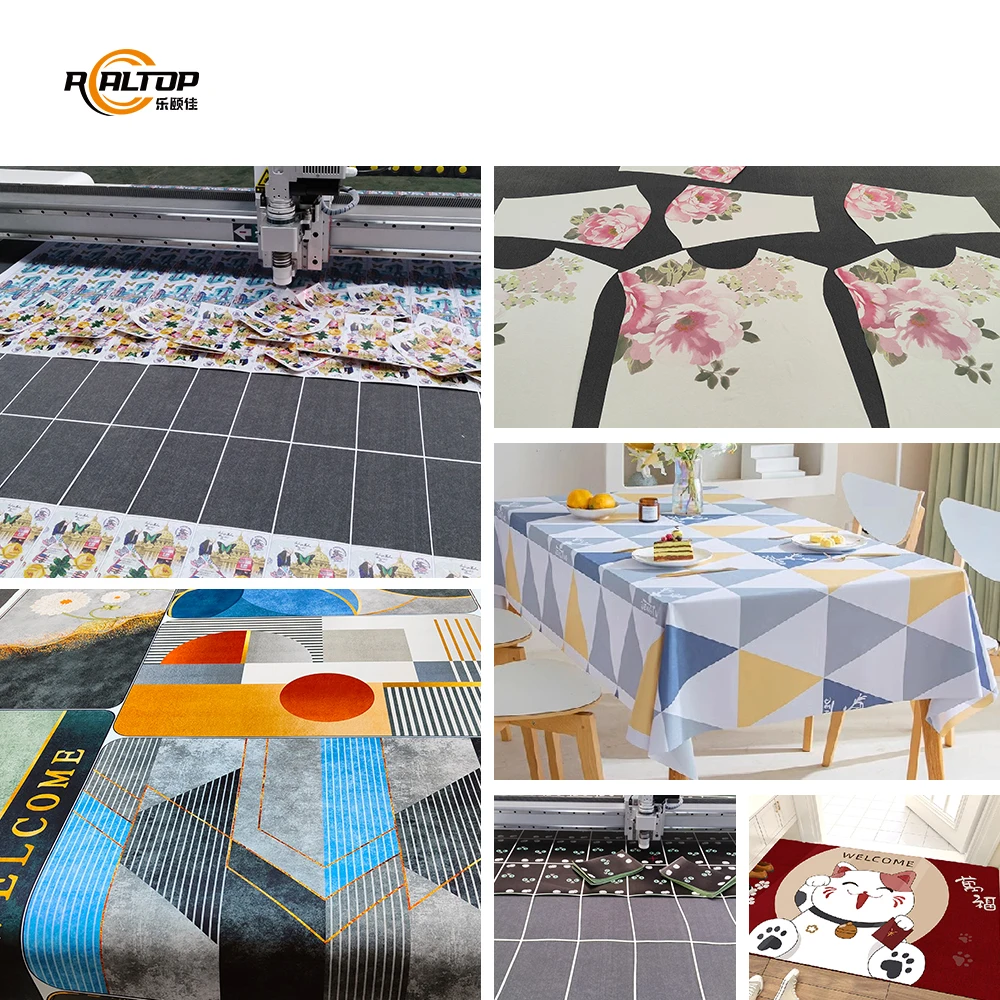
| Apparel Manufacturing | Suits, knitwear, lace, complex woven and knitted fabrics, pattern-matching layouts |
| Automotive Interiors | Seat fabrics, carpets, PVC mats, cold-cut gaskets |
| Home Textiles | Sofa fabrics, curtains, rugs requiring multi-layer cutting |
| Composite Processing | Carbon fiber prepreg, aramid, specialty technical fabrics |
| General Flexible Materials | Cardboard, carton, PVC, EVA, leather, PTFE, rubber sheets |
Why a Working Area Quotation Is Not Enough for Fabric Cutting
The real specification happens when your roll goods hit the vacuum table.
Buyers often select a CNC oscillating knife cutting machine manufacturer based on bed dimensions alone, assuming a 1600×2500 mm workspace guarantees performance. The mismatch usually surfaces weeks after installation: high-density upholstery foam that should shear cleanly instead compresses and frays under the wrong oscillation frequency, or a multi-ply technical textile delaminates because the vacuum zoning was sized for large panels rather than the small nested parts you actually cut. A machine that holds tolerance on a standard test coupon can lose grip entirely on slick synthetic weaves at production speed [NEED_CITE: vacuum hold-down variables across flexible material types]. Matching the knife profile, stroke frequency, and table zone layout to your specific fabric stack is the engineering step most quotations skip.
Configuring the Tool Head to the Textile, Not the Brochure
A CNC oscillating knife cutting machine manufacturer offering seven interchangeable tool heads on a single gantry solves the most common procurement error: forcing one knife type across incompatible materials. An oscillating knife handles standard woven and knitted cloth at high stroke rates, while a driven rotary knife rolls through heavy canvas or webbing without lifting the ply stack. Creasing wheels score carton sample boards without cutting through the liner, and the kiss cutting tool isolates adhesive-backed vinyl from its carrier sheet. The selection is finalized only after a test run on the buyer’s own sample, eliminating the guesswork that causes edge fuzz or crushed cores on the production floor.
Vacuum Zoning and the Small-Part Problem
Hold-down failures on nested components smaller than 300 mm are a frequent complaint with flatbed cutters designed for signage panels. The aluminum bellows table on this unit pairs with a 9 kW pump and sectional vacuum zones, so only the active cutting area draws suction. This prevents air bleed from uncovered regions that would otherwise let lightweight jersey knit or open-mesh fabric drift during a 2000 mm/s traverse. The zoning layout is mapped to the buyer’s typical nesting pattern before the machine leaves the factory, ensuring that a cluster of small collar or cuff pieces stays as flat as a full-width panel spread [NEED_CITE: vacuum zone mapping for nested garment components].
Reading the Spec Sheet for What It Actually Cuts
The ±0.1 mm positioning accuracy is achievable only when the servo system, mechanical frame, and vacuum table are acting as a rigid assembly; any flex in the gantry under lateral knife pressure will widen the tolerance band, which is why the frame is precision-ground rather than welded and bolted. Cutting speed reaches 2000 mm/s on single-ply materials with low cutting resistance, but denser stacks require slower traverses to maintain the stated accuracy and avoid knife deflection. The 30 mm maximum thickness rating applies to specific foam densities and must be verified against the buyer’s actual material, as a harder EVA compound at the same thickness demands a different blade geometry and slower feed rate. PLC control with multi-language display ensures the operator can set these parameters natively rather than relying on translated manuals.
The Cost of Skipping the Sample Cutting Step
Accepting a quotation without a sample cutting report on your own material is the single highest-risk decision in flatbed knife procurement. The wrong oscillation frequency on a carbon fiber prepreg sheet causes fraying that propagates into the laminate during curing, ruining downstream tooling. A vacuum table configured for large panels will let small leather pieces lift at the corners, producing skewed cuts that force operators into manual trimming and material waste. These failures do not appear on the manufacturer’s demo floor because the test material is not yours [NEED_CITE: material-specific cutting failures in composite and textile processing].
Why the Build Process Matters for This Machine Class
The design team engineers both knife and laser cutting systems in the same facility, allowing a buyer whose material portfolio spans woven textiles and acrylic sheet to standardize on one control philosophy and software environment. The core factory controls frame fabrication, motion component assembly, and final calibration, meaning tolerance issues are resolved on the floor rather than outsourced to a third-party integrator. Tool head selection and vacuum table configuration are specified per order, not picked from a default list. Voltage, plug type, and control language are confirmed against the buyer’s facility before the electrical cabinet is wired, preventing the on-site rewiring delays that plague generic export shipments. Every machine ships with a factory test record specific to the agreed configuration.
Documentation & Verification
- Machine specification sheet listing every tool head and vacuum zone included in your order
- Electrical schematic with voltage and frequency matched to your facility power supply
- Sample cutting report documenting edge quality and achievable thickness on your supplied material
- Software licence and file format compatibility note for your existing PLT, DXF, AI, or PDF workflow
- Factory test record signed off against your agreed configuration before crating
- Spare parts list identifying wear items specific to your selected knife and creasing tools
Installation, Commissioning & Support
- Foundation must support the 3300×2100×1350 mm footprint and dynamic loads during 2000 mm/s traverses
- Dedicated circuit sized for the 9 kW vacuum pump plus servo and PLC loads at your confirmed voltage
- Gantry and tool head carriage assembled and leveled on-site after transport to preserve frame alignment
- First-article run using your production material to validate knife selection and vacuum zoning settings
- Operator training covering PLC parameter adjustment and tool change procedures for all supplied heads
- Preventive maintenance schedule tied to knife blade replacement and vacuum pump filter inspection intervals
What We Need to Quote Your Configuration Accurately
Provide the material type, maximum ply count or thickness, and a representative cutting file so we can match the tool head and nesting software to your workflow. Confirm your facility voltage and frequency, preferred control panel language, and whether your current production line requires conveyor-fed material handling. If you need a sample cutting report on your own fabric roll before commitment, ship a swatch to our facility and we will document edge quality, cycle time, and achievable thickness before any order is signed.
Frequently Asked Questions
Q: How do you determine which tool head is correct for my fabric stack?
A: We run a sample cutting test using your supplied material, evaluating edge quality, ply separation, and cutting speed with each candidate knife type. The report documents which head handles your specific weave, density, and layer count without fraying or delamination, and that configuration is locked into your order specification before production begins.
Q: Will the control system and electrical cabinet match our plant standards?
A: Voltage, frequency, plug type, and control panel language are confirmed during the quotation stage and documented in the electrical schematic before the cabinet is wired. We build to 110V, 220V, or 380V configurations and customize display languages including English, Russian, Italian, and others to ensure operators can work without translation barriers.
Q: How do you ensure small nested parts do not shift during cutting?
A: The aluminum bellows vacuum table is divided into zones mapped to your typical nesting layout, and the 9 kW pump is balanced against the active zone area. We test hold-down performance on your smallest production piece during the sample run to verify that no lifting or skewing occurs at the specified cutting speed.
Q: Can the software import our existing design files without conversion?
A: The nesting and control software natively accepts PLT, DXF, AI, and PDF formats. We confirm file compatibility during the sample phase by importing your actual production files and running the nesting output through the machine controller, so any post-processing requirements are identified and resolved before the machine ships.
Q: What does the sample cutting report include before we place an order?
A: The report documents the material tested, the tool head and knife profile used, cutting speed, edge quality photographs, measured accuracy against the ±0.1 mm tolerance, and any vacuum zoning adjustments made. This document becomes the baseline configuration for your order and is referenced during the factory acceptance test.
You may also like

商品评价
Clear filtersThere are no reviews yet.