




-
 Courier delivery
-
 DHL Courier delivery
-
 Warranty 1 year
-
 Free 30-Day returns

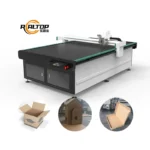
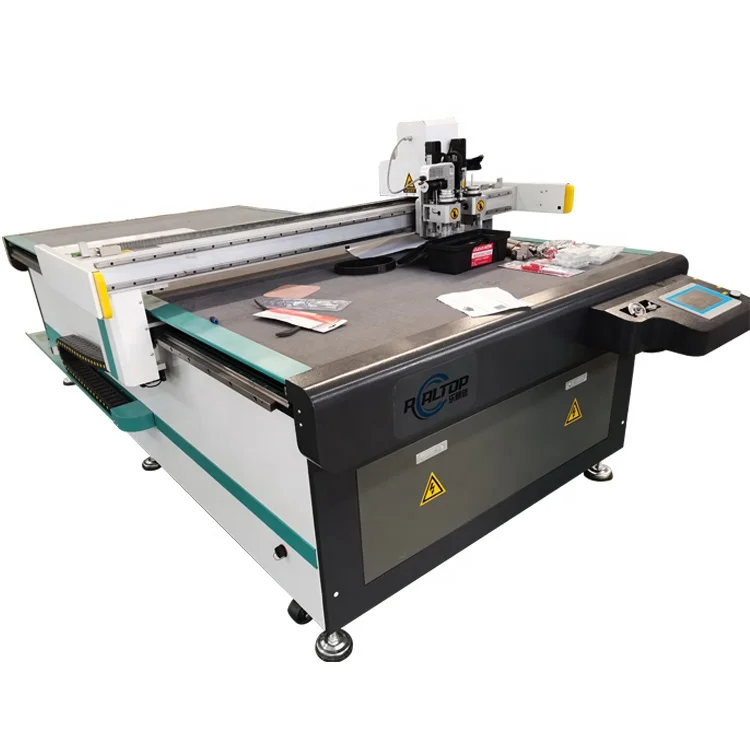
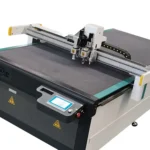
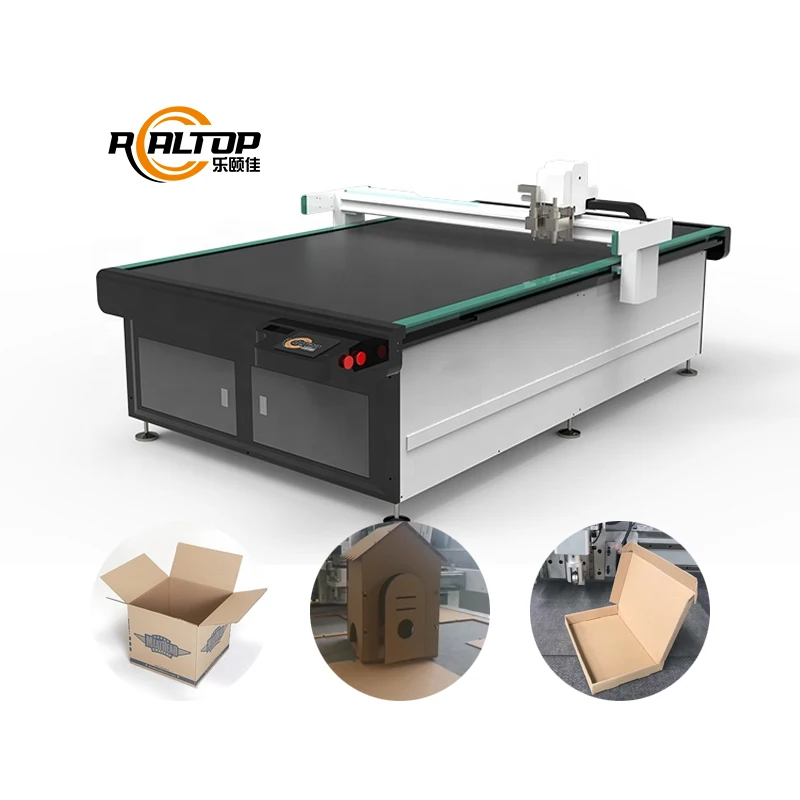
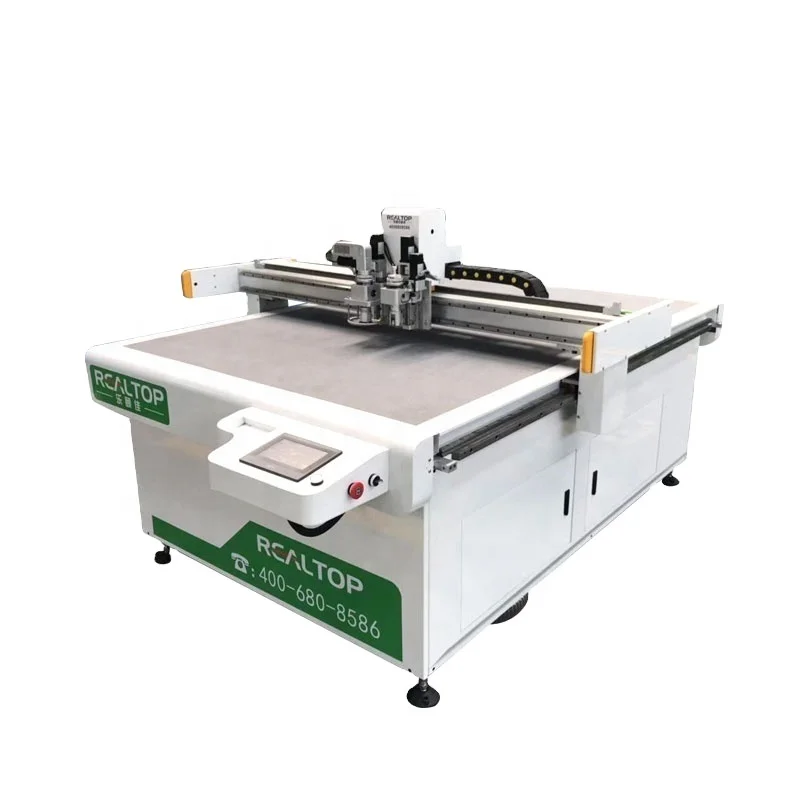
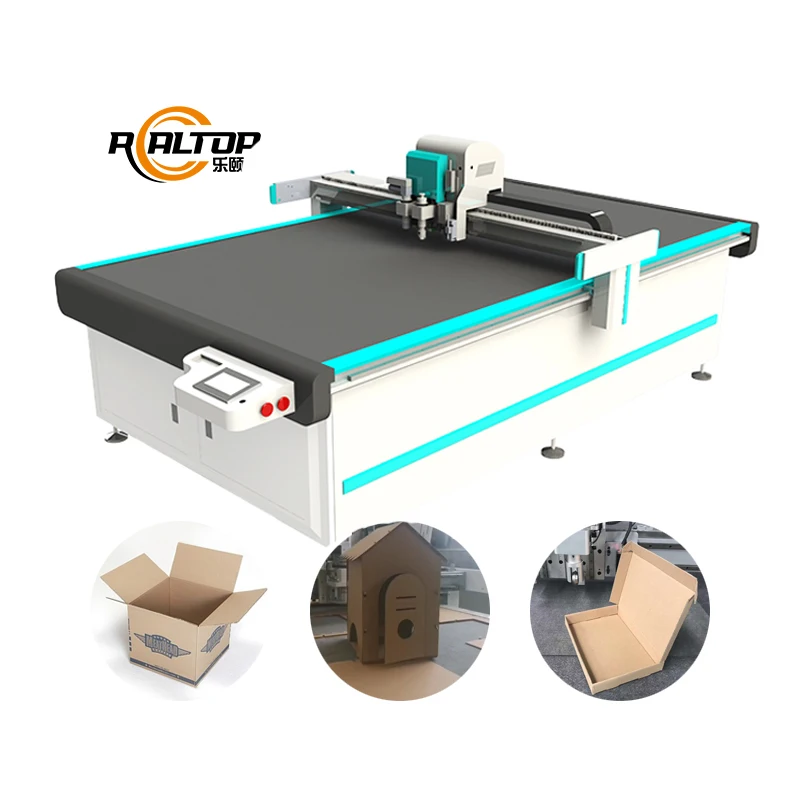
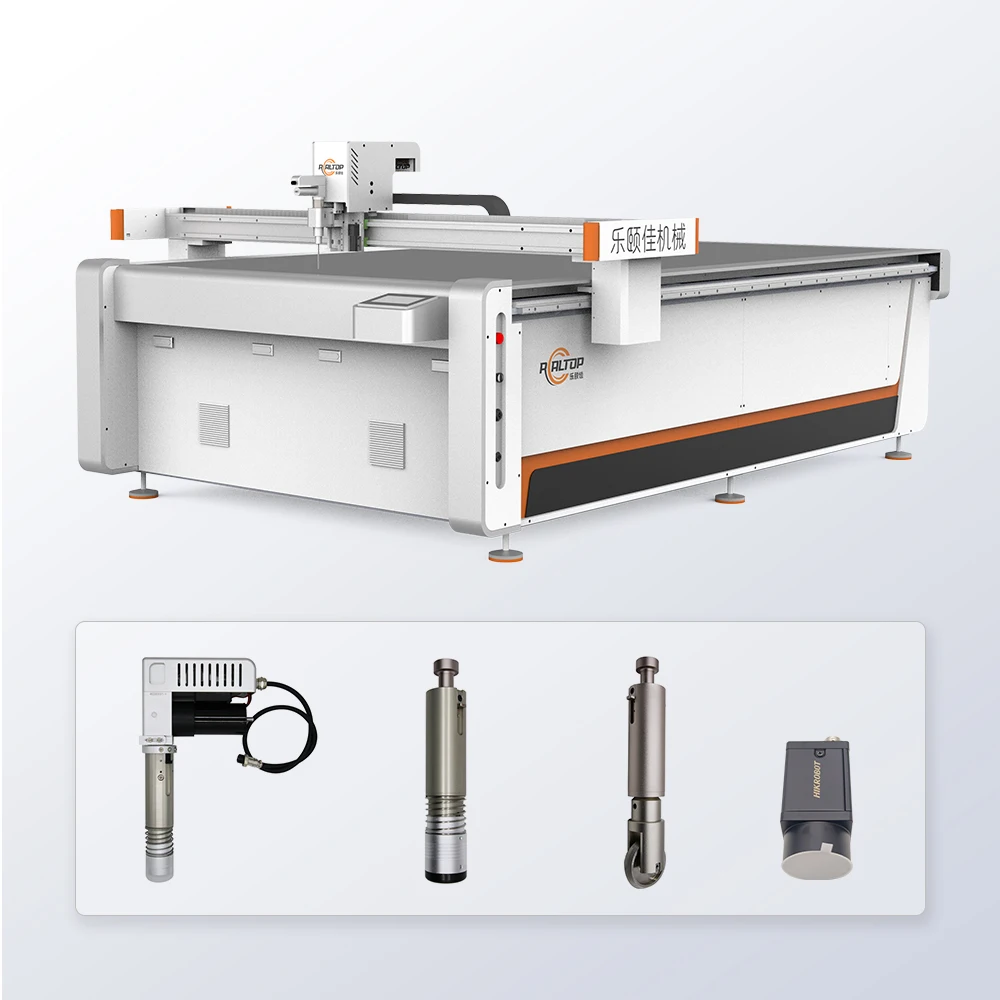
In-house engineered cutting platform — Every tool head and vacuum zone on the RT-D2516/RT-S2516 is configured against the buyer’s actual board stock, not selected from a generic catalogue.
Technical Specifications
| Parameter | Value |
|---|---|
| Model | RT-D2516/RT-S2516 |
| Product Type | CNC Corrugated Box Cutting Machine |
| Working Area | 1600 × 2500 mm |
| Machine Dimensions | 3450 × 2300 × 1250 mm |
| Rated Power | 9 kW |
| Translational Velocity | 800 – 1200 mm/s |
| Cutting Speed | 200 – 800 mm/s (basis to be confirmed against flute profile and board density) |
| Maximum Cutting Thickness | Up to 70 mm with pneumatic tool (board flute type and density to be confirmed) |
| Repeatability | ≤0.1 mm |
| Vacuum Pump | 7.5 kW |
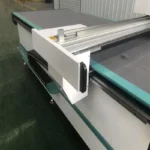
| Transmission Drive | Digital servo motor, linear guide, synchronous belt, imported ball screw |
| Servo Motor | Japanese Yaskawa |
| Linear Guide | Taiwan Hiwin rail |
| Conveyor Belt | Germany imported |
| Tool Head | Swiss imported knife, vibration full cut, vibration half cut, cursor location |
| Functions | Cutting, creasing, marking |
| Instruction Format | HP-GL compatible |
| Voltage | 380V ±10% |
| Safety Device | Infrared sensors |
| Certification | CE |
Application Suitability
| Application | Material or Output |
|---|---|
| Carton sample prototyping | Corrugated board, grey board, art card |
| Short-run corrugated box production | Single, double and triple-wall flute profiles |
| Gift box and display packaging | Laminated board, foam board, honeycomb panel |
| Sticker and label die-cutting | Self-adhesive vinyl, PVC, flexible substrates |
| Gasket and seal prototyping | Rubber, silicon, sponge composite leather |
When Board Thickness Exceeds the Knife’s Real Capacity
A CNC corrugated box cutting machine manufacturer must confirm tool head selection against your actual flute profile, not just the stated working area.
Cutting capacity is a function of knife stroke, board density and flute structure — never a single number on a spec sheet.
I have watched buyers commit to a flatbed cutter based on the 1600 × 2500 mm bed size, only to discover on the first production day that the oscillating knife crushes triple-wall board instead of slicing through it. The vibration frequency that works cleanly on E-flute leaves ragged, torn edges on BC-flute at the same speed [NEED_CITE: oscillating knife behaviour across corrugated flute profiles]. Matching the Swiss imported knife amplitude and the pneumatic assist to your specific board stack is the only way to avoid that outcome.
Matching the Knife to the Flute
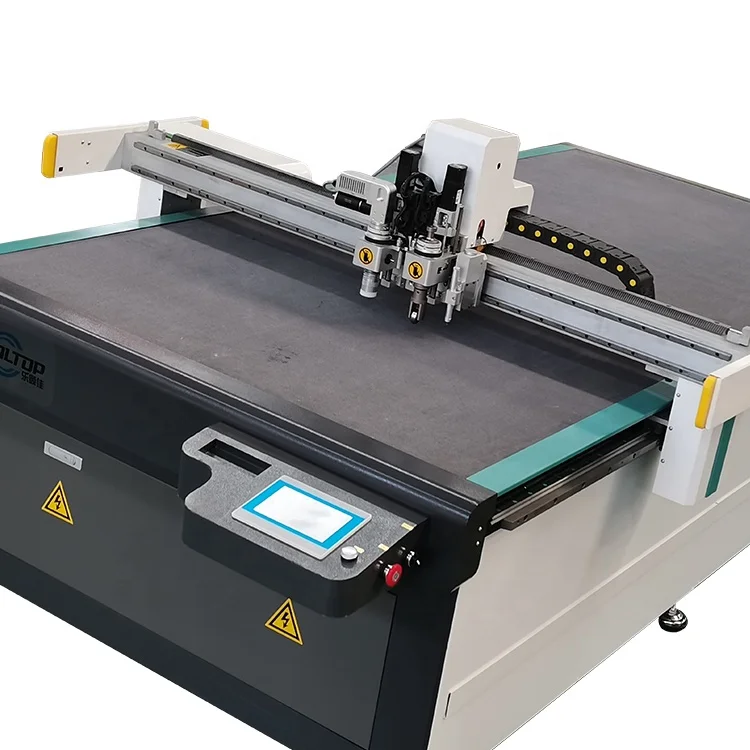
The RT-D2516/RT-S2516 carries a Swiss imported oscillating knife capable of full cut, half cut and cursor location in one head. For micro and single-face flute, the high-frequency vibration produces a clean edge without delaminating the liner. When the job shifts to double or triple-wall, the pneumatic cutting tool engages to push through densities that would stall a standard oscillating blade. This dual-path approach is what a reliable CNC corrugated box cutting machine manufacturer builds into the system from the design stage rather than adding as an afterthought.
Holding the Sheet Flat Across the Full Bed
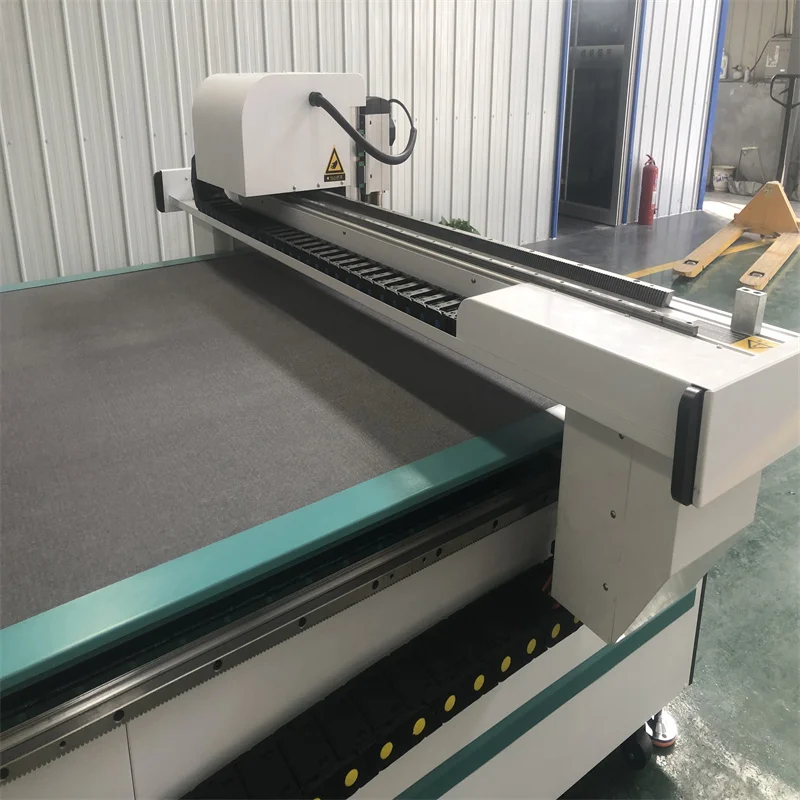
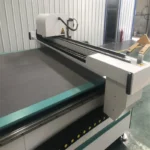
A 7.5 kW vacuum pump paired with a zoned flat table keeps corrugated sheets pinned during high-speed contour cuts. Corrugated board warps with humidity and stored tension, so vacuum zones must be selectable to match the sheet footprint. The Germany imported conveyor belt feeds stock onto the table without manual lifting, reducing operator fatigue on repeat sample runs and short production batches [NEED_CITE: vacuum zoning requirements for corrugated digital cutting].
What the Numbers Actually Mean for Your Floor
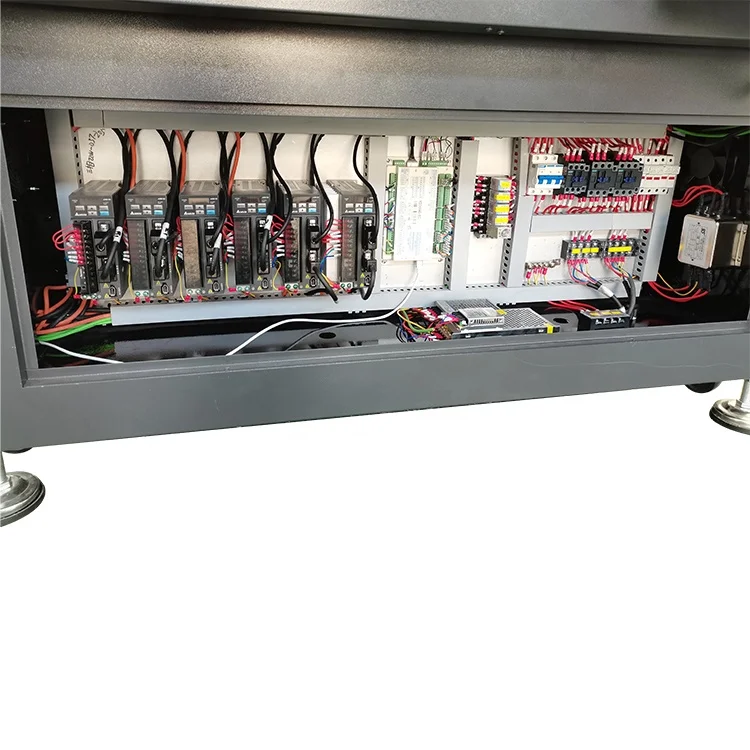
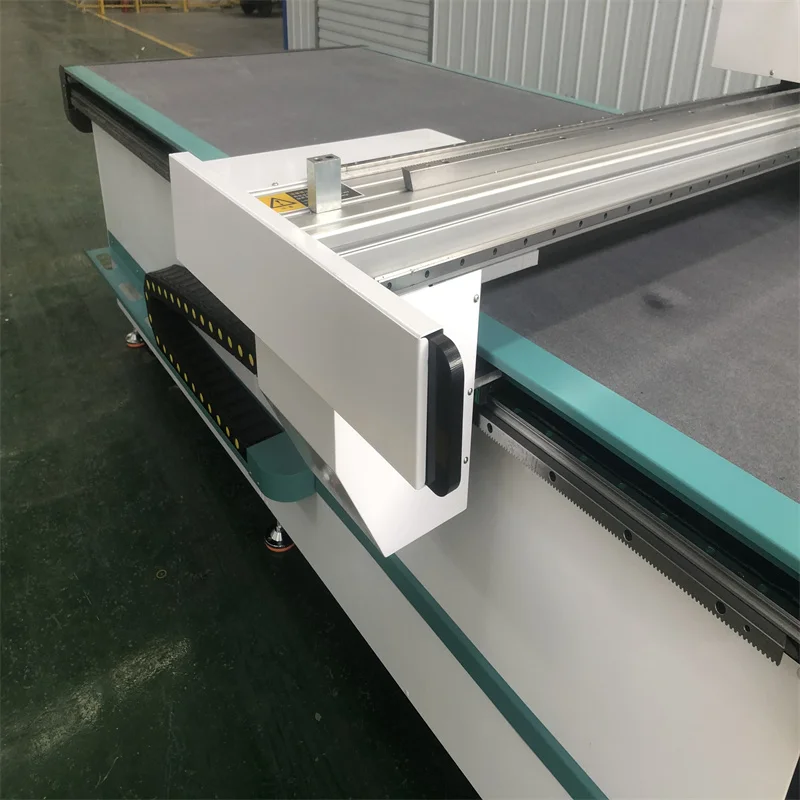
The 9 kW rated power covers servo drives, vacuum pump and conveyor simultaneously, so the machine does not trip breakers when all systems run together. Repeatability of ≤0.1 mm across the Hiwin linear guide means crease lines land on the same coordinate whether you are cutting the first sample or the three-hundredth box in a batch. Yaskawa servo motors manage acceleration and deceleration curves, preventing the belt-slip that causes dimensional drift on long runs. HP-GL compatibility allows direct import from common packaging CAD systems, though buyers should verify DXF and AI file support during the specification stage.
The Cost of Skipping the Sample Cut
Buyers who skip material trials often discover edge-quality problems after the machine is bolted to their floor. A knife that tears coated board will do the same on the production line, and adjusting feed rate alone rarely fixes a tool-material mismatch [NEED_CITE: cutting edge quality on coated and laminated corrugated board]. Requesting a sample cut on your own board stock before shipment is the single most effective way to catch this before it becomes a site-commissioning dispute.
Why Buyers Source This Machine Here
The design team and core factory operate under one roof in Jinan, so configuration changes are handled by the engineers who built the frame rather than a sales intermediary. Every RT-D2516/RT-S2516 leaves the factory with a test record cut on the buyer’s specified board type, giving documented proof of edge quality and crease accuracy. Voltage and frequency are confirmed per destination market before the electrical panel is wired, avoiding costly rewiring on arrival. The tool head list — oscillating, pneumatic, creasing, marking — is selected per material, not bundled as a one-size package. CE documentation accompanies each shipment for customs clearance in regulated markets.
Documentation & Verification
- Machine specification sheet listing confirmed tool head and vacuum table configuration
- Electrical schematic with voltage and frequency matched to destination market
- Sample cutting report on buyer-supplied corrugated board stock and flute profile
- Factory test record with dimensional check before crate closure
- CE declaration document included in the shipping file pack
- Operation and maintenance manual with spare parts list
Installation, Commissioning & Support
- Floor space of roughly 3450 × 2300 mm plus operator clearance on three sides
- Dedicated 380V ±10% circuit rated for 9 kW continuous draw
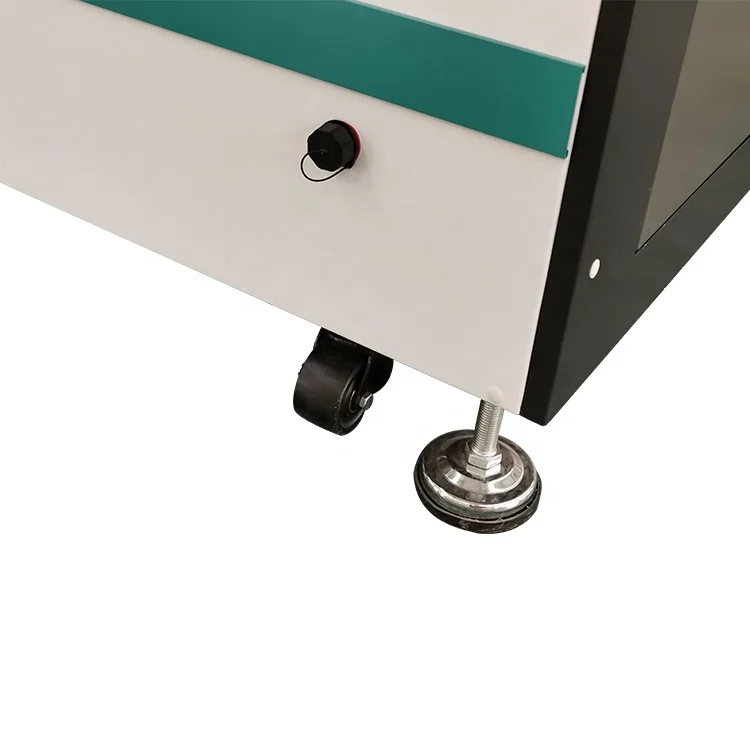
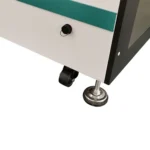
- Machine ships fully assembled; leveling feet require calibrated spirit level
- First-run crease and cut alignment verified against buyer’s die-line file
- Oscillating knife blade and creasing wheel included in initial consumable kit
- Linear guide and ball screw lubrication schedule provided in manual
What We Need to Quote Accurately
Send a sample of the corrugated board you cut most often, including flute type and lamination details, along with your typical maximum sheet size. Confirm the voltage and frequency at your facility, the CAD file format your designers export, and whether creasing is required on the same setup as cutting. With that information we can run a sample test and return a configuration-specific proposal.
Frequently Asked Questions
Q: How is cutting capacity verified for my corrugated flute type before I place an order?
A: We ask you to send a sheet of your actual board stock. Our technicians run a cut-and-crease test using the tool head we recommend for your flute profile, then ship the finished sample back with a report covering edge quality, crease depth and dimensional accuracy. You approve the result before production begins.
Q: What voltage and frequency options are available for export markets?
A: The standard configuration is 380V ±10%, but the electrical panel can be wired for other industrial voltages before dispatch. We confirm the exact voltage, frequency and plug type for your facility during the specification stage so no on-site rewiring is needed after delivery.
Q: How do you decide between oscillating knife and pneumatic knife for my board?
A: Single-face and micro-flute profiles cut cleanly with the oscillating knife at high speed. Thicker double and triple-wall boards need the pneumatic tool to push through the full depth without crushing the flute. We select the right tool after testing your specific board sample.
Q: Does the system accept DXF or AI files, or only HP-GL?
A: HP-GL is the native instruction format. If your design team works in DXF, AI or PDF, tell us during the specification stage so we can confirm software compatibility and, if needed, supply a file-conversion workflow that fits your existing packaging CAD environment.
Q: How is the vacuum table zoned for small box parts that tend to lift?
A: The vacuum table is divided into selectable zones. For small parts we close off unused zones to concentrate suction under the workpiece, and the 7.5 kW pump maintains consistent hold-down even at maximum cutting speed on the 1600 × 2500 mm bed.
You may also like

商品评价
Clear filtersThere are no reviews yet.