


-
 Courier delivery
-
 DHL Courier delivery
-
 Warranty 1 year
-
 Free 30-Day returns

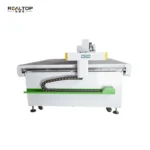
In-house design integration — Realtop engineers the frame, motion system, and Swiss oscillating knife head as a unified platform rather than assembling sourced sub-assemblies, giving buyers direct access to the design team behind the machine.
Technical Specifications
| Parameter | Value |
|---|---|
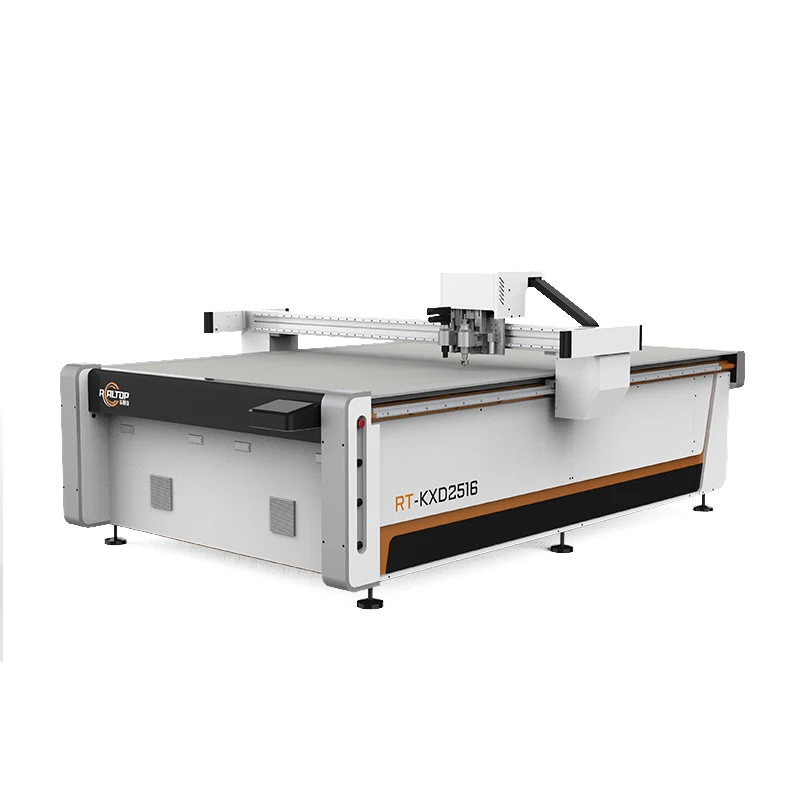
| Model | RT-D2516/RT-S2516 |
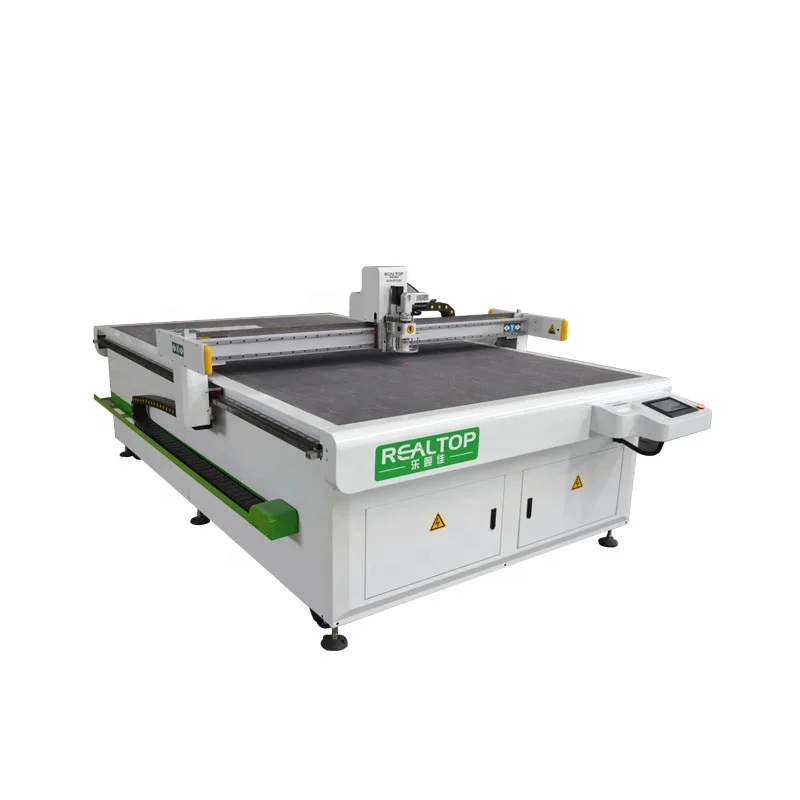
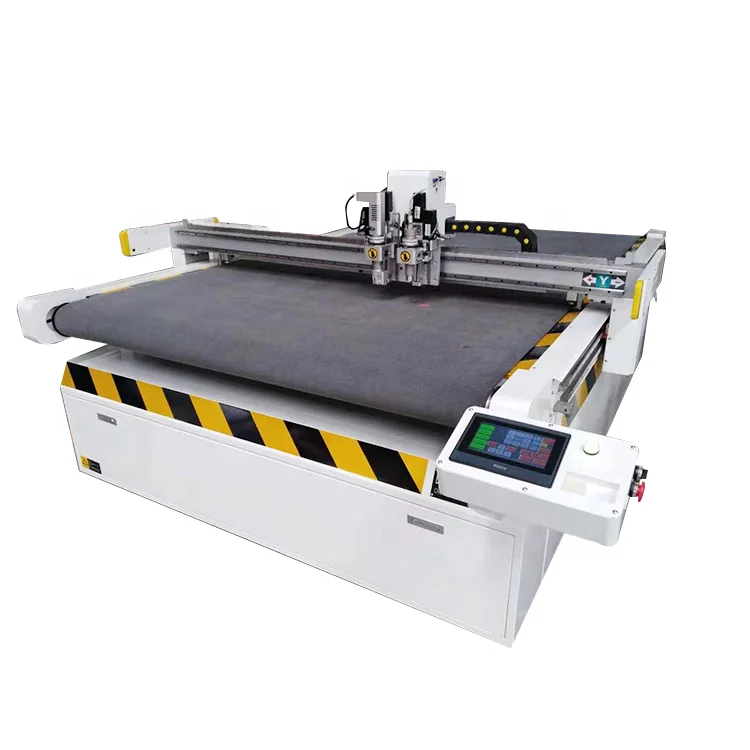
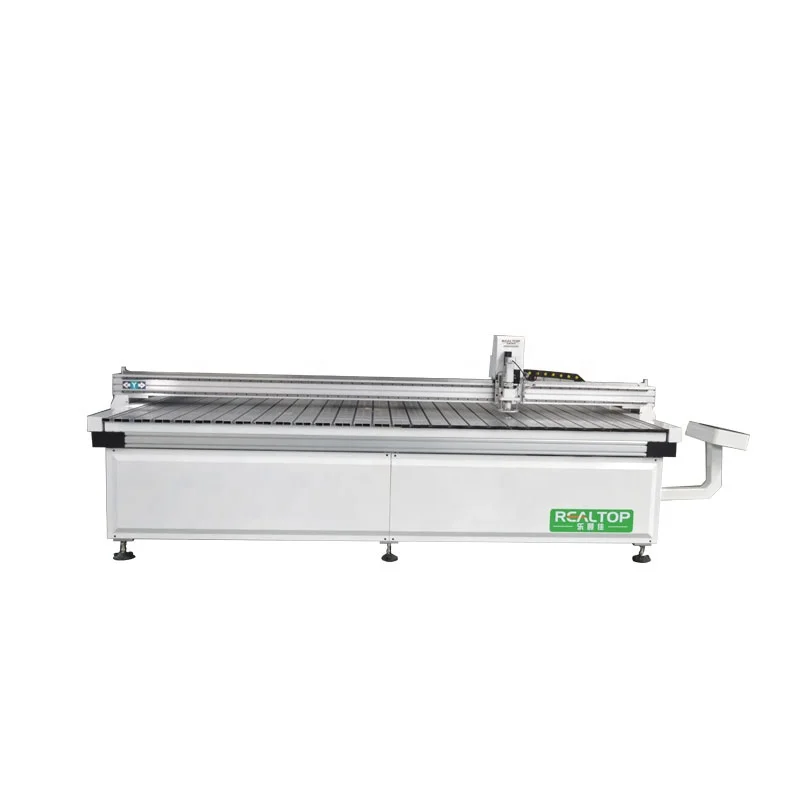
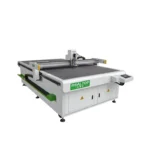
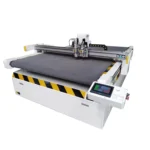
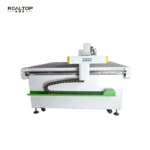
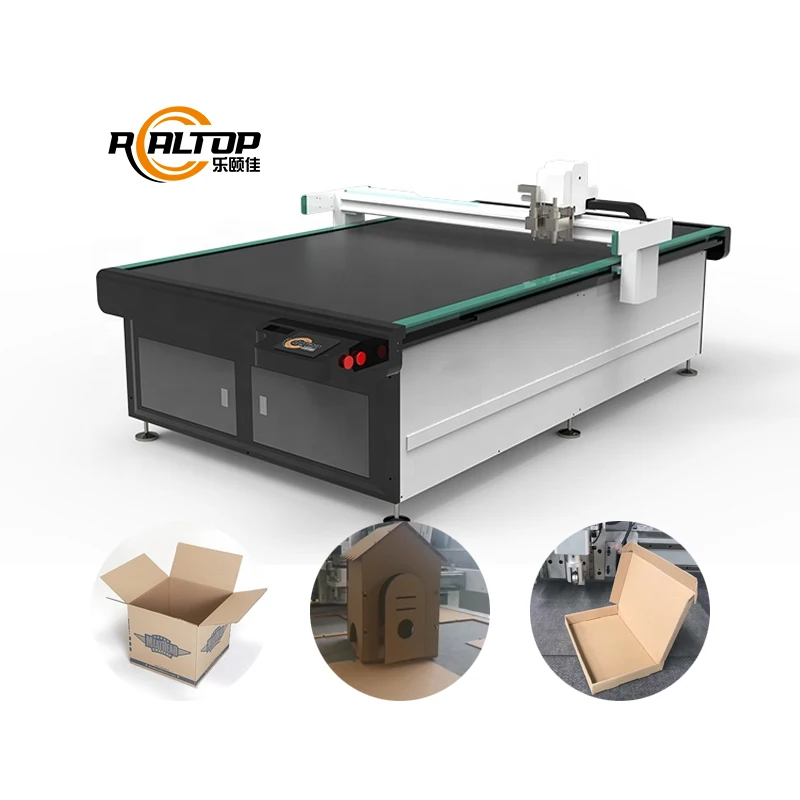
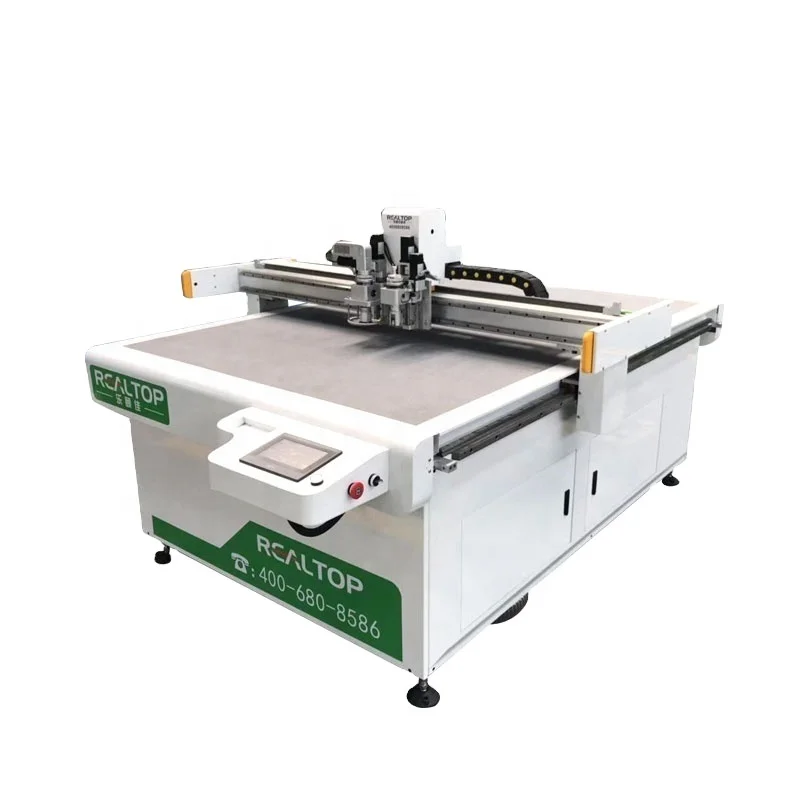
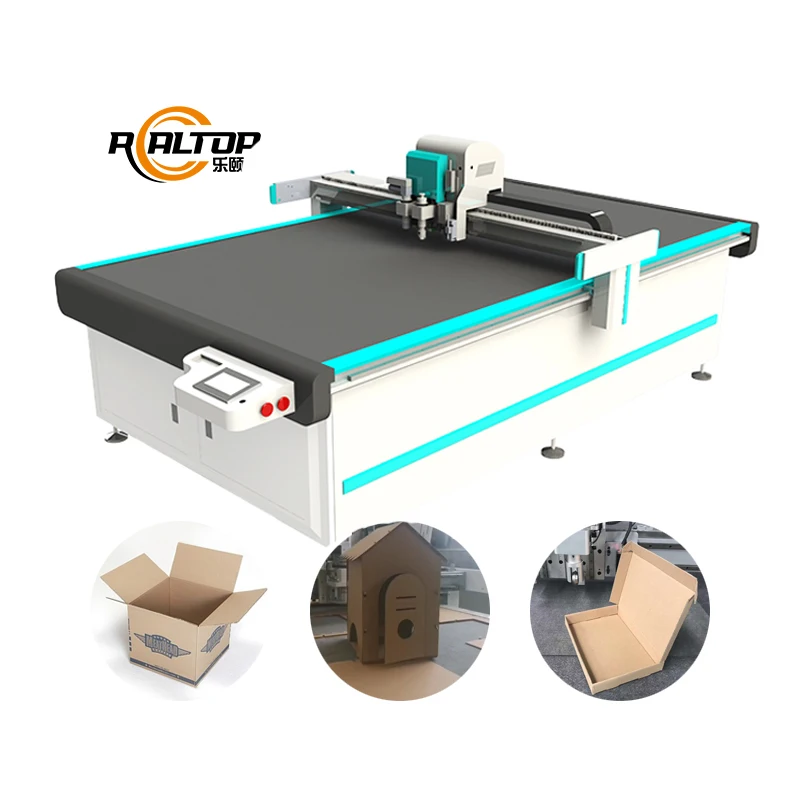
| Product Type | CNC Oscillating Knife Cutting Machine for Fabric and Flexible Materials |
| Working Area | 1600×2500 mm |
| Overall Dimensions (L×W×H) | 3450×2300×1250 mm |
| Rated Power | 9 kW |
| Voltage | 380V ±10% |
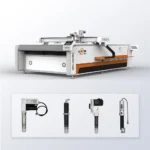
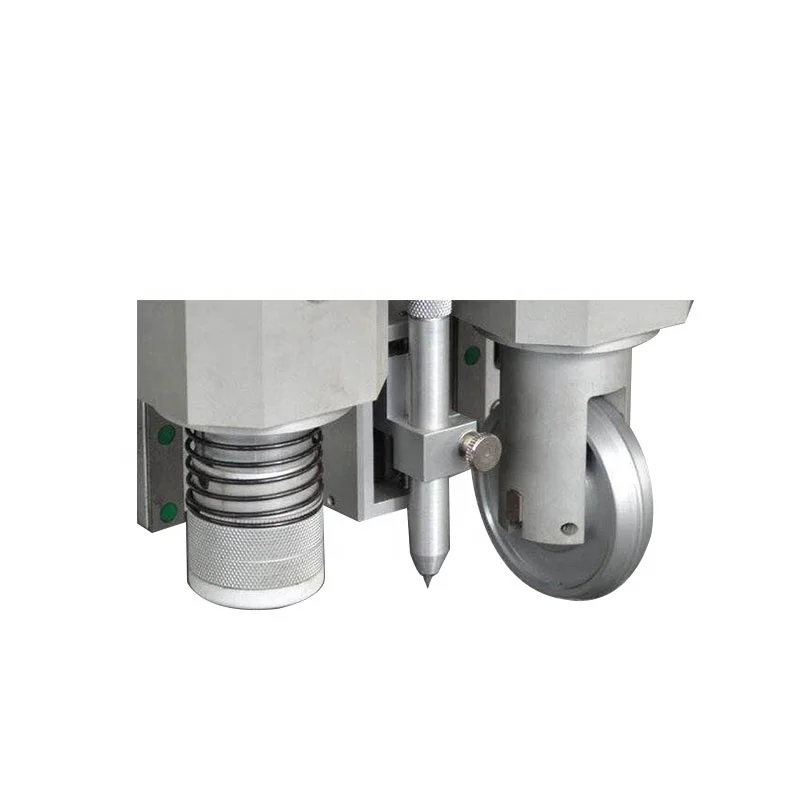
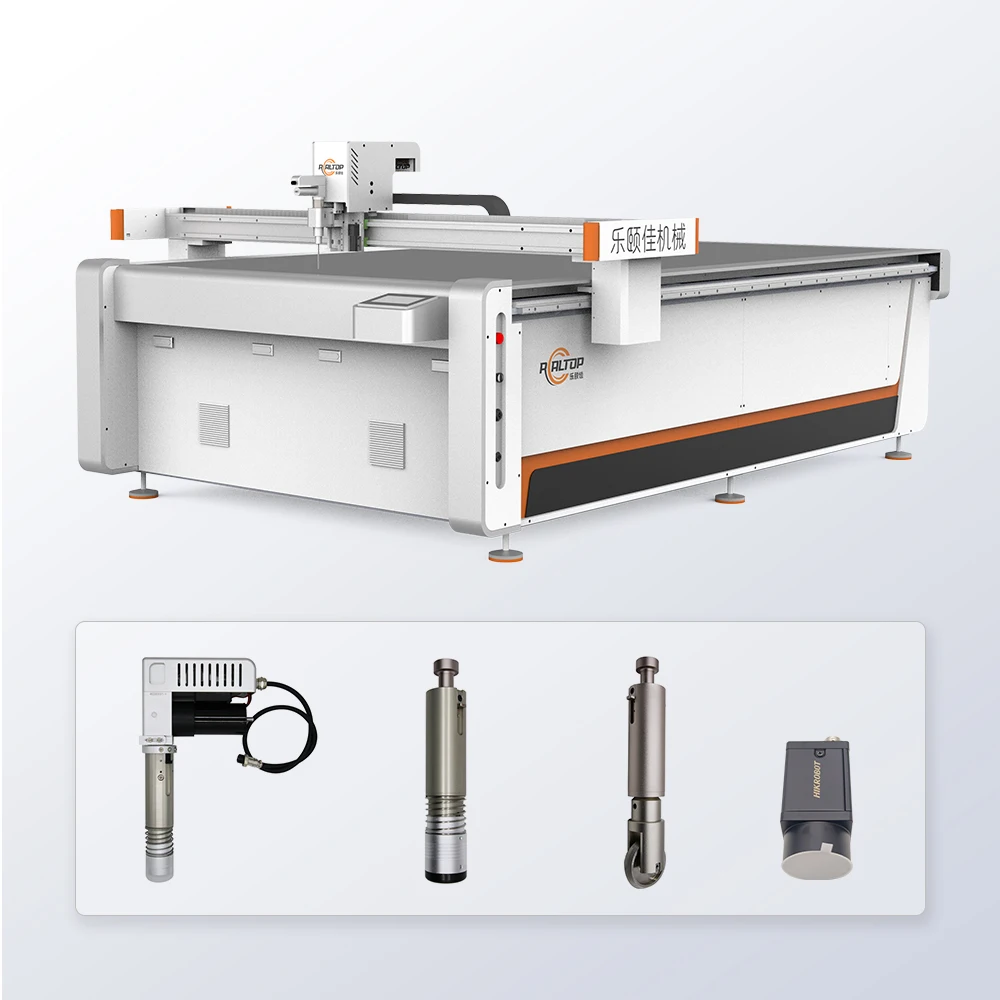
| Tool Head | Swiss imported oscillating knife (vibration full cutting, vibration half cutting, cursor location function) |
| Translational Velocity | 800–1200 mm/s |
| Cutting Speed | 200–800 mm/s (basis to be confirmed) |
| Positioning Repeatability | ≤0.1 mm |
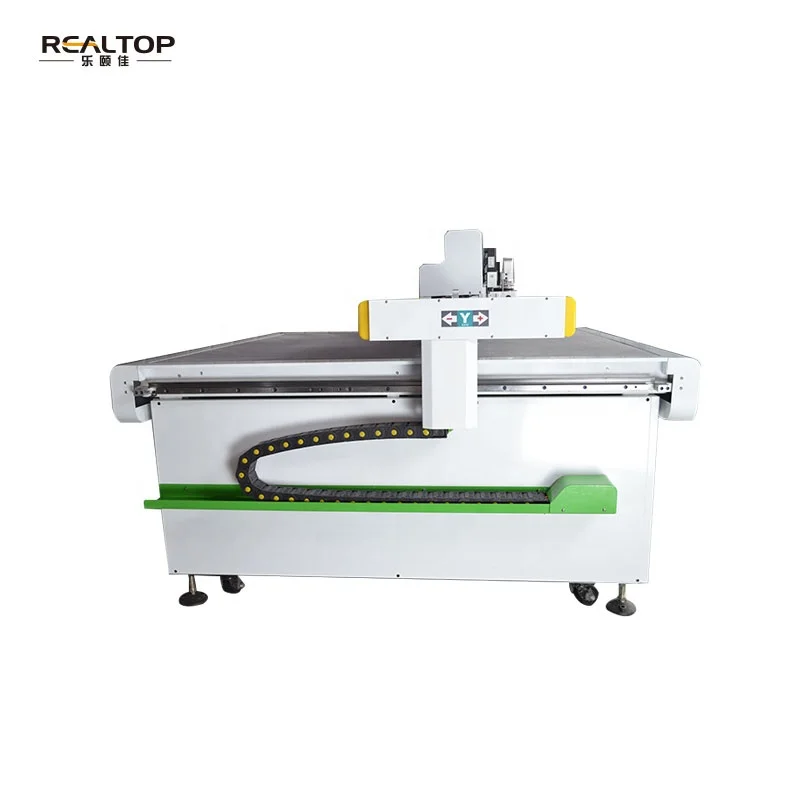
| Transmission System | Japanese Yaskawa digital servo motor, Taiwan Hiwin linear guide, synchronous belt, ball screw |
| Control / Instruction Format | HP-GL compatible format |
| Safety Device | Infrared sensors |
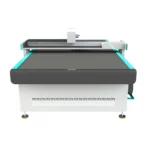
| Table Type | Flat vacuum table with 7.5 kW vacuum pump, auto feeding, Germany imported conveyor belt |
| Certification | CE |
| Warranty | 12 months for whole machine, 3 months for consumables |
Application Suitability
| Application | Material or Output |
|---|---|
| Bridal gown and wedding dress production | Satin, tulle, organza, lace, beaded fabric overlays |
| Garment and formalwear manufacturing | Cotton, silk, polyester blends, lining composites |
| Leather goods and footwear | Composite leather, PU leather, sponge-backed hides |
| Flexible industrial materials | PVC, soft glass, silicone sheets, rubber, sponge composites |
Why Tool Head Selection Matters More Than Working Area
Buyers routinely specify a CNC oscillating knife cutting machine factory order based on table size alone, only to discover the standard knife head cannot handle their actual production material. A bridal atelier once ran sample tests on plain satin and approved the cut quality, then switched to beaded tulle for real production runs — the oscillating knife shredded the beadwork and the vacuum could not hold layered mesh flat, producing three days of scrap before reconfiguration. [NEED_CITE: material-specific tool head selection for oscillating knife cutting]
The cutting method must match the material, not the other way around.
When an OEM cloth cutting table is specified without a prior sample test on the buyer’s actual production material, the gap between quoted capability and real output widens quickly. Delicate woven fabrics, multi-layer composites, and foam-backed materials each demand different oscillation frequencies and blade geometries. The Swiss imported knife head on the RT-D2516/RT-S2516 addresses this with both full-cut and half-cut modes, but only a sample cutting report on the buyer’s own roll stock confirms whether the configuration actually works.
Frame Rigidity and Motion Accuracy Across the Bed
A 1600×2500 mm working area means the gantry travels over four square metres of table surface. Any deflection in the frame or play in the linear guide translates directly into dimensional drift at the far corners of the cutting zone. The RT-D2516/RT-S2516 pairs a Yaskawa digital servo drive with Hiwin linear guides and ball screw transmission to maintain ≤0.1 mm repeatability. This matters especially when cutting nested pattern pieces for bridal gowns where a millimetre of drift across a long train panel forces re-cutting and fabric waste. CNC oscillating knife cutting machine factory buyers evaluating build quality should request the factory test record showing motion accuracy measured at multiple bed positions.
Vacuum Holding Power on Permeable and Layered Fabrics
Holding fabric flat during high-speed traversal is where many flatbed cutting tables fail. [NEED_CITE: vacuum table performance on porous textile materials] The 7.5 kW vacuum pump paired with the Germany imported conveyor belt on the RT-D2516/RT-S2516 is designed to pull air through the permeable surface and keep layered or lightweight materials pinned during cuts at up to 800 mm/s. For open-weave fabrics like tulle or mesh, vacuum effectiveness depends on zoning configuration and whether the pump capacity matches the table area in use. Buyers producing multi-layer layups should verify holding performance on their specific stack height during the sample cutting stage.
Reading the Specification Sheet Against Actual Production Needs
Translational velocity of 800–1200 mm/s describes how fast the head moves between cuts, not through the material. The cutting speed range of 200–800 mm/s is what determines throughput, and this figure depends heavily on fabric type, layer count, and blade wear. The Swiss oscillating knife head supports vibration full cutting for through-cuts on single or multiple plies and half cutting for kiss-cut applications on adhesive-backed materials. HP-GL compatible format governs file input; buyers whose existing CAD workflow outputs DXF or PLT files should confirm software compatibility and nesting file import before placing an order. The infrared sensor array adds operator protection during high-speed traversal across the full bed area.
The Cost of Skipping Material-Specific Sample Tests
Importers who commit to an OEM cloth cutting table without testing their own production material often discover problems only after the machine is installed and operators are trained. A wrong blade geometry on layered sponge composite produces crushed edges rather than clean cuts. Insufficient vacuum on small pattern pieces causes fabric lift mid-cut, ruining nested layouts. [NEED_CITE: fabric cutting edge quality and vacuum hold-down failures] These issues are solvable — but reconfiguring tool heads and vacuum zoning after shipment costs far more than a sample cutting test before the order is finalized.
Why Buyers Source Directly From the Manufacturing Floor
The RT-D2516/RT-S2516 is designed and produced in-house, meaning the engineering team that specifies the Yaskawa servo and Hiwin guide configuration is accessible during the procurement process. The factory provides a complete electrical schematic with voltage confirmation before shipment, so 380V ±10% requirements are validated against the buyer’s local supply. Tool head and table configuration are specified per material and production volume rather than offered as a fixed catalogue package. Sample cutting on the buyer’s own fabric roll is conducted before commitment, generating a report that documents cut edge quality, holding performance, and achievable speed on the actual production material. The in-house design team handles OEM and rebranding requests, including control panel language and documentation customization. [NEED_CITE: OEM manufacturing capability for CNC cutting equipment]
Documentation & Verification
- Machine specification sheet with RT-D2516/RT-S2516 voltage and tool head configuration confirmed
- Electrical schematic showing 380V ±10% wiring and servo motor circuit layout
- Sample cutting report produced on buyer’s own fabric with edge quality documentation
- Factory test record covering motion accuracy across the 1600×2500 mm bed
- Operation and maintenance manual with HP-GL format compatibility notes
- Spare parts list covering Swiss knife blades and conveyor belt consumables
Installation, Commissioning & Support
- 3450×2300×1250 mm footprint requires level concrete floor with clearance for auto-feeding conveyor
- 9 kW rated power demands dedicated 380V circuit with ±10% voltage tolerance verification
- Machine ships partially assembled; gantry and vacuum pump require on-site connection
- First-run calibration includes servo tuning and vacuum zone testing on buyer’s fabric roll
- Operator training covers Swiss knife head blade changes and half-cut depth adjustment
- Consumable spare parts include oscillating blades and Germany conveyor belt segments
What We Need From Your Side to Provide an Accurate Configuration
To recommend the correct tool head and vacuum zoning for your production line, please share the specific fabric types you cut, including layer count and maximum stack height. Confirm your local voltage and frequency standards so the electrical system matches your facility supply before dispatch. Let us know whether your existing nesting software outputs HP-GL compatible files or if format conversion is needed. If you have a specific production material you want tested, send a sample roll and we will run cutting trials and return a detailed report before you commit to the order.
Frequently Asked Questions
Q: How does the in-house design team customize the machine for OEM or rebranding requests?
A: The engineering team adjusts control panel language, electrical standards, and documentation branding to match the importer’s market requirements. Frame and motion components remain the proven RT-D2516/RT-S2516 platform, while external panels, software splash screens, and manual layouts are adapted. Buyers receive a full specification confirmation package before production begins, ensuring OEM configuration matches the destination market’s regulatory and operational expectations.
Q: What factory test and quality control records are provided before shipment?
A: Each RT-D2516/RT-S2516 undergoes assembly verification, motion accuracy measurement across the full 1600×2500 mm working area, and vacuum pump performance testing. The factory test record documents these results along with servo drive calibration data and infrared sensor functionality. Buyers receive this record alongside packing photographs before the machine leaves the production floor, giving full visibility into build quality prior to dispatch.
Q: Can I send my own material for sample cutting, and what does the report cover?
A: Send your actual production fabric roll or sheet samples to the factory. The sample cutting test runs on the RT-D2516/RT-S2516 using the recommended Swiss oscillating knife configuration and documents cut edge quality, material holding stability under vacuum, achievable cutting speed on your specific material, and any tool head adjustments needed. The written report is returned with the sample pieces for your evaluation before order commitment.
Q: How are spare parts and after-sales support structured for overseas importers?
A: The spare parts list covers Swiss knife blades, conveyor belt segments, and wear items specific to the 7.5 kW vacuum pump system. The 12-month whole machine warranty and 3-month consumable warranty apply from the date of shipment. Operation and maintenance manuals include troubleshooting guides, and the support team provides remote diagnostics using the control system’s error logs when connectivity is available at the installation site.
Q: What is the OEM capability for control panel language and electrical standard customization?
A: The RT-D2516/RT-S2516 electrical system is configurable for destination market voltage and frequency requirements, with the 380V ±10% base specification adapted as needed. Control interface language, safety label translations, and documentation sets are prepared per the buyer’s market. The in-house design team confirms all customization points through the specification sheet sign-off process, so electrical and language requirements are locked before production starts.
You may also like

商品评价
Clear filtersThere are no reviews yet.