


-
 Courier delivery
-
 DHL Courier delivery
-
 Warranty 1 year
-
 Free 30-Day returns

In-House Design & Production — We cover frame fabrication, motion integration, and tool head configuration under one roof, letting us validate cutting parameters on your actual material before building the machine.
Technical Specifications
| Parameter | Value |
|---|---|
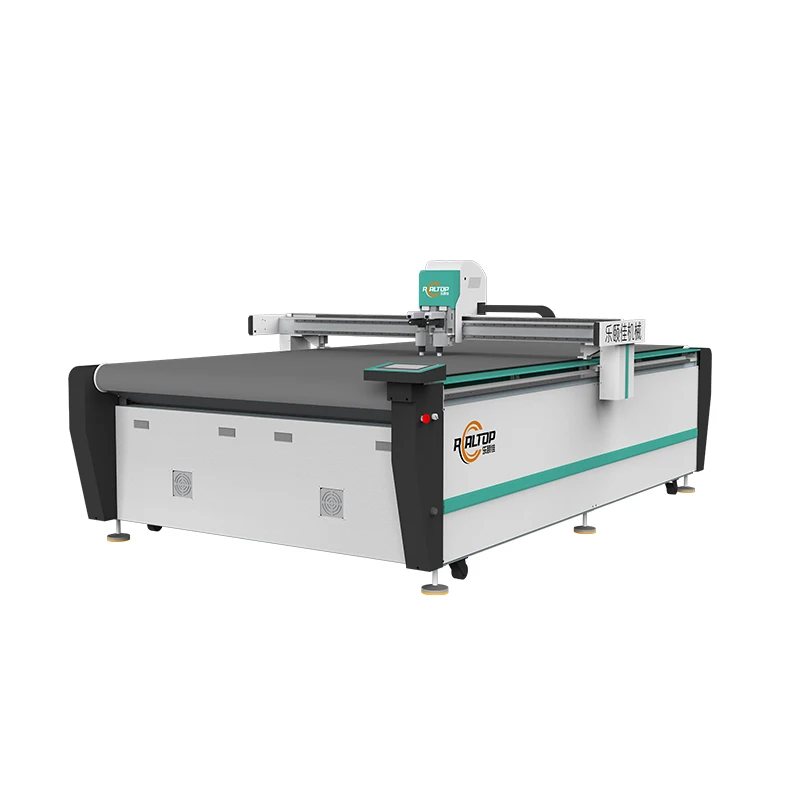
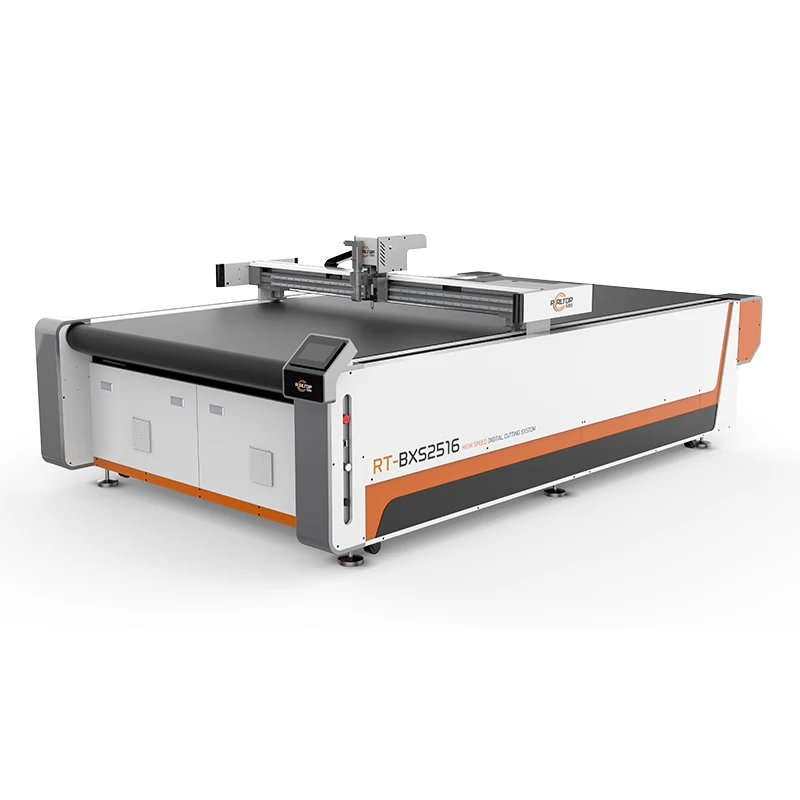
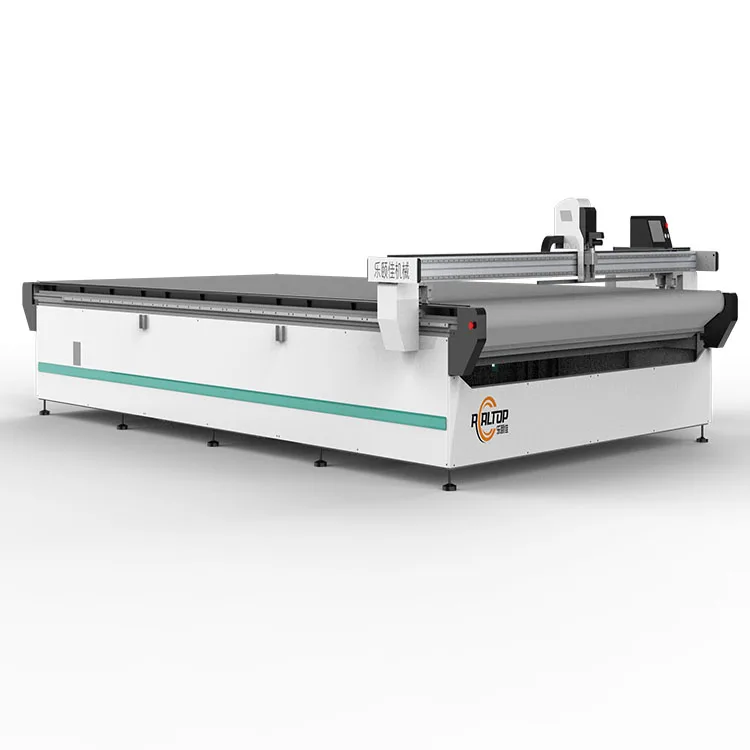
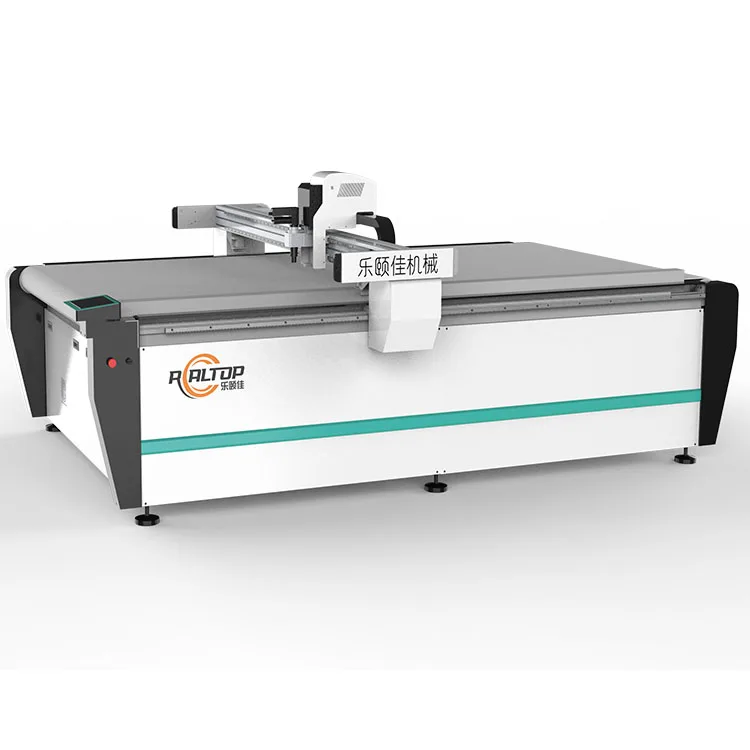
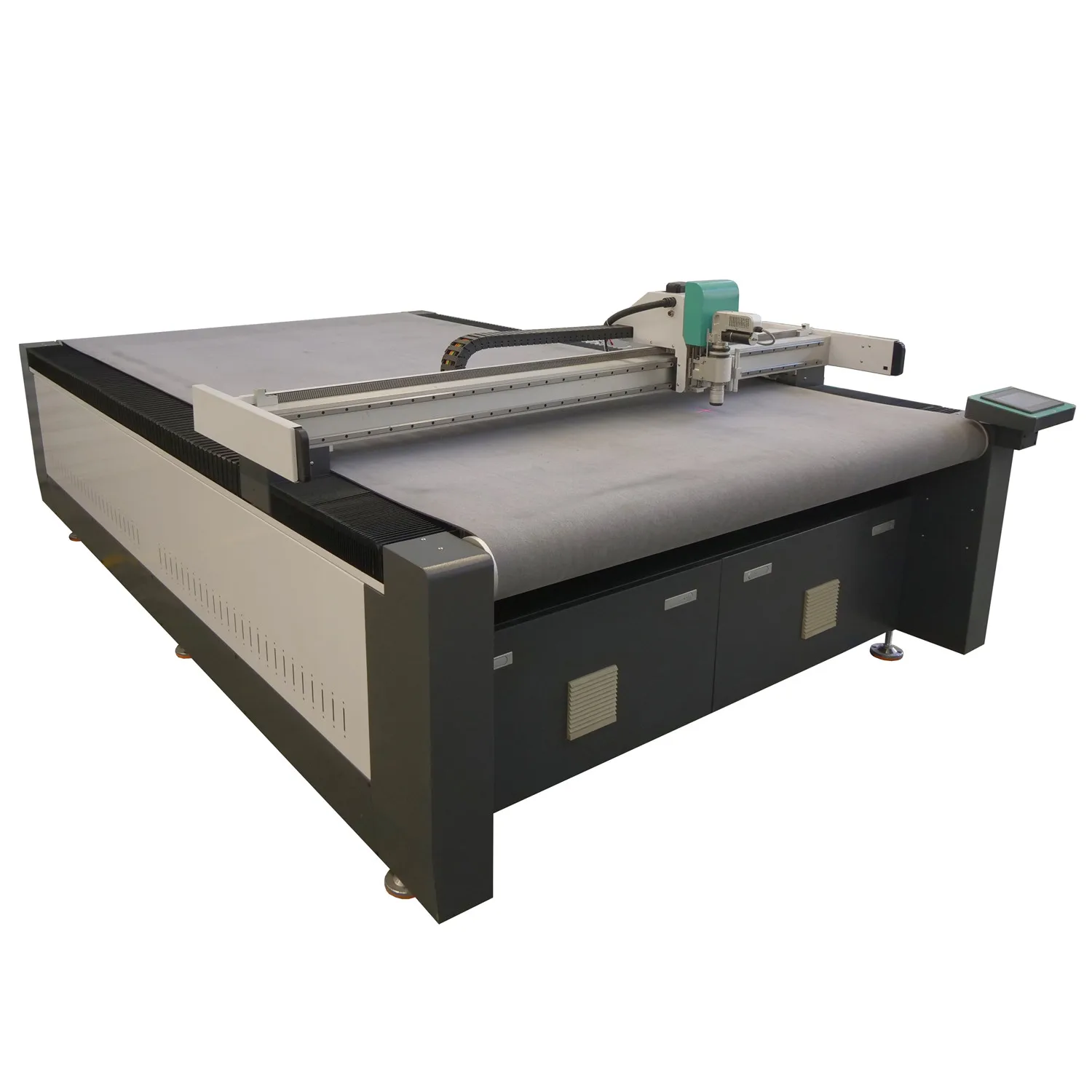
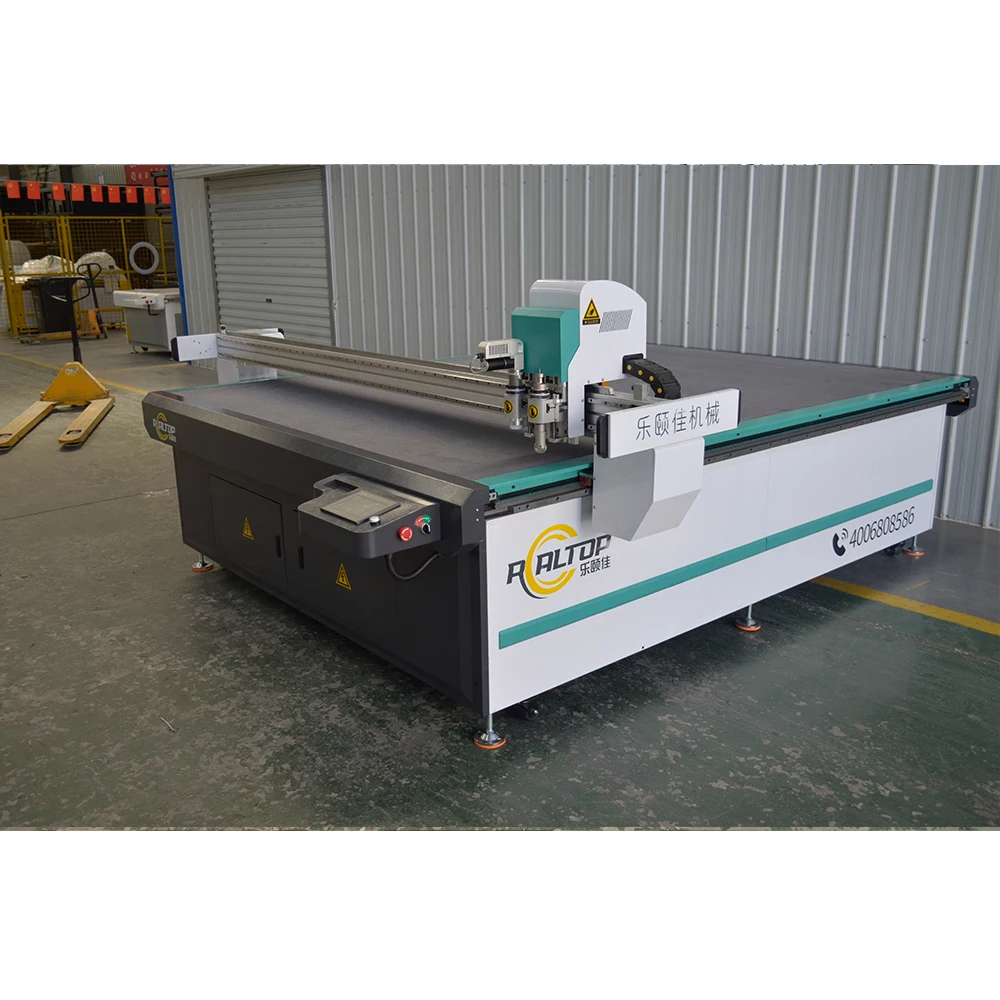
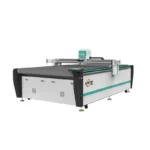
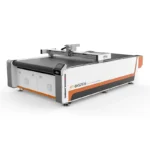
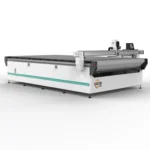
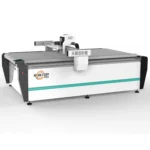
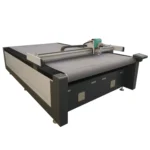
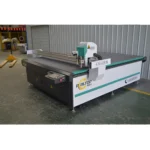
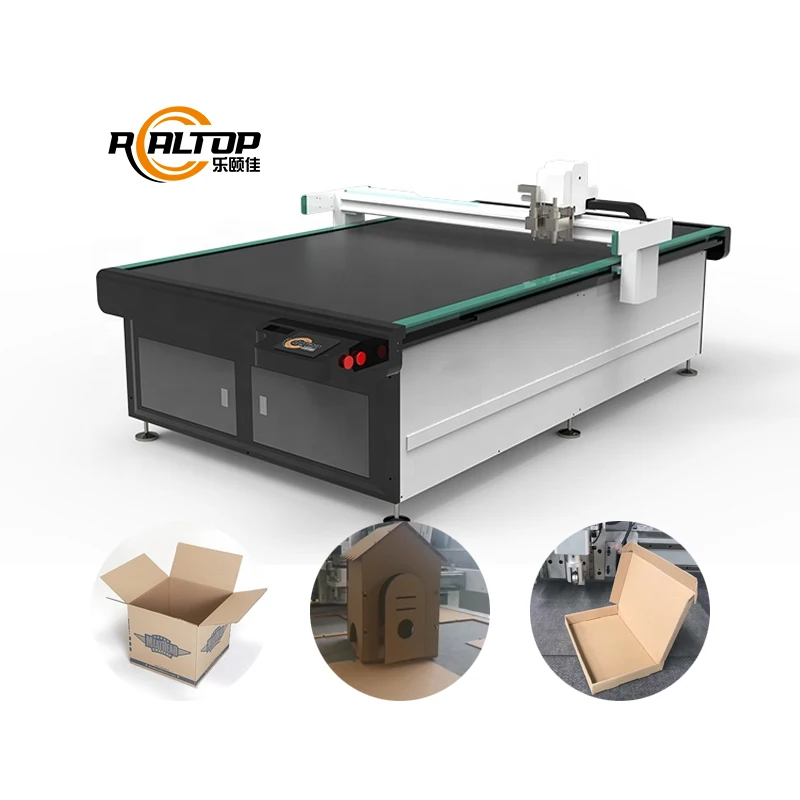
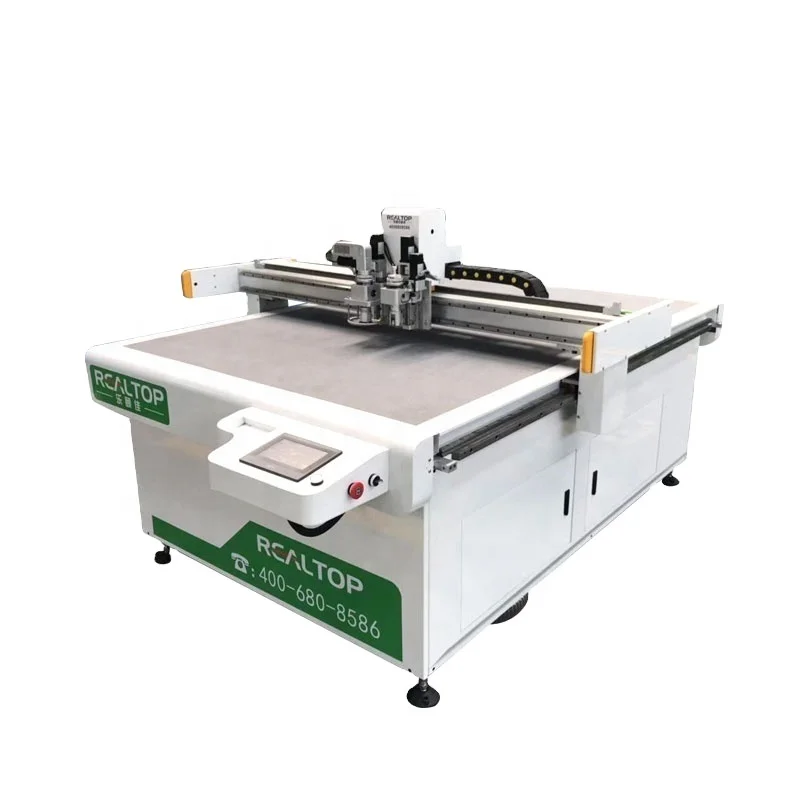
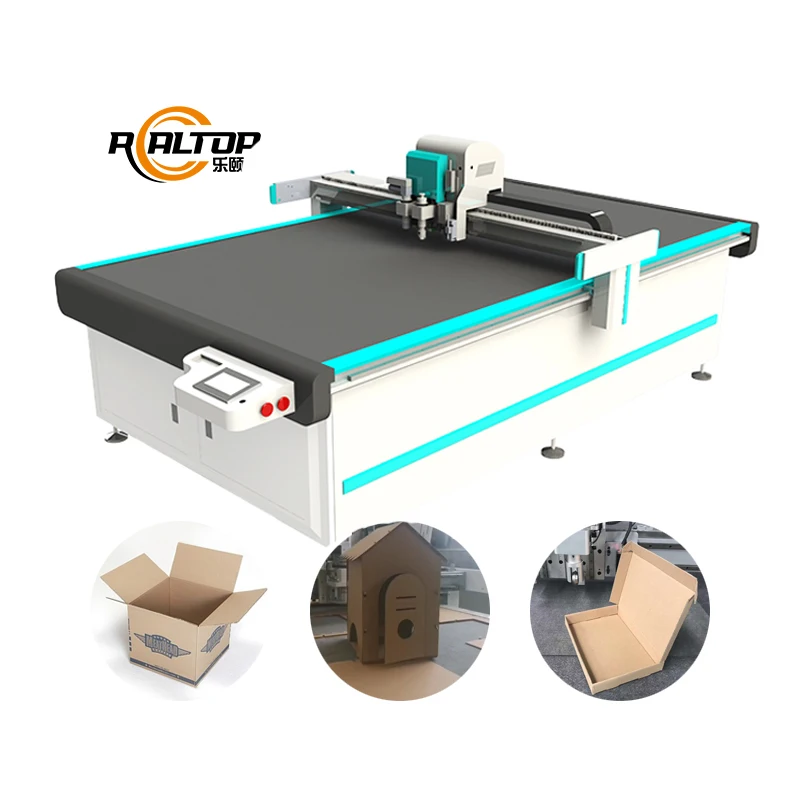
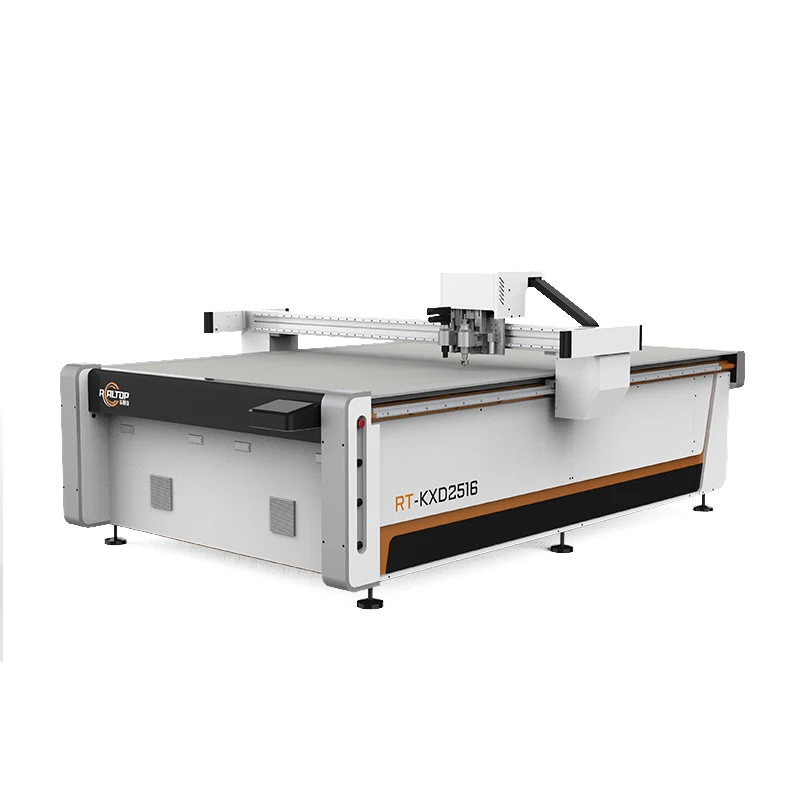
| Product Type | CNC Digital Flatbed Cutting Machine |
| Working Area | 1600 × 2500 mm |
| Machine Dimensions | 3450 × 2300 × 1250 mm |
| Rated Power | 9 kW |
| Voltage | 380V ±10% (frequency to be confirmed) |
| Transmission System | Digital servo motor, linear guide, synchronous belt, ball screw |
| Servo Motor Brand | Delta (Panasonic optional) |
| Vacuum Table | Magnesium-aluminum alloy, PVDF fluorocarbon coating, anodic and hard oxidation |
| Vacuum Pump | 7.5 kW, aviation aluminum shell, built-in silencer sponge |
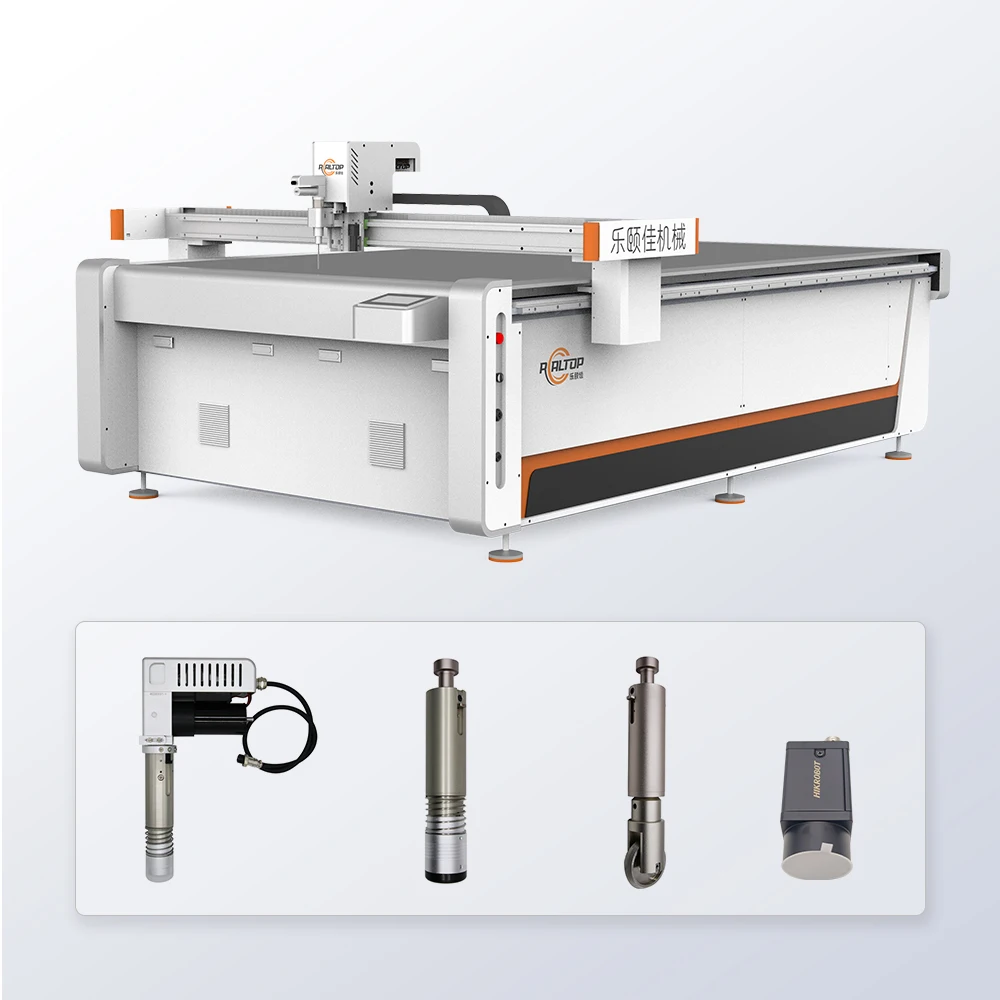
| Tool Head Options | Swiss imported knife, oscillating knife, pneumatic knife, high-power vibrating knife, circular knife, V-cutting knife, drag knife, creasing wheel, dotted line knife, punching, brush |
| Visual Positioning | Small CCD camera mark point positioning, panoramic camera recognition, projection positioning |
| Translational Velocity | 800–2000 mm/s |
| Cutting Speed | 200–800 mm/s (basis to be confirmed) |
| Cutting Thickness | ≤100 mm (varies by material) |
| Repeated Accuracy | ≤0.1 mm |
| Fixed Model | Flat working table (conveyor belt optional) |
| Safety Device | Infrared sensors, anti-collision beam sensors, emergency stop |
| Instruction System | HP-GL compatible format |
| Software Language | English, Russian, Italian, Chinese (custom languages available) |
| Cutting Method | Blade physical cutting (non-laser) |
| Warranty | 1 year (domestic and overseas) |
Application Suitability
| Application | Material or Output |
|---|---|
| Garment and Footwear | Clothing cloth, leather, shoe material, non-woven fabric |
| Automotive Interiors | Composite materials, PU, EVA, XPE, carpet |
| Bags and Luggage | Luggage material, synthetic leather, heavy-duty textile |
| Sealing and Gaskets | PTFE, ETFE, rubber, soft glass, silicon, fiberglass |
| Packaging and Printing | Cardboard, corrugated cardboard, sticker, film |
| Soft Furnishings | Sponge, foam board, carpet, textile |
Why Material Trials Matter More Than the Brochure
A CNC flatbed cutting machine manufacturer must validate the tooling on your exact fabric before the order is locked.
I once saw a production line stall because a machine specified for standard cotton was suddenly asked to cut high-elasticity spandex blends. The material shifted under the knife, ruining the batch. We had to re-engineer the hold-down and tool head on-site [NEED_CITE: material handling challenges in automated textile cutting]. Sourcing a CNC flatbed cutting machine manufacturer without demanding a physical sample cut on your own roll stock often leads to compromised edge quality or rejected parts.
Engineering the Frame for Vibration Control
When an oscillating knife vibrates thousands of times per minute, the frame must absorb that energy without transferring it to the cutting head. Our machines use a thick-walled seamless steel frame that is welded and high-temperature tempered. This thermal stress relief prevents the bed from warping over years of use. The final machining is done on a CNC machining center to ensure the linear guides sit on a perfectly flat plane, which is critical for maintaining the ≤0.1 mm repeated accuracy across the entire 1600 × 2500 mm workspace.
Vacuum Hold-Down and Zoning Strategy
Holding a single sheet of leather is straightforward; holding a porous non-woven fabric or a small, intricate gasket pattern requires precise air management. The vacuum table is milled from a magnesium-aluminum alloy and finished with a PVDF fluorocarbon coating to resist corrosion from shop-floor humidity. The 7.5 kW vacuum pump features an aviation aluminum shell and internal silencer sponge to keep noise levels manageable in enclosed cutting rooms. Multi-zone activation allows the operator to isolate suction only where the material sits, preventing air leakage around the edges and ensuring the fabric does not lift during high-speed traversing [NEED_CITE: vacuum table zoning principles in flatbed cutting].
Tool Head Configuration for Flexible Materials
Cutting speed and edge quality depend entirely on matching the tool head to the material density. A Swiss imported oscillating knife handles dense composites and thick foam board, while a circular knife might be specified for continuous long runs of thin garment cloth. A CNC flatbed cutting machine manufacturer should itemize the tool head configuration rather than offering a generic package. For printed textiles, the small CCD camera mark point positioning or panoramic camera recognition aligns the cut path to the printed contour, compensating for any stretch or distortion that occurred during the printing process.
The Cost of Ignoring Electrical and Environmental Specs
Voltage fluctuation is a common cause of servo drive failure in export markets. If the destination factory runs on a 60 Hz grid while the machine is wired for 50 Hz, the vacuum pump and servo motors will overheat and degrade prematurely. Similarly, failing to specify the correct safety sensor configuration can lead to beam collisions if the machine is placed near high-traffic forklift aisles. These oversights usually surface only after the machine is installed and the warranty claim is disputed [NEED_CITE: electrical compatibility issues in industrial machinery exports].
Why Source From This Facility
We operate an in-house design team and core factory that builds both the knife and laser cutting platforms, giving buyers direct access to the engineers who configure the motion systems.
- Material-Specific Configuration: Tool heads and table zoning are specified per material profile, not sold as a standard package.
- Pre-Shipment Validation: Factory test records and sample cutting reports are generated on the buyer’s actual material before the crate is sealed.
- Electrical Customization: Voltage, plug type, and control language are confirmed against the destination market requirements during the schematic review.
- Documentation Completeness: Every unit ships with electrical schematics, CE declarations, and an itemized spare parts list.
Documentation & Verification
- Machine specification sheet detailing the exact servo motor brand and vacuum pump rating.
- Electrical schematic and voltage confirmation matching the destination grid frequency.
- Tool head and table configuration list itemized for your specific material mix.
- Sample cutting report generated on your actual fabric or composite roll.
- CE declaration and factory test record signed by the QC manager.
- Operation manual and software license with confirmed file format compatibility.
Installation, Commissioning & Support
- Requires a level concrete floor to support the 3450 × 2300 × 1250 mm footprint without twisting the frame.
- Dedicated 380V ±10% circuit required to protect the 9 kW rated power draw and Delta servo drives.
- Vacuum pump and main bed are shipped in a single crate to minimize on-site assembly time.
- Initial calibration of the CCD camera and tool head offset is performed during the first power-up.
- Operator training covers nesting software import and routine cleaning of the PVDF-coated table.
- Spare parts list includes consumable blades and silencer sponges for the 7.5 kW vacuum pump.
Inquiry Guidelines for Production Managers
To provide an accurate configuration, we need to know the material type, maximum thickness, and daily cutting volume. Please confirm the local voltage and frequency, as well as the preferred control software language. If you are cutting printed contours, specify the mark type so we can select between the small CCD or panoramic recognition system. Sending a physical sample roll allows us to validate the hold-down pressure and tool head selection before finalizing the quotation.
Frequently Asked Questions
Q: What is the factory’s QC process from frame welding to final assembly?
A: The frame undergoes high-temperature tempering after welding to relieve stress, followed by CNC machining for flatness. The magnesium-aluminum vacuum table is verified for suction uniformity across all zones. Final assembly includes a run-off test using the buyer’s specified tool head and material parameters to ensure the ≤0.1 mm repeated accuracy is met before packing.
Q: Can voltage, plug type, and control language be customized before shipment?
A: Yes. The electrical schematic is reviewed and confirmed with the buyer during the ordering process. We configure the 380V ±10% system to match the local frequency (50/60 Hz) and install the appropriate plug. The control interface and nesting software can be set to English, Russian, Italian, Chinese, or other custom languages.
Q: What OEM and private-label options are available for distributors?
A: Distributors can request custom branding on the machine housing and control interface. We provide full documentation packages, including electrical schematics and spare parts lists, that can be co-branded or white-labeled. The tool head configuration can also be standardized across a distributor’s region to simplify local inventory and support.
Q: How is the tool head configuration determined for different fabrics?
A: We require a physical sample of the material to test cutting depth, edge quality, and hold-down requirements. Based on the trial, we select from options like the Swiss imported oscillating knife, pneumatic knife, or circular knife. The vacuum table zoning is also adjusted to ensure porous or stretch materials remain flat during high-speed cutting.
Q: What documentation ships with each machine?
A: Each unit includes a detailed machine specification sheet, electrical schematic, tool head configuration list, and a sample cutting report. We also provide a CE declaration, factory test record, operation and maintenance manual, software license note, and a priced spare parts list for long-term maintenance planning.
You may also like

商品评价
Clear filtersThere are no reviews yet.