


-
 Courier delivery
-
 DHL Courier delivery
-
 Warranty 1 year
-
 Free 30-Day returns

In-House Design and Factory Build — Frame, motion components, and vacuum table are engineered and assembled under one roof, matching tool head selection to your specific fabric density before the order is confirmed.
Technical Specifications
| Parameter | Value |
|---|---|
| Product Type | Cloth CNC Cutting Machine |
| Working Area | 1600×2500 mm |
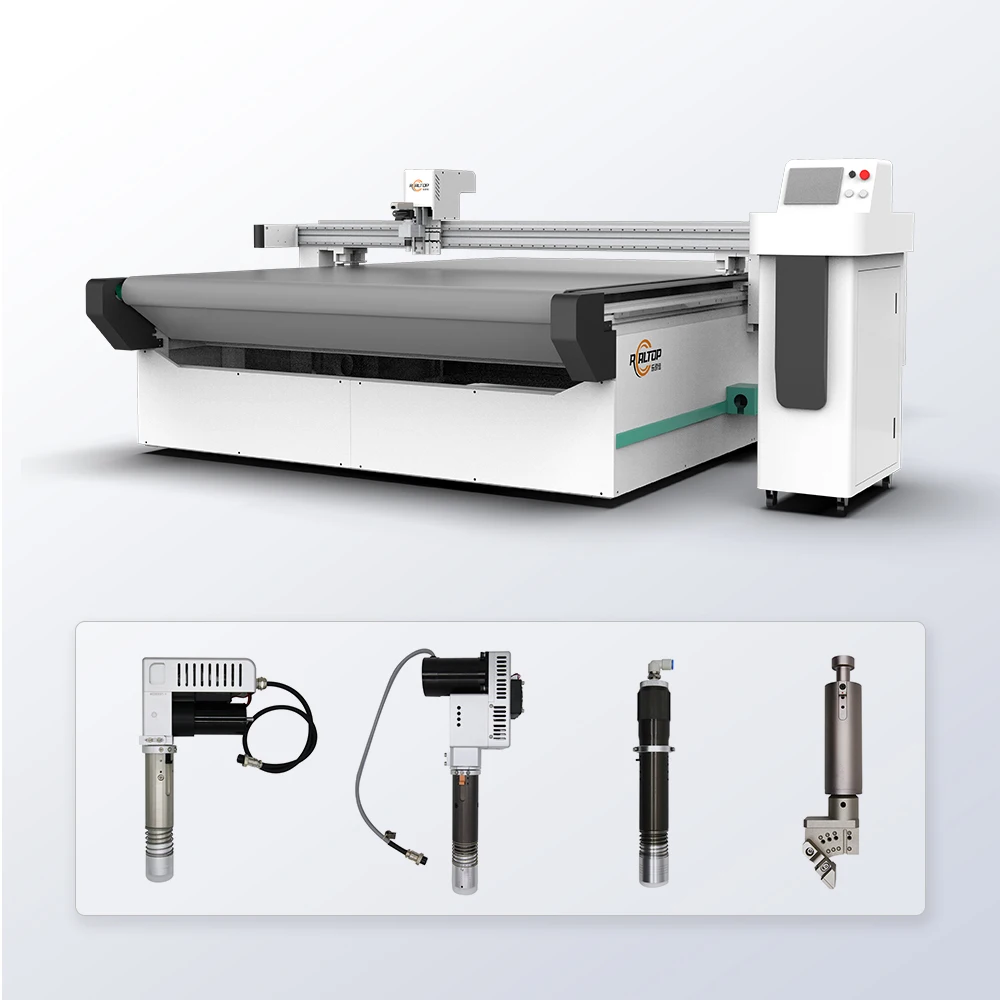
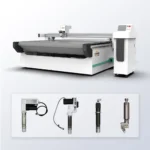
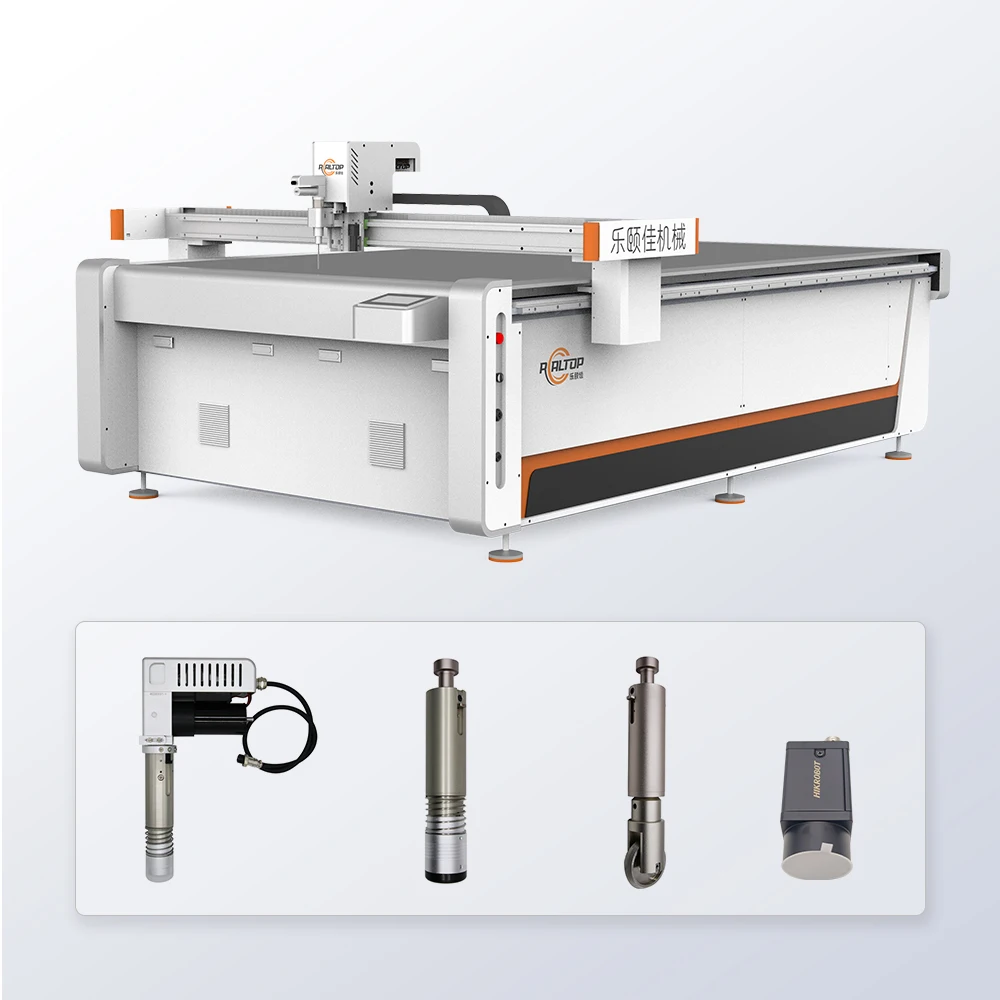
| Tool Head Options | Oscillating knife, Driven rotary knife, Creasing wheel, Kiss cutting tool, Pneumatic knife, Milling tool, V groove knife |
| Cutting Speed | 0–2000 mm/s |
| Cutting Thickness | ≤ 30 mm |
| Cutting Accuracy | ±0.1 mm |
| Repeatability | ±0.1 mm |
| Vacuum Pump | 9 kW |
| Vacuum Table | Aluminum bellows vacuum table |
| Control System | PLC control panel |
| Servo Drive Options | Panasonic, Delta, Dorna |
| Voltage Options | 110V / 220V / 380V (frequency to be confirmed) |
| Software & File Formats | PLT, DXF, AI, PDF; dedicated packaging box structure design software included |
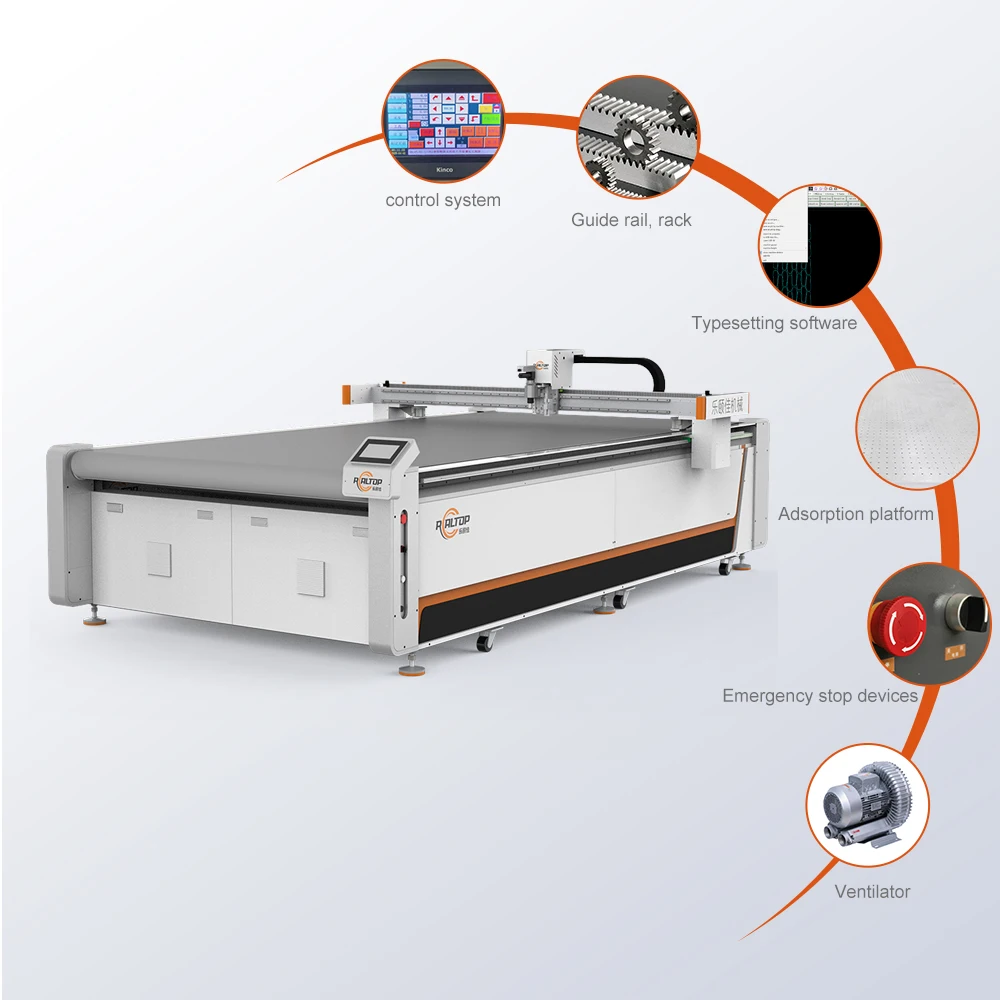
| Safety Device | Infrared sensor device and emergency stop device |
| Overall Dimensions (L×W×H) | 3300×2100×1350 mm |
| Language Options | English, Russian, Italian, Chinese; special languages customizable |
| Feeding System | Auto feeding with conveyor configuration |
| Multi-layer Capacity | Up to 30–50 mm thickness (basis to be confirmed) |
| Productivity Claim | 5–6× manual cutting (basis not stated in source) |
| Certification | CE |
Application Suitability
| Application | Material or Output |
|---|---|
| Apparel manufacturing | Suits, knitwear, lace, pattern-matching fabric layouts |
| Automotive interiors | Seat fabrics, carpets, PVC floor mats |
| Home textiles | Sofa fabrics, curtains, rugs, multi-layer textile cutting |
| Composite processing | Carbon fiber prepreg, aramid, specialty reinforcement materials |
| General non-metal | Cardboard, carton, EVA foam, leather, acrylic, PTFE, rubber |
The Voltage Mismatch That Stops a Line Before It Starts
Specifying a CNC oscillating knife cutting table manufacturer starts with a conversation about material and voltage, not just a working area dimension.
Confirming voltage, frequency, and plug type before production prevents costly rewiring or transformer work at the buyer’s facility.
I have visited workshops where a 380V machine arrived at a site running 220V single-phase, and the entire installation stalled for weeks while an electrician sourced and installed a step-up transformer. In other cases, the control panel labels and PLC menus were in a language the operators could not read, slowing down the first production runs. These are not machine defects — they are specification gaps that surface only after the crate is opened [NEED_CITE: voltage and frequency standards by export market]. The 1600×2500 mm platform supports 110V, 220V, and 380V configurations, and language options span English, Russian, Italian, Chinese, and custom requests, but these choices must be locked in during the ordering stage.
Build Quality Starts at the Frame
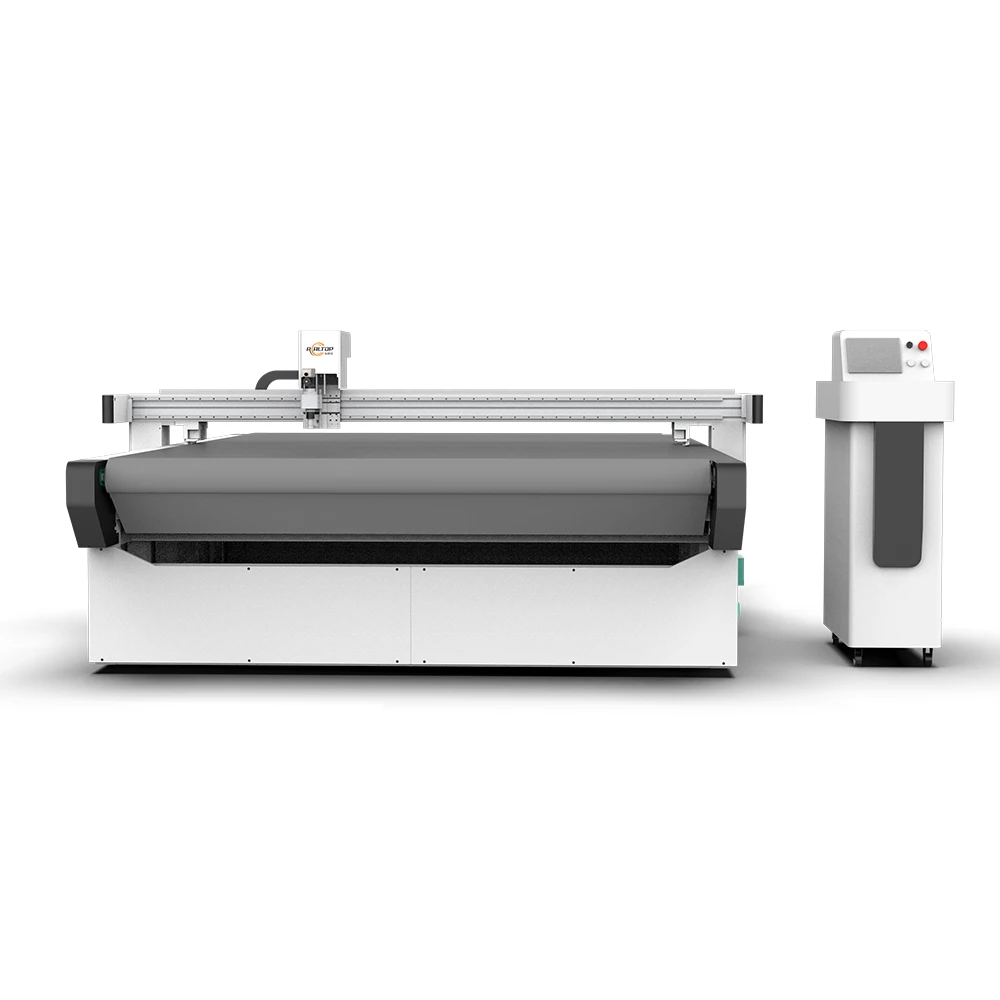
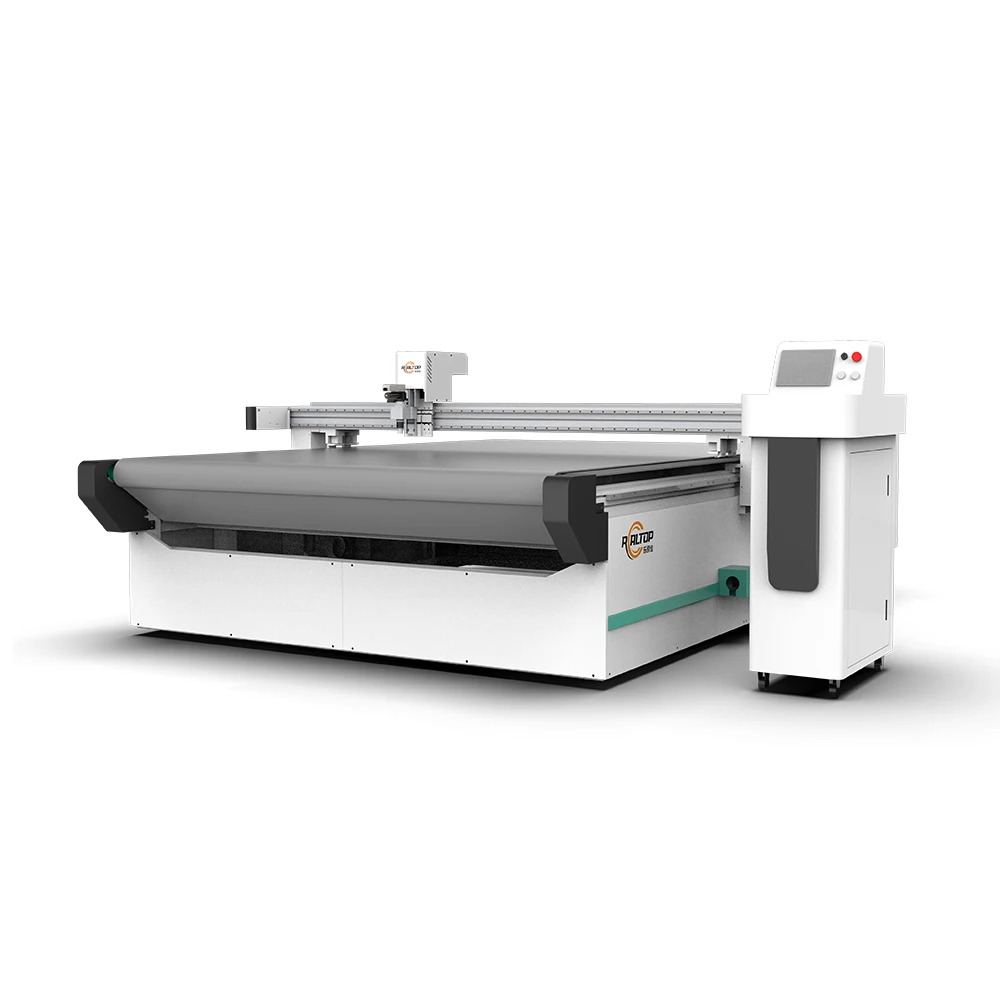
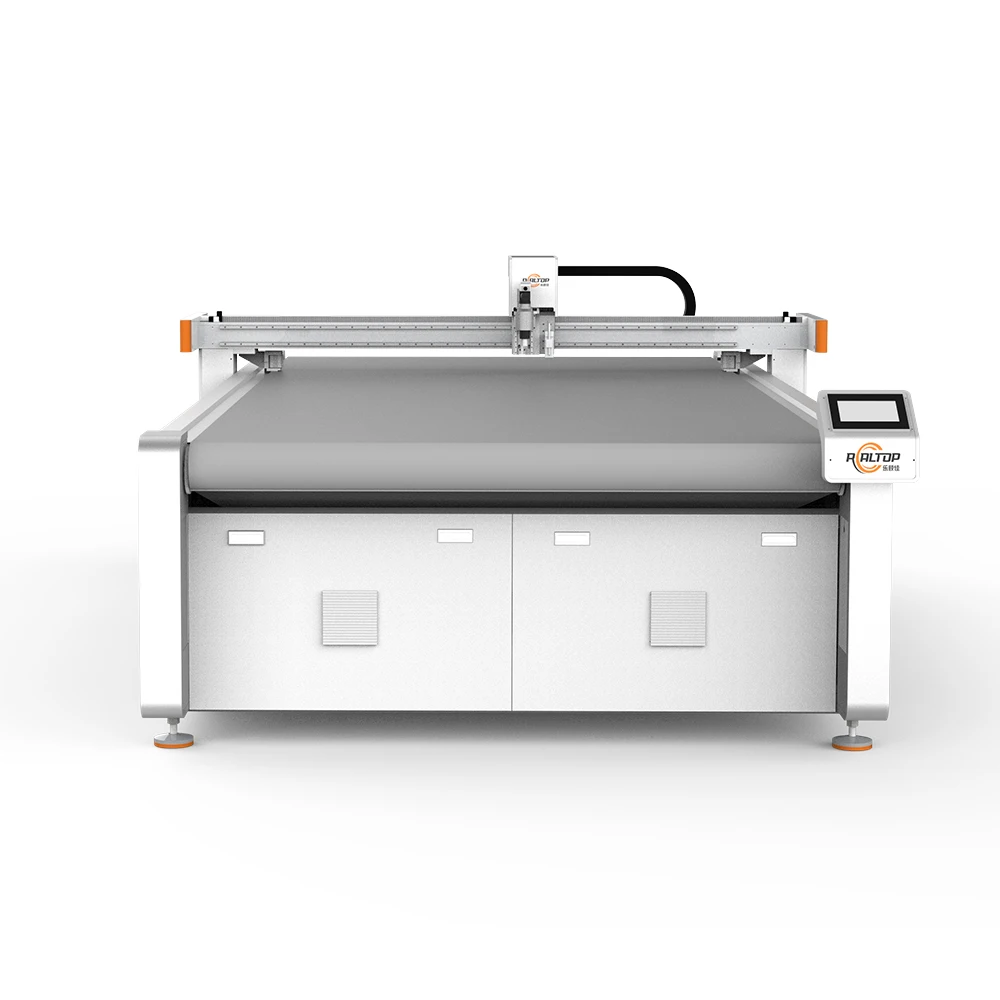
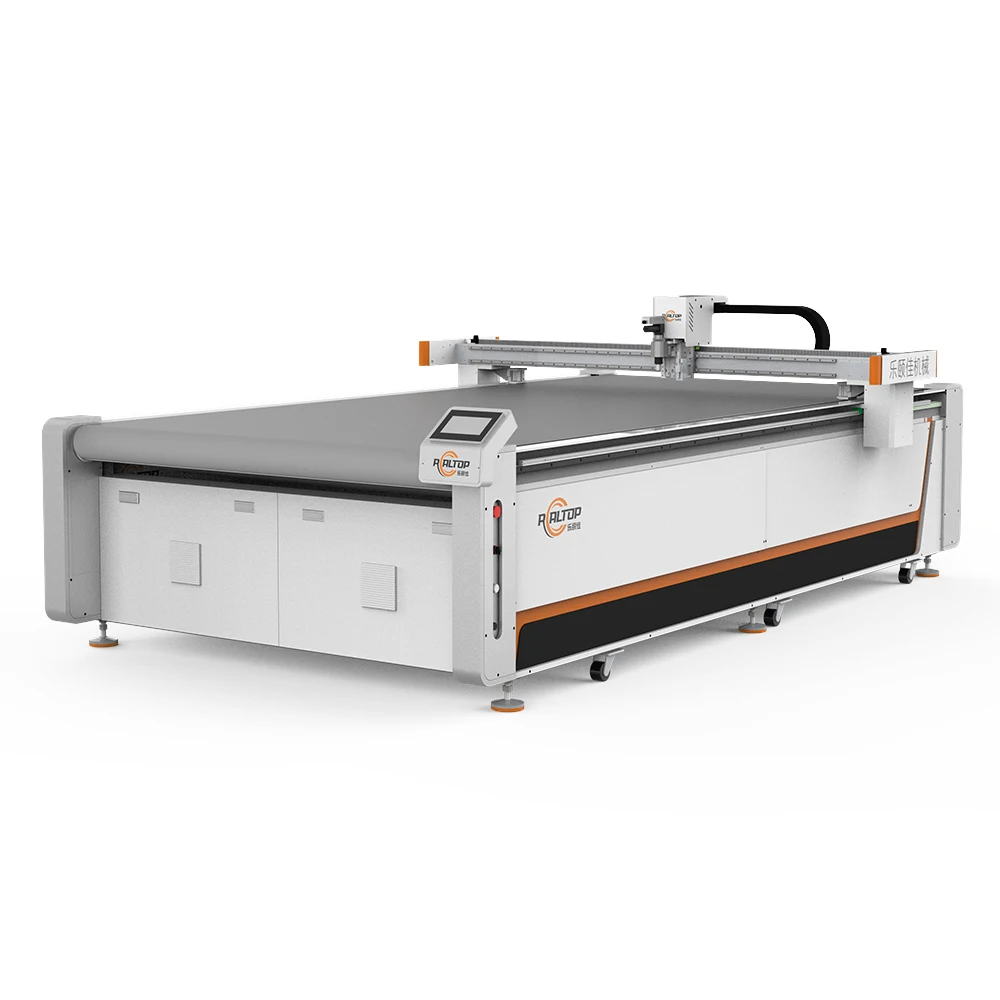
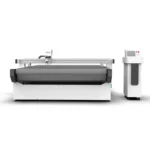
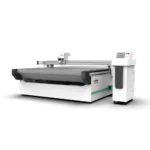
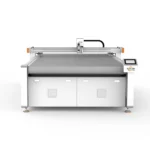
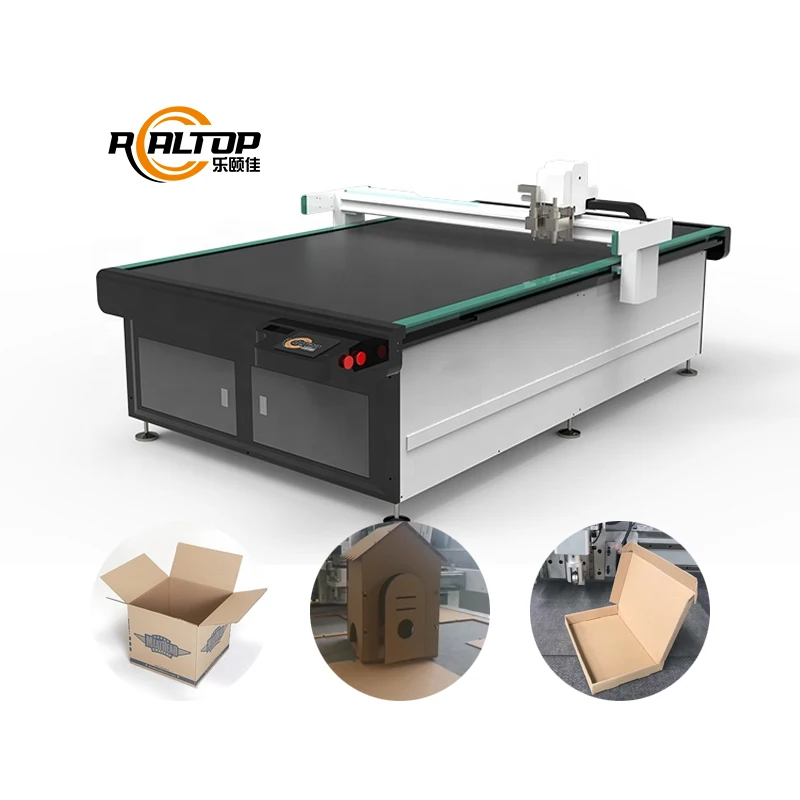
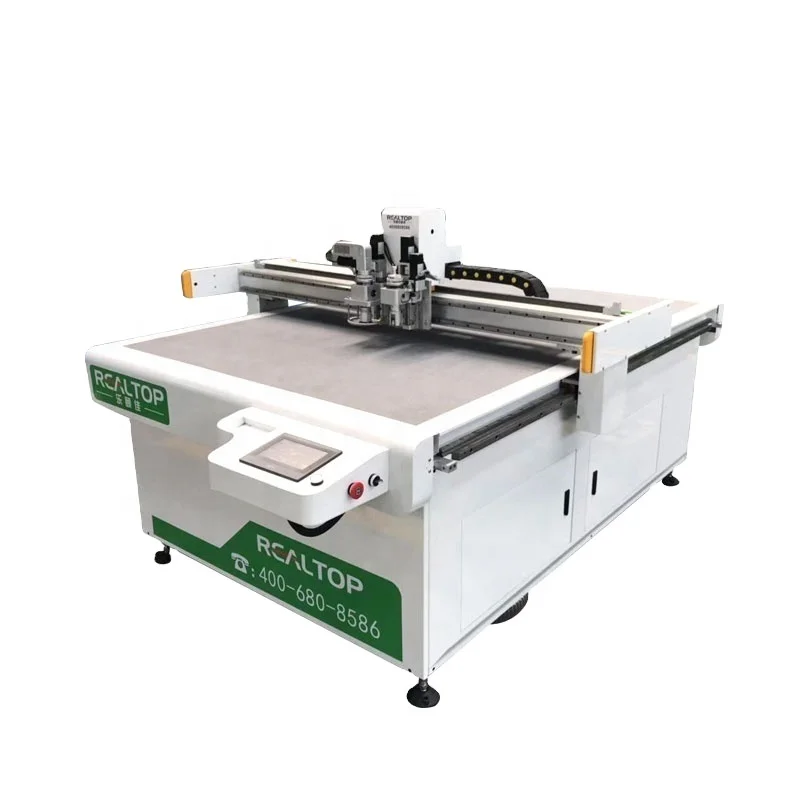
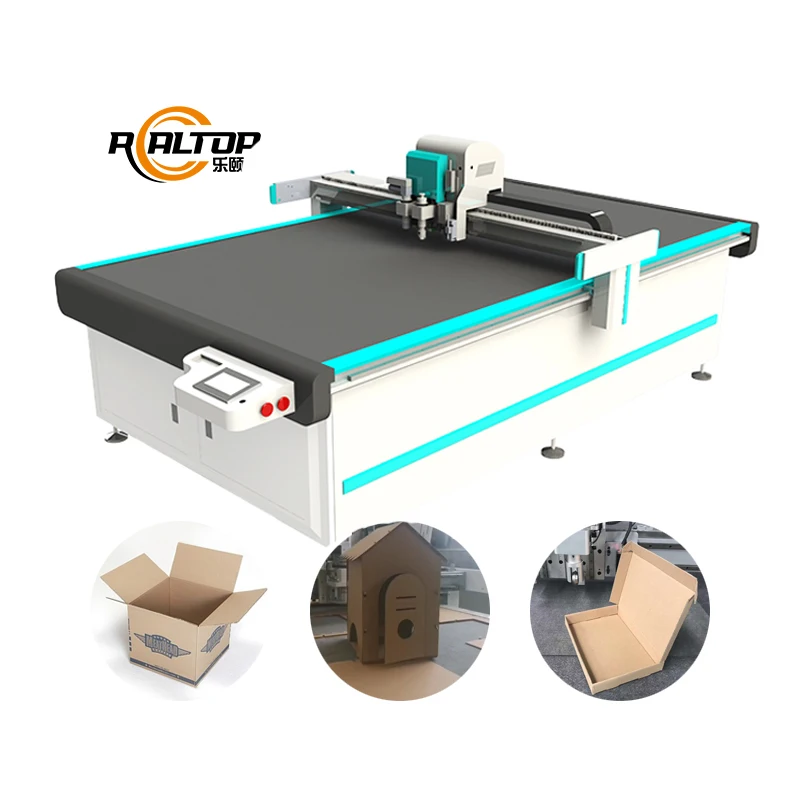
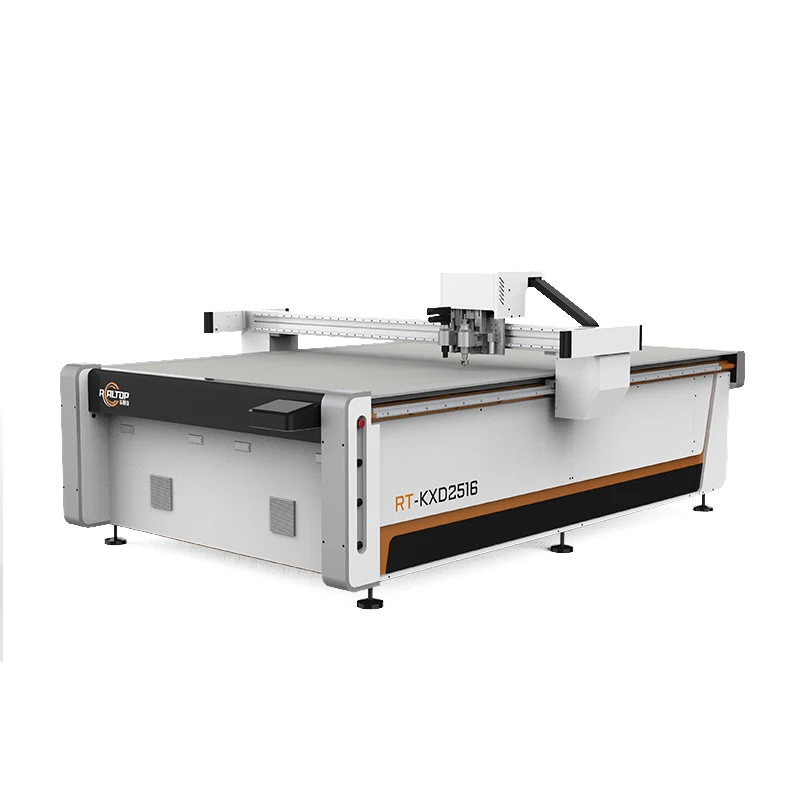
A flatbed cutting table holds accuracy only when the frame resists deflection under continuous high-speed motion. The 1625 uses a heavy-duty frame with a precision-ground working surface, giving the aluminum bellows vacuum table a stable foundation. When cutting multi-layer fabric stacks up to 30 mm, any frame twist translates directly into edge wander across the 2500 mm stroke. This CNC oscillating knife cutting table manufacturer controls frame welding, machining, and assembly in-house, which means dimensional inspection happens before the machine leaves the factory rather than after it reaches the buyer’s floor.
Vacuum Hold-Down and Zoning Logic
Fabric layers shift during cutting when vacuum pressure is uneven or too weak for the material porosity. The 9 kW vacuum pump paired with the aluminum bellows table generates consistent suction across the 1600×2500 mm area. For small garment pattern pieces, the zoning configuration determines whether edge lift occurs mid-cut. Buyers working with loosely woven textiles or multi-layer knitwear should request a sample cutting report that documents hold-down performance on their actual material stack before confirming the order [NEED_CITE: vacuum table zoning requirements for porous textile materials].
What the Specifications Mean on the Shop Floor
The ±0.1 mm cutting accuracy and repeatability figures matter most when nested patterns share tight margins — a common scenario in suit and knitwear production where fabric cost dominates the bill of materials. The oscillating knife head handles woven and knitted textiles cleanly, while the driven rotary knife suits continuous long cuts on rolled material. The creasing wheel and V groove knife extend the machine’s range into carton sample making and packaging structure work. Servo drive selection from Panasonic, Delta, or Dorna allows buyers to align with the service infrastructure available in their region, which directly affects spare parts lead times and technician familiarity. The 0–2000 mm/s speed range is a configured envelope; actual cutting speed depends on fabric density, ply count, and the selected tool head. File format compatibility with PLT, DXF, AI, and PDF ensures the machine accepts output from common nesting and pattern design software without manual conversion steps.
What Happens When Tool Head and Material Do Not Match
Choosing the wrong tool head for a given fabric produces ragged edges on woven material or crushed layers on foam-backed composites. A buyer cutting automotive seat fabric with a standard oscillating knife may find the edges acceptable at single-ply but frayed at the 30 mm multi-layer stack they actually run in production. Similarly, a kiss cutting tool set for vinyl may fail to penetrate a gasket material of similar thickness but higher density. These mismatches are not visible on a spec sheet — they emerge only when the machine meets the actual material under real cycle conditions [NEED_CITE: tool head selection criteria for multi-layer textile cutting].
Why Buyers Source This Machine Directly from the Factory
The design team and production floor operate in the same facility, so a tool head layout change requested during specification review is engineered by the same group that builds the frame. In-house capability covers both knife and laser cutting technologies, meaning a buyer can compare methods against their material rather than being locked into one approach. The factory provides a sample cutting report on the buyer’s own fabric before order commitment, documenting edge quality, cutting speed, and hold-down behavior. Electrical schematics and voltage confirmation are issued as part of the standard documentation package. Language customization on the PLC panel — including non-standard options — is confirmed during the order stage, not guessed at shipment.
Documentation & Verification
- Machine specification sheet listing every selected tool head and table configuration for the 1600×2500 mm working area
- Electrical schematic with voltage and frequency confirmation matching the buyer’s site power supply
- Factory test record documenting cutting results on the buyer’s submitted fabric samples before dispatch
- Software license and file format compatibility note for PLT, DXF, AI, and PDF workflows
- CE declaration included in the shipment documentation package
- Spare parts list covering oscillating knife blades, rotary knife discs, and vacuum table seals
Installation, Commissioning & Support
- The 3300×2100×1350 mm footprint requires a level concrete floor with clearance for the auto feeding conveyor extension
- A dedicated circuit matching the confirmed voltage (110V, 220V, or 380V) must be in place before the machine is uncrated
- The 9 kW vacuum pump draws significant current and should be on its own breaker separate from the PLC control circuit
- First commissioning includes verifying cutting accuracy across the full 1600×2500 mm stroke with the buyer’s actual fabric
- PLC panel language is set to the confirmed option during commissioning, and operators are trained on tool head changeover procedures
- Wear parts including oscillating knife blades and vacuum table bellows seals are included in the initial spare parts kit
What We Need to Move Forward
To match the right tool head and table configuration, share your fabric type, ply count, and the maximum stack thickness you plan to cut. Confirm your site voltage, frequency, and the control panel language your operators need. If you have existing nesting software or preferred file formats, let us know so compatibility is verified before the build starts.
Frequently Asked Questions
Q: How does the factory verify frame and motion build quality before shipment?
A: The frame is welded and precision-ground in-house, and motion components are assembled and tested under load before the machine is approved for dispatch. A factory test record is generated, documenting dimensional accuracy and cutting results on the buyer’s own material samples submitted in advance.
Q: What OEM and customization options are available for this platform?
A: Voltage can be configured to 110V, 220V, or 380V with the matching frequency. PLC language supports English, Russian, Italian, Chinese, and custom options. Tool head layout is selected per the buyer’s material range, and branding adjustments are available for distributor partners placing repeat orders.
Q: Can we send our own fabric for a cutting test before placing an order?
A: Yes, buyers are encouraged to send representative fabric samples including the thickest multi-layer stack they intend to cut. The factory produces a sample cutting report that documents edge quality, achievable cutting speed, and vacuum hold-down performance on that specific material.
Q: What documentation is included with the shipment?
A: Each machine ships with a specification sheet, electrical schematic, voltage confirmation document, tool head configuration list, operation and maintenance manual, software license note, spare parts list, CE declaration, and packing photographs for condition verification on arrival.
Q: What is the typical lead time for production and factory testing?
A: Production lead time depends on the selected configuration, tool head count, and any custom voltage or language requirements. Buyers should confirm the schedule during the quotation stage, and factory testing on buyer-supplied material is completed before the machine is cleared for packing.
You may also like

商品评价
Clear filtersThere are no reviews yet.