


-
 Courier delivery
-
 DHL Courier delivery
-
 Warranty 1 year
-
 Free 30-Day returns

In-House Design and Production — We specify tool heads and vacuum zoning based on your actual leather sample, matching the cutting method to material density rather than forcing a single configuration.
Technical Specifications
| Parameter | Value |
|---|---|
| Model | RT-D2516/RT-S2516 |
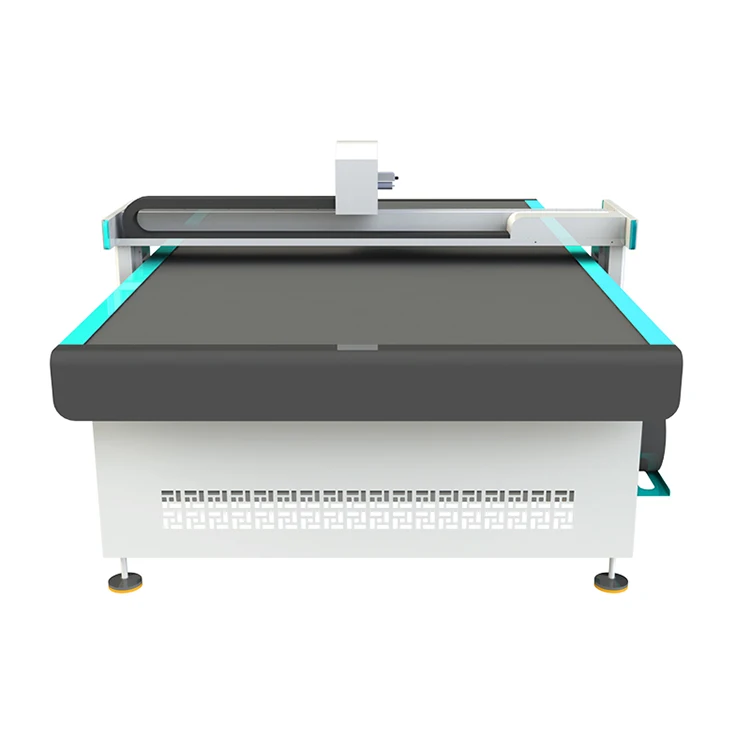
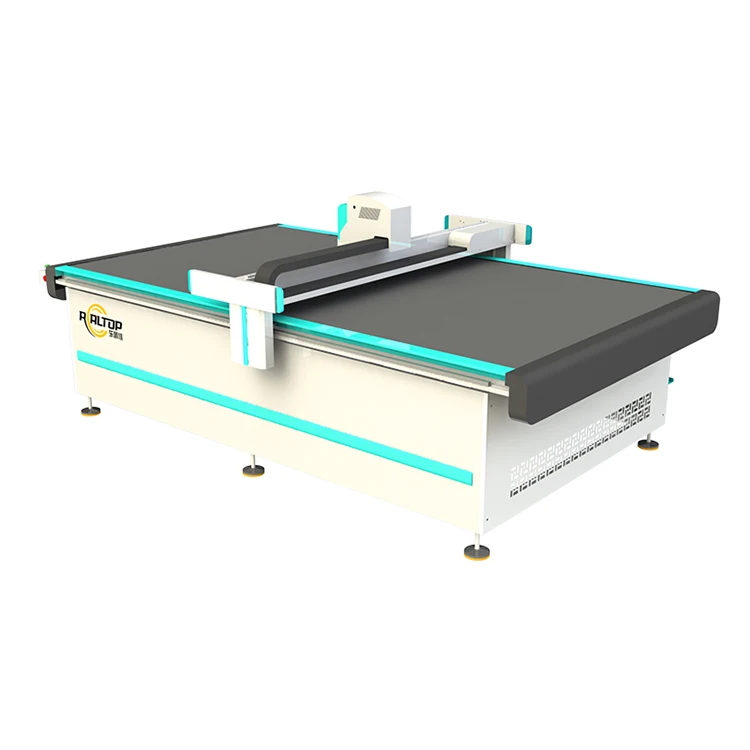
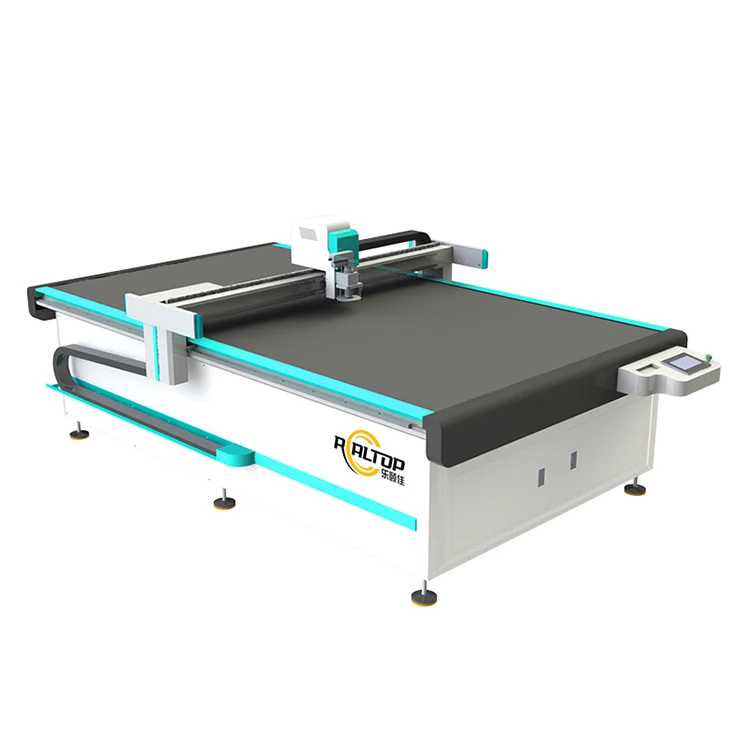
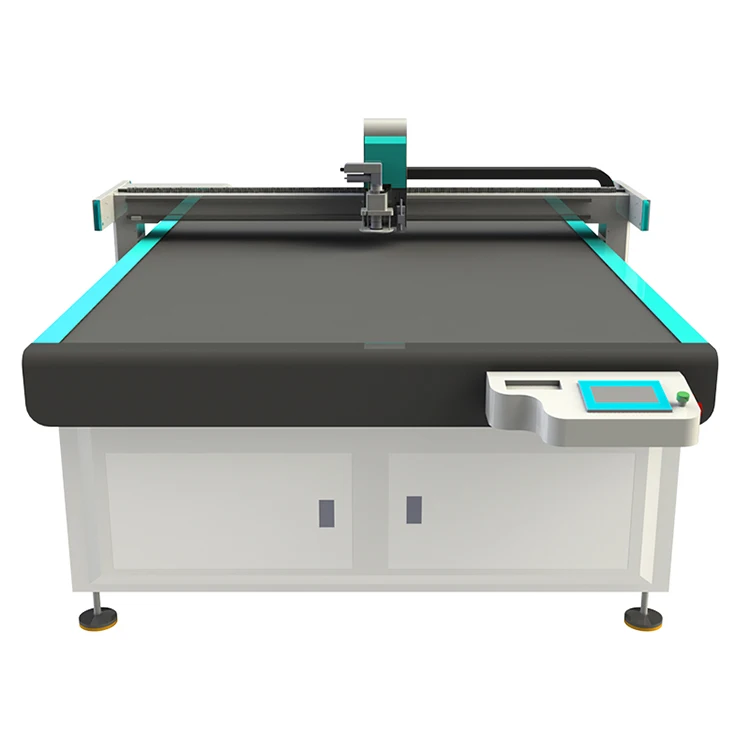
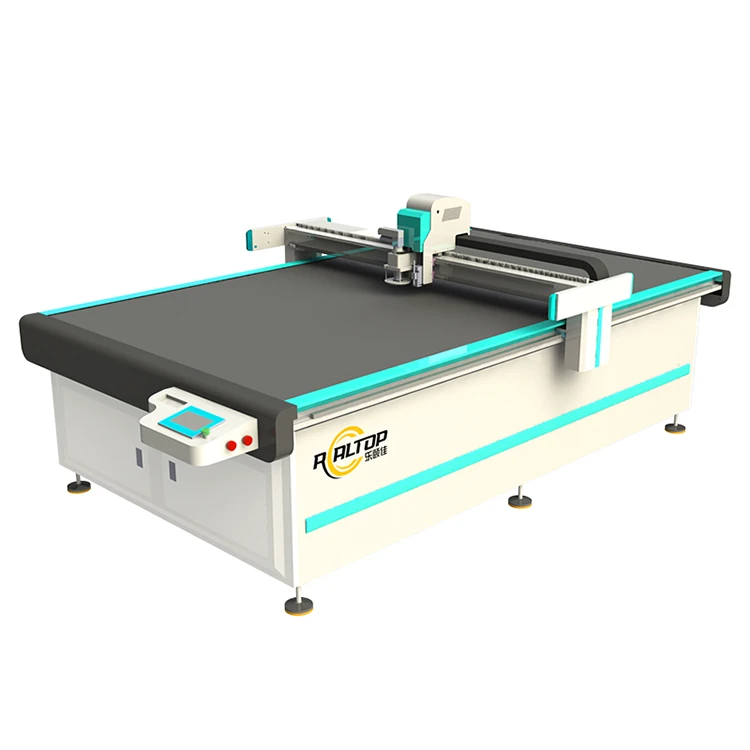
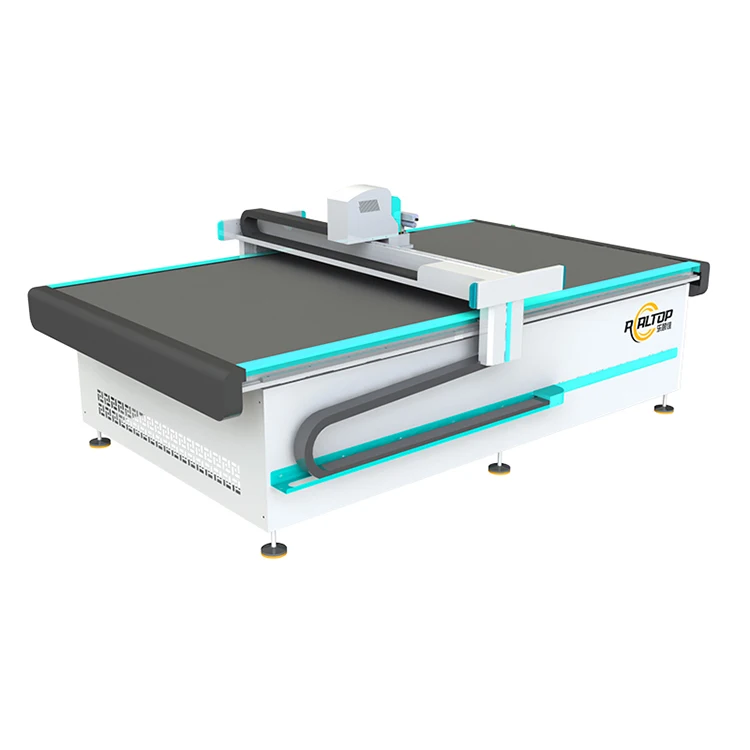
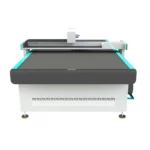
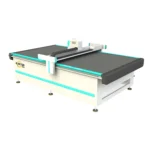
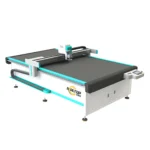
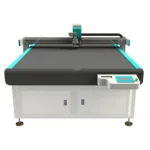
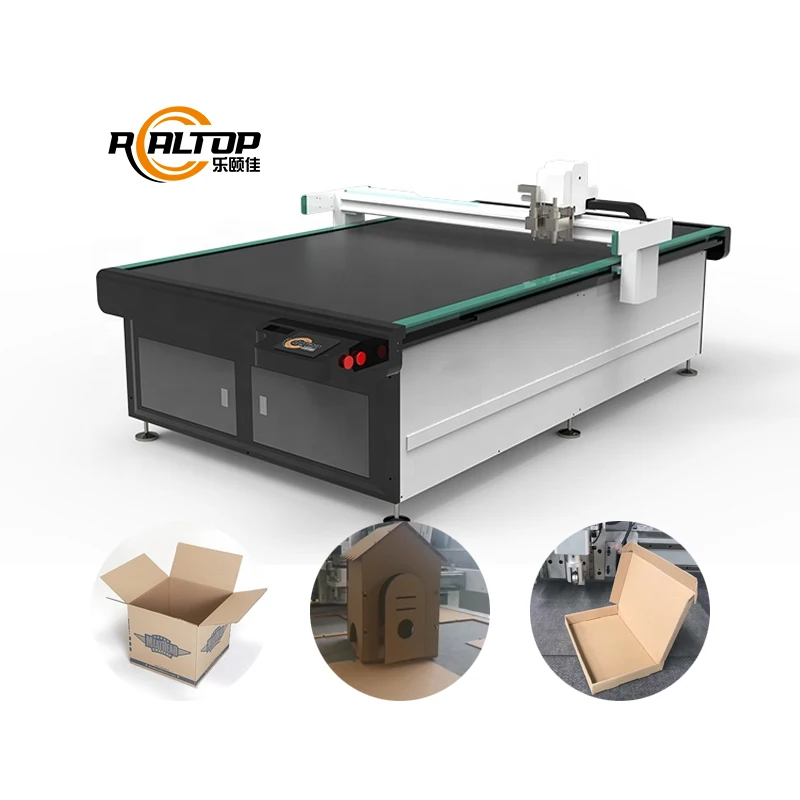
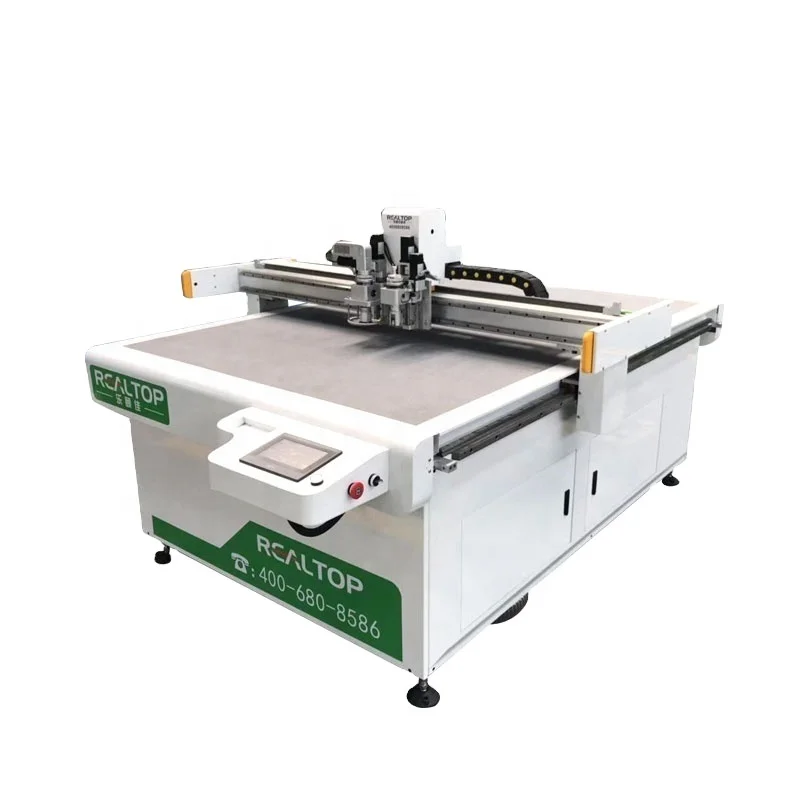
| Product Type | CNC Leather Oscillating Knife Cutting Machine |
| Working Area | 1600*2500MM |
| Overall Dimensions | 3450×2300×1250MM |
| Rated Power | 9 kW |
| Vacuum Pump | 7.5 kW |
| Table Type | Flat working table with vacuum |
| Tool Head | Swiss imported knife (vibration full cutting, half cutting, cursor location) |
| Translational Velocity | 800-1200 mm/s |
| Cutting Speed | 200-800 mm/s (basis not stated in source — confirm material type / thickness) |
| Repeated Accuracy | ≤0.1 mm |
| Transmission System | Digital servo motor, linear guide, synchronous belt, imported ball screw |
| Servo Motor | Japanese Yaskawa |
| Guide Rail | Taiwan Hiwin |
| Conveyor Belt | Germany imported |
| Instruction System | HP-GL compatible format |
| Voltage | 380V±10% |
| Safety Device | Infrared sensors |
Application Suitability
| Application | Material or Output |
|---|---|
| Leather goods manufacturing | Hides for bags, shoes, belts, and accessories |
| Garment and footwear production | Flexible fabrics, synthetic textiles, and composite layers |
| Automotive interior components | Soft trim materials, dashboard skins, sponge composite leather |
| Industrial gasket and seal cutting | PVC, soft glass, silicon, rubber sheets |
Why the Vacuum Table Question Should Come Before the Price
A flat table alone does not hold small leather pieces during oscillating knife cutting.
When buyers evaluate a CNC Leather Cutting Machine manufacturer, the conversation often starts with working area and price. But if you cut small hide sections for shoe uppers or bag panels, a poorly zoned vacuum table lets the material lift at the edges. The knife catches the lifted edge, and the piece is ruined. On composite materials with sponge backing, insufficient hold-down force causes the blade to compress the foam layer instead of slicing through it, leaving crushed edges that fail downstream inspection. [NEED_CITE: vacuum table zoning requirements for flexible material cutting]
Servo Drive Precision Across the Full Bed
The RT-D2516/RT-S2516 uses Japanese Yaskawa digital servo motors paired with Taiwan Hiwin linear guide rails to deliver ≤0.1 mm repeated accuracy across the 1600×2500 mm working area. For leather cutting, this matters because pattern pieces nest tightly to maximize hide yield, and even a small positional drift at the far end of the bed means overlapping cut lines and wasted material. The imported ball screw and synchronous belt transmission keeps the Swiss oscillating knife head on its programmed path whether it is performing a full cut through 5 mm belt leather or a half cut for crease lines on thinner garment hides.
Auto-Feeding for Continuous Hide Processing
The Germany-imported conveyor belt integrated with the auto-feeding system allows operators to load successive hide sections without stopping the CNC Leather Cutting Machine manufacturer line between sheets. In a footwear factory cutting dozens of upper panels per hide, this continuous feed reduces the dead time between loads. The flat vacuum table locks each section in place once it reaches the cutting zone, and the 7.5 kW vacuum pump maintains suction across the working surface to counteract the lateral forces generated by the oscillating knife. [NEED_CITE: conveyor-fed CNC cutting systems for hide processing]
Specifying Tool Head and Speed for Leather Density
The Swiss imported knife head supports both vibration full cutting and half cutting modes, which serve different leather densities. Full cutting drives the blade through the entire material thickness in a single pass, suitable for belt leather or shoe sole components. Half cutting scores the surface without penetrating through, used for fold lines on bag panels or crease marks on garment patterns. The 200-800 mm/s cutting speed range must be matched to material behavior: thicker, denser hides require slower travel to maintain clean edges, while thin synthetic leather tolerates the upper range. The HP-GL compatible instruction system accepts pattern files from most leather-specific nesting software, so buyers do not need to rebuild their workflow around proprietary formats. The 9 kW rated power supports sustained oscillation at high frequency, which is where cheaper machines lose amplitude on dense material.
The Cost of Selecting the Wrong Tool Configuration
A buyer once ordered an oscillating knife table specified only by working area, without confirming the tool head against their actual material stack. The machine arrived configured for thin garment leather, but their production involved multi-layer sponge composite for automotive seat covers. The knife compressed the foam layer rather than shearing through it, producing ragged edges that failed quality inspection and halted the assembly line for days while a replacement tool head was shipped and installed. The vacuum zoning was also set for large panels, so small gasket pieces lifted during cutting. [NEED_CITE: material-specific tool head selection for oscillating knife systems]
Why Buyers Source This Machine Here
The design team and core factory in Jinan build both knife and laser cutting systems under one roof, so the cutting method is selected based on your leather type and production volume rather than limited to whatever technology a single-method supplier offers. Every RT-D2516/RT-S2516 ships with a sample cutting report performed on your own material, confirming edge quality, vacuum hold-down, and cutting speed before the machine leaves the factory. Voltage, plug type, and control panel language are confirmed against your local electrical standards before production begins. The tool head and table configuration list is finalized per your material specification, not selected from a default build sheet. In-house quality control covers frame welding, motion assembly, and full-bed traverse testing, so you receive a factory test record documenting actual cutting performance across the entire working area.
Documentation & Verification
- Factory test record on your specific leather type and thickness before dispatch
- Electrical schematic and 380V±10% voltage confirmation for your regional grid
- Tool head and vacuum table configuration list matched to your material stack
- Software licence and HP-GL file format compatibility note for your nesting workflow
- Sample cutting report showing edge quality on your actual hide material
Installation, Commissioning & Support
- Foundation must support the 3450×2300 mm footprint plus operator clearance on three sides
- Dedicated 380V±10% circuit required for the 9 kW machine load plus 7.5 kW vacuum pump
- Machine arrives with vacuum table and conveyor belt pre-assembled; servo calibration performed on-site
- First-run parameter tuning of oscillation frequency and feed rate matched to your leather density
- Operator training covers HP-GL file import, nesting setup, and tool head changeover procedures
- Spare Swiss knife blades and conveyor belt sections included for initial production period
What We Need to Quote Accurately
Send us the leather type you cut most frequently, whether natural hide or synthetic composite, along with the thickness range and daily panel volume. Confirm your facility voltage and frequency so we build the electrical system to match. Let us know if your current nesting software outputs HP-GL or if you need format compatibility verified before the order.
Frequently Asked Questions
Q: How do I verify that the stated cutting speed applies to my leather thickness?
A: The 200-800 mm/s range depends on material density and thickness. We perform a sample cutting test on your actual leather before building your machine, documenting the speed that produces clean edges without crushing or fraying. This report becomes part of your factory test record and sets realistic throughput expectations for your production planning.
Q: Can the voltage and control language be customized for my country?
A: The standard configuration is 380V±10%, but we confirm your local grid voltage and frequency before production. The control panel language is set to your preference, and the electrical schematic documents the exact wiring configuration shipped. This avoids costly rewiring or transformer purchases after the machine arrives at your facility.
Q: How do I choose between full cutting and half cutting for my products?
A: Full cutting shears through the entire leather thickness for finished pieces like shoe uppers or belt blanks. Half cutting scores the surface to create fold lines on bag panels or crease guides on garments. The Swiss imported knife head on the RT-D2516/RT-S2516 supports both modes, and we configure the oscillation amplitude during your sample test to match your product requirements.
Q: Will small leather parts stay flat during cutting on the vacuum table?
A: Vacuum zoning divides the flat table into independent suction areas. We configure the zone layout based on your smallest part size so that even narrow strips and small gasket pieces remain locked in place against the oscillating knife lateral force. Your sample test confirms that no edge lifting occurs on your specific part geometry.
Q: What documentation arrives with the machine to support installation?
A: You receive a factory test record, electrical schematic with voltage confirmation, tool head configuration list, HP-GL software licence note, operation manual, and spare parts list. These documents specify the exact configuration built for your material, not generic templates, so your maintenance team has accurate reference data from day one.
You may also like

商品评价
Clear filtersThere are no reviews yet.