





-
 Courier delivery
-
 DHL Courier delivery
-
 Warranty 1 year
-
 Free 30-Day returns

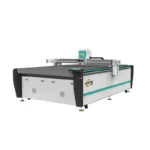
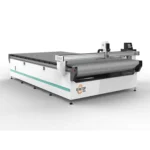
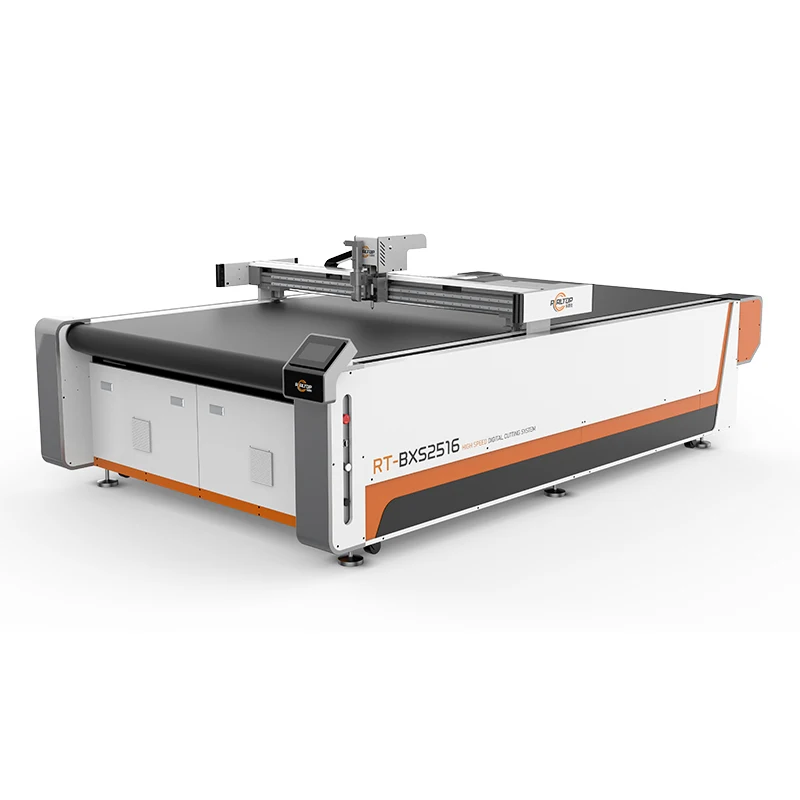
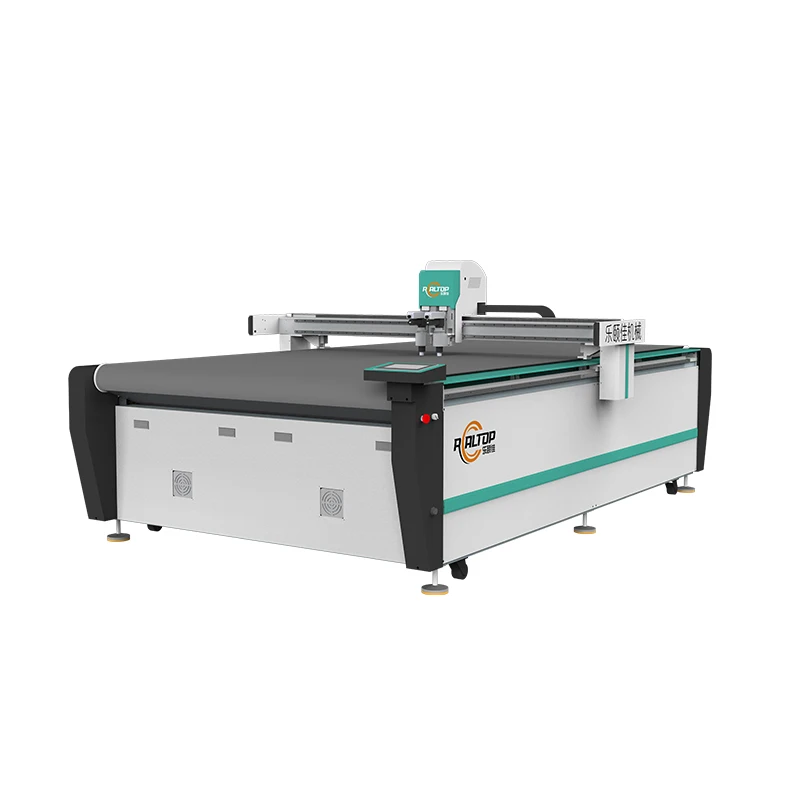
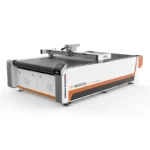
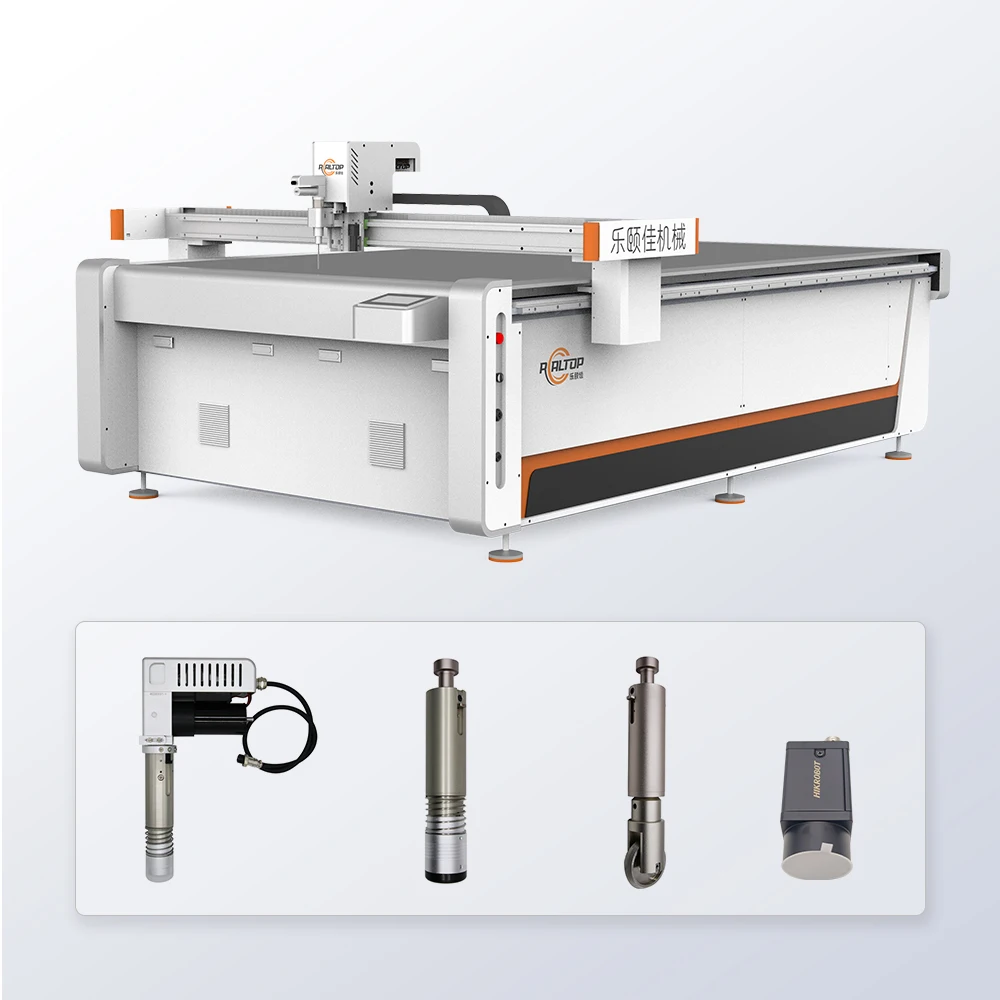
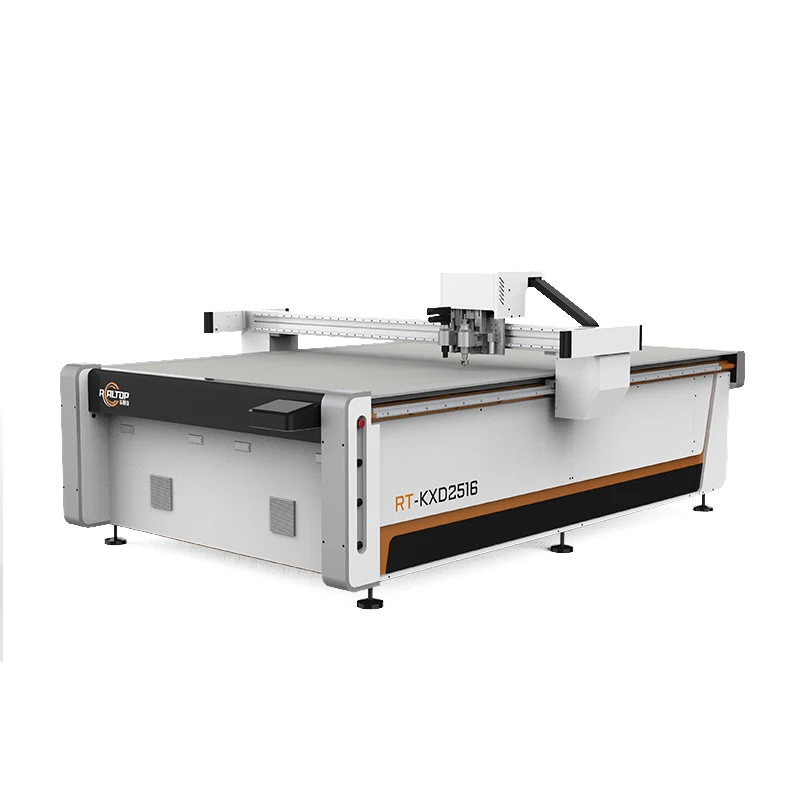
In-House Knife Cutting Design — Every RT-D2516/RT-S2516 oscillating knife platform is engineered and assembled under one roof in Jinan, letting us match tool head, vacuum zoning, and drive components directly to your leather composite structure before the machine leaves the factory.
Technical Specifications
| Parameter | Value |
|---|---|
| Model | RT-D2516/RT-S2516 |
| Product Type | CNC Oscillating Knife Leather Cutting Machine |
| Working Area | 1600 × 2500 mm |
| Machine Dimensions | 3450 × 2300 × 1250 mm |
| Rated Power | 9 kW |
| Translational Velocity | 800–1200 mm/s |
| Repeated Accuracy | ≤ 0.1 mm |
| Voltage | 380 V ± 10 % |
| Transmission System | Digital servo motor, linear guide, synchronous belt, ball screw |
| Guide Rail | Taiwan Hiwin linear rail |
| Servo Brand | Delta servo motor |
| Vacuum Pump | 7.5 kW |
| Table Type | Flat vacuum table with Germany imported conveyor belt |
| Safety Device | Infrared sensor anti-collision beam |
| Instruction Format | HP-GL compatible |
| Cutting Thickness | 20–80 mm depending on material density (basis to be confirmed) |
| Tool Head Options | Oscillating knife, pneumatic knife, high-power vibrating knife, circular knife, V-cutting knife, drag knife, creasing wheel, dotted-line knife, punching tool, brush |
| Visual Positioning Options | Small CCD camera mark-point positioning, panoramic camera recognition, projection positioning |
Application Suitability
| Application | Material or Output |
|---|---|
| Footwear upper production | Natural and synthetic leather with defect-avoidance nesting |
| Leather goods and bags | Full-grain, split, and PU leather sheets requiring clean edge finish |
| Automotive interior panels | Sponge composite leather and PVC laminates for dashboards and door trims |
| Garment flexible material cutting | Suede, microfiber, and woven textiles in multi-ply layups |
| Gasket and seal fabrication | Soft rubber, silicone, and non-asbestos fiber sheets |
Why Tool Head Selection Decides Edge Quality on Leather
A wrong tool head on a leather cutting line leaves ragged edges on full-grain hides or crushes sponge composite layers, forcing operators to re-cut or hand-trim. The RT-D2516/RT-S2516 addresses this by offering ten switchable tool heads — oscillating, pneumatic, high-power vibrating, circular, V-cutting, drag, creasing, dotted-line, punching, and brush — each validated against the buyer’s specific leather grade and thickness before the machine ships. [NEED_CITE: tooling selection impact on leather edge quality in CNC flatbed cutting]
Running a vibrating knife on a dense vegetable-tanned belt leather at the wrong stroke frequency produces delamination between the grain and flesh layers. Switching to a pneumatic knife with a guided downward stroke keeps the cut perpendicular and preserves edge burnish. Our sample-cutting protocol tests your exact hide on our factory floor, documents stroke frequency and blade angle, and ships the recommended tool head pre-installed.
Drive Train Rigidity and Its Effect on Contour Cuts
A CNC Oscillating Knife Leather Cutting Machine manufacturer must ensure the gantry does not flex when the oscillating blade encounters dense fiber bundles in shoulder leather. The RT-D2516/RT-S2516 uses Taiwan Hiwin linear rails paired with a ball-screw and synchronous-belt hybrid drive, keeping the cutting head within ≤ 0.1 mm repeated accuracy even on tight-radius shoe upper patterns. Delta servo motors deliver closed-loop torque control so the knife slows proportionally at corners, preventing the blade from dragging through the hide.
Vacuum Zoning for Small Leather Parts
Flat vacuum tables with a single suction zone struggle to hold small pattern pieces — belt loops, wallet gussets, shoe eyelet stays — because the surrounding leakage area overwhelms the pump. The 7.5 kW vacuum pump on this platform is ducted through a multi-zone manifold, letting the operator activate only the cells beneath the current cutting nest. This concentrated hold-down prevents the hide from lifting into the blade path, which would otherwise nick the material and damage the knife tip. [NEED_CITE: vacuum hold-down principles for flexible sheet materials on flatbed cutters]
Matching Specs to Real Workshop Conditions
The 1600 × 2500 mm working area accommodates standard 4 × 8 ft leather hides with enough margin for clamping and conveyor feed. At a translational velocity range of 800–1200 mm/s, the machine balances throughput against the vibration sensitivity of thin garment suede, which can chatter at top speed. The 9 kW rated power covers the servo drives, spindle oscillation, vacuum pump, and conveyor motor simultaneously without requiring an oversized main breaker. Voltage is set to 380 V ± 10 %, suitable for most industrial grids, but control cabinet wiring can be reconfigured for 220 V or 415 V export markets before dispatch.
The Cost of Ignoring Material-Specific Validation
When a leather cutting machine is specified only by working area and shipped without a material test, the first production run often reveals that the default oscillating blade shreds chrome-tanned garment leather at high stroke rates. Operators then slow the machine to compensate, dropping effective throughput below what the line was planned for. [NEED_CITE: production losses from unvalidated material-machine pairing in leather workshops] Re-commissioning the tool head after installation adds service travel cost and delays shipment to the footwear or bag buyer downstream.
Why Buyers Source This Platform from Realtop
The Jinan-based design team covers both the mechanical frame and the software nesting layer, meaning CCD camera positioning logic is written in-house rather than bolted on from a third-party integrator. The factory test record includes cuts on the buyer’s own leather sample, documenting edge quality, cycle time, and blade wear rate before crating. Voltage, control panel language, and HP-GL file compatibility are confirmed in writing prior to production. CE documentation is prepared per the applicable machinery directive, and the spare parts list specifies consumable blade SKUs matched to the tool head shipped.
Documentation & Verification
- Machine specification sheet listing every tool head and positioning option selected for your order
- Electrical schematic with confirmed voltage and breaker rating for your workshop grid
- Sample cutting report on your leather hide, showing edge photographs and measured accuracy
- Factory test record demonstrating vacuum hold-down on your smallest pattern piece
- HP-GL file format compatibility note confirming your existing nesting software imports cleanly
Installation, Commissioning & Support
- Foundation: level concrete floor to support 3450 × 2300 × 1250 mm footprint and 7.5 kW vacuum pump vibration
- Power: dedicated 380 V ± 10 % circuit sized for 9 kW continuous draw plus inrush margin
- Assembly: gantry and conveyor belt arrive partially disassembled; rail alignment performed on-site
- First run: technician validates Hiwin rail parallelism and Delta servo tuning with your leather stock
- Training: operator instruction on tool head changeover, vacuum zone selection, and CCD mark-point calibration
- Spares: initial kit of oscillating and drag knife blades matching your leather hardness range
What to Include in Your Inquiry
Send us a representative leather hide — type, thickness, and whether it is bonded or layered — along with your typical nest layout and daily cutting volume. Specify your workshop voltage and frequency, the control language your operators need, and any existing nesting software whose files must import directly. If you run automotive sponge composite leather, note the foam density so we can pre-select the correct vibrating knife stroke.
Frequently Asked Questions
Q: How do you decide which oscillating knife type fits my leather?
A: We test your actual hide on our factory floor, measuring edge quality and blade wear across stroke frequencies. A full-cutting Swiss-imported oscillating knife suits dense belt leather, while a high-power vibrating knife handles sponge composite layers. The recommended tool head ships pre-installed and is documented in your sample cutting report.
Q: Can the CCD camera track irregular leather outlines for contour cutting?
A: Yes. The small CCD camera detects printed mark points placed around the hide perimeter, letting the RT-D2516/RT-S2516 align the cutting path to natural leather edges and avoid scars or brand marks. Panoramic camera recognition is available for higher-speed workflows where multiple hides feed consecutively.
Q: What if my local voltage differs from 380 V?
A: We reconfigure the control cabinet windings and breaker ratings before shipment to match your grid — common export settings include 220 V 60 Hz and 415 V 50 Hz. The electrical schematic in your documentation pack confirms the final voltage, and the nameplate is updated accordingly.
Q: Is there a material test before I commit to the order?
A: Every purchase is preceded by a sample cutting session using your leather stock. We document edge finish, dimensional accuracy, and knife wear rate, then adjust the tool head and vacuum zone map. The signed sample cutting report is included in your shipment documentation.
You may also like

商品评价
Clear filtersThere are no reviews yet.