



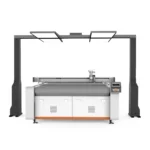
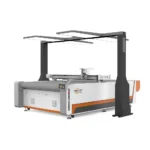
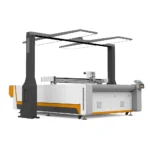
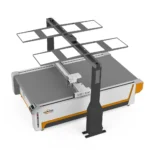

-
 Courier delivery
-
 DHL Courier delivery
-
 Warranty 1 year
-
 Free 30-Day returns

In-House Design & Manufacturing — Realtop engineers both knife and laser systems under one roof, letting buyers match the cutting method to the material rather than forcing one process.
Technical Specifications
| Parameter | Value |
|---|---|
| Model | 1625 (Standard) |
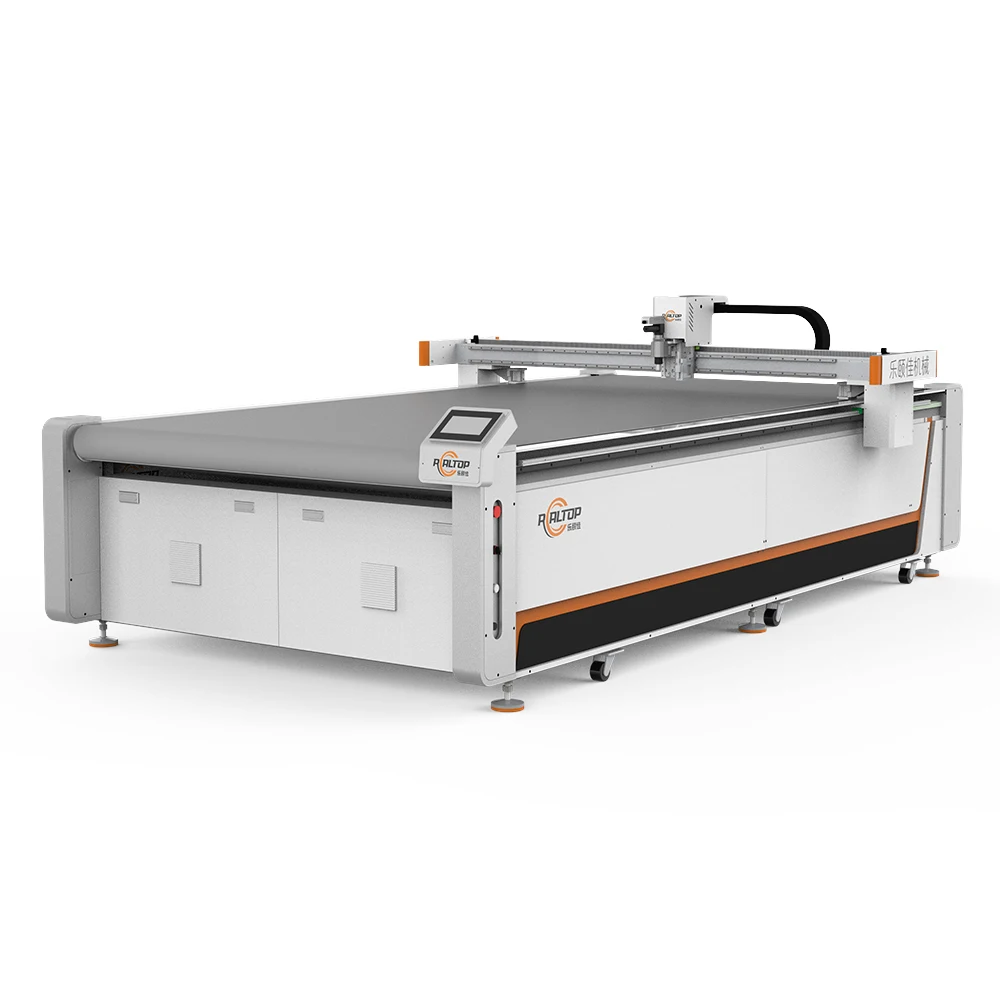
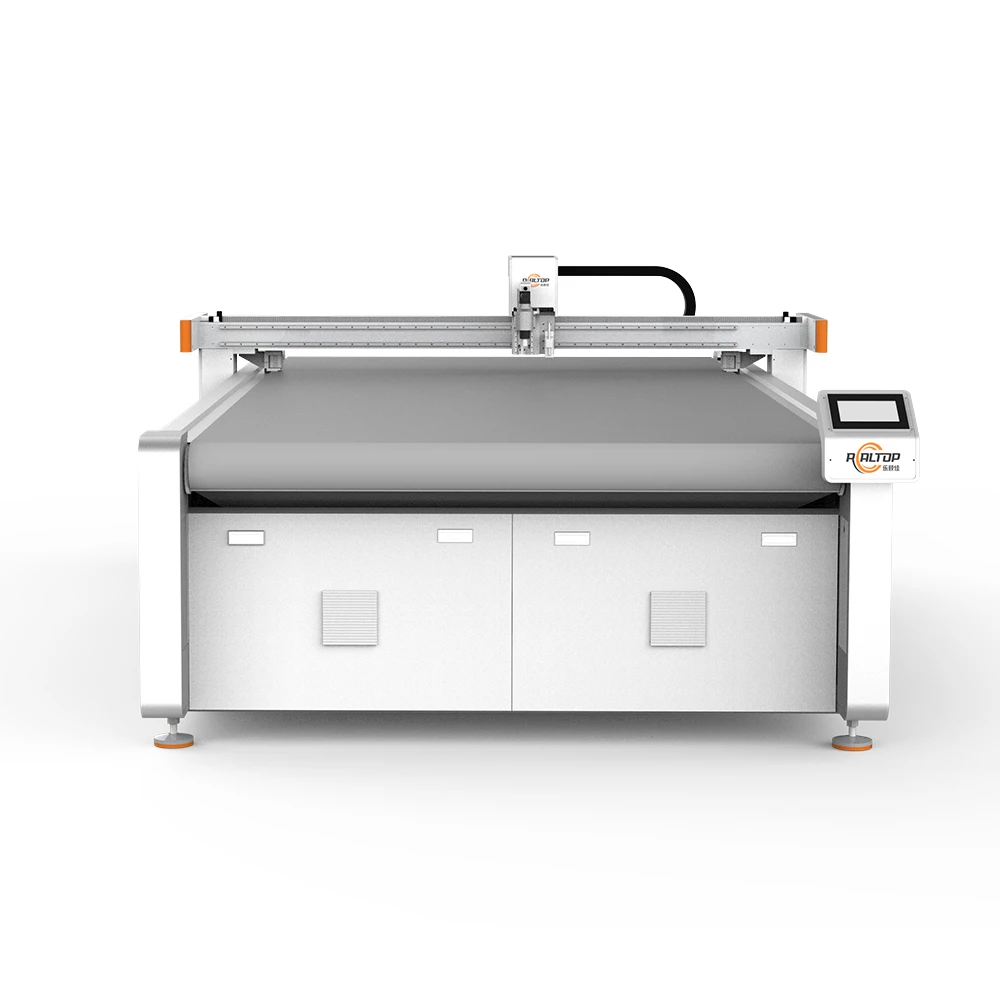
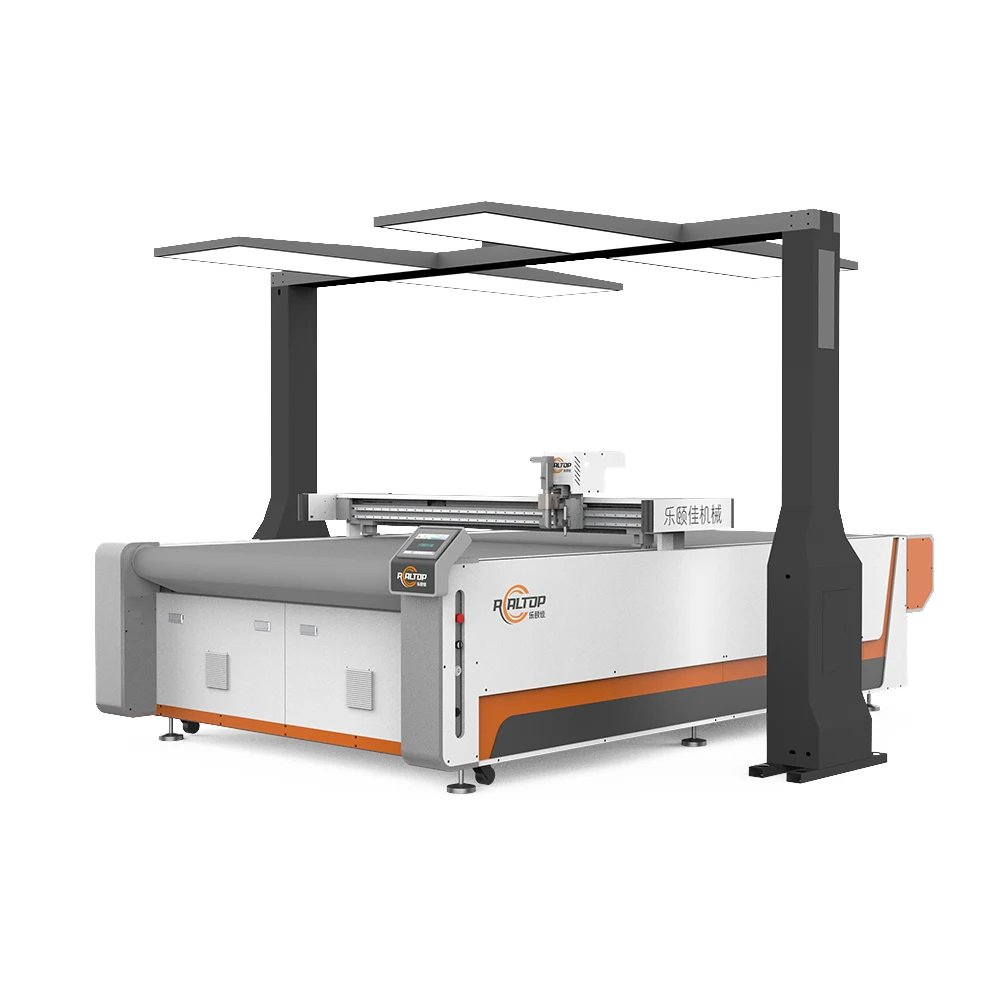
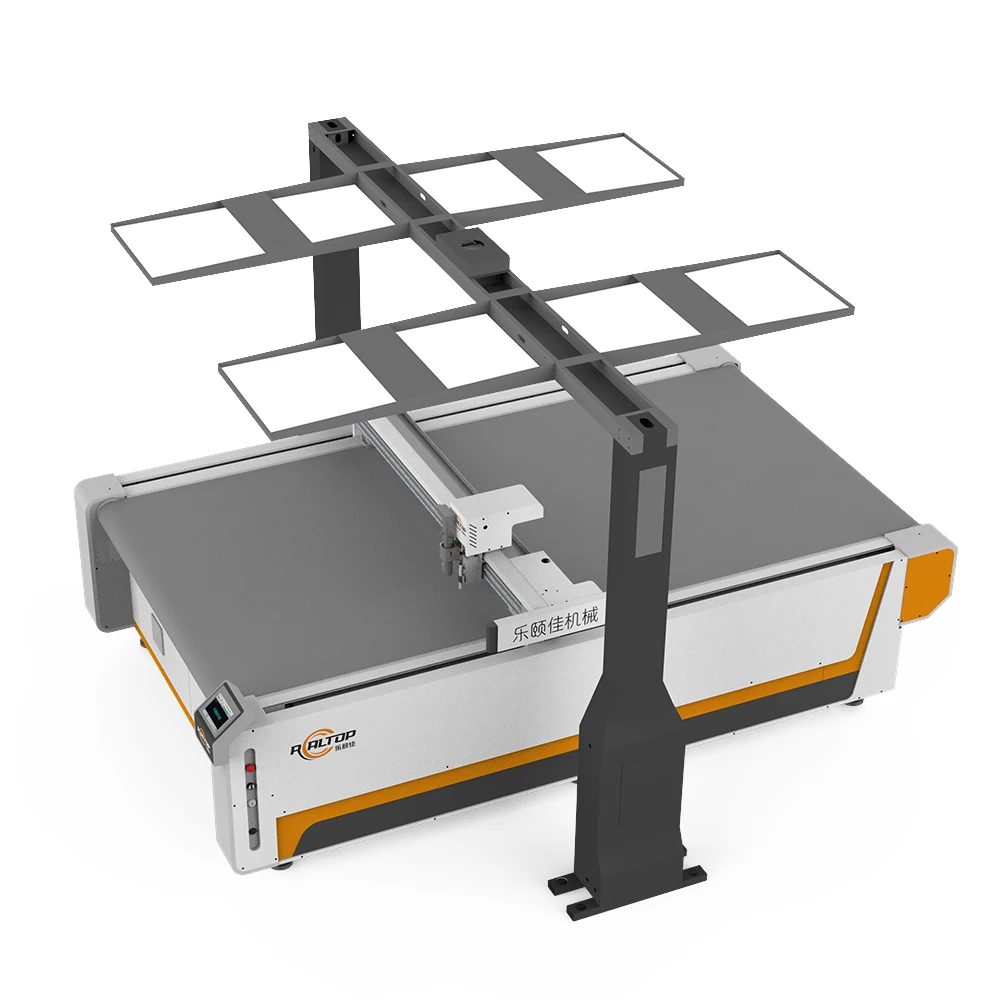
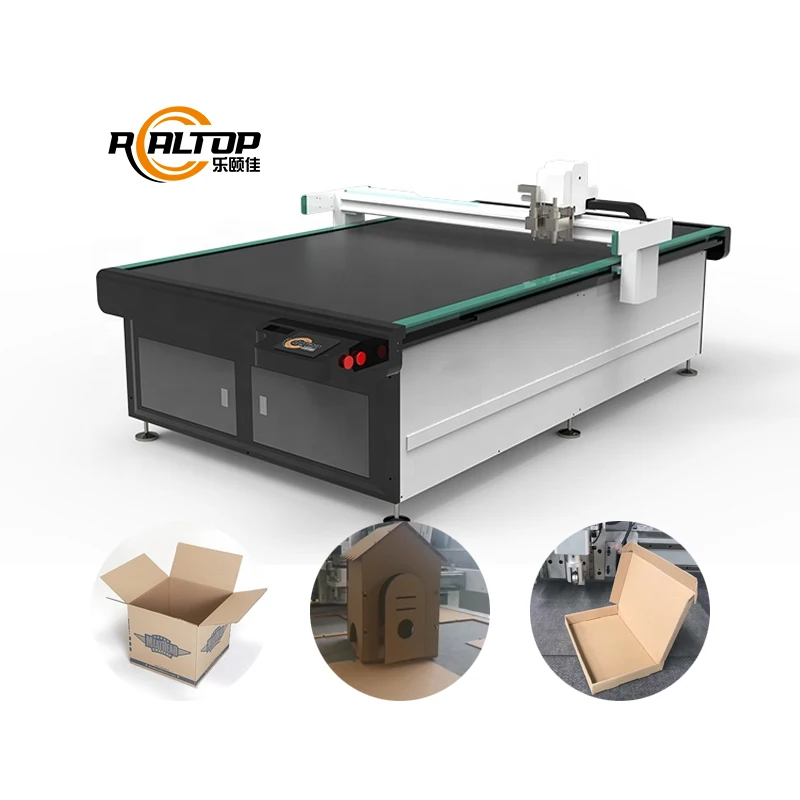
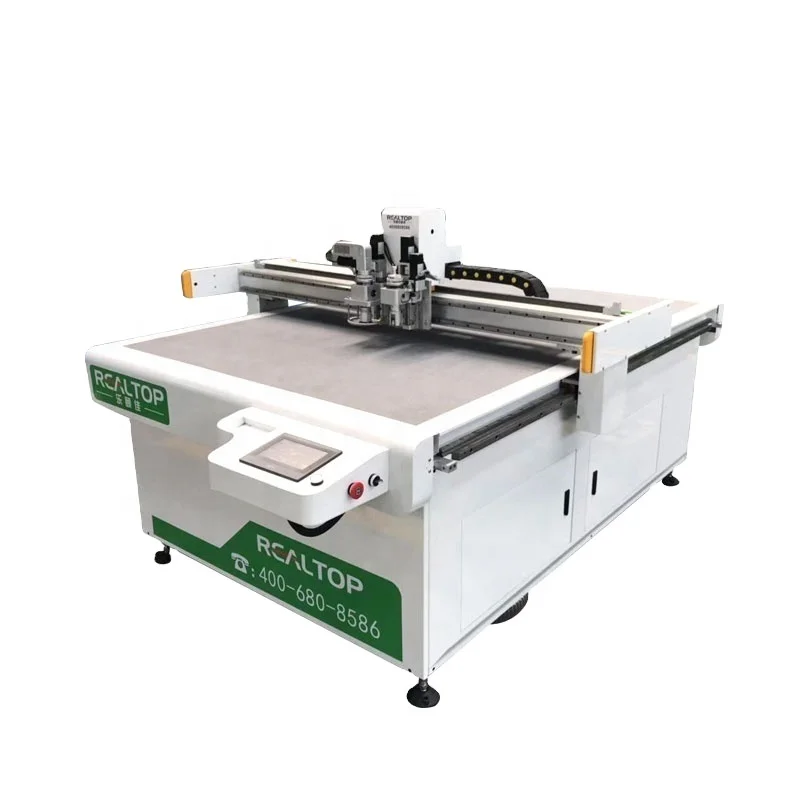
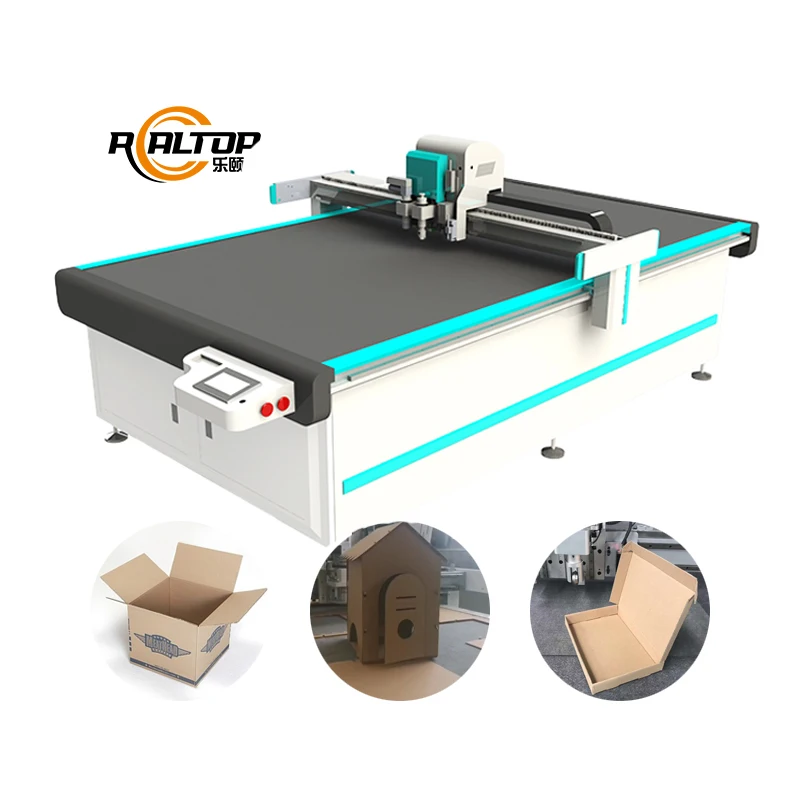
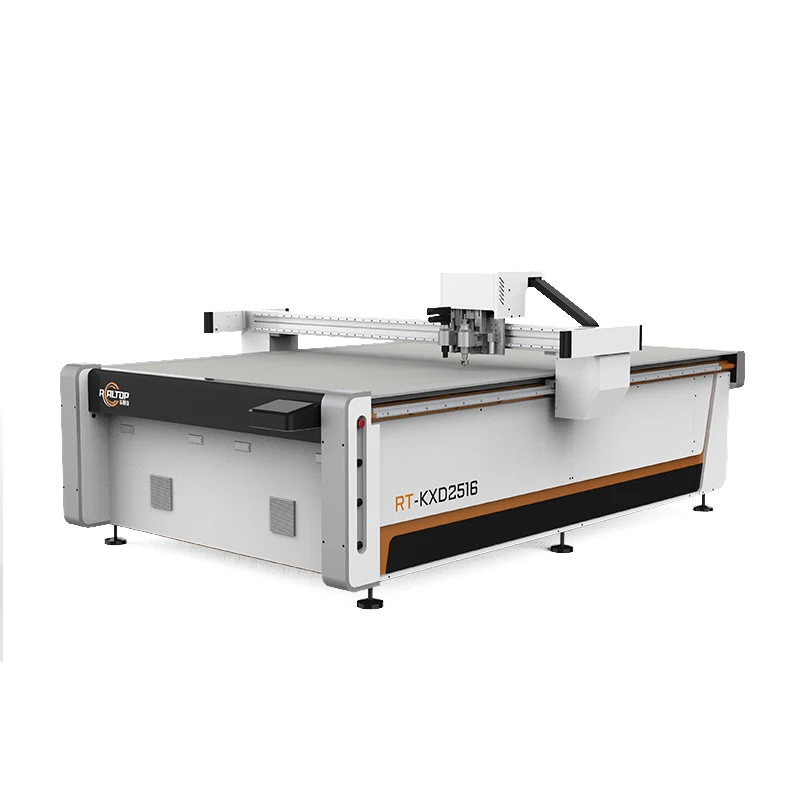
| Product Type | CNC Oscillating Knife Cutting Machine |
| Working Area | 1600×2500 mm |
| Cutting Speed | 0–2000 mm/s |
| Cutting Thickness | ≤30 mm (basis not stated in source — confirm material type and density) |
| Cutting Accuracy | ±0.1 mm |
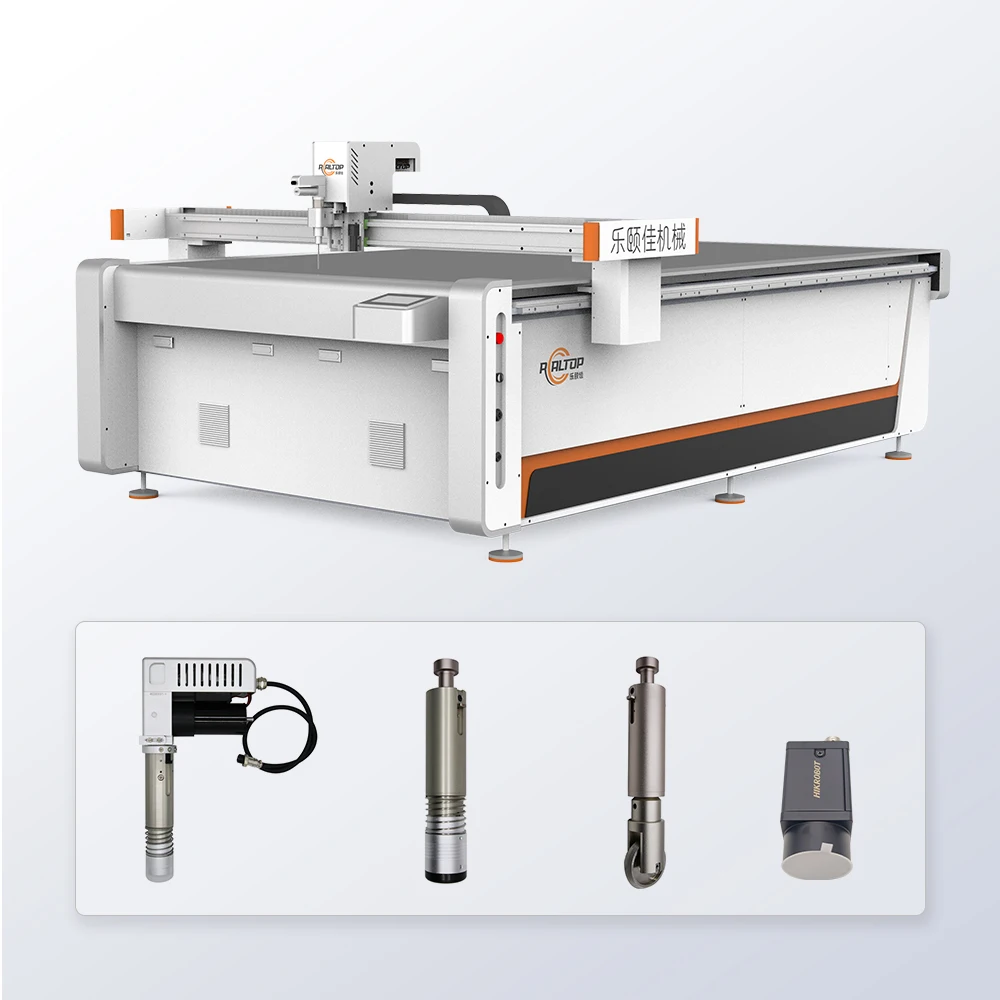
| Available Tool Heads | Oscillating knife, Driven rotary knife, Creasing wheel, Kiss cutting tool, Pneumatic knife, Milling tool, V groove knife |
| Vacuum Table | Aluminum bellows vacuum table |
| Vacuum Pump Power | 9 kW |
| Servo Drive Options | Panasonic, Delta, or Dorna |
| Control System | PLC control panel |
| Compatible File Formats | PLT, DXF, AI, PDF |
| Voltage Options | 110V / 220V / 380V (frequency not stated in source) |
| Machine Dimensions | 3300×2100×1350 mm |
| Language Options | English, Russian, Italian, Chinese; other languages customizable |
| Safety Devices | Infrared sensor and emergency stop |
| Compliance | CE |
| Warranty | 3 years |
Application Suitability
| Application | Material or Output |
|---|---|
| Footwear uppers and leather goods | Genuine leather, synthetic leather, coated hides with CCD contour tracking |
| Automotive interior trim and seat covers | Automotive leather, PU, composite foam, gasket material |
| Sofa upholstery and soft furnishing | Thick fabric, velvet, patterned textile rolls |
| Signage, packaging sample making | Foam board, corrugated carton, PVC sheets, adhesive vinyl |
| Industrial gasket and sealing | PTFE, rubber, cork composites, insulating materials |
Why "Working Area" Is the Wrong Starting Point for a CNC Oscillating Knife Cutting Machine Manufacturer
Specify the tool head, vacuum zoning, and material first — then size the table.
When a buyer sources equipment from a CNC oscillating knife cutting machine manufacturer, the conversation often begins with bed size. A 1600×2500 mm table sounds generous, but if the vacuum zoning cannot hold a small leather piece flat during oscillation, the cut drifts. [NEED_CITE: vacuum table zoning and material hold-down principles for flatbed cutting]. I have watched customers receive machines that matched their sheet dimensions yet choked on the actual material density they fed daily. The cutting depth rating only means something when tied to a specific leather type, foam density, or composite layup.
Tool Head Selection Drives Leather Edge Quality
Leather is not one material — it ranges from thin garment splits to dense sole bends with adhesive backing. The 1625 platform supports seven tool options, from oscillating knife for clean shearing of thick hides to driven rotary knife for single-ply textile runs. A CNC oscillating knife cutting machine manufacturer that offers this range lets the production team switch tooling as contracts change, instead of buying a second machine. The creasing wheel and kiss cutting tool add folding carton and sticker work to the same floor footprint.
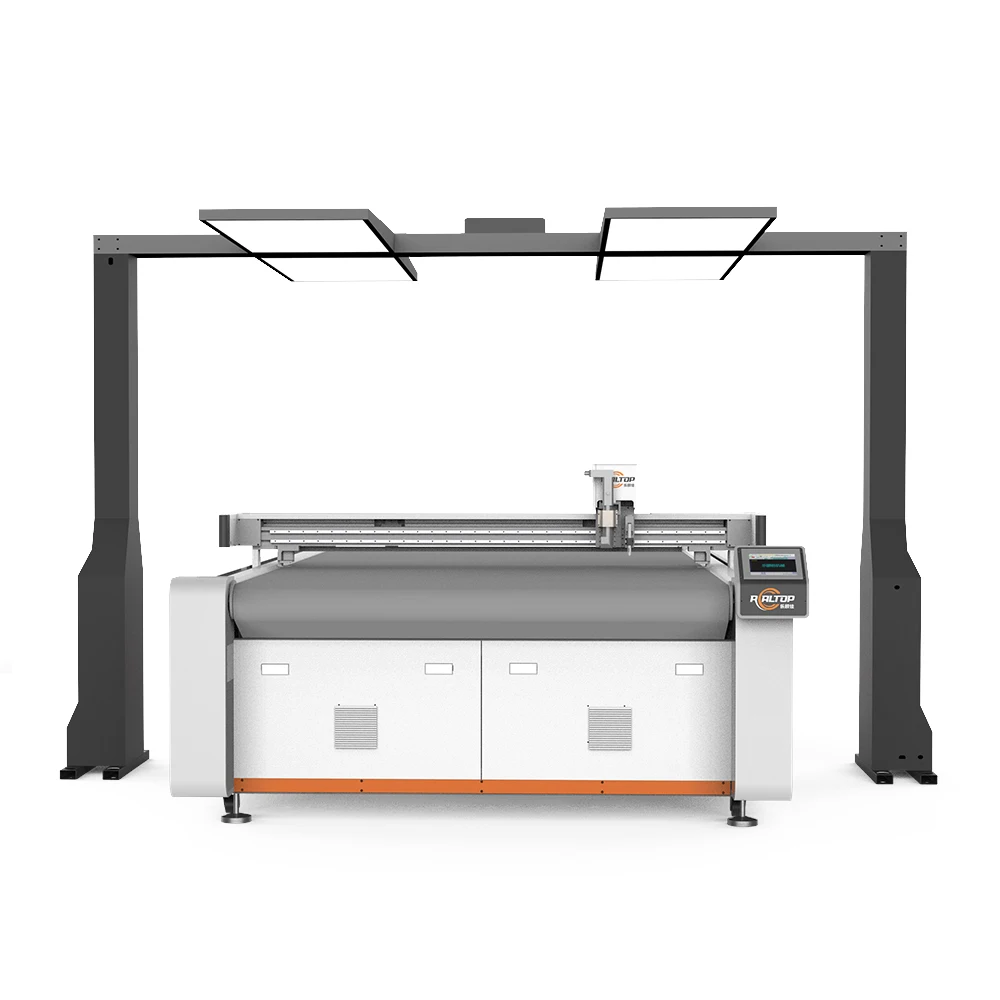
Contour Recognition on Printed Leather and Fabric
Shoe uppers and automotive panels often arrive pre-printed with grain or registration marks. The CCD camera option reads these marks at production speed and adjusts the cut path in real time. [NEED_CITE: CCD camera contour recognition accuracy on printed flexible materials]. Without this, operators manually align each nest, and registration errors accumulate across a shift. For footwear factories running dozens of SKUs, contour recognition is not a luxury — it determines whether the cut parts match the stitch line downstream.
Reading the Specs That Actually Matter
The 9 kW vacuum pump paired with the aluminum bellows table maintains consistent hold-down across the 1600×2500 mm bed. Aluminum resists warping under thermal cycling better than mild steel alternatives, keeping flatness within tolerance over years of shift work. The ±0.1 mm cutting accuracy figure applies when the material is fully seated against the table and the correct oscillation frequency is set for that thickness. Servo drive selection — Panasonic, Delta, or Dorna — affects acceleration smoothness and positioning repeatability, which shows up most on tight-radius curves in shoe upper patterns.
The Hidden Cost of Skipping the Sample Cut
A buyer once ordered a vibrating knife setup for automotive synthetic leather based on standard factory test material. The actual production stock had a heavier coating layer, and the first two batches came off the table with ragged edges and crushed foam backing. The rework delayed their shipment to the OEM by days. [NEED_CITE: material variability impact on cutting tool performance and edge finish]. Every leather grade and composite stack behaves differently under oscillation. The sample cut on the buyer’s own roll eliminates guesswork before the machine leaves the factory.
Why Buyers Specify Through This Factory
Realtop builds both knife and laser platforms in-house, so a leather processor is not pushed toward whichever technology the sales team happens to carry. The design team matches tool head, vacuum zoning, and CCD requirements to the buyer’s material stack before order confirmation. Voltage, plug standard, and control language are locked in during the specification phase, not discovered at uncrating. Sample cutting reports on the buyer’s actual leather document edge quality, hold-down performance, and cycle behavior before commitment. The three-year warranty backs the full machine, not just selected components.
Documentation & Verification
- Machine specification sheet listing confirmed tool heads and vacuum zoning layout for your material
- Electrical schematic with voltage and frequency verified for the destination market
- Sample cutting report on buyer-supplied leather or fabric before order finalization
- Tool head and table configuration list matching the agreed application scope
- Software license note and file format compatibility confirmation for PLT, DXF, AI, PDF
- Factory test record documenting cut accuracy and edge quality before dispatch
Installation, Commissioning & Support
- Foundation must be level to support the 3300×2100×1350 mm footprint and 1625 frame rigidity
- Dedicated circuit sized for the 9 kW vacuum pump plus spindle and servo loads
- Machine ships in modular sections for container loading and reassembly at site
- First-run commissioning includes tool offset calibration on buyer-supplied leather stock
- Operator training covers tool head changeover, PLC parameter adjustment, and nesting workflow
- Spare oscillating blades, rotary knife consumables, and vacuum table seal strips included
- Scheduled maintenance intervals documented for servo drives and vacuum pump filters
What to Include in Your Inquiry
Send a representative sample of the leather, synthetic, or composite material you intend to cut, including thickness range and whether the surface is printed or plain. Confirm your local voltage standard and frequency, the control panel language your operators require, and the file formats your design team currently outputs. If you run multiple SKUs daily, note the typical part size range so vacuum zoning can be configured accordingly.
Frequently Asked Questions
Q: How do I confirm which tool head suits my leather type and thickness?
A: Send a sample roll to the factory for a documented test cut. The report records which tool head — oscillating knife, rotary, or pneumatic — produced the cleanest edge at your required speed. Configuration is finalized before order, not adjusted after delivery.
Q: Can voltage, plug type, and control language be customized before shipment?
A: Yes. Voltage options span 110V, 220V, and 380V, and the plug standard is matched to your destination market. The PLC control panel is loaded with the operator language you specify, including English, Russian, Italian, Chinese, or a custom language confirmed during the order.
Q: Does the CCD camera reliably track printed marks on leather at production speed?
A: The CCD system reads registration marks on printed leather and patterned fabric in real time, adjusting cut paths for each piece. Consistent print quality and mark contrast are required for reliable tracking, which is verified during the sample cutting evaluation.
Q: Why is a sample cut on my own material required before ordering?
A: Leather density, coating thickness, and backing composition vary by supplier and batch. A sample cut on your actual stock confirms edge quality, hold-down stability, and achievable cutting speed, preventing the mismatches that cause rework and delayed deliveries.
You may also like

商品评价
Clear filtersThere are no reviews yet.