

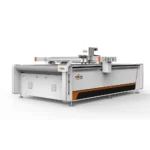


-
 Courier delivery
-
 DHL Courier delivery
-
 Warranty 1 year
-
 Free 30-Day returns

In-House Design Team — we match the cutting method to your packaging material and flute type rather than forcing one tooling across every substrate.
Technical Specifications
| Parameter | Value |
|---|---|
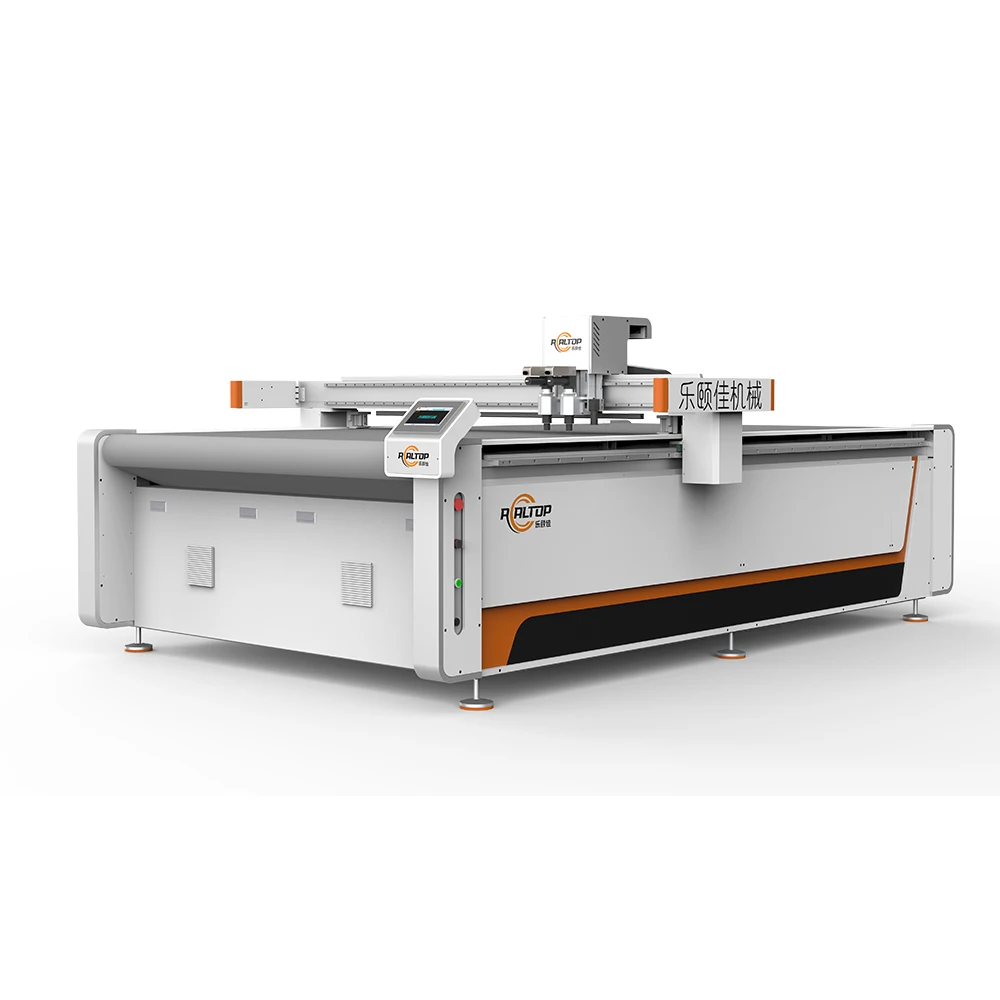
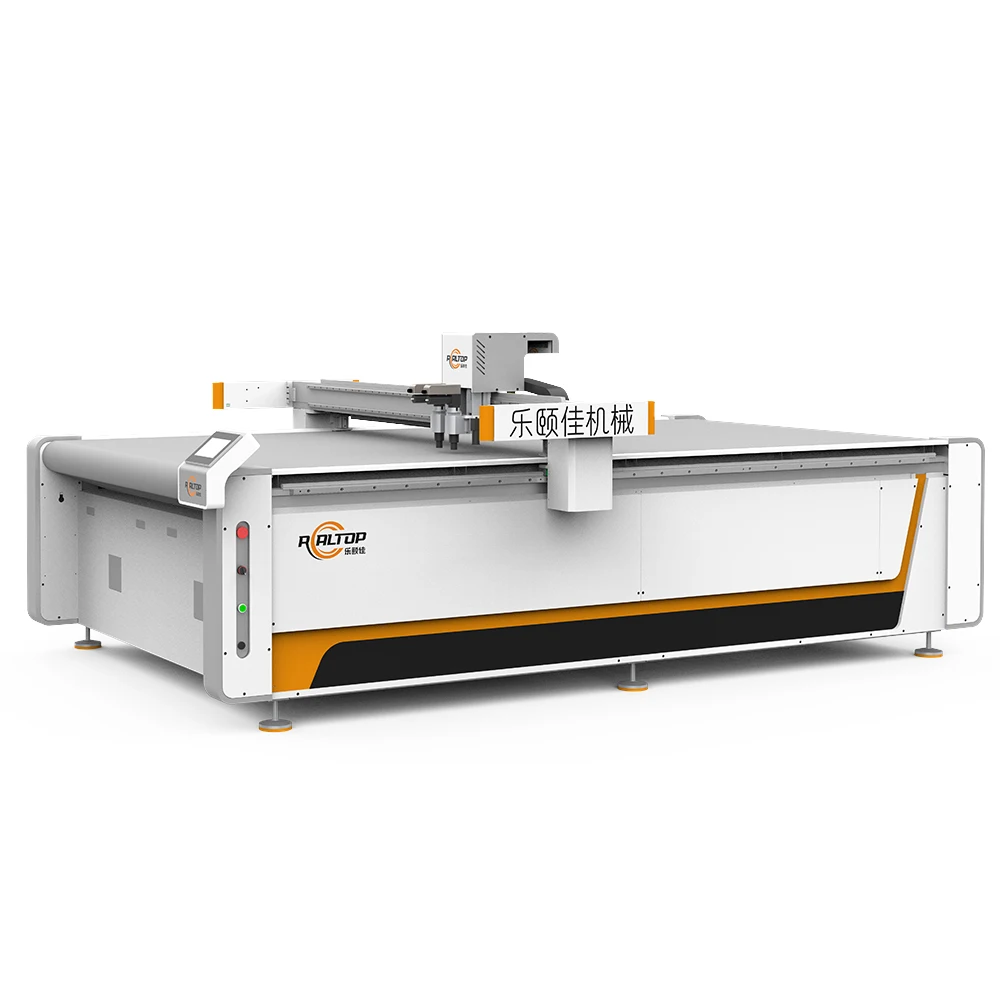
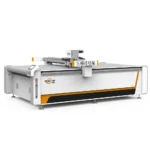
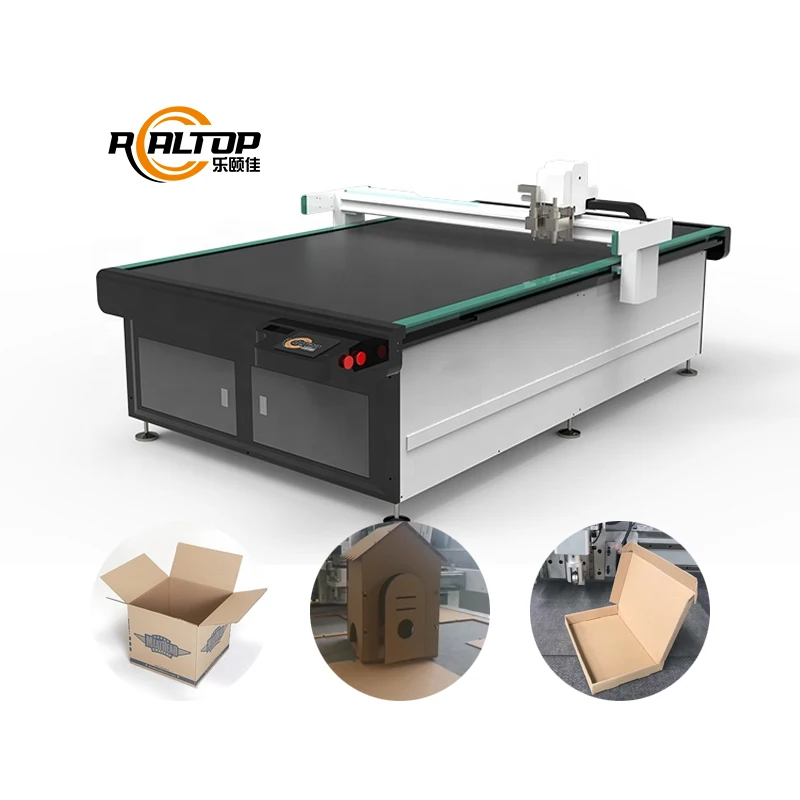
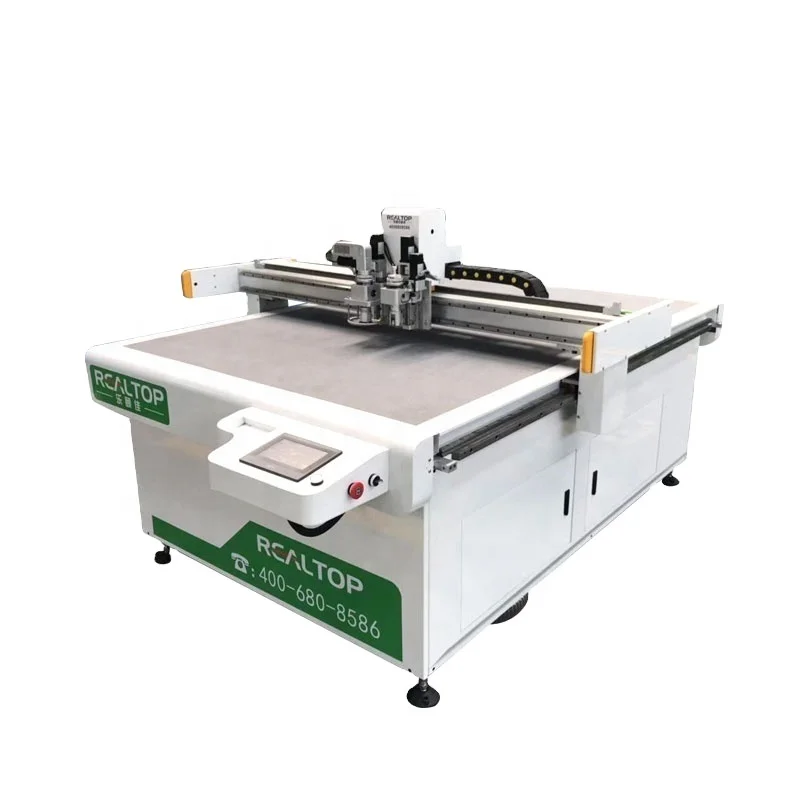
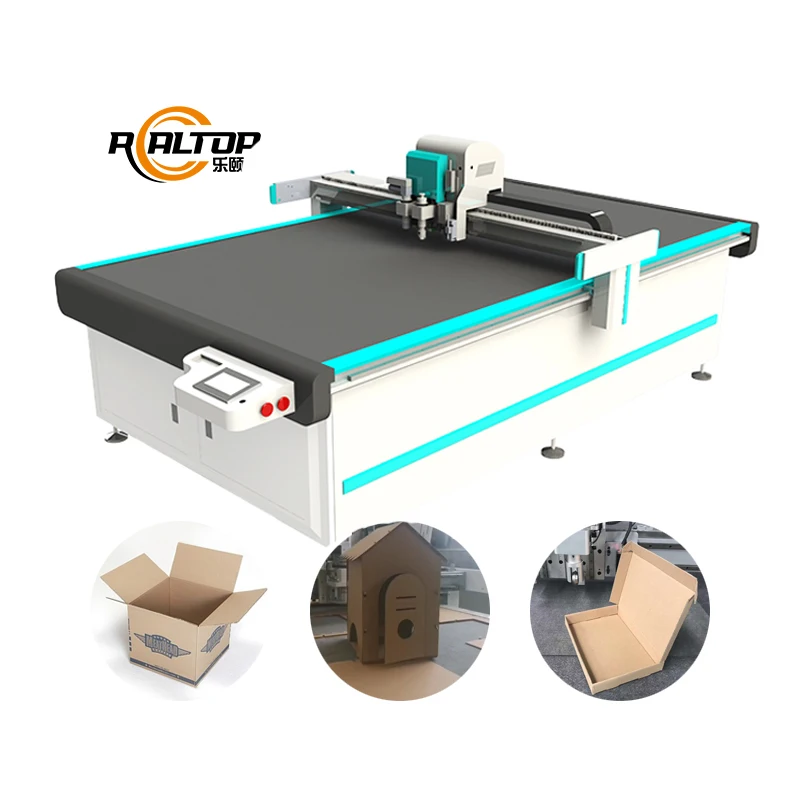
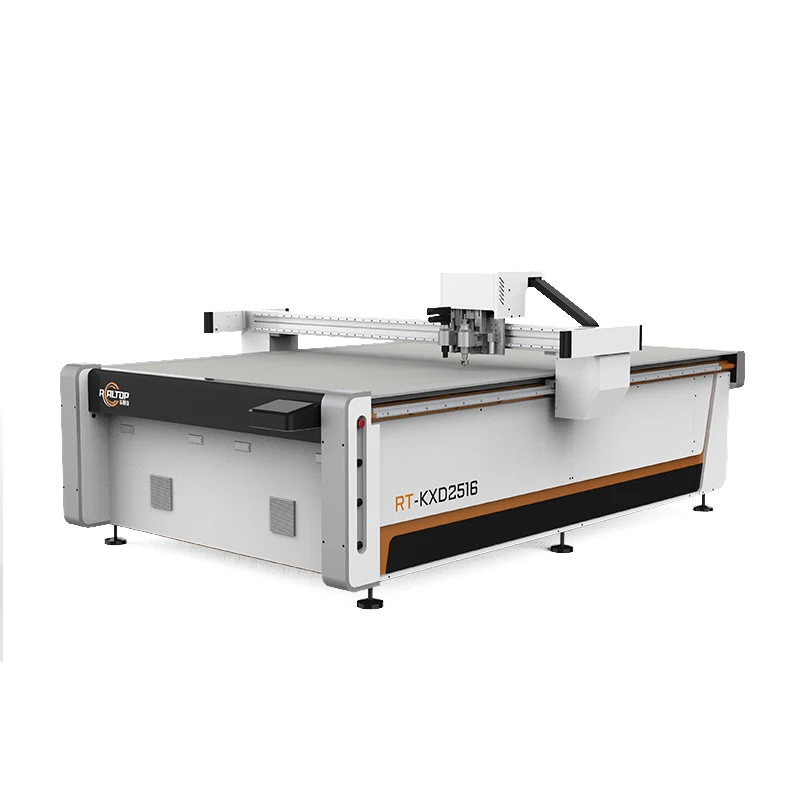
| Product Type | CNC Oscillating Knife Cutting Machine |
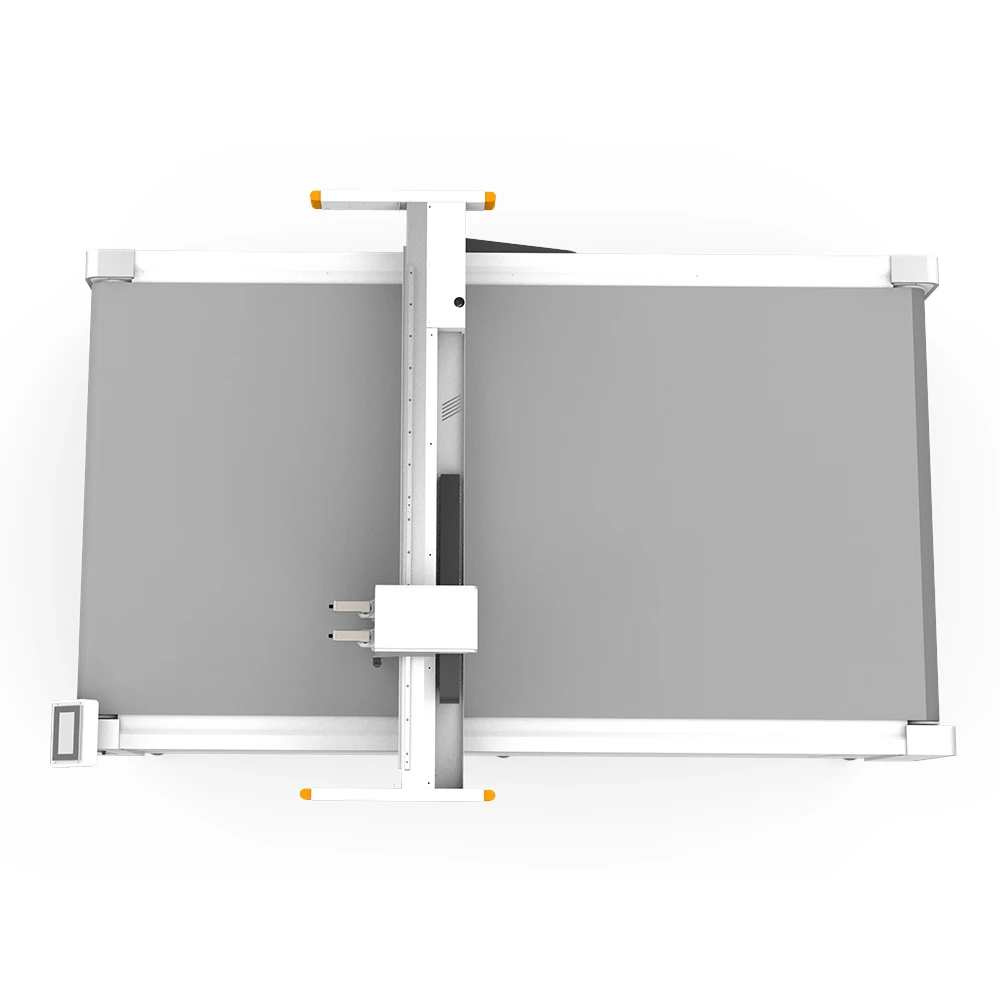
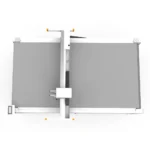
| Working Area | 1600 × 2500 mm |
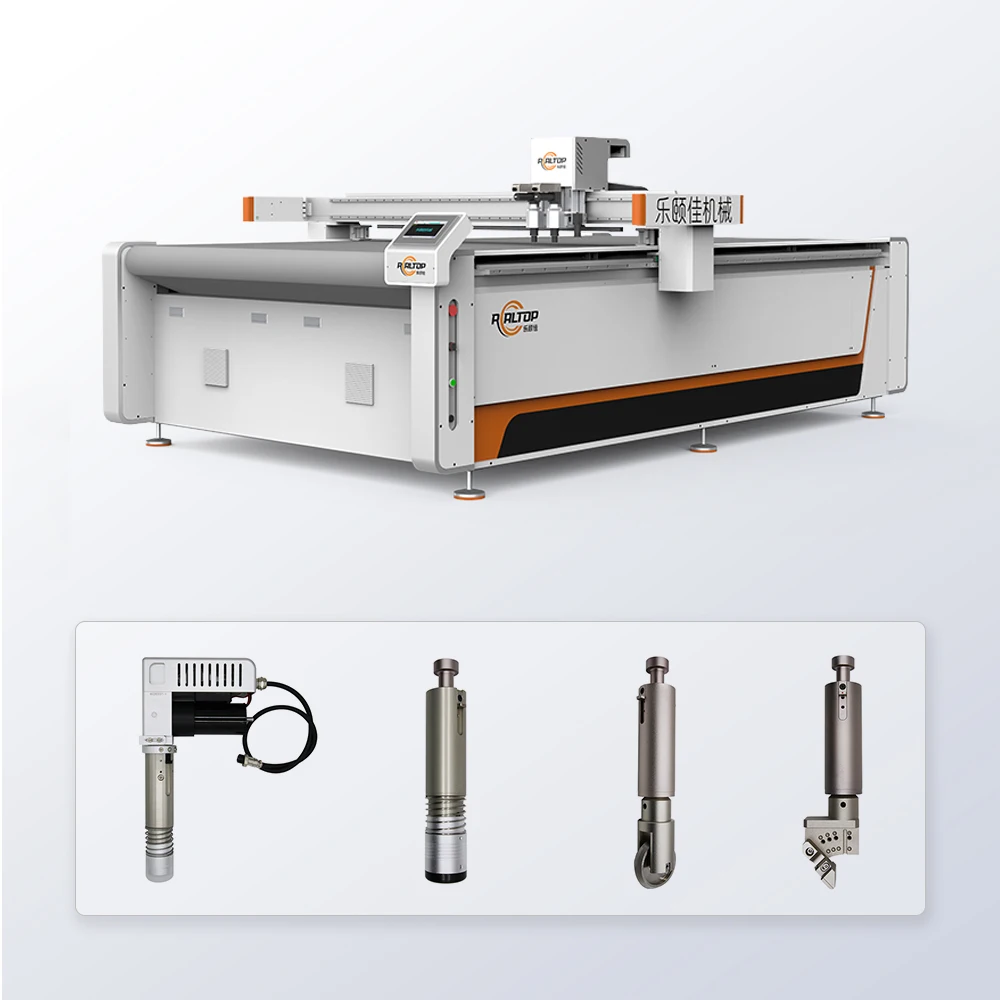
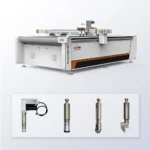
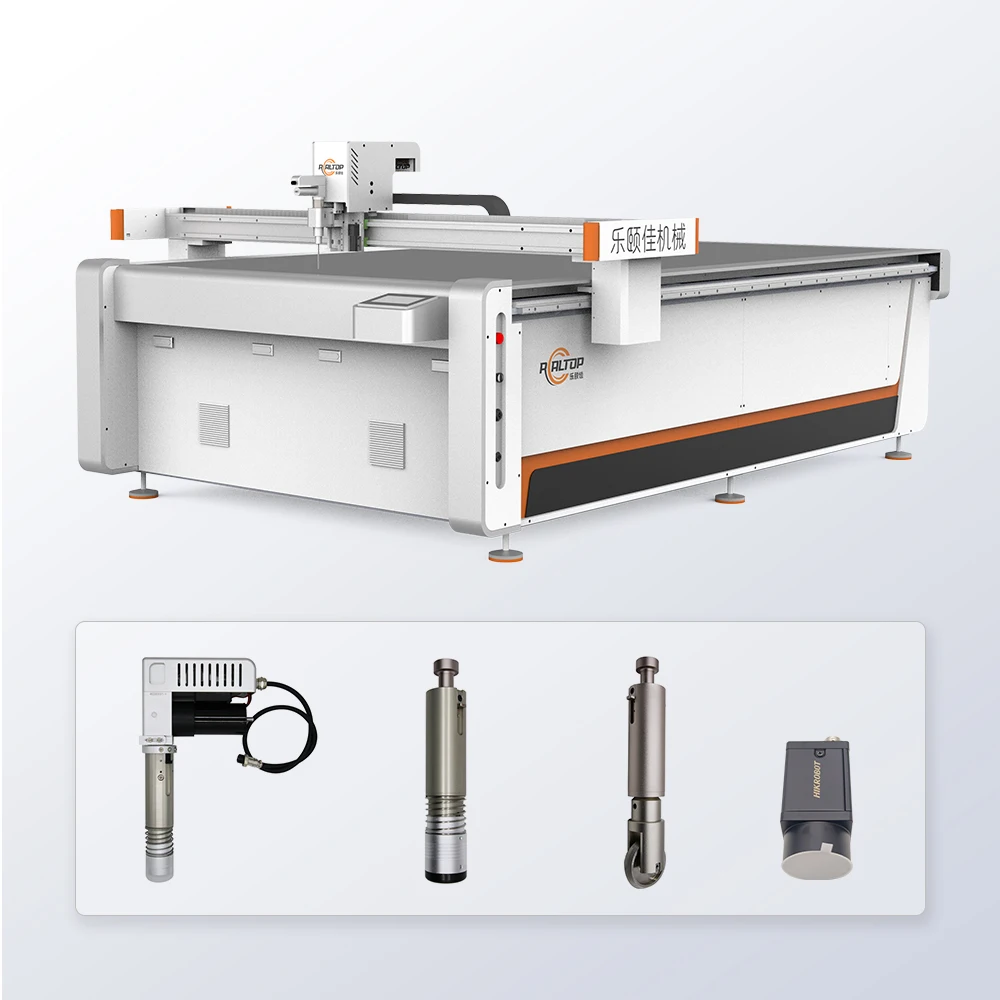
| Tool Head Options | Oscillating knife, driven rotary knife, creasing wheel, kiss cutting tool, pneumatic knife, milling tool, V-groove knife |
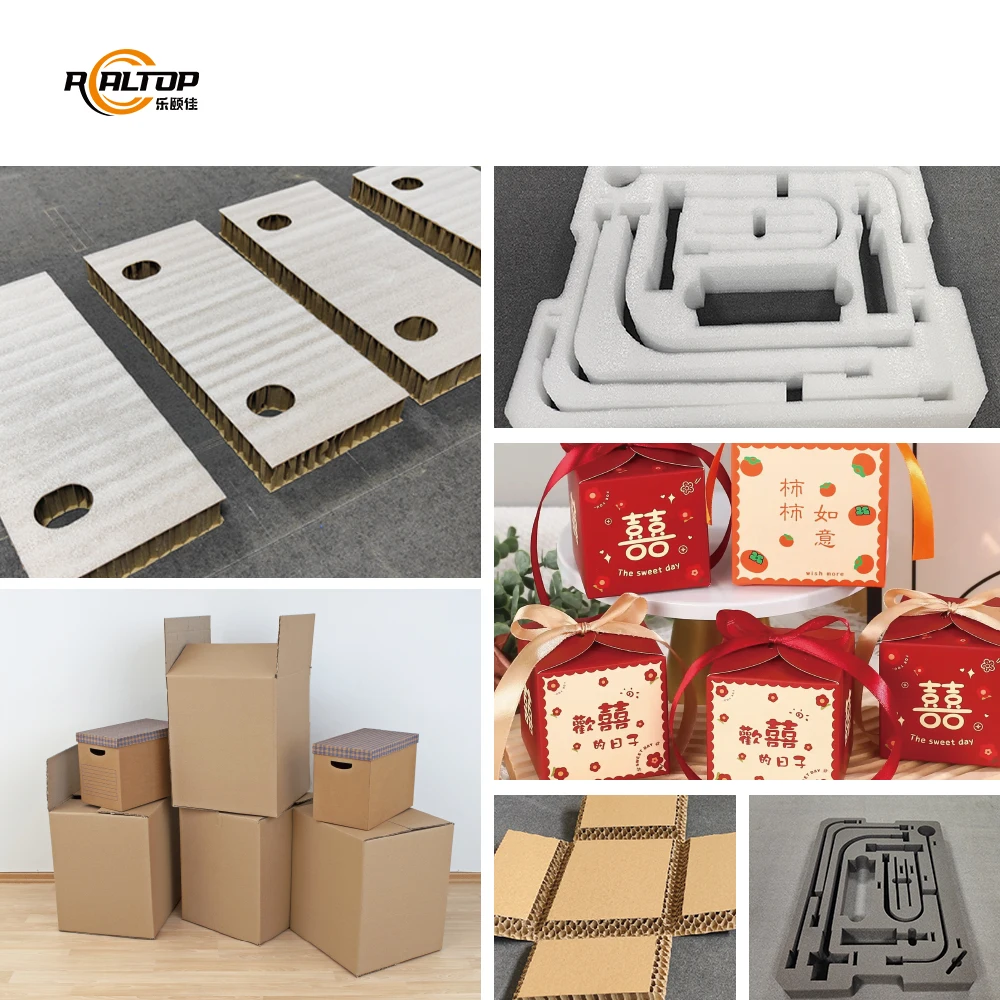
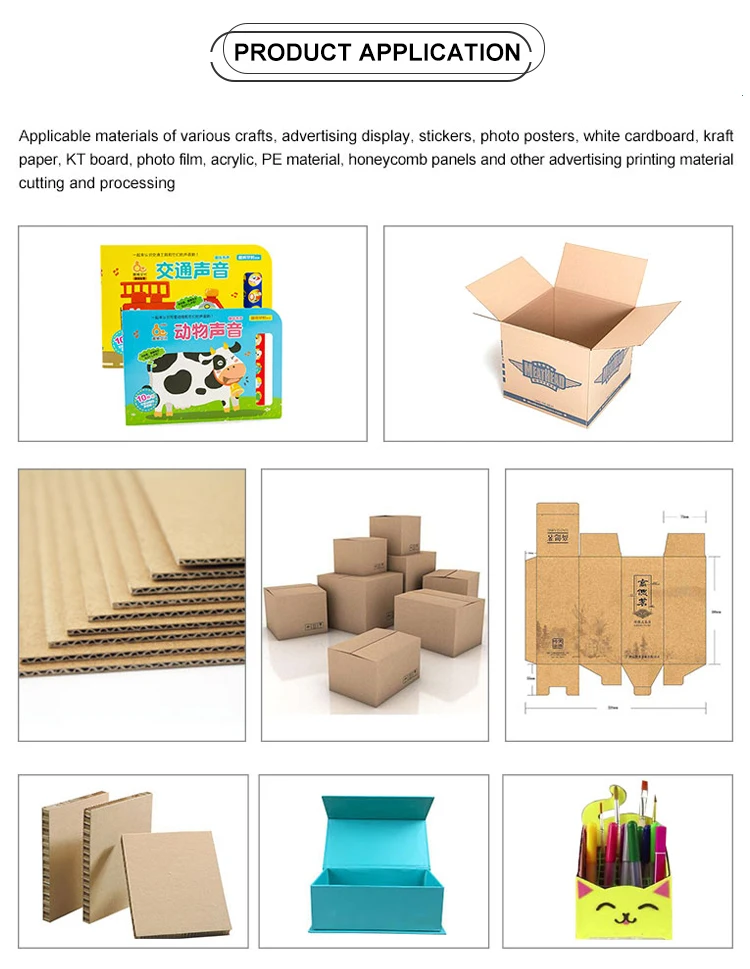
| Applicable Materials | Corrugated cardboard (E/B/BC-flute), greyboard, cardstock, EVA/EPE/PU foam, rubber mats, velvet/non-woven fabric, PVC, PET, leather |
| Cutting Speed | 0–1500 mm/s |
| Cutting Thickness | Up to 40 mm (basis to be confirmed by material density and flute profile) |
| Cutting Accuracy | ±0.1 mm |
| Vacuum Table | Aluminum bellows vacuum table |
| Vacuum Pump | 9 kW |
| Servo Drive Options | Panasonic, Delta, or Dorna |
| Control System | PLC control panel with intuitive interface |
| Supported File Formats | PLT, DXF, AI, PDF |
| Software | Dedicated packaging box structure design software |
| Voltage Options | 110V, 220V, or 380V |
| Language Options | English, Russian, Italian, Chinese (customizable) |
| Safety Devices | Infrared sensor and emergency stop |
| Machine Dimensions | 3300 × 2100 × 1350 mm |
| Certification | CE |
Application Suitability
| Application | Material or Output |
|---|---|
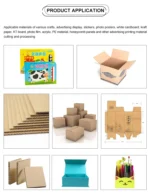
| Packaging sample making and carton prototyping | Corrugated cardboard of various weights and ply counts (E-flute, B-flute, BC-flute) |
| Protective insert fabrication | EVA foam, EPE foam, PU foam cut to custom profiles |
| Premium box and display board conversion | Greyboard, art paper, specialty paper, cardstock |
| Soft packaging and inlay production | Velvet, fleece, non-woven fabric, synthetic leather |
| Thin-gauge plastic packaging components | PVC, PET, thin plastic sheets |
| Gasket and seal sample cutting | Rubber mats, composite materials, adhesive-backed stock |
Why Board Thickness Matters More Than Working Area
When a packaging sample maker specifies a machine by table size alone, the cutting head often cannot handle the flute structure at production speed. The real constraint is how the tooling engages with BC-flute at full depth versus E-flute at high speed.
Configuration must be validated against your actual board weight, flute type, and daily sample volume before any commitment is made.
I once saw a buyer receive a machine that cut E-flute cleanly but stalled on double-wall BC-flute because the oscillating knife stroke was set for lighter stock. The operator spent hours adjusting blade depth manually. The issue was not the machine itself — it was the gap between what the buyer cut every day and what was written on the spec sheet. This is where a CNC Oscillating Knife Cutting Machine manufacturer must confirm tooling against the buyer’s heaviest board grade before production begins. [NEED_CITE:corrugated flute classification and cutting resistance by ply count]
Tool Head Selection by Flute and Cut Type
A packaging operation typically requires more than one cut style on the same sheet. The oscillating knife handles full-depth cuts through single and double-wall corrugated board. The creasing wheel scores fold lines without penetrating the liner, which is essential for clean box assembly. For kiss-cut applications where the top layer is cut but the backing remains intact, a dedicated kiss cutting tool controls depth within fractions of a millimeter. Matching each tool head to its specific task on the packaging sample avoids ragged edges and crushed flutes.
Software and File Format Compatibility in Sample Workflows
Packaging designers often work in Adobe Illustrator or dedicated structural design software, exporting in AI or PDF format. The dedicated packaging box structure design software on this system imports PLT, DXF, AI, and PDF files directly, which reduces the translation errors that arise when converting between CAD platforms. Before an order is placed, we confirm that the buyer’s existing file format and nesting workflow pass through without geometry loss. This step matters because a file that drops fold-line data during import will produce a sample that cannot be assembled correctly. [NEED_CITE:common file format conversion issues in digital packaging sample making]
Reading the Specs That Actually Affect Output
The 1600 × 2500 mm working area accommodates most standard corrugated sheets used in packaging prototyping, but the aluminum bellows vacuum table is what holds thin cardstock and heavy BC-flute flat during the cut. Without sufficient hold-down force across the full bed, lighter materials lift at the edges and shift the cut path by more than the ±0.1 mm accuracy rating. The 9 kW vacuum pump generates the suction needed for porous corrugated board, which leaks air more readily than solid plastic sheets. The PLC control panel stores tool-head parameters for each material type, so operators switch between E-flute cartons and EVA foam inserts without recalibrating from scratch each time. Servo drive options from Panasonic, Delta, or Dorna allow buyers to select a motion system that matches local service availability and spare parts access.
What Happens When the Wrong Tool Head Meets Your Board
If a creasing wheel is not matched to the board weight, the score line either cuts too shallow to fold cleanly or penetrates the liner and weakens the box wall. On foam inserts, using a standard oscillating knife instead of a pneumatic knife can compress the material before the blade passes through, leaving a beveled edge that does not sit flush inside the carton. These defects show up during sample approval and delay client sign-off. [NEED_CITE:tool head and material mismatch effects on edge quality in digital cutting]
Why Buyers Source This Equipment Here
The design team configures each machine around the buyer’s stated material and sample volume, not a default catalogue build. Both knife and laser cutting systems are developed in-house, so a packaging fabricator that also processes acrylic display stands can discuss both methods with one engineering team. Every tool head combination and table zone layout is documented before the order is confirmed. Sample cutting on the buyer’s own corrugated stock or foam sheet is completed before production starts, providing a physical reference for edge quality and dimensional accuracy. Voltage, plug configuration, and control language are verified against the destination market so the machine runs on arrival without electrical adaptation.
Documentation & Verification
- Machine specification sheet listing each configured tool head and its designated material
- Electrical schematic with voltage and frequency confirmed for your local supply
- Sample cutting report produced on your corrugated board or foam stock before commitment
- Software licence and file format compatibility note matching your existing design workflow
- Factory test record showing cutting accuracy and vacuum hold-down across the full bed
- Packing photographs documenting machine condition at the point of dispatch
Installation, Commissioning & Support
- Floor space must accommodate the 3300 × 2100 × 1350 mm footprint plus operator access on three sides
- Dedicated power circuit matching confirmed voltage (110V/220V/380V) and the 9 kW vacuum pump load
- Table leveling and vacuum seal inspection performed on site after the aluminum bellows bed is positioned
- First-run calibration using your actual packaging board to verify creasing depth and knife stroke
- Operator training covering tool head changes, PLC parameter recall, and file import from DXF or AI
- Spare blade and creasing wheel kit included for initial production runs before local resupply
What We Need to Configure Your Machine
To match the tooling and table layout to your packaging operation, provide the board types and flute grades you cut most often, the maximum sheet size you run, and the file format your design team exports. If your workshop runs on a specific voltage or requires a particular control language, note that at the inquiry stage. We also ask for a sample of your heaviest board so we can run a cutting test before finalizing the configuration.
Frequently Asked Questions
Q: How is cutting thickness verified against my specific corrugated flute type and board weight?
A: We run a sample cut on your actual board before the order is finalized. The test covers the flute profile, ply count, and weight you process daily. The cutting depth, blade type, and stroke frequency are adjusted during this test, and the results are documented in a sample cutting report you receive before production begins.
Q: Which tool head is recommended for creasing versus full-cut on my carton stock?
A: The creasing wheel scores fold lines without penetrating the outer liner, while the oscillating knife handles full-depth perimeter cuts. For your specific board weight, we determine the creasing wheel diameter and pressure setting during the sample test to ensure clean folds without liner damage.
Q: Is the vacuum table zoning sufficient for small packaging sample parts that tend to lift?
A: The aluminum bellows vacuum table provides hold-down across the full 1600 × 2500 mm area. During the sample test, we check whether small cutouts and narrow waste strips remain flat under vacuum. If your design includes very small parts, we adjust the zone layout or recommend a sacrificial overlay to maintain suction on the pieces that matter.
Q: Can the software import my existing DXF or AI file format and nesting workflow?
A: The dedicated packaging software accepts PLT, DXF, AI, and PDF files. Before order confirmation, we test your actual design files through the import process to verify that fold lines, cut paths, and dimensions transfer without geometry loss or layer errors.
Q: What voltage, plug type, and control language are confirmed before shipment?
A: We confirm your local voltage (110V, 220V, or 380V), plug standard, and preferred control panel language before production begins. The electrical schematic reflects these choices, and the PLC interface is set accordingly so the machine is operational upon installation without on-site electrical modification.
You may also like

商品评价
Clear filtersThere are no reviews yet.