



-
 Courier delivery
-
 DHL Courier delivery
-
 Warranty 1 year
-
 Free 30-Day returns

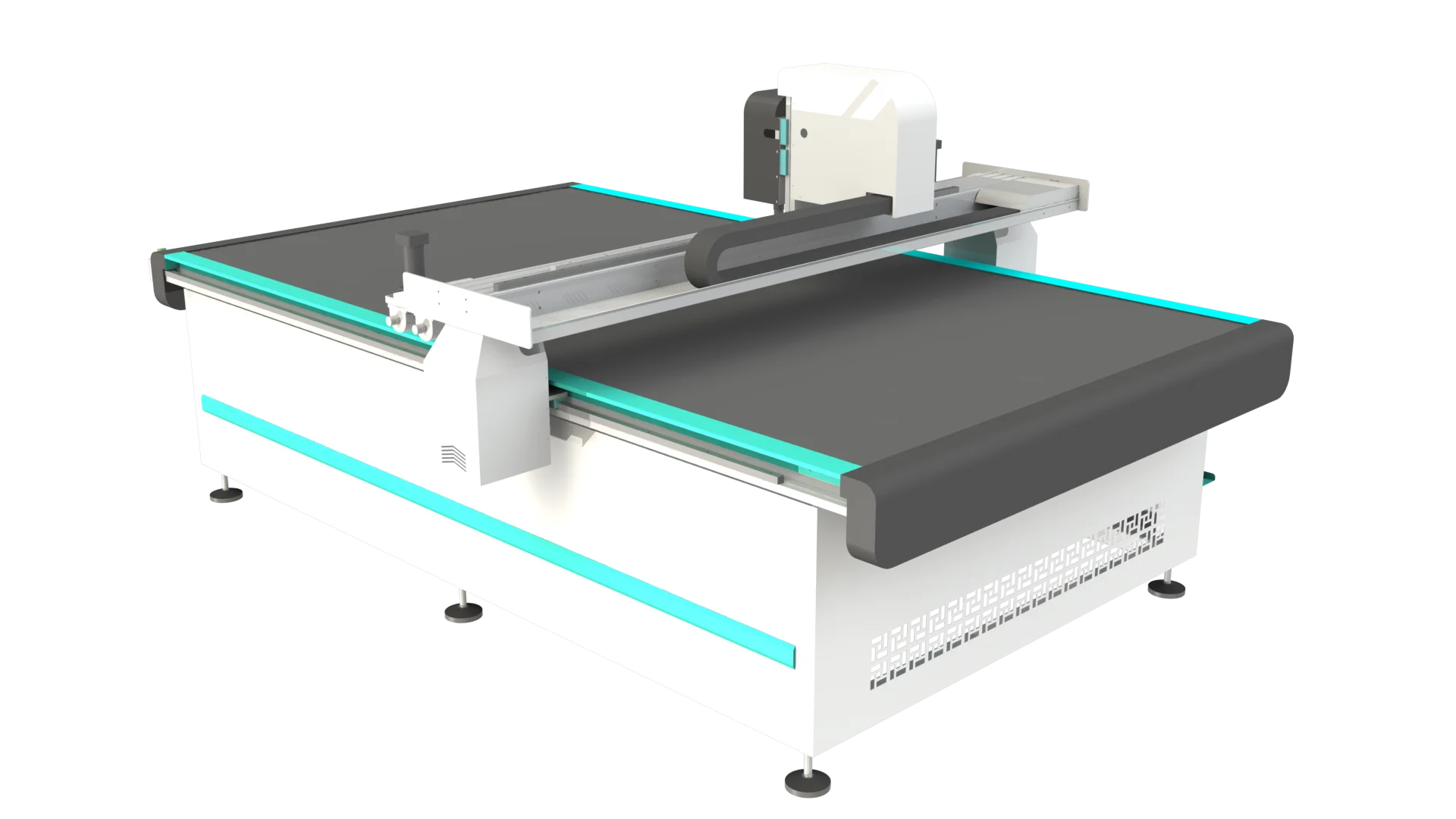
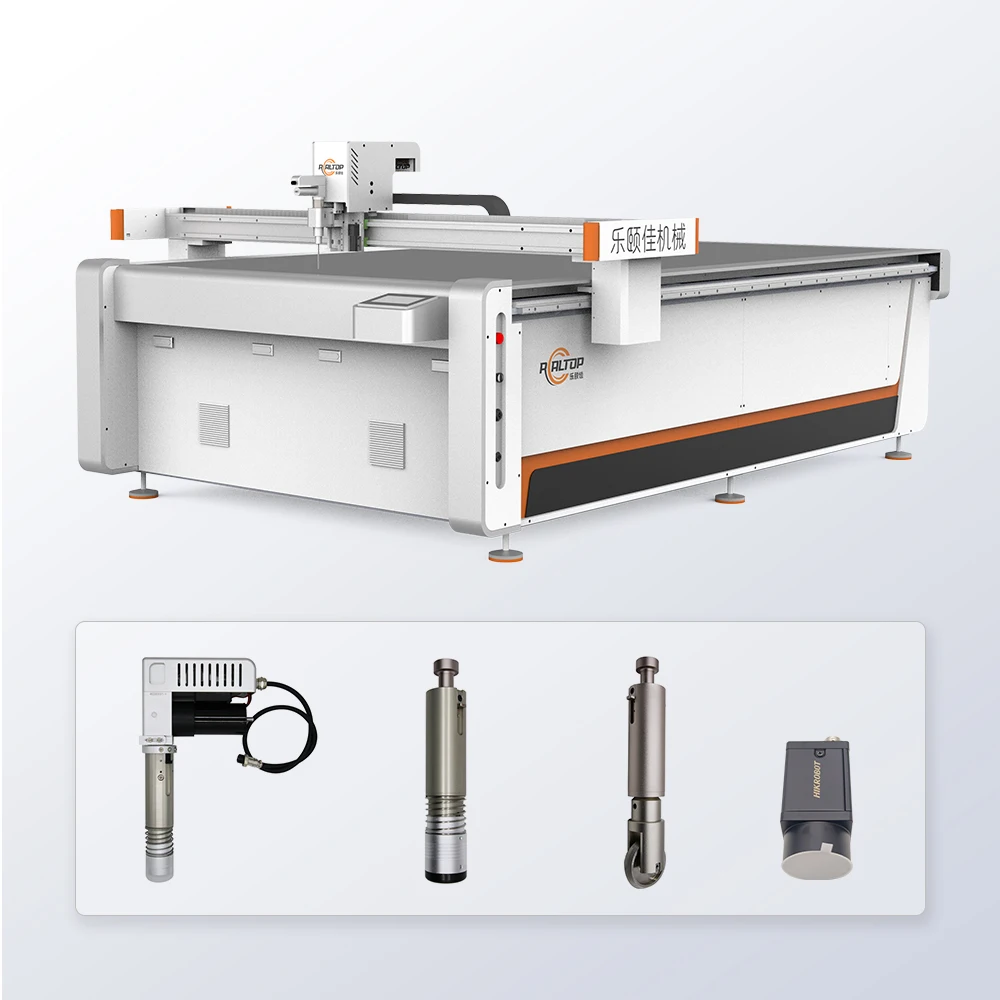
Customized Tool Head and Table Layout — We build each oscillating knife unit around the buyer’s actual board grade, flute profile, and nesting workflow instead of quoting a fixed catalog setup.
Technical Specifications
| Parameter | Value |
|---|---|
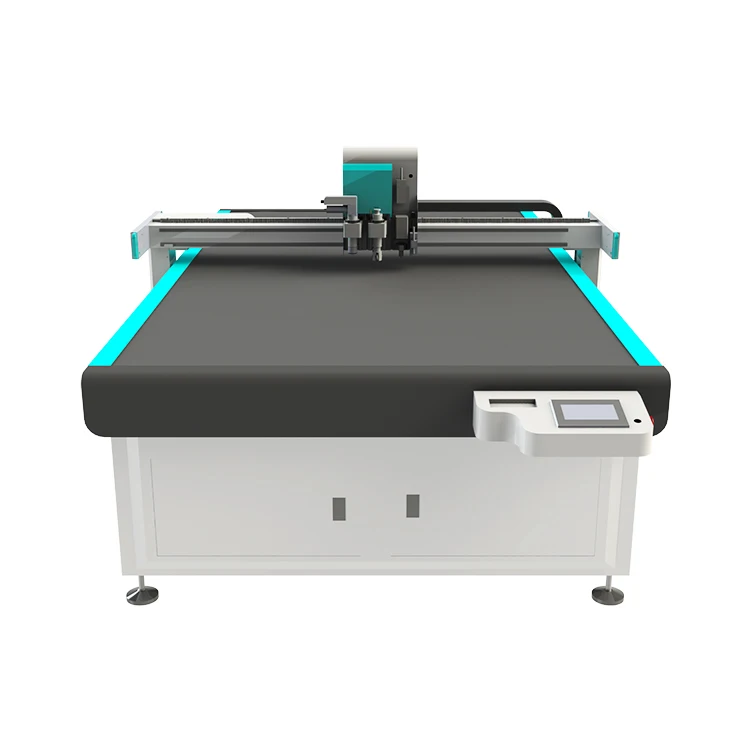
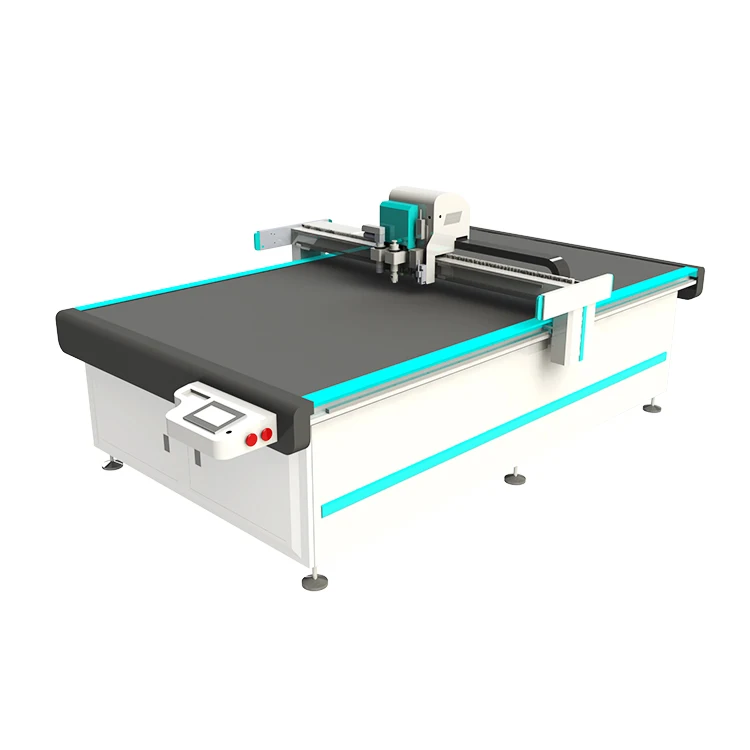
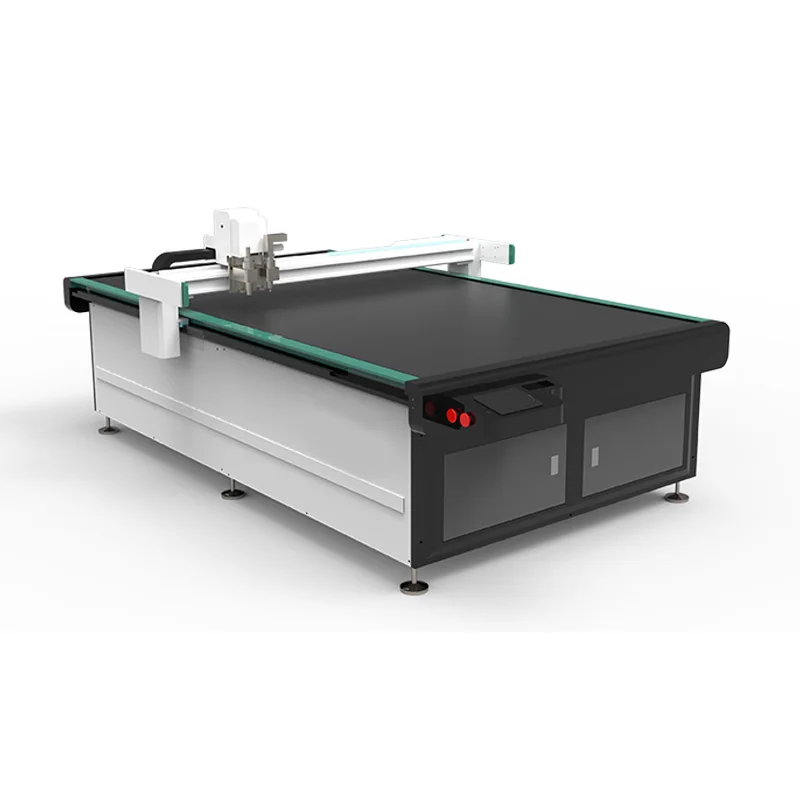
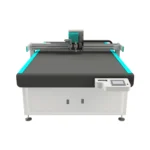
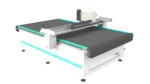
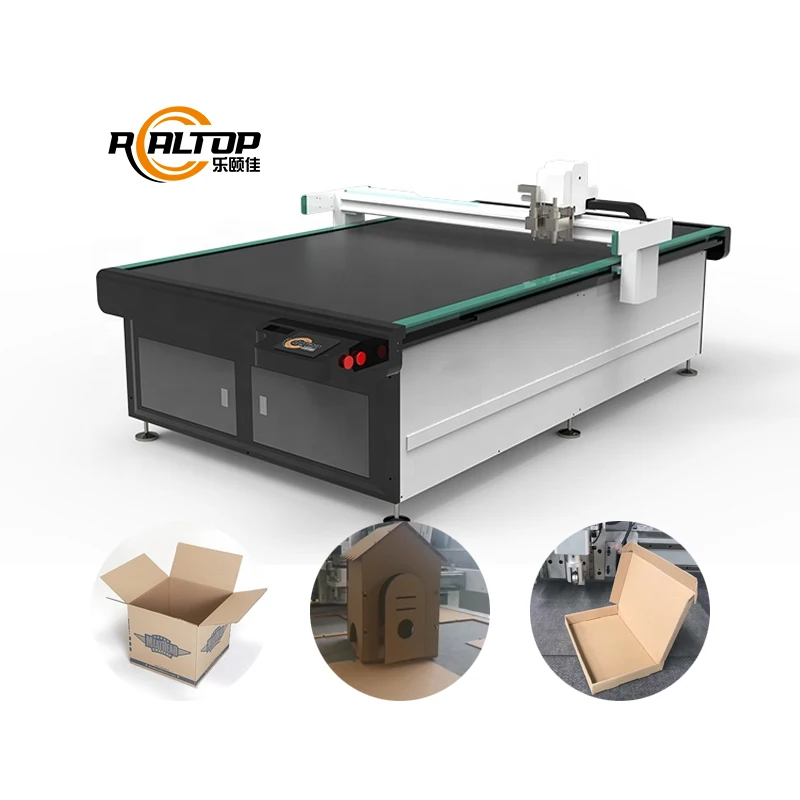
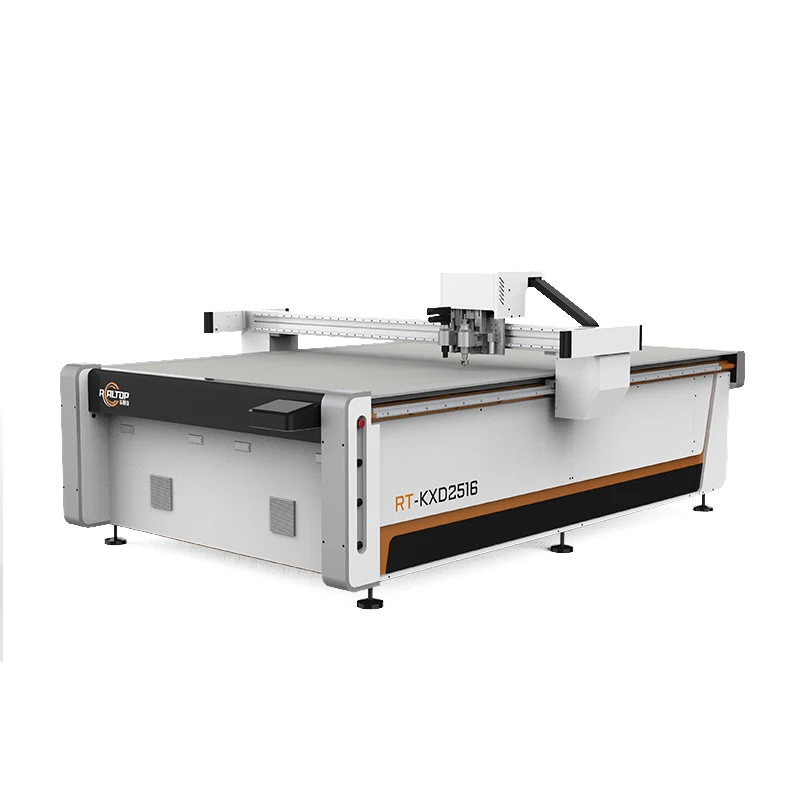
| Product Type | CNC Oscillating Knife Cutting Machine |
| Working Area | 1600 × 2500 mm |
| Machine Size | 3450 × 2300 × 1250 mm |
| Rated Power | 11 kW |
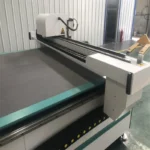
| Working Table | Flatbed vacuum table with 7.5 kW pump |
| Multifunctional Head | Swiss-imported knife, full cut / half cut / cursor location |
| Safety Device | Infrared sensors |
| Translational Velocity | 800 – 1200 mm/s |
| Cutting Speed | 200 – 800 mm/s (material dependent) |
| Repeated Accuracy | ≤ 0.1 mm |
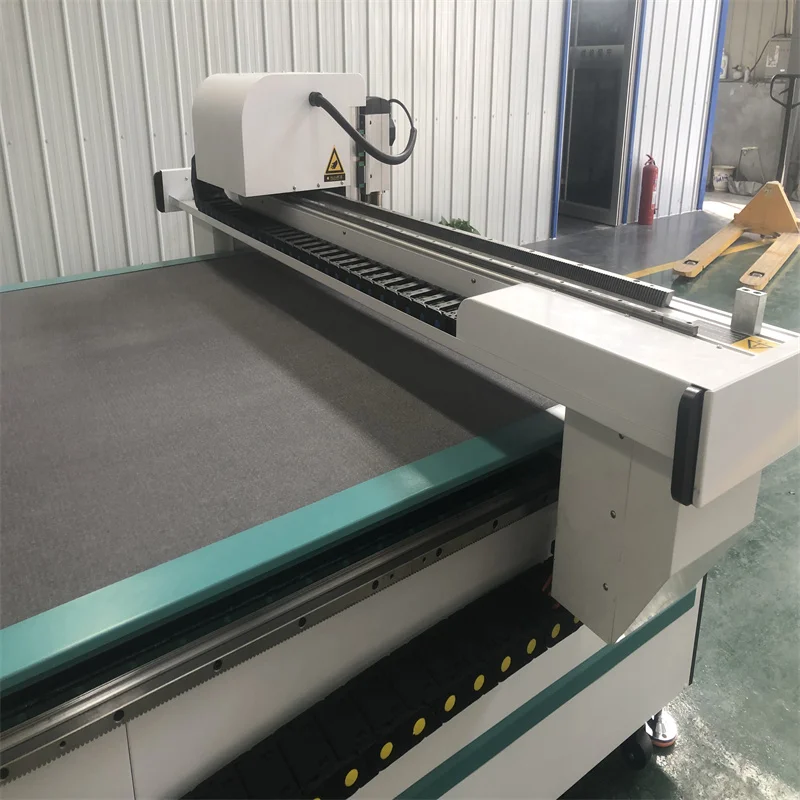
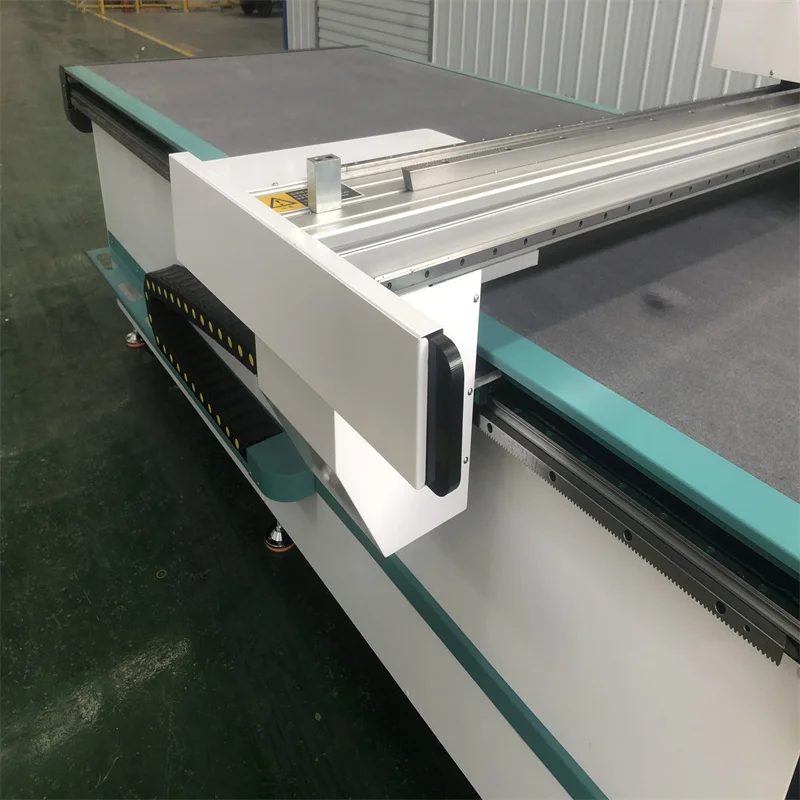
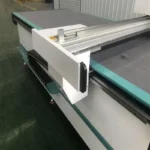
| Transmission System | Digital servo motor, linear guide, synchronous belt, ball screw |
| Servo Motor | Japanese Yaskawa |
| Linear Rail | Taiwan Hiwin |
| Instruction System | HP-GL compatible format |
| Voltage | 380 V ± 10% |
| Conveyor Belt | Germany-imported, auto-feeding enabled |
| Key Features | Oscillating knife with half-cut creasing, auto-feeding for roll stock, infrared safety sensors |
Application Suitability
| Application | Material or Output |
|---|---|
| Packaging sample making | Single-wall and double-wall corrugated board, greyboard, folding carton stock |
| Cardboard box prototyping | Short-run die-line templates, creasing and cutting on kraft and coated liner |
| Roll material processing | Flexible substrates including leather, PVC, soft glass, and silicone on continuous feed |
| Garment and footwear cutting | Sponge composite leather, clothing fabrics, and flexible technical textiles |
When Working Area Is the Only Spec That Gets Discussed
A CNC Oscillating Knife Cutting Machine manufacturer must push past table dimensions and address the board grade, flute type, and daily volume before any quote leaves the factory.
Buyers often specify a 1600 × 2500 mm bed and assume the machine will handle their material automatically. In reality, double-wall corrugated requires different knife amplitude and vacuum zoning than single-face kraft liner. I have stood in carton plants where parts lifted off the table mid-cut because the default suction layout was designed for lighter stock. Confirming the actual material thickness and production sequence before build prevents costly on-site rework [NEED_CITE: vacuum zoning requirements by corrugated flute type].
Blade Amplitude and Crease Depth on Corrugated Stock
The Swiss-imported oscillating knife head on this CNC knife cutting system delivers both full cutting and half cutting in a single pass. Full cut penetrates the entire board for clean perimeter edges, while half cut scores the crease line without cutting through the bottom liner. Matching the oscillation frequency to the flute profile — E-flute, B-flute, or BC double-wall — determines whether the crease folds cleanly or crushes the corrugation. Getting this right during factory testing means the packaging sample maker receives a machine already tuned to their primary board grade.
Vacuum Hold-Down and Auto-Feeding for Continuous Runs
The 7.5 kW vacuum pump paired with the flatbed table holds corrugated sheets flat during high-speed traversal. For roll-fed materials like PVC or composite leather, the Germany-imported conveyor belt and auto-feeding system advance the substrate between cuts without manual repositioning. This matters for operators running nesting layouts where a single misalignment propagates through dozens of parts. The CNC Oscillating Knife Cutting Machine processes roll stock continuously, reducing manual handling between sheets [NEED_CITE: material hold-down methods in digital flatbed cutting].
Drive Train Precision and Its Effect on Die-Line Accuracy
The combination of Japanese Yaskawa digital servo motors and Taiwan Hiwin linear rails delivers ≤ 0.1 mm repeatability across the full 1600 × 2500 mm working area. In packaging sample making, this tolerance keeps crease lines aligned with cut edges so the finished box folds square. The synchronous belt and ball screw transmission eliminates backlash that would otherwise show up as stepped edges on curved die-line profiles. When the instruction system imports HP-GL files directly from the buyer’s CAD workflow, positional accuracy from file to finished part stays consistent across successive runs.
What Happens When the Tool Head Does Not Match the Board
Selecting the wrong knife angle or oscillation amplitude for a given flute type produces ragged edges on single-wall or crushed creases on double-wall. The vacuum zoning may also be inadequate for small die-cut parts, causing them to shift during the final cut pass. Buyers who skip material testing before order confirmation often discover these issues only after installation, when reconfiguring the tool head and suction layout adds weeks to commissioning. The cost is not just the hardware swap but the production downtime while the correct setup is established [NEED_CITE: tooling mismatch consequences in carton sample cutting].
Why Sourcing This Cutter from the Build Floor Matters
In-house design and production means the oscillating knife configuration, vacuum table zoning, and conveyor feed are engineered together rather than assembled from unrelated sub-systems. Every CNC Oscillating Knife Cutting Machine undergoes sample cutting on the buyer’s own board grade before shipment, so edge quality and crease depth are verified in advance. Voltage, plug type, and control language are confirmed against the destination facility’s grid and operator preference. Electrical schematics and a tool head configuration list ship with the machine, giving local maintenance teams a complete reference. The HP-GL compatible software and file format compatibility note ensure the cutter integrates with existing nesting and CAD workflows without custom programming.
Documentation & Verification
- Factory test record using buyer-supplied corrugated board grade and flute profile
- Electrical schematic with voltage and plug type confirmed for destination grid
- Tool head and vacuum table configuration list matched to specified material range
- Software licence and HP-GL file format compatibility note for existing CAD workflow
- Sample cutting report documenting edge quality and crease depth on buyer’s stock
- Spare parts list covering oscillating knife blades, conveyor belt segments, and vacuum filters
Installation, Commissioning & Support
- 11 kW rated power requires a dedicated 380 V ± 10% circuit with appropriate breaker sizing
- Machine footprint of 3450 × 2300 mm plus conveyor infeed clearance defines floor layout
- Vacuum pump commissioning includes zone mapping to match the buyer’s nesting pattern
- First-run calibration verifies ≤ 0.1 mm repeatability across the full 1600 × 2500 mm travel
- Operator training covers oscillating knife blade changes, HP-GL file loading, and crease depth adjustment
- Scheduled maintenance plan for Yaskawa servo drives, Hiwin rails, and conveyor belt tension
What to Prepare Before Requesting a Quotation
Send the exact corrugated board grades, flute types, and maximum sheet thickness you plan to process. Include your typical daily volume and whether you run from sheets or rolls. Specify the local voltage and frequency at the installation site along with the preferred control language. If you use a particular CAD or nesting software, provide sample files so compatibility can be verified before the machine enters production.
Frequently Asked Questions
Q: How do you match the oscillating knife setup to our specific board grade?
A: We request samples of your actual corrugated stock — including flute type and liner weight — and run cutting tests at our facility. The oscillation amplitude, knife angle, and vacuum zoning are adjusted until edge quality and crease depth meet your standard. A sample cutting report ships with the machine documenting the verified settings for your material.
Q: Can the voltage and control interface be customized for our local grid?
A: Yes. The standard 380 V ± 10% configuration can be adapted to your facility’s supply before the machine leaves the factory. We confirm voltage, frequency, plug type, and control panel language during the specification review so no on-site electrical modification is needed at commissioning.
Q: Does this cutter support CCD camera contour recognition for printed packaging?
A: CCD contour recognition is available as a configuration option for buyers cutting pre-printed packaging where the knife path must follow registered print marks. If your workflow involves printed carton faces, specify this during the inquiry so the camera system and software are integrated and tested before dispatch.
Q: What spare parts should we stock for the first year of operation?
A: The spare parts list included with the machine covers oscillating knife blades, vacuum pump filters, and conveyor belt segments. Blade consumption depends on your board grade and daily volume. We recommend confirming a replenishment schedule at installation so replacement parts arrive before stock runs low.
Q: How is the software integrated with our existing CAD and nesting workflow?
A: The instruction system accepts HP-GL compatible format, which most packaging CAD platforms export natively. Before order confirmation we review your file format and nesting software to verify direct import capability. A compatibility note documenting the tested file workflow ships with the machine documentation.
You may also like

商品评价
Clear filtersThere are no reviews yet.