


-
 Courier delivery
-
 DHL Courier delivery
-
 Warranty 1 year
-
 Free 30-Day returns

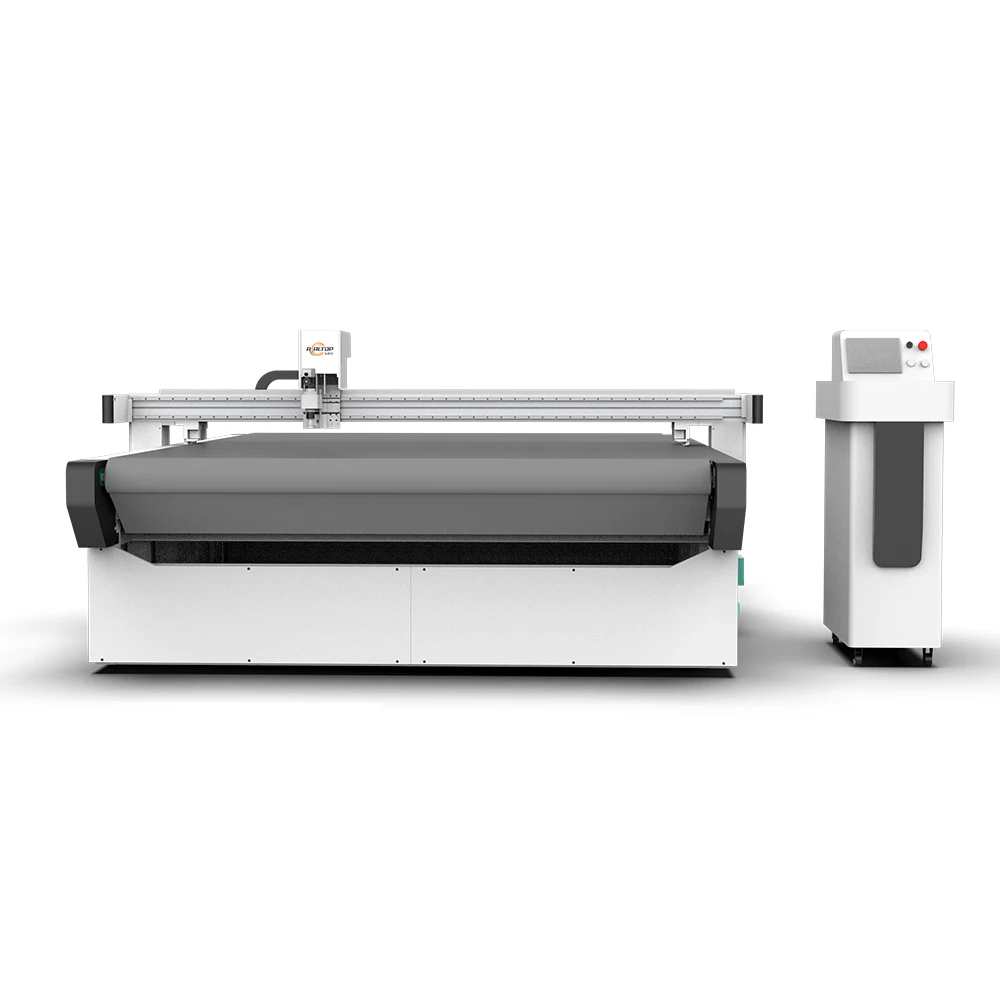
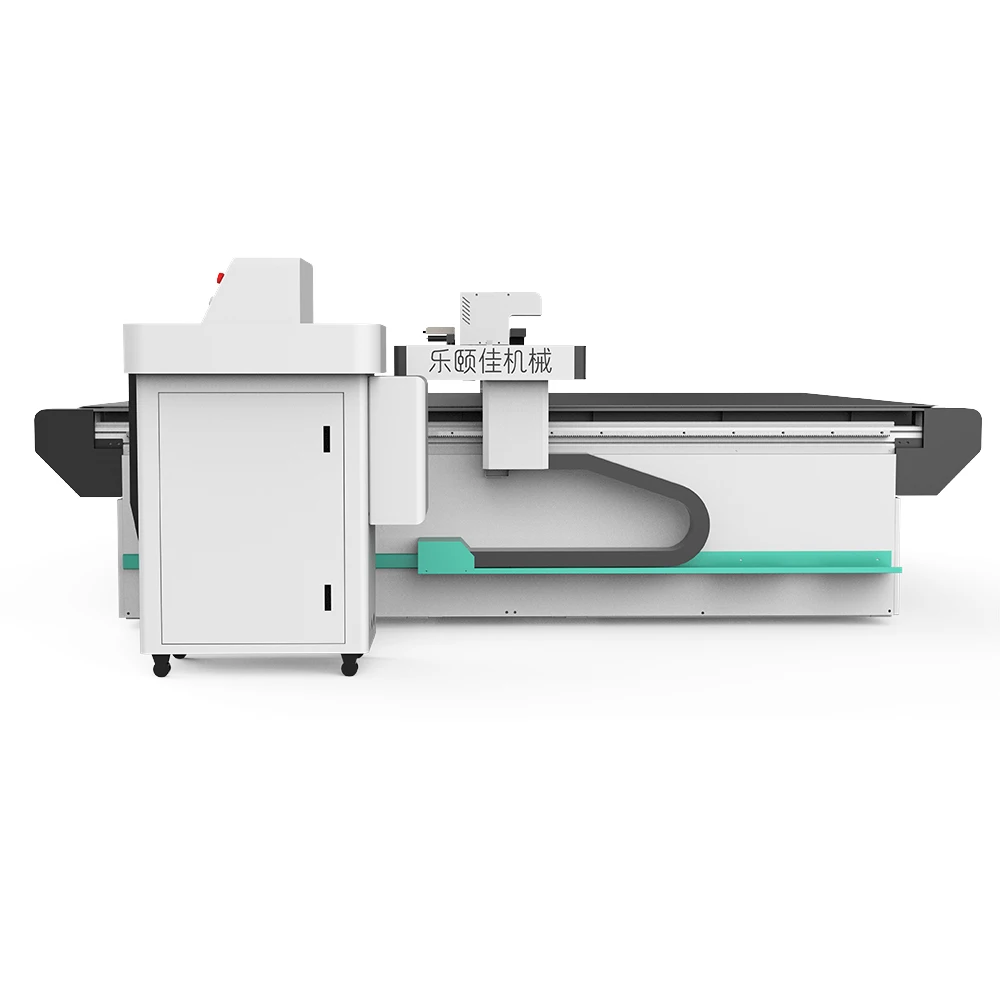
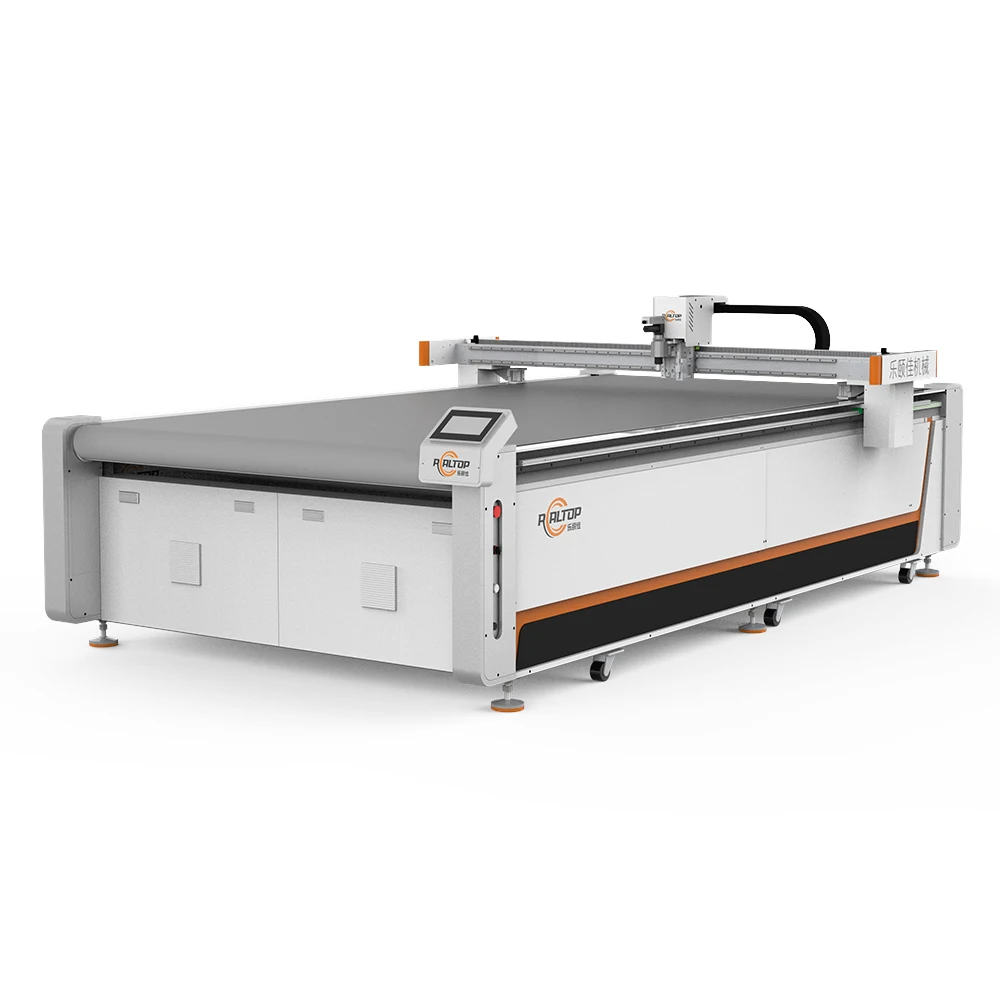
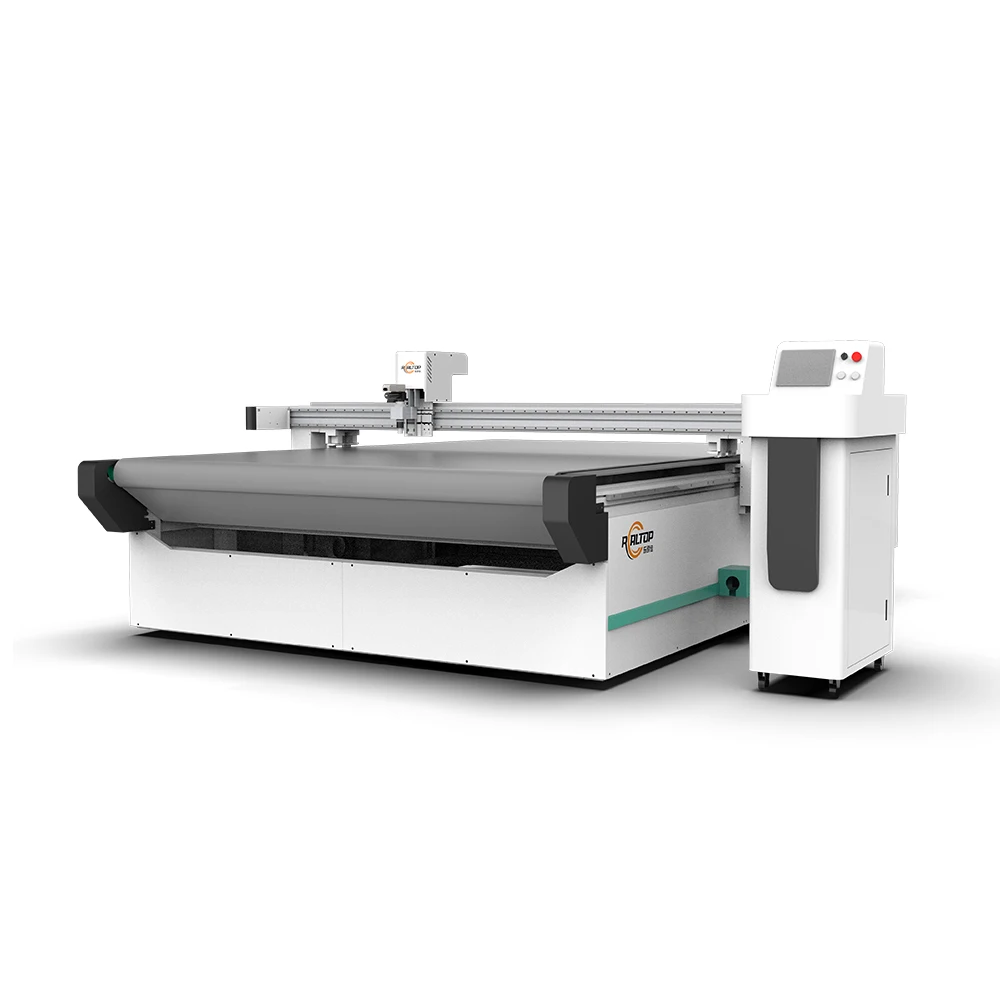
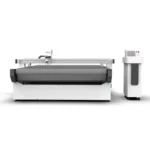
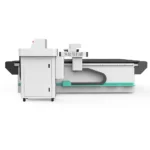
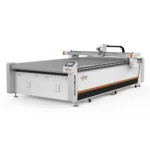
Tool-to-material matching — our 1625 oscillating knife system pairs blade frequency, vacuum zoning and conveyor options with your actual fabric roll, not a generic working-area guess.
Technical Specifications
| Parameter | Value |
|---|---|
| Product Type | CNC Oscillating Knife Cutting Machine |
| Model | 1625 |
| Working Area | 1600×2500 mm |
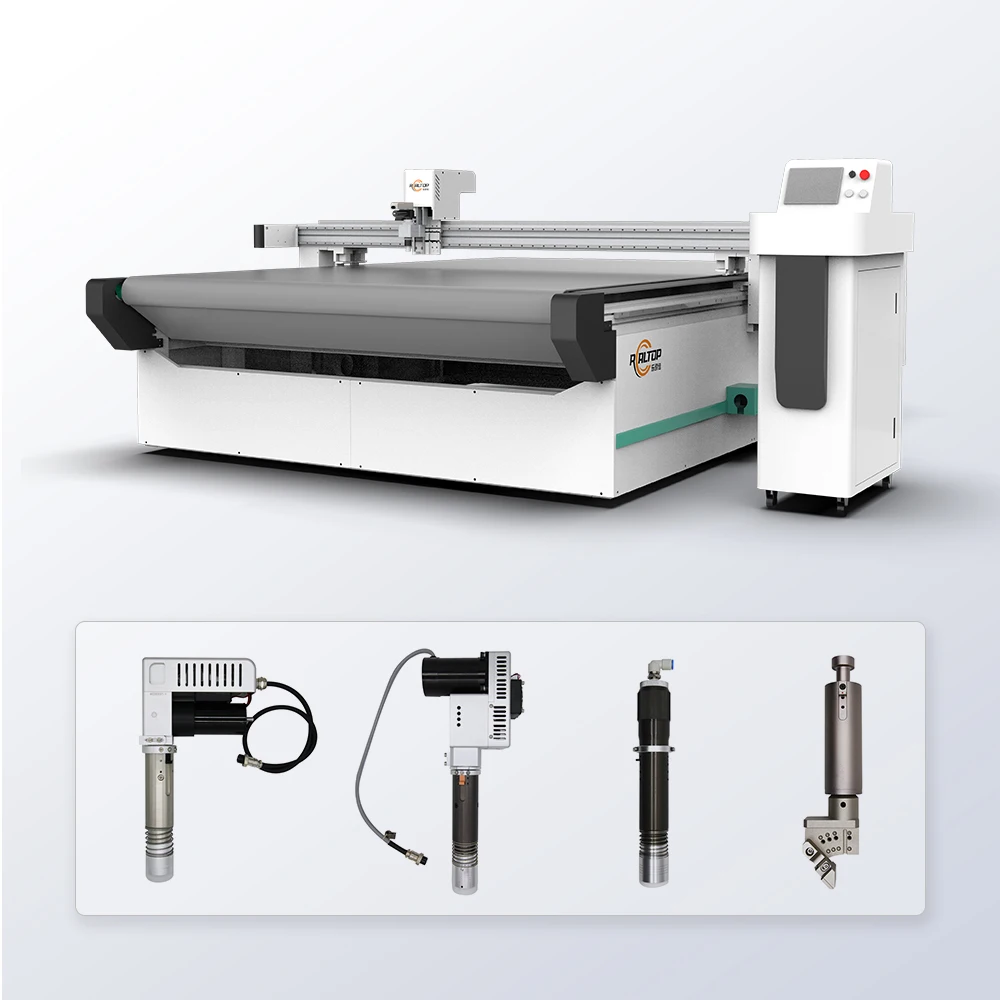
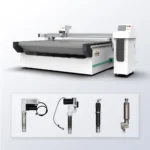
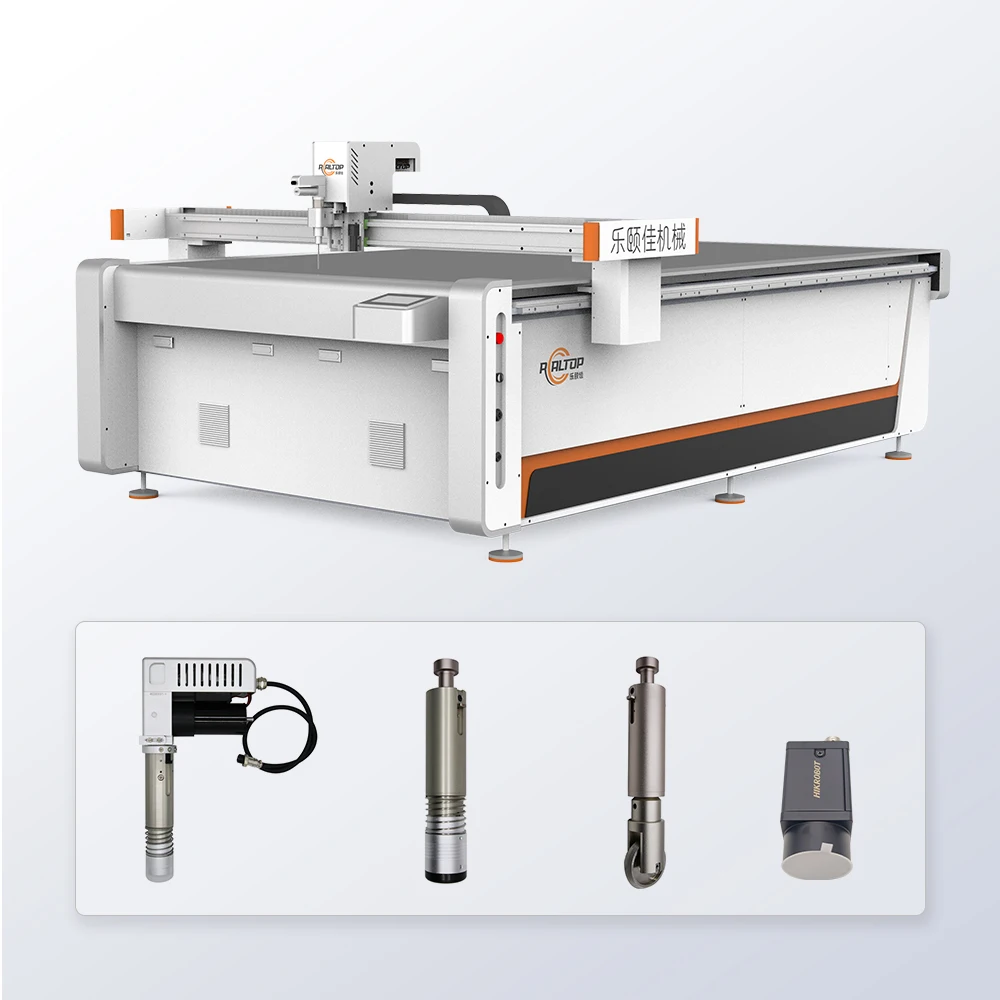
| Available Tool Heads | Oscillating knife, Driven rotary knife, Creasing wheel, Kiss cutting tool, Pneumatic knife, Milling tool, V groove knife |
| Cutting Speed Range | 0–2000 mm/s (basis to be confirmed by material type and ply count) |
| Cutting Thickness Capacity | ≤ 30 mm (basis not stated in source — confirm material density) |
| Cutting Accuracy | ±0.1 mm |
| Vacuum Pump Output | 9 kW |
| Control Platform | PLC control panel |
| Machine Dimensions | 3300×2100×1350 mm |
| Servo Motor Options | Panasonic, Delta, Dorna configurations available |
| Compatible File Formats | PLT, DXF, AI, PDF |
| Voltage Options | 110V, 220V, 380V |
| Safety Systems | Infrared sensor device, emergency stop |
| Interface Language | English, Russian, Italian, Chinese (custom languages available) |
| Compliance Marking | CE |
Application Suitability
| Application | Material or Output |
|---|---|
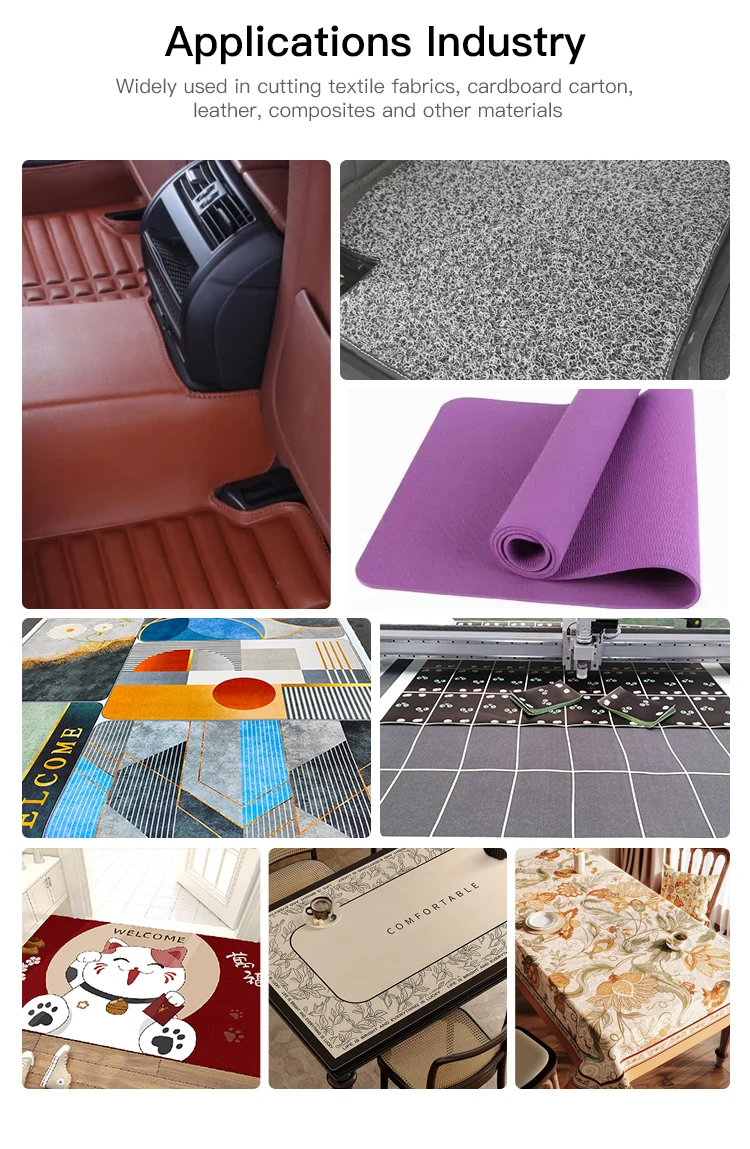
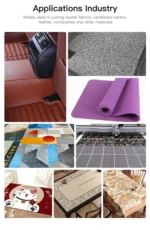
| Apparel manufacturing | Suits, knitwear, lace, multi-layer complex woven and knit fabrics |
| Automotive interior trimming | Seat cover fabrics, floor carpets, PVC interior mats |
| Home textile fabrication | Sofa upholstery materials, heavy curtains, area rugs |
| Composite material processing | Carbon fiber prepreg, aramid fabric layups |
Why Fabric Type Should Be the First Question a CNC Fabric Cutter manufacturer Asks
A machine rated by working area alone will fail the moment your material changes.
I once watched a line in the Yangtze Delta shut down for two days because the sample approval ran on standard polyester, but production switched to a high-elasticity spandex blend. The oscillation frequency and vacuum hold-down pressure that worked perfectly on the test roll produced frayed edges and delaminated plies on the actual order, scrapping two full rolls before anyone caught it. The cutting head was simply specified for a generic "fabric" category rather than the specific tensile and surface behavior of the production material [NEED_CITE: textile tensile variation across fiber blends]. When sourcing a CNC Fabric Cutter manufacturer, the first specification to lock down is not the table size but the exact fiber composition, weave density and ply count of your daily production mix.
Oscillation Frequency and Blade Selection per Textile Grade
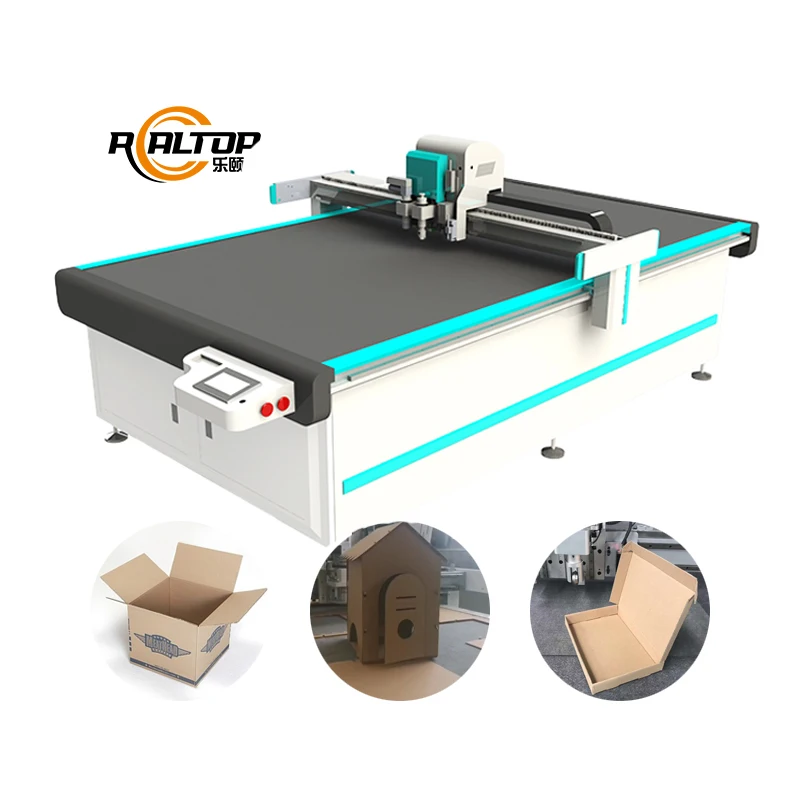
Different fabrics demand fundamentally different cutting actions. A high-frequency oscillating knife slices through tight woven synthetics without pulling threads, while a driven rotary knife handles continuous cuts on knit and stretch materials where blade drag would distort the fabric. The 1625 supports both configurations alongside creasing wheels for fold lines on packaging substrates and kiss cutting tools for vinyl appliqué layers. Selecting the correct tool head is not an accessory choice — it determines whether the cut edge is clean or requires secondary trimming on every piece.
Vacuum Table Zoning for Nested Small Parts
Holding a single large fabric panel flat is straightforward. Holding dozens of small pattern pieces stable after the surrounding material has been cut away is where most tables fail. The aluminum bellows vacuum table on this system works with a 9 kW pump to generate consistent hold-down across the working surface, but the zoning configuration must match your nesting pattern [NEED_CITE: vacuum hold-down requirements for nested fabric parts]. Without proper zone segmentation, small cut pieces lift during the final passes, shifting under the blade and ruining both the part and the adjacent pieces in the nest layout.
Reading the Specs Beyond the Headline Numbers
The ±0.1 mm cutting accuracy figure matters most when your pattern pieces feed directly into automated sewing stations where cumulative tolerance drift throws off stitch alignment. The 0–2000 mm/s speed range is the mechanical envelope; actual cutting speed for your fabric depends on ply count, material density and the complexity of contour curves in your pattern files. The 9 kW vacuum pump provides the pressure differential needed for multi-layer cutting, but the real-world hold-down effectiveness depends on table surface flatness, seal integrity around the bellows and the porosity of your specific fabric — a tightly woven canvas holds vacuum differently than an open-knit mesh.
The Cost of Guessing Your Configuration
A buyer who specifies a 1600×2500 table and accepts whatever default tool head ships with the machine will discover the mismatch on the first production run. Ragged edges on stretch fabric mean every piece needs manual trimming, adding labor and slowing downstream assembly. Insufficient vacuum zoning causes small gusset pieces to shift mid-cut, generating scrap that accumulates across a shift [NEED_CITE: fabric scrap rates from vacuum hold-down failure]. A language mismatch on the PLC panel means the operator calls the vendor for every parameter adjustment instead of running the job independently. These are not warranty issues — they are specification failures that occur before the machine leaves the factory.
Why This Build Approach Matters
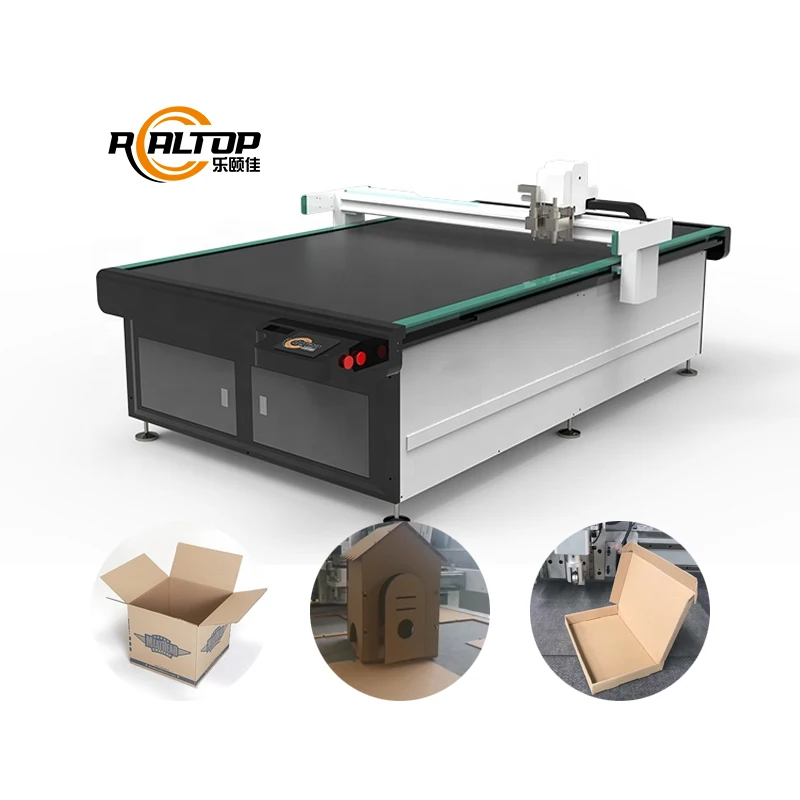
The frame uses heavy-duty construction with a precision-ground surface, which directly affects cutting accuracy when the head travels at speed across the full 2500 mm axis length — any frame deflection shows up as dimensional drift on long pattern pieces. Servo motor selection across Panasonic, Delta and Dorna allows matching the motion control response to the cutting speed and acceleration demands of your specific fabric and pattern complexity. Software is confirmed for your file format workflow before the order enters production, avoiding the situation where files require manual re-drawing on arrival. Sample cutting on your own material roll validates the tool head, speed and vacuum configuration before commitment, not after installation. The dedicated packaging box structure design software is included for operations that combine fabric cutting with carton sample making.
Documentation & Verification
- Machine specification sheet listing the exact tool head and vacuum configuration matched to your fabric
- Electrical schematic with voltage and frequency confirmed for your facility supply
- Sample cutting report on your own material roll with edge quality photographs
- Factory test record verifying cutting accuracy across the full 1600×2500 mm travel
- Software licence documentation with file format compatibility confirmed for PLT, DXF, AI, PDF inputs
- Spare parts list identifying consumable blades and wear items with part numbers
Installation, Commissioning & Support
- Foundation must be level within tolerance to maintain vacuum seal across the 3300×2100 mm machine footprint
- Dedicated electrical circuit required matching the confirmed voltage option at 110V, 220V or 380V
- System arrives with vacuum table and frame requiring on-site assembly and belt tensioning
- First-run commissioning includes tool head calibration and vacuum zone testing on your production fabric
- Operator training covers PLC panel navigation in your selected control language
- Consumable blade inventory and replacement schedule based on your material abrasiveness
What to Include in Your Inquiry
To get a configuration that runs your material from day one, specify the exact fabric composition, weight per square meter, and the number of layers you cut simultaneously. Include your daily cutting volume and the typical pattern complexity so we can match the servo response and nesting approach. Confirm your facility voltage and frequency, along with the preferred control panel language, so the electrical build and software interface align with your workshop from delivery.
Frequently Asked Questions
Q: How do you determine which tool head fits my fabric?
A: We run sample cuts on your actual material before configuration is finalized. The oscillating knife, driven rotary knife and pneumatic knife each behave differently depending on fiber composition, weave density and ply count. The correct choice is validated by edge quality and cutting speed on your roll, not by a generic material chart.
Q: Can the machine handle my local voltage and control language?
A: Voltage is configurable across 110V, 220V and 380V, confirmed before production begins. The PLC control panel supports English, Russian, Italian and Chinese as standard, with custom language options available. We verify both electrical supply and interface language during the specification confirmation stage.
Q: What happens during the sample cutting process?
A: You send a roll of your production fabric and we cut your actual pattern files using the proposed tool head and vacuum configuration. The sample cutting report documents edge quality, cutting speed and dimensional accuracy. Configuration adjustments are made at this stage, not after the machine ships.
Q: How does vacuum zoning affect small pattern pieces?
A: The aluminum bellows vacuum table with the 9 kW pump provides broad surface hold-down, but small pieces cut free from surrounding material can lift without proper zone segmentation. We configure the zoning layout based on your typical nesting pattern to maintain stability through the final cutting passes.
Q: Will the software accept my existing design files?
A: The system accepts PLT, DXF, AI and PDF formats. We confirm file import compatibility and nesting workflow integration during the pre-order specification stage. If your current software outputs a different format, we identify the conversion requirement before the machine enters production.
You may also like

商品评价
Clear filtersThere are no reviews yet.