


-
 Courier delivery
-
 DHL Courier delivery
-
 Warranty 1 year
-
 Free 30-Day returns

Material-driven configuration — Every RT-D2516/RT-S2516 unit ships only after trial cutting on your actual fabric, locking in tool head and vacuum zoning parameters before dispatch.
Technical Specifications
| Parameter | Value |
|---|---|
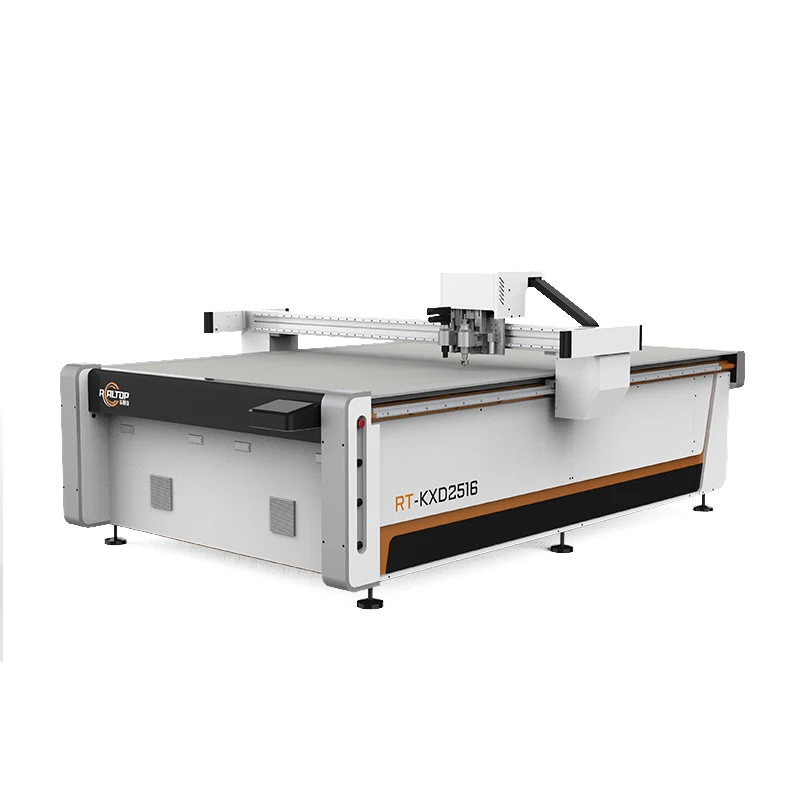
| Model | RT-D2516/RT-S2516 |
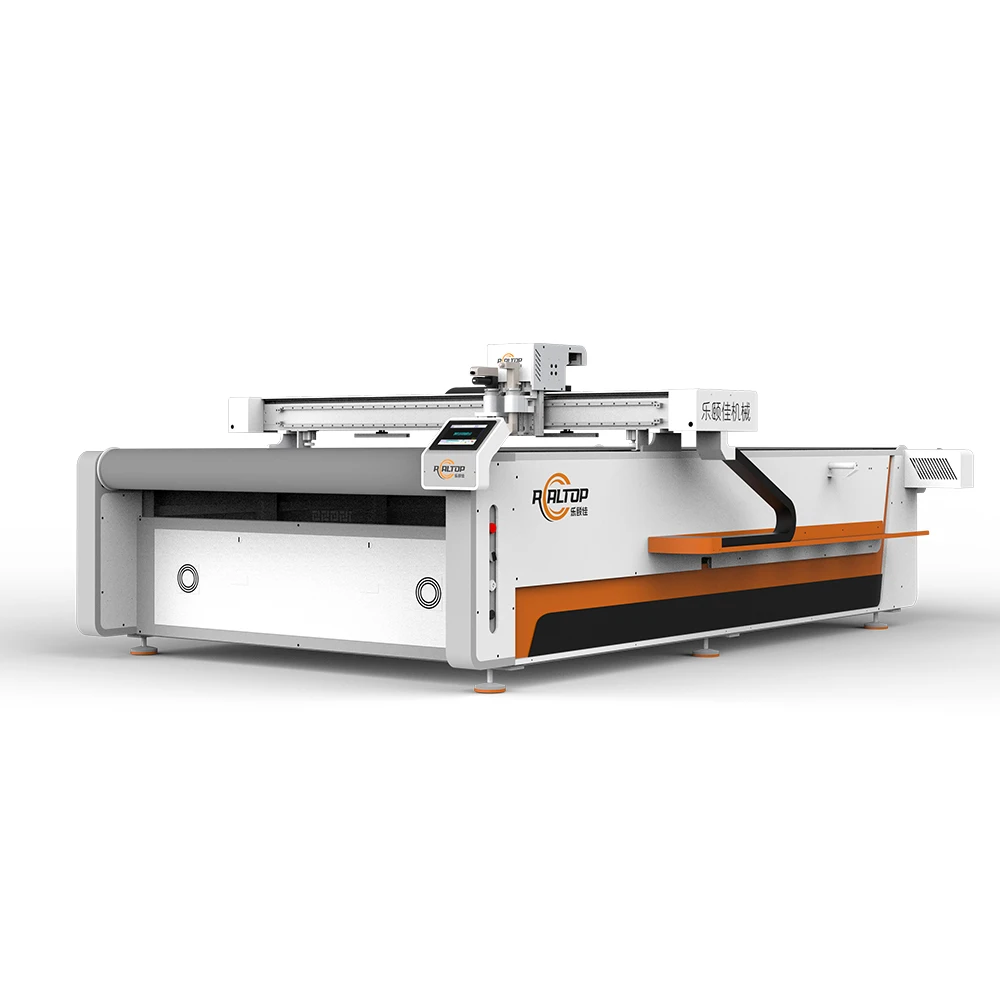
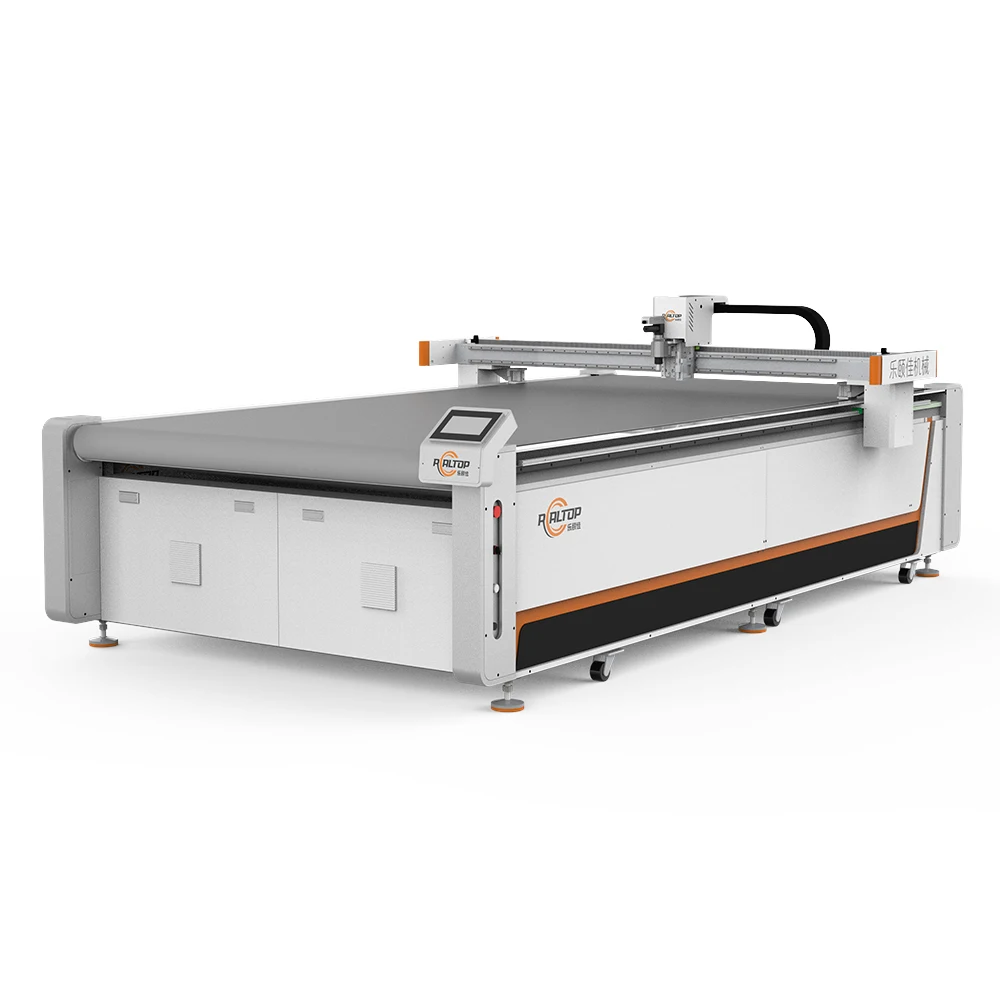
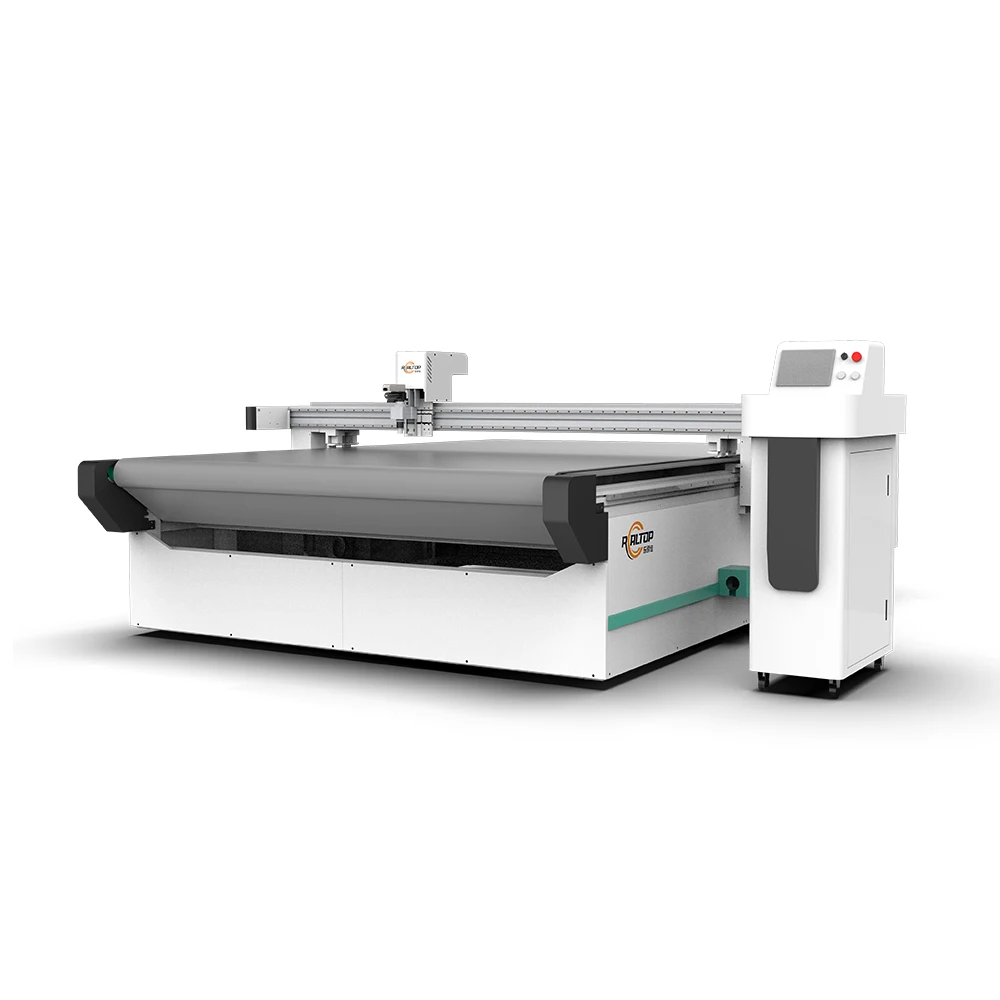
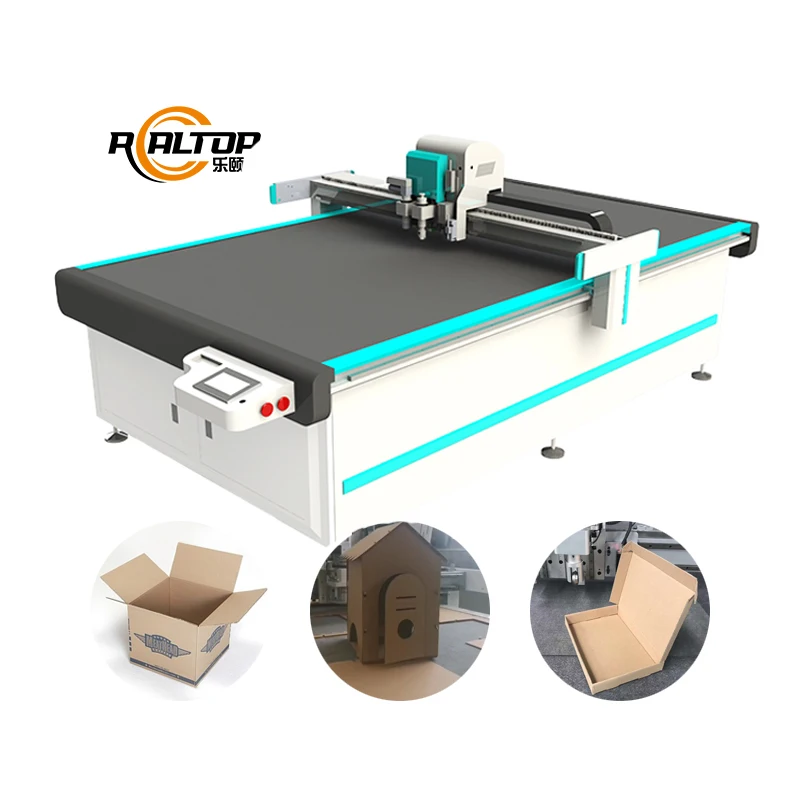
| Product Type | CNC Oscillating Knife Cutting Machine |
| Working Area | 1600×2500 mm |
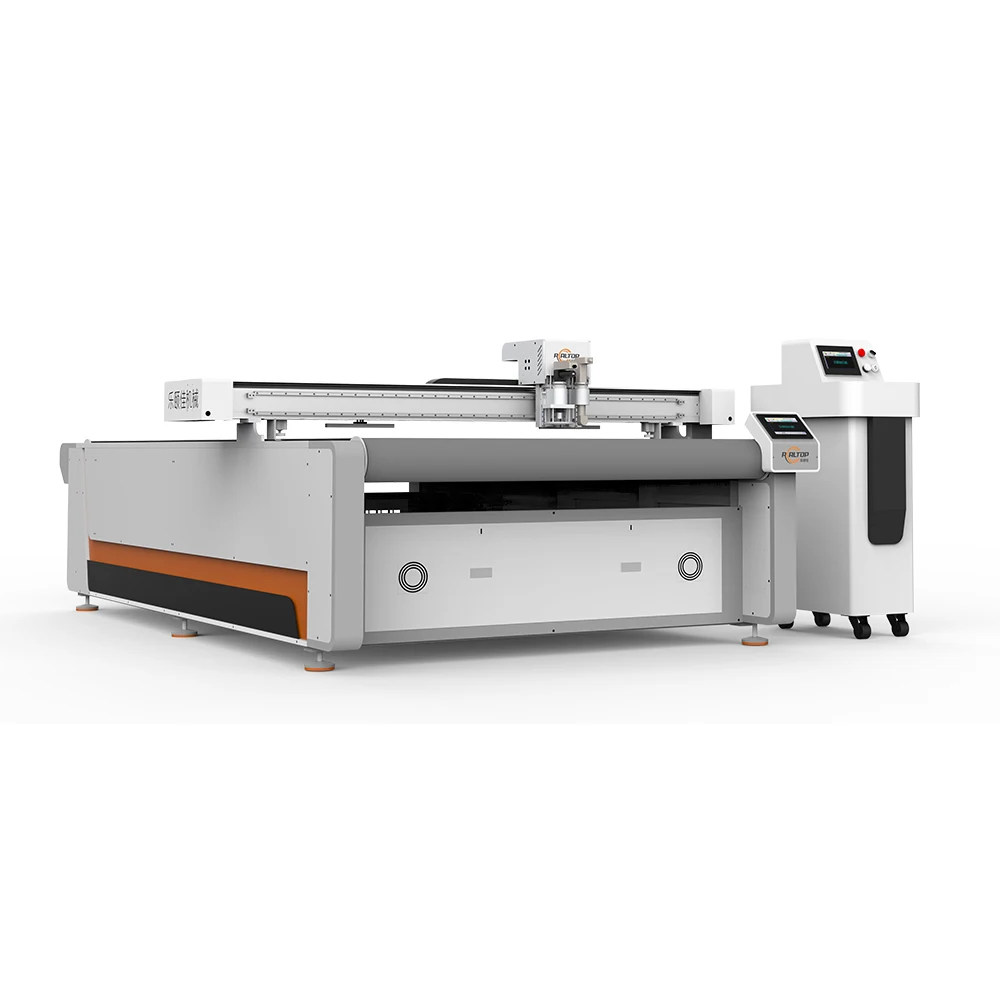
| Machine Dimensions | 3450×2300×1250 mm |
| Rated Power | 9 kW |
| Voltage | 380V ±10% |
| Control Interface | CNC touch screen panel |
| Transmission System | Digital servo motor, linear guide, synchronous belt, ball screw |
| Servo Motor Options | Delta (China) or Panasonic (Japan) |
| Translational Velocity | 800–2000 mm/s |
| Cutting Speed | 200–800 mm/s (according to different cutting materials) |
| Cutting Thickness | ≤100 mm (varies with material) |
| Repeated Accuracy | ≤0.1 mm |
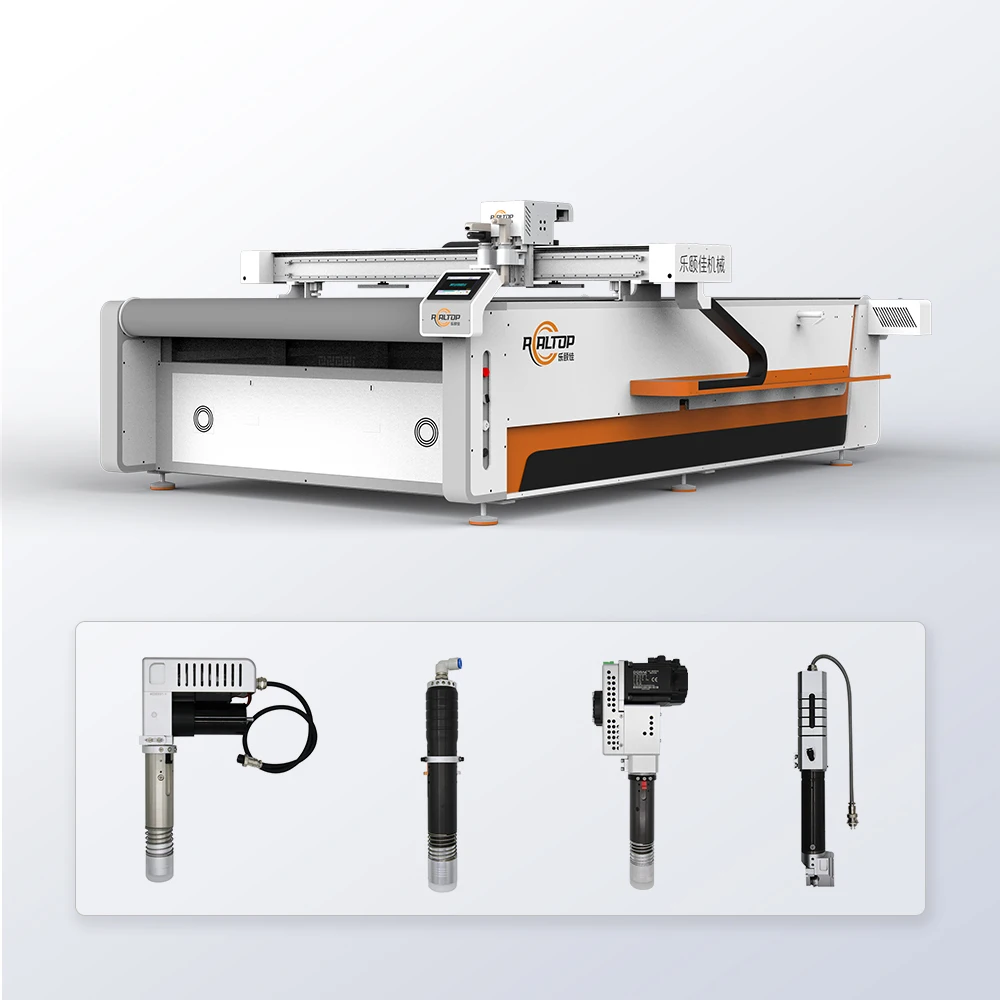
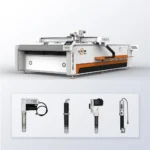
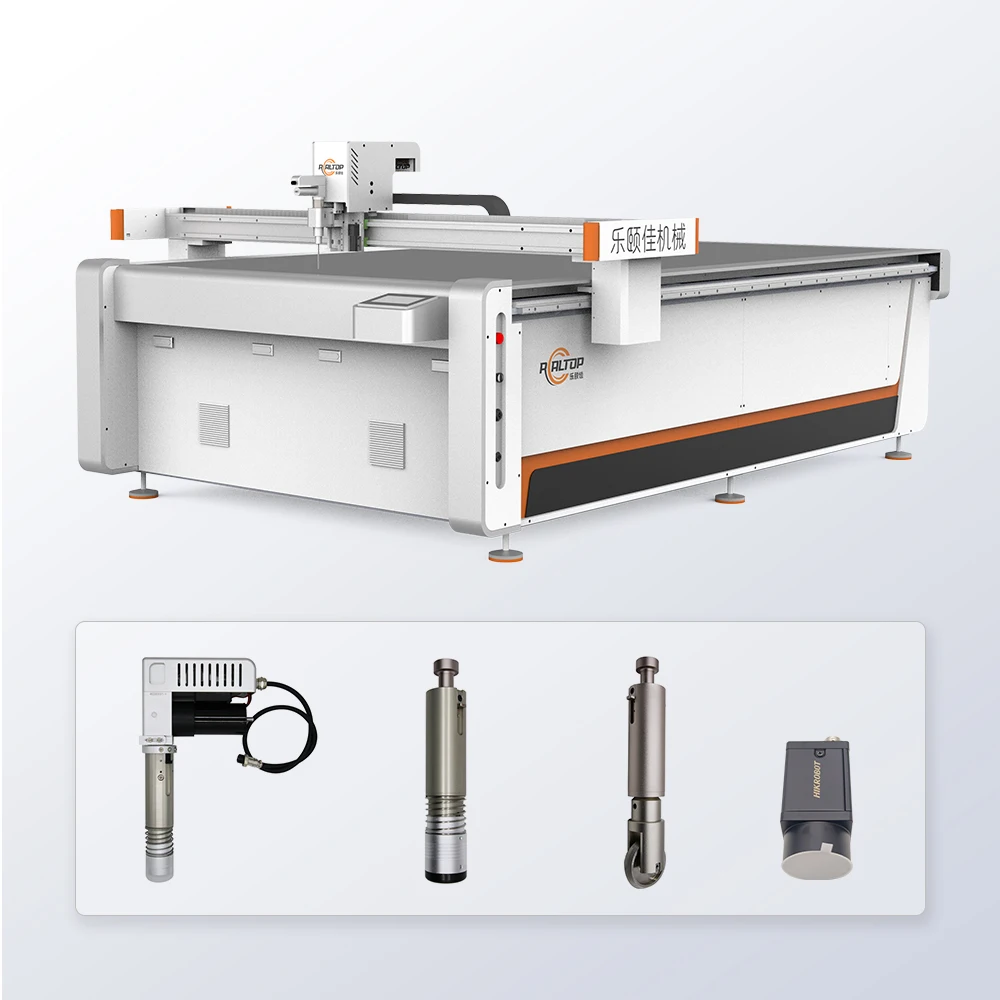
| Tool Head Configuration | Swiss imported oscillating knife, pneumatic knife, high-power vibrating knife, circular knife, drag knife, creasing wheel, punching tool |
| Visual Positioning Options | Small CCD mark point, panoramic camera recognition, projection positioning |
| Vacuum Table | Magnesium-aluminum alloy with PVDF powder spraying, anodic oxidation, hard oxidation |
| Vacuum Pump | 7.5 kW |
| Table Options | Flat working table, auto feeding table |
| Conveyor Belt | Germany imported |
| Linear Guide | Taiwan Hiwin rail |
| Safety Devices | Infrared induction blocking, anti-collision beam sensors, emergency stop |
| Instruction System | HP-GL compatible |
| Software File Formats | PLT, DXF, AI |
| Language Options | English, Russian, Italian, Chinese; special languages customizable |
| Assembly State | Fully assembled |
| Standards | CE |
Application Suitability
| Application | Material or Output |
|---|---|
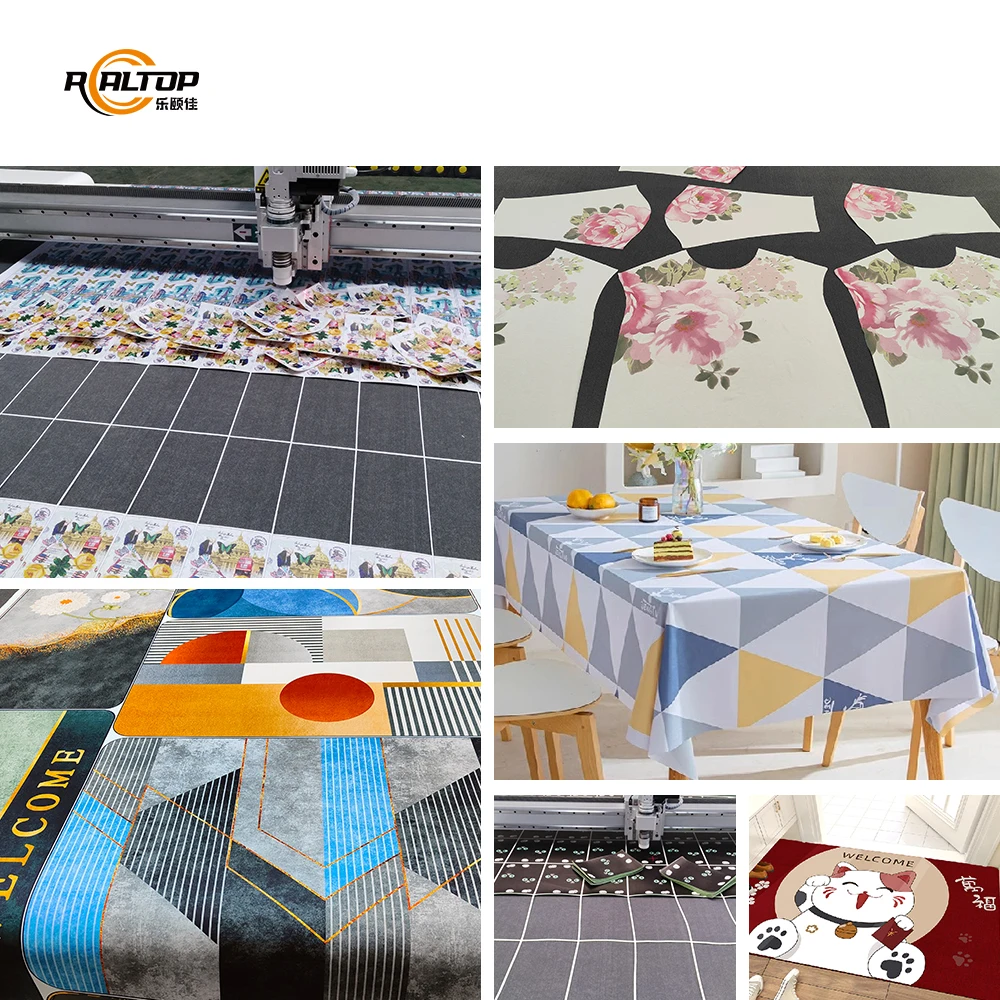
| Garment and footwear production | Clothing cloth, shoe material, leather, multi-layer fabric |
| Automotive interior fabrication | Composite materials, sponge, PU, EVA, floor mat textiles |
| Packaging and carton sample making | Corrugated cardboard, sticker film, foam board |
| Soft home furnishings | Carpet, non-woven fabric, textile, curtain and upholstery fabric |
| Sealing and gasket fabrication | Rubber, PTFE, ETFE, fiberglass, composite gasket sheets |
| Sports and outdoor goods | XPE, PVC, PP, PE, foam, synthetic textile |
Why Bed Size Alone Fails Cloth Cutting Buyers
Configuration must follow material behavior, not just table dimensions.
A 1600×2500 mm working area looks adequate on paper, yet buyers frequently discover the machine struggles once real production stock hits the table. Multi-layer technical textiles, coated fabrics, and dense non-wovens demand specific oscillating frequencies and vacuum holding forces that a generic setup cannot provide. I have seen fabricators receive machines that ran standard polyester perfectly during factory tests, only to face blade dulling and frayed edges when switching to high-tenacity geotextile or layered composite [NEED_CITE: material-specific cutting configuration practices]. The CNC oscillating knife cutting machine manufacturer must confirm tool head selection, blade type, and table zoning against your actual production material before build.
Blade Selection Dictates Edge Quality on Technical Textiles
The Swiss imported oscillating knife head handles full cutting, half cutting, and cursor location tasks across a wide range of woven and non-woven cloth. For denser or more abrasive materials such as fiberglass or multi-layer carpet, the high-power vibrating knife or pneumatic knife option provides the force and stroke frequency needed to maintain clean shear through the full stack. Selecting the wrong blade type for a given fabric weight results in delaminated plies and frayed selvedge rather than clean separation.
Vacuum Zoning Holds Small Pattern Pieces in Place
The magnesium-aluminum alloy table with PVDF coating and hard oxidation treatment resists wear from constant blade contact while maintaining flatness. The 7.5 kW vacuum pump paired with zoned adsorption areas prevents lightweight fabric and small garment pattern pieces from lifting during high-speed traverses. Without adequate zoning, nested pieces smaller than a hand span tend to shift before the blade completes the contour, causing miscuts and wasted material [NEED_CITE: vacuum table zoning for small-part retention in digital cutting].
Frame Stability Under Continuous Vibration Load
The RT-D2516/RT-S2516 uses a high-temperature tempered welded steel frame finished on a CNC machining center. This process relieves residual welding stress so the frame maintains dimensional accuracy despite the constant high-frequency vibration generated by the oscillating knife head. A frame that has not undergone proper stress relief will gradually drift out of square, and repeated accuracy of ≤0.1 mm depends on the gantry staying true across the full 1600×2500 mm travel range. The Taiwan Hiwin linear guides and ball screw transmission complement this foundation by minimizing play in the motion system.
The Hidden Cost of Skipping Material Trials
Buyers who approve a configuration based solely on working area and rated power often face weeks of rework once production begins. A blade that cuts single-ply cotton cleanly may crush and delaminate three-layer foam-backed automotive textile, requiring a complete tool head swap and new parameter set. Vacuum zones configured for large signage sheets leave small gasket patterns lifting off the table at 800 mm/s translational speed. These mismatches surface only after the machine is installed on the buyer’s floor, turning a routine commissioning into a multi-week troubleshooting cycle [NEED_CITE: post-installation configuration correction in CNC cutting equipment].
Why Buyers Source This Machine from Our Facility
In-house design and production cover both the knife cutting mechanism and the motion platform, so the RT-D2516/RT-S2516 configuration responds directly to material requirements rather than forcing the buyer into a fixed catalog model. Tool head and vacuum table options are specified against the buyer’s sample before the build order is released. Electrical schematics confirm 380V ±10% compatibility with the buyer’s facility supply before wiring begins. The touch screen control panel ships in the buyer’s preferred language — English, Russian, Italian, Chinese, or a custom language — so operators do not struggle with untranslated menus on day one. Software file format support for PLT, DXF, and AI is verified against the buyer’s existing nesting workflow to avoid import failures during production.
Documentation & Verification
- Machine specification sheet listing confirmed tool head and vacuum table options
- Electrical schematic with 380V ±10% confirmation matched to facility supply
- Sample cutting report on buyer’s cloth or textile with edge quality photographs
- Software licence and PLT, DXF, AI file format compatibility note
- Factory test record documenting repeated accuracy and cutting speed on buyer material
- CE declaration where applicable for destination market entry
Installation, Commissioning & Support
- Fully assembled 3450×2300×1250 mm frame requires level concrete floor with adequate clearance for auto feeding table
- Dedicated 380V ±10% circuit with confirmed frequency for 9 kW rated power and 7.5 kW vacuum pump
- CNC touch screen panel configured in buyer’s language before first power-on
- Blade offset and oscillation frequency calibrated on buyer’s cloth samples during commissioning
- Hiwin linear guide lubrication schedule and synchronous belt tension check intervals documented
- Spare blade and punching tool inventory list provided based on material abrasiveness
What to Include in Your Inquiry
Send fabric or textile samples with layer count, thickness, and daily cutting volume so we can match the tool head and vacuum zoning before quoting. Confirm your facility voltage, frequency, and preferred control language. If your nesting software outputs specific file formats beyond PLT, DXF, or AI, include a sample file for compatibility verification.
Frequently Asked Questions
Q: How is tool head selection matched to my fabric type and thickness?
A: We run your actual cloth sample on the RT-D2516/RT-S2516 using different tool heads — Swiss oscillating knife, high-power vibrating knife, or pneumatic knife — and document edge quality, cutting speed, and blade wear. The configuration that delivers clean edges without delamination is locked into your build specification before production begins.
Q: What voltage and language options are confirmed before shipment?
A: The 380V ±10% supply is verified against your facility electrical specification, and the appropriate servo motor — Delta or Panasonic — is selected accordingly. The touch screen control panel is loaded with your chosen language from English, Russian, Italian, Chinese, or a custom language before the machine leaves the factory.
Q: Can the CCD system track printed marks on my textile at production speed?
A: Both the small CCD mark point positioning and panoramic camera recognition options are tested with your printed material at the target translational velocity of up to 2000 mm/s. We confirm mark detection reliability and contour accuracy on your specific print layout before finalizing the visual positioning configuration.
Q: How does vacuum zoning prevent small fabric pieces from lifting?
A: The magnesium-aluminum alloy table is divided into independently controlled adsorption zones. During sample cutting, we identify which zones hold your smallest nested pattern pieces securely at full cutting speed, and this zoning map is saved to your machine profile.
Q: What sample cutting is done on my material before I commit?
A: We cut your cloth, leather, or composite material using the proposed RT-D2516/RT-S2516 configuration and provide a report covering edge quality, cutting depth achieved within the ≤100 mm range, and realistic cutting speed. You approve the results before the order is finalized.
You may also like

商品评价
Clear filtersThere are no reviews yet.