




-
 Courier delivery
-
 DHL Courier delivery
-
 Warranty 1 year
-
 Free 30-Day returns

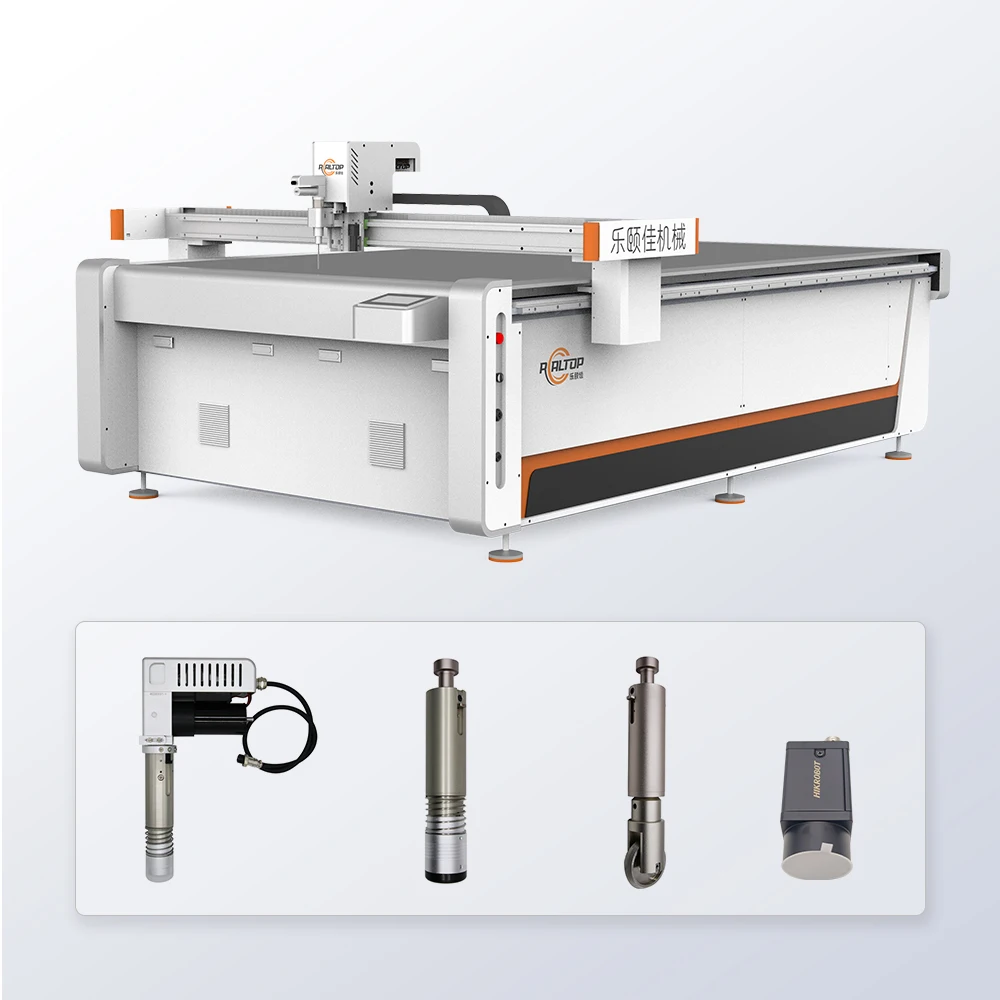
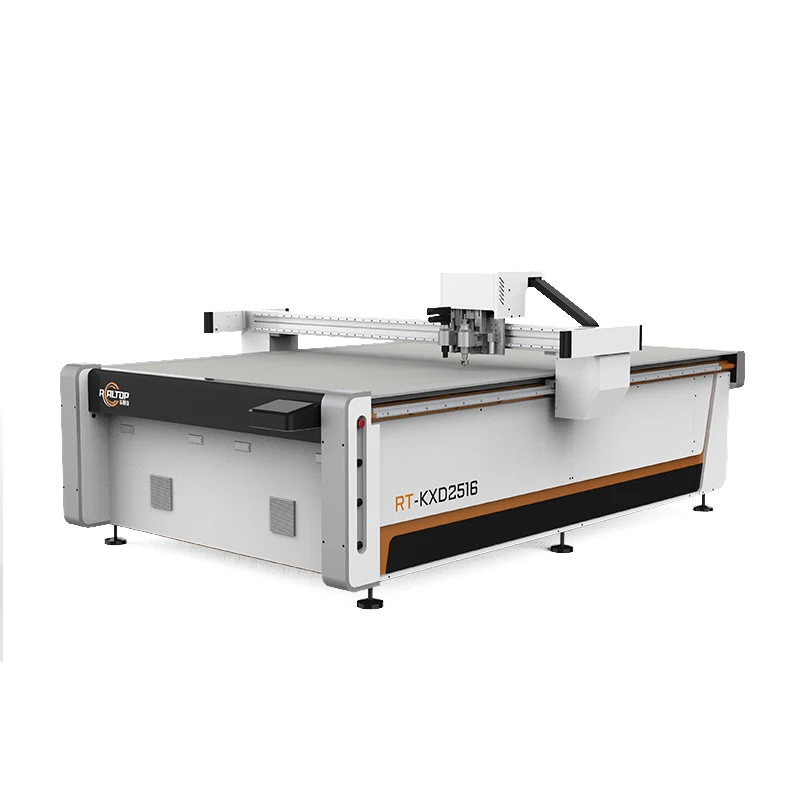
Precision Knife Configuration — Every cutting head and table zone is specified against your textile sample rather than a generic catalog line.
Technical Specifications
| Parameter | Value |
|---|---|
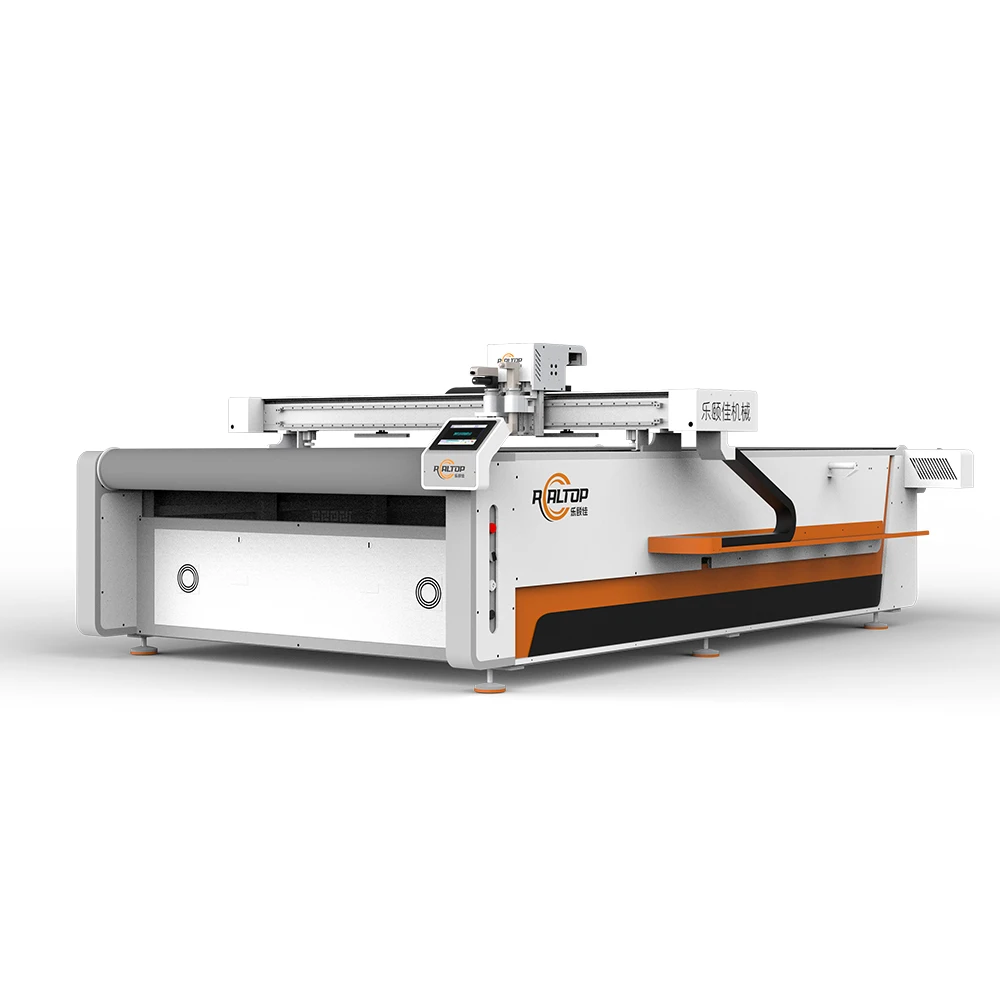
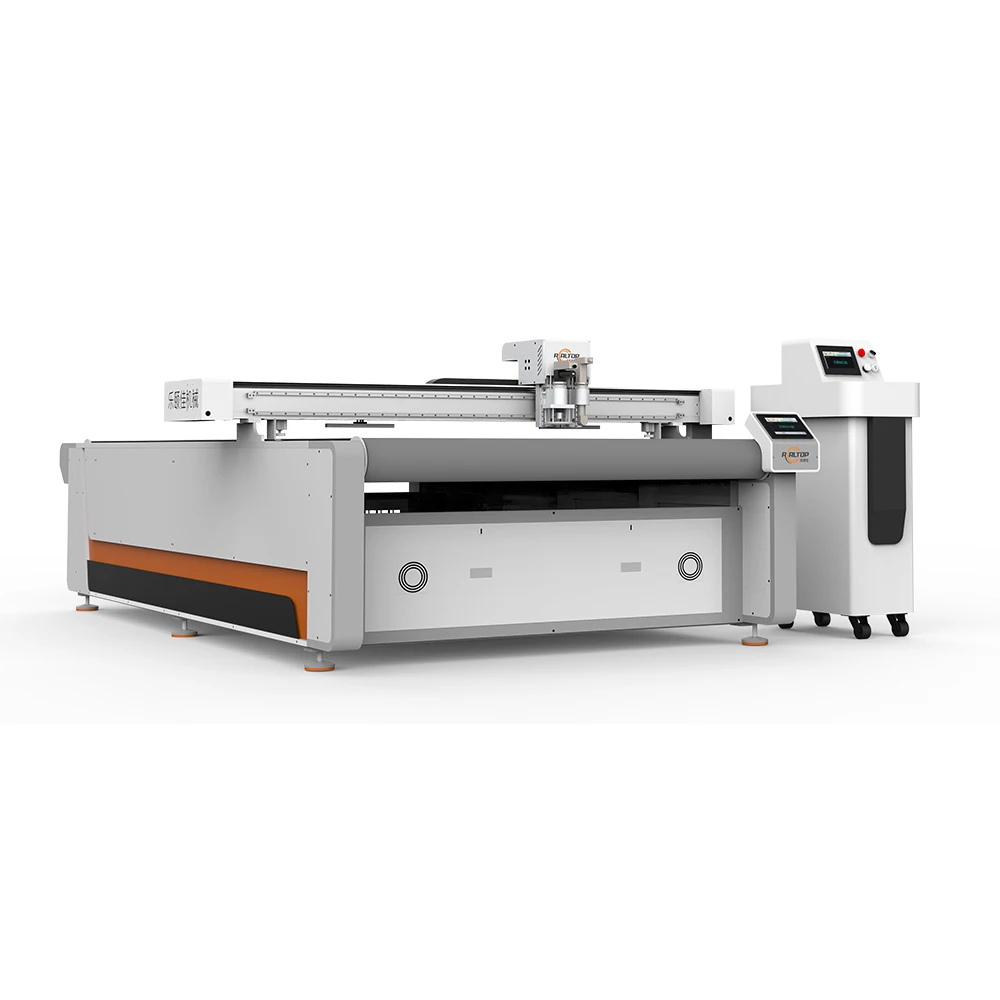
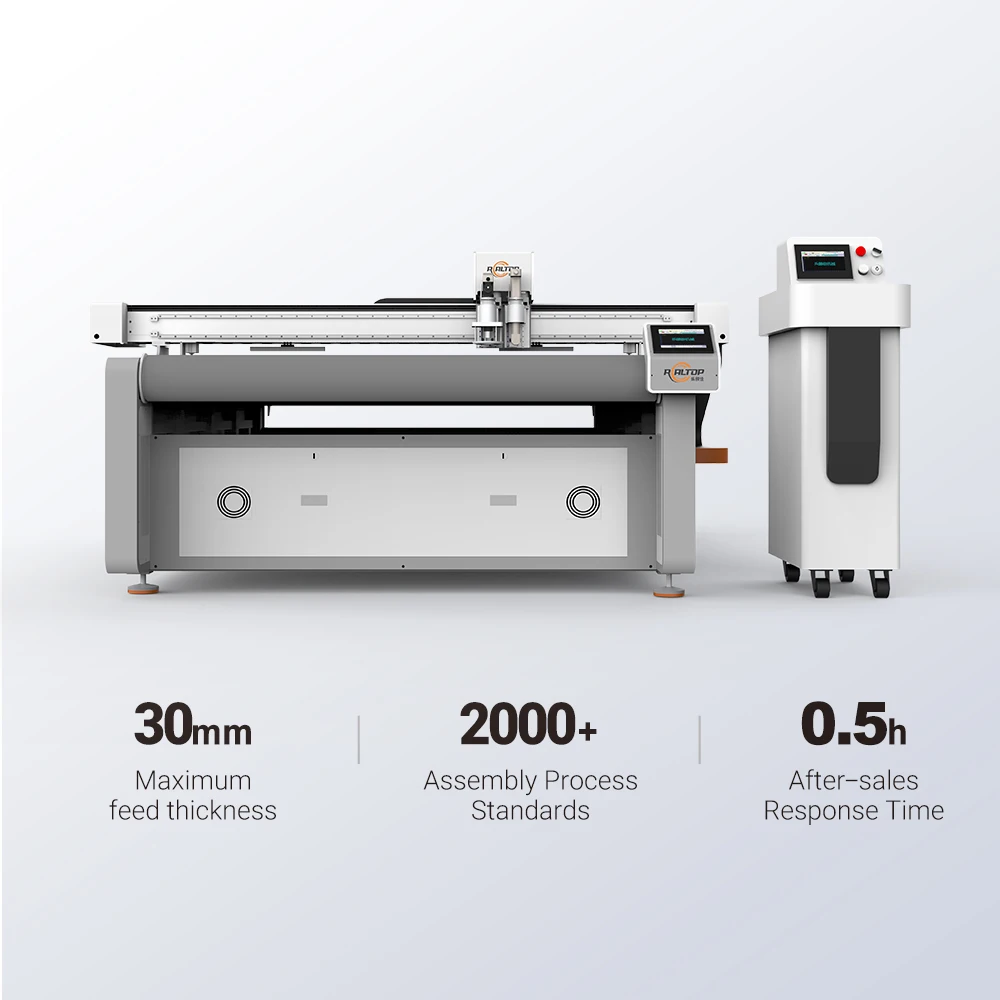
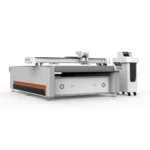
| Product Type | CNC Oscillating Knife Cutting Machine for Textile |
| Working Area | 1600 × 2500 mm |
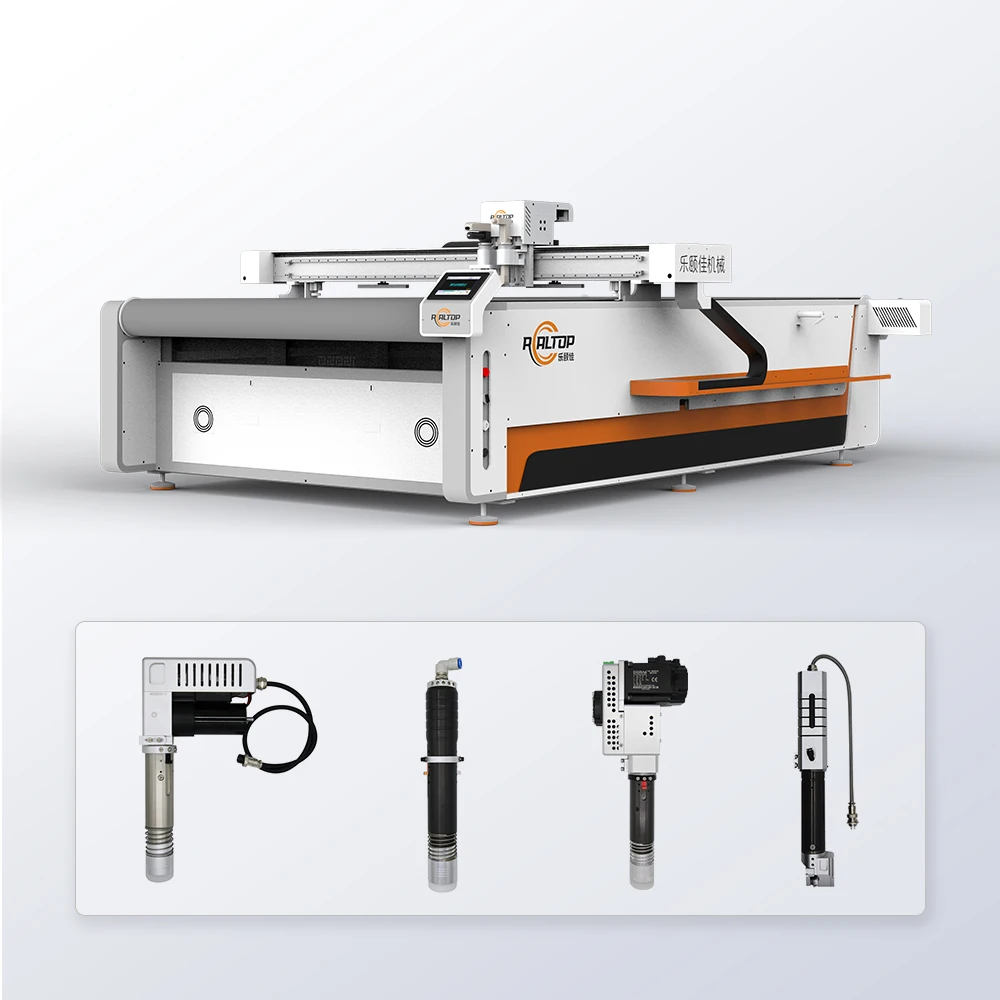
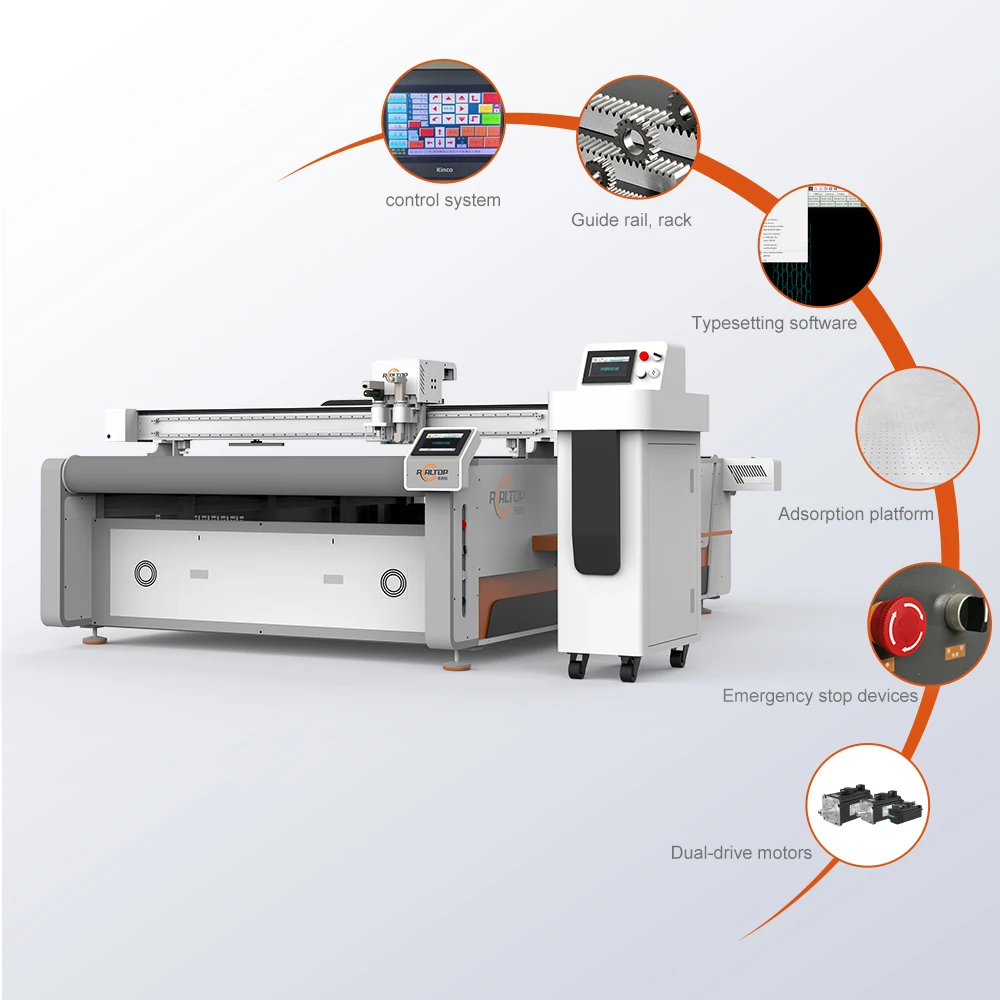
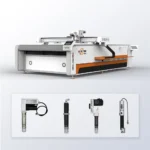
| Tool Head Options | Oscillating knife, driven rotary knife, creasing wheel, kiss cutting tool, pneumatic knife, milling tool, V-groove knife |
| Cutting Speed | 0–2000 mm/s |
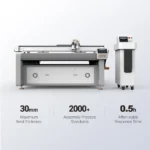
| Cutting Thickness | Up to 30 mm (basis not stated in source — depends on fabric density and layer count) |
| Cutting Accuracy | ±0.1 mm |
| Vacuum Table | Aluminum bellows vacuum table |
| Vacuum Pump Power | 9 kW |
| Servo Motor Options | Panasonic, Delta, Dorna |
| Control System | PLC control panel |
| Supported File Formats | PLT, DXF, AI, PDF |
| Voltage Options | 110V, 220V, 380V |
| Machine Dimensions | 3300 × 2100 × 1350 mm |
| Safety Features | Infrared sensor device, emergency stop |
| Interface Languages | English, Russian, Italian, Chinese (customization available) |
| Certification | CE |
Application Suitability
| Application | Material or Output |
|---|---|
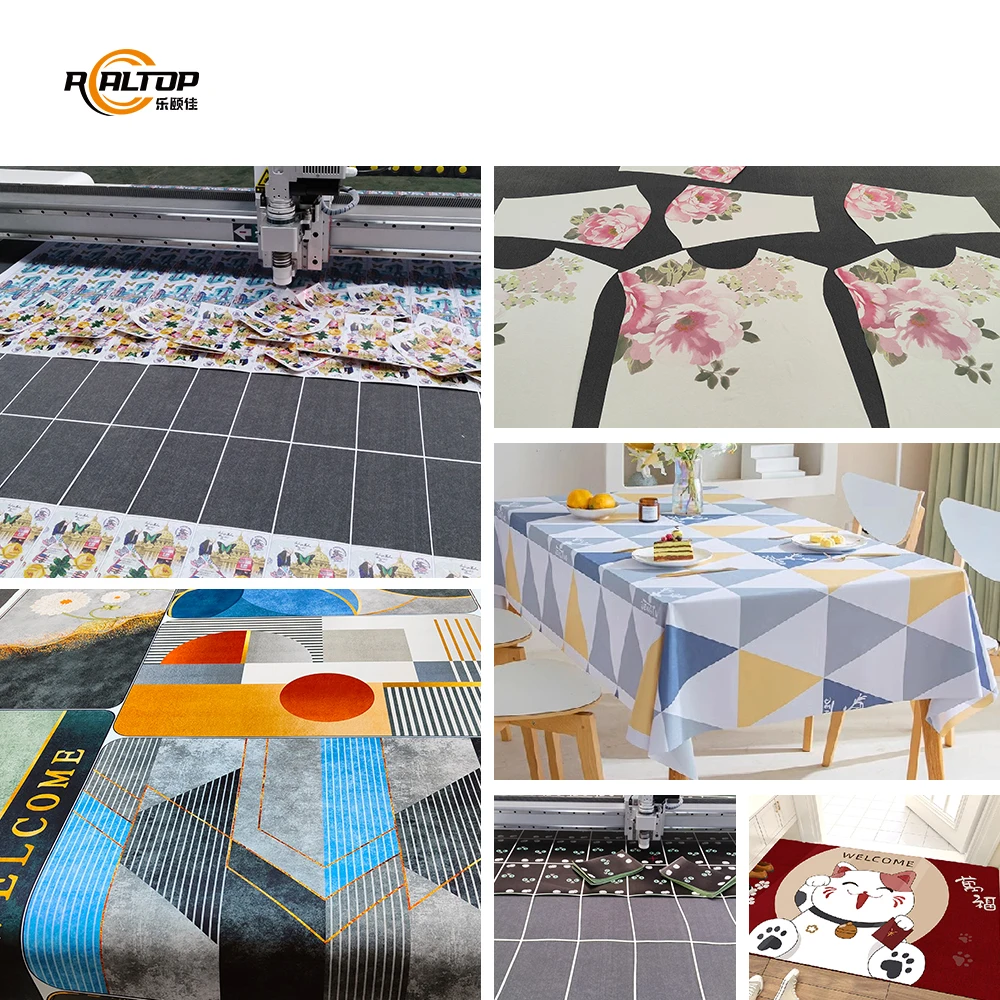
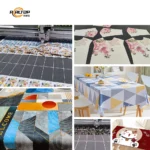
| Apparel Manufacturing | Suits, knitwear, lace, pattern-matched complex fabrics |
| Automotive Interiors | Seat fabrics, carpets, PVC floor mats |
| Home Textiles | Sofa fabrics, curtains, rugs, multi-layer upholstery |
| Composite Processing | Carbon fiber prepreg, aramid fabric, technical textiles |
Why Material Samples Must Precede Machine Selection
A cutting machine specified on working area alone will underperform when it meets your actual fabric.
I have watched buyers commit to a CNC oscillating knife cutting machine manufacturer based on bed size and price, only to discover their multi-layer knitwear shifts under the knife because the vacuum zoning was never matched to small pattern pieces. The machine cuts perfectly — on the material it was set up for. When your textile contains elastic fibers or a coated backing, the oscillation frequency and blade angle that worked on the showroom sample produce frayed edges or incomplete cuts through the bottom ply. This is not a defect; it is a specification gap [NEED_CITE: textile cutting performance variables by fabric composition].
Matching Tool Heads to Fabric Behavior
Different textile structures demand fundamentally different cutting actions. An oscillating knife handles woven and non-woven materials by vibrating the blade vertically, producing clean edges on layers up to the rated thickness. A driven rotary knife suits continuous single-ply or low-ply fabrics where speed matters more than stacking depth. For kiss cutting on adhesive-backed textile laminates, the dedicated kiss cutting tool scores the top layer without penetrating the release liner. Selecting the correct head eliminates secondary trimming and prevents material waste at the pattern boundary. The CNC oscillating knife cutting machine manufacturer should confirm which heads ship with your configuration before the frame leaves the factory.
Vacuum Table Zoning and Multi-Layer Stability
The aluminum bellows vacuum table on this system provides full-surface adsorption, but the practical value depends on how the table is divided into independently controlled zones. When cutting small garment panels from a large lay, only the active zone needs full suction; running the entire 9 kW pump across an unsectioned table wastes energy and still fails to hold lightweight knit fabrics flat. Proper zoning keeps each cut piece locked in place until the head clears the area [NEED_CITE: vacuum table zoning principles for textile cutting]. This matters especially on elastic or slippery materials where even slight lift produces dimensional drift across a long nesting layout.
Reading the Specification Sheet Like a Production Manager
Cutting accuracy of ±0.1 mm means that a 500 mm pattern piece will land within half a millimeter of its intended dimension — sufficient for apparel grading where panel alignment affects seam registration downstream. The 0–2000 mm/s speed range is the mechanical travel envelope; actual cutting speed on your fabric will be lower depending on ply height, blade engagement, and cornering frequency. The PLC control panel supports PLT, DXF, AI, and PDF imports, so buyers running nesting software that outputs in these formats can integrate without middleware. Servo motor selection across Panasonic, Delta, and Dorna options lets you balance motion smoothness against spare-parts availability in your region.
The Cost of Skipping Configuration Validation
Buyers who select a tool head from a catalog chart without testing their actual material often face weeks of parameter tuning after installation. A pneumatic knife that slices cleanly through denim may crush a foam-backed automotive carpet, leaving a compressed edge that fails quality inspection. Voltage mismatches between the ordered 380V configuration and a workshop running 220V single-phase can prevent the vacuum pump from reaching rated suction, causing lift issues that the operator blames on the blade. These problems are solvable but expensive when discovered on your production floor rather than during factory acceptance [NEED_CITE: industrial equipment voltage compatibility standards].
Why This Build Approach Matters
In-house design covering oscillating, rotary, and pneumatic knife technologies means the cutting method follows your textile, not the other way around. Each machine ships with a tool head and table configuration list written against the material you sent for sampling, not a default bill of materials. Voltage, plug type, and control language are confirmed before the electrical panel is wired, so the machine powers on correctly at destination. The factory test record documents cutting performance on your specific fabric stack — thickness, speed, edge condition — giving you a baseline to reference during commissioning. Sample cutting on the buyer’s own material before commitment is standard process, not an optional courtesy.
Documentation & Verification
- Machine specification sheet listing every tool head and table zone in your configuration
- Electrical schematic with confirmed voltage, frequency, and plug type for your market
- Factory test record showing cut samples on your submitted textile at agreed parameters
- Software licence and file format compatibility note covering PLT, DXF, AI, PDF workflows
- Spare parts list identifying consumable blades, vacuum seals, and servo-specific components
- Operation and maintenance manual in your selected control language
Installation, Commissioning & Support
- Requires a level concrete floor spanning at least 3500 × 2300 mm to accommodate the 3300 × 2100 mm frame with access clearance
- Dedicated electrical circuit matching confirmed voltage option (110V, 220V, or 380V) with appropriate breaker rating for the 9 kW vacuum pump
- Machine ships as a single assembled unit; rigging plan must account for 1350 mm height through workshop doors
- First-day commissioning includes vacuum zone mapping, blade depth calibration, and test cuts on your production textile
- Operator training covers PLC interface navigation, file import from your nesting software, and tool head changeover procedure
- Consumable blade inventory and vacuum bellows inspection schedule defined before handover
Preparing Your Inquiry
To move from general interest to a configured quotation, share the textile types you cut most frequently, including fabric weight, ply count in a typical lay, and the thickest material you run. Specify your local voltage and frequency, the control language your operators prefer, and whether your nesting workflow exports in PLT, DXF, AI, or PDF. If you can send a sample roll or swatch, we run it on the configured head and return cut pieces with a parameter report before you commit to an order.
Frequently Asked Questions
Q: How do I know which tool head my fabric requires?
A: Send us a sample of your textile at the thickness and ply count you actually cut. We test oscillating knife, driven rotary knife, and pneumatic knife options on your material and report edge quality, achievable speed, and blade life. The configuration list in your quotation reflects the tested result, not a catalog assumption.
Q: What voltage and frequency does this machine support?
A: The system is configurable for 110V, 220V, or 380V supply. Voltage and frequency must be confirmed before the electrical panel is built. We provide a wiring schematic matching your local standard and verify compatibility during the factory test so there are no surprises at installation.
Q: Can the control system run in my local language?
A: Standard interface languages include English, Russian, Italian, and Chinese. Additional languages are available as a customization option, confirmed at order stage. The PLC panel displays all cutting parameters, alarms, and file management menus in the selected language.
Q: What happens during the sample cutting process?
A: You supply your actual textile, and we configure a machine with the tool head and vacuum zoning suited to it. Cut pieces are returned with a report documenting blade type, cutting speed, edge condition, and dimensional accuracy so you can evaluate results before placing a machine order.
Q: What support is included after delivery?
A: Commissioning covers machine leveling, vacuum calibration, blade setup, and operator training on the PLC interface. A spare parts list identifies wear items specific to your tool head configuration. Ongoing technical support addresses parameter tuning, software questions, and parts replenishment as your production needs evolve.
You may also like

商品评价
Clear filtersThere are no reviews yet.