





-
 Courier delivery
-
 DHL Courier delivery
-
 Warranty 1 year
-
 Free 30-Day returns

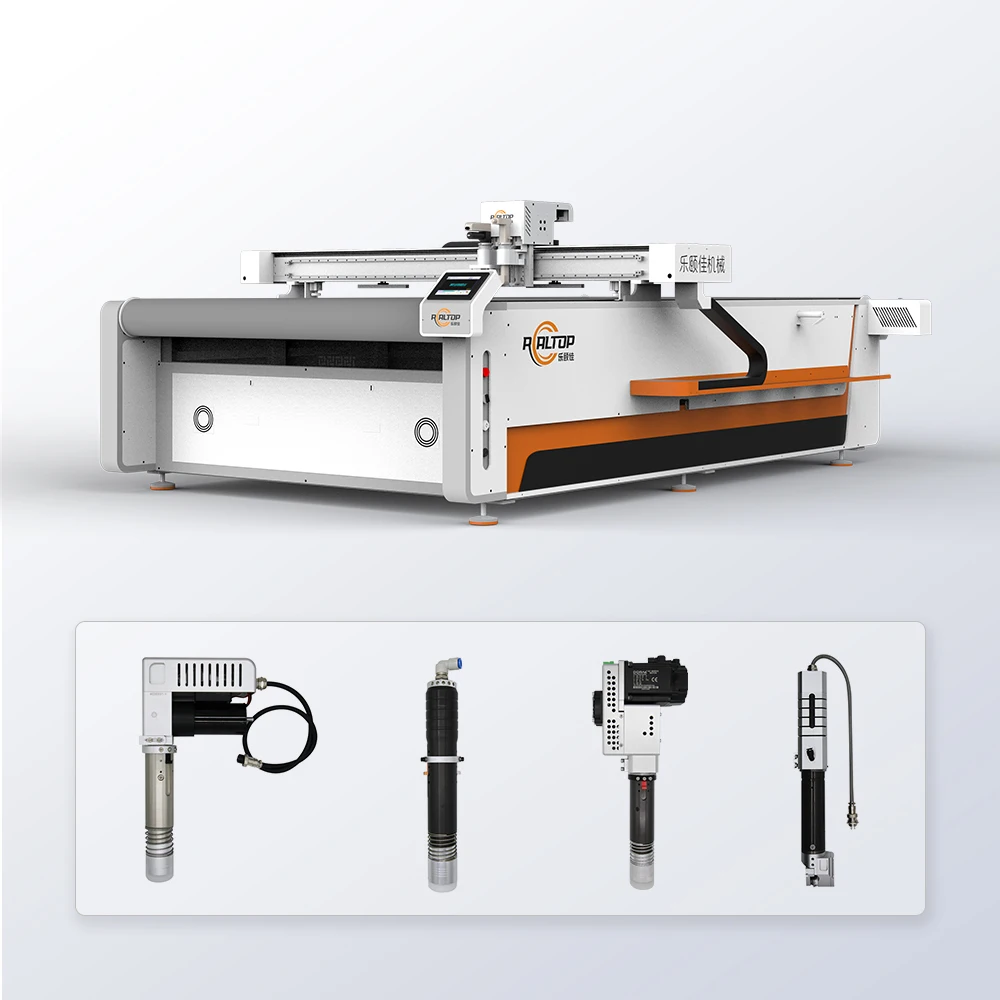
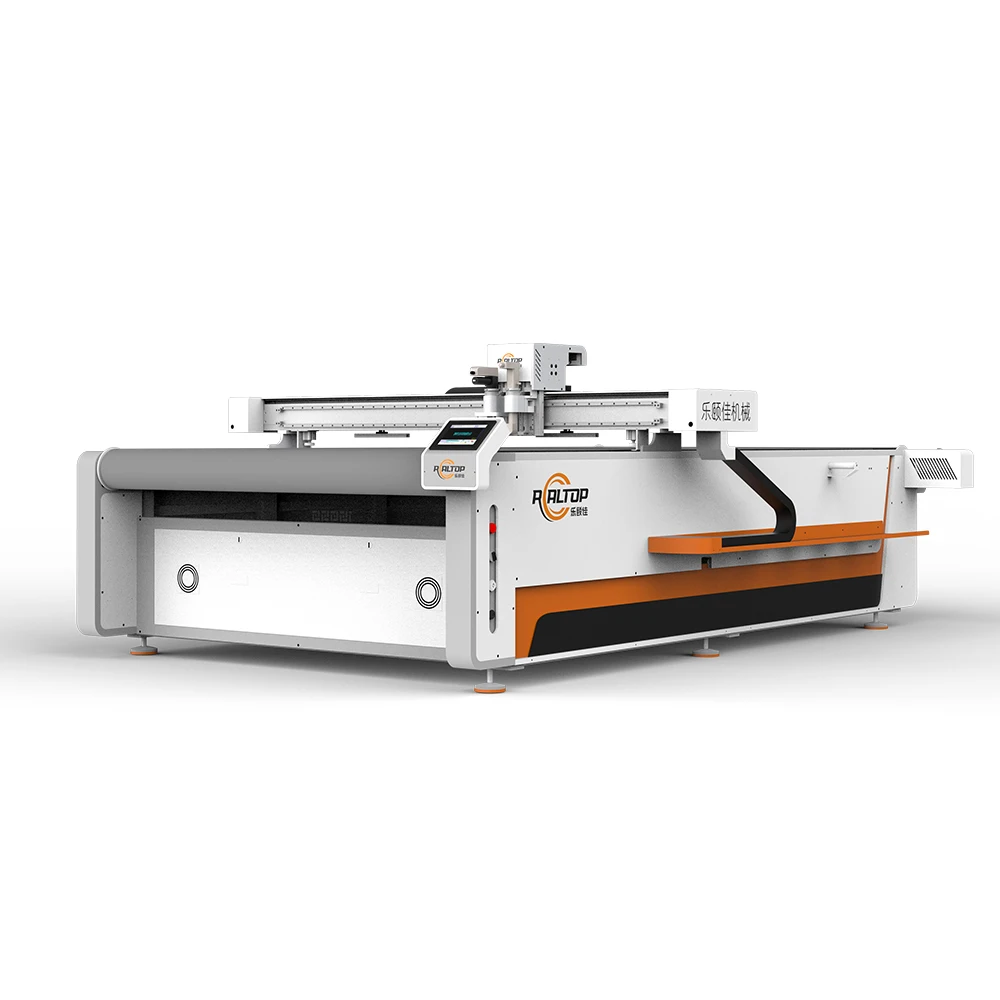
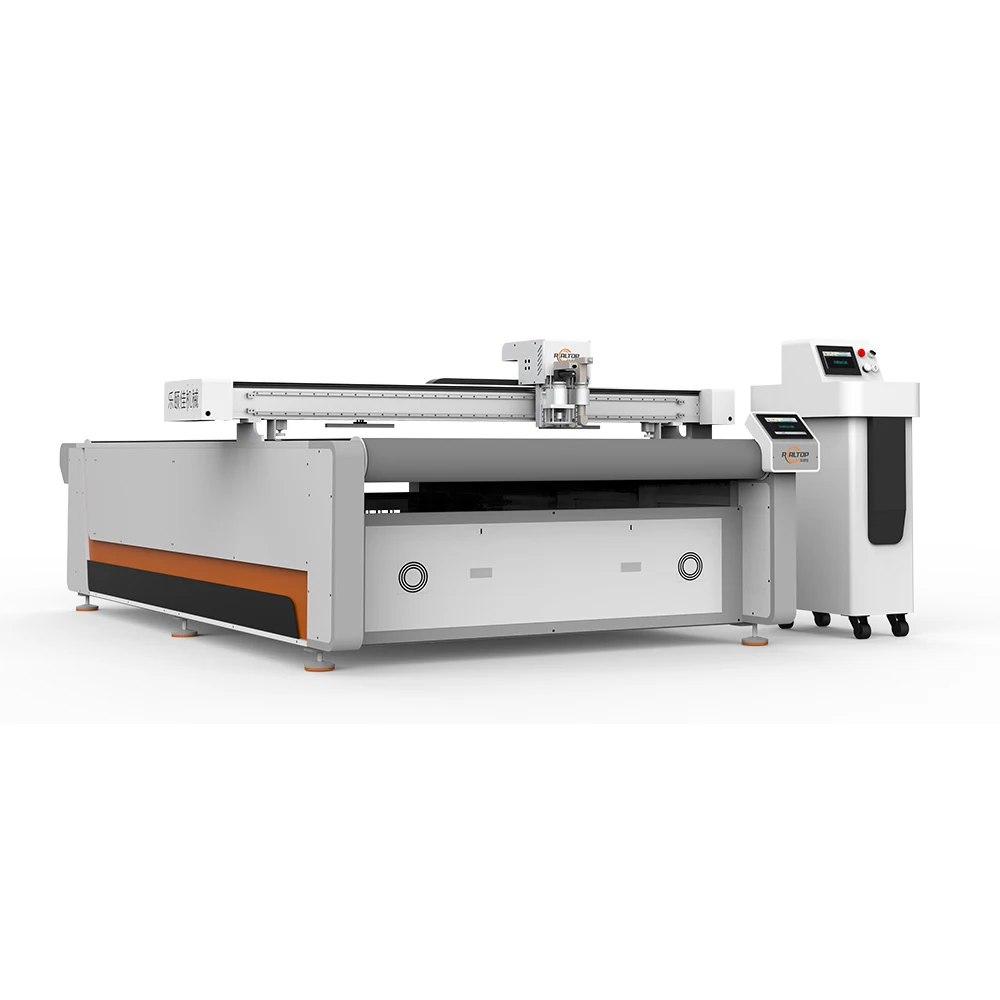
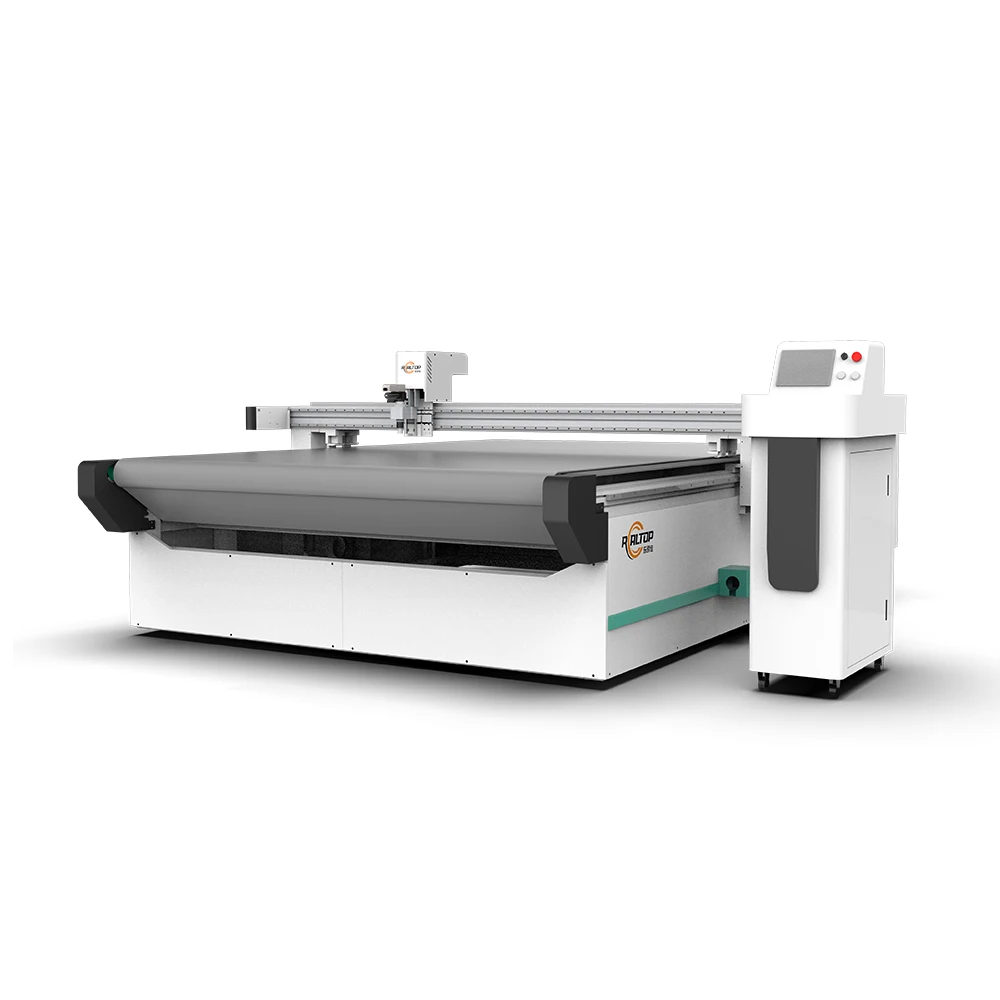
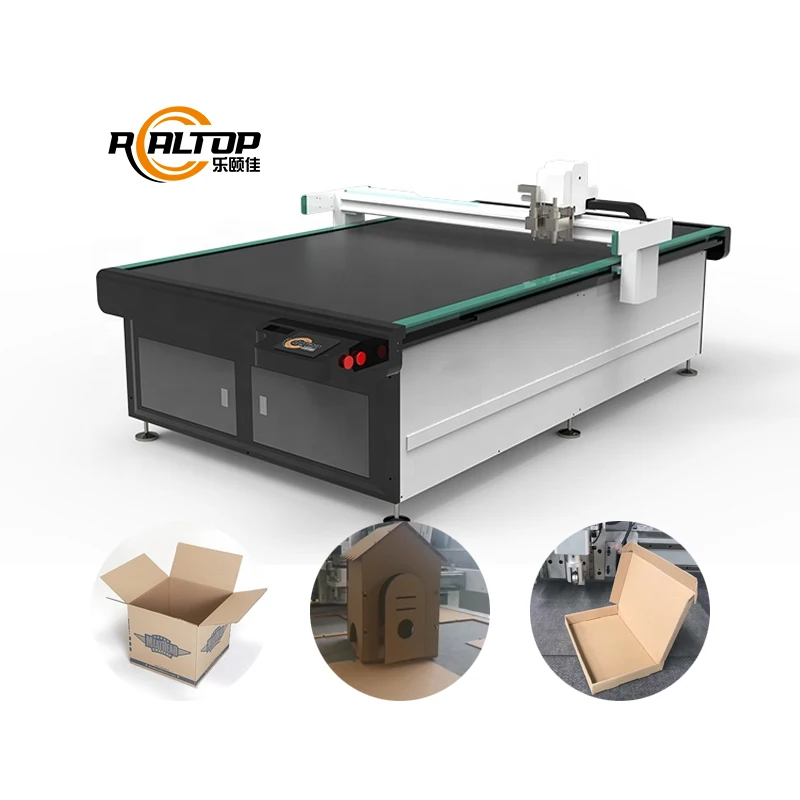
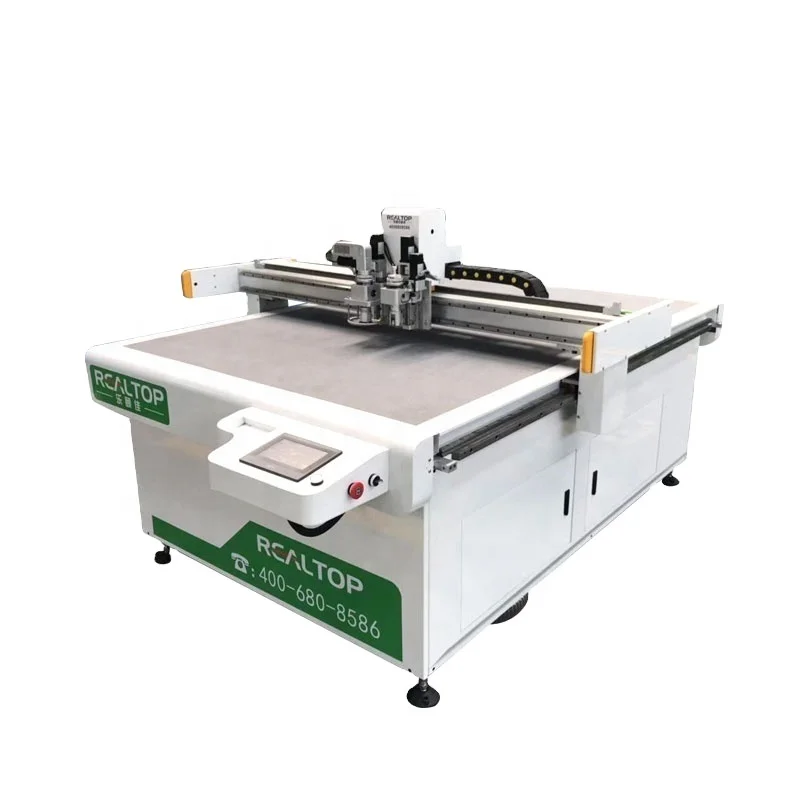
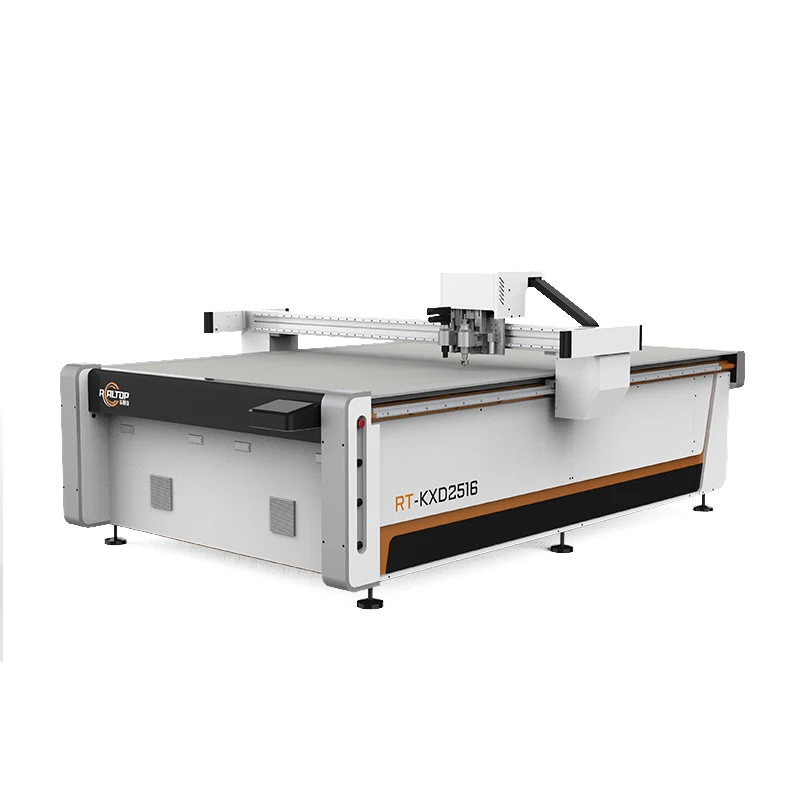
Factory-Engineered Frame and Motion — The RT-D2516/RT-S2516 platform is welded, tempered, and assembled under one roof, giving importers a single accountable source for build quality and long-term dimensional stability.
Technical Specifications
| Parameter | Value |
|---|---|
| Model | RT-D2516/RT-S2516 |
| Product Type | CNC Oscillating Knife Cutting Machine |
| Working Area | 1600×2500 mm |
| Machine Size | 3450×2300×1250 mm |
| Rated Power | 9 kW |
| Cutting Thickness | Up to 100 mm (varies with material density and tool head) |
| Translational Velocity | 800–2000 mm/s |
| Cutting Speed | 200–800 mm/s (basis not stated in source — confirm material type and thickness) |
| Repeated Accuracy | ≤0.1 mm |
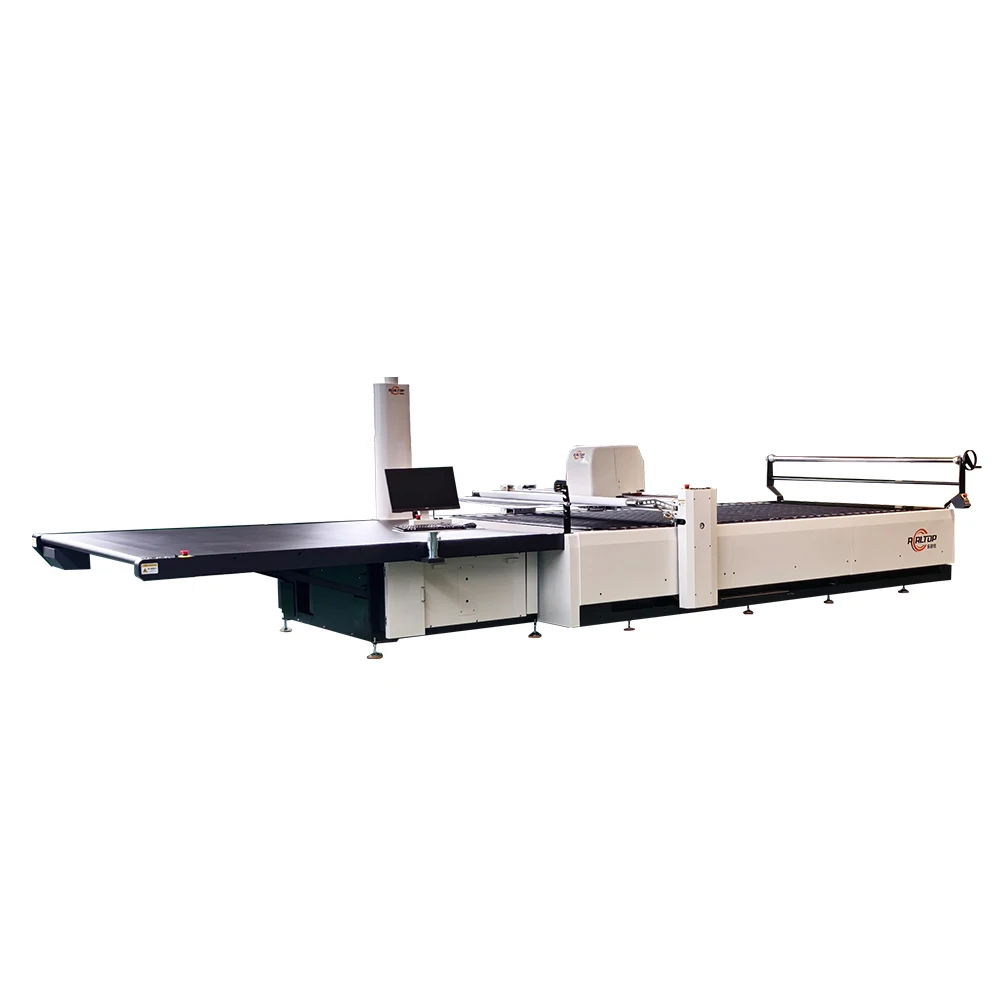
| Table Type | Flat working table or auto-feeding conveyor table |
| Vacuum Table Surface | Magnesium-aluminum alloy with PVDF powder spraying and hard oxidation |
| Vacuum Pump | 7.5 kW, integrated aviation aluminum shell with built-in silencer |
| Servo Motor Options | Delta (China) or Panasonic (Japan) |
| Linear Rail | Taiwan Hiwin |
| Transmission | Digital servo motor, linear guide, synchronous belt, ball screw |
| Instruction Format | HP-GL compatible |
| Voltage | 380V ±10% (customizable) |
| Control Panel | Touch screen with multi-language support |
| Software Formats | PLT, DXF, AI |
| Safety Device | Infrared anti-collision sensor with emergency stop |
| Visual Positioning Options | Small CCD mark point, panoramic camera, or projection positioning |
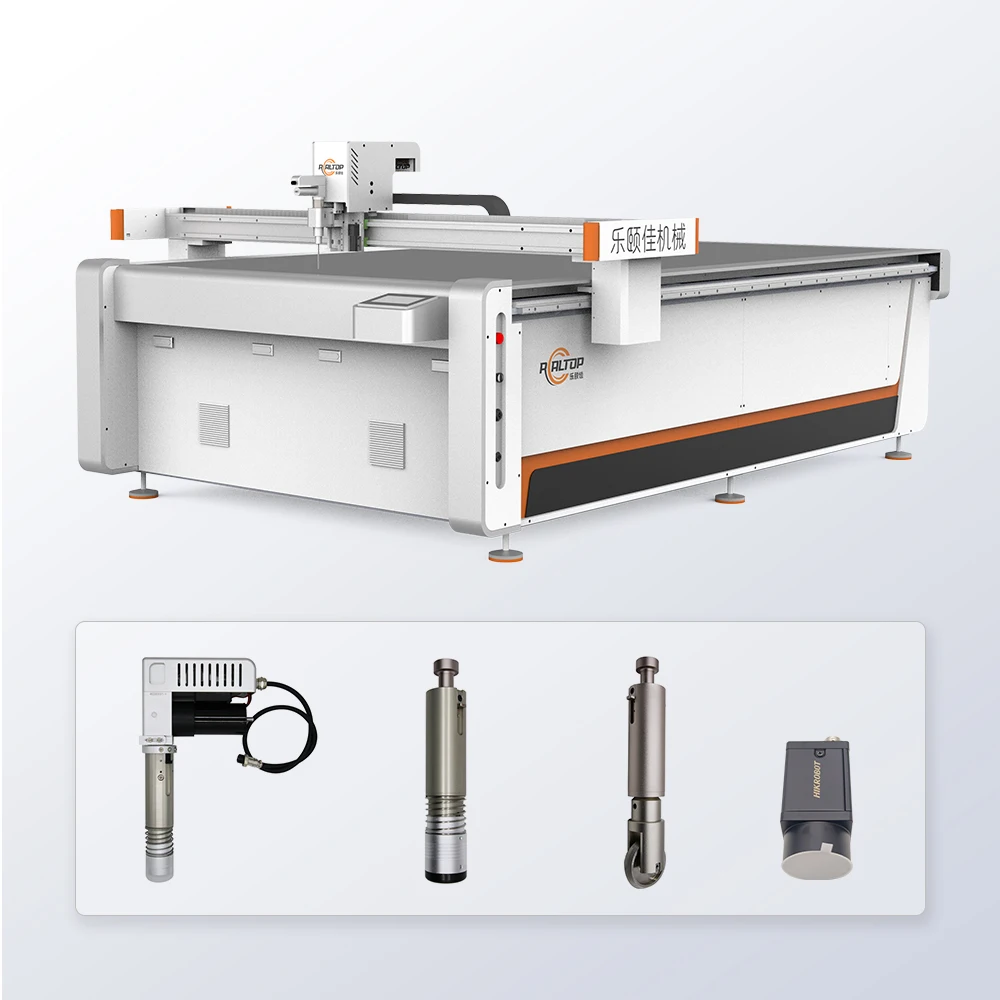
| Tool Head Options | Oscillating knife, pneumatic knife, high-power vibrating knife, circular knife, V-cutting knife, drag knife, creasing wheel, dotted line knife, punching, brush |
Application Suitability
| Application | Material or Output |
|---|---|
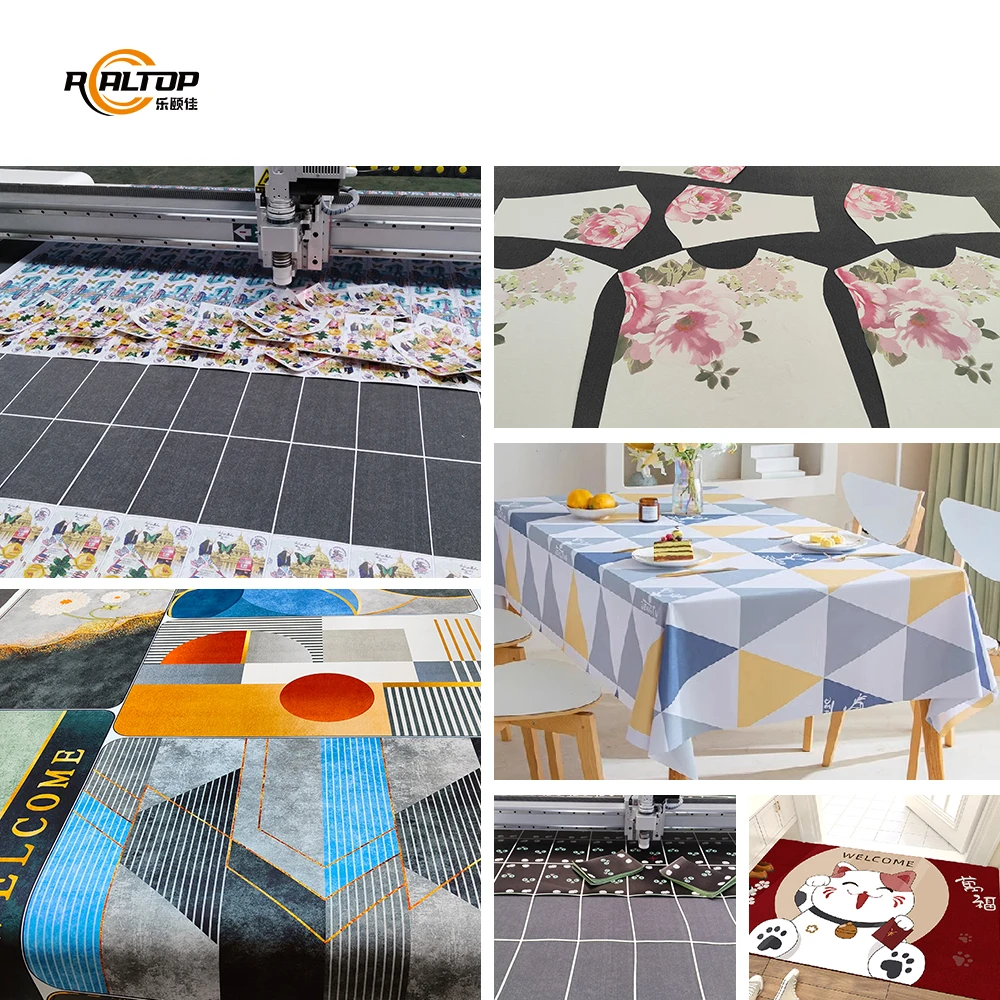
| Automotive interior trimming | Car mats, TPE composite floor liners, tint film |
| Soft furnishing and carpet production | Woven carpet, non-woven fabric, sponge, PU foam |
| Footwear and luggage manufacturing | Leather, shoe material, luggage cloth, EVA, XPE |
| Gasket and sealing fabrication | Rubber, PTFE, ETFE, fiberglass, composite gasket sheets |
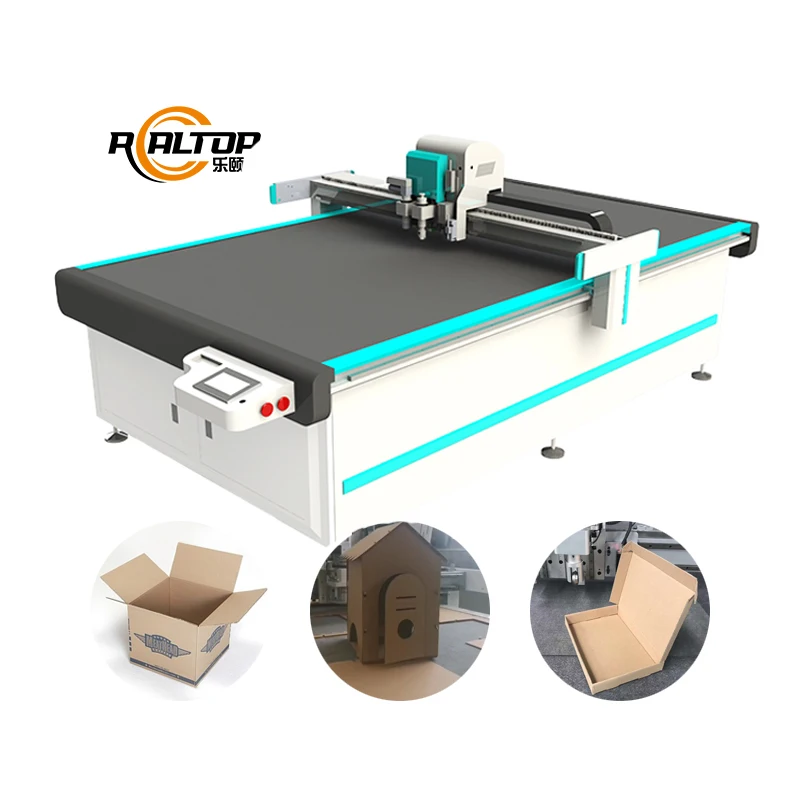
| Packaging and sample making | Corrugated cardboard, plastic box, sticker, film |
| Garment and textile cutting | Clothing cloth, woven textile, multi-layer fabric stacks |
What "Cutting Thickness Up to 100 mm" Actually Means in Production
A thickness number on a spec sheet tells you nothing without the material density and the tool head behind it.
I spent weeks troubleshooting a CNC oscillating knife cutting machine manufacturer order where the buyer assumed the rated thickness applied equally to soft sponge and dense composite TPE. It does not. A 100 mm block of open-cell foam yields to an oscillating blade very differently than a 30 mm sandwich of rubber-backed car mat material. The vibration amplitude, blade profile, and vacuum hold-down all need to match the actual stock you are feeding onto the table. When a distributor resells a machine without confirming this match, the end user blames the machine, not the specification gap [NEED_CITE: material density and cutting force relationship in oscillating knife systems].
How the Frame Build Affects Cutting Repeatability Over Time
Every RT-D2516/RT-S2516 frame starts as thick-walled seamless steel tube, welded into a single bed structure and then put through high-temperature tempering to relieve internal stress. After tempering, the entire frame goes onto a CNC machining center for the rail mounting surfaces. This sequence matters because a frame that is welded and never stress-relieved will slowly warp over months of vibration, pulling the linear rails out of parallel and degrading that ≤0.1 mm repeated accuracy figure. For a CNC oscillating knife cutting machine manufacturer, controlling this process in-house means every unit ships with verified flatness across the full 1600×2500 mm working area.
Vacuum Table Design and What It Means for Small-Part Hold-Down
The magnesium-aluminum alloy table surface receives PVDF fluorocarbon coating followed by hard anodic oxidation, producing a flat, corrosion-resistant work surface that stays true through years of blade contact. The 7.5 kW vacuum pump runs through an aviation aluminum housing with integrated silencer sponge, which noticeably reduces the ambient noise level on the shop floor. More importantly for production, the table zoning determines whether small cut pieces stay pinned or lift off during the final pass. When zoning is too coarse, a cut leather gasket or a small automotive tint film piece can drift, ruining the contour and wasting material. We confirm the zone layout with each buyer based on their typical part size before the table goes into assembly.
Reading the Specs That Separate a Good Cut from a Bad One
The servo motor choice between Delta and Panasonic directly influences how smoothly the head negotiates tight corners in a nesting pattern at the upper end of the 200–800 mm/s cutting speed range. Taiwan Hiwin linear rails paired with ball screw drive give the gantry the rigidity it needs when the oscillating knife is pushing through dense composite material at full depth. The Swiss-imported knife assembly delivers vibration full cutting, half cutting, and cursor location in a single head, reducing tool change downtime on jobs that mix kiss-cut and through-cut operations. On the software side, HP-GL compatibility and support for PLT, DXF, and AI files means the CNC oscillating knife cutting machine manufacturer configuration can drop into most existing design workflows without requiring the buyer to learn a proprietary system.
The Real Cost of Skipping the Material Trial
I once configured a vibration knife setup for a South Asian automotive floor mat plant that was running TPE with a composite backing layer. We tested with standard EVA and the cuts were clean, so we shipped. On arrival, the blade could not penetrate the denser bottom layer, and an entire production batch was scrapped before we could fly out and reconfigure the tool head and vacuum pressure. That failure was entirely preventable with a material sample test before the machine left the factory. Every time a buyer skips the sample cutting step, they are gambling their first production run on an assumption [NEED_CITE: material variability in automotive composite flooring substrates].
Why Importers and Distributors Source This Platform Here
Realtop designs and builds both knife and laser cutting platforms in-house, so when a distributor’s customer base spans fabric and acrylic, one factory relationship covers both technologies. The RT-D2516/RT-S2516 frame welding, motion assembly, tool head integration, and factory testing all happen on the same floor, which means a visiting inspector can trace a single unit from raw steel to packed crate. Voltage, control language, and plug type are confirmed against the destination market before production starts, not discovered as a mismatch at commissioning. Tool head combinations are specified per the buyer’s material list, so a distributor serving the automotive interior market can order a configuration that is ready for car mats and gaskets on day one. The in-house design team also handles custom language interfaces and branding requirements that OEM partners need for their local markets.
Documentation & Verification
- Machine specification sheet listing confirmed tool heads and table zone layout
- Electrical schematic with voltage and frequency matched to destination country
- Sample cutting report produced on your actual material before factory dispatch
- CE declaration documentation where applicable to your import market
- Factory test record with measured accuracy and run-off data
- Spare parts list with part numbers and availability terms
Installation, Commissioning & Support
- Foundation requires level concrete floor to support 3450×2300 mm footprint and dynamic vibration loads
- Dedicated 380V ±10% circuit with proper grounding for 9 kW total rated power draw
- Machine ships with vacuum pump and conveyor system pre-assembled to minimize on-site assembly time
- First-power commissioning includes servo tuning and vacuum zone calibration across the 1600×2500 mm table
- Operator training covers tool head changes, nesting software, and multi-language touch screen navigation
- Wearing parts inventory includes blades, knife holders, and vacuum seals sized to your tool head configuration
What We Need Before Quoting Your Configuration
To match the RT-D2516/RT-S2516 to your production requirements, send us the specific materials you will be cutting, including type, thickness range, and whether they are single-layer or composite. Let us know your target market voltage and frequency, preferred control panel language, and whether your workflow requires CCD camera positioning for printed contour work. If you have existing CAD files or nesting software, share the format so we can confirm compatibility before the order is finalized.
Frequently Asked Questions
Q: What OEM configuration options are available for distributors and importers?
A: Voltage and frequency are set to match your destination market. Control panel language is selectable from English, Russian, Italian, and Chinese, with special languages available on request. Tool head combinations are configured per your customer base material list. Branding, color, and documentation language can also be customized for OEM partners.
Q: How does the factory test each machine before shipment?
A: Every unit goes through frame flatness verification, servo tuning, and vacuum pressure testing across all zones. We run sample cuts on the buyer’s own material when provided, documenting blade penetration depth, edge quality, and positional accuracy. A complete factory test record ships with the machine.
Q: What documentation comes with the machine?
A: You receive the machine specification sheet, electrical schematic, tool head and table configuration list, operation manual, software license with file format notes, spare parts list, and packing photographs. CE declaration is included where applicable to your market [NEED_CITE: CE machinery directive requirements for industrial cutting equipment].
Q: Can I inspect the frame and motion components during a factory visit?
A: Yes. The entire build process from frame welding through motion assembly and final testing takes place on our production floor. Visiting buyers can inspect the seamless steel frame construction, Hiwin linear rail mounting, and servo integration at any stage. We schedule inspection visits around your build timeline.
You may also like

商品评价
Clear filtersThere are no reviews yet.