




-
 Courier delivery
-
 DHL Courier delivery
-
 Warranty 1 year
-
 Free 30-Day returns

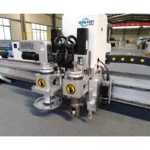
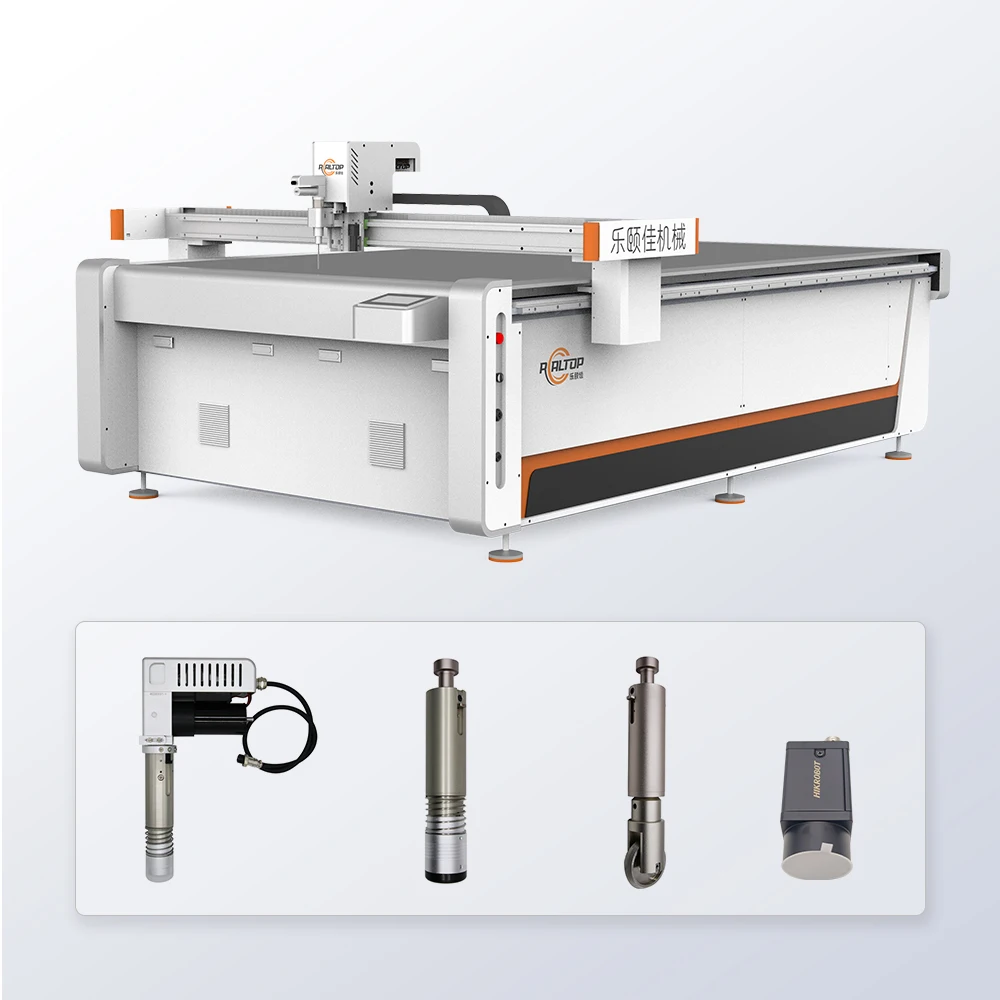
Integrated Tool Head Engineering — Every oscillating knife, creasing wheel and vacuum zone on our packaging CNC cutting machines is specified against your actual board grade before a single component is ordered.
Technical Specifications
| Parameter | Value |
|---|---|
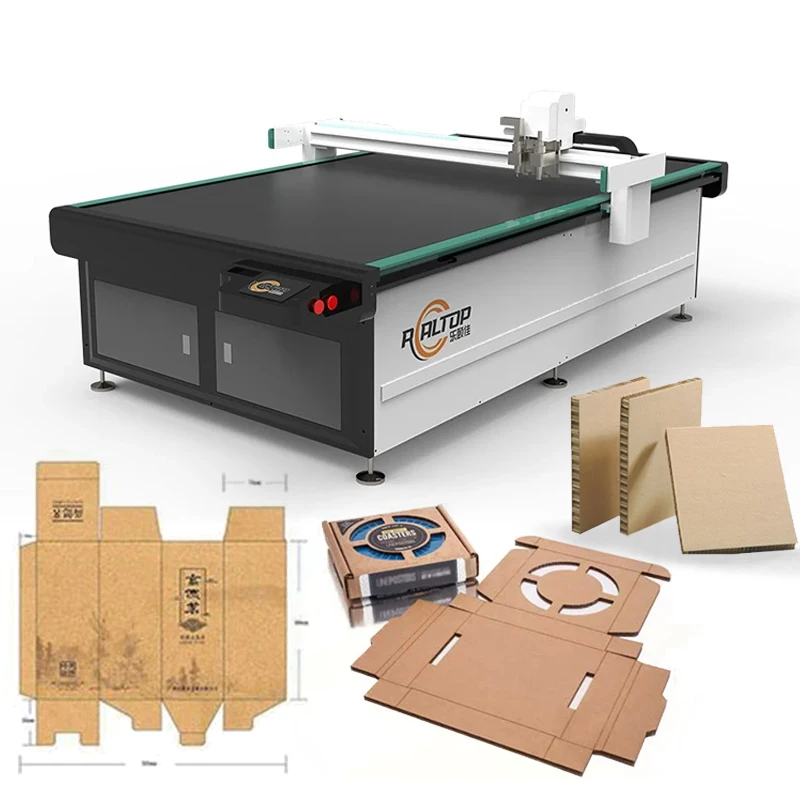
| Product Type | CNC Oscillating Knife Cutting Machine for Packaging & Carton Sample Making |
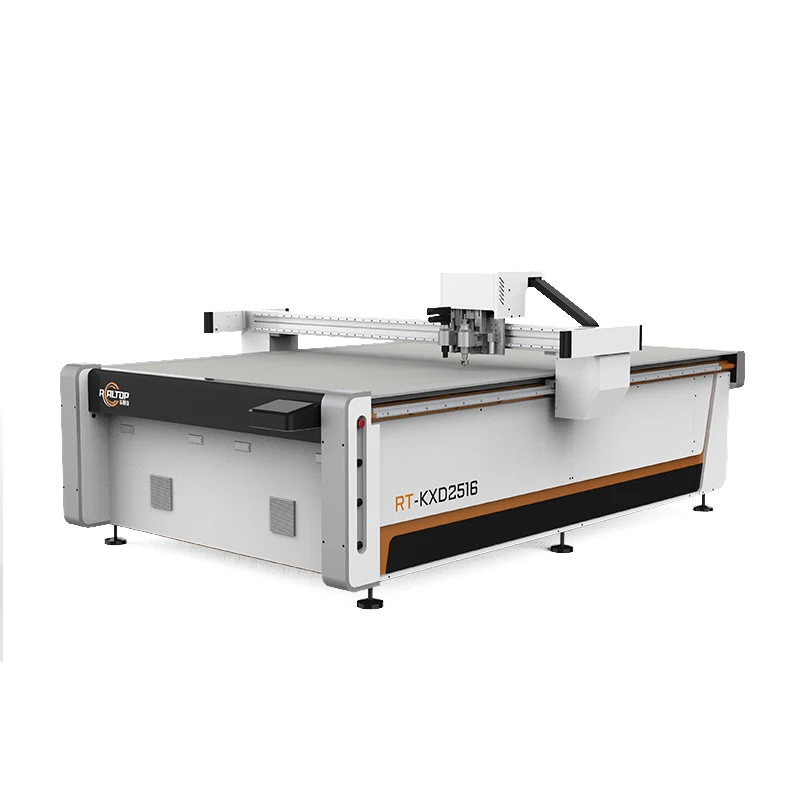
| Model | RT–R2513 / RT-D2516 / RT-S2516 |
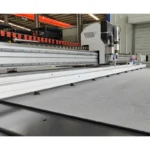
| Working Area | 2500×1300 mm (RT–R2513) / 1600×2500 mm (RT-D2516 / RT-S2516) |
| Machine Size | 3550×1910×1400 mm (RT–R2513) / 3450×2300×1250 mm (RT-D2516 / RT-S2516) |
| Cutting Thickness | ≤18 mm (basis not stated in source — confirm material type and density) |
| Repeated Accuracy | <0.05 mm |
| Rated Power | 9 kW |
| Voltage | 380 V |
| Servo Motor | Dongling servo (Delta servo available as configuration option) |
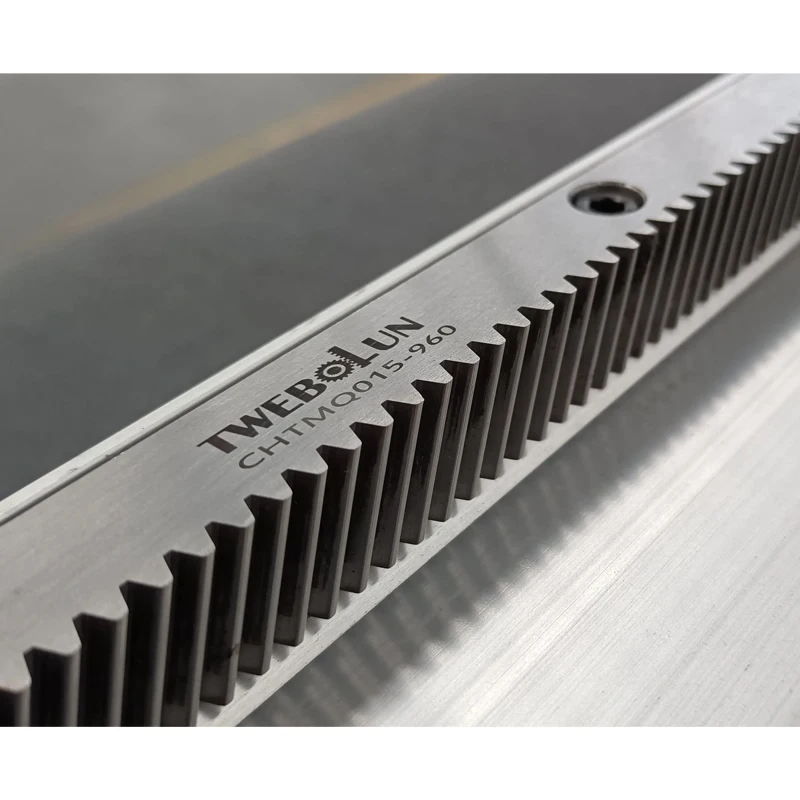
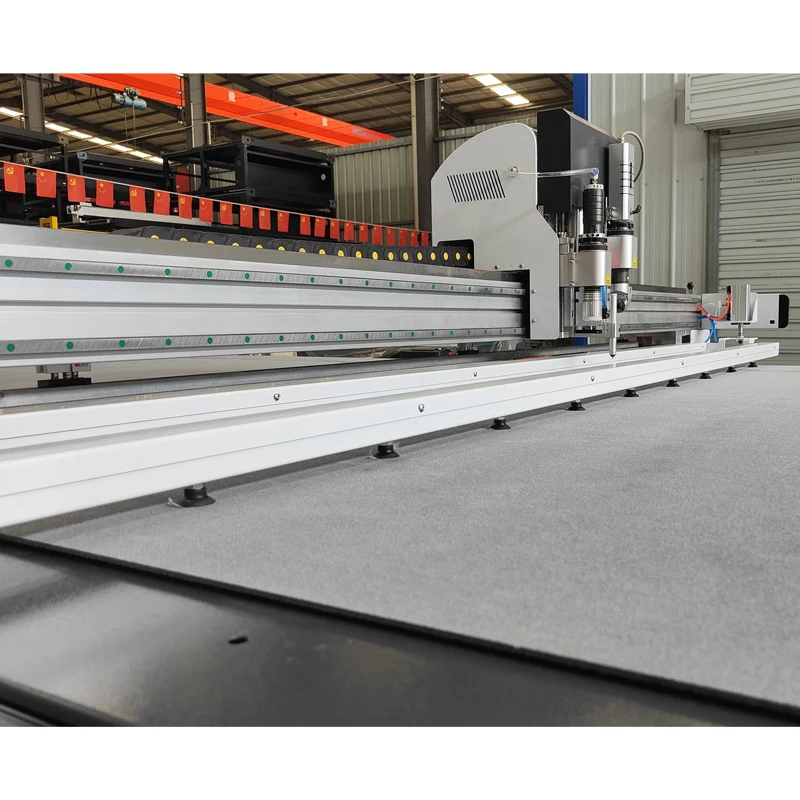
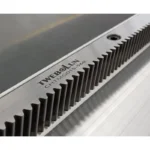
| Transmission | Rack and pinion with imported linear square guide rails |
| Fixing Method | Aluminum alloy honeycomb structure vacuum adsorption platform |
| Vacuum Pump | 7.5 kW |
| Control / Data Transfer | Ethernet port |
| Software & File Formats | DXF, OLT, PDF, AI; professional carton nesting software included |
| Safety Device | Infrared sensors, emergency stop |
| Table Surface | Wear-resistant anti-pull felt belt |
| Language Options | English, Russian, Italian, Chinese; other languages customizable |
| Blade Supply | 10 pieces of oscillating blades included |
| Warranty | 1 year (excludes felt and knife blades) |
| Delivery Time | <30 working days |
Application Suitability
| Application | Material or Output |
|---|---|
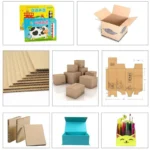
| Carton and packaging sample making | Corrugated board, greyboard, honeycomb paperboard for die-free prototypes |
| Short-run box production | Single-wall and double-wall corrugated for express shipping and snack food cartons |
| Electrical appliance carton cutting | Heavy-duty corrugated and reinforced cardboard requiring both through-cut and crease |
| Gift box and premium packaging | Coated paperboard, laminated stock requiring clean fold lines |
| Sticker and label contour cutting | Self-adhesive vinyl, PP paper, sticker sheets with kiss-cut capability |
Why the Creasing Wheel Matters More Than the Working Area
When a packaging producer evaluates a Packaging CNC Cutting Machine manufacturer, the first number on the quote is usually the table size. But if the creasing wheel cannot compress the flute structure of your specific corrugated grade without cracking the liner, the working area is irrelevant — every sheet that comes off the table is scrap. The crease depth, wheel width and downward pressure must be matched to your flute profile and board thickness before the order is placed.
I saw this firsthand on the assembly floor. A customer ordered a machine for standard corrugated sample making. The trial cuts we ran used their supplied samples, and the creases were clean. When the machine arrived at their facility, they were running laminated corrugated stock that was substantially denser. The creasing wheel could not penetrate the lamination layer, the fold lines fractured, and an entire batch of cartons was rejected. That failure had nothing to do with the machine’s positioning accuracy or servo performance — it was a specification gap [NEED_CITE: material testing requirements for corrugated packaging machinery procurement].
Frame Construction That Holds Tolerance Through Production Runs
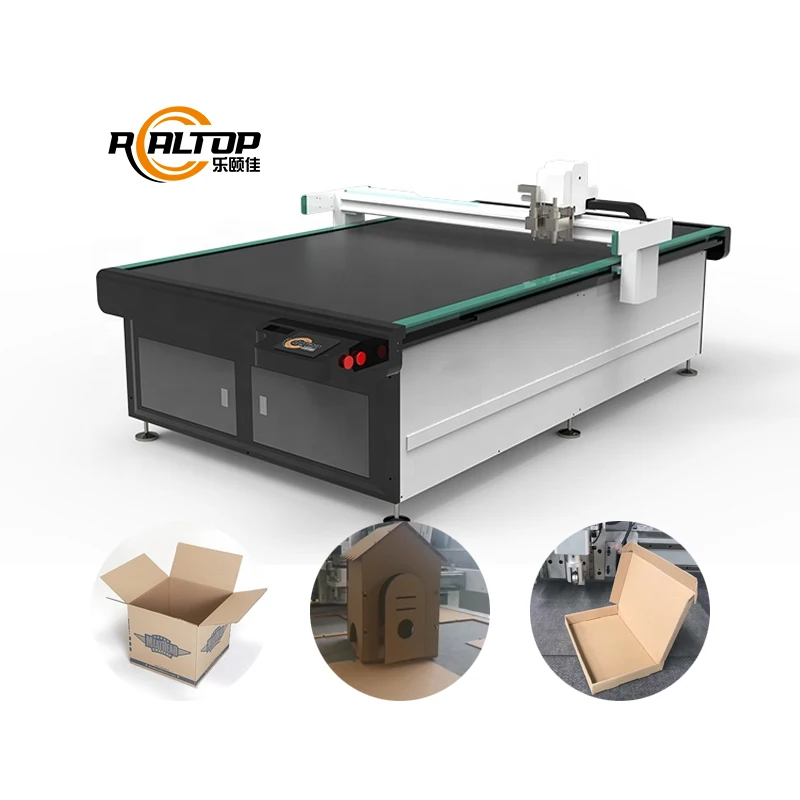
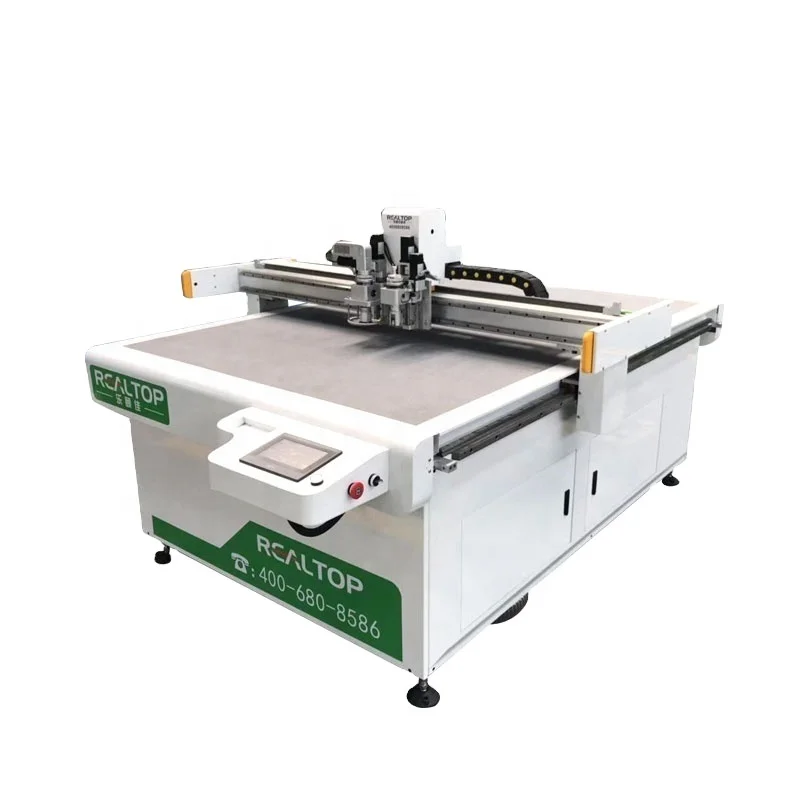
A packaging cutting machine lives under continuous vibration from the oscillating knife head and cyclic loading from the vacuum pump. The frame on these models is welded from thick square seamless steel tubing and then put through high-temperature stress relief treatment. This process releases the internal stresses locked in during welding, so the frame does not gradually twist or settle over months of operation. When a Packaging CNC Cutting Machine manufacturer skips this step, the repeated accuracy drifts as the frame relaxes, and fold lines begin to miss their intended position on long production runs.
Multi-Tool Head Configuration in a Single Work Cycle
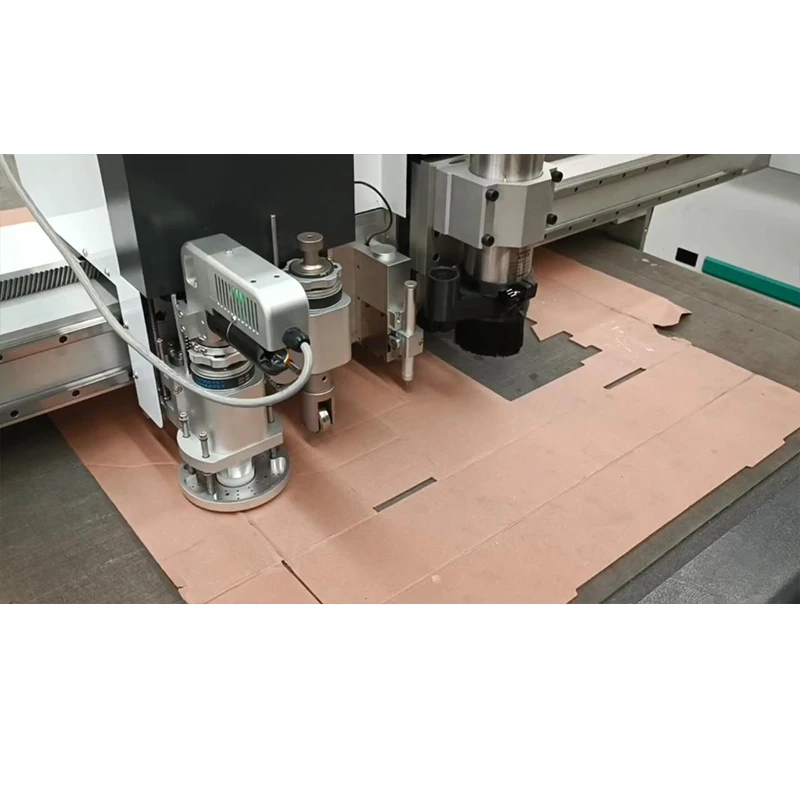
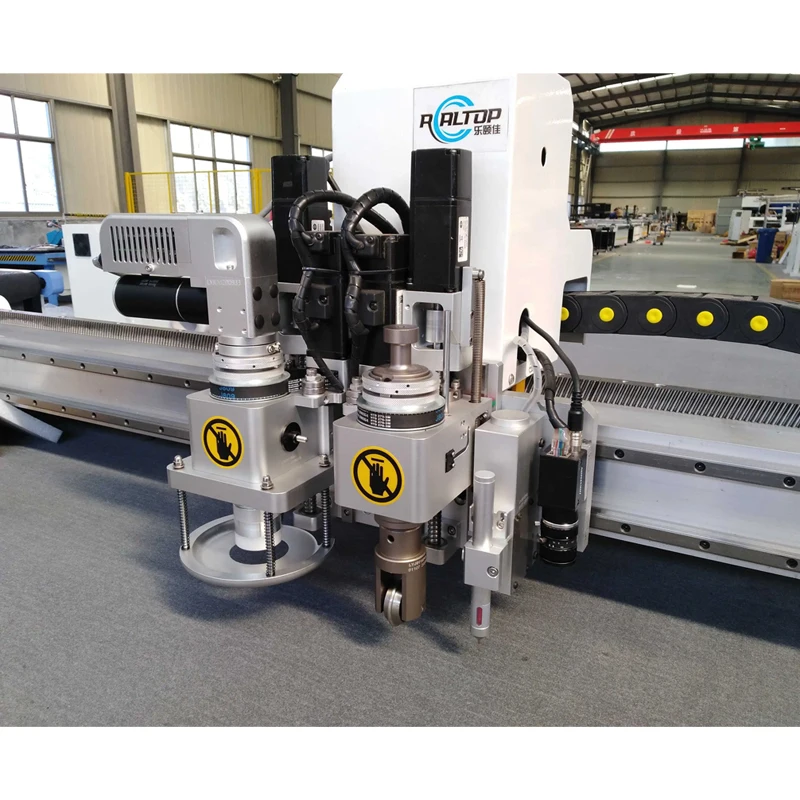
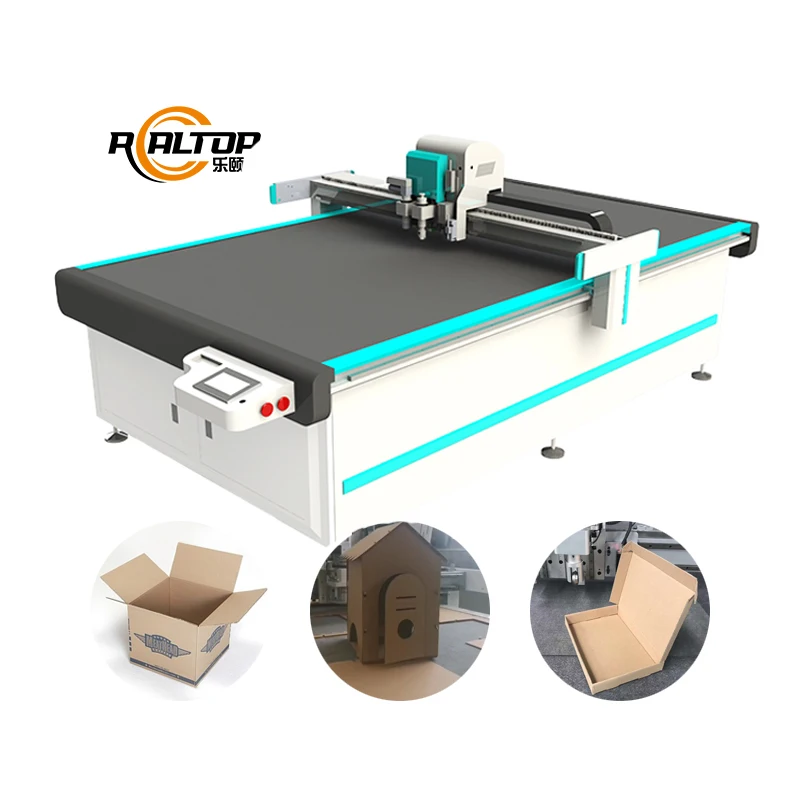
The tool head array on these machines typically includes an oscillating knife for through-cutting the board outline, a creasing tool for scoring fold lines, a kiss-cut knife for sticker and label contours, and a round punch for registration holes or ventilation slots. Running all four operations in one cycle eliminates the repositioning errors that occur when a sheet moves between separate cutting and creasing stations. For short-run carton sample makers, this means a complete prototype — cut outline, fold lines, and punch marks — comes off the table ready to fold and assemble without secondary handling [NEED_CITE: multi-tool CNC cutting workflow advantages in packaging prototyping].
Reading the Spec Sheet Against Real Production Conditions
The stated cutting thickness of up to 18 mm needs context. That figure applies to specific material densities, and corrugated board behaves differently from solid greyboard or honeycomb paperboard at the same nominal thickness. A B-flute single-wall board at 3 mm cuts very differently from a 3 mm laminated gift box stock. The repeated accuracy of <0.05 mm is achievable because the rack-and-pinion transmission rides on precision linear square guide rails — this is the combination that keeps the knife tip on its programmed path even during tight-radius contour cuts on complex box templates. The 9 kW rated power covers the spindle motor, vacuum pump and servo drives running simultaneously, which is the realistic load during a full cutting cycle. Software compatibility with DXF, OLT, PDF and AI files means your existing design workflow can feed directly into the nesting program without file conversion steps that introduce geometry errors.
The Cost of Skipping Material Verification
Choosing the wrong tool head for a material does not show up as a machine error — it shows up as ragged edges on corrugated cuts, crushed flute structure along fold lines, or kiss-cuts that go too deep and cut through the backing paper. These defects are usually blamed on the blade, the operator, or the software, when the actual cause is a configuration mismatch between the tool head specification and the material being processed. A creasing wheel that is too narrow for a thick double-wall board will produce a crease that looks acceptable on the first sample but cracks after the carton is folded and filled [NEED_CITE: creasing wheel selection criteria by corrugated flute type]. The vacuum table zoning compounds this — if the suction zones are not configured for the size of the part being cut, small carton components can lift during the final contour pass, producing a dimensional error that only appears when the box is assembled.
Why Procurement Teams Source This Packaging CNC Cutting Machine Manufacturer
In-house design and production covering the frame, motion system and tool head configuration means a single engineering team controls the entire specification chain rather than assembling sourced sub-assemblies. Tool head and table configuration are specified per material and production volume, so the oscillating knife stroke frequency, creasing wheel profile and vacuum zone layout are matched to the buyer’s actual board grades. Voltage, plug type and control language are confirmed before production begins, eliminating the shipment-delay corrections that happen when these details are left to the packing stage. Sample cutting on the buyer’s own material is conducted before order commitment, providing a physical reference for edge quality and crease integrity. CE declaration is available where applicable, with supporting documentation prepared for the destination market.
Documentation & Verification
- Machine specification sheet listing confirmed tool head and vacuum zone configuration
- Electrical schematic with voltage and frequency matching your facility supply
- Sample cutting report on your corrugated or cardboard stock at specified thickness
- Tool head and table configuration list matched to your material profile
- Software licence with confirmed file format compatibility for DXF, OLT, PDF and AI
- Spare parts list with blade and felt belt replacement intervals
Installation, Commissioning & Support
- Machine arrives fully assembled — no frame reassembly required at your facility
- 380 V three-phase dedicated circuit with appropriate breaker rating for 9 kW rated load
- Vacuum pump commissioning includes zone-by-zone suction verification on your board stock
- Oscillating knife stroke and creasing wheel pressure calibrated to your material during on-site startup
- Software menu language set to operator preference before training session begins
- 10 oscillating blades included for initial production; reorder lead time confirmed at delivery
Preparing Your Inquiry
When you are ready to evaluate configuration, the most useful information to share includes the specific board types and flute profiles you will be running, the maximum sheet size in your current product range, and your local voltage and frequency standard. If you have existing CAD files in DXF or AI format, send a sample so we can verify nesting compatibility before quotation. For buyers considering OEM branding or private-label configuration, specify the documentation language, control interface language and any destination-market certification requirements upfront.
Frequently Asked Questions
Q: How do you verify build quality and frame rigidity before shipment?
A: The welded steel frame undergoes high-temperature stress relief treatment to release internal welding stresses before assembly. Every machine runs a factory test protocol that includes extended cutting cycles on representative material, with repeated accuracy measured across the full working area. The test record and dimensional verification report are included in the documentation package shipped with the machine.
Q: Can the machine be OEM-branded or custom-configured for our distribution market?
A: OEM and ODM configuration is available, covering branding, control interface language, software menu language and documentation translation. Voltage and plug type are set to your market standard. Tool head selection can be adjusted to match the board grades most common in your region, and the configuration list is finalized before production begins.
Q: What is the difference between standard and optional configurations?
A: The standard configuration includes Dongling servo motors and the rack-and-pinion transmission system. Optional upgrades include Delta servo motors, Taiwan Hiwin linear guide rails, and a Germany-sourced conveyor belt for auto-feeding setups. The configuration list provided with your quotation clearly marks each component as standard or optional so you can evaluate what your production volume requires.
Q: How do you handle after-sales support and spare parts for overseas distributors?
A: The one-year warranty covers mechanical and electrical components, excluding consumables like felt belts and knife blades. Spare parts are supplied at cost, and technical support is available with response within one working day. Oscillating blades, creasing wheels and other wear items are listed in the spare parts documentation with recommended reorder quantities.
Q: Can we visit the factory to inspect production and run a sample test?
A: Factory visits are available for specification review and live sample cutting. You can bring your own board stock, or we source representative material matching your specifications. The sample cutting is run on the actual machine configuration being quoted, and the cut pieces are yours to evaluate for edge quality, crease integrity and dimensional accuracy before placing the order.
You may also like

商品评价
Clear filtersThere are no reviews yet.