






-
 Courier delivery
-
 DHL Courier delivery
-
 Warranty 1 year
-
 Free 30-Day returns

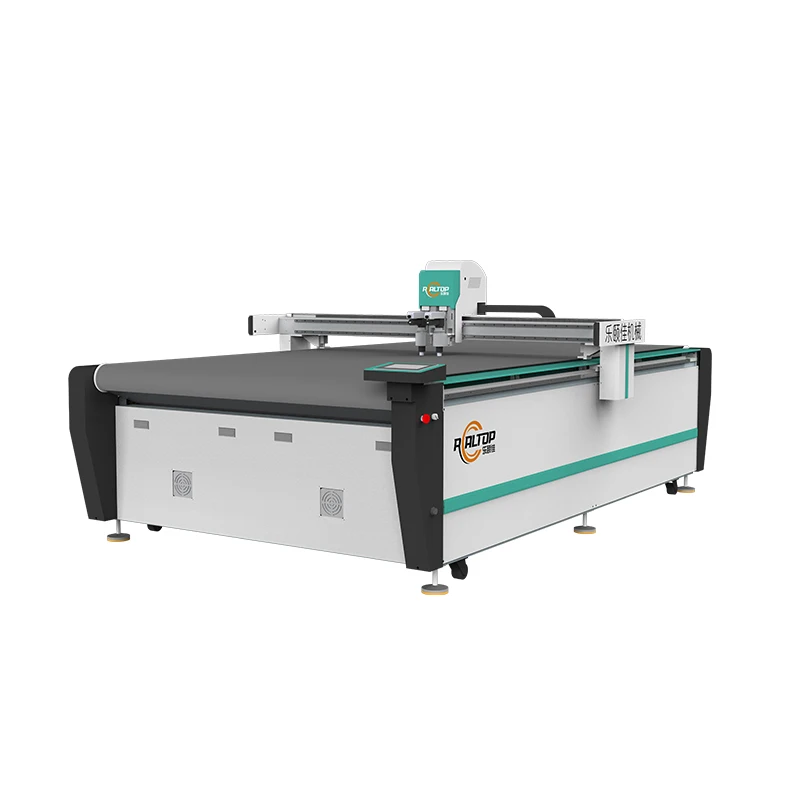
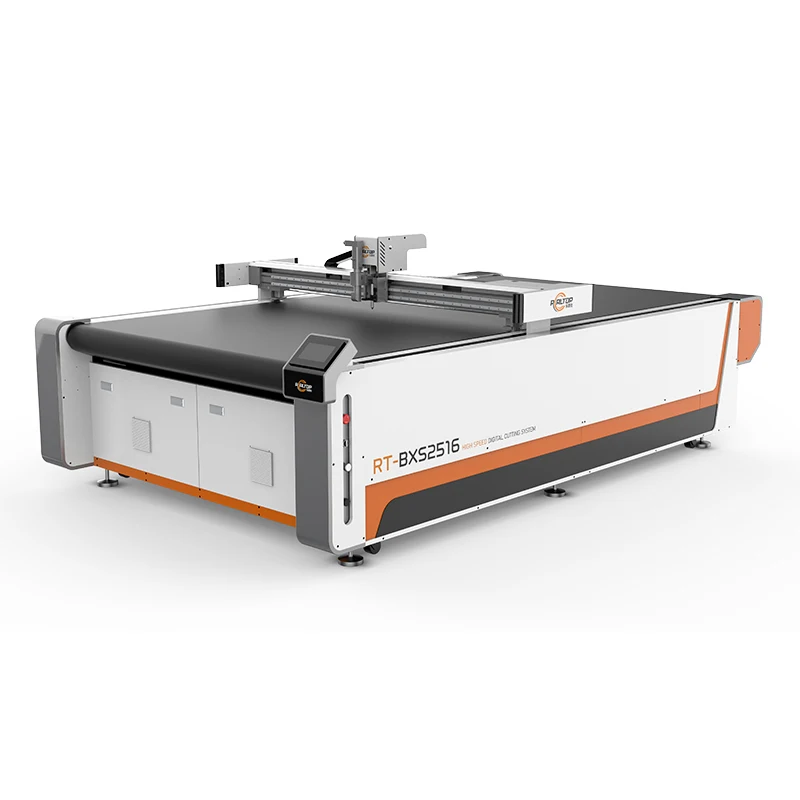
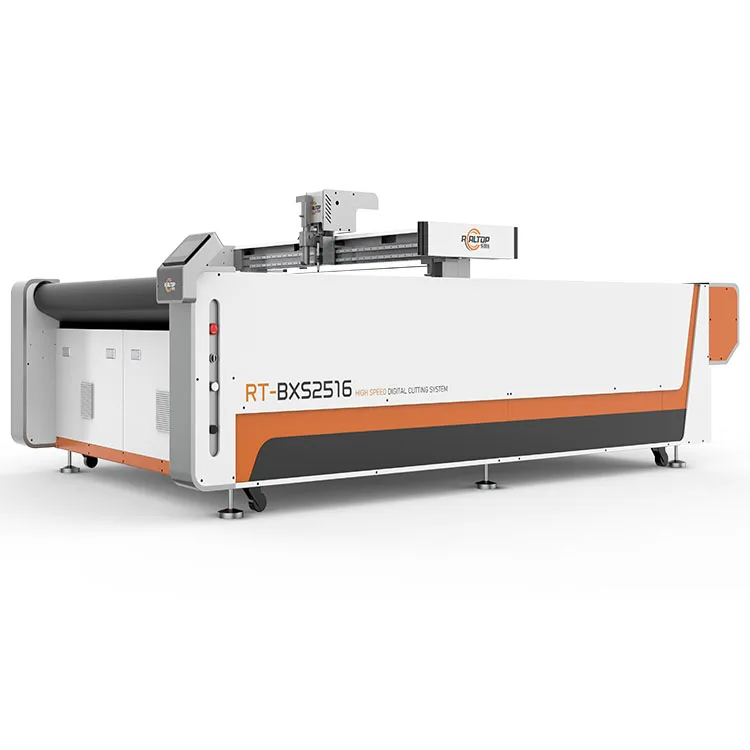
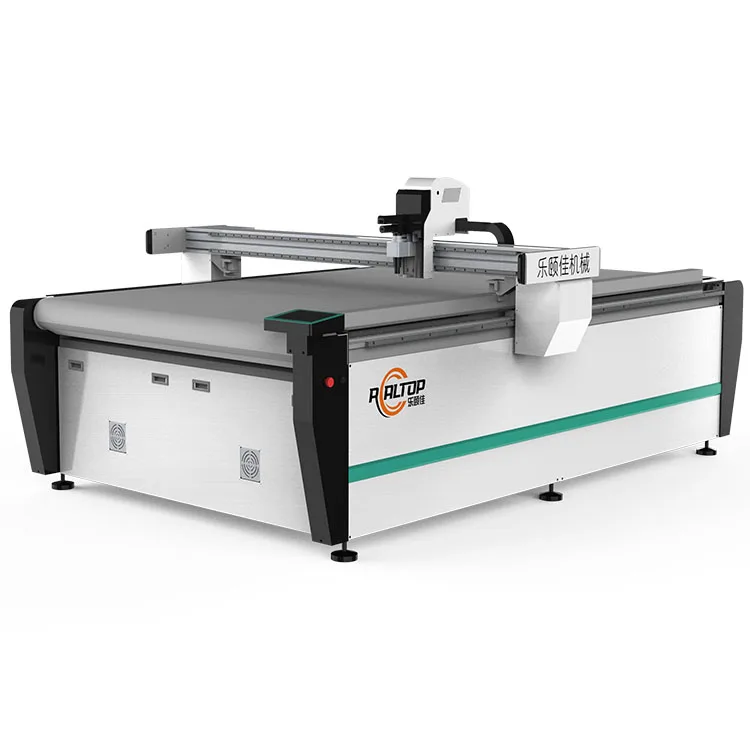
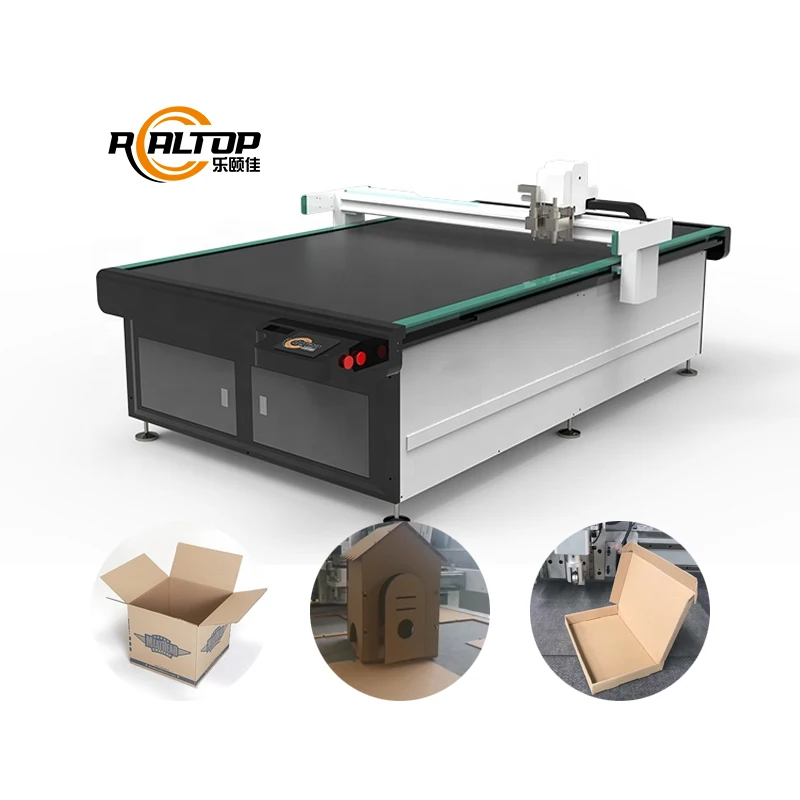
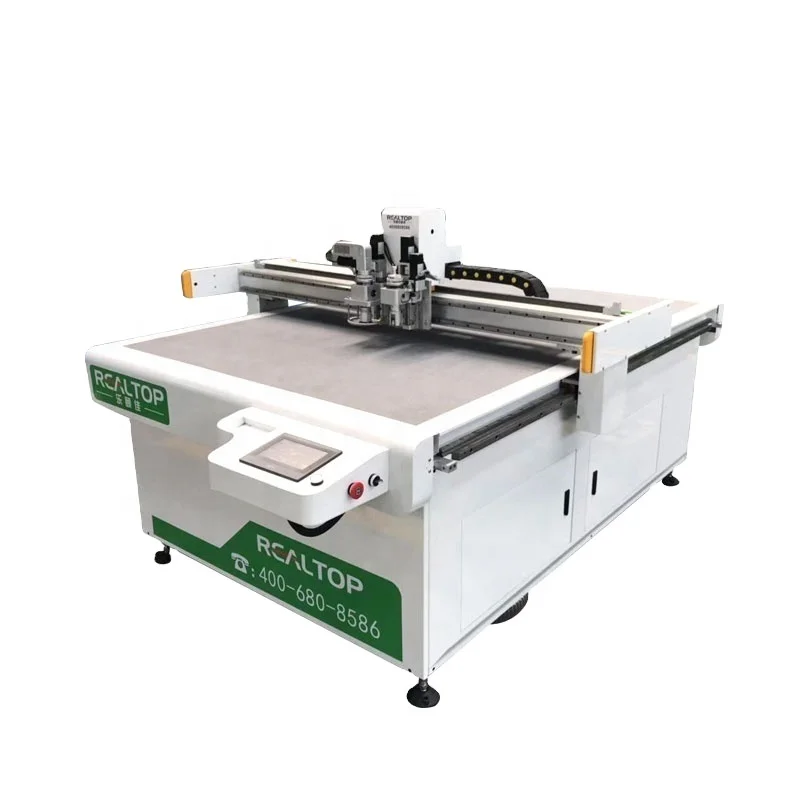
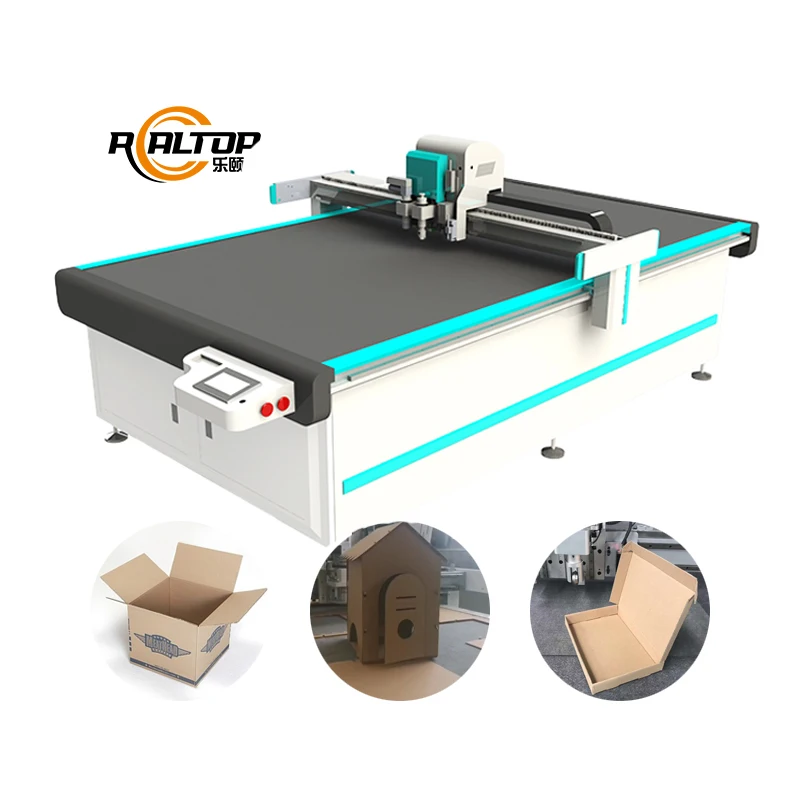
In-House Engineering Team — Realtop Machinery designs and manufactures CNC oscillating knife cutting tables with configurable tool heads and vacuum systems built around the buyer’s material, not generic assemblies.
Technical Specifications
| Parameter | Value |
|---|---|
| Product Type | CNC Oscillating Knife Cutting Machine |
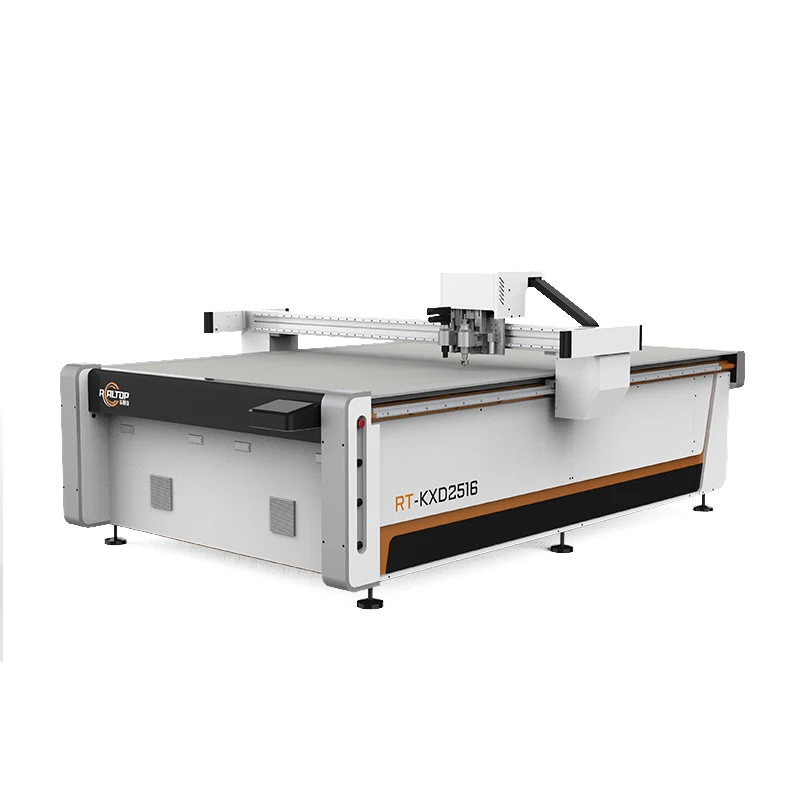
| Model | RT-D2516/RT-S2516 |
| Working Area | 1600×2500mm |
| Overall Dimensions (L×W×H) | 3450×2300×1250mm |
| Rated Power | 9kW |
| Voltage | 380V±10% (50/60Hz confirmation required) |
| Transmission System | Digital servo motor, linear guide, synchronous belt, ball screw (imported) |
| Servo Motor Brand | Delta (Panasonic optional) |
| Translational Velocity | 800–2000mm/s |
| Cutting Speed | 200–800mm/s (varies by material density and thickness) |
| Repeated Accuracy | ≤0.1mm |
| Cutting Thickness | ≤100mm (material dependent; basis to be confirmed for specific composites) |
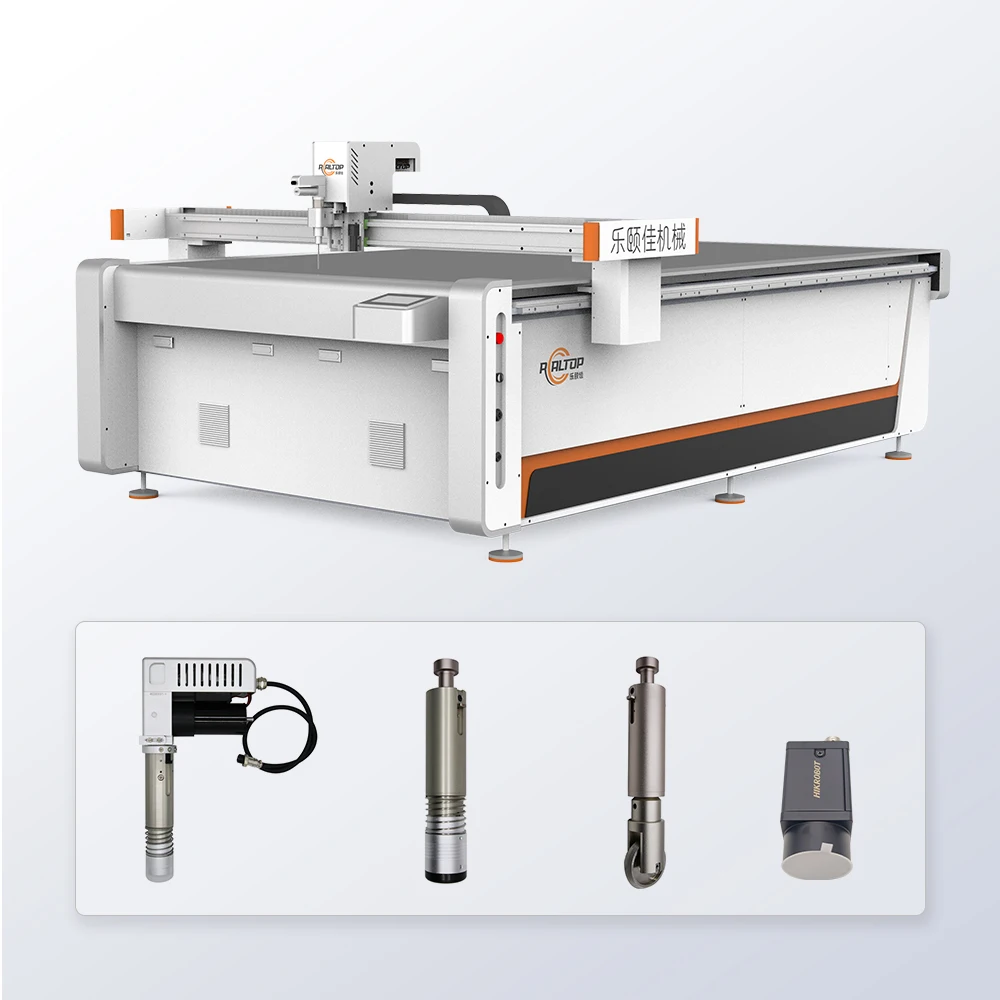
| Multifunctional Tool Head | Swiss imported vibrating knife (full/half cut), cursor location; options include pneumatic knife, high-power vibrating knife, circular knife, V-cut, drag knife, creasing wheel, punching, brush |
| Visual Positioning | Small CCD camera mark point, panoramic camera recognition, projection positioning |
| Vacuum Table | Magnesium-aluminum alloy, fluorocarbon PVDF powder sprayed, anodic and hard oxidation; 7.5kW vacuum pump |
| Working Table Type | Flat table (conveyor belt optional, Germany imported) |
| Safety Device | Infrared induction blocking, beam anti-collision, emergency stop, intelligent infrared sensor stop |
| Instruction System | HP-GL compatible format |
Application Suitability
| Application | Material or Output |
|---|---|
| Automotive interior trimming | Sponge composite leather, PVC, soft glass, silicon, rubber |
| Footwear and leather goods production | Leather, flexible materials, multi-layer fabric |
| Home furnishing and carpet cutting | Thick pile carpet, foam, textile |
| Packaging and signage prototyping | Corrugated board, foam board, vinyl |
| Gasket and composite fabrication | Rubber, silicon, sponge composite materials |
What the "Up to 100mm Thickness" Claim Really Means for Composites
Cutting depth is a function of material density, fiber weave, and tool head configuration, not a single spec sheet number.
When buyers see a cutting thickness rated at 100mm, they often assume it applies universally across all flexible materials they plan to process. I learned the hard way that a machine configured for short-pile carpet will struggle, produce ragged edges, or fail to penetrate when faced with thick long-pile or dense sponge composite leather. The vibration knife that slices cleanly through 5mm PVC may compress and tear 20mm foam if the frequency and stroke are not matched to the material’s compressive strength.
This is why we insist on material samples before confirming any order. The cutting speed drops noticeably as material thickness and density increase, and a configuration that runs 800mm/s on thin vinyl might need to slow to 200mm/s or less on a dense rubber gasket. [NEED_CITE: material density and compressive strength variables in CNC knife cutting]
Build Quality That Holds Tolerance Under Continuous Load
The frame of the RT-D2516/RT-S2516 uses thick-walled seamless steel structure that undergoes high-temperature tempering and finishing on a CNC machining center. This process is designed to prevent deformation under the lateral forces generated when a vibrating knife encounters resistance in dense composite materials. The imported linear guides and ball screws maintain the ≤0.1mm repeated accuracy across the full 1600×2500mm working area, which matters when cutting nested patterns for automotive interiors where a 0.5mm deviation can cause assembly issues downstream. The servo motors, standard Delta with Panasonic as an option, deliver the responsiveness needed for tight corner cuts without overshoot.
Vacuum Table Engineering for Small Parts and Porous Materials
The magnesium-aluminum alloy vacuum table is treated with fluorocarbon PVDF powder spray, anodic oxidation, and hard oxidation — a combination that resists abrasion from dragging heavy composite sheets and prevents corrosion from moisture in certain materials. The 7.5kW vacuum pump is housed in an aviation aluminum shell with built-in silencer sponge to reduce workshop noise. More importantly, the table zoning can be configured to hold small parts that would otherwise lift during high-speed cutting. When cutting intricate gasket shapes from rubber or small leather pieces for footwear, inadequate vacuum zoning causes material shift, ruined parts, and downtime to clear debris from the knife path. [NEED_CITE: vacuum table zoning impact on small part retention]
Decoding the Specs: What Actually Affects Your Daily Output
The 200–800mm/s cutting speed range is entirely dependent on what you are cutting. Thin vinyl or single-layer fabric runs at the upper end; dense sponge composite leather or multi-layer carpet drops to the lower end, and the actual throughput per shift reflects this. The Swiss imported oscillating knife handles most flexible materials with clean edges, but if your production includes thick rubber or very dense foam, a pneumatic knife or high-power vibrating knife may be required — a choice made during the sample testing phase, not guessed from a catalog. The CCD camera positioning options (small mark point, panoramic recognition, projection) solve different problems: mark point works for registered print-to-cut jobs, panoramic handles large-format contour recognition, and projection helps operators align irregularly shaped material before cutting. The HP-GL instruction system accepts standard vector formats, but software compatibility with your existing nesting workflow must be confirmed before the machine ships, not discovered on the factory floor.
The Cost of Skipping the Configuration Conversation
Buyers who specify a machine by working area alone and skip the tool head and vacuum zone conversation often find themselves retrofitting later. A flat table without conveyor may slow material loading for high-volume runs. A vacuum pump sized for large sheets may fail to hold small nested parts. A vibrating knife that works on leather may produce crushed edges on foam if the oscillation frequency is not adjusted. These are not defects — they are configuration mismatches that could have been resolved before production started. [NEED_CITE: CNC cutting tool head selection by material type]
Why Buyers Evaluate Our Factory Before Committing
Realtop Machinery maintains an in-house design team and core factory that covers both knife cutting and motion system engineering. This means the frame, tool head configuration, and vacuum zoning are built to match the buyer’s material and production volume rather than assembled from generic components and resold. The OEM capability extends to frame size, tool head selection, voltage, and control language — all confirmed in writing before production begins. Factory test records are generated on the buyer’s own material, documenting cutting edge quality and speed, so there are no surprises at installation. The design team can adjust vacuum zone layout, conveyor integration, and safety sensor placement based on the specific production environment the machine will enter.
Documentation & Verification
- Machine specification sheet listing every configured tool head and vacuum zone
- Electrical schematic confirming voltage, frequency, and plug type for destination market
- Factory test record on buyer’s own composite material with documented edge quality
- Sample cutting report on buyer’s material before order commitment
- Operation and maintenance manual in confirmed control language
- Spare parts list matched to installed tool heads and consumables
Installation, Commissioning & Support
- Requires level floor with adequate clearance around 3450×2300×1250mm overall dimensions
- Dedicated 380V±10% circuit with confirmed 50/60Hz frequency and appropriate breaker
- Arrives fully assembled; requires vacuum pump connection and conveyor integration if configured
- First-run parameter tuning on buyer’s actual material thickness and type
- Operator training covering tool head changes, vacuum zoning adjustment, and CCD calibration
- Spare oscillating knives, vacuum seals, and drive belts included per tool head list
Preparing Your Inquiry for Accurate Configuration
To configure the RT-D2516/RT-S2516 correctly, provide the specific material types, thicknesses, and sheet sizes you will cut most often. Include your local voltage, frequency, and plug standard, along with the preferred control language for the operator interface. If you have existing nesting software or file format requirements, share samples so compatibility can be verified before quotation.
Frequently Asked Questions
Q: How is the machine frame constructed and what quality control steps are applied?
A: The frame uses thick-walled seamless steel that undergoes high-temperature tempering and CNC machining center finishing to prevent deformation. Every unit is tested for repeated accuracy across the full working area before dispatch, with documented results provided to the buyer.
Q: What OEM and customization options are available?
A: Frame size, tool head selection, vacuum zone layout, voltage, frequency, plug type, and control language are all configurable. Each option is confirmed in writing before production begins, and the factory test is performed with the buyer’s specific configuration and material.
Q: Can the factory provide a test cut on the buyer’s own material?
A: Yes. Buyers are required to send material samples before order commitment. The factory performs cutting tests, documents edge quality and speed, and provides a sample cutting report so the buyer can evaluate results before proceeding.
Q: What documentation is included with shipment?
A: Shipment includes the machine specification sheet, electrical schematic with voltage confirmation, tool head and table configuration list, factory test record, operation manual in the confirmed language, software compatibility note, and spare parts list matched to installed components.
Q: What is the after-sales support structure?
A: The warranty covers parts for one year, with the buyer responsible for shipping costs. An on-site engineer is available for installation and training, with travel and accommodation covered by the buyer. Spare parts are available directly from the factory based on the installed configuration.
You may also like

商品评价
Clear filtersThere are no reviews yet.