



-
 Courier delivery
-
 DHL Courier delivery
-
 Warranty 1 year
-
 Free 30-Day returns

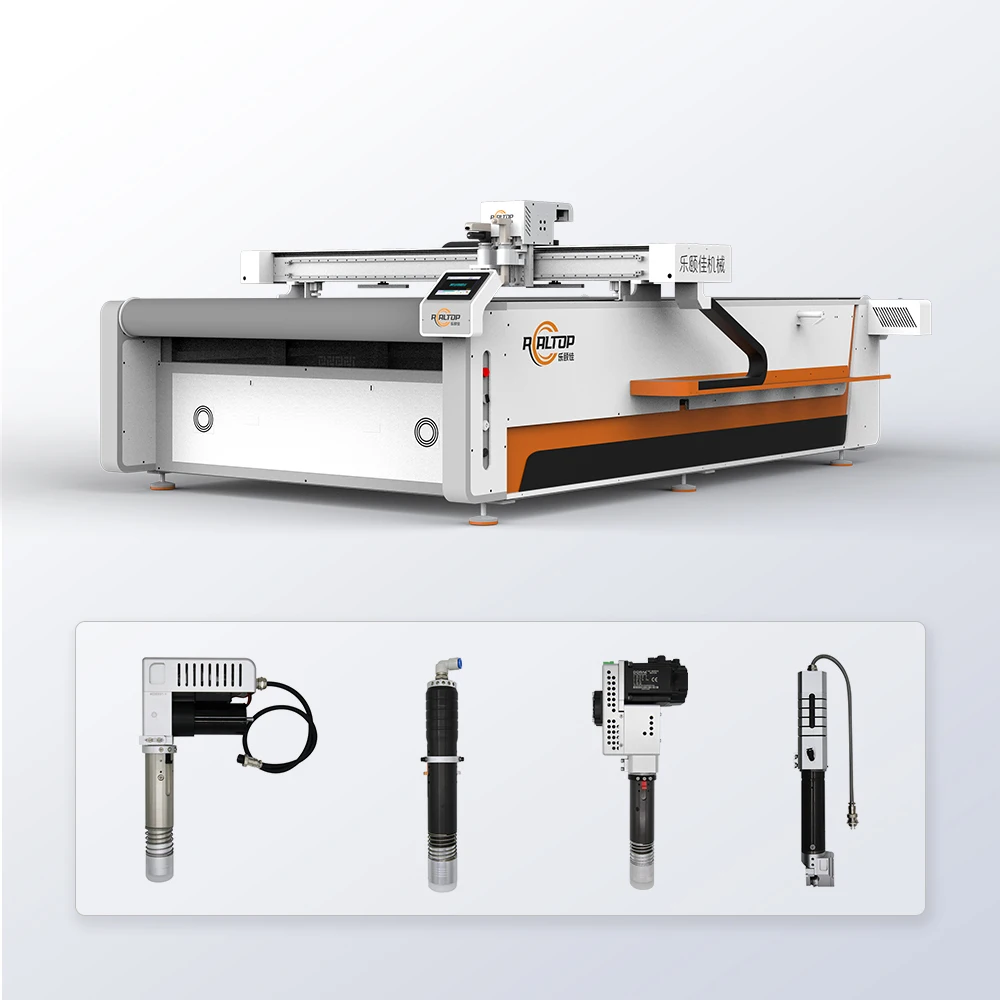
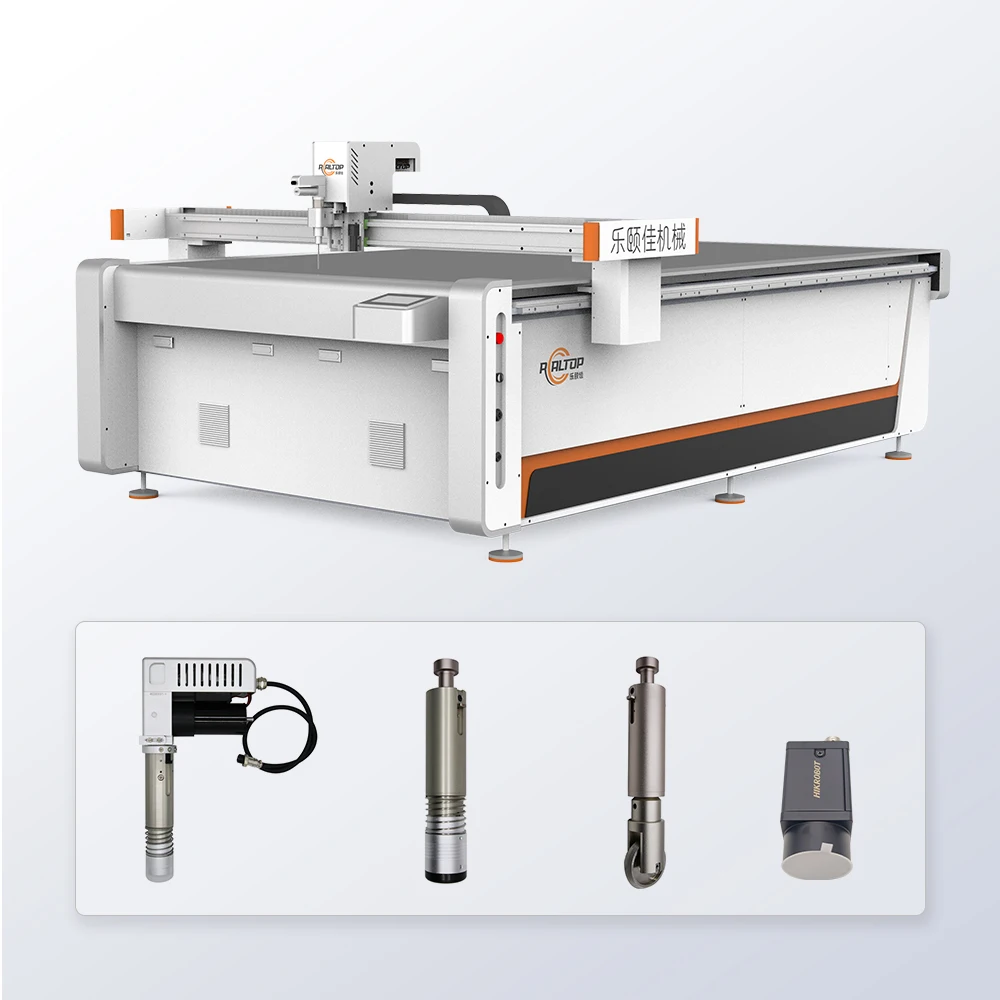
Custom Tool Head Configuration — Every oscillating knife, driven rotary knife and creasing wheel option is specified against your actual fabric or board sample before the frame is welded.
Technical Specifications
| Parameter | Value |
|---|---|
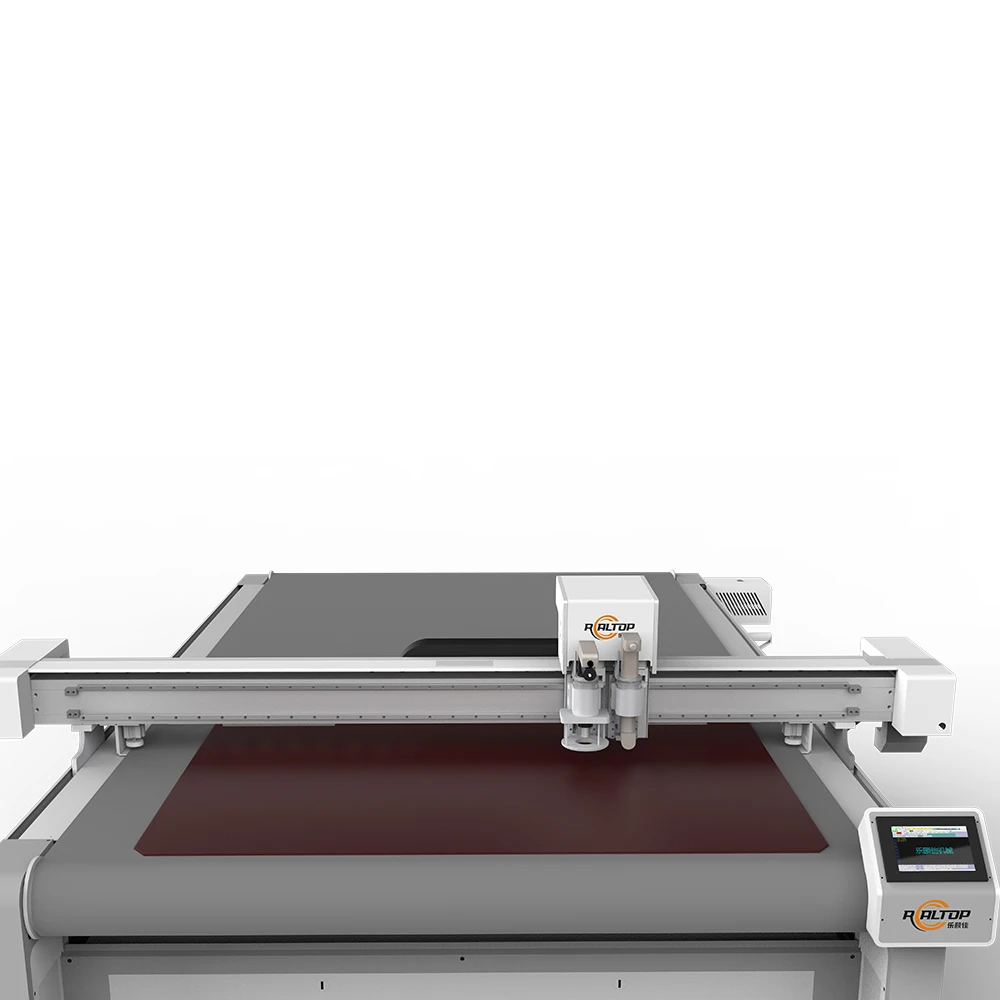
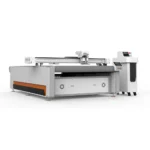
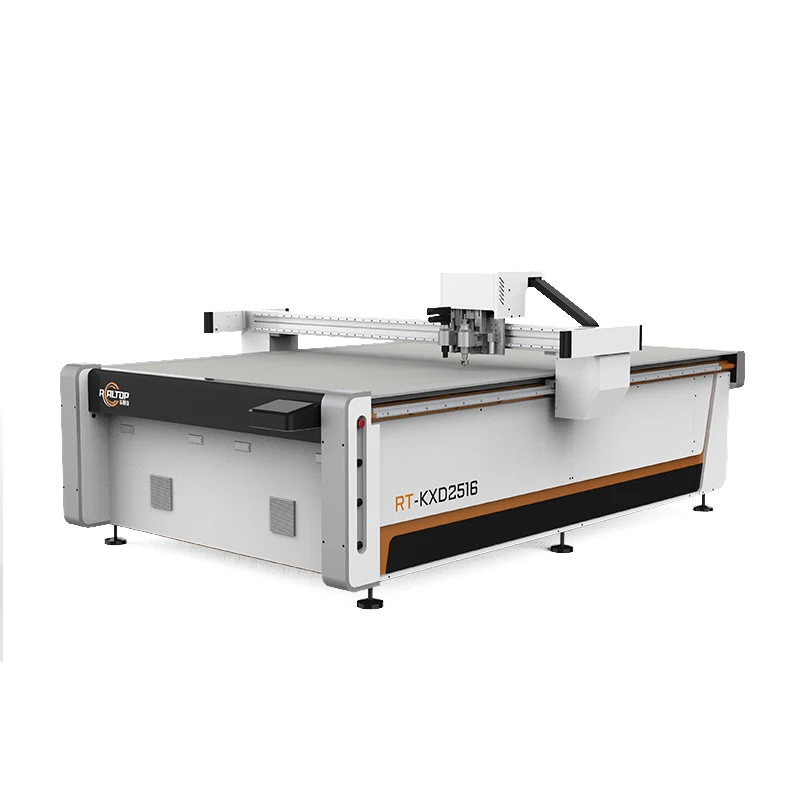
| Product Type | CNC Oscillating Knife Cutting Machine |
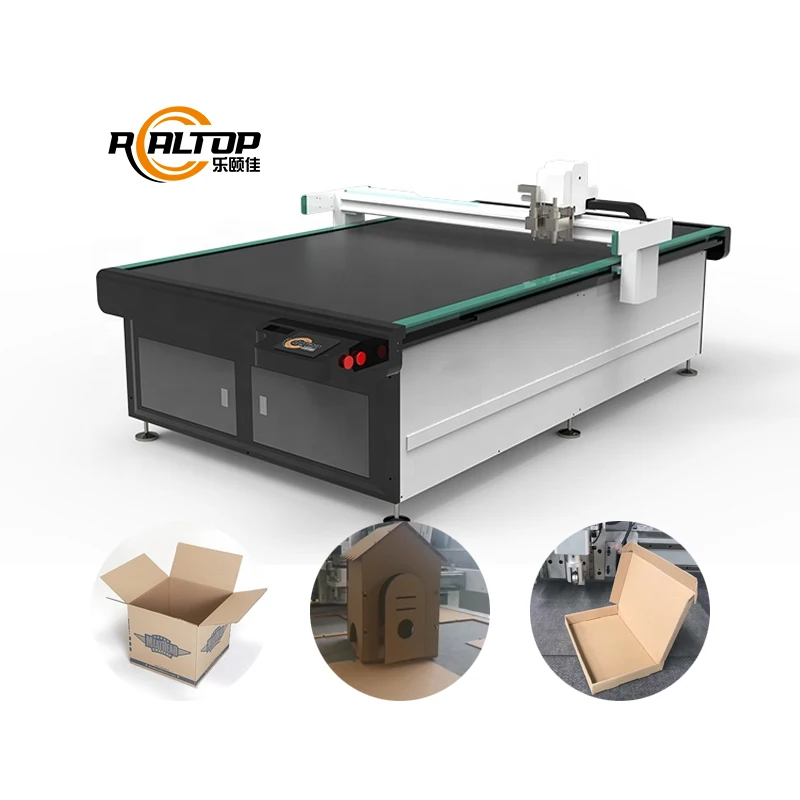
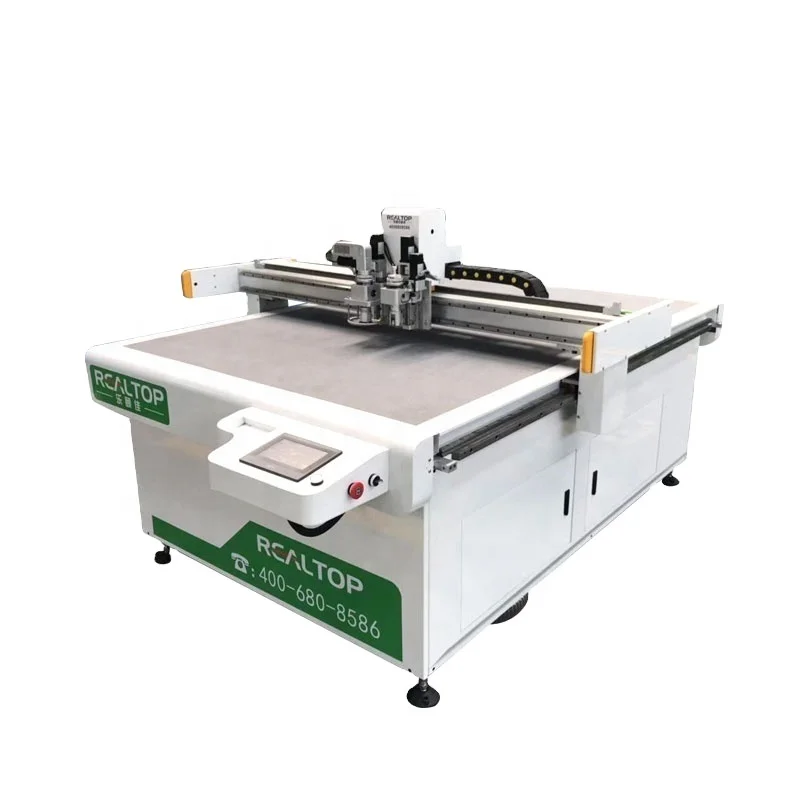
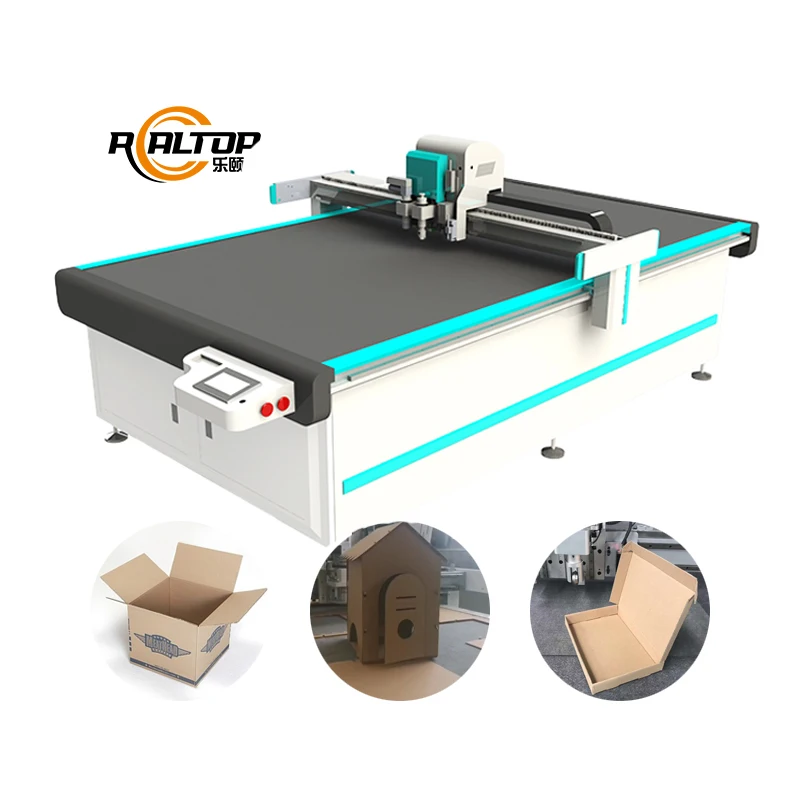
| Working Area | 1600 × 2500 mm |
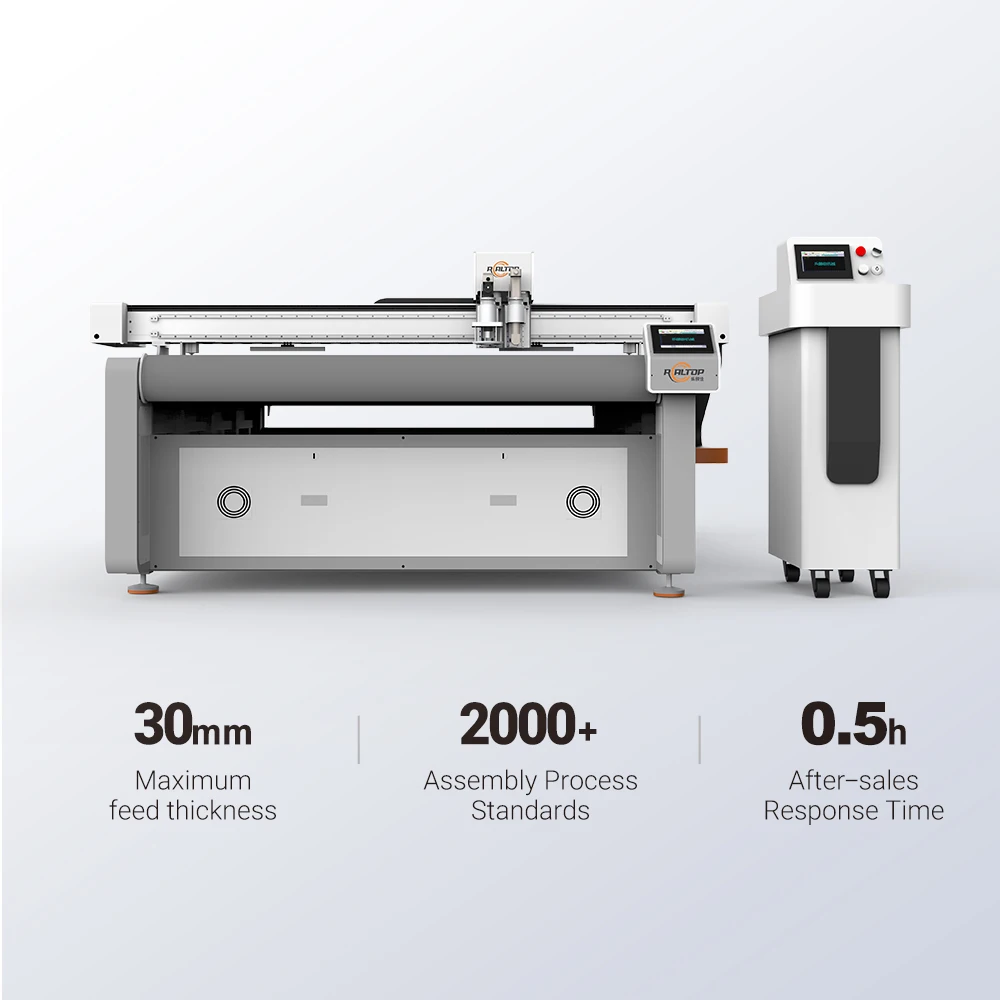
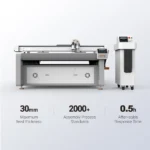
| Cutting Thickness | ≤ 40 mm |
| Cutting Speed | 0–1500 mm/s |
| Cutting Accuracy | ±0.1 mm |
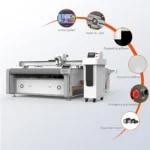
| Tool Options | Oscillating knife, Driven rotary knife, Creasing wheel, Kiss cutting tool, Pneumatic knife, Milling tool, V groove knife, CCD camera |
| Vacuum Pump | 9 kW |
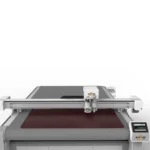
| Vacuum Table | Aluminum bellows vacuum table |
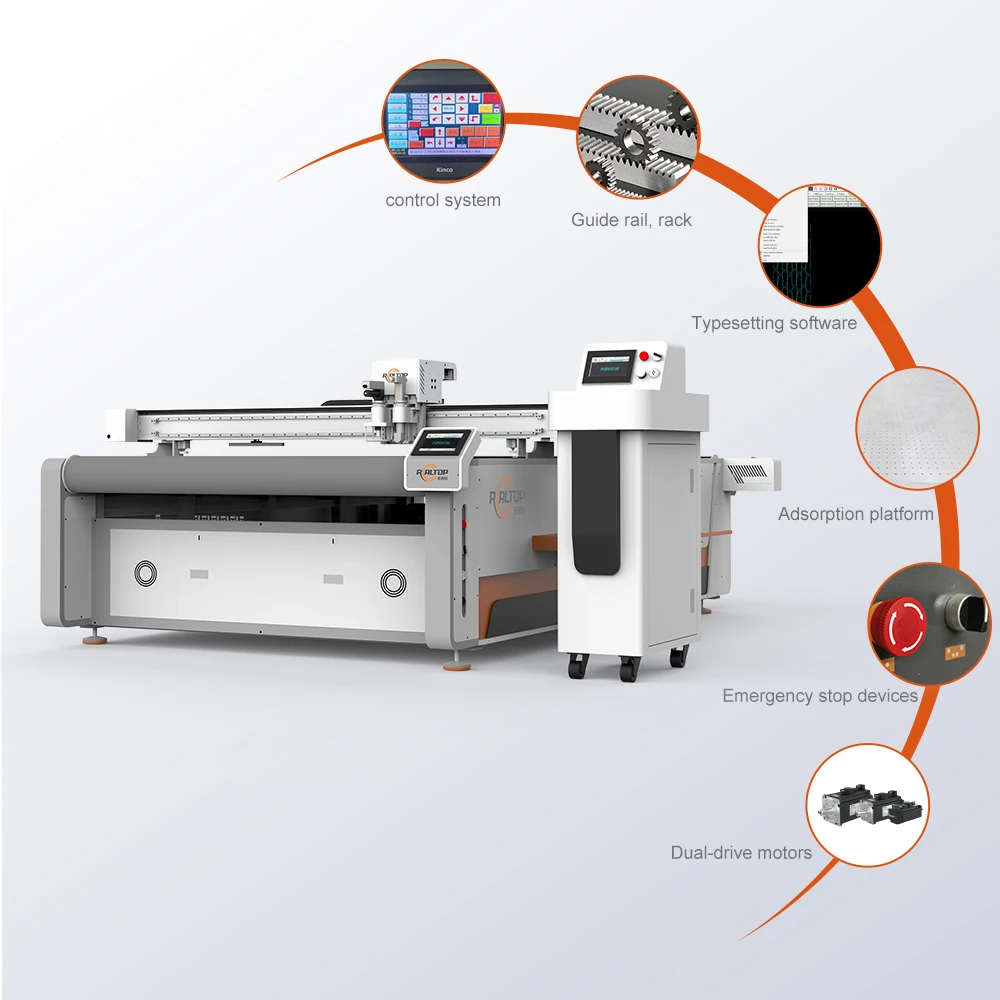
| Control System | PLC control panel |
| Voltage Options | 110V, 220V, 380V |
| Servo Motor Options | Panasonic, Delta, Dorna |
| Software Language Options | English, Russian, Italian, Chinese (special languages customizable) |
| Profile Formats | PLT, DXF, AI, PDF |
| Safety Devices | Infrared sensor device, emergency stop device |
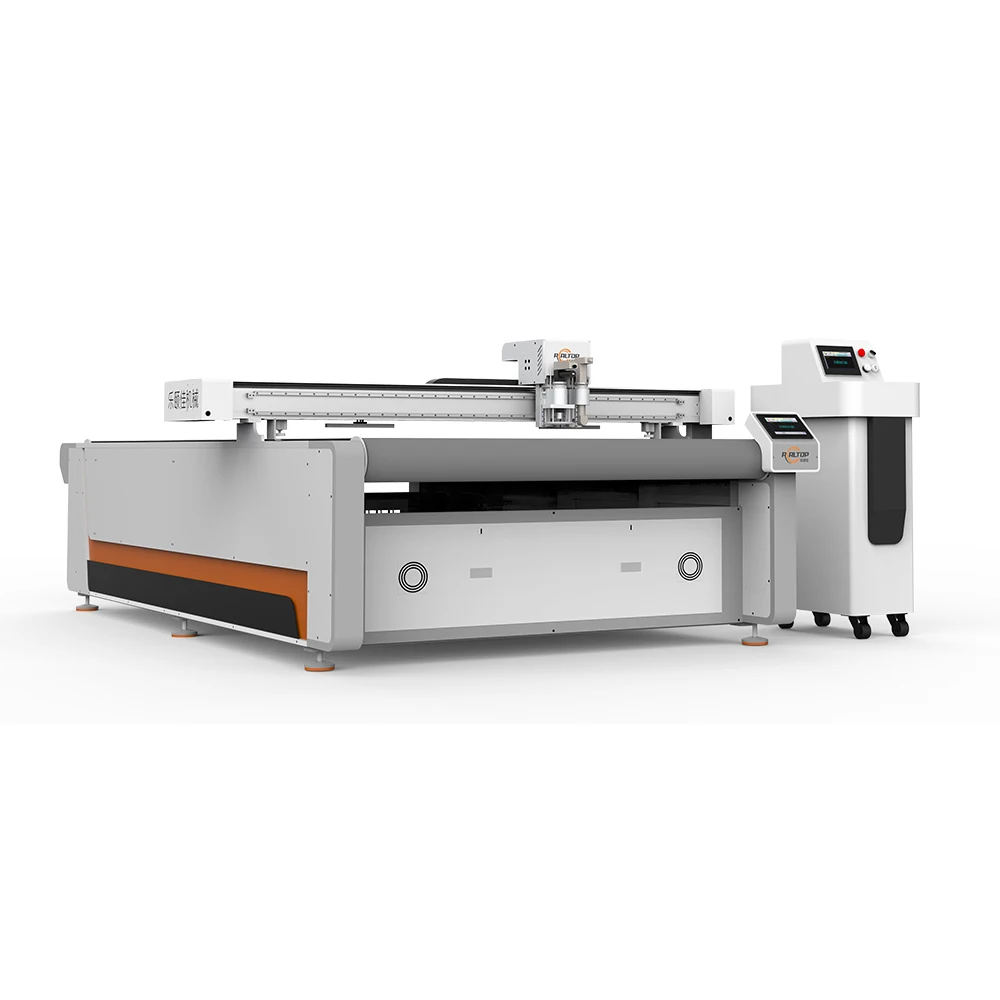
| Machine Size | 3300 × 2100 × 1350 mm |
| Assembly State | Fully assembled |
| Compliance | CE (declared in source) |
Application Suitability
| Application | Material or Output |
|---|---|
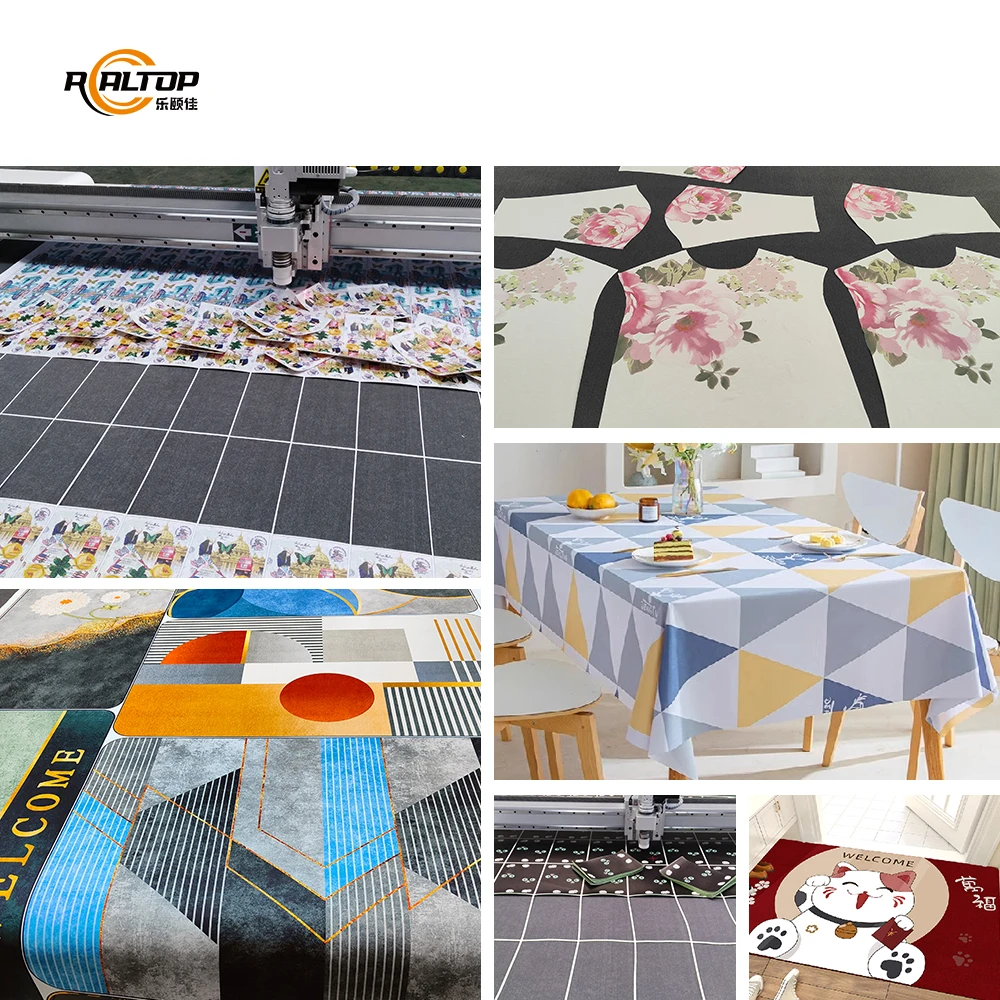
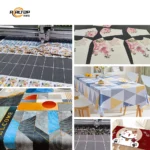
| Garment and footwear production | Multi-layer woven fabric, synthetic leather, technical textiles |
| Packaging and carton sample making | Corrugated board, greyboard, specialty paper without die-cut molds |
| Automotive interior and gasket cutting | Foam, rubber mats, composite sound-deadening materials |
| Advertising and signage finishing | PVC board, vinyl, self-adhesive film, acrylic |
| Composite and foam fabrication | EVA, PTFE, rubber sheets up to 40 mm thickness |
Why the Voltage Question Should Come Before the Price
A CNC oscillating knife cutting machine manufacturer that skips voltage confirmation is handing you a three-week delay before production even starts.
I supported a commissioning job a few years back where a textile buyer in West Africa received a machine configured for 380V three-phase, only to find the local mains supply fluctuated well beyond the VFD overvoltage threshold on the first power-up. The entire cutting line sat idle while a step-down transformer was sourced locally [NEED_CITE: voltage and frequency standards by export market]. That experience changed how I approach every build sheet: voltage, plug type and control language now sit at the top of the pre-assembly checklist, not as an afterthought on the packing list. A machine that cannot run on your workshop’s actual supply is not a cutting table — it is a very expensive storage unit.
Build Quality Starts at the Frame and Ends at the PLC
Every frame that leaves the shop floor is welded, stress-relieved and machined in-house. This matters because a cutting accuracy of ±0.1 mm across a 1600 × 2500 mm working area is only achievable when the gantry rails and rack-and-pinion drive sit on a bed that has been properly normalized. When the frame geometry drifts, no amount of servo tuning compensates for it at the cutting head.
Factory-Side Quality Control Before Dispatch
Before any machine is crated, it runs a continuous cutting cycle on material that matches the buyer’s specification. The vacuum table zoning is tested with the smallest part geometry the buyer plans to cut, because full-surface adsorption on a 1600 × 2500 mm bed means nothing if a 50 × 50 mm gasket lifts at 1200 mm/s [NEED_CITE: vacuum hold-down requirements for small-part CNC cutting]. Servo motor selection — Panasonic, Delta or Dorna — is matched to the inertia requirements of the specific tool head configuration, not picked from whichever is cheapest that quarter.
How Specs Translate to the Cutting Bed
The 9 kW vacuum pump paired with an aluminum bellows vacuum table is not a generic specification. Aluminum bellows construction delivers higher flatness across the full working area compared to standard PVC vacuum beds, which is critical when cutting multi-layer fabric stacks where any surface deviation creates cumulative positioning error. The PLC control panel drives the oscillating knife at up to 1500 mm/s, but real cutting speed depends on material density — a 40 mm EVA foam block requires a slower feed rate than a single layer of woven cotton to maintain edge quality. The CCD camera option tracks printed contour marks for die-less packaging sample work, eliminating the need for physical dies on short runs. File format compatibility covering PLT, DXF, AI and PDF means most existing nesting workflows carry over without conversion software.
What Happens When Configuration Is an Afterthought
A driven rotary knife specified for thick technical textiles will crush and drag through single-layer silk, leaving pulled threads along every cut line. Similarly, a vacuum table with insufficient zoning leaves small automotive gasket parts lifting off the bed mid-cut, forcing the operator to re-run the entire sheet. These are not warranty issues — they are specification failures that surface only after the machine is installed and the production clock is ticking [NEED_CITE: tool head and material compatibility in CNC digital cutting].
Why Buyers Source This Machine From Our Factory Floor
In-house design covers both knife and laser cutting, so the correct method is matched to the material rather than forcing fabric onto a laser bed or acrylic onto a knife table. Tool head and table configuration are documented per material type and thickness before production begins. Sample cutting on your own material is completed and reported before you commit to the order. Voltage, plug and control panel language are confirmed on the build sheet, not assumed. The machine ships fully assembled, reducing on-site commissioning from days to hours.
Documentation & Verification
- Factory test record running your specific fabric weight and ply count before dispatch
- Electrical schematic confirming voltage, frequency and plug type for your facility
- Tool head configuration list matched to each material on your production schedule
- Software licence and file format compatibility note for PLT, DXF, AI and PDF workflows
- Sample cutting report with edge quality photographs on your supplied material
Installation, Commissioning & Support
- Fully assembled delivery means no gantry alignment required on your shop floor
- 9 kW vacuum pump requires a dedicated circuit separate from the PLC control panel supply
- Machine footprint of 3300 × 2100 mm plus operator clearance dictates minimum bay allocation
- First-run parameter tuning covers oscillating knife frequency and vacuum zone mapping
- Operator training includes tool head changeover between oscillating knife and creasing wheel
- Spare parts list covers knife blades, CCD lens covers and vacuum table seals
Starting the Specification Conversation
Provide your material type, maximum thickness, sheet dimensions and daily cutting volume so the correct tool head and vacuum zoning can be specified. Confirm your facility voltage and frequency, along with your preferred control panel language, before the electrical cabinet is wired. If you have an existing nesting workflow, share a sample file so format compatibility is verified before shipment.
Frequently Asked Questions
Q: How is the correct tool head selected for my specific material and thickness?
A: The tool head — oscillating knife, driven rotary knife, creasing wheel or another option from the eight available — is chosen after a sample cutting test on your actual material. Thickness up to 40 mm and material density determine which tool produces a clean edge without crushing or fraying.
Q: Can the CCD camera track printed contour marks at full production speed?
A: The CCD camera option is calibrated to track printed registration marks during contour cutting. Tracking reliability at higher speeds depends on mark contrast and size, which is verified during the sample cutting phase before the machine configuration is finalized.
Q: What voltage, plug type and control language are confirmed before shipment?
A: Voltage is selected from 110V, 220V or 380V options and confirmed on the electrical schematic before assembly. Plug type matches your local standard, and the PLC control panel language — from English, Russian, Italian, Chinese or a custom language — is set before the cabinet is closed.
Q: How do I verify vacuum table zoning is sufficient for my small-part cutting jobs?
A: The aluminum bellows vacuum table is tested with your smallest part geometry during the factory sample run. If parts lift during cutting, the zone layout is adjusted and retested before the machine is approved for dispatch.
Q: What file formats and nesting software workflows are compatible with the machine?
A: The control system accepts PLT, DXF, AI and PDF profile formats directly. If your existing nesting software exports in one of these formats, compatibility is verified with a test file before the machine ships.
You may also like

商品评价
Clear filtersThere are no reviews yet.