


-
 Courier delivery
-
 DHL Courier delivery
-
 Warranty 1 year
-
 Free 30-Day returns

Configuration Flexibility — Tool head and table setup matched to your specific fabric composite and production volume before order.
Technical Specifications
| Parameter | Value |
|---|---|
| Model | RT-D2516 / RT-S2516 |
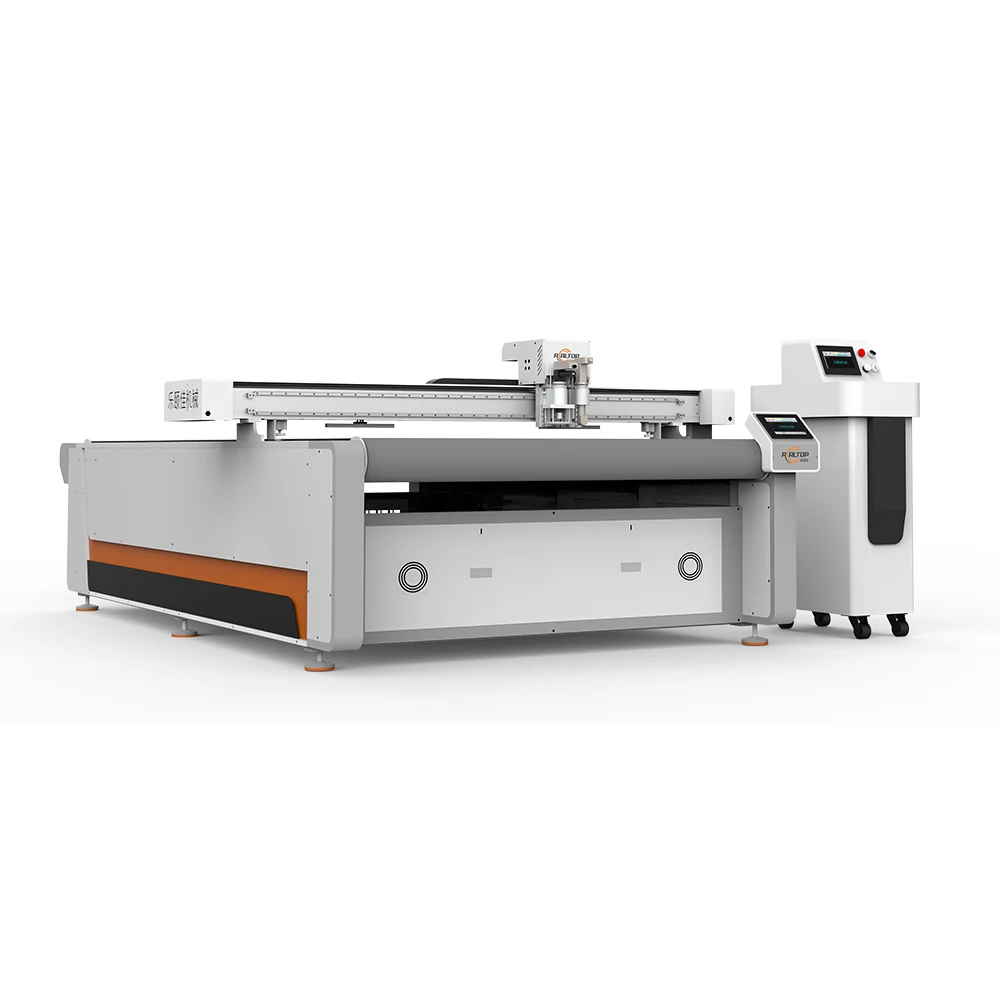
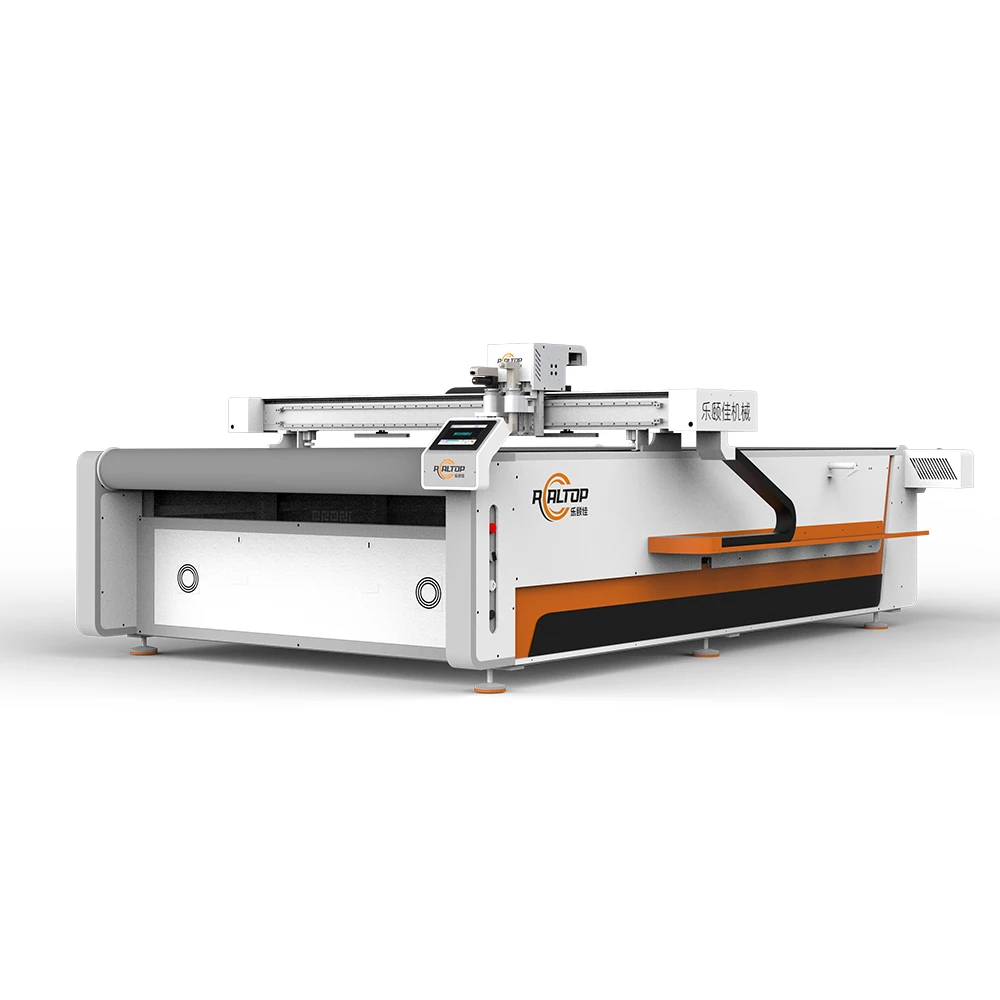
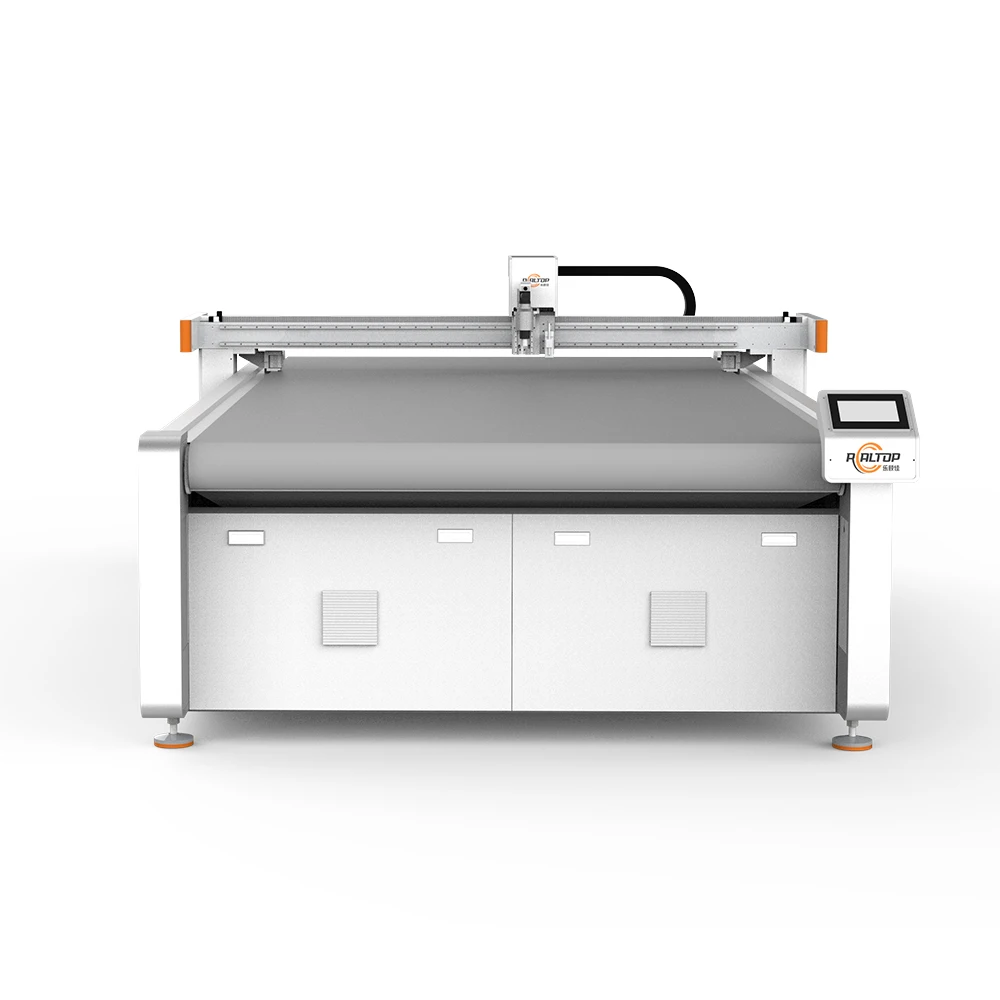
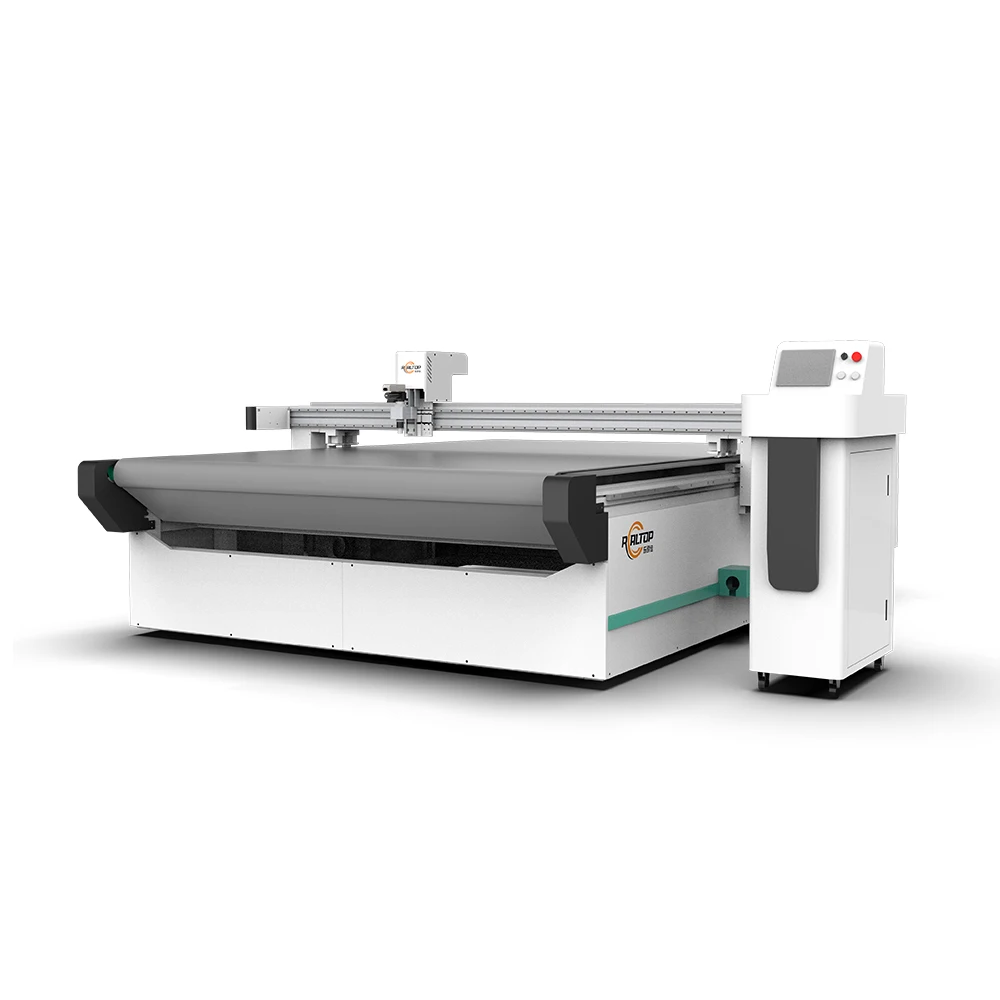
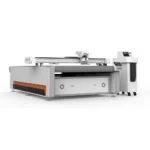
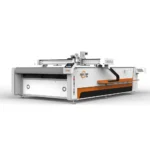
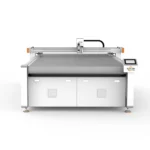
| Product Type | CNC Oscillating Knife Cutting Machine |
| Working Area | 1600 × 2500 mm |
| Machine Size | 3450 × 2300 × 1250 mm |
| Rated Power | 9 kW |
| Vacuum Pump Power | 7.5 kW |
| Table Type | Flat working table / Auto feeding table (configurable) |
| Cutting Speed | 200 – 800 mm/s (varies by material density and ply count) |
| Translational Velocity | 800 – 2000 mm/s |
| Repeated Accuracy | ≤ 0.1 mm |
| Cutting Thickness | Up to 100 mm (source value — verify against manufacturer catalog for specific textile) |
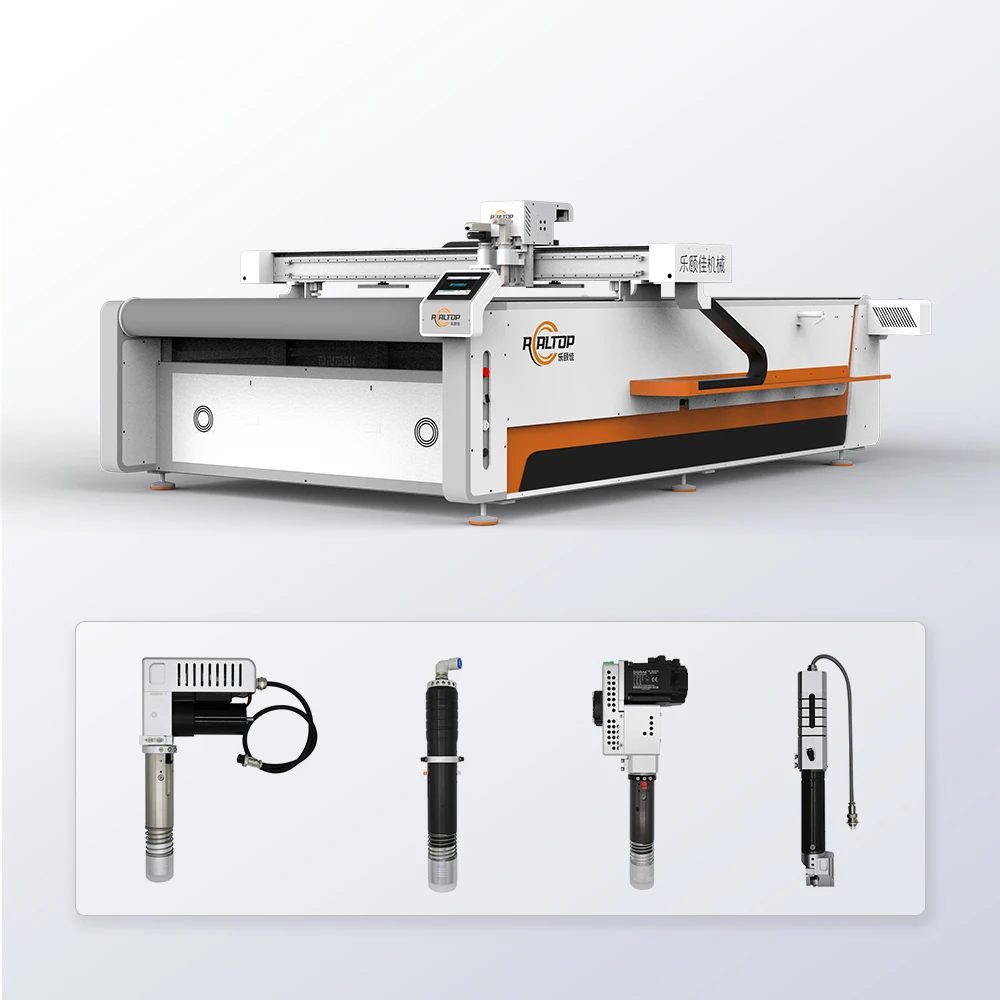
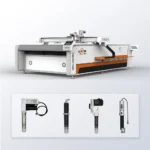
| Multifunctional Head | Swiss imported oscillating knife with full cut, half cut, and cursor location |
| Transmission System | Digital servo motor, linear guide, synchronous belt, ball screw |
| Servo Motor | Delta (Panasonic optional) |
| Linear Guide | Taiwan Hiwin rail |
| Conveyor Belt | Germany imported (on feeding table models) |
| Vacuum Table Surface | Magnesium-aluminum alloy with fluorocarbon PVDF coating, anodic and hard oxidation |
| Visual Positioning | Small CCD mark point / Panoramic camera recognition / Projection positioning |
| Instruction System | HP-GL compatible format |
| Control Panel | Touch screen, multi-language support |
| Software Formats | PLT, DXF, AI |
| Voltage | 380 V ± 10% |
| Safety Devices | Infrared sensors, anti-collision, emergency stop |
Application Suitability
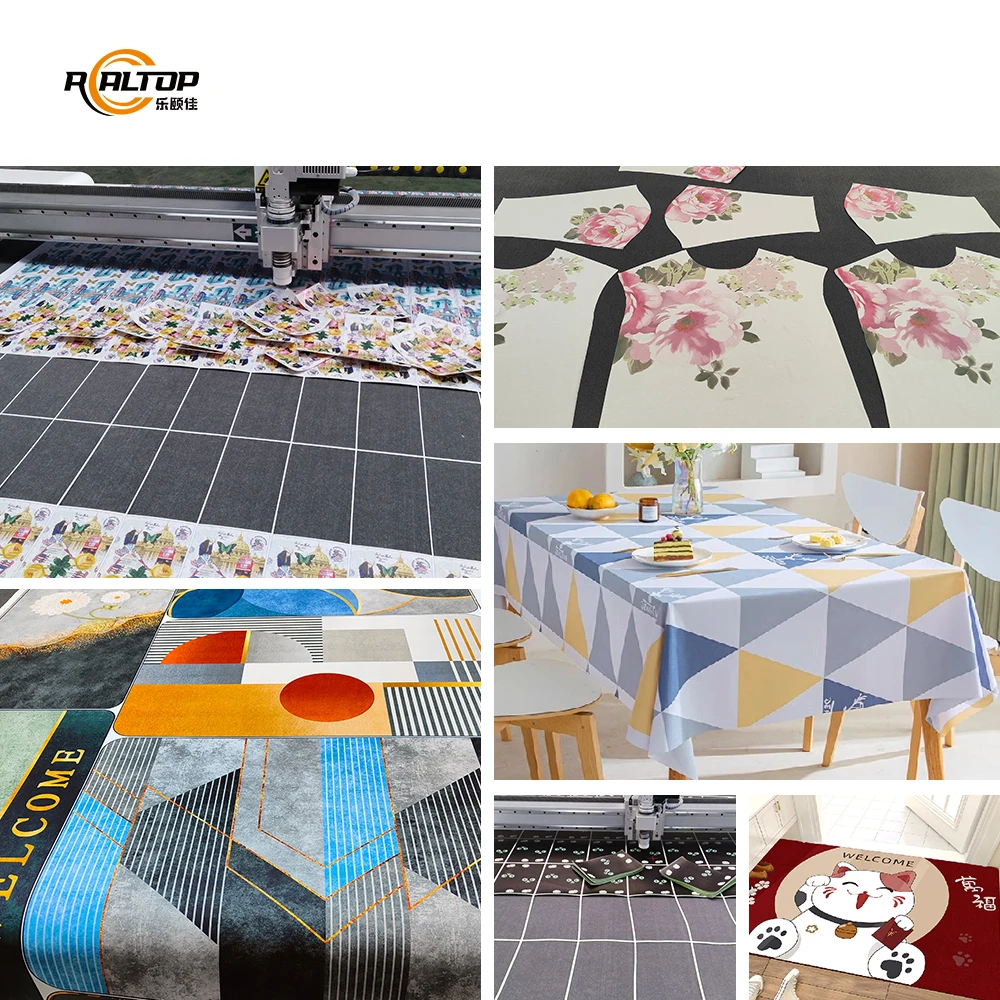
| Application | Material or Output |
|---|---|
| Medical and protective apparel | AAMI-level SMS non-woven, breathable film laminates, spunbond composites |
| Garment and sportswear production | Multi-layer woven fabric, knitted textile, technical mesh |
| Footwear and bag manufacturing | Natural leather, PU synthetic, sponge composite leather, luggage material |
| Automotive interior components | Car carpet, headliner fabric, sponge composite, gasket material |
| Soft furnishings and carpet | Home textile, non-woven felt, carpet, floor mat materials |
| Composite and technical textile | Carbon fiber prepreg, fiberglass cloth, PTFE, ETFE film |
Why Specifying a Cloth CNC Cutting Machine on Working Area Alone Fails
The cutting method, tool head, and vacuum configuration must be locked to the material before the order is placed.
I have watched buyers receive a machine that handles standard SMS non-woven perfectly, only to find the same oscillating knife delaminates the breathable membrane in an AAMI Level 3 gown composite [NEED_CITE: textile composite structure and cutting behavior]. The machine footprint looked right on paper, but the tool head angle and down-stroke pressure were tuned for a different substrate. When a CNC oscillating knife cutting machine manufacturer ships without a sample test on the buyer’s actual roll stock, the first week of production becomes a trial-and-error exercise on the factory floor instead of a controlled commissioning. This machine series addresses that gap by specifying the oscillating knife profile, blade angle, vacuum zoning, and conveyor tension around the exact fabric weight and ply count you intend to run.
Frame Build and Motion Components
The RT-D2516 and RT-S2516 use a thick-walled seamless steel welded frame that goes through high-temperature tempering and CNC machining center finishing. This process relieves welding stress and establishes a flat reference plane for the linear guides. A stable frame matters most when the cutting head accelerates across a 2500 mm stroke — any torsion in the base translates directly into contour drift on nested pattern pieces.
Knife Head and Tooling Logic
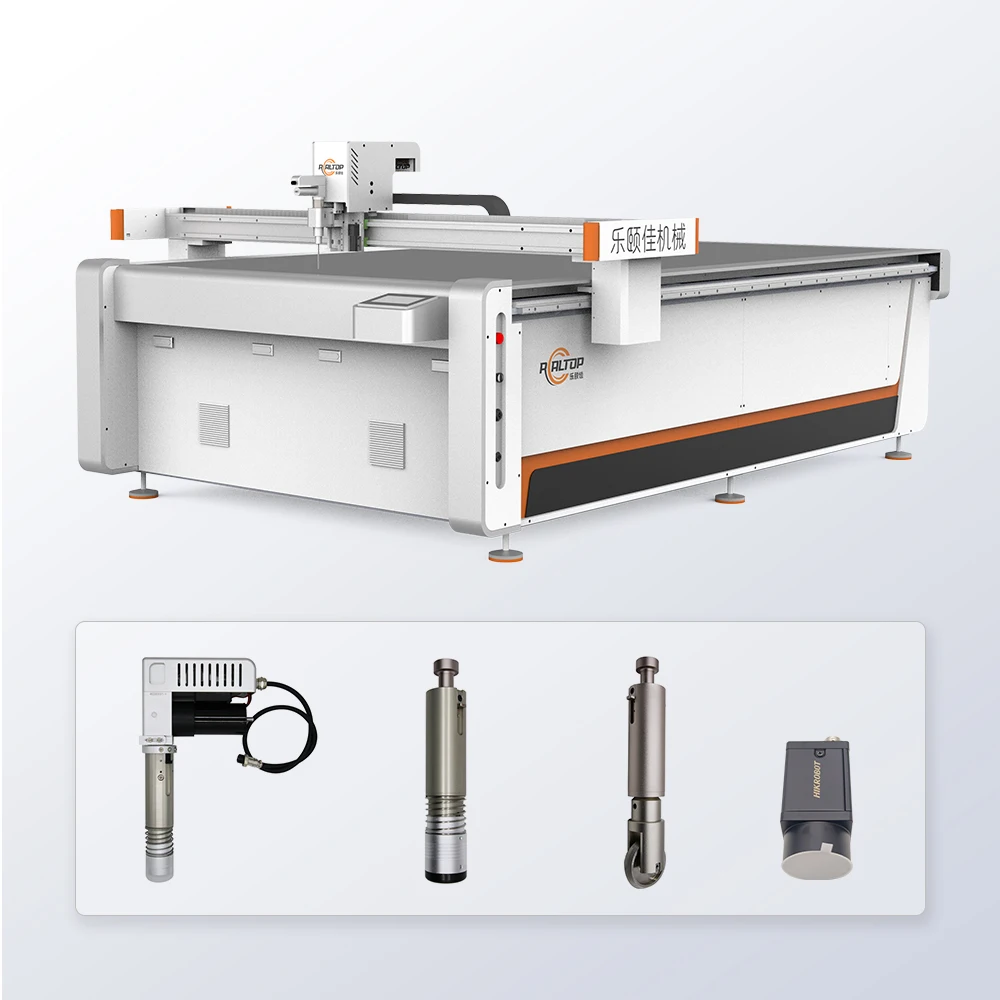
The Swiss imported oscillating knife head supports full cutting, half cutting, and cursor location in one tool station. Full cutting handles multi-layer fabric stacks and dense composites, while half cutting scores kiss-cut patterns on sticker and film without penetrating the backing. Tool head selection is not generic; blade angle and oscillation frequency are matched to the material being processed, so a buyer cutting 3 mm sponge composite leather runs a different setup than one cutting single-ply PTFE film [NEED_CITE: oscillating knife tooling parameters by material].
Reading the Spec Sheet Against Real Production
The 1600 × 2500 mm working area accommodates standard fabric roll widths and allows full garment marker layouts with minimal repositioning. Cutting speed ranges from 200 to 800 mm/s depending on material resistance — dense rubber gasket stock runs at the lower end, while woven garment textile runs higher. The Taiwan Hiwin linear rails and Delta servo motors maintain the ≤ 0.1 mm repeated accuracy across the full table travel. The magnesium-aluminum vacuum table with PVDF fluorocarbon coating provides uniform hold-down without surface abrasion on delicate non-wovens, and the 7.5 kW vacuum pump generates enough suction to keep small pattern pieces flat during high-speed contour cuts.
The Cost of a Mismatched Tool Head
Choosing the wrong oscillating knife profile for a laminated fabric produces visible consequences within the first few cuts. Membrane layers wrinkle and separate from the base textile, leaving ragged edges that fail visual inspection on protective garments. On sponge composite leather, insufficient blade angle crushes the foam core rather than shearing it, and the deformed edge cannot be recovered by downstream sewing. A buyer who skipped sample testing discovers these problems only after the machine is installed, when changing blade geometry and recalibrating vacuum zoning consumes production time that was already committed to customer orders [NEED_CITE: knife cutting edge quality on composite materials].
Why Procurement Decisions Land Here
The design and production of both knife and laser cutting equipment happens in-house, so a buyer can compare cutting methods against the same material sample rather than being forced into one technology. The core factory controls frame welding, tempering, and CNC finishing, meaning build quality is verified internally rather than outsourced to a welding subcontractor. Every configuration — from servo motor brand to control panel language — is confirmed against the buyer’s target market electrical standard before production starts. Sample cutting on the buyer’s actual roll stock is standard procedure, generating a test report that documents blade angle, cutting speed, and edge quality on the specific material. OEM branding and documentation customization are available for distributors who need factory-direct machines under their own identity.
Documentation & Verification
- Machine specification sheet listing confirmed tool head, vacuum table type, and voltage
- Sample cutting report on buyer’s own fabric or composite material before commitment
- Electrical schematic showing wiring, component ratings, and confirmed plug type
- Factory test record documenting cutting accuracy and vacuum hold-down performance
- Software license note confirming PLT, DXF, and AI file format compatibility
- Packing photographs showing machine condition and crate sealing before dispatch
Installation, Commissioning & Support
- Floor must support 3450 × 2300 mm footprint with level tolerance for linear guide alignment
- Dedicated 380 V ± 10% circuit with correct breaker rating for 9 kW total machine load
- Machine ships in sections; vacuum table and frame require on-site assembly and leveling
- First-power commissioning includes servo tuning, vacuum zoning check, and test cut on installed material
- Touch screen configured in buyer’s language with HP-GL file import workflow verified
- Swiss knife blade and Germany conveyor belt listed as consumables with reorder part numbers
Starting the Conversation
Send the material data sheet for the fabric or composite you intend to cut, including layer count, total thickness, and roll width. Confirm the local voltage and frequency at your facility so the electrical package can be specified correctly. If you have existing DXF or AI pattern files, share a sample so software compatibility and nesting workflow can be verified before quotation.
Frequently Asked Questions
Q: How is the machine frame built to maintain accuracy over years of high-speed cutting?
A: The frame uses thick-walled seamless steel tube welding followed by high-temperature tempering to relieve internal stress. All mounting surfaces for the Taiwan Hiwin linear guides are finished on a CNC machining center, establishing a single flat reference plane that prevents contour drift as the head traverses the full 2500 mm stroke.
Q: What OEM customization is available for export to different electrical markets?
A: Voltage, frequency, plug type, and control panel language are confirmed against your local standard before production begins. The 380 V ± 10% baseline is adjustable for markets with different industrial supply, and all electrical schematics are provided in the buyer’s required documentation format.
Q: How do you confirm the oscillating knife setup matches my specific material?
A: We request a sample roll or swatch of your actual production material and run test cuts at our facility. The sample cutting report documents the blade angle, oscillation frequency, cutting speed, and resulting edge quality, so the tool head configuration is locked before the machine ships.
Q: Can I send my own fabric for sample cutting before placing the order?
A: Yes. Sample cutting on the buyer’s own material is a standard step in our sales process. You send representative fabric or composite samples, and we return a test report showing cut quality, edge finish, and recommended machine parameters for your specific substrate.
Q: What factory testing is performed before the machine leaves the production floor?
A: Each unit undergoes a full factory test covering dimensional accuracy across the working area, vacuum hold-down performance on the magnesium-aluminum table, servo response and positioning repeatability, and a production-speed cutting run on the buyer’s specified material before crating.
You may also like

商品评价
Clear filtersThere are no reviews yet.