





-
 Courier delivery
-
 DHL Courier delivery
-
 Warranty 1 year
-
 Free 30-Day returns

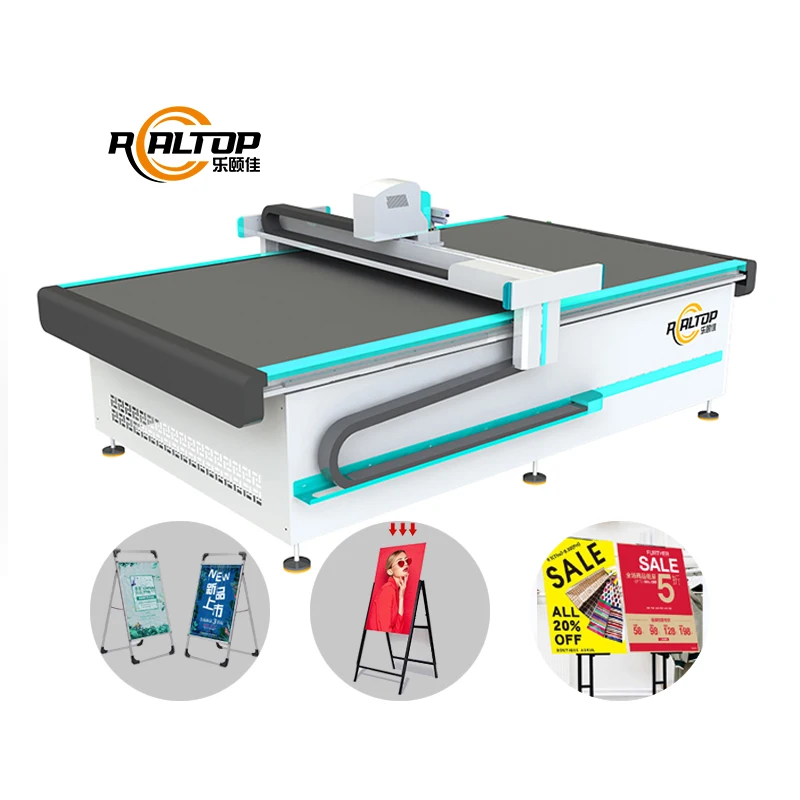
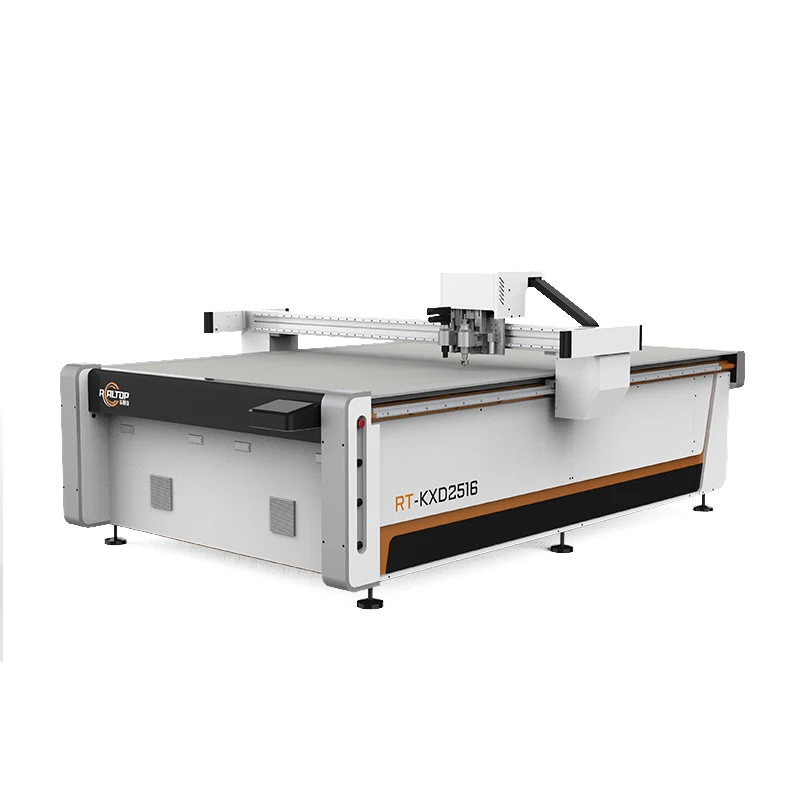
In-house knife and table engineering — Every RT-D2516/RT-S2516 leaves the Jinan facility with its oscillating knife head, vacuum zoning layout and CCD option matched to the buyer’s sample material, not pulled from a generic catalogue.
Technical Specifications
| Parameter | Value |
|---|---|
| Product Type | CNC Oscillating Knife Cutting Machine |
| Model | RT-D2516 / RT-S2516 |
| Working Area | 1600 × 2500 mm |
| Machine Footprint (L × W × H) | 3450 × 2300 × 1250 mm |
| Rated Power | 9 kW |
| Voltage | 380 V ±10 % (50/60 Hz to be confirmed per destination market) |
| Translational Velocity | 800 – 1200 mm/s |
| Cutting Thickness Range | 20 – 80 mm (up to 100 mm depending on material density and tool selection) |
| Repeated Positioning Accuracy | ≤ 0.1 mm |
| Working Table | Flat vacuum adsorption table, magnesium-aluminum alloy with PVDF powder coating and anodized finish |
| Vacuum Pump | 7.5 kW integrated unit, aviation aluminum shell with built-in silencer sponge |
| Servo Motors | Delta digital servo (Panasonic optional), IP67 rated |
| Guide Rails | Taiwan Hiwin linear guides |
| Conveyor Belt | Germany-sourced belt material |
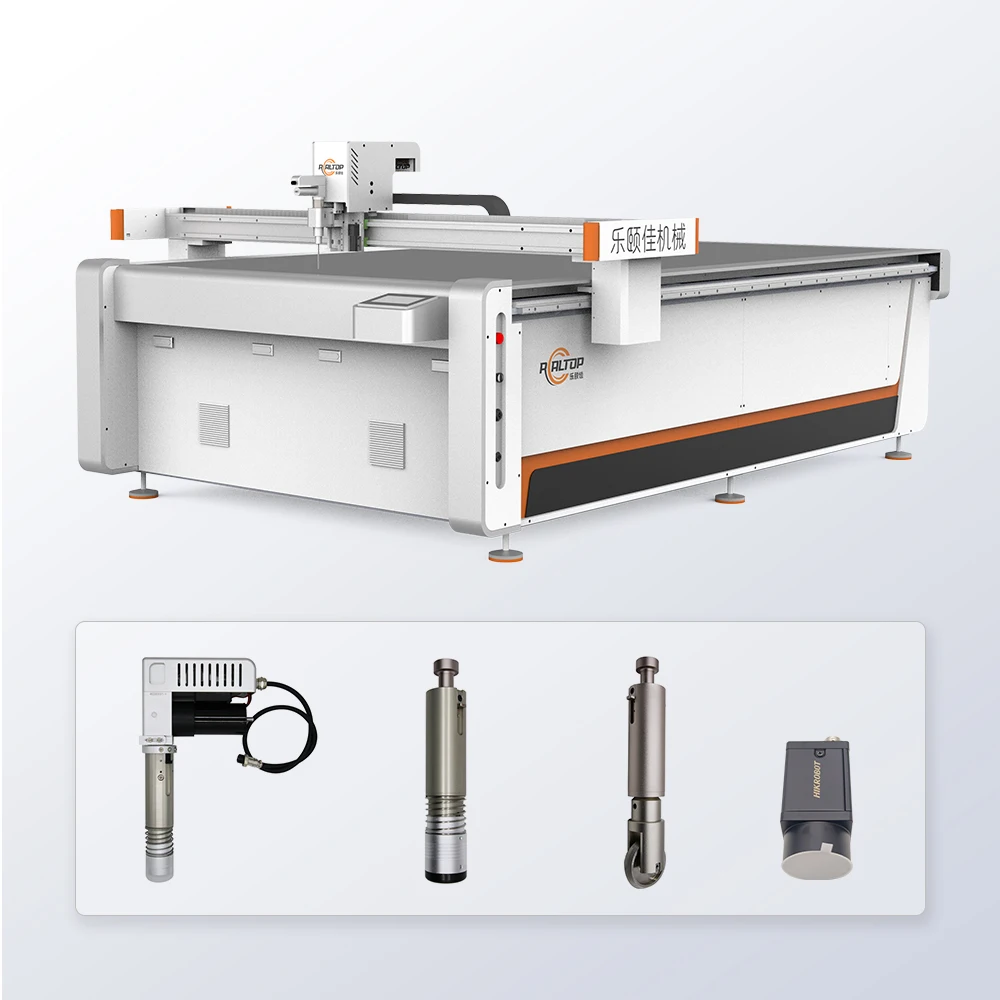
| Tool Head Options | Oscillating knife, pneumatic knife, high-power vibrating knife, circular knife, V-cutting knife, drag knife, creasing wheel, dotted-line knife, punching tool, brush |
| Multifunctional Head | Swiss-imported knife with vibration full-cut, half-cut and cursor location |
| Visual Positioning Options | Small CCD mark-point positioning, panoramic camera recognition, projection positioning |
| Safety Devices | Infrared induction blocking, dual-side beam anti-collision sensors, emergency stop |
| Instruction Format | HP-GL compatible |
| Language Options | English, Russian, Italian, Chinese (special languages available on request) |
| Certification | CE declaration where applicable |
Application Suitability
| Application | Material or Output |
|---|---|
| Automotive floor mats and carpets | PVC-backed carpet, XPE foam, sponge-rubber composites, fiberglass-reinforced sound deadening felt |
| Door panel inserts and headliners | PU foam sheets, non-woven textile laminates, EVA composite boards |
| Seating foam contouring | High-density PU foam blocks, multi-layer bonded cushion stock |
| Gaskets and sealing pads | Rubber sheet, PTFE, ETFE, compressed fiber gasket material |
| Leather and luggage panels | Full-grain and split leather, synthetic PU leather, woven luggage fabric |
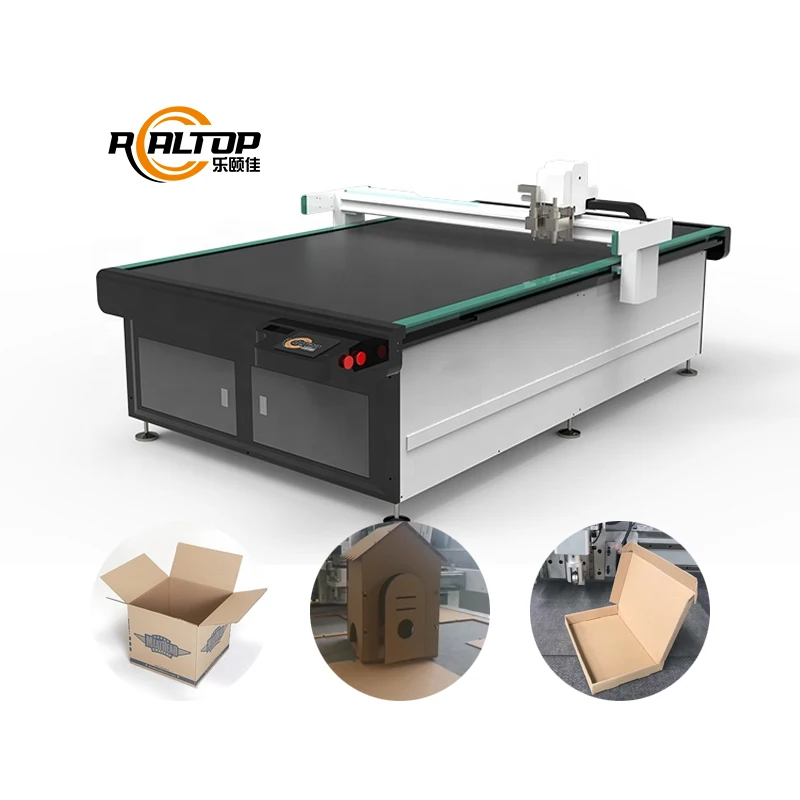
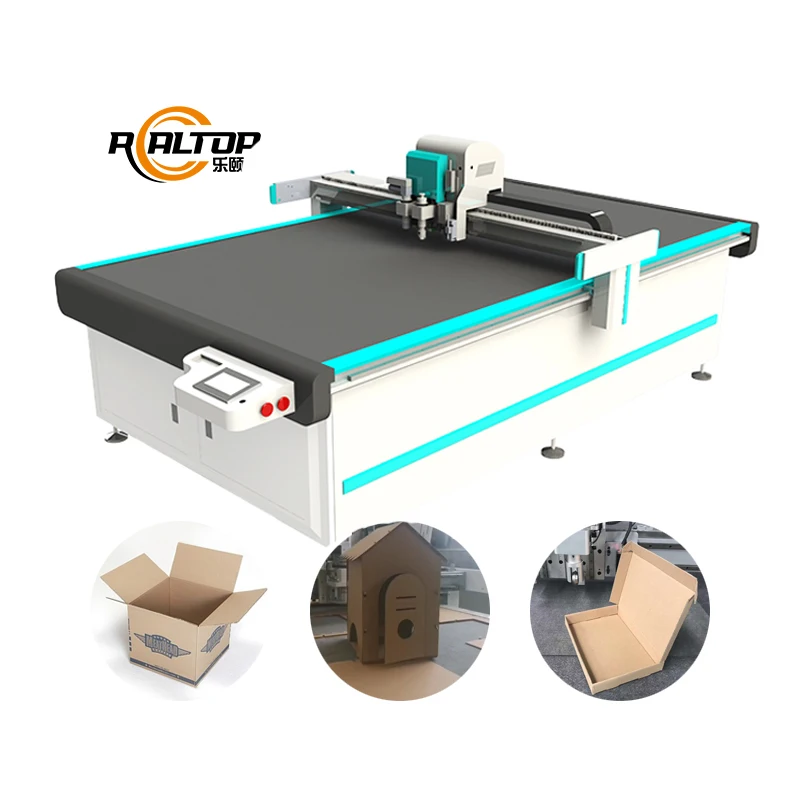
| Packaging sample making | Corrugated cardboard, folding carton board, foam board, plastic box stock |
When Material Thickness Beats the Spec Sheet
Automotive interior cutting often fails not because the machine is undersized, but because the tool head was chosen against a data-sheet thickness rather than the actual composite layup. A floor mat that reads 6 mm on paper can carry a fiberglass scrim or a high-density sound-deadening backing that destroys a standard oscillating blade within hours. Matching the knife type, oscillation frequency and vacuum zoning to the real layup is the only way to hold edge quality across a production run. I have watched automotive carpet lines go down for days after a tool head that handled plain PVC choked on a glass-fiber reinforced barrier layer [NEED_CITE: composite layup variability in automotive interior materials]. This CNC oscillating knife cutting machine manufacturer addresses that gap by running sample cuts on buyer-supplied material before any configuration is locked in.
Knife Head Selection Against Real Composite Layups
The tool head roster on the RT-D2516/RT-S2516 spans oscillating, pneumatic, V-cutting, drag and circular knives, plus punching and creasing tools. Automotive carpet with a dense rubber backing typically calls for a high-power vibrating knife at reduced stroke frequency to avoid delamination, while thin non-woven headliner fabric suits a standard oscillating blade at full speed. The Swiss-imported multifunctional head adds half-cut and cursor-location capability for kiss-cut applications on laminated door panel skins. Specifying the right tool is a conversation that starts with the buyer’s actual material stack, not a generic chart.
Vacuum Zoning and Small-Part Hold-Down
The magnesium-aluminum alloy table uses PVDF-coated, anodized zones fed by a 7.5 kW vacuum pump. When cutting nested sets of small gasket pieces or complex floor mat geometries, insufficient zoning lets parts lift at the trailing edge of the cut path, producing ragged exits and forcing re-cuts [NEED_CITE: vacuum hold-down requirements for small flexible parts]. Zone layout on the RT-D2516/RT-S2516 is configured during order review so that suction distribution matches the buyer’s typical nesting pattern, whether the run is large single-piece carpets or tightly nested seal profiles.
Reading the Drive Train and Frame Numbers
The repeated positioning accuracy of ≤ 0.1 mm rests on Taiwan Hiwin linear guides paired with Delta digital servo motors, with Panasonic servos available as an option. IP67-rated servo protection keeps the motors functional despite the fine particulate that automotive foam and carpet cutting generates. The translational velocity range of 800 – 1200 mm/s governs non-cutting moves; actual cutting speed depends on material density and knife choice. The frame is welded steel, stress-relieved by high-temperature tempering and finished on a CNC machining center — a sequence that maintains flatness across the 1600 × 2500 mm working area through years of cyclic loading.
The Cost of Skipping the Sample Cut
Sending a material sample takes a week and a courier fee. Skipping it can cost a production line several days of unplanned downtime, a batch of scrapped tool heads, and missed delivery deadlines to the vehicle assembly plant [NEED_CITE: production downtime costs in automotive supply chains]. When the wrong vacuum zone layout meets a small, stiff gasket part, the piece lifts mid-cut, the blade snags, and the edge tears — a defect that may not surface until the customer’s quality audit. These are not warranty claims the machine builder can resolve remotely; they are configuration errors caught only by cutting the real stock.
Why Buyers Source This Machine From the Core Factory
In-house design covers both the knife-cutting head mechanics and the machine frame, meaning tool configuration and structural rigidity are developed together rather than bolted on after the fact. The CCD and panoramic camera options are integrated at the design stage, not retrofitted, so contour tracking keeps pace with production speed on printed automotive textiles. Voltage, plug type and control language are confirmed per destination country before the build starts. Every machine goes through a factory test using the buyer’s material, producing a documented cutting report before crating. OEM configurations — including custom table sizes, specialized tool heads and language-specific HMI — are handled within the same production line, not outsourced.
Documentation & Verification
- Factory test record showing repeated accuracy and vacuum suction measured on buyer’s automotive interior material
- Electrical schematic with confirmed voltage, frequency and plug type for destination country
- Tool head and vacuum zone configuration list tied to the buyer’s material stack
- Sample cutting report documenting edge quality, cycle time and blade wear on supplied stock
- Software licence and HP-GL file format compatibility note matching buyer’s nesting workflow
- Spare parts list with lead times for consumable blades, vacuum seals and guide blocks
Installation, Commissioning & Support
- 3450 × 2300 mm footprint requires a level concrete floor with clearance for material feed and off-cuts on all sides
- 9 kW rated power plus 7.5 kW vacuum pump need a dedicated 380 V circuit with confirmed frequency
- Machine ships fully assembled; rigging plan must account for the 1600 × 2500 mm table width at doorway entry
- First-run parameter setting includes vacuum zone balancing, servo tuning and CCD calibration on buyer’s printed stock
- Operator training covers tool head changeover, nesting file import and daily guide-rail cleaning
- One-year parts warranty with consumable blade and vacuum seal recommendations for automotive composite materials
Before You Send the Drawing
Start with the material data: layup composition, total thickness, maximum sheet size and the daily volume you need to sustain. Confirm the local voltage and frequency, the control language your operators read, and whether your existing nesting software outputs HP-GL. If the stock includes printed contour marks, specify the mark geometry so the camera option can be validated before the build. Sample cutting on your actual material is the final gate — once that report is signed off, the build configuration is locked.
Frequently Asked Questions
Q: How is the tool head matched to my specific automotive interior material?
A: We run a sample cut on your actual stock — whether that is fiberglass-reinforced sound deadening felt, multi-layer carpet or PU foam — and document edge quality, blade wear and cycle time. The tool head, oscillation frequency and knife type are then specified from that result, not from a generic material chart.
Q: Can the CCD camera track printed contour marks at full production speed?
A: The CCD and panoramic camera options are integrated into the motion control at the design stage, allowing mark-point recognition during continuous cutting passes. Camera selection is validated during the sample-cut phase on your printed textile or laminated material to confirm tracking reliability before the machine is built.
Q: What voltage, plug and language details are locked in before shipment?
A: Voltage, frequency, plug type and HMI language are confirmed in writing during the specification review. The electrical schematic is issued to the buyer for sign-off before production begins, ensuring the machine matches the destination country’s supply standards without field modification.
Q: How do I confirm vacuum zoning handles my mix of small and large parts?
A: Zone layout is planned around your typical nesting pattern during the order review. The factory test then measures actual suction at each zone using your material and part geometry, so small gasket pieces and large carpet panels both stay flat throughout the cutting path.
Q: What OEM or custom configurations does the factory support?
A: Custom table dimensions, specialized tool heads, non-standard voltage configurations and language-specific operator interfaces are all handled on the same production line. Each OEM request goes through the same sample-cut and factory-test protocol as standard models before dispatch.
You may also like

商品评价
Clear filtersThere are no reviews yet.