



-
 Courier delivery
-
 DHL Courier delivery
-
 Warranty 1 year
-
 Free 30-Day returns

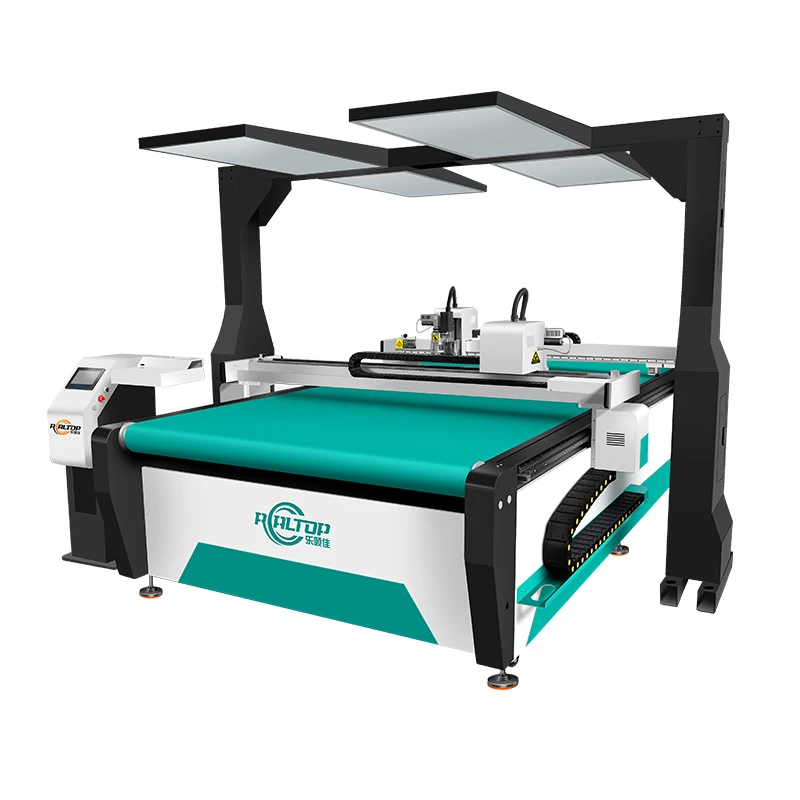
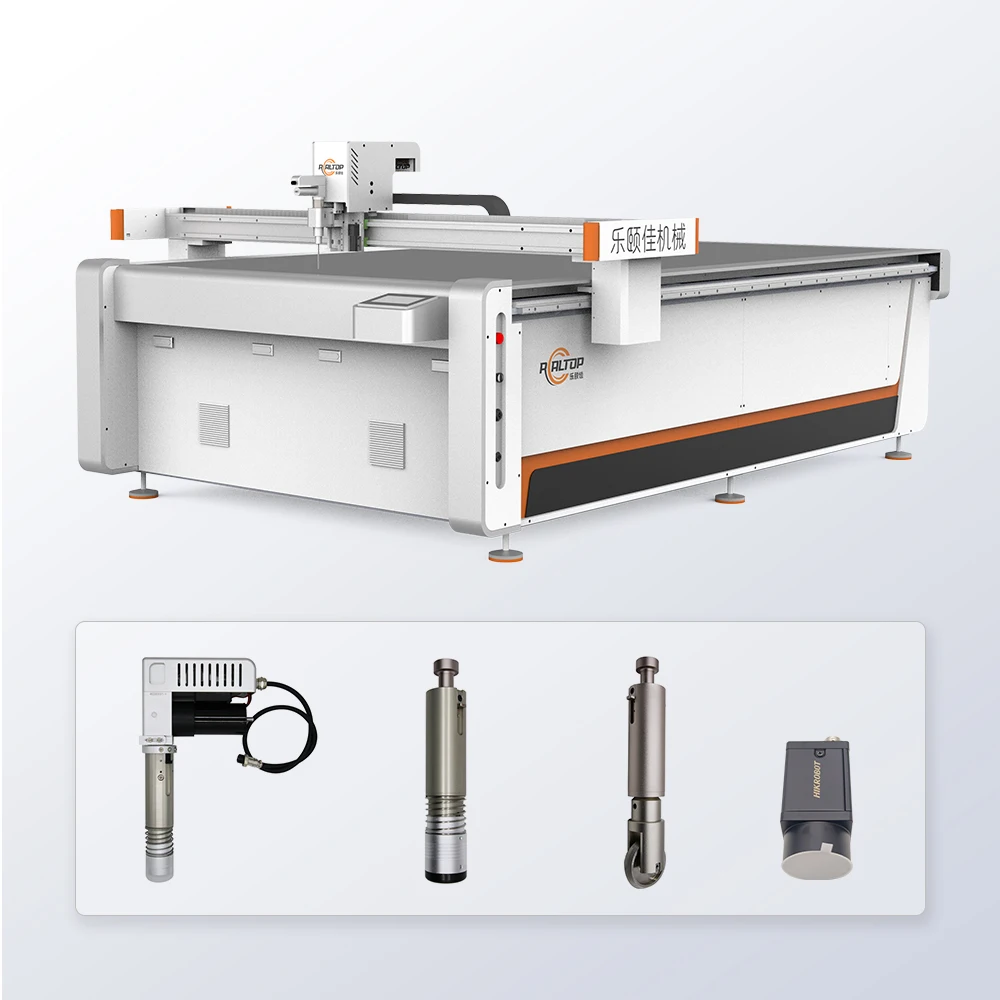
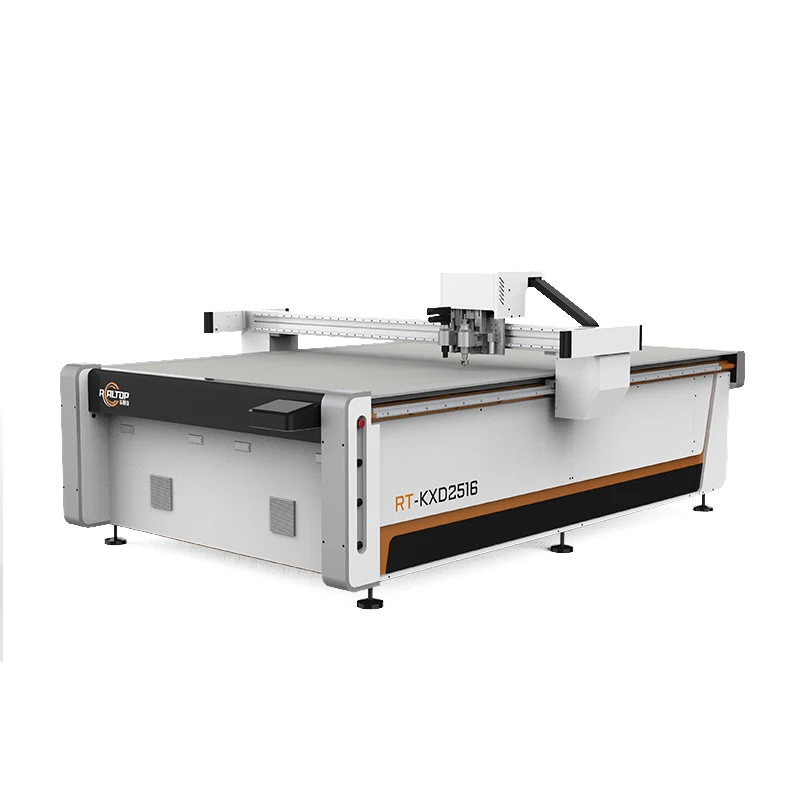
Precision-matched cutting — Every RT-D2516/RT-S2516 is configured with the correct knife head and vacuum zoning after your specific fabric weight and composite structure are tested in our Jinan workshop.
Technical Specifications
| Parameter | Value |
|---|---|
| Model | RT-D2516/RT-S2516 |
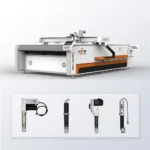
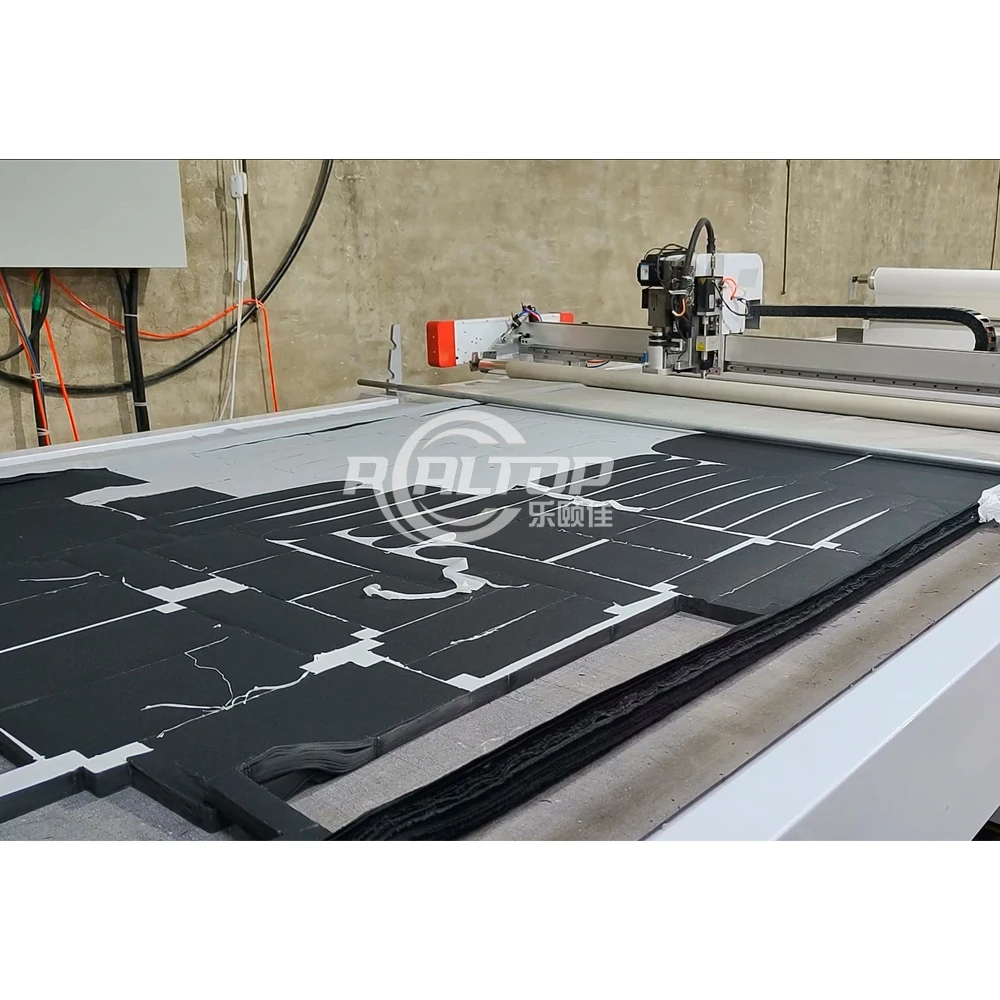
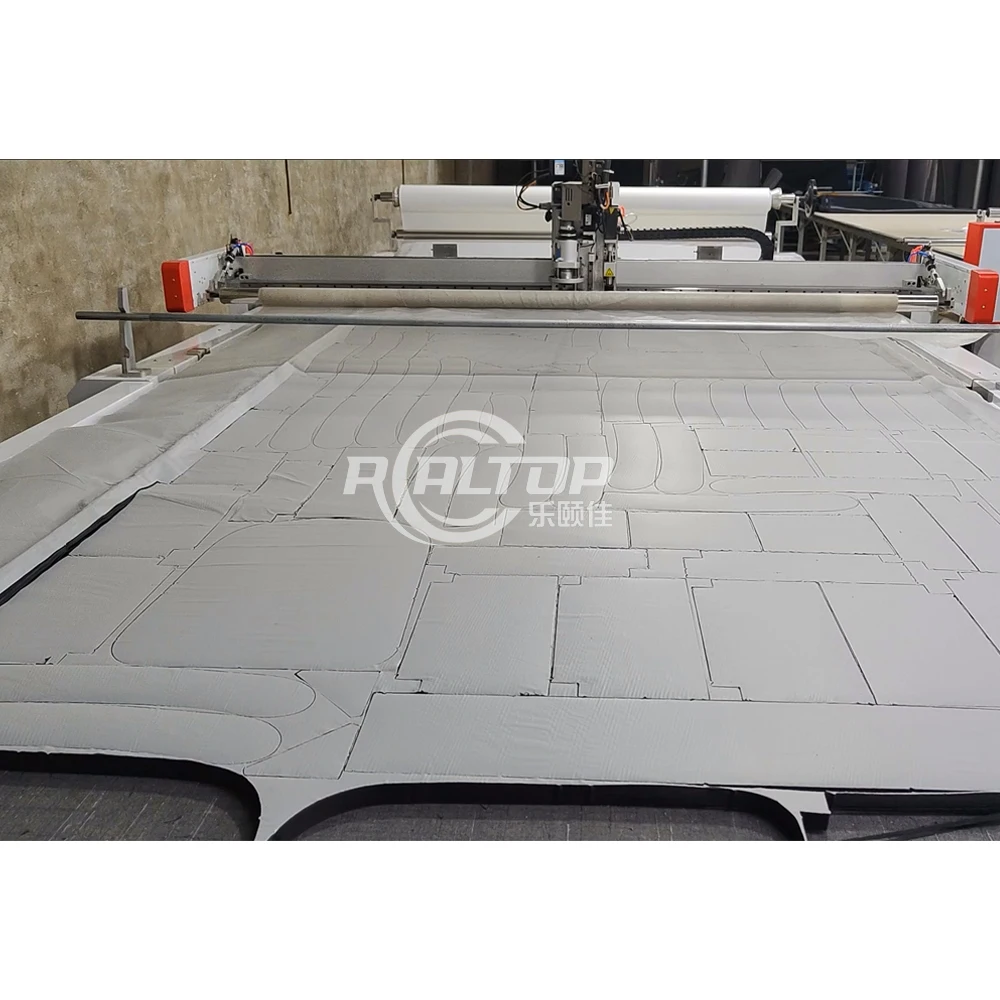
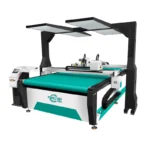
| Product Type | CNC Oscillating Knife Cutting Machine |
| Working Area | 1600 × 2500 mm |
| Machine Size | 3450 × 2300 × 1250 mm |
| Rated Power | 9 kW |
| Vacuum Pump | 7.5 kW |
| Translational Velocity | 800–1200 mm/s |
| Cutting Thickness | Up to 50 mm depending on material density and composition |
| Repeated Accuracy | ≤0.1 mm |
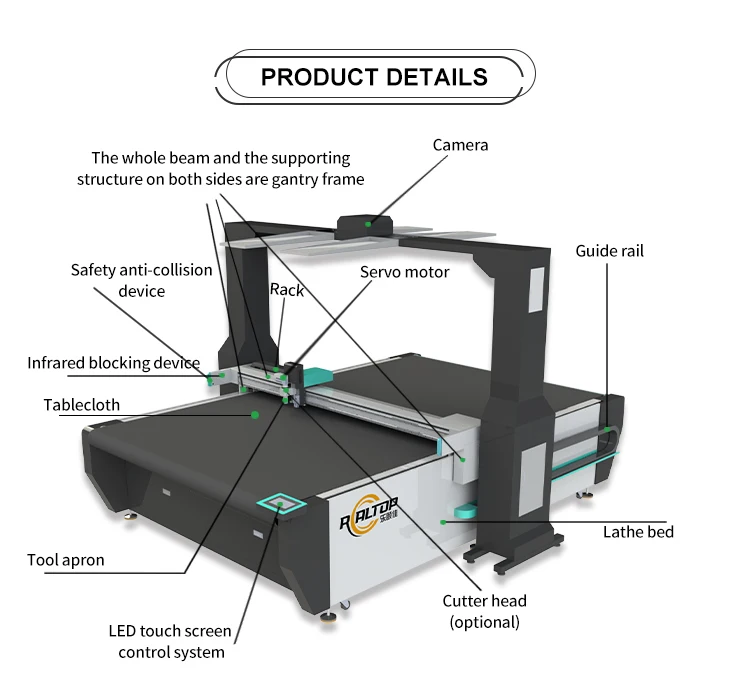
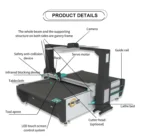
| Tool Head | Swiss imported knife (vibration full cutting, vibration half cutting, cursor location) |
| Servo Motor | Delta servo motor (Panasonic servo motor available) |
| Guide Rail | Taiwan Hiwin rail |
| Transmission System | Digital servo motor, linear guide, synchronous belt, imported ball screw |
| Working Table | Flatbed with high-density felt surface and conveyor belt (Germany imported) |
| Safety Device | Infrared sensors |
| Voltage | 380V ± 10% (customizable) |
| Control Language | English, Russian, Italian, Chinese (special languages available on request) |
| Instruction System | HP-GL compatible format |
| Frame Structure | Overall welding process, imported milling machine processing |
| Assembly State | Fully assembled before shipment |
| Warranty | 1 year |
| Standards | CE |
Application Suitability
| Application | Material or Output |
|---|---|
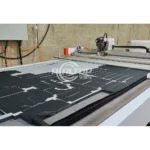
| Garment and fashion production | Multi-layer woven fabrics, knits, technical textiles, lining materials |
| Leather goods manufacturing | Genuine leather hides, synthetic PU/PVC leather, split leather |
| Automotive interior components | Sponge composite leather, foam-backed fabrics, headliner materials |
| Footwear and bag production | Flexible sheet materials, textile uppers, soft padding layers |
| Soft signage and displays | Flexible banner material, fabric graphics, PVC sheets |
Why Material Samples Must Arrive Before the CNC Knife Cutting Machine Manufacturer Quotes You
A working area figure on a nameplate never tells you whether the blade will survive your material at production speed.
I spent years on the assembly floor before moving to technical sales, and one mistake stays with me. A customer ordered a vibrating knife unit rated for PVC foam, but their real production material was a composite car mat with an embedded steel wire layer. The blade destroyed itself within days. Now, with machines like the RT-D2516/RT-S2516, I refuse to confirm a configuration until I have seen and cut the buyer’s actual material sample. Fabric weight alone can change the recommended translational velocity and tool head choice dramatically [NEED_CITE: oscillating knife cutting parameters for different textile densities].
Matching the Tool Head to the Actual Production Stack
The Swiss imported knife on this CNC oscillating knife cutting machine handles full cutting, half cutting, and cursor location in one modular holder. That flexibility matters because a garment factory cutting six layers of lightweight polyester needs a different oscillation frequency and blade geometry than an automotive supplier slicing 30 mm sponge composite leather. The modular tool holder design also allows future additions such as a round knife, marking pen, or auto feeder without replacing the entire head assembly.
Frame Rigidity and Motion Components Under Continuous Load
An overall welded frame processed on an imported milling machine gives the rail and rack mounting surfaces the flatness they need for long-term accuracy. Taiwan Hiwin rails paired with an imported digital servo motor and ball screw transmission keep repeated accuracy within 0.1 mm across the full 2500 mm travel. When a machine runs two or three shifts on heavy textile stacks, that baseline rigidity prevents the gradual drift that shows up as mismatched pattern pieces [NEED_CITE: linear guide deflection under dynamic load on flatbed cutting tables].
Reading the Spec Sheet Beyond Working Area
The 800–1200 mm/s translational velocity range reflects what is achievable on thin, uniform fabrics; heavier or denser composites require slower passes to maintain edge quality and blade life. The 7.5 kW vacuum pump must be matched to the table zoning your typical part size demands — small pattern pieces on a large flatbed need concentrated suction zones to prevent material lift during high-speed passes. The HP-GL compatible instruction system means your existing nesting software and file formats can drive this unit, but confirming that compatibility before the order avoids a painful discovery during commissioning.
What Happens When Configuration Is Skipped
Ordering on working area alone is the most common mistake in this equipment class. A buyer who specifies a flatbed without discussing vacuum zoning discovers during installation that small leather pieces lift off the felt surface mid-cut, producing scrap instead of sellable parts. Another scenario: the voltage on arrival does not match the workshop supply, and the servo drives fault repeatedly until a transformer is sourced locally [NEED_CITE: voltage mismatch consequences on industrial servo systems]. These are not theoretical problems — they are repeatable patterns I have seen across multiple export shipments.
Why Sourcing This Unit From Our Factory Makes Sense
Our Jinan facility designs and builds both knife and laser cutting systems under one roof, so the cutting method is genuinely matched to your material rather than forced into whatever technology happens to be on the floor. Every RT-D2516/RT-S2516 undergoes a full factory test with the buyer’s material before packing photographs are taken and the crate is closed. Electrical schematics, voltage confirmation, and control language settings are locked down during the order stage — not guessed at during assembly. The CE-marked build covers export markets that require documented machinery compliance, and our in-house design team handles OEM configuration requests from custom control languages to non-standard table surfaces.
Documentation & Verification
- Machine specification sheet listing confirmed tool head and table configuration
- Electrical schematic with voltage and frequency locked to your site supply
- Factory test record cut on your supplied material sample before dispatch
- Software licence and HP-GL file format compatibility confirmation note
- Spare parts list matched to the configured knife type and vacuum components
- Packing photographs showing assembly state and protective measures
Installation, Commissioning & Support
- 3450 × 2300 mm footprint requires level concrete floor with clearance for material loading on all sides
- 380V ± 10% three-phase dedicated circuit with separate breaker for the 7.5 kW vacuum pump
- Machine ships fully assembled; rigging plan must account for 1250 mm height through workshop doors
- First-run parameter tuning on your fabric type included during on-site or remote commissioning
- Operator training covers Swiss knife blade changes, vacuum zoning adjustment, and HP-GL file import
- High-density felt table surface and conveyor belt inspection intervals provided in maintenance manual
What to Include With Your Inquiry
Send us your material type, the number of layers you typically cut in one pass, and your maximum sheet dimensions. Confirm your workshop voltage and frequency, your preferred control panel language, and whether your existing nesting software outputs HP-GL or requires a different format. If you have a production target per shift, share that alongside the material data so we can recommend the correct translational velocity setting and vacuum zoning layout.
Frequently Asked Questions
Q: How do you confirm the right tool head for my material before I order?
A: We ask you to ship a sample of your actual production material to our Jinan workshop. Our technicians run test cuts on the RT-D2516/RT-S2516 using different blade geometries and oscillation settings, then share a cutting report showing edge quality, achievable speed, and blade wear observations so you can see the configuration before committing to an order.
Q: What voltage, plug and control language options are available for my market?
A: The standard configuration runs on 380V ± 10%, but we confirm your site voltage and frequency before production begins. Control language options include English, Russian, Italian, and Chinese, with other languages available on request. Plug type and cable entry are matched to your country’s electrical standards during the specification stage.
Q: Can I send my own material for sample cutting before placing the order?
A: Yes — sample cutting on your own material is a standard step in our sales process, not an exception. We test cutting speed, edge finish, and vacuum hold-down performance on your specific fabric, leather, or composite, and provide a written report before you approve the final machine configuration.
Q: What is your OEM capability and custom configuration range?
A: Our in-house design team handles requests including non-standard table surfaces, custom control panel languages, alternative servo motor brands such as Panasonic, and integration of additional tool heads like round knives or marking pens. Every custom specification is documented and confirmed before production starts.
Q: How do you ensure frame and motion component quality during production?
A: The frame is overall welded and then processed on an imported milling machine to ensure flat mounting surfaces for Taiwan Hiwin rails and rack components. Each unit undergoes a factory running test where repeated accuracy is measured across the full 1600 × 2500 mm working area before the electrical box and high-flexibility cables are finalized.
You may also like

商品评价
Clear filtersThere are no reviews yet.