


-
 Courier delivery
-
 DHL Courier delivery
-
 Warranty 1 year
-
 Free 30-Day returns

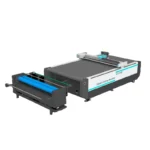
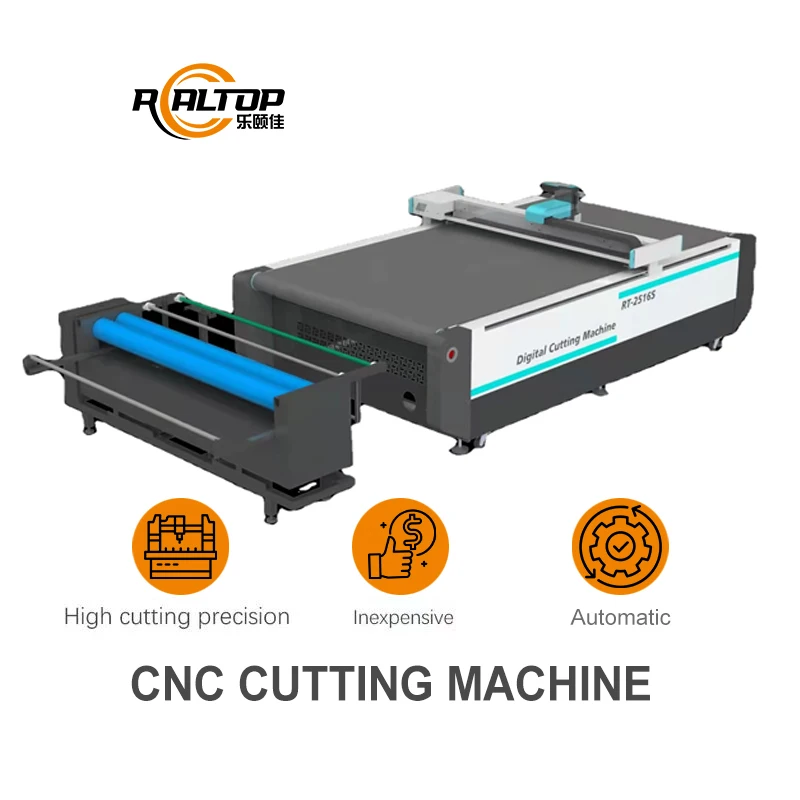
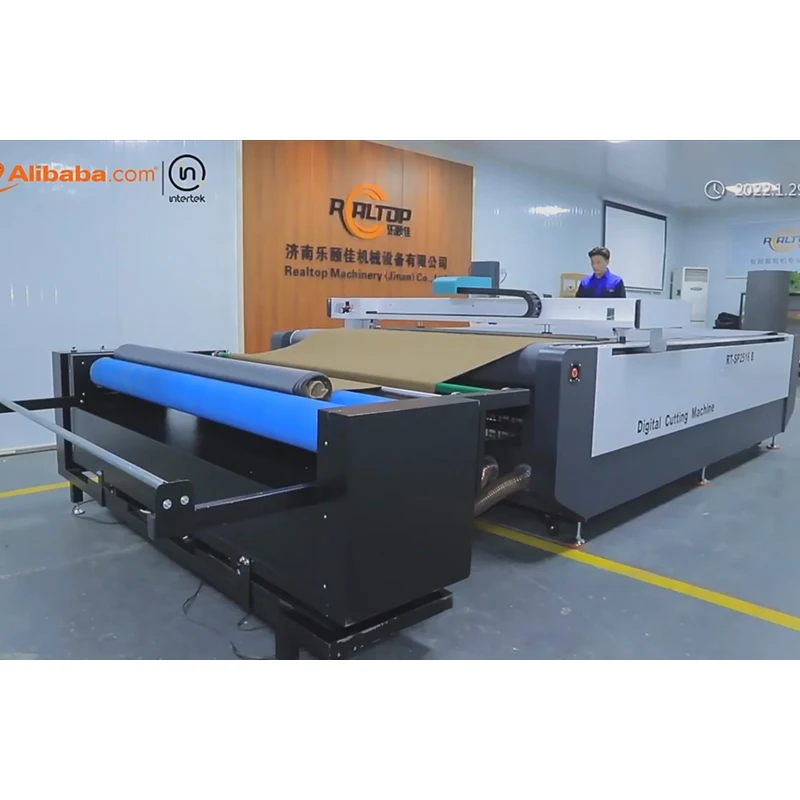
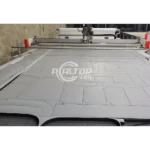
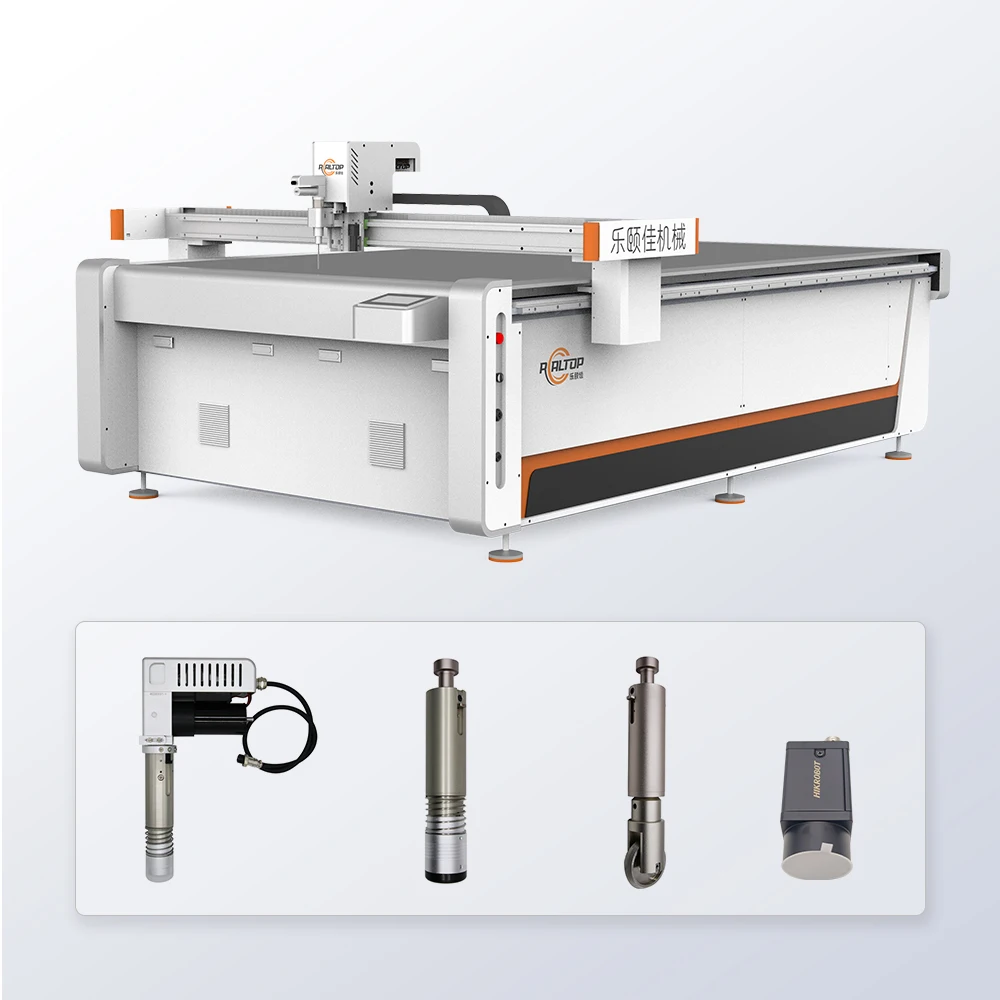
Precision-Built Frames — Every CNC Oscillating Knife Cutting Machine frame undergoes overall welding and imported milling machine processing to ensure guide rail surfaces meet strict flatness tolerances before assembly begins.
Technical Specifications
| Parameter | Value |
|---|---|
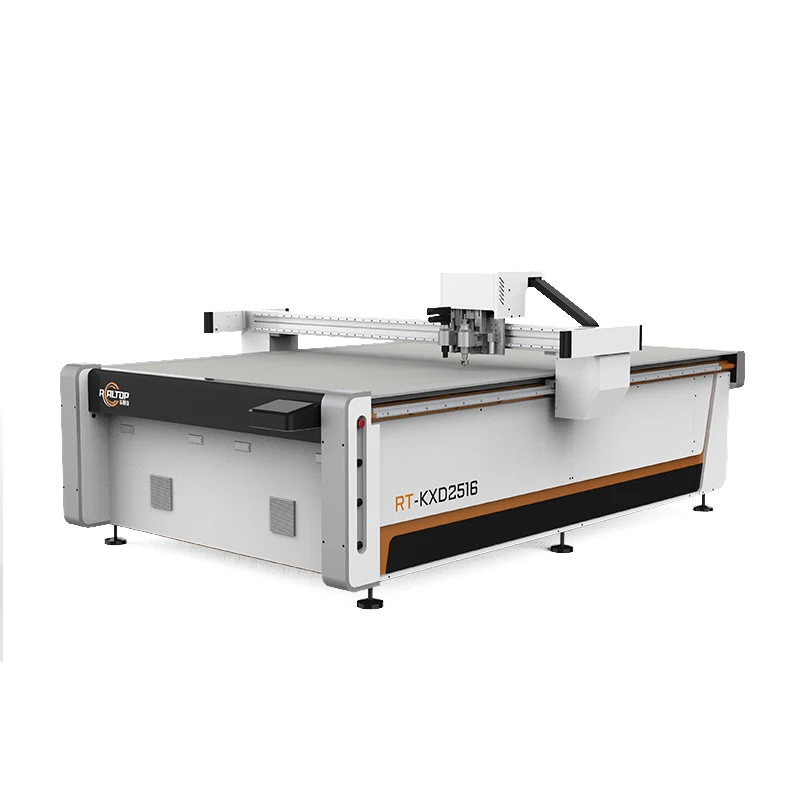
| Model | RT-D2516/RT-S2516 |
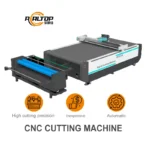
| Product Type | CNC Oscillating Knife Cutting Machine |
| Working Area | 1600 × 2500 mm |
| Machine Size | 3450 × 2300 × 1250 mm |
| Rated Power | 9 kW |
| Vacuum Pump | 7.5 kW |
| Table Type | Flat working table with high-density felt surface |
| Tool Head | Swiss imported knife (vibration full cutting, half cutting, cursor location) |
| Cutting Thickness | ≤50 mm depending on material density (basis to be confirmed) |
| Translational Velocity | 800–1200 mm/s |
| Repeated Accuracy | ≤0.1 mm |
| Transmission System | Digital servo motor, linear guide, synchronous belt, ball screw |
| Servo Motor | Panasonic / Delta |
| Guide Rail | Taiwan Hiwin rail |
| Conveyor Belt | Germany imported conveyor belt |
| Safety Device | Infrared sensors |
| Instruction System | HP-GL compatible format |
| Voltage | 380V ± 10% |
| Software Language Options | English, Russian, Italian, Chinese (special languages customizable) |
| Standards | CE |
Application Suitability
| Application | Material or Output |
|---|---|
| Garment and fabric cutting | Multi-layer woven cotton, polyester, nylon, and blended textiles |
| Leather goods manufacturing | Natural and synthetic leather for footwear, bags, and upholstery |
| Automotive interior production | Sponge composite leather, headliner fabric, and floor covering materials |
| Signage and soft material processing | PVC, soft glass, and silicone sheets |
| Composite material fabrication | Rubber, foam laminate, and flexible insulation panels |
| Home furnishing production | Curtain fabric, sofa upholstery, and mattress textile layers |
What "Working Area" Alone Fails to Tell You About Cloth Cutting
A 1600 × 2500 mm table means nothing if the vacuum zoning cannot hold small pattern pieces flat during high-speed oscillation.
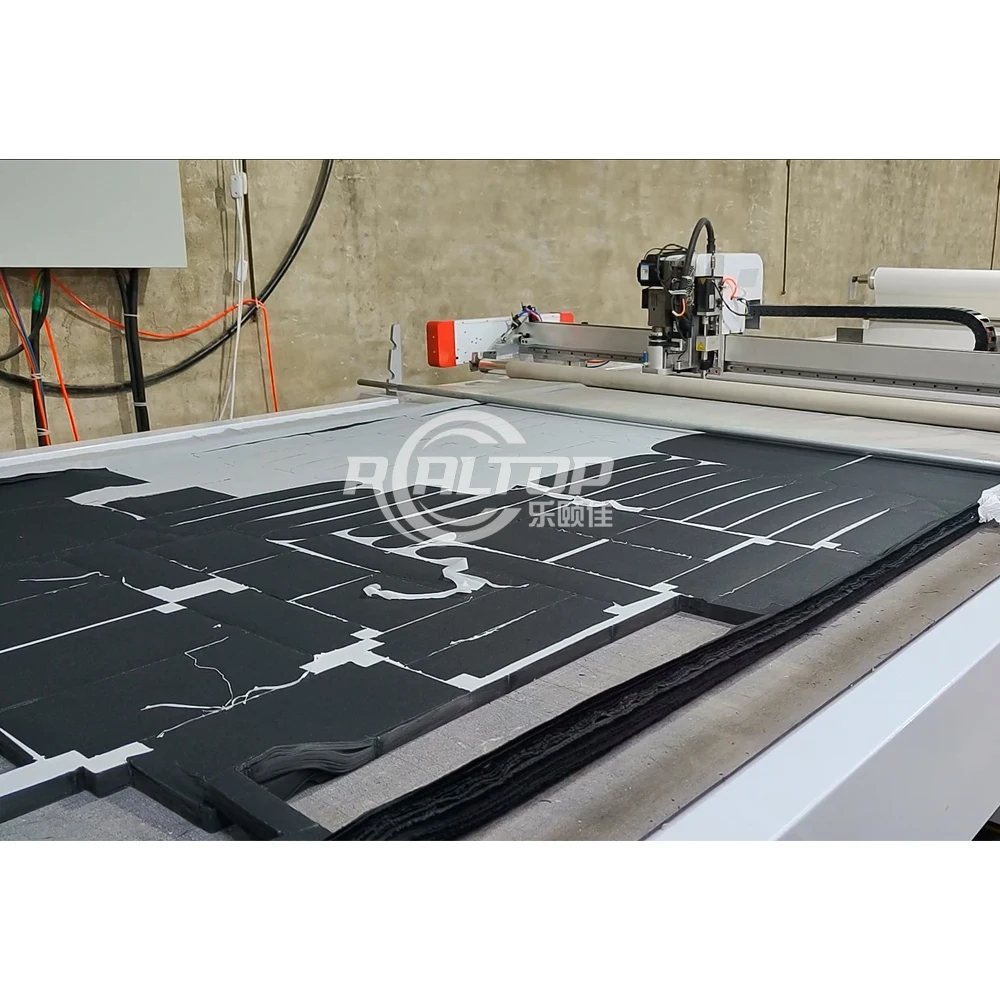
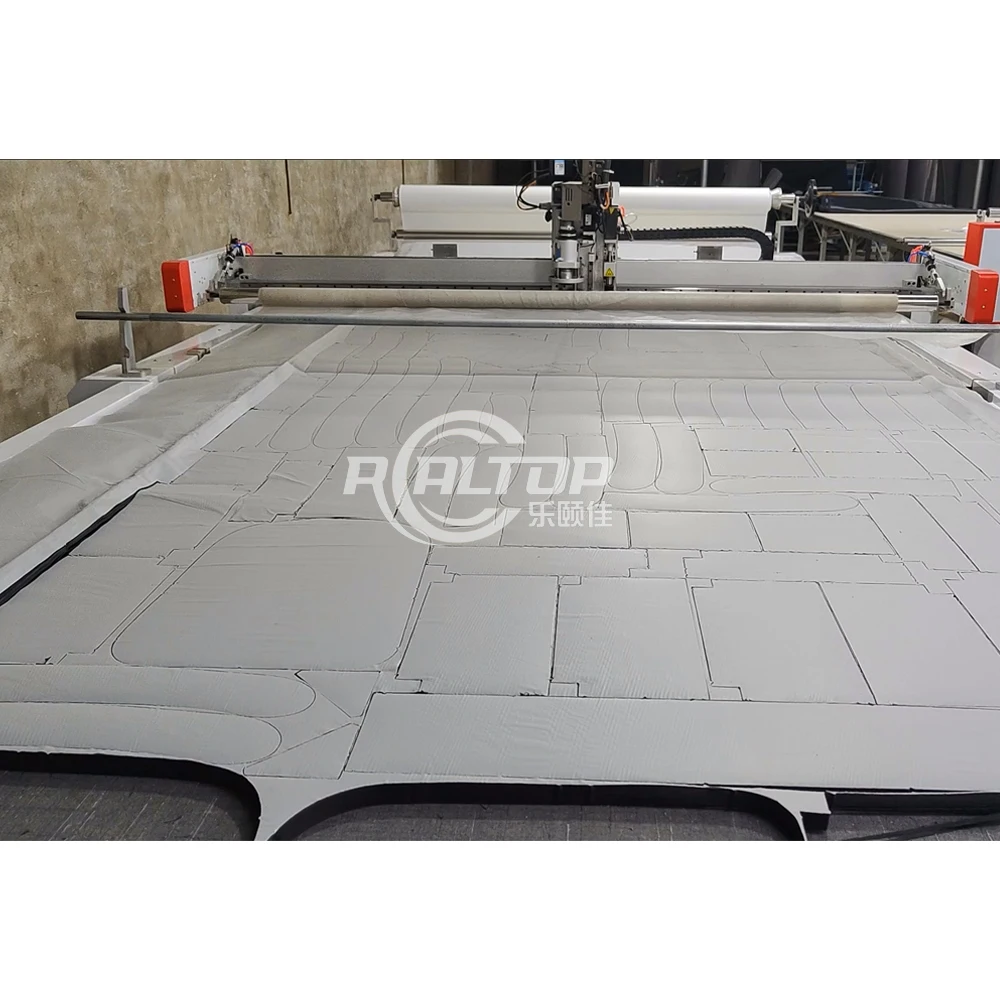
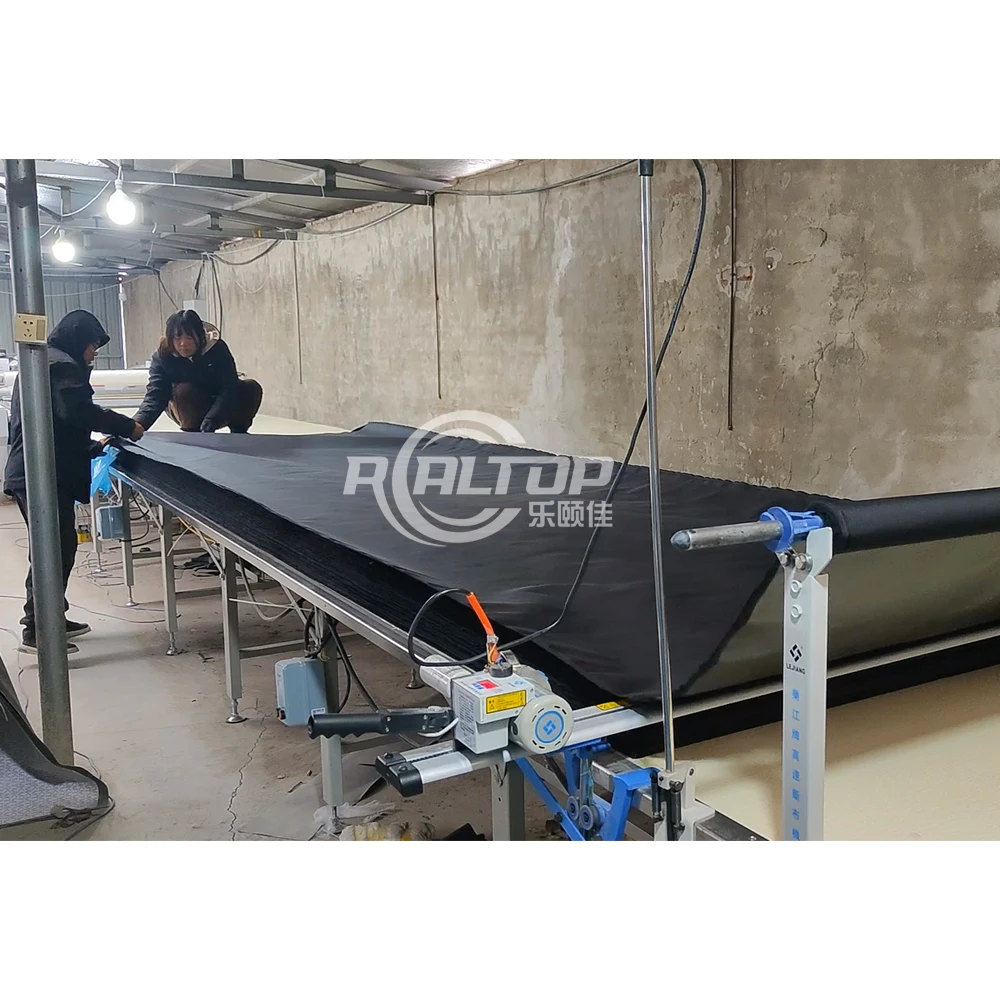
I have watched fabric producers specify a CNC oscillating knife cutting machine based purely on sheet size, then discover during commissioning that lightweight cotton lifts off the felt at the trailing edge because the vacuum zones were not mapped to their nesting layout. Small collar or cuff patterns are especially vulnerable. The issue compounds when cutting multi-layer lays, where a single shifted ply ruins the entire stack. [NEED_CITE: vacuum hold-down requirements for multi-layer textile cutting]
Frame Construction and Motion Accuracy
The RT-D2516/RT-S2516 frame is built through an overall welding process followed by machining on an imported milling machine. This sequence ensures that the mounting surfaces for the Taiwan Hiwin linear guides are co-planar, preventing the subtle twist that causes cumulative positioning drift over long cutting runs. When cutting garment panels that require ≤0.1 mm repeated accuracy across the full 2500 mm stroke, frame flatness is the foundation that every other component depends on. A CNC oscillating knife cutting machine manufacturer that controls both welding and milling in-house can trace any deviation back to a single production step rather than blame a subcontractor.
Drive System and Servo Coordination
Panasonic or Delta digital servo motors drive the gantry through ball screw and synchronous belt transmission. The pairing matters for cloth cutting because fabric lays present variable resistance: a dense denim stack demands different torque response than a single-ply silk. The servo system adjusts feed force in real time, maintaining the 800–1200 mm/s translational velocity range without stalling or overshooting at direction changes. [NEED_CITE: servo motor tuning for variable-density textile cutting]
Understanding the Specification Sheet Beyond the Numbers
The 9 kW rated power covers the servo drives, vacuum pump relay, and control electronics under continuous load, while the separate 7.5 kW vacuum pump circuit requires its own dedicated breaker to prevent voltage sag during startup. The Swiss imported knife head provides three functions — vibration full cutting, vibration half cutting, and cursor location — each matched to different cloth operations: full cut for through-ply separation, half cut for kiss-cutting laminated materials, and cursor for marking drill points or notch positions. The HP-GL compatible instruction system means most garment CAD files import without intermediate conversion, reducing the file-handling errors that cause misaligned pattern pieces on the cutting table.
The Cost of Choosing the Wrong Table Configuration
A flat felt table without adequate vacuum zoning will let small cut pieces drift during the final passes of a nesting layout, especially on slippery synthetic fabrics. When the hold-down fails mid-job, operators must stop, reposition, and re-cut affected pieces, consuming material and delaying delivery. [NEED_CITE: material waste rates from vacuum hold-down failure in textile cutting] Producers cutting coated composite fabrics face an additional problem: insufficient hold-down causes the material to pucker ahead of the blade, producing ragged edges that fail quality inspection.
Why Source This CNC Oscillating Knife Cutting Machine Here
In-house design and production covering both frame fabrication and tool head integration means a single accountable source for build quality — no split responsibility between a frame builder and a knife system integrator. The assembly floor verifies guide rail flatness and servo tuning on every unit before it leaves the factory. Tool head and table configuration are specified per buyer material, not pulled from a default catalog page. Voltage, control language, and software settings are confirmed against destination-market requirements before production starts. Sample cutting on the buyer’s own cloth roll validates the configuration before order commitment, catching issues like the coated composite fabric problem I once encountered where vibration frequency needed complete recalibration.
Documentation & Verification
- Machine specification sheet with confirmed tool head and table configuration per material type
- Electrical schematic matching destination voltage and plug type before dispatch
- Factory test record on buyer-supplied cloth samples demonstrating cut quality and accuracy
- CE declaration with machinery directive compliance for European market entry
- Software licence and HP-GL file format compatibility note for CAD workflow integration
- Spare parts list with Swiss knife consumables and felt replacement schedule
Installation, Commissioning & Support
- Requires level concrete floor capable of supporting the 3450 × 2300 × 1250 mm machine footprint plus material staging area
- Dedicated 380V ± 10% three-phase circuit with separate 7.5 kW breaker for the vacuum pump
- Machine ships partially assembled; gantry and tool head require on-site alignment and calibration
- First-run commissioning includes vacuum zone mapping to buyer’s nesting layout and servo tuning for target fabric
- Operator training covers Swiss knife head function switching, felt table maintenance, and HP-GL file import workflow
- Spare kit includes replacement oscillating blades, felt segments, and conveyor belt tensioning hardware
What We Need to Specify Your Machine
Send your primary fabric type, typical lay thickness, and maximum sheet width so we can confirm the correct vacuum zoning and knife head configuration. Specify your facility voltage and frequency, preferred control language, and any existing CAD software in your workflow. If you are cutting coated or composite textiles, share a sample roll for cutting trials before we finalize the build configuration.
Frequently Asked Questions
Q: How does the in-house design team customize the machine for different cloth types?
A: The engineering team selects vacuum zone layout, knife oscillation frequency, and hold-down pressure settings based on your specific fabric. Lightweight woven textiles need different parameters than coated composite materials or multi-layer denim lays. Configuration is validated through sample cutting on your actual material before production is approved.
Q: What OEM capability exists for distributors and importers?
A: Private-label branding, custom control panel language, destination-specific voltage and plug configuration, and tailored documentation packages are available. The core factory handles frame welding, milling, and final assembly, giving distributors a single manufacturing partner for quality accountability and consistent build standards across orders.
Q: How are frame welding and milling controlled for long-term accuracy?
A: Each frame undergoes overall welding followed by imported milling machine processing of guide rail mounting surfaces. This ensures flatness tolerances that support the ≤0.1 mm repeated accuracy specification. Quality control inspects surface co-planarity before the Taiwan Hiwin rails are mounted, preventing cumulative drift during extended cutting runs.
Q: What documentation ships with the CNC Oscillating Knife Cutting Machine?
A: Buyers receive a machine specification sheet, electrical schematic with voltage confirmation, factory test record, CE declaration, operation and maintenance manual, software licence with file format compatibility notes, spare parts list, and packing photographs. All documents reference the specific unit serial number and confirmed configuration.
Q: How is voltage and control language confirmed before production?
A: During the specification confirmation stage, buyers provide their facility voltage, frequency, and plug type along with preferred control interface language. The electrical schematic is prepared to match these requirements and reviewed by the buyer before the machine enters production, preventing costly rewiring or reprogramming after delivery.
You may also like

商品评价
Clear filtersThere are no reviews yet.