








-
 Courier delivery
-
 DHL Courier delivery
-
 Warranty 1 year
-
 Free 30-Day returns

In-house cutting head and frame engineering — Realtop matches the oscillating knife configuration and vacuum table zoning to your specific material density before a single specification is locked in.
Technical Specifications
| Parameter | Value |
|---|---|
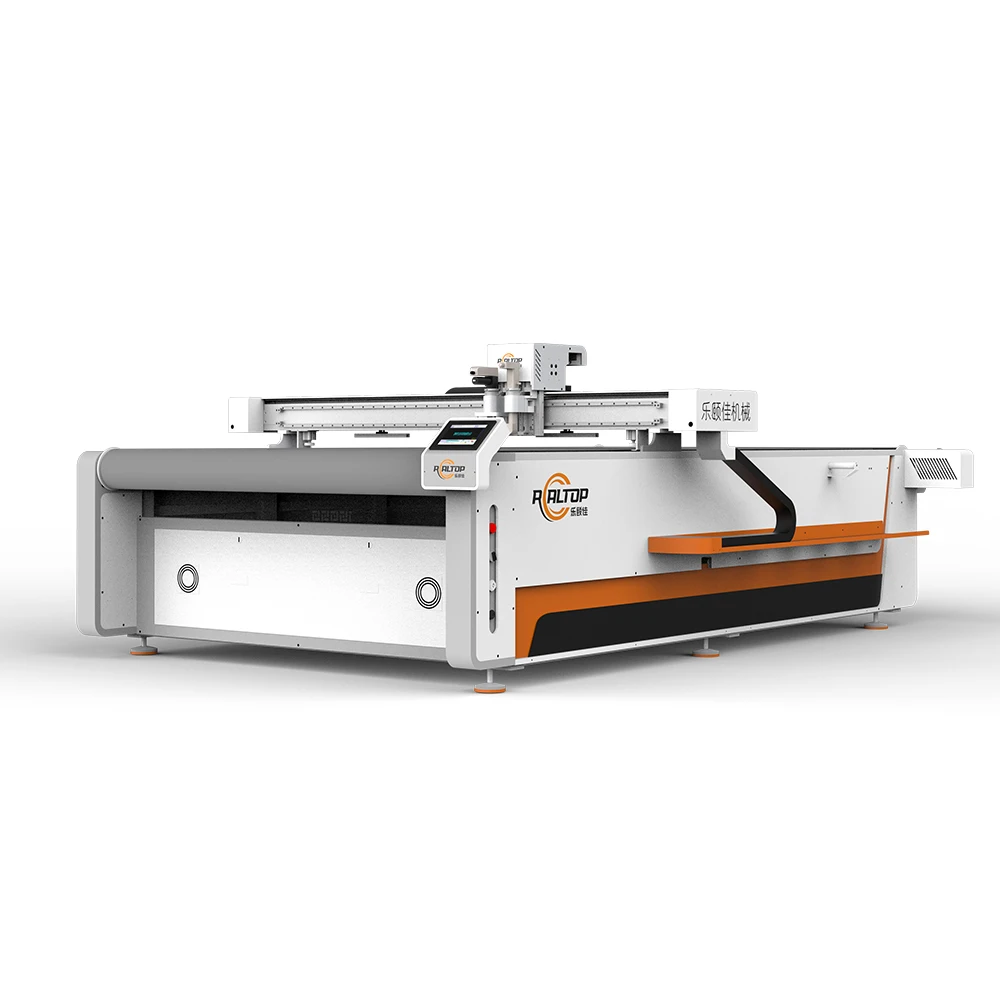
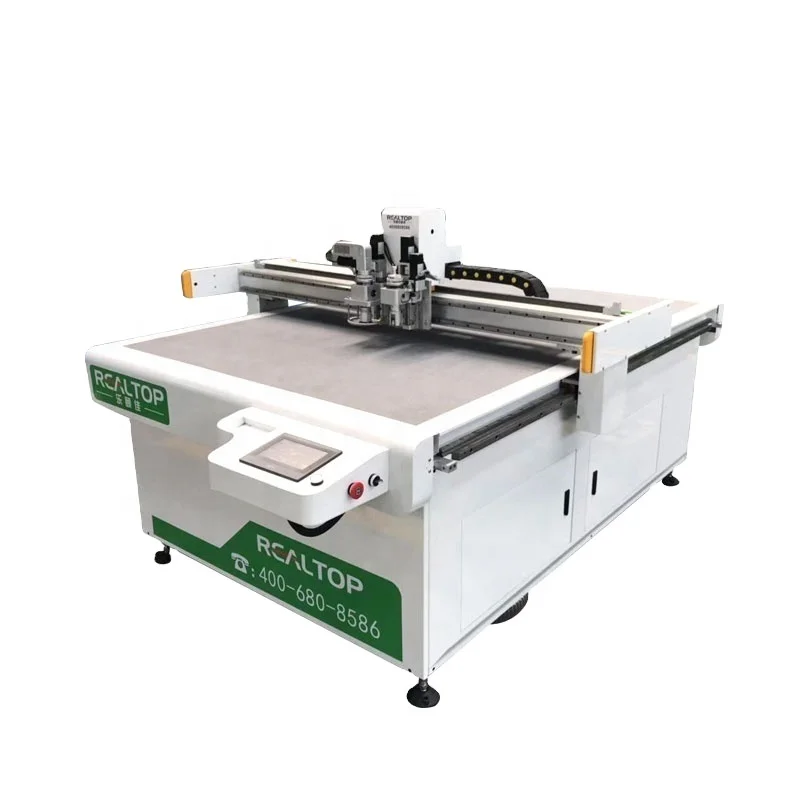
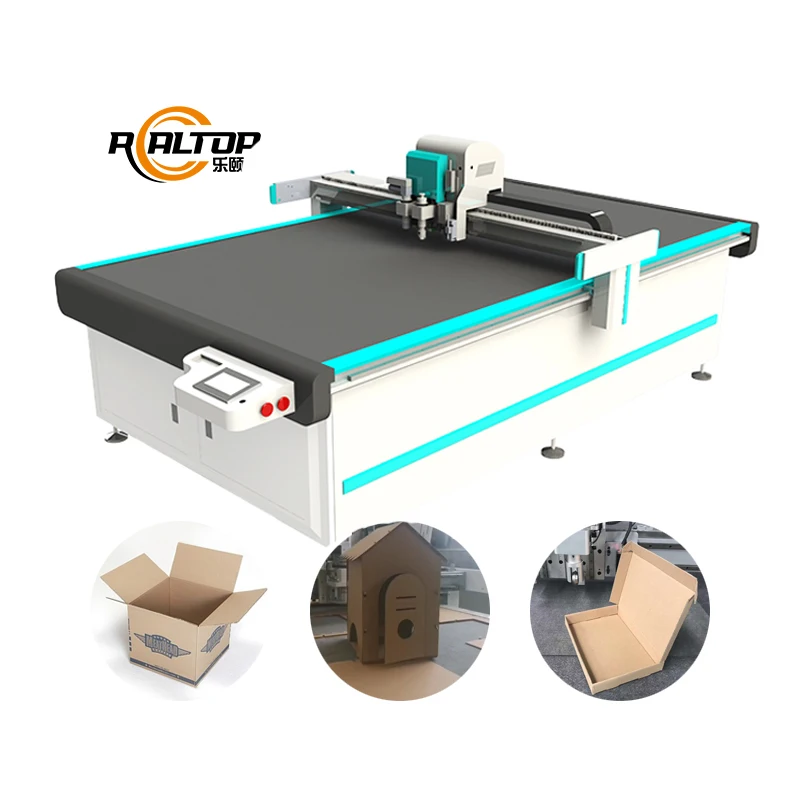
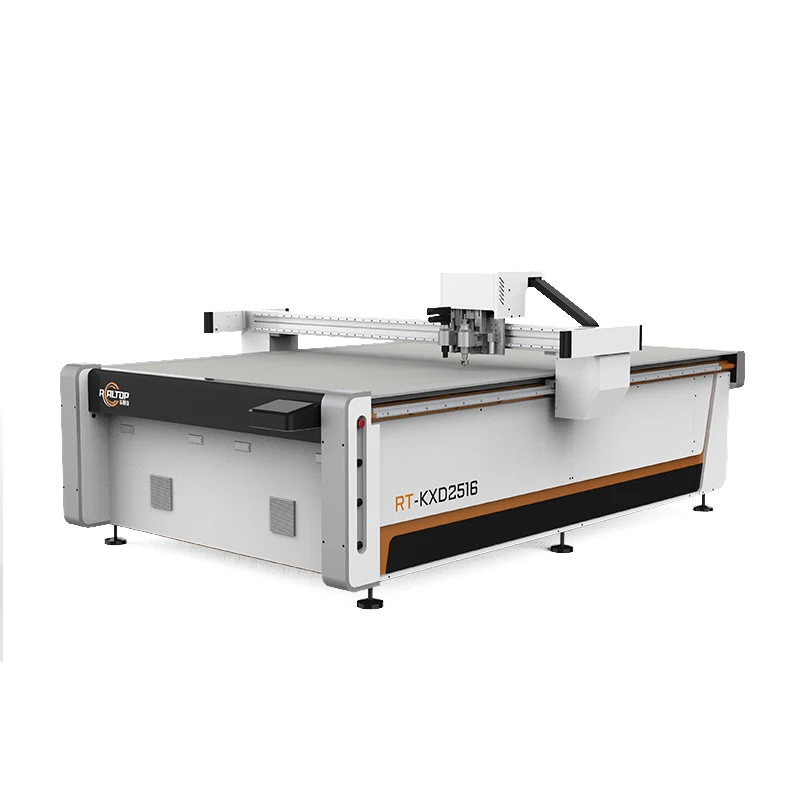
| Product Type | CNC Digital Flatbed Cutting Machine (Oscillating Knife) |
| Working Area | 1600 × 2500 mm |
| Machine Dimensions (L×W×H) | 3450 × 2300 × 1250 mm |
| Rated Power | 9 kW |
| Voltage Requirement | 380 V ±10% (50/60 Hz confirmation required before shipment) |
| Vacuum Pump Power | 7.5 kW |
| Working Table Surface | Flat aluminum alloy honeycomb vacuum adsorption platform |
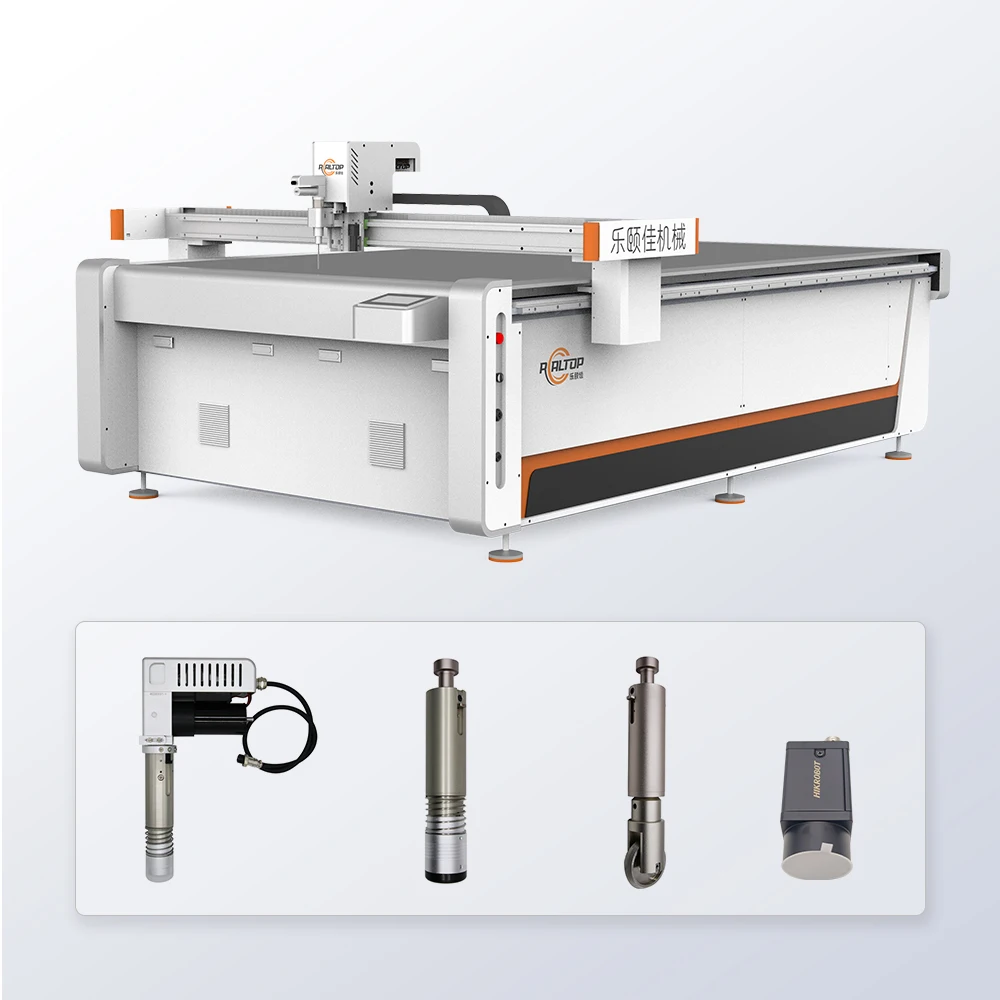
| Tool Head Configuration | Swiss imported oscillating knife (full cut, half cut, cursor location) |
| Maximum Cutting Thickness | ≤100 mm (varies with material density and compressibility) |
| Translational Velocity | 800–2000 mm/s |
| Cutting Speed | 200–800 mm/s (dependent on material type and ply count) |
| Repeated Positioning Accuracy | ≤0.1 mm |
| Servo Motor System | Delta digital servo motors |
| Linear Motion Guide | Hiwin linear rails |
| Transmission Mechanism | Synchronous belt and ball screw |
| Safety Devices | Infrared sensors and emergency stop |
| Conveyor System | Germany imported belt for auto feeding |
| Instruction Format | HP-GL compatible |
| Software Suite | Professional carton nesting software; multi-language interface support |
Application Suitability
| Application | Material or Output |
|---|---|
| Automotive floor mat production | High-density rubber composite, PVC coil, sponge-backed leather |
| Car interior trim fabrication | Sponge composite leather, soft glass, silicone sheets |
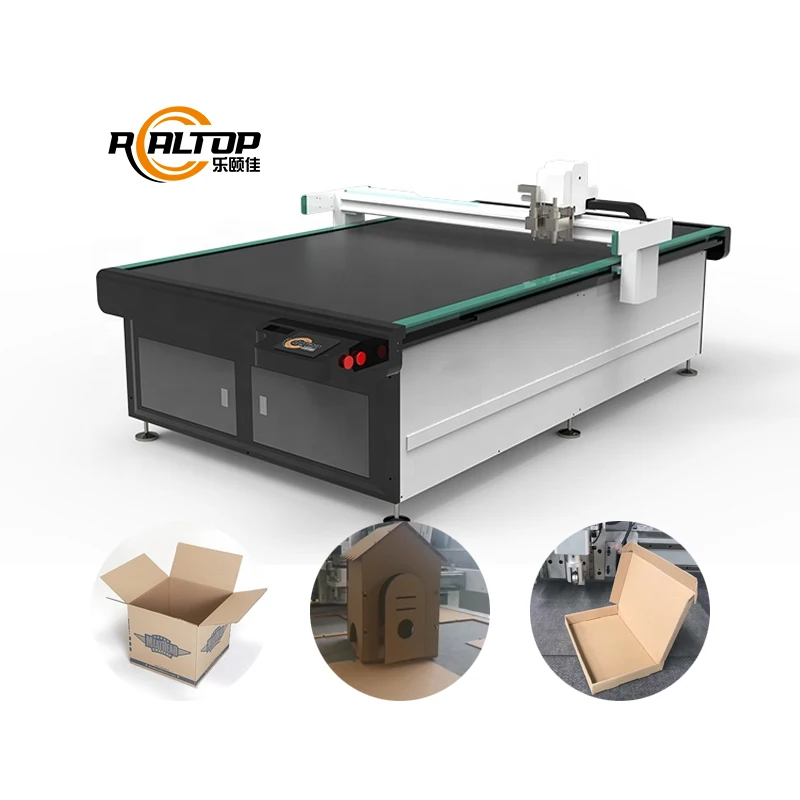
| Packaging carton sample making | Corrugated cardboard, greyboard, folding box board |
| Gasket and seal prototyping | Non-asbestos fiber, cork-rubber composite, PTFE sheets |
| Footwear upper cutting | Natural leather, PU synthetic, textile laminates |
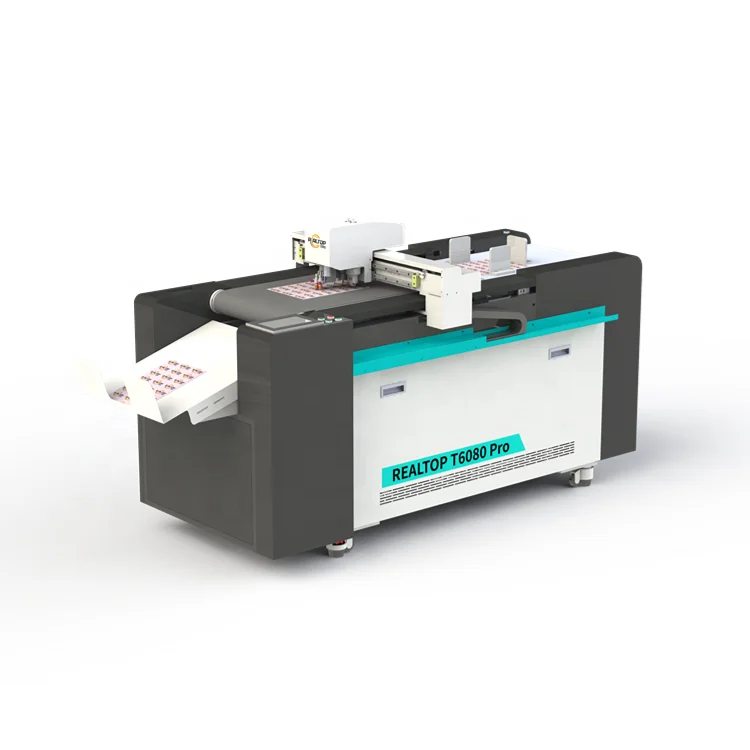
| Signage and sticker contouring | Self-adhesive vinyl, reflective film, magnetic sheet |
Why Material Thickness Verification Must Precede the Order
A CNC Oscillating Knife Cutting Machine manufacturer worth working with will never quote based on working area alone. The cutting head and vacuum zoning must be validated against the exact material you run on your floor. I once saw a buyer specify a system for what they called "standard EVA foam," only to discover on commissioning day that their actual stock was a cross-linked polyethylene composite nearly twice the density. The knife head stalled, the vacuum zones could not hold the smaller nested parts, and production halted while replacement tooling was air-shipped across two continents. [NEED_CITE: material density impact on oscillating knife cutting performance]
When the material sample never reaches the factory before the configuration is signed off, the buyer absorbs every downstream cost: re-machined tool holders, re-zoned vacuum tables, and idle operators waiting for parts.
How the Frame and Motion System Handle Production Loads
The 1600 × 2500 mm working envelope accommodates full automotive mat sets in a single nesting layout, reducing material handling between cuts. Delta servo motors paired with Hiwin linear rails maintain ≤0.1 mm repeatability across that entire travel range, which matters when contour-cutting complex perimeter shapes on multi-layer rubber composites. The ball screw and synchronous belt transmission combination resists the lateral deflection that heavier knife loads generate during thick-stock penetration.
Vacuum Zoning Strategy for Small and Large Parts
Holding a full sheet of PVC is straightforward; holding a dozen small gasket blanks nested in the center of that same sheet is where generic platforms fail. The aluminum honeycomb vacuum table divides suction into addressable zones, allowing the operator to activate only the sections directly beneath the current cut path. A 7.5 kW pump delivers sufficient negative pressure to prevent material lift even when the oscillating knife exits and re-enters at high translational speeds. [NEED_CITE: vacuum adsorption principles for CNC flatbed cutting tables]
Reading the Specs That Actually Matter on the Shop Floor
The stated ≤100 mm cutting thickness is a ceiling, not a guarantee across every stock type. A 40 mm slab of closed-cell foam will cut cleanly at moderate speed, while a 15 mm sheet of high-density rubber composite may demand a slower feed rate and a stiffer blade geometry. The 200–800 mm/s cutting speed range reflects this material dependency: softer foams permit the upper end, denser composites require the lower. Swiss imported oscillating knife heads support full-depth cutting, kiss-cutting for adhesive-backed laminates, and cursor positioning for manual alignment of pre-printed sheets. The HP-GL instruction format ensures compatibility with nesting workflows already running in most packaging and automotive CAD environments.
The Hidden Cost of Skipping the Sample Cut
When a configuration is chosen from a catalog rather than verified against a physical sample, the failure rarely appears during the first week. It surfaces three months later when the knife seat develops play from repeated overload, or when the vacuum zones prove insufficient for a new contract requiring smaller part geometries. The production line stops, replacement components are back-ordered, and the buyer realizes too late that a sample cutting report would have redirected the entire tool head specification. [NEED_CITE: cost of unplanned downtime in automotive interior manufacturing]
Why Buyers Source This Platform from Realtop
The design team engineers both the machine frame and the cutting head configuration under one roof, so the CNC Oscillating Knife Cutting Machine manufacturer can adjust vacuum zoning, knife stroke frequency, and feed parameters as a single integrated system rather than bolting a third-party head onto a generic gantry. Every configuration list is written against the buyer’s material sample, not against a brochure category. Voltage, plug type, and control language are confirmed on the electrical schematic before the frame enters final assembly. The software license and file format compatibility note ensures that the buyer’s existing nesting workflow imports without manual re-drawing. Sample cutting on the buyer’s own stock is completed and documented before any commercial commitment is finalized.
Documentation & Verification
- Machine specification sheet listing every configured tool head and table zone assignment
- Electrical schematic with confirmed voltage, frequency, and plug type for the destination site
- Sample cutting report on the buyer’s own material showing edge quality and cycle data
- Factory test record documenting repeatability measurements across the full working envelope
- Software license certificate with supported file format compatibility list
- Spare parts inventory list with recommended reorder thresholds for consumable blades
Installation, Commissioning & Support
- Floor space of at least 4.5 × 3.5 meters required to accommodate the 3450 × 2300 mm footprint plus operator clearance
- Dedicated 380 V ±10% circuit with minimum 16 kW capacity to serve both the 9 kW machine and 7.5 kW vacuum pump simultaneously
- Machine ships fully assembled; placement requires overhead crane access rated for the total unit weight
- First-run commissioning includes vacuum zone calibration and oscillating knife stroke tuning on buyer’s material
- Operator training covers HP-GL file import, nesting software workflow, and tool head changeover procedures
- Consumable blade stock and spare knife seat assemblies included in the initial shipment spare parts kit
Before You Request a Quotation
Share the exact material type, thickness range, and maximum sheet dimensions you process, along with typical daily cutting volume. Specify the destination voltage and frequency standard, preferred control panel language, and whether your existing CAD output uses HP-GL or an alternative instruction format. If your production involves printed contour work or multi-ply laminates, send a physical sample so that the tool head and vacuum configuration can be validated before the specification is finalized.
Frequently Asked Questions
Q: How is the actual cutting thickness verified for my specific material before I commit?
A: We request a physical sample of your stock material and run a documented cutting test that records edge quality, achievable thickness, and cycle time. The sample cutting report is shared with you before any order is placed, so the ≤100 mm general limit is confirmed against your actual material density and composition.
Q: How do I ensure the voltage, plug, and language are correct before the machine ships?
A: The electrical schematic is prepared and confirmed with your local site specifications during the quotation stage. Voltage tolerance, frequency, plug type, and control interface language are all locked in writing before the frame enters final assembly, preventing mismatches at your facility.
Q: Which tool head configuration suits my material — oscillating knife, drag knife, or creasing wheel?
A: The selection depends on material density, thickness, and whether you need full cuts, kiss cuts, or fold-line creasing. We evaluate your sample against all available head options and document the recommendation in the configuration list, so you know exactly which tooling is matched to your production.
Q: What is the scope for OEM customization on working area, conveyor, or multi-head setups?
A: Working area dimensions, conveyor feed integration, and multi-head configurations can all be adapted to your production workflow. Each customization is engineered against your material and volume requirements, with updated specifications confirmed before production begins.
Q: Which spare parts should I keep in stock, and what is the replacement lead time?
A: We provide a spare parts list highlighting consumables such as oscillating knife blades and knife seat components. First-year replacement parts are supplied at no charge, with the buyer covering shipping. Lead times for standard spares are communicated in the initial documentation package.
You may also like

商品评价
Clear filtersThere are no reviews yet.