




-
 Courier delivery
-
 DHL Courier delivery
-
 Warranty 1 year
-
 Free 30-Day returns

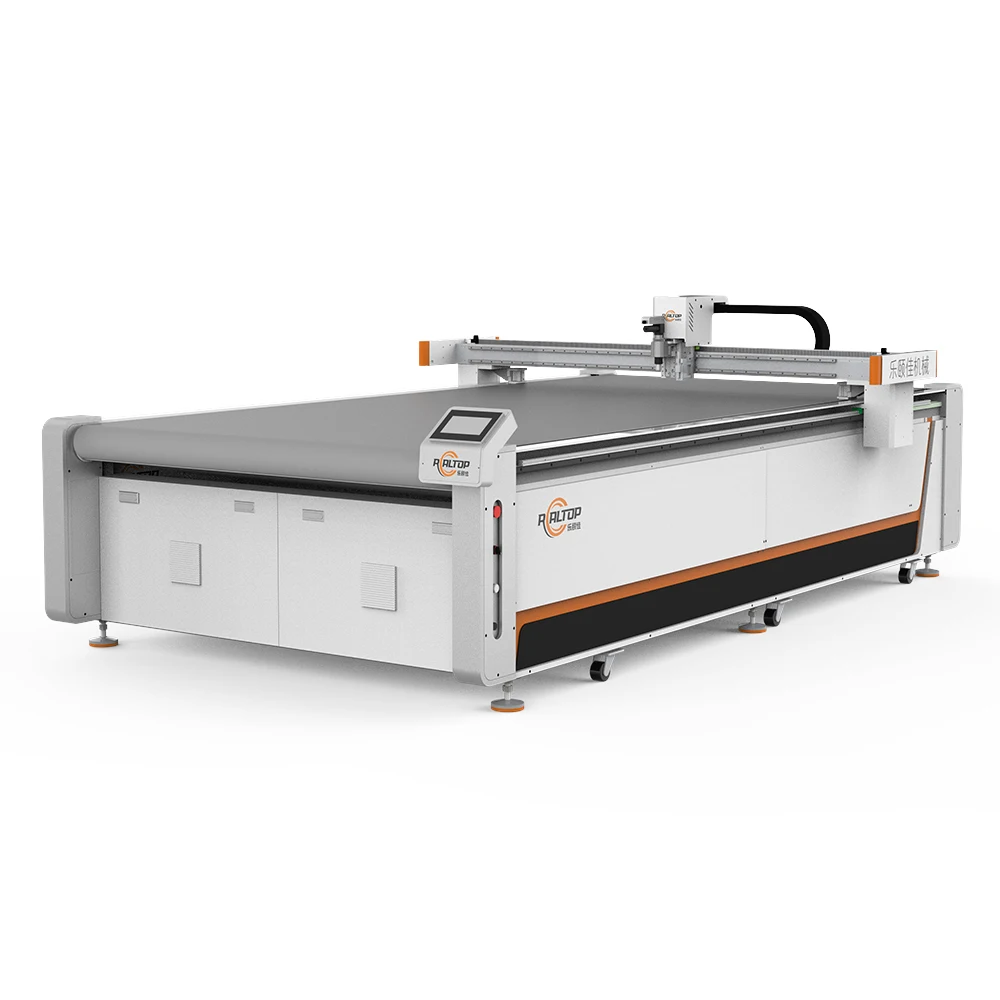
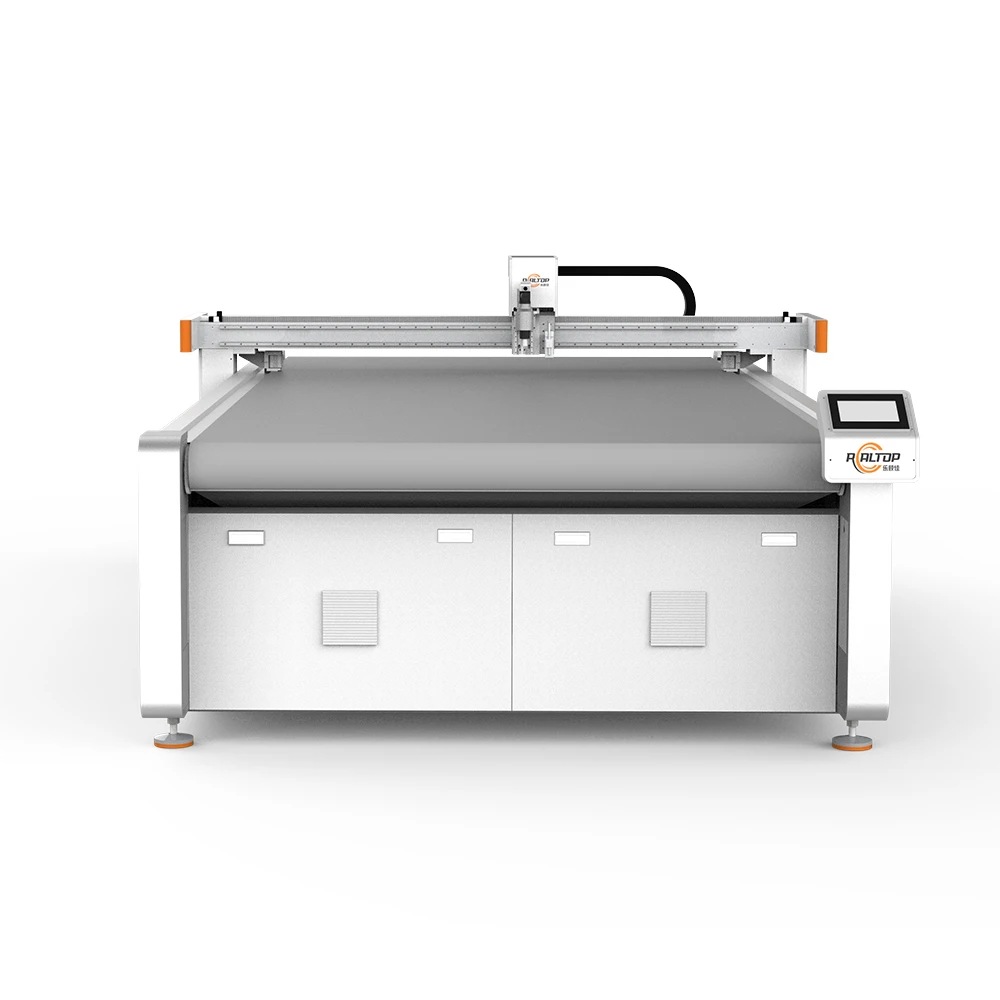
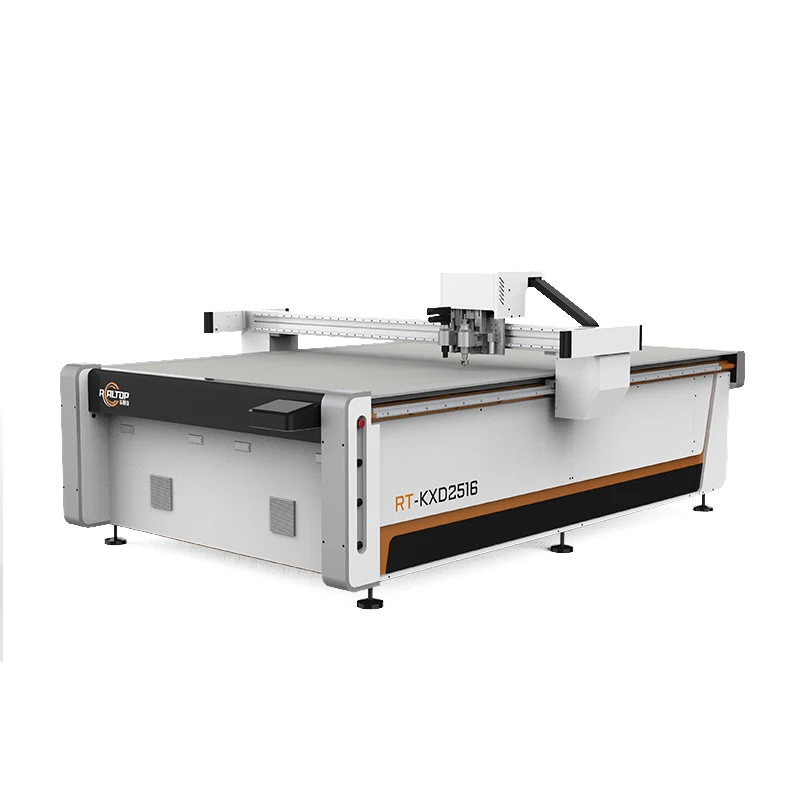
In-House Design and Build — The 1625 platform lets buyers match knife tooling, vacuum zoning, and CCD configuration to their actual leather or composite stock rather than forcing a generic setup.
Technical Specifications
| Parameter | Value |
|---|---|
| Model | 1625 |
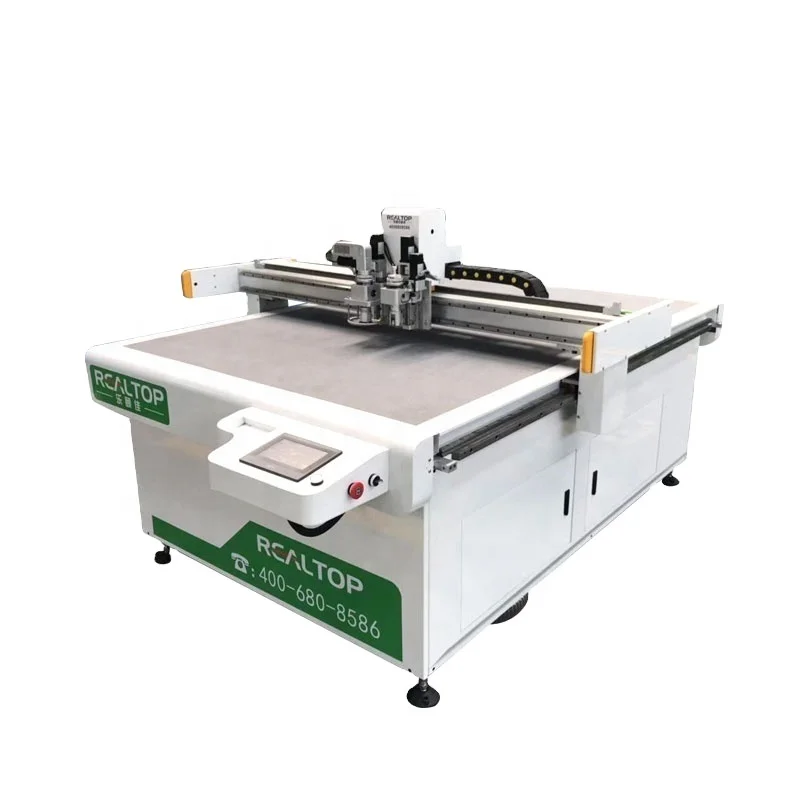
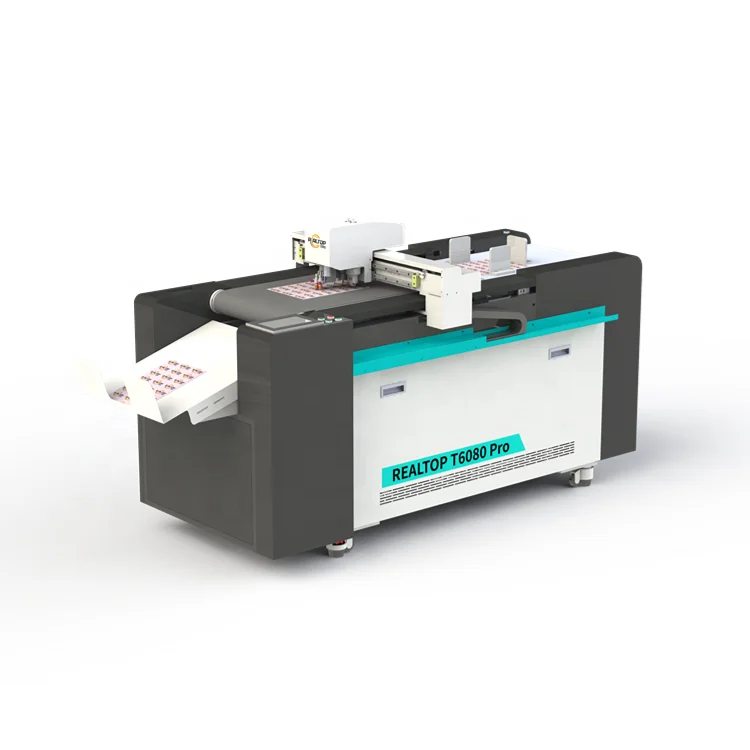
| Product Type | CNC Oscillating Knife Cutting Machine |
| Working Area | 1600 × 2500 mm |
| Cutting Thickness | ≤ 40 mm (basis to be confirmed depending on material density and type) |
| Cutting Accuracy | ±0.1 mm |
| Cutting Speed | 0–1500 mm/s |
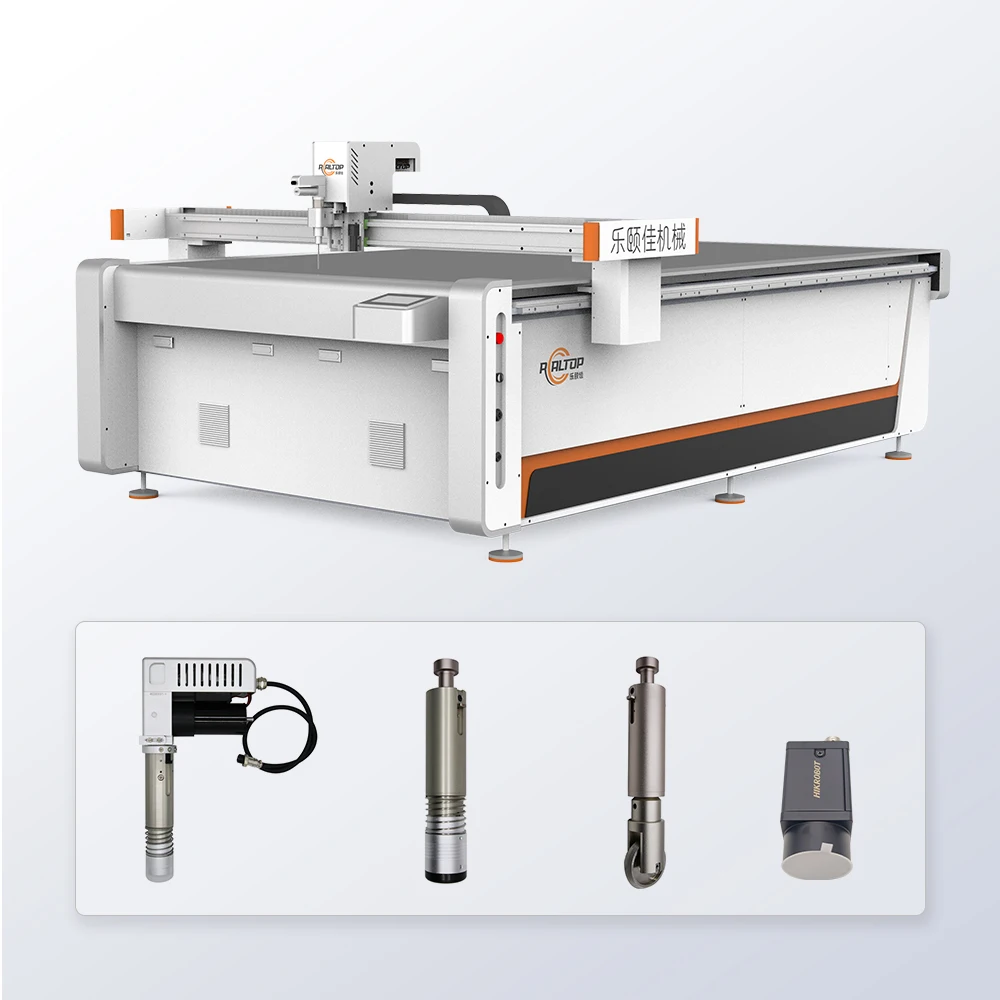
| Tool Head Options | Oscillating knife, Driven rotary knife, Creasing wheel, Kiss cutting, Pneumatic knife, Milling, V-groove knife |
| Positioning System | CCD camera contour recognition (optional) |
| Vacuum Table | Aluminum bellows vacuum table |
| Vacuum Pump | 9 kW |
| Control System | PLC control panel |
| Servo Motor Options | Panasonic, Delta, Dorna (availability to be confirmed) |
| Voltage Options | 110V, 220V, 380V |
| File Format Compatibility | PLT, DXF, AI, PDF |
| Display Language | English, Russian, Italian, Chinese (custom languages available) |
| Safety Devices | Infrared sensor, emergency stop |
| Machine Size | 3300 × 2100 × 1350 mm |
| Standards | CE |
Application Suitability
| Application | Material or Output |
|---|---|
| Footwear and leather goods | PU leather, genuine leather, synthetic leather with fabric backing |
| Garment and home furnishing | Multi-layer textile cutting with nesting-optimized yield |
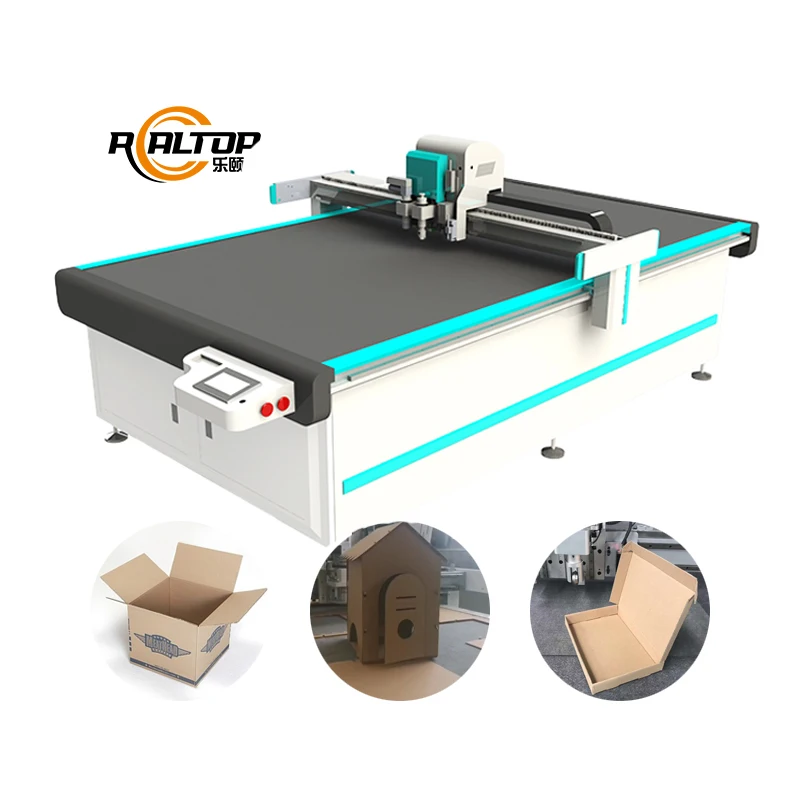
| Packaging sample making | Corrugated cardboard (E-flute, B-flute, BC-flute), greyboard, carton prototyping |
| Automotive interiors | Foam, EVA, gasket materials, composite panels |
| Signage and display | PVC, PET, thin plastic sheets |
| Industrial gaskets | Rubber mats, PTFE, non-woven fabric |
What "Cutting Thickness ≤ 40 mm" Actually Means for Your Material
Thickness ratings change completely once material density, backing layers, and tool head selection enter the picture.
I remember standing in an automotive interior workshop where a freshly installed CNC oscillating knife cutting machine had been specified by working area alone. The supplier quoted a maximum cutting thickness, but the real stock was a PU leather with a woven textile backing that compressed under the knife and tore at the edges. Two weeks of production had to be redone while the team figured out the right oscillation frequency and blade geometry. A machine rated for thick foam does not automatically handle layered synthetic leather at the same depth [NEED_CITE: material density effect on oscillating knife cutting performance].
When sourcing a CNC Oscillating Knife Cutting Machine manufacturer, the first question should always be what happens when your exact material — with its specific density, backing, and composite structure — meets the blade at production speed.
Tool Head Selection Dictates Edge Quality More Than Speed
The 1625 offers seven tool head options, and choosing the wrong one is the most common reason for ragged edges or crushed material. Oscillating knife heads work well for dense leather and foam because the rapid vertical stroke slices through fibers cleanly, while a driven rotary knife handles continuous contour cuts on thin textiles with less drag. A pneumatic knife suits thicker, more compressible stock where downward force must be adjustable on the fly. The point of having a CNC Oscillating Knife Cutting Machine manufacturer offer multiple heads is not variety for its own sake — it is matching the cutting action to the material behavior.
Vacuum Table Zoning and Small-Part Hold-Down
An aluminum bellows vacuum table with a 9 kW pump provides the suction force needed to hold flat stock during cutting. But full-surface adsorption only works if the table zoning matches the part geometry. Small gasket pieces or narrow leather straps tend to lift when the vacuum zone is larger than the part itself, causing the knife to drag or skip [NEED_CITE: vacuum table zoning for small-part CNC cutting]. The 1625 table can be configured with zone segmentation so that suction concentrates under the active cutting area rather than dissipating across empty bed space.
Reading the Specs Against Your Production Reality
The ±0.1 mm cutting accuracy figure reflects the motion system’s repeatability under controlled conditions. In practice, accuracy at the cut edge depends on blade sharpness, material tension, and vacuum hold-down working together. The 0–1500 mm/s speed range is the servo drive envelope; actual production speed on thick PU leather with a woven backing is typically a fraction of that ceiling, set by the oscillation frequency and the resistance the blade encounters. File format support across PLT, DXF, AI, and PDF means the machine can accept artwork directly from most CAD and vector design packages without an intermediate conversion step, which eliminates a common source of contour drift in printed leather work.
The Hidden Cost of Skipping a Material Test
Specifying a machine by working area and maximum thickness without testing actual stock leads to predictable failures: blades wearing out mid-shift because the material is harder than expected, vacuum tables that cannot hold small pieces flat, and CCD systems that lose printed registration marks when the conveyor runs at line speed [NEED_CITE: CCD contour recognition reliability at production speed]. These are not defects in the machine — they are mismatches between the configuration and the job. A two-week delay recalibrating on the factory floor costs far more than a sample cutting session before the purchase order is signed.
Why Source This Platform Here
The 1625 is designed and assembled in-house, which means the same engineering team that selects the servo drive also validates the vacuum table zoning for a specific material. Buyers do not receive a standard configuration and then discover that the CCD camera was never tested against their printed registration marks. Tool head, table, and software configuration are documented per order. The PLC control panel and display language are set to the buyer’s requirements before the machine leaves the factory, not reconfigured on arrival by a local technician guessing at parameters [NEED_CITE: PLC language configuration for export CNC equipment]. Servo motor selection across Panasonic, Delta, and Dorna allows the motion system to match local service availability in the buyer’s market.
Documentation & Verification
- Machine specification sheet reflecting your confirmed tool head and table configuration
- Electrical schematic with voltage and plug type matched to your facility
- Sample cutting report on your leather or composite material before shipment
- Software licence and file format compatibility note for PLT, DXF, AI, PDF workflows
- Factory test record showing cutting accuracy and vacuum hold-down performance
- CE declaration and operation manual in your specified control language
Installation, Commissioning & Support
- Floor space requirement based on the 3300 × 2100 mm machine footprint plus operator clearance
- Dedicated power circuit matching confirmed voltage option (110V, 220V, or 380V)
- Machine arrives assembled with vacuum table and gantry pre-aligned from factory test
- First-run parameter calibration on your material thickness and cutting speed at commissioning
- Operator training covering PLC panel navigation, tool head changeover, and CCD setup
- Spare blade inventory and vacuum pump maintenance schedule provided at handover
What to Include in Your Inquiry
Send a sample or data sheet of your actual material — including backing type, thickness range, and whether the surface is printed. Specify your daily cutting volume, the sheet sizes you buy from your supplier, and your facility voltage and frequency. If you already run nesting software or a specific file format workflow, confirm that so the software configuration can be verified before the build starts.
Frequently Asked Questions
Q: How is the correct tool head selected for my specific leather type and thickness?
A: We run a sample cutting test on your actual material — PU, genuine, or synthetic with backing — and evaluate edge quality, blade wear, and cutting force. The tool head recommendation (oscillating, driven rotary, or pneumatic) is then documented in your configuration list alongside the material it was validated against.
Q: Can the CCD camera track printed marks reliably at full production speed?
A: The CCD system is tested against your printed registration marks at the cutting speed your production requires, not just at slow calibration speed. The sample cutting report records tracking accuracy at line speed before the configuration is locked.
Q: What voltage and control language customization is confirmed before shipment?
A: Your facility voltage (110V, 220V, or 380V), plug type, and control panel language are specified in the order and verified during the factory test. The electrical schematic shipped with the machine reflects these confirmed settings.
Q: How do I verify cutting capacity before placing the order?
A: Send your material to our facility for a sample cutting session. You receive a report covering edge quality, maximum cutting depth achieved, vacuum hold-down performance, and CCD tracking results — all on your actual stock.
Q: What software file formats are supported and is nesting workflow compatible?
A: The system accepts PLT, DXF, AI, and PDF files directly. If you use a specific nesting software or workflow, we verify file import and output compatibility during the pre-order configuration stage to avoid conversion issues on your shop floor.
You may also like

商品评价
Clear filtersThere are no reviews yet.