

Blog
How to Pick Reliable Wallpaper CNC Cutting Solutions From China Suppliers for Interior Design

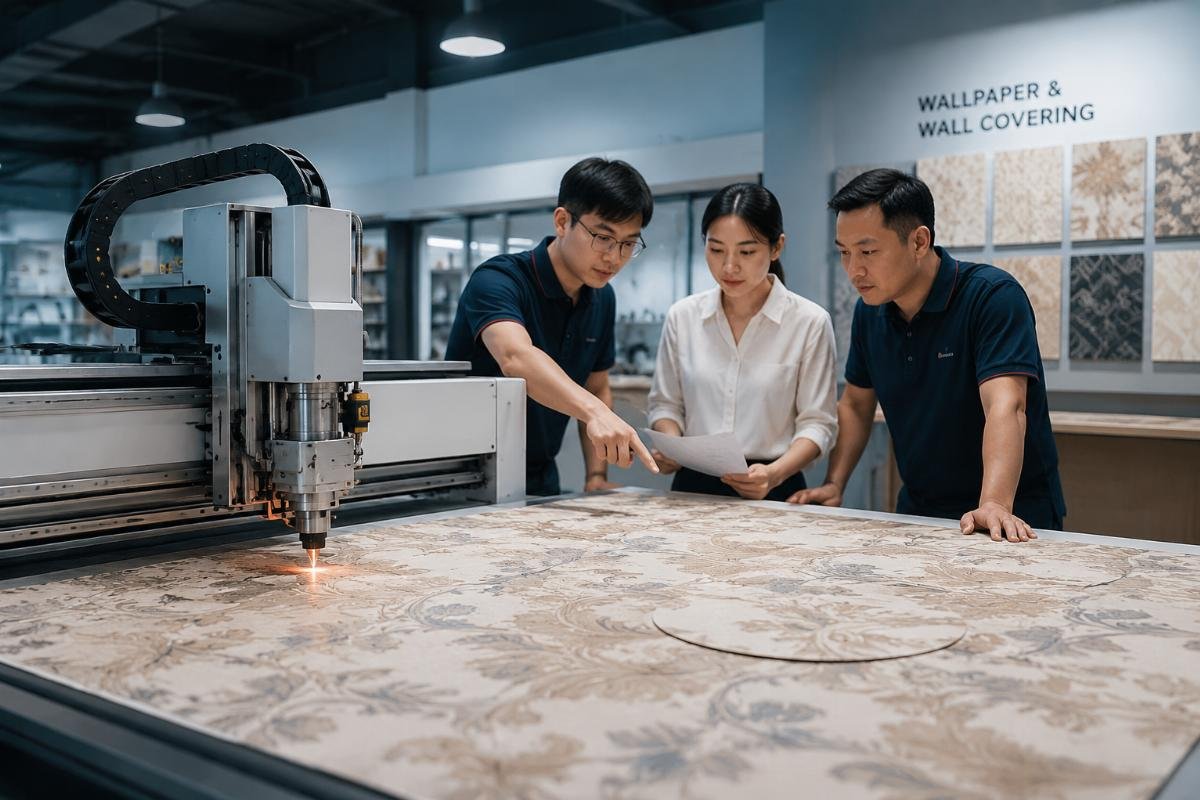
How to Pick Reliable Wallpaper and Wall Covering CNC Cutting Solutions for Interior Design Companies From China Suppliers
Most interior design teams assume standard CNC cutters work for wallpaper processing, but generic hot-cut models cause edge焦化 and toxic fumes that ruin finished wall materials. If you are currently comparing cutting equipment for custom wallpaper and wall covering orders, this mismatch between generic machinery and specialized flexible material demands can add 30% to your production costs and extend lead times by weeks, even if you select a well-known global machinery brand.
The most reliable, cost-effective cutting solutions for interior design firms come from niche Chinese manufacturers specializing in flexible material cold-cut technology, with support for low minimum order quantities, custom configurations, and full after-sales coverage that matches enterprise-level supplier service standards.
I have supported over 70 interior design firms across Europe, North America, and Southeast Asia in upgrading their wall material production workflows over the past 6 years, and the consistent pain point we see across every project is that teams waste an average of 22% of raw wall material before they replace a generic cutter with a purpose-built solution [NEED_CITE: Cold cutting technology reduces wallpaper and wall covering material waste by 15% to 25% compared to traditional die cutting and generic hot CNC cutting]. Even small design studios with as few as 3 to 5 ongoing projects per month see a measurable reduction in post-installation rework within the first month of switching.
Below we break down the core criteria to evaluate, common pitfalls to avoid, and actionable steps to pick a supplier that fits your team’s exact production scale and order requirements.
What core requirements do interior design companies have for wallpaper and wall covering CNC cutting solutions?
The three non-negotiable, rigid requirements for any cutting solution in this space cannot be met by generic cutting equipment on the market today. Generic models built for metal, wood, or rigid composite materials are designed for entirely different operating parameters, and adapting them for wall materials almost always leads to hidden costs that only show up after you have already invested in the machine.
| Evaluation Factor | Common Misaligned Approach | Recommended Specialized Specification |
|---|---|---|
| Material Compatibility | Selecting a cutter that only supports 2 to 3 common wall materials | Compatible with 30+ flexible materials including non-woven fabric, PVC, wall cloth, and self-adhesive wall stickers [NEED_CITE: Purpose-built wall covering cutters support all common flexible wall material types without requiring multiple machines for different product lines] |
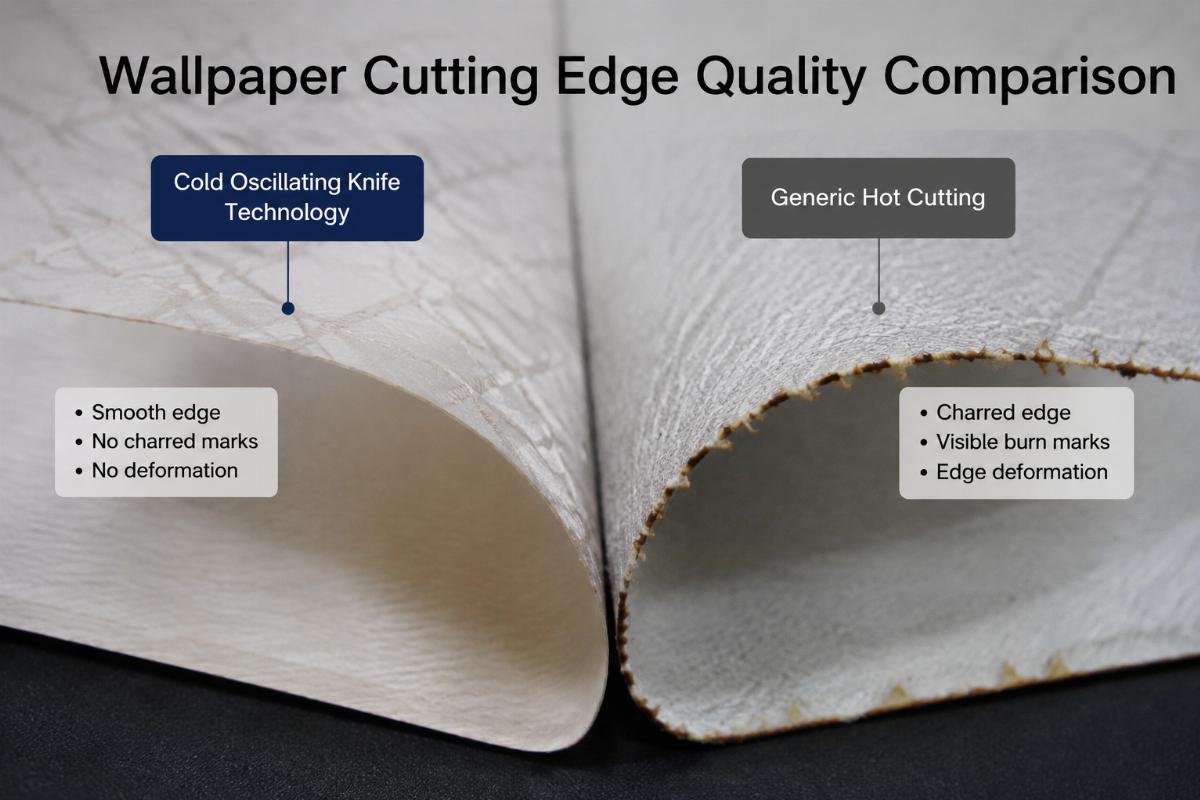
| Cutting Technology | Choosing a hot-cut or laser cutter for faster processing | Cold oscillating knife cutting that leaves zero burnt edges and no toxic fumes |
| Precision Threshold | Accepting ±0.5mm or higher repeat positioning accuracy | Repeat positioning accuracy controlled within ±0.1mm to reduce installation rework |
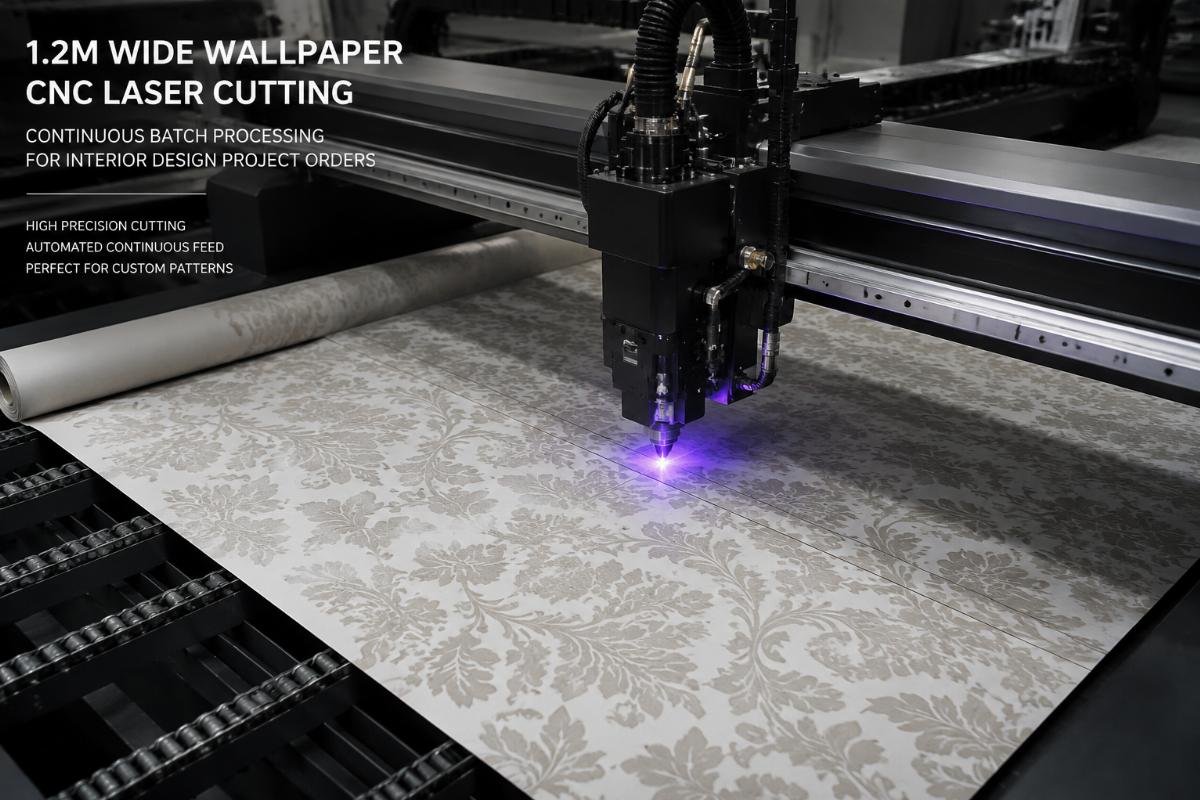
A German interior design firm specializing in high-end residential projects recently worked with us to replace two generic laser cutters for a batch of 100 apartment unit wall material orders. The purpose-built solution they selected supported continuous cutting for 1.2m width wallpaper, and cut the total delivery window for the full batch from 12 working days to just 3 working days, with zero rejected sheets due to edge damage or size mismatch.
- Material Compatibility Check – Request a free sample cutting test for all wall material types you regularly use, and ask for a recorded test video to verify edge quality before placing any order.
- Precision Validation – Confirm that the stated repeat positioning accuracy is ±0.1mm or lower, as every 0.1mm of additional accuracy error correlates to a 3% higher post-installation rework rate for wall materials.
- Technology Confirmation – Explicitly rule out any supplier that recommends hot-cut or laser cutting for wallpaper, as these processes will consistently cause edge discoloration and odor issues.
Why do most standard CNC cutters fail to deliver expected results for wallpaper and wall covering processing?
The three core flaws of generic standard cutters for wall material processing are not obvious during initial demos, and only appear once you run full production batches. Most sales representatives for generic machinery brands will not disclose these limitations upfront, as their product lines are not engineered for this specific use case.
| Failure Point | Generic Standard Cutter Performance | Specialized Wall Covering Cutter Performance |
|---|---|---|
| Cutting Technology Consequence | Hot-cut processes leave burnt edges and release toxic fumes that require 72+ hours of ventilation before installation | Cold-cut processes produce clean, odor-free edges that are ready for immediate installation |
| Precision Gap | Low precision leads to 10% to 15% of wall material sheets being rejected before installation | ±0.1mm precision reduces pre-installation rejection rates to below 1% |
| File Compatibility | Requires multiple file conversion steps that lose design detail mid-process | Direct support for DXF/PLT/AI/PDF file imports with no secondary conversion needed |
A small UK-based interior design studio with 8 team members tried to use a standard wood CNC cutter they already owned for a small run of custom wall stickers last year. They ended up scrapping 28% of their material stock due to uneven cuts and file conversion errors, and spent 12 extra hours reworking design files before they abandoned the project and ordered a purpose-built cutter instead.
- Process Rejection Audit – Ask the supplier for case study data on pre-installation rejection rates for their existing interior design clients, rather than relying solely on demo footage.
- File Import Testing – Send your most commonly used design file format to the supplier and request a test cut output to confirm no detail is lost during import.
- Odor Test Request – Ask for a sealed sample of cut wall material to verify there is no chemical odor after processing, which is a common hidden issue with generic hot-cut models.
How to avoid common pitfalls when selecting wallpaper and wall covering cutting equipment?
Checking three core dimensions of supplier capabilities will help you avoid more than 90% of common equipment selection risks for wall material cutting. You do not need to be a machinery expert to run these checks, and every reputable specialized supplier will be able to provide clear documentation or proof for each point immediately.
| Risk Category | Common Supplier Pitfall | Verified Compliance Standard |
|---|---|---|
| Process Type Misalignment | Pushing lower-cost generic hot-cut models for wall material use cases | Explicitly offers cold oscillating knife cutting as the default for flexible wall materials |
| Parameter Inflation | Stating higher precision in marketing materials than the actual machine can deliver | Provides third-party test reports confirming ±0.1mm repeat positioning accuracy for production units |
| Post-Sales Support Gap | Offering 1-year or shorter warranty with no on-site support for small orders | Provides consistent warranty and support terms regardless of order size [NEED_CITE: Top specialized Chinese flexible material cutting suppliers offer 3-year full machine warranty even for single-unit orders] |
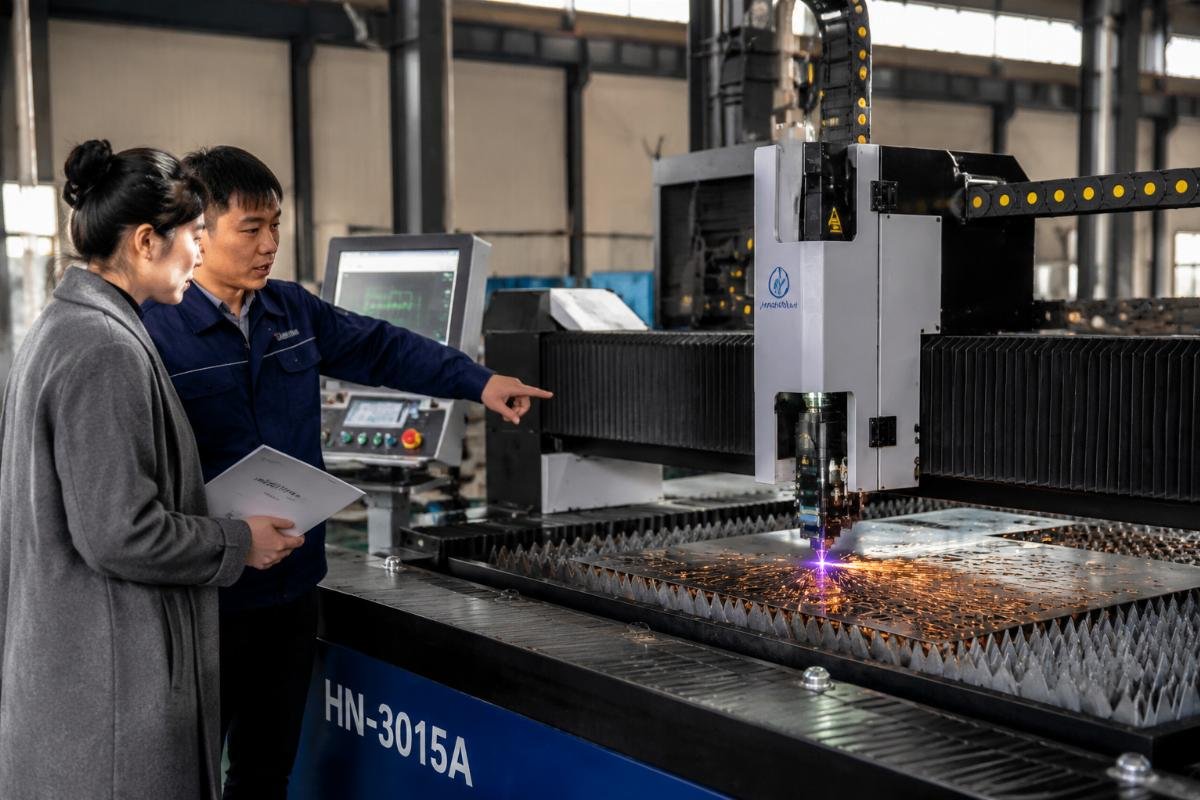
A Canadian interior design equipment trader we worked with last quarter initially tested a generic cutter from a general machinery supplier, but after finding out there was no on-site installation support for single-unit orders and only a 6-month warranty, they switched to a specialized supplier that offered free on-site training and 24/7 online support for even their smallest test orders.
- Technology Filter – Immediately eliminate any supplier that does not explicitly list cold oscillating knife cutting for flexible wall materials on their product page.
- Warranty Verification – Confirm the warranty period is at least 3 years, and that support terms do not change for low minimum order quantity requests.
- Delivery Timeline Check – Confirm that custom machine lead times can be held to 31 days or less, as specialized suppliers with standardized component inventories do not require the 2-month lead time most generic custom equipment needs.
What support should you expect from a reliable CNC cutting solution supplier for interior design projects?
Reliable suppliers for interior design wall material cutting solutions provide three core support services at no extra cost, even for single-unit orders. These include free sample cutting with test videos, fully customizable working area and tool configurations, and full lifecycle after-sales support to avoid hidden operational costs after delivery.
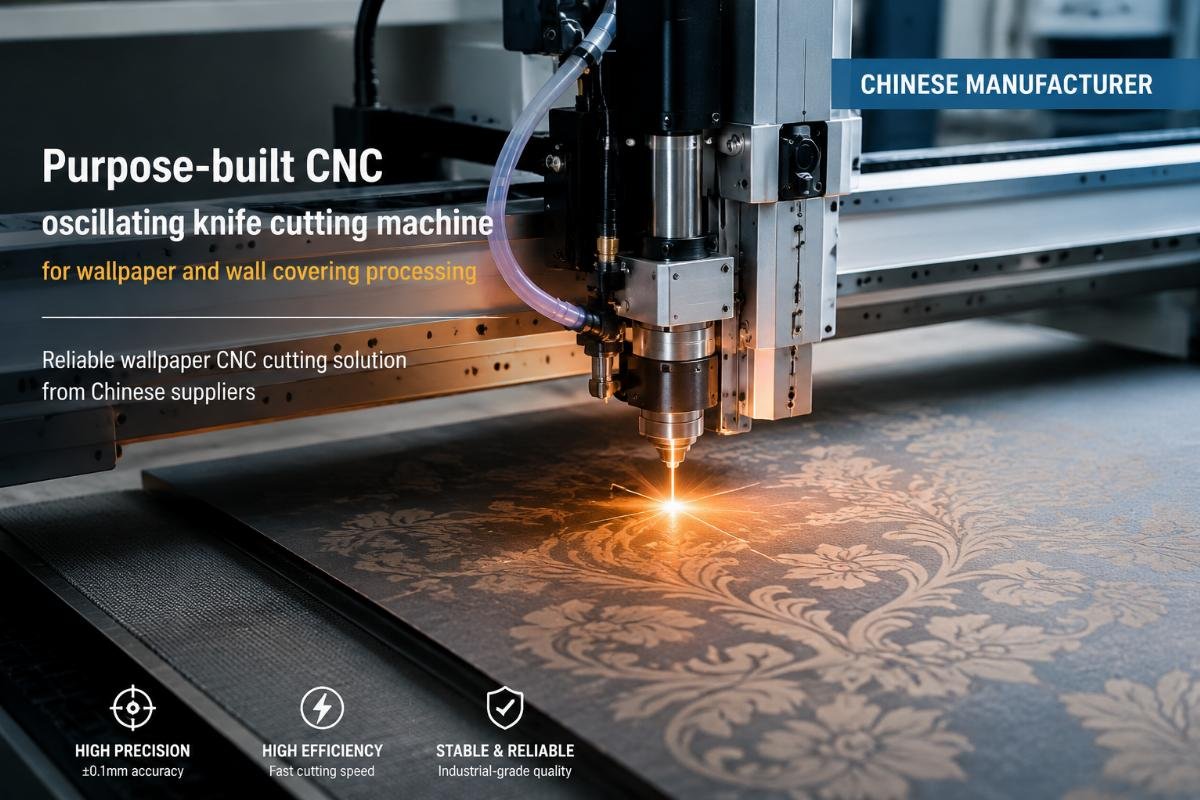
A specialized manufacturer based in Jinan, China that meets all these criteria is Realtop Machinery, which holds full CE certification for all its flexible material cutting products, offers 3-year full machine warranty, 24/7 online support, free on-site installation and operator training, and 31-day delivery for custom configurations
